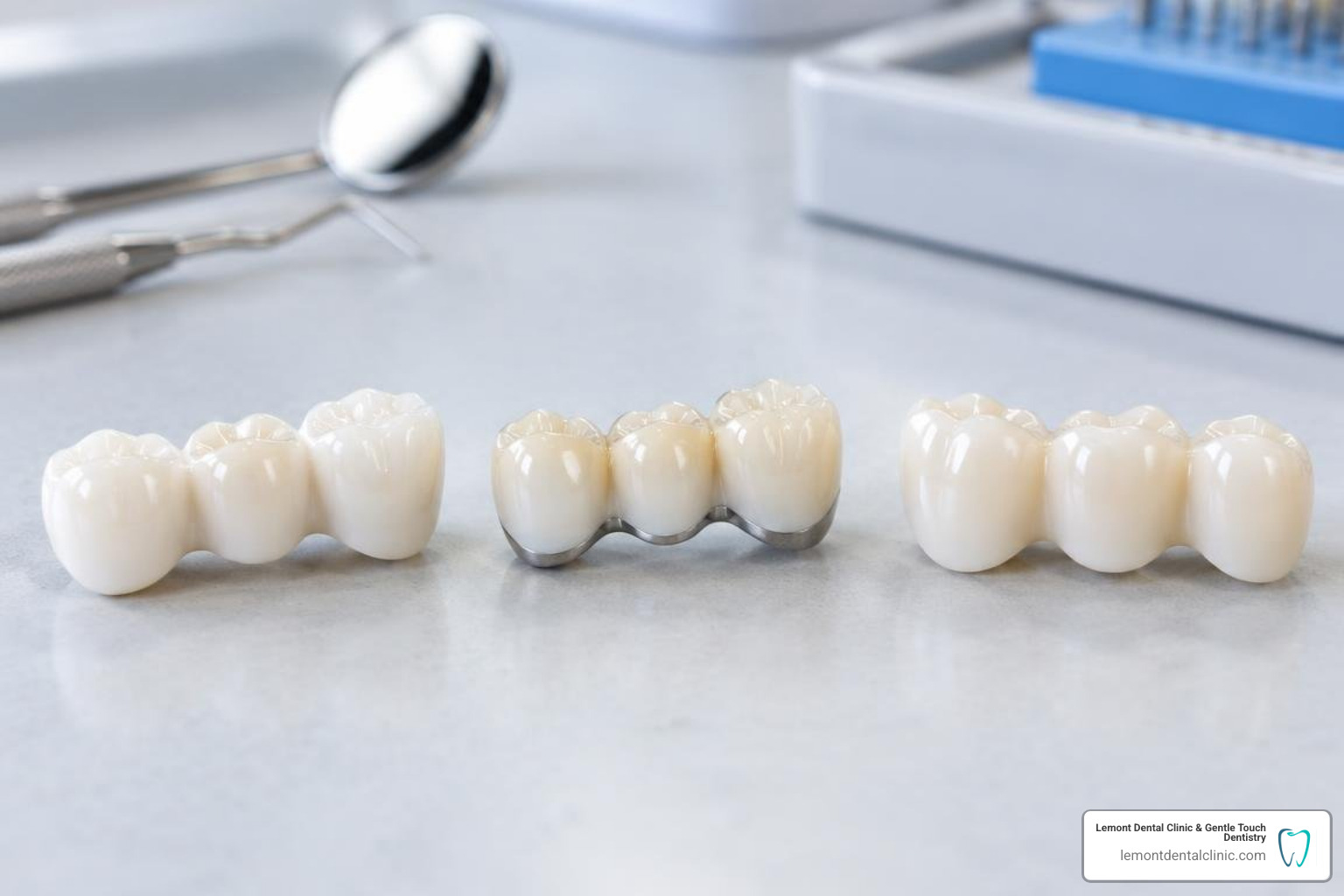
Ceramic dental bridge cost is typically $2,000 to $4,000 for a full-ceramic bridge. For comparison, a porcelain-fused-to-metal (PFM) bridge often costs $1,500 to $3,000, while a zirconia bridge runs about $2,500 to $5,000. These are broad estimates, not quotes for a specific treatment plan.
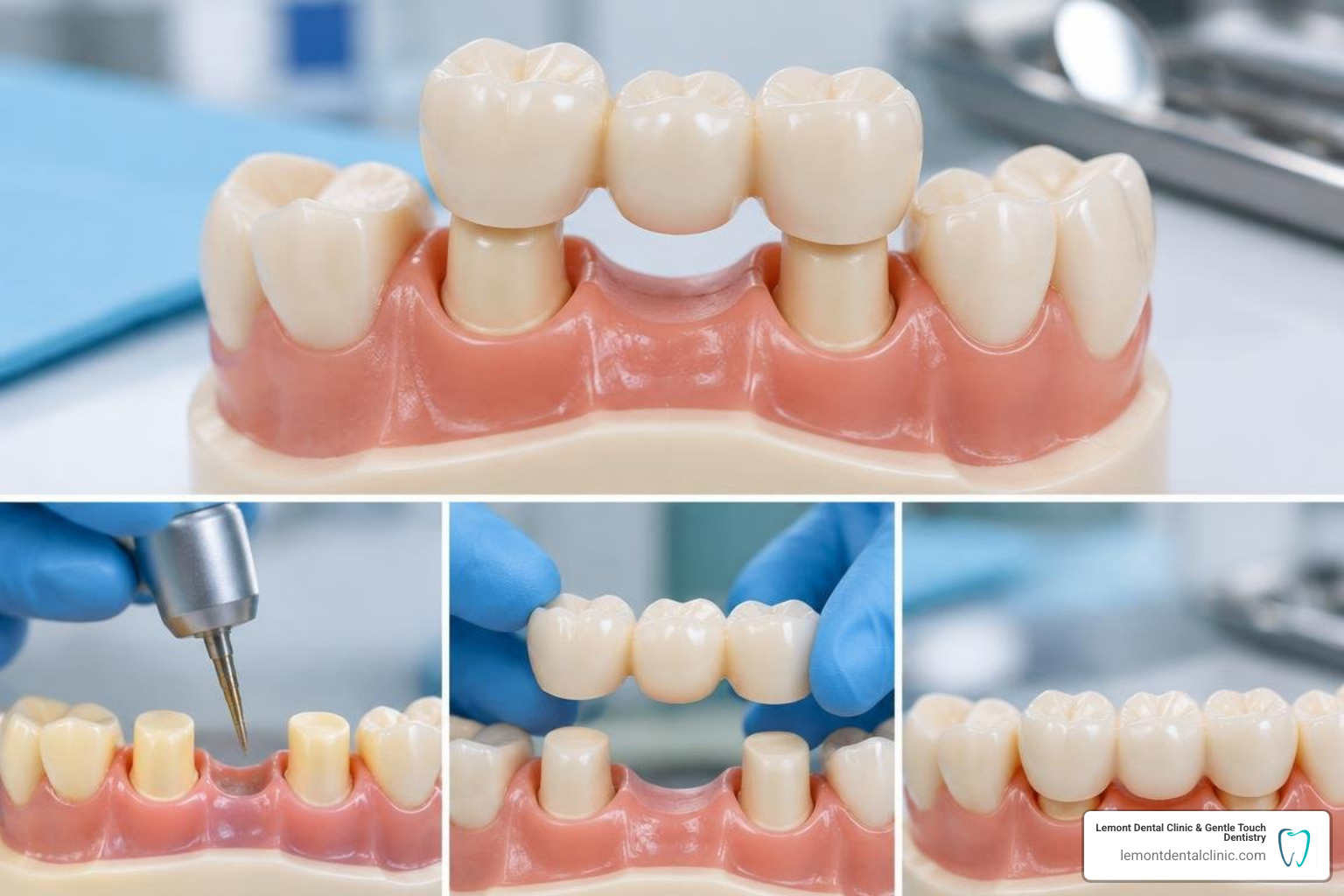
A bridge that replaces one missing tooth usually has three units: two crowns on the neighboring teeth and one replacement tooth between them. The number of units, material, and health of the supporting teeth all affect your final price. This guide will help you weigh appearance, strength, and cost before choosing a material.
Ceramic dental bridge cost: average prices by material and unit
Think of a bridge like a three-person bench: two people on the ends hold everything up, and one sits in the middle. The “ends” are crowns on your natural teeth (abutments). The “middle” is the replacement tooth (the pontic). Each of those parts is a unit, and each unit is made in a dental lab, which is why material choice moves the price so much.
The table below shows typical estimates. Real fees vary by provider, location, and your treatment plan.
Material
Estimated cost per bridge
Estimated cost per unit
PFM
$1,500 to $3,000
$700 to $1,200
All-ceramic (full porcelain)
$2,000 to $4,000
$900 to $1,700
Zirconia
$2,500 to $5,000
$900 to $1,700
E-max (lithium disilicate)
Varies by units
$1,200 to $1,800
What is the average ceramic dental bridge cost?
A full porcelain or ceramic bridge generally falls between $2,000 and $4,000. For context, Delta Dental’s 2025 data puts the average out-of-network cost of a standard three-unit bridge at about $3,600, regardless of material. Another national survey lists a single-tooth traditional bridge at $5,197, with a range of $4,100 to $9,650. The two numbers differ because they measure different things, so treat both as ballparks rather than promises.
Where you live matters too. Illinois averages about $5,406 for a traditional bridge in that survey, so a quote in the Chicago suburbs may land higher than a low-end national figure. The only price that truly counts is the one in a written estimate after an exam and X-rays.
How much does a ceramic dental bridge cost per unit?
Here is the per-unit picture:
PFM: about $700 to $1,200
All-ceramic: about $900 to $1,700
Zirconia: about $900 to $1,700
E-max: about $1,200 to $1,800
A three-unit bridge pays for three units of lab work to replace one tooth. That is why adding a unit tends to add roughly $500 to $1,200 depending on the material. If you are missing two teeth in a row, you need a four-unit bridge, and the price climbs accordingly. Our guide to what you will actually pay for a 3 teeth dental bridge walks through that math in more detail.
How do ceramic, PFM, and zirconia compare?
Each material has a personality:
All-ceramic and E-max: These are the beauty queens. They mimic the color and translucency of natural enamel, so they are a popular pick for visible front teeth. They can be less forgiving under heavy chewing forces, and chipping is a real consideration.
PFM: A metal framework covered in porcelain. It is proven and budget-friendly, and works well for back teeth where appearance matters less. The downside is that a dark metal line can show at the gumline if your gums recede.
Zirconia: The strongest ceramic option. It resists chipping and fracture well, making it a strong choice for molars and for people who clench or grind. Layered versions look more natural than older, very opaque ones.
A simple rule of thumb: ceramic or E-max for the smile zone, zirconia for the heavy-chewing zone, PFM when budget leads the decision. Your dentist can fine-tune that after looking at your bite.
What factors shape the total cost of a ceramic bridge?
Several things move the final number:
Material: As shown above, the choice can shift the price by $500 to $2,000 per bridge.
Number of units: More missing teeth means more crowns and pontics.
Lab work and digital design: Milling, layering, staining, glazing, and shade matching all take skill and time.
Tooth location and bite force: Molars need more strength than front teeth, and grinding adds stress.
Abutment health: Supporting teeth must be strong and healthy. Decay or weak roots may need treatment first.
Provider fees and geography: Experience and local costs both play a part.
Different materials also need different thickness, which affects how much tooth is shaped for the crowns. The American Dental Association offers a helpful overview of materials for indirect restorations. For a deeper look at how fees are listed, see our itemized dental bridge fees guide.
What can add to the quoted price?
The bridge itself is not always the whole bill. Ask whether your estimate includes:
Oral exam: about $50 to $200
X-rays: about $25 to $50
Professional cleaning: about $70 to $250
Local anesthesia: about $40 to $150
Tooth extraction, if needed: about $50 to $500
A temporary bridge while the lab makes the final one
Root canal, core buildup, or gum treatment on supporting teeth
Follow-up visits, plus any future repair or replacement
Asking for all of this upfront means no surprises later.
Does dental insurance cover ceramic dental bridges?
Most plans treat bridges as major restorative care. Delta Dental says plans typically cover 50% to 80% after the deductible, while some other sources cite 40% to 50%. Either way, read the fine print:
Annual maximum: A $2,500 bridge with a $1,000 maximum leaves you $1,500 to pay. This often matters more than the percentage.
Waiting periods: Some plans make you wait before major work is covered.
Missing-tooth clause: Some plans exclude teeth lost before coverage began.
Material allowance: Some plans pay based on a less expensive material, so a ceramic or zirconia upgrade may cost you more.
In-network fees: Using an in-network dentist usually lowers your share.
Bridges typically last 5 to 15 years, and how you care for yours makes a big difference. Daily cleaning under the replacement tooth is the key habit. Try:
A floss threader or superfloss
An interdental brush
A water flosser
Routine checkups and cleanings
A night guard if you grind your teeth
Avoiding ice and other hard objects
Decay or gum disease around a supporting tooth is the most common reason a bridge needs replacing, so a little daily effort protects a lot of money.
What are the pros and cons of ceramic bridges?
Pros
Natural look, with shade and translucency that blend with neighbors
A metal-free option, with no dark gumline edge
Strong choices available (zirconia) when bite forces are high
Cons
Ceramics can chip, depending on the type and your bite
Neighboring teeth must be shaped to hold crowns
Bacteria and plaque can cause decay under crowns if cleaning is skipped
Cleaning under the pontic takes extra effort
Often costs more than PFM
For a front tooth, appearance usually wins. For a molar, strength should lead the conversation.
How does a ceramic bridge’s value change over time?
Upfront price is only one piece. Try a simple cost-per-year view: divide the bridge price by its expected years of service. A $2,500 bridge lasting 12 years works out to about $208 per year. One example using per-unit prices over 10 years showed PFM at roughly $95 per year, zirconia and all-ceramic at $130, and E-max at $150 per year. Those gaps are small, so a material that fits your tooth and bite can be better value than the cheapest option that fails early.
A bridge is also faster than the alternative. It usually takes two visits over a few weeks, while an implant can take 4 to 8 months. Implants often last longer, so it is worth comparing in our dental bridge vs implant guide.
How can you manage the cost without insurance?
Without insurance, these steps help:
Ask for a written, itemized estimate listing material, units, temporaries, and follow-ups.
Compare treatment plans, not only total prices.
Ask about in-house payment plans and any financing terms, including interest.
Use HSA or FSA funds, since a bridge is a qualified dental expense paid with pre-tax money.
Frequently Asked Questions about ceramic dental bridge cost
How much does a three-unit ceramic bridge cost?
A three-unit bridge has two abutment crowns and one pontic. For full ceramic, expect roughly $2,000 to $4,000, though the national out-of-network average for a three-unit bridge of any material is about $3,600. Material, location, and the condition of your supporting teeth all shift the number, so ask for a written estimate.
How long does a ceramic dental bridge last?
Most bridges last 5 to 15 years. Good oral hygiene, manageable bite forces, healthy supporting teeth, and regular dental visits push you toward the longer end.
Can a chipped ceramic bridge be repaired?
Sometimes. A minor chip can often be smoothed or repaired with resin. A larger fracture or crack usually means replacing the bridge. Either way, have a dentist look at it promptly, since chips can affect your bite and appearance.
Conclusion
The best bridge material is the one that fits your tooth location, bite, budget, and smile goals, not simply the priciest or cheapest. Ceramic shines in visible areas, zirconia handles heavy chewing, and PFM remains a practical budget option. At Lemont Dental Clinic & Gentle Touch Dentistry, we serve patients in Lemont, Palos Hills, and nearby communities, and we will build a personalized treatment plan with a clear written estimate. When you are ready, our guide to plan the cost of a three-tooth bridge is a great next step, and we are happy to answer questions at your visit.