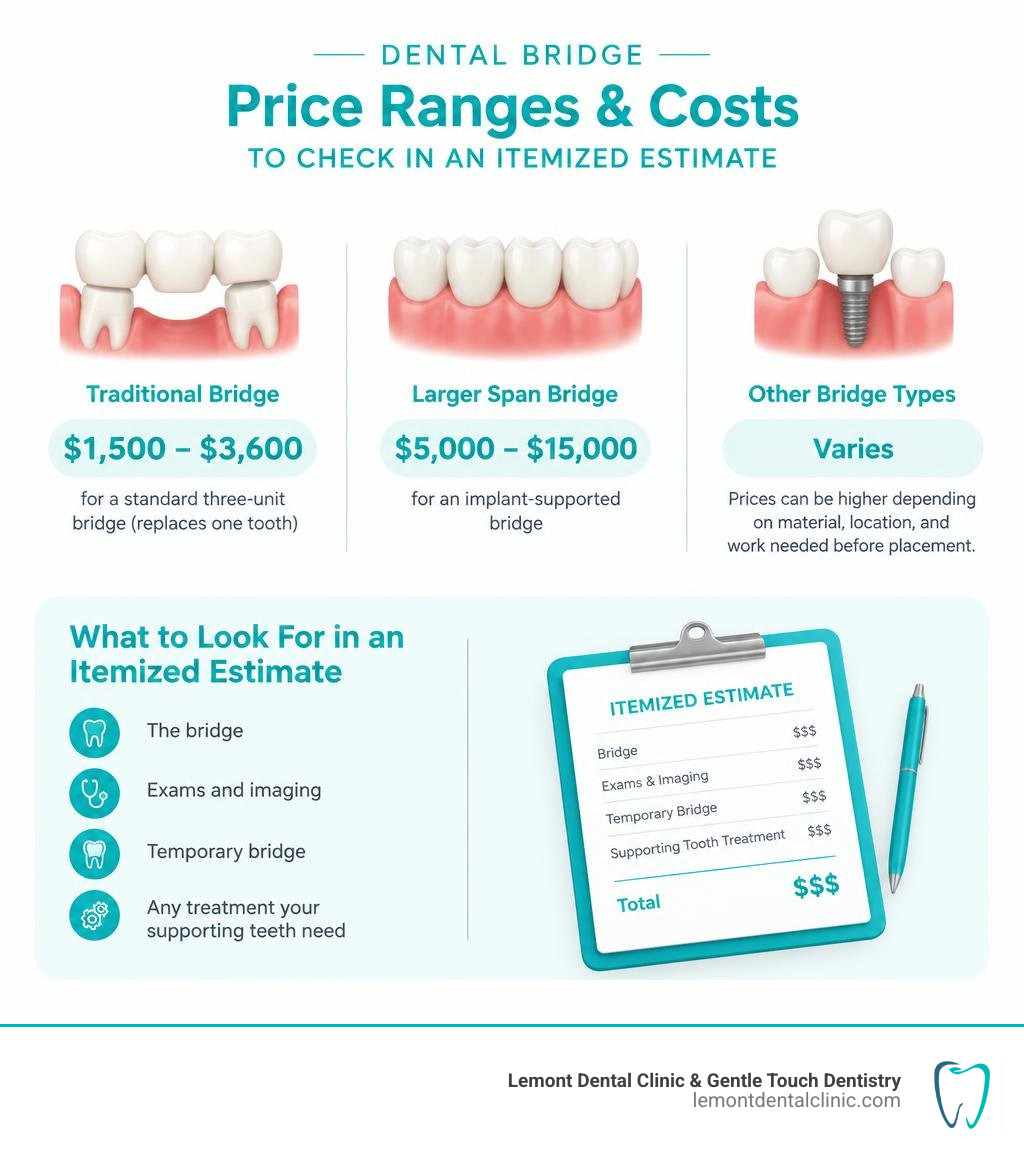
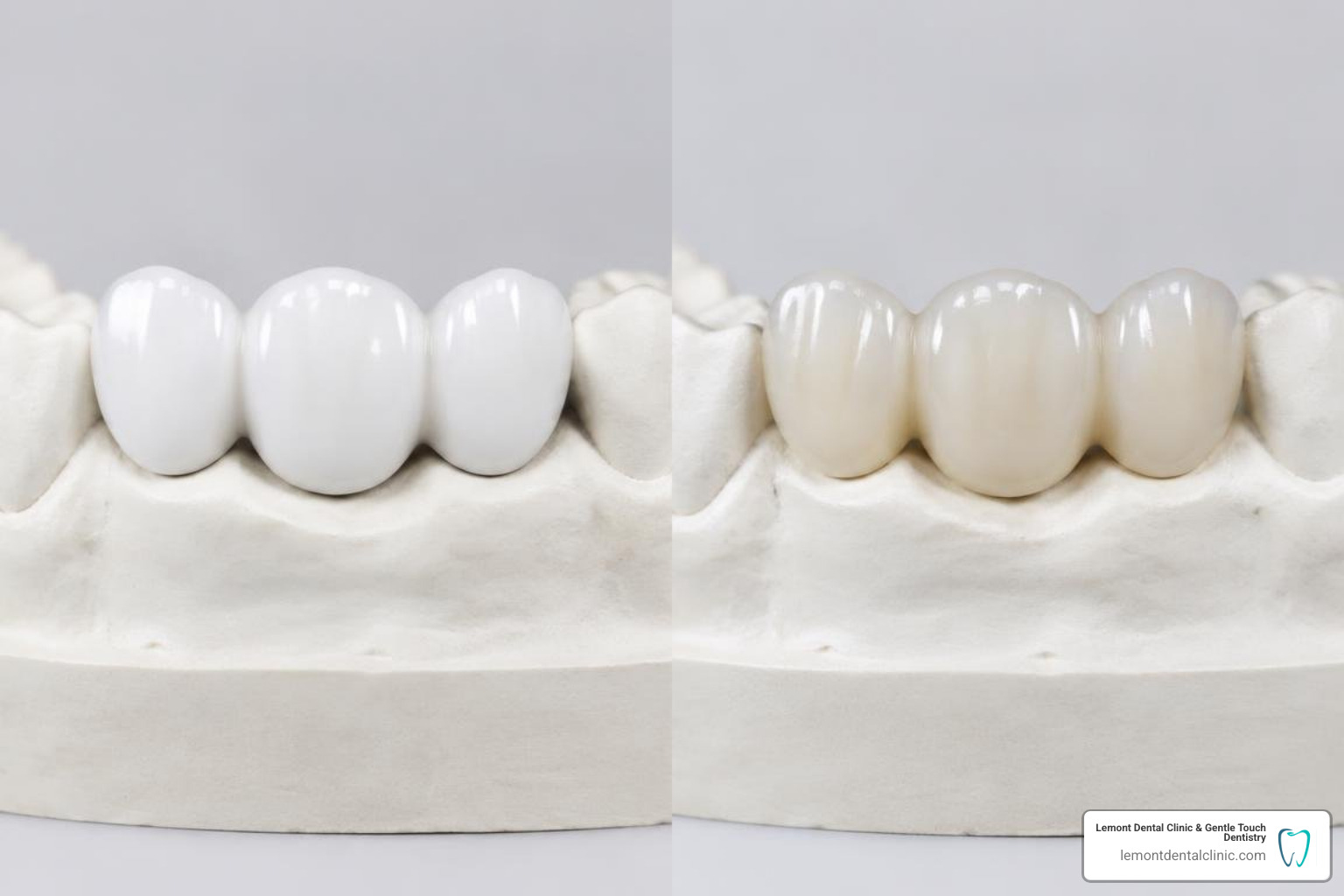
A tooth bridge typically costs $1,500 to $3,600 for a standard three-unit bridge that replaces one missing tooth. Prices can be higher depending on the bridge type, material, location, and work needed before placement. An implant-supported bridge often costs $5,000 to $15,000 for a larger span.
Insurance may cover part of the cost, but deductibles and annual limits affect what you pay. To compare quotes, ask for an itemized estimate that includes the bridge, exams, imaging, temporary bridge, and any treatment your supporting teeth need. This estimate should also clarify whether the quoted tooth bridge price covers only the laboratory-fabricated restoration or the full sequence of clinical appointments required to design, fit, and permanently cement it.
Average Tooth Bridge Price Breakdown by Bridge Type
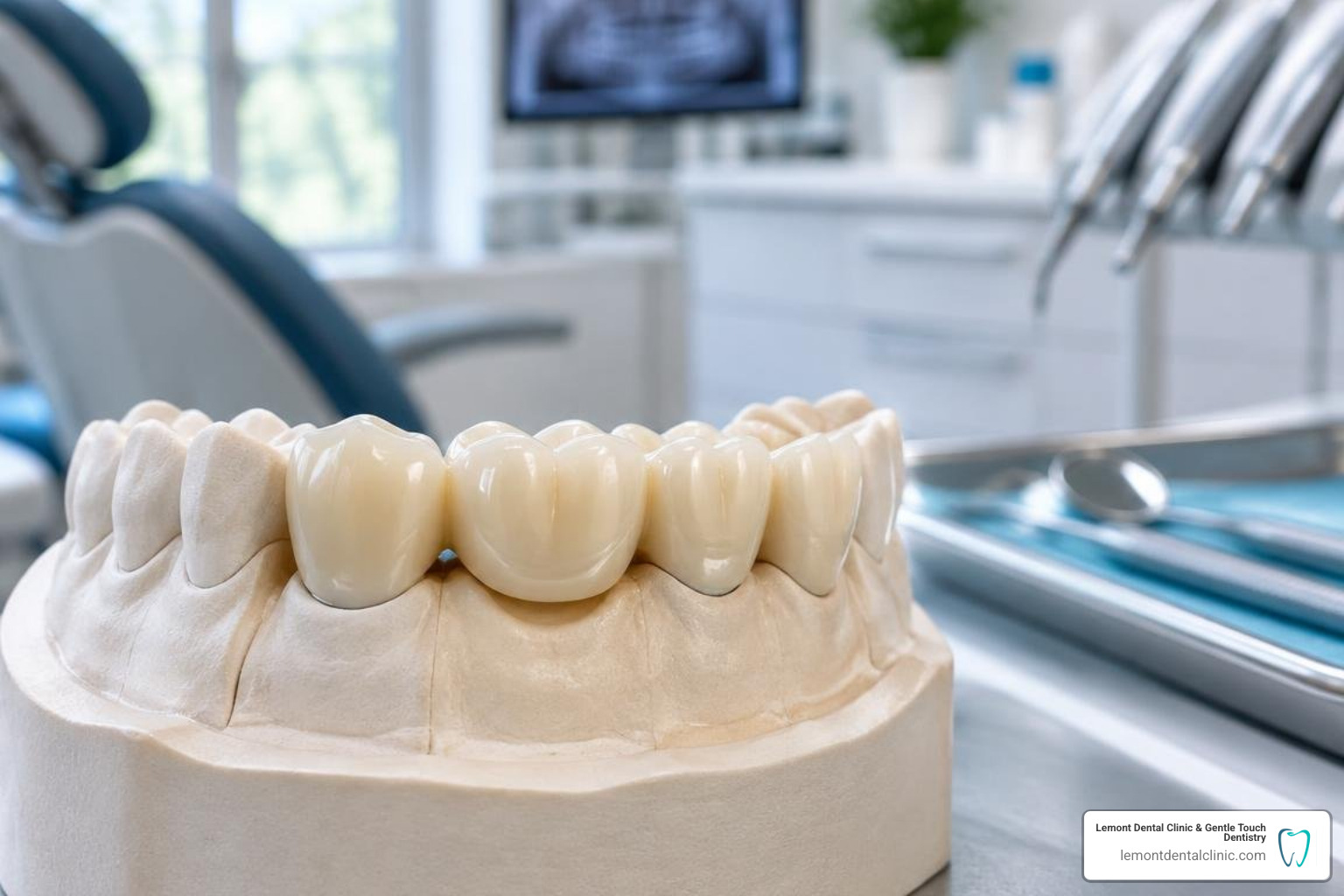
When you begin researching restorations for missing teeth, understanding how dentists calculate your overall investment is essential. A dental bridge replaces one or more missing teeth by anchoring an artificial tooth (called a pontic) to natural teeth or implants on either side (known as abutments).
The national average cost for a traditional bridge is $5,197, though out-of-pocket totals typically range from $1,041 to $5,197 depending on design complexity, prep work, and insurance. To explore the foundational numbers, check out our fixed bridge cost guide for comprehensive context on restorative dentistry.
Bridge Type
Average Cost (Without Insurance)
Expected Lifespan
Best Clinical Use Case
Traditional Fixed Bridge
$2,000 – $5,000
10 – 15 Years
Replacing 1–2 teeth with healthy adjacent teeth
Cantilever Bridge
$1,041 – $3,000
5 – 10 Years
Single missing tooth with an anchor on only one side
Maryland (Resin-Bonded)
$1,500 – $2,500
5 – 10 Years
Single missing front tooth with low biting stress
Implant-Supported Bridge
$5,000 – $15,000+
15 – 30+ Years
Multiple missing teeth without natural anchor teeth
Traditional and Cantilever Bridges
Traditional fixed bridges remain the gold standard in restorative care. This configuration uses two crowns placed over natural anchor teeth with the replacement pontic suspended between them. They distribute chewing forces evenly, making them ideal for back molars. Fabricated from porcelain-fused-to-metal (PFM) or all-ceramic materials, traditional units cost between $2,000 and $5,000.
Cantilever bridges are used when there is an anchor tooth on only one side of the gap. Because the pontic acts as a lever arm, it places extra stress on the single abutment tooth. Dentists typically reserve this restoration for low-pressure areas to prevent structural failure over time. While the initial tooth bridge price may appear lower than a traditional bridge, the reduced long-term stability can lead to earlier replacement or repair.
Maryland Resin-Bonded Bridges
A Maryland bridge offers a conservative alternative for front teeth. Instead of reshaping adjacent teeth down to pegs for full crowns, your dentist bonds small metal or porcelain wings directly to the backs of neighboring teeth.
Because it requires minimal enamel removal, the procedure is quick and preserves healthy tooth structure. These bridges cost between $1,500 and $2,500, but because they rely solely on resin cement, they carry a higher risk of debonding under heavy chewing pressure. For patients who prioritize preserving natural enamel and need a solution in the aesthetic zone, this lower tooth bridge price can be an attractive short-term option.
Implant-Supported Fixed Bridges
When you have three or more consecutive missing teeth, an implant-supported bridge provides exceptional stability without altering natural teeth. Titanium implant posts are surgically placed into the jawbone to act as anchors, and a multi-unit porcelain bridge is secured over them.
While upfront fees range from $5,000 to $15,000, these restorations stimulate the jawbone to prevent bone shrinkage. As part of modern restorative dental services, implant bridges offer superior stability and long-term value for extensive tooth loss. The higher initial tooth bridge price reflects the surgical phase, the titanium components, and the laboratory work required to create a restoration that can last for decades.
Factors That Influence Your Total Bridge Costs
Several variables dictate your final bill. The bridge itself is only one part of the equation; material quality, unit counts, and clinical expertise all play a role.
How Dental Materials Impact Your Tooth Bridge Price
The materials selected for your bridge balance appearance, durability, and cost:
Zirconia: Milled with advanced digital CAD/CAM technology, solid zirconia is virtually unbreakable and resists chipping, making it an excellent choice for heavy grinders.
Lithium Disilicate (E-Max): Offers lifelike translucency and unmatched aesthetic appeal, ideal for the front smile zone.
Porcelain-Fused-to-Metal (PFM): Combines the strength of a metal substructure with a tooth-colored porcelain overlay, serving as a reliable choice for decades.
Cast Metal / Gold Alloys: Highly biocompatible and wear-resistant, though their metallic appearance limits their use mainly to hidden back molars.
Each material carries a different laboratory fabrication fee, which is passed through as part of your total tooth bridge price. High-strength ceramics like zirconia and lithium disilicate typically cost more than PFM because they require specialized milling equipment and more time-intensive finishing.
Comparing Tooth Bridge Price by Number of Units
Dental bridges are priced by the unit (each crown and each pontic counts as one unit). Replacing a single missing tooth requires a three-unit bridge (two abutment crowns plus one pontic), running between $1,500 and $3,600.
If you are missing two adjacent teeth, a four-unit dental bridge is required, which increases lab fabrication fees and the total price accordingly. The more units involved, the higher the tooth bridge price, because each additional crown or pontic adds material, laboratory time, and clinical adjustment appointments.
Geographic Location and Regional Price Differences
Where you receive treatment directly impacts fee schedules. High-overhead metropolitan centers like Manhattan average $2,500 to $5,636 for a basic bridge, and UK private bridge cost benchmarks show private clinics charging £800 to over £4,500 depending on location.
In suburban Illinois communities such as Lemont, Palos Hills, Orland Park, and Romeoville, competitive regional pricing provides exceptional value without the inflated overhead of major downtown medical districts. Patients who compare the tooth bridge price across nearby suburbs often find that traveling a short distance outside the city center yields significant savings for the same high-quality materials and techniques.
Additional Pre-Treatment Procedures and Hidden Fees
Your supporting teeth and gums must be completely healthy before placing a bridge. Pre-treatment procedures are billed separately and should be factored into your budget:
Comprehensive Oral Examination: $50 – $200
Digital Diagnostic X-Rays / 3D Imaging: $25 – $250
Tooth Extractions: $150 – $450 per tooth
Periodontal (Deep Gum) Therapy: $200 – $800 per quadrant
Root Canal Therapy on Abutment Teeth: $700 – $1,500 per tooth
Provisional Temporary Acrylic Bridge: $150 – $400
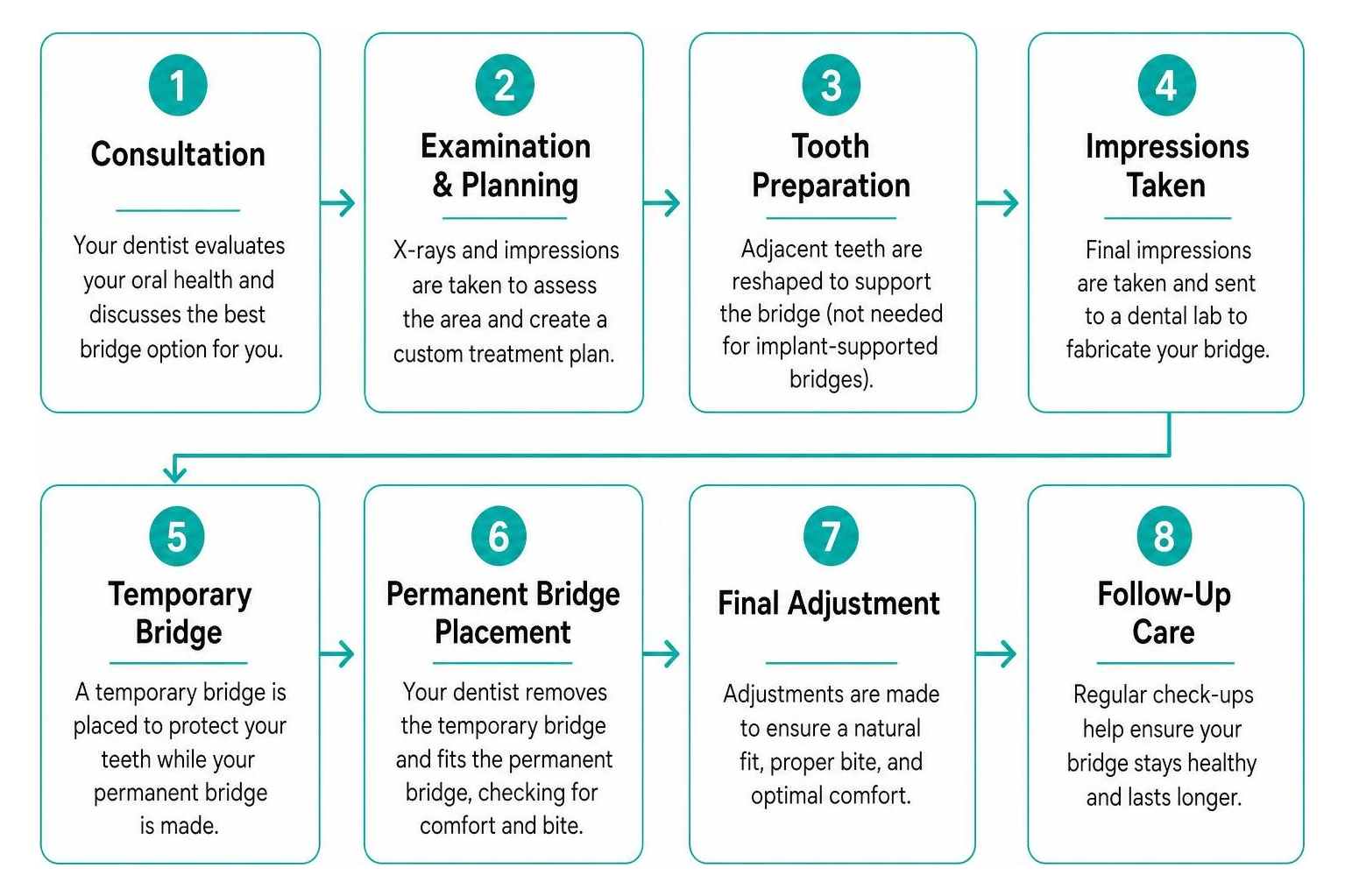
These preparatory services are essential for ensuring the long-term success of your restoration. If an abutment tooth has active decay or gum disease, placing a bridge over it would trap bacteria and lead to failure. Your dentist will identify any necessary pre-treatment during the comprehensive examination, so the final tooth bridge price you are quoted should always include these preparatory line items rather than surprising you later.
Dental Bridge vs. Implants and Dentures: Cost and Longevity Comparison
When replacing teeth, comparing all your options helps you make the right choice for your smile and your wallet. Reviewing dental bridge vs implant differences side-by-side clarifies short-term savings versus lifetime maintenance.
Feature
Dental Bridge
Single Dental Implant
Removable Partial Denture
Initial Upfront Cost
$1,500 – $5,000
$3,000 – $5,000
$700 – $2,500
Average Lifespan
10 – 15 Years
25+ Years / Lifetime
5 – 8 Years
Impact on Adjacent Teeth
Enamel permanently shaped
No impact on natural teeth
Metal clasps place mild stress
Jawbone Preservation
No (bone loss under pontic)
Yes (stimulates jawbone)
No (accelerates resorption)
10-Year Replacement Need
Moderate (35% need repair)
Very Low (<5% failure)
High (requires relining/remake)
While a dental bridge often carries a lower initial tooth bridge price than an implant, the comparison table shows why lifetime costs matter. A bridge may need replacement after 10 to 15 years, whereas a well-maintained implant can last a lifetime. However, bridges remain an excellent choice for patients who want a faster, non-surgical solution or who lack sufficient jawbone density for implant placement without additional grafting procedures.
Insurance Coverage and Payment Financing Options
Most dental insurance policies classify traditional fixed bridges as a major restorative procedure. According to Delta Dental bridge coverage guidelines, plans often cover 40% to 50% of the cost after your deductible is met, up to your annual maximum (typically $1,000 to $2,000).
To manage remaining out-of-pocket balances, patients frequently utilize:
Flexible Spending Accounts (FSA) & Health Savings Accounts (HSA): Use pre-tax dollars for substantial tax savings on restorative dental work.
Third-Party Medical Financing: Healthcare financing programs provide structured installment plans over 6 to 24 months to help fit restorative care into your monthly budget.
Flexible In-House Financing: Structured dental payment plans allow you to spread treatment expenses across manageable monthly payments.
Because insurance annual maximums are often lower than the full tooth bridge price, many patients combine their coverage with one or more of these financing options. Your dental office can submit a pre-treatment estimate to your insurer so you know exactly what portion of the bridge will be covered before you commit to treatment.
Frequently Asked Questions About Dental Bridges
How long does a dental bridge typically last?
A standard dental bridge lasts between 5 and 15 years. With meticulous home care, regular dental cleanings, and healthy supporting teeth, many bridges comfortably exceed 15 years. The lifespan depends heavily on the material chosen, your oral hygiene routine, and whether you avoid habits like chewing ice or using your teeth as tools.
Is getting a dental bridge painful?
The procedure is comfortable because your dentist numbs the area thoroughly with local anesthetic before reshaping your teeth. You may notice mild gum tenderness or temperature sensitivity for a few days afterward, which responds well to over-the-counter pain relievers. Most patients return to normal eating and drinking within a week.
How do I clean and maintain a dental bridge?
Because the artificial tooth is joined to the crowns, you cannot floss between them normally. Use floss threaders, super floss, interdental brushes, or a water flosser daily to clean beneath the pontic and prevent decay at the crown margins. Regular professional cleanings also help your dentist monitor the bridge margins and supporting teeth for early signs of trouble.
Conclusion
A well-crafted dental bridge restores your chewing function, prevents neighboring teeth from shifting, and renews your smile. At Lemont Dental Clinic & Gentle Touch Dentistry, our team provides personalized restorative solutions using advanced technology and clear, upfront pricing across Lemont, Palos Hills, and surrounding communities.
To explore customized pricing for your smile, explore our detailed breakdown on the cost of 3 tooth bridge and schedule your consultation with us today. We will walk you through every component of your tooth bridge price, from preparatory care to final cementation, so you can make a confident decision about restoring your smile.