What Does a Fixed Hybrid Implant Denture Cost in Lemont?
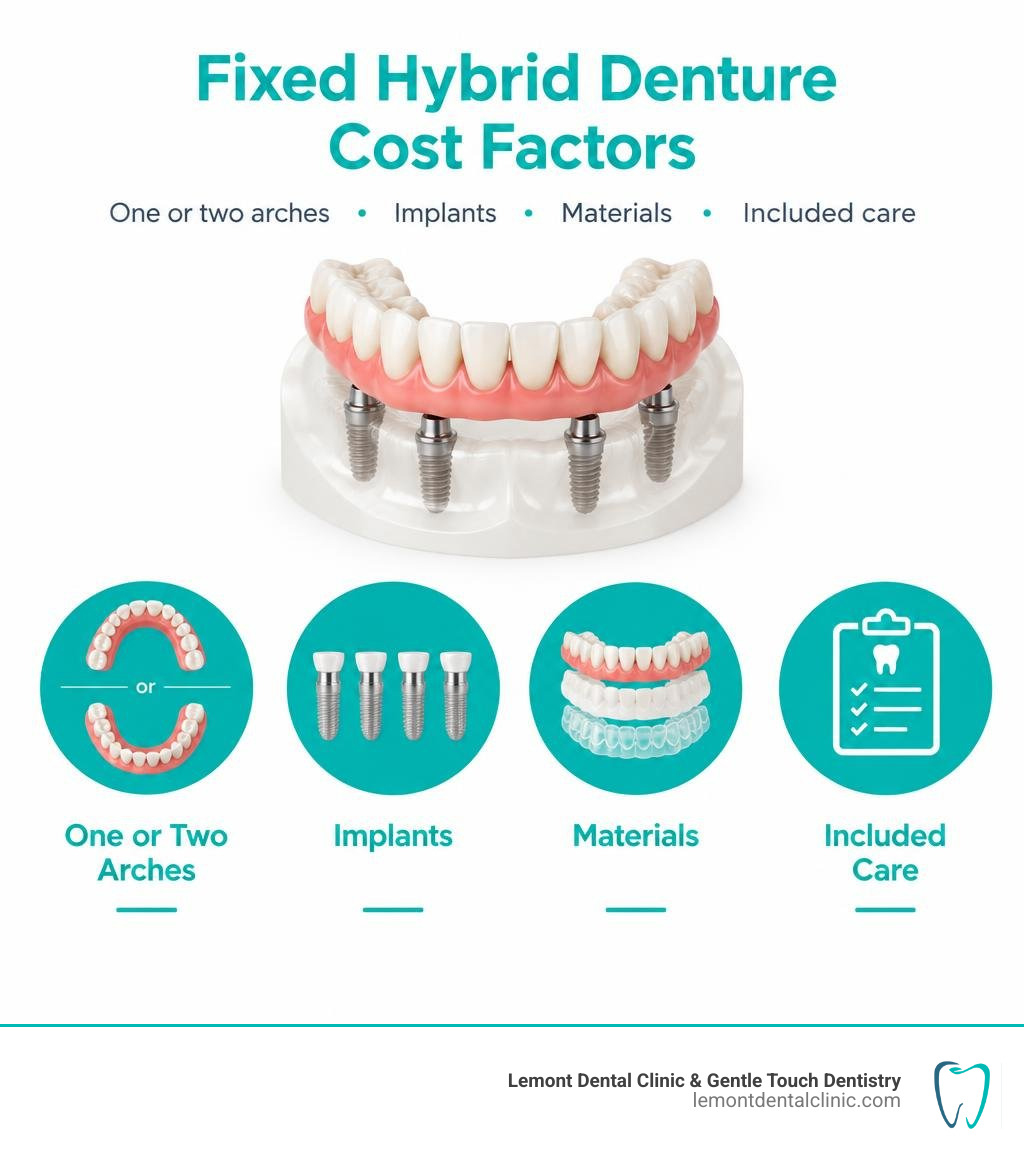
The cost of a fixed hybrid implant denture in Lemont depends on whether you need one arch or both, the number of implants, and the final denture material. As a broad U.S. benchmark, full-mouth dental implants can cost $30,000 to $150,000. That range is not a quote for treatment in Lemont.
To compare estimates, ask what each price includes: scans, extractions, implants, abutments, temporary teeth, the final fixed denture, and follow-up care. A written plan from Lemont Dental Clinic & Gentle Touch Dentistry can show which costs apply to your needs.
Learn more about Lemont implant fixed hybrid denture cost:
Understanding Lemont Implant Fixed Hybrid Denture Cost and Price Ranges
When restoring an entire arch of missing or failing teeth, understanding the total financial investment is just as vital as choosing the right clinical technique. Navigating the price of full mouth dental implants can feel overwhelming because different practices structure their fees in distinct ways. Around 73% of dental implant patients end up paying nearly double what they initially expected simply because they focused on an incomplete baseline quote that excluded essential surgical steps.
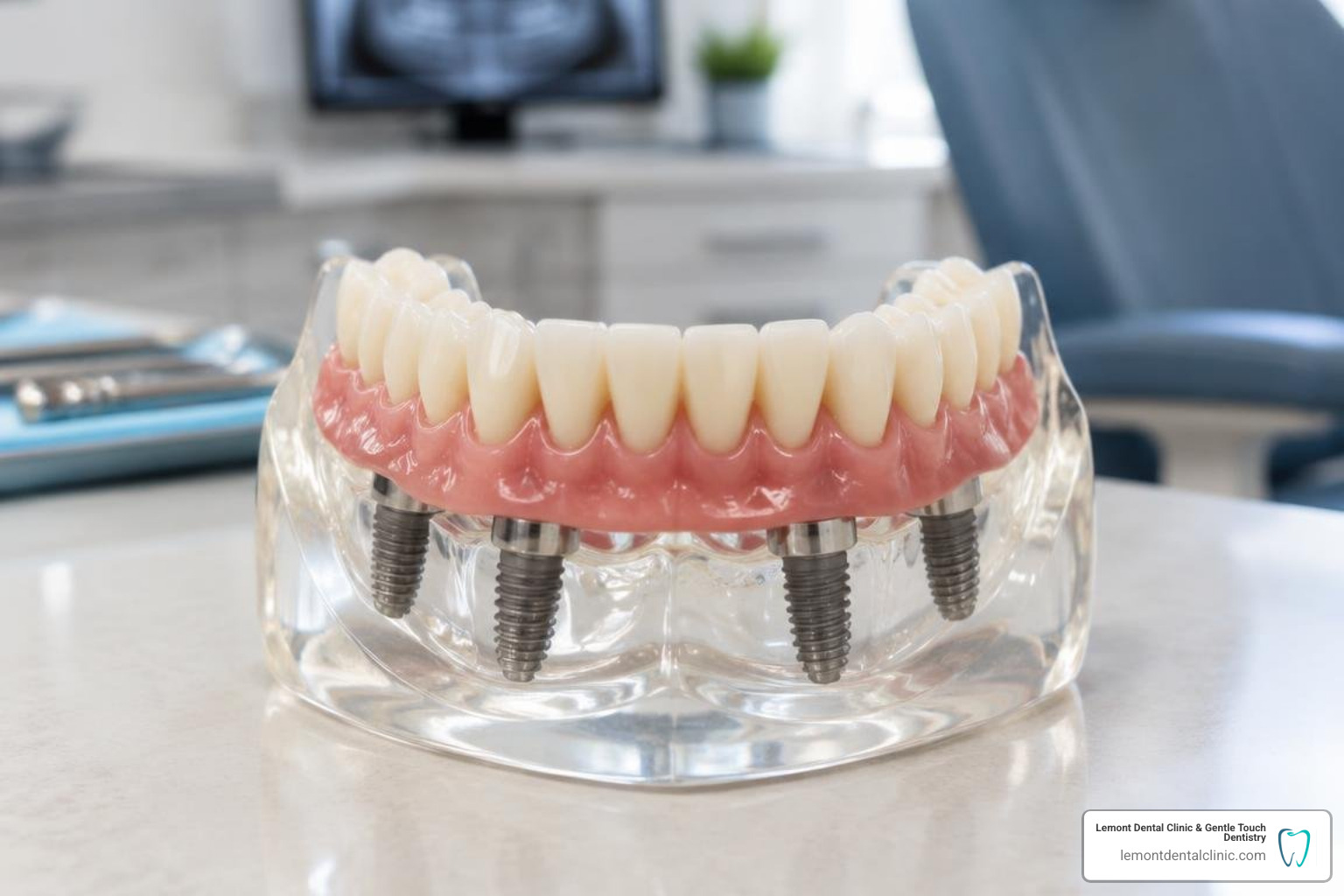
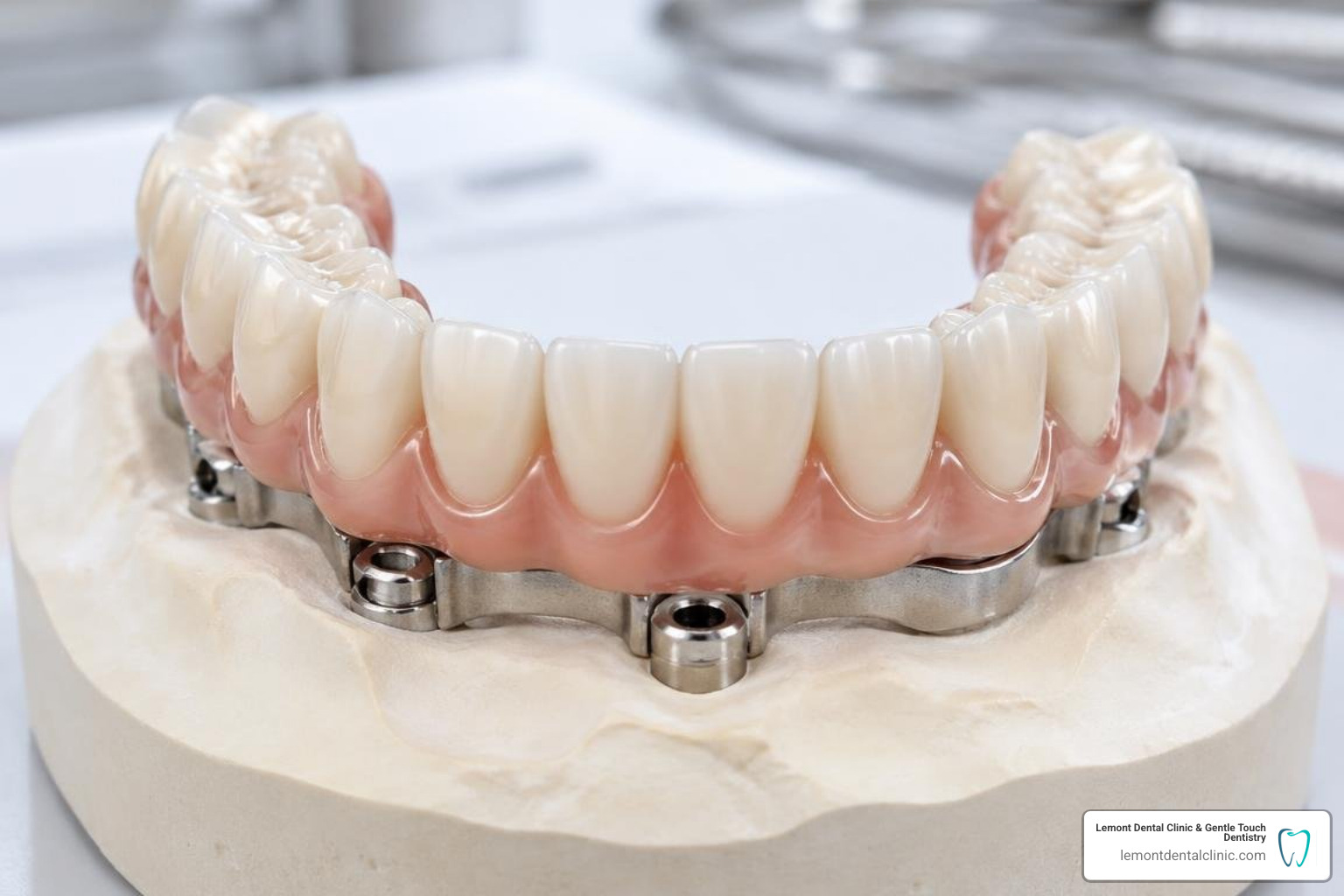
A true fixed hybrid restoration is anchored permanently into your jawbone using four to eight precision implants. These prosthetics are designed to stay secure, support chewing function, and avoid the instability associated with missing or failing teeth. To help you evaluate estimates across Lemont, Palos Hills, and surrounding communities like Homer Glen and Lockport, here is a comparison of common cost variables inside fixed hybrid treatment planning:
Fixed Hybrid Cost Factor
What It Usually Includes
How It Can Affect the Estimate
Single-Arch Fixed Hybrid
One upper or lower full-arch restoration supported by implants
Lower total cost than treating both arches, but the opposing bite must be evaluated carefully
Dual-Arch Fixed Hybrid
Upper and lower implant-supported fixed restorations planned together
Higher total investment, with stronger control over bite alignment and smile design
Acrylic-Titanium Fixed Hybrid
A reinforced framework with acrylic gum tissue and denture teeth
Often a more budget-conscious fixed option, with possible long-term maintenance for worn or chipped acrylic
Monolithic Zirconia Fixed Arch
A high-strength ceramic arch secured to implants
Higher laboratory and material cost, with excellent durability and resistance to staining or wear
Comparing these details helps clarify what fits your personal health goals.
Breaking Down the Lemont Implant Fixed Hybrid Denture Cost by Material
The framework and prosthetic material you select dictate not only the durability of your new smile, but also the long-term maintenance expenses.
Acrylic-Titanium Hybrids: These consist of a cast titanium or cobalt-chromium bar wrapped in pink dental acrylic with denture resin teeth. While they can provide a practical path toward permanent teeth, the acrylic resin can wear down or chip over a decade of heavy chewing, sometimes requiring tooth replacement or re-polishing.
Monolithic Zirconia Bridges: Milled from solid blocks of ultra-durable zirconia ceramic, these restorations are highly resistant to chipping, staining, and wear. They also reduce the small material junctions where bacteria can gather around acrylic boundaries, offering a strong standard for longevity and aesthetics.
Framework Design and Bite Engineering: The way the fixed hybrid is reinforced, shaped, and secured affects how chewing forces move through the implants. Careful design helps reduce excess stress on the restoration and supports easier maintenance over time.
Single-Arch vs Full-Mouth Restoration Investment
Opting to treat a single arch, either upper or lower, versus both jaws simultaneously involves significant mechanical considerations. When we place a fixed hybrid in only the upper jaw while the lower jaw has a different tooth arrangement, the opposing bite dynamics directly influence implant stress.
Restoring both arches simultaneously with full arch dental implants gives our clinical team complete control over your bite alignment, masticatory force distribution, and aesthetic proportions. While dual-arch rehabilitation increases the surgical scope, it can reduce the overall treatment timeline and help prevent asymmetrical wear caused by an unbalanced bite.
Biomechanical Factors and Candidacy in Periodontally Compromised Patients
A frequent question we encounter is whether a history of chronic gum disease prevents you from receiving fixed implant restorations. In developed nations, periodontal diseases affect more than 65% of the adult population aged 65 and older. Fortunately, prior periodontal infection does not disqualify you from permanent teeth.
Long-term clinical data provides immense reassurance. In a landmark 11-year follow-up study evaluating implants in patients with a history of severe periodontitis (Galindo-Moreno et al., 2023):
The estimated mean marginal bone loss (MBL) after roughly 11 years (4,108 days) was minimal at only -0.307 mm (SE = 0.042).
Only 0.15% of evaluated implants showed severe radiographical bone loss of 3.0 mm or more from the implant collar.
When radiographic success is defined as marginal bone loss under 2.0 mm, the overall success probability reached an impressive 95.3%.
Only 18.9% of implants exhibited marginal bone loss greater than 0.5 mm over this extended period.
These findings show that as long as active infection is fully eliminated prior to surgery and proper mechanics are respected, implant therapy remains remarkably stable over time.
Key Clinical Variables That Change the Cost of a Fixed Hybrid Implant Denture in Lemont
Several anatomical factors dictate the surgical complexity and overall cost of a fixed hybrid implant denture in Lemont:
Alveolar Ridge Resorption: Severe bone loss from missing teeth may require supplemental bone grafting or sinus lifts before or during implant insertion.
Implant Diameter and Geometry: Placing narrower implants (3.5 mm or less) in compromised sites can sometimes experience higher marginal bone remodeling compared to standard or wide-diameter fixtures that provide robust bone-to-implant contact.
Platform Switching & Internal Conical Connections: High-end implant systems feature internal conical friction-fit connections and platform switching, shifting the mechanical connection away from the bone margin to preserve vital crestal bone.
3D Guided Surgical Stents: Computer-guided planning software maps your exact nerve pathways and bone contours, ensuring optimal 3D angulation and reducing surgical chair time.
Transmucosal Abutment Height and Long-Term Bone Preservation
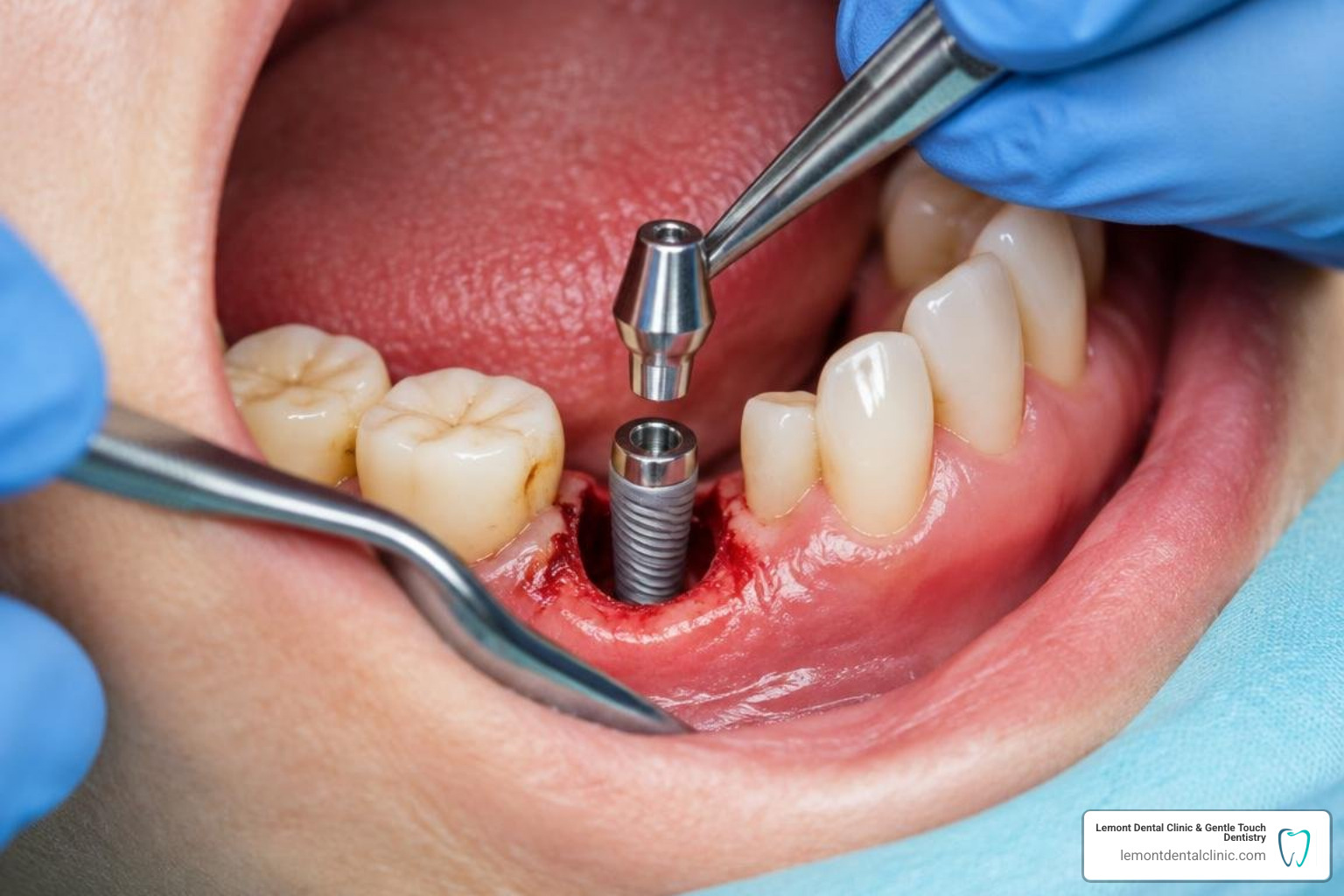
One of the most critical prosthetic variables for bone stability is the transmucosal abutment height. The abutment is the connector piece sitting between the dental implant submerged in the bone and the hybrid bridge resting on top.
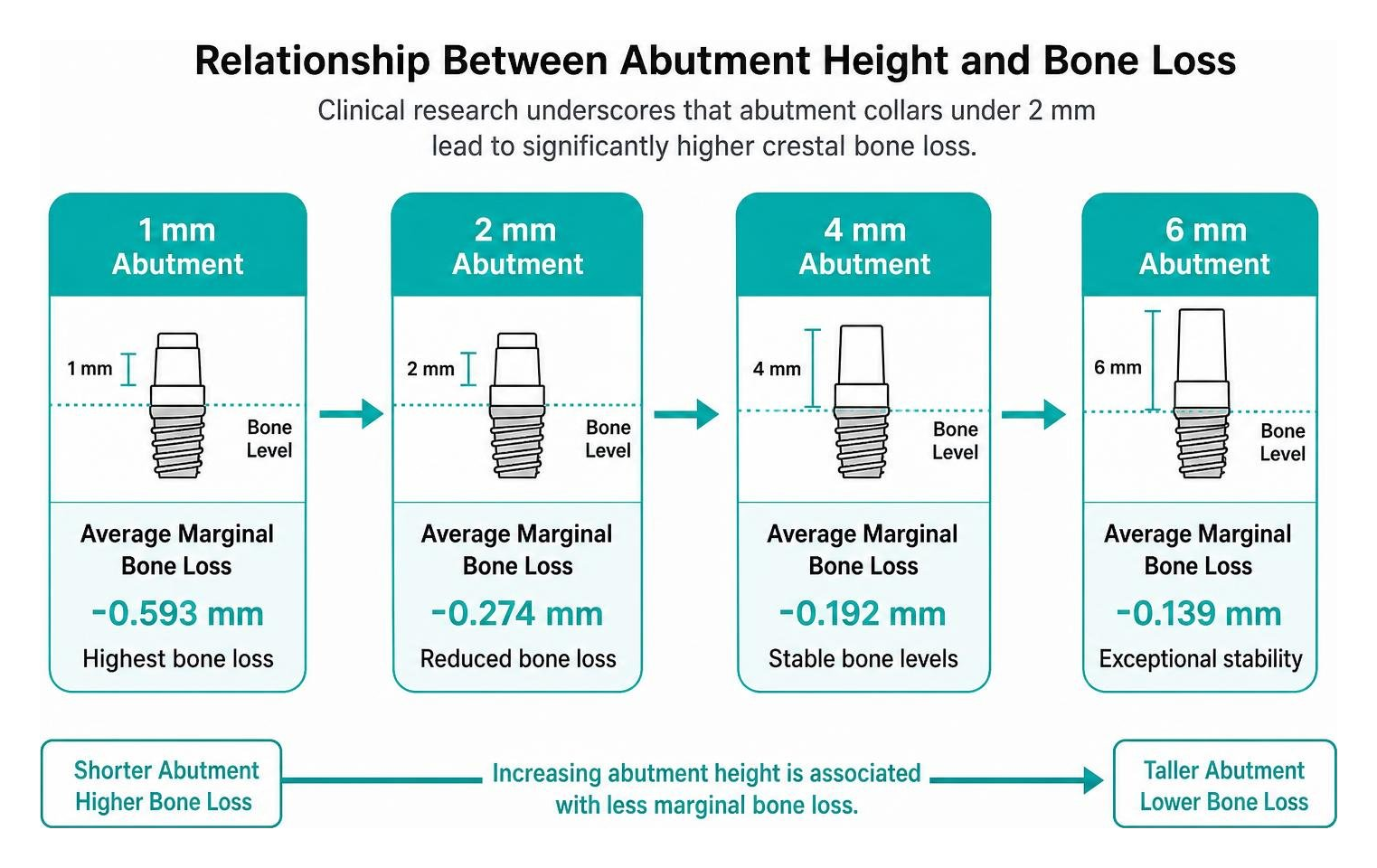
Clinical research underscores that abutment collars under 2 mm lead to significantly higher crestal bone loss (Galindo-Moreno et al., 2023). Specifically:
1 mm Abutments: Resulted in an average marginal bone loss of -0.593 mm.
2 mm Abutments: Reduced bone loss down to -0.274 mm.
4 mm Abutments: Maintained stable bone levels with only -0.192 mm of remodeling.
6 mm Abutments: Exhibited exceptional stability with just -0.139 mm of remodeling.
Taller transmucosal abutments move the prosthetic inflammatory microgap away from the alveolar crest, allowing a healthy biological seal to establish. Balancing these structural nuances is part of evaluating the pros and cons of full mouth dental implants for your situation.
Immediate Temporary Teeth vs Final Fixed Hybrid Dentures
Advancements in digital dentistry have dramatically transformed surgical recovery. When researching immediate-load protocols, it helps to understand the difference between temporary teeth used during healing and the final fixed hybrid denture:
Immediate provisional teeth when clinically appropriate: After implants are placed, a temporary acrylic bridge may be attached so the smile has function and appearance during healing. The patient typically wears this provisional appliance for 3 to 6 months while the implants integrate with the jawbone.
Final fixed hybrid denture: After healing and bite verification, new records are captured and the final acrylic-titanium or zirconia restoration is fabricated and secured. This stage is designed for long-term strength, fit, cleansability, and aesthetics.
Both stages are part of a carefully planned full-arch workflow. Comparing these phases is central to evaluating teeth in a day treatment and understanding when the temporary and final restorations are delivered.
The Hidden Financial and Health Costs of Treatment Delay
Postponing treatment for failing teeth or an unstable bite often carries steep biological and financial penalties. Over a lifetime, the average individual spends upwards of $95,000 on piecemeal dental repairs, root canals, repeat crown replacements, and emergency patching.
Delaying full-arch restoration exposes you to substantial systemic and structural risks:
Accelerated Jawbone Resorption: The jawbone requires mechanical stimulation from tooth roots to maintain density. Within the first 12 months after tooth loss, substantial alveolar width and height melt away, complicating future implant placement.
Cardiovascular and Systemic Strain: Chronic oral bacterial infections and untreated periodontitis are associated with an estimated 34% increased risk of cardiovascular complications due to systemic inflammatory cascades.
Nutritional Decline: Inability to chew fibrous vegetables, lean proteins, and complex carbohydrates leads to gastrointestinal issues and compromised systemic vitality.
Escalating Surgical Costs: Waiting until bone is severely depleted often necessitates more complex planning, such as advanced grafting or sinus augmentation, which can significantly increase final expenses.
Financing and Payment Options for Full-Arch Restorations
A full-arch restoration represents an investment in your daily comfort, health, and confidence. To ensure this life-changing procedure remains accessible to our neighbors throughout Lemont, Palos Heights, Bolingbrook, Romeoville, and Orland Park, structured payment solutions are available.
Most patients utilize third-party healthcare financing to spread the investment into predictable monthly installments. Depending on credit qualifications, terms commonly include:
Monthly Installment Plans: Full-arch restorations often break down into predictable monthly options ranging from $450 to $900 per month for comprehensive rehabilitation.
Credit Approval Benchmarks: Prime financing rates generally require a credit score of 675 or higher, though options exist across a wide spectrum of credit tiers.
Split-Payment Structuring: Combining health savings accounts (HSA), flexible spending accounts (FSA), and structured payment plans helps maximize your budget.
Insurance Coverage Realities and Maximum Annual Benefit Utilization
Traditional dental insurance policies were designed decades ago primarily for basic maintenance rather than complex full-mouth reconstructions. Consequently, most standard plans carry annual maximum benefits capped between $1,000 and $2,000 per year.
While insurance rarely covers the entire cost of a fixed hybrid denture, our administrative team works closely with you to maximize every allowable benefit. Medically necessary tooth extractions, preliminary bone preservation, 3D diagnostic imaging, and select prosthetic codes may qualify for reimbursement under your policy, directly offsetting your out-of-pocket balance.
Frequently Asked Questions About Implant Dentures in Lemont
Can patients with a history of severe periodontitis receive fixed hybrid dentures?
Yes. Clinical studies demonstrate an outstanding 95.3% long-term success rate for implants supporting full-arch bridges in patients with prior severe periodontitis (Galindo-Moreno et al., 2023). The crucial prerequisite is thoroughly treating and resolving active periodontal infection prior to implant surgery and maintaining consistent hygiene cleanings every 3 to 6 months afterward.
How does abutment height influence marginal bone loss around full-arch implants?
Using transmucosal abutments of 2 mm or taller significantly preserves crestal bone. Short 1 mm abutments allow inflammatory microgaps to sit too close to the crestal bone, resulting in more than double the bone loss (-0.593 mm) compared to taller abutments (-0.274 mm for 2 mm collars; -0.139 mm for 6 mm collars) (Galindo-Moreno et al., 2023).
What credit requirements exist for dental implant payment plans?
Most third-party medical and dental lenders look for a credit score of 675 or higher for their lowest-interest promotional programs. However, secondary lending networks provide payment plans across various credit profiles to ensure patients can access needed care.
Conclusion
Restoring your smile with a fixed hybrid denture permanently eliminates the pain, dietary limitations, and self-consciousness of missing or failing teeth. While the upfront investment is substantial, modern dental implant therapy provides a predictable, lifelong solution boasting a national clinical success rate between 95% and 97%.
At Lemont Dental Clinic & Gentle Touch Dentistry, our team provides comprehensive, all-in-one general and restorative care under one roof. By combining experienced clinicians, cutting-edge surgical technology, and clear pricing, we help patients across Lemont, Palos Hills, and surrounding communities achieve lasting oral health.
Schedule a consultation today to explore our advanced dental implant solutions and receive a tailored, transparent treatment plan built around your smile goals.
References
Galindo-Moreno P, Catena A, Lopez-Chaichio L, Borges T, O’Valle F, Torrecillas-Martínez L, Padial-Molina M. “The Influence of History of Severe Periodontitis on Estimated Long-Term Marginal Bone Loss around Implants Restored with Fixed Segmented Full-Arch Rehabilitation..” Journal of clinical medicine, 2023. PMCID PMC10607884.