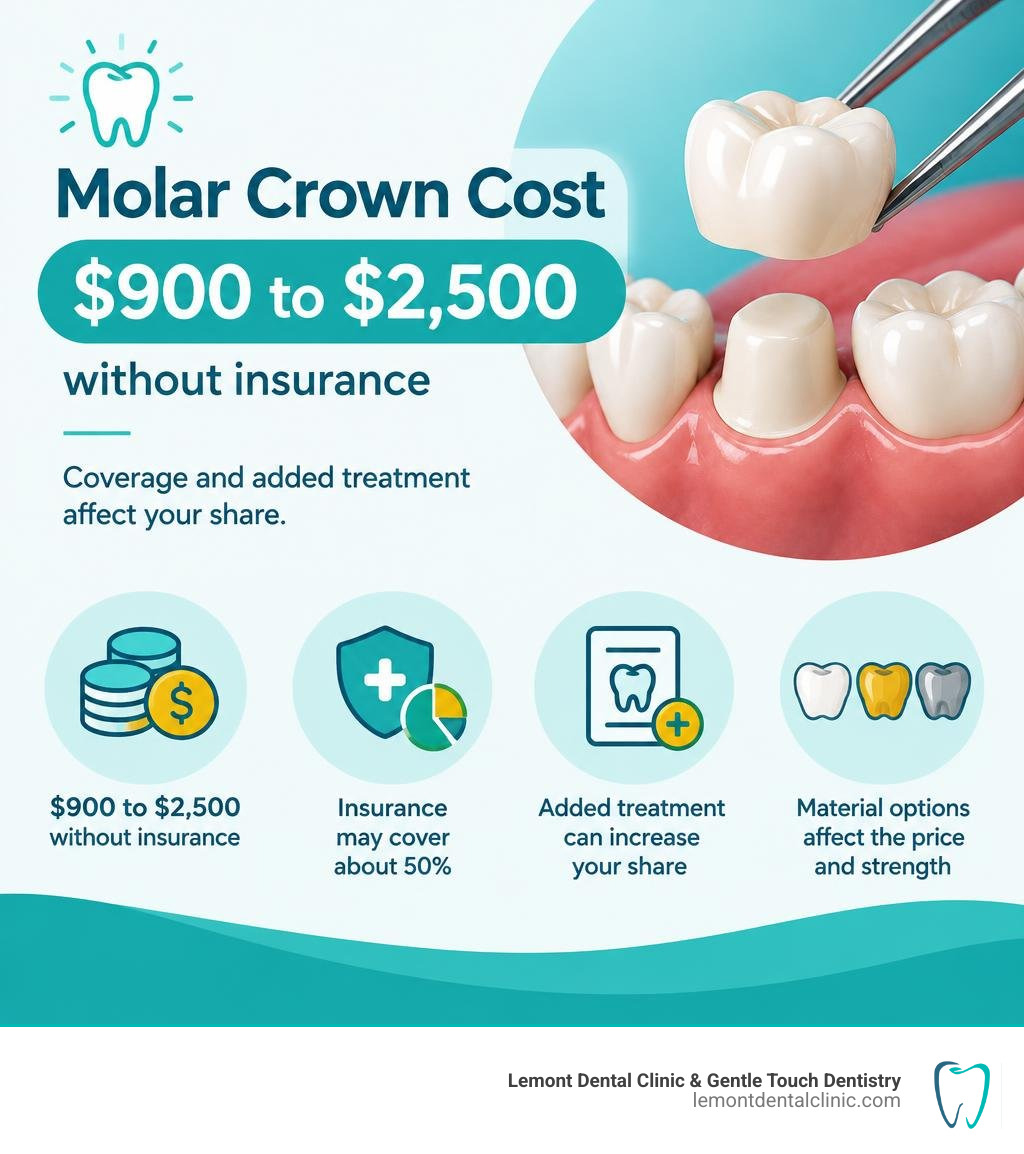
The cost of a molar crown is typically $900 to $2,500 without insurance. If your dental plan covers a medically necessary crown, it may pay about 50% of its allowed cost. Your share could be higher if you have a deductible, have reached your annual benefit limit, or need other treatment first.
The crown material also matters. Zirconia, gold, porcelain-fused-to-metal, and other options have different prices and strengths. A root canal or core buildup can add to the bill. Before treatment, ask for an itemized estimate that shows the crown, any added procedures, and your expected insurance payment.
Average Cost of a Crown Molar: What to Expect in 2026
When evaluating tooth restoration expenses, understanding the general baseline helps you plan your personal budget effectively. Across the United States in 2026, the out-of-pocket price for a single standalone crown on a back tooth generally falls between $800 and $2,500 for uninsured patients. The overall national private average hovers around $1,200 to $1,400 depending on the exact material chosen. If you seek out-of-network care, standard fees frequently range between $1,100 and $2,000 per tooth.
Dental offices bill crowns using specific Current Dental Terminology (CDT) codes. Rather than using a generic label, insurance companies and clinics process treatments using precise codes based on the underlying material:
D2750: Porcelain fused to high noble metal (gold-based PFM)
D2751: Porcelain fused to predominantly base metal
D2790: Full cast high noble metal (full gold crown)
D2791: Full cast predominantly base metal
Having clear clarity on restorative dental services explained ensures you understand which line items are included on your initial billing estimate.
Molar Crown Costs vs. Front Tooth Restorations
A question patients often ask us is whether restoring a back molar costs more or less than fixing a visible front incisor. While fees are frequently comparable, the clinical goals and laboratory demands are completely distinct.
Front teeth demand meticulous artistic layering, custom shade-matching, and translucency to seamlessly match your natural smile. In contrast, molars are the workhorses of your mouth. During mastication, your first and second molars endure intense biting loads exceeding 150 pounds per square inch (psi).
Furthermore, molars present multi-rooted anatomical structures, larger surface areas, and tighter access angles at the back of the mouth. Because of this massive physical pressure, molar restorations require exceptional structural density, fracture toughness, and precise occlusal alignment. At our practice, we craft specialized crowns and bridges tailored to handle these heavy bite forces without compromising comfort.
Regional Cost Variations and State Fee Schedules
Dental fees reflect geographic operating expenses, regional commercial lab rates, and local economic conditions. For instance, high-cost coastal metropolitan areas often bill substantially higher rates than Midwestern communities.
In Illinois, private fees for permanent ceramic and zirconia restorations typically average around $1,522, representing competitive Midwestern pricing relative to urban markets like California or New York where crowns regularly exceed $2,000. Operating across Lemont, Palos Hills, and surrounding communities like Orland Park, Lockport Heights, Romeoville, Bolingbrook, Oak Lawn, and Palos Heights, our focus remains on providing exceptional clinical precision alongside fair, accessible pricing.
Molar Crown Pricing and Durability by Material Type
The material you select directly shapes both the initial procedure fee and the restoration’s total functional lifespan. Because back molars handle the vast majority of chewing stress, material resilience is paramount.
Crown Material
Average Cost (No Insurance)
Expected Lifespan
Fracture Resistance / Strength
Best Suited For
Monolithic Zirconia
$1,000 – $2,500
15 – 25+ Years
Ultra-High (900–1,200 MPa)
Heavy chewers, clenchers, aesthetic back teeth
High-Noble Gold Alloy
$900 – $2,500
20 – 40+ Years
Exceptional (Malleable wear)
Second molars, severe bruxism, minimal tooth prep
Porcelain-Fused-to-Metal (PFM)
$800 – $2,400
10 – 15 Years
High Core / Moderate Surface
Traditional restorations, mid-range budgets
Base Metal Alloy
$800 – $1,800
15 – 20+ Years
Very High
Maximum durability on a tight budget
All-Porcelain / Ceramic (E-Max)
$900 – $2,500
10 – 15 Years
Moderate (360–500 MPa)
Front teeth, premolars (less ideal for 2nd molars)
Comparing the Cost of a Crown Molar Across Different Materials
Every restorative material offers distinct advantages and trade-offs.
Zirconia vs. Gold for Posterior Molars
When restoring back teeth, full-contour monolithic zirconia and cast gold alloys represent the gold standard in modern dentistry.
Monolithic Zirconia ($1,000 – $2,500): Zirconia is a biocompatible, tooth-colored ceramic material that possesses unmatched tensile strength (up to 1,200 MPa). Unlike traditional porcelain, solid zirconia contains no delicate exterior layers that can chip or flake off under extreme pressure. It provides a natural white appearance while surviving aggressive chewing forces. Zirconia is also frequently the top choice for single-tooth implant crowns.
High-Noble Gold ($900 – $2,500): Cast gold alloys boast the longest documented clinical success record in dentistry, with many restorations lasting 30 to 40 years. Gold wears down at a rate nearly identical to natural human enamel, meaning it will not abrade or damage opposing teeth. Furthermore, gold requires the least amount of natural tooth reduction during preparation.
Porcelain-Fused-to-Metal and Base Metal Options
Porcelain-Fused-to-Metal (PFM) ($800 – $2,400): PFM restorations combine a durable interior metal coping with a tooth-colored porcelain shell. While reliable and widely covered by dental benefit plans, the porcelain outer layer can chip over time under heavy molar grinding. Additionally, if the gumline recedes over the years, a thin dark metal collar may become visible near the margin.
Base Metal Alloys ($800 – $1,800): Made from non-precious metals like nickel-chromium or cobalt-chromium, these silver-colored crowns are exceptionally strong and wear-resistant. However, because approximately 10% to 15% of women and 1% to 2% of men experience nickel sensitivities, we carefully review medical and allergy histories before placing non-precious base metals.
Additional Preparatory Treatments That Add to Your Total Bill
A dental crown is rarely placed on a completely pristine tooth. Often, the reason a crown is required in the first place is widespread structural decay, a deep fracture, or internal nerve infection. Preparatory procedures are billed as distinct clinical line items.
Calculating the Combined Cost of a Crown Molar and Root Canal
When deep decay reaches the internal dental pulp, endodontic therapy becomes necessary to remove infected tissue and relieve pain before the tooth can be crowned.
A standalone molar root canal typically costs between $700 and $2,100 without insurance. When paired with a permanent crown ($900 to $2,500), the combined out-of-pocket investment usually ranges from $1,800 to $4,100. If you have active dental insurance covering 50% of major restorative treatments, your out-of-pocket expense for both procedures combined generally lands between $900 and $2,000.
If you suspect you have deep nerve inflammation, we provide gentle root canal treatment designed to alleviate discomfort and preserve your natural tooth roots.
Core Buildup, Posts, and Diagnostic Imaging Expenses
Before a crown can be secured, the damaged tooth needs sufficient physical volume to anchor the restoration.
Comprehensive Exam & Diagnostic X-rays: $75 to $250. Periapical radiographs and 3D imaging allow us to inspect the root tip and surrounding bone health.
Core Buildup (CDT D2950): $200 to $500. Using durable composite resin, we rebuild missing tooth structures so the permanent crown has a solid foundation.
Post and Core: $250 to $650. If minimal natural crown structure remains after a root canal, a small post is gently cemented inside the root canal space to retain the core buildup.
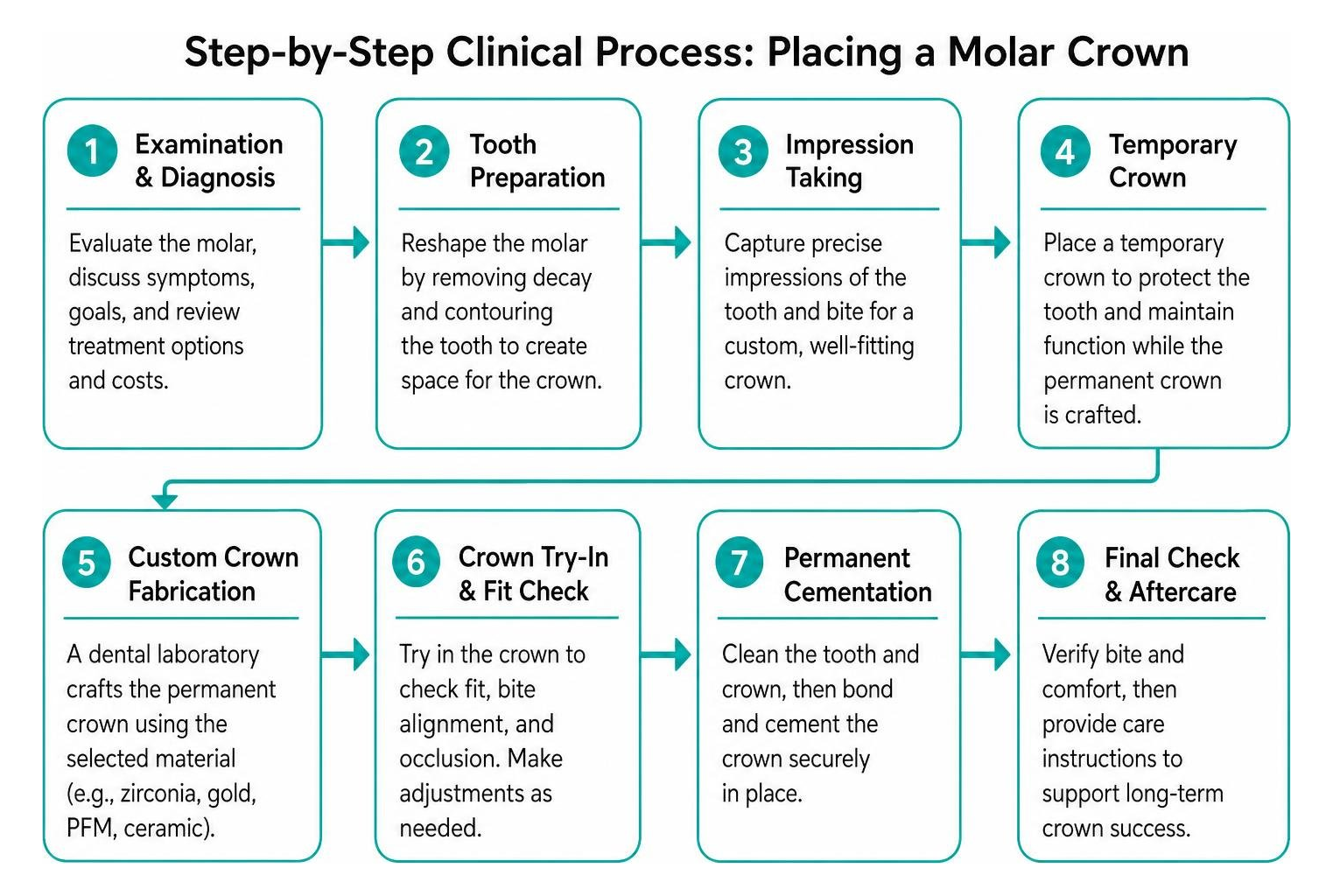
Protective Temporary Crown: $90 to $250 (frequently bundled into the crown fee). Protects your prepared tooth and preserves chewing function during the 2 to 3 weeks while the permanent crown is custom crafted.
Dental Insurance Coverage, Out-of-Pocket Caps, and Payment Options
Navigating insurance paperwork can sometimes feel overwhelming, but understanding standard policy structures helps prevent surprise bills.
Major Restorative Benefits and Waiting Periods
Most comprehensive dental insurance plans categorize crowns as Major Restorative Care.
Standard 50% Coinsurance: Insurance commonly pays 50% of the plan’s allowable fee for medically necessary crowns (such as repairing severe decay, cracked cusps, or root-canal-treated teeth). Cosmetic crowns are generally excluded.
Annual Benefit Maximums: Most dental policies have a strict annual cap between $1,000 and $2,500 per calendar year. Once this limit is reached, you are responsible for any remaining balance.
Waiting Periods & Frequency Limitations: New insurance policies often enforce a 6- to 12-month waiting period before major restorative benefits activate. Furthermore, policies typically enforce a replacement clause limiting crown replacements on the same tooth to once every 5 to 7 years.
Pre-Treatment Estimates: Before starting treatment, we submit a formal pre-determination to your carrier to confirm exact coverage percentages and personal out-of-pocket responsibilities.
Financing and Managing Restorative Dental Expenses
If you are paying out of pocket or have exceeded your annual insurance maximum, several structured financial avenues can help you manage treatment costs comfortably:
HSA & FSA Accounts: Health Savings Accounts and Flexible Spending Accounts allow you to pay for crowns, core buildups, and root canals using pre-tax dollars, saving you an estimated 20% to 35% depending on your tax bracket.
Third-Party Medical Financing: Programs like CareCredit allow you to divide procedure costs into manageable monthly installments, often with promotional interest-free periods for qualifying terms.
In-House Installment Options: We offer transparent, structured dental payment plans to ensure our patients across Lemont, Palos Hills, Hickory Hills, Palos Park, and Chicago Ridge can receive timely care without unmanageable financial strain.
Frequently Asked Questions About Molar Crowns
Is a crown always necessary after a root canal on a molar?
Yes, in almost every clinical scenario. When a molar undergoes a root canal, the blood supply and inner nerve tissue are removed, causing the remaining tooth structure to become brittle over time.
Because back molars absorb relentless forces exceeding 150 psi during meals, an un-crowned molar is highly susceptible to vertical root fractures. A vertical fracture extends down into the root and cannot be repaired, necessitating a complete tooth extraction. Placing a full-coverage crown seals the tooth against bacteria and locks the cusps together, preserving your natural smile.
How long does a molar crown last before needing replacement?
On average, a well-crafted molar crown lasts 10 to 15 years, while high-strength monolithic zirconia can last 15 to 25+ years and gold restorations frequently endure for 30 to 40+ years.
A crown requires replacement if secondary bacterial decay forms along the gumline margin, if the underlying tooth suffers a new fracture, or if severe chronic clenching wears through the restorative material. Practicing diligent daily flossing, brushing with non-abrasive fluoride toothpaste, and wearing a protective nightguard if you grind your teeth will significantly maximize your crown’s longevity.
What is the most budget-conscious crown option for a back molar?
Porcelain-fused-to-metal (PFM) or non-precious base metal alloy crowns are generally the most budget-friendly options upfront, ranging from $800 to $1,800 without insurance.
However, long-term value is just as important as upfront pricing. A monolithic zirconia crown ($1,000 to $2,500) provides superior fracture resistance and longevity, making it far less likely to chip or require premature replacement compared to economy materials.
Conclusion
Protecting a damaged back tooth with a durable crown preserves your natural bite, maintains proper jaw alignment, and prevents costly future extractions. Whether you are weighing monolithic zirconia, gold alloys, or exploring coverage through your dental insurance, understanding the complete treatment plan ensures you make confident, informed decisions for your smile.
At Lemont Dental Clinic & Gentle Touch Dentistry, we take pride in delivering comprehensive general and restorative dentistry for families throughout Lemont, Palos Hills, Orland Park, Bolingbrook, Worth, and neighboring communities. Our team combines state-of-the-art diagnostic technology, gentle clinical techniques, and transparent pricing to provide restorations built to last.
If you have a damaged, aching, or cracked molar, do not wait for the problem to worsen. Explore our teeth restoration price guide or contact our welcoming team today to schedule your comprehensive consultation and receive a clear, personalized treatment estimate!