Why Scaling and Polishing Your Teeth Matters More Than You Think
Scaling polishing teeth is a professional dental cleaning that removes hardened plaque (tartar) and surface stains — something your toothbrush simply cannot do on its own.
Here’s what you need to know at a glance:
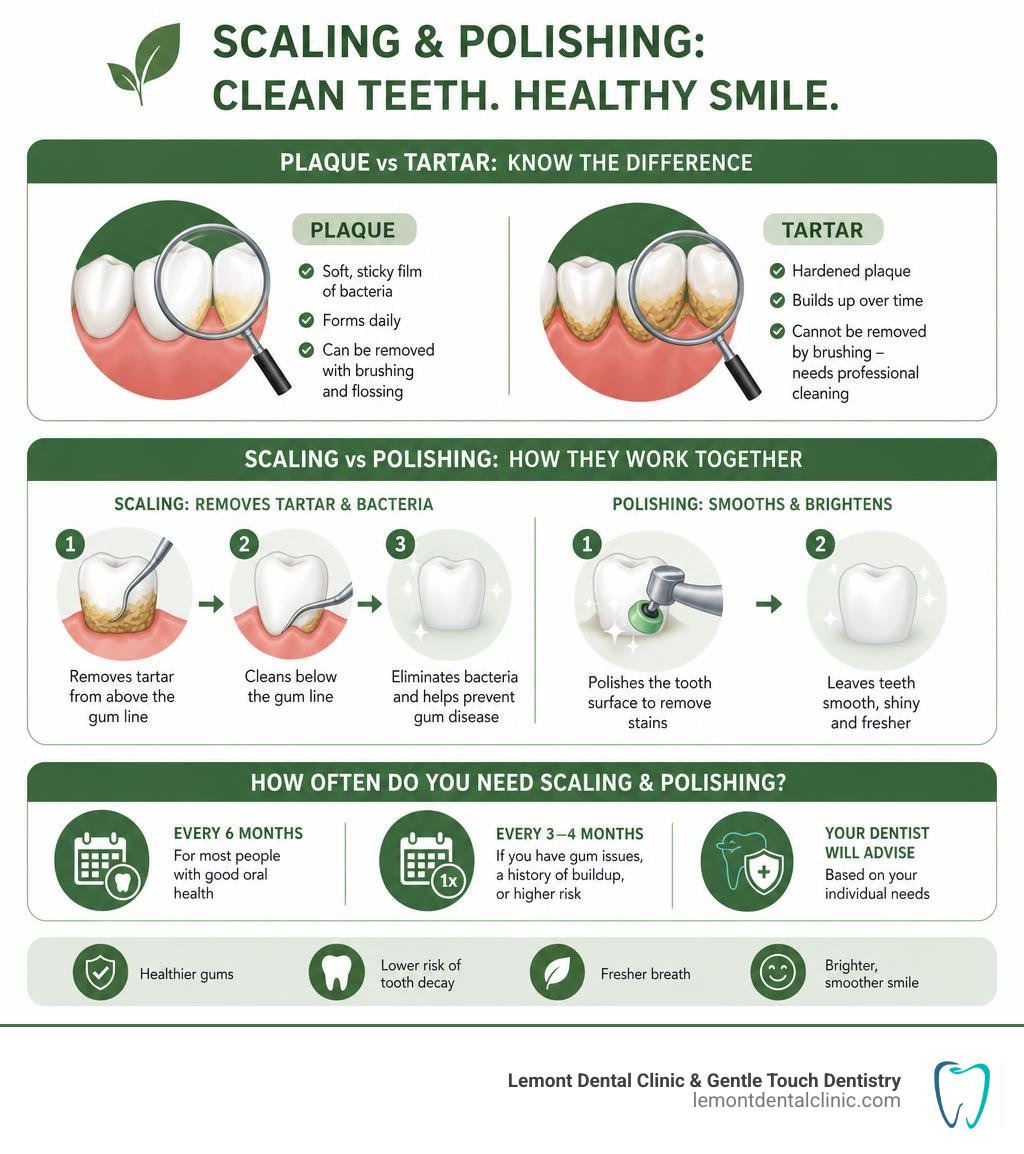
Scaling removes hardened tartar and bacterial buildup from above and below the gum line
Polishing smooths the tooth surface to remove stains and make it harder for plaque to stick
Together, they prevent gum disease, reduce tooth decay risk, and freshen breath
Most people need this done once or twice a year; those with gum disease may need it more often
It is not painful — mild sensitivity is normal, and local anesthetic is available if needed
It is not cosmetic only — regular scaling is linked to lower rates of tooth loss and even reduced heart attack risk
Most people know they should go to the dentist regularly. But many put it off — sometimes for years — because of anxiety, cost concerns, or simply not knowing what to expect.
Here’s the thing: waiting makes it worse. Tartar builds up silently. Gum inflammation follows. And once gum disease sets in, the treatment becomes more involved and more expensive.
The good news? A routine scaling and polishing appointment is straightforward, effective, and well worth it. This guide covers everything — the procedure itself, the benefits, the risks, what it costs, and how to take care of your teeth afterward.
When we talk about maintaining a healthy, vibrant smile, daily brushing and flossing are only half the battle. The other half takes place in the dental chair. A professional hygiene session, clinically referred to as dental prophylaxis, consists of two main stages: scaling and polishing.
At Lemont Dental Clinic & Gentle Touch Dentistry, we view this combination as the ultimate defense system for your mouth. Scaling is the mechanical removal of plaque, calculus (tartar), and bacterial biofilms from the surfaces of your teeth. Polishing follows immediately after, using a specialized paste to buff away superficial stains and leave your enamel glassy and smooth.
While many patients look forward to the clean, fresh feeling and the immediate cosmetic benefits of a brighter smile, the primary purpose of this treatment is preventive. By thoroughly removing the bacterial strongholds that thrive in your mouth, we protect your oral structures from decay and chronic inflammation. If you are looking to book your next routine visit, you can learn more about our comprehensive scale and clean dentist services to see how we keep your smile in peak condition.
The Difference Between Scaling and Polishing
Though they are performed during the same appointment, scaling and polishing serve entirely different clinical functions and utilize distinct techniques:
Scaling: This is the therapeutic phase. It targets both supragingival areas (above the gum line) and subgingival areas (just below the gum line). Using specialized instruments, we chip away at the calcified deposits that have bonded to your teeth.
Polishing: This is the finishing phase. Once the hard deposits are gone, we use a gentle, rotating rubber cup or an advanced air-polishing system to remove residual plaque and surface stains caused by coffee, tea, or food. This step smooths out microscopic rough patches on the enamel.
According to a scientific research study on scaling and polishing techniques, smoothing the enamel is highly functional. Rough surfaces provide the perfect anchor points for new bacteria to latch onto. By polishing the teeth to a high shine, we make it much more difficult for bacterial biofilms to colonize your teeth in the weeks following your visit.
Why Professional Plaque and Tartar Removal is Essential
To understand why you cannot simply brush away all buildup at home, we have to look at the transition from plaque to tartar.
Plaque is a soft, sticky film of bacteria that constantly forms on your teeth. When you brush and floss diligently, you disrupt this biofilm and clear most of it away. However, even the most meticulous brushers will miss tiny spots, particularly near the salivary glands behind the lower front teeth and along the gum line.
Within 24 to 72 hours, the minerals in your saliva mix with the unremoved plaque, causing it to mineralize and harden into calculus (tartar). Once tartar forms, it is chemically bonded to your enamel. It is essentially concrete on your teeth. No toothbrush, dental floss, or mouthwash can budge it. Trying to scrape it off yourself with toothpick-style tools at home can permanently gouge your enamel and lacerate your gums.
If left untreated, this hardened calculus acts as a continuous irritant, triggering a chronic immune response that leads to bleeding, swelling, and eventually bone loss. Seeking professional plaque removal near me is the only safe and effective way to break this cycle and keep your gums firmly attached to your teeth.
The Step-by-Step Scaling and Polishing Procedure
Knowing exactly what happens during your appointment can demystify the process and significantly reduce dental anxiety. Our clinical workflow is optimized for both clinical thoroughness and patient comfort. If you want to dive deeper into what to expect when you walk through our doors, explore our guide on professional teeth cleaning expectations.
Step 1: Dental Examination and Assessment
Before any cleaning instruments touch your teeth, we perform a thorough visual inspection of your entire mouth. We use a small dental mirror to check your teeth and gums for signs of decay, localized inflammation, or structural issues.
During this assessment, we also measure your “pocket depths”—the tiny spaces between the top of your gum line and where the gum tissue attaches to the tooth. Healthy pockets measure between 1 and 3 millimeters. Pockets that measure 4 millimeters or deeper indicate that plaque and tartar have begun to migrate below the gum line, signaling early to moderate gum disease. This step ensures that we tailor our cleaning to your specific oral anatomy. To understand the baseline of these preventive visits, read more about the fundamentals of a professional dental cleaning.
Step 2: Ultrasonic and Manual Scaling
Once the assessment is complete, the scaling process begins. We typically use a combination of two methods:
Ultrasonic Scaling: We start with an ultrasonic scaler. This modern device features a tiny metal tip that vibrates at an incredibly high frequency (between 25,000 and 45,000 times per second). These rapid micro-vibrations literally shatter the hard tartar deposits. Simultaneously, a continuous stream of cooled water washes over the tip. This water spray serves two purposes: it keeps the instrument cool and creates microscopic bubbles that implode (a process called cavitation), which helps destroy bacterial cell walls. You can read more about how this works in our detailed resource on ultrasonic teeth cleaning.
Manual Scaling: After the bulk of the tartar is cleared by the ultrasonic device, we switch to hand instruments known as curettes and scalers. These hand tools allow us to manually feel for any remaining tiny, rough spots of calculus, especially in tight spaces between the teeth and just under the gum line, ensuring a completely clean foundation.
Step 3: Professional Teeth Polishing Techniques
Once your teeth are entirely free of tartar, we move on to polishing. The traditional method involves a slow-speed dental handpiece with a soft rubber cup attached to the end. We fill this cup with “prophy paste”—a specialized, slightly gritty paste available in various flavors and grit levels. We gently press the spinning cup against each tooth surface, buffing away stains and microscopic plaque.
For patients with heavy staining or hard-to-reach areas, we may utilize air polishing, such as the ProphyFlex system. This technique uses a targeted stream of pressurized air, water, and a very fine, non-abrasive powder (often sodium bicarbonate or glycine) to gently blast away stains from deep crevices and around dental work.
A key consideration during this phase is the preservation of your dental restorations. A scientific study on restorative material surface changes demonstrated that repeated scaling and improper polishing can alter the surface roughness of dental materials like lithium disilicate (ceramic), metal alloys, and zirconia. This research highlights why professional care is so vital: our trained hygienists know exactly how to adjust their techniques, pressures, and polishing pastes to protect your crowns, veneers, and fillings while still achieving an immaculate clean.
Clinical Benefits and Risks of Professional Dental Care
While having a bright, smooth smile is an excellent immediate result, the true value of scaling polishing teeth lies in its profound clinical benefits. Regular cleanings do not just protect your mouth; they have a cascading positive effect on your entire body.
Health Benefits of Scaling Polishing Teeth
The mouth is the gateway to the rest of your body. When bacteria run rampant on your teeth, they do not stay localized. They can easily enter your bloodstream through inflamed, bleeding gums. Here is how professional scaling and polishing protects your health:
Gingivitis and Periodontitis Prevention: By removing the bacterial biofilm and tartar that irritate the gums, we halt the progression of gingivitis (reversible gum inflammation) before it develops into periodontitis (irreversible bone loss). Learn more about how we help you manage these conditions with our targeted gum disease cleaning.
Reduced Risk of Tooth Loss: A long-term clinical study found that the incidence of tooth loss was 1.87 times higher in individuals who did not receive regular scaling over a 3-year period compared to those who did.
Cardiovascular Protection: Chronic oral inflammation is closely linked to heart health. A 13-year retrospective health claims cohort study revealed that the incidence of acute myocardial infarction (heart attacks) was 3.5% in the group that did not receive dental scaling, compared to just 1.9% in the group that received regular professional scaling.
Better Diabetes Management: Treating periodontal disease has been shown to help lower systemic inflammation and improve blood sugar control. In the Netherlands, providing intermediate periodontal treatment resulted in a reduction in diabetes-related healthcare expenses of approximately €8.04 per quarter per individual.
Fresher Breath: Chronic bad breath (halitosis) is usually caused by volatile sulfur compounds produced by anaerobic bacteria hiding under tartar and in gum pockets. Scaling removes these bacterial reservoirs at the source.
To explore this body of evidence further, you can read the comprehensive scientific review on adult scaling benefits, which synthesizes the direct clinical and economic advantages of maintaining regular professional cleanings.
Potential Risks of Scaling Polishing Teeth
Like any medical or dental procedure, scaling and polishing carry minor, temporary side effects that you should be aware of:
Transient Tooth Sensitivity: Once we remove a thick layer of tartar, the underlying tooth structure—specifically the root surfaces—is exposed to air, hot, and cold foods for the first time in months. This can cause mild, temporary sensitivity. If you experience this, our guide on teeth sensitivity after cleaning offers practical tips to manage it.
Mild Gum Soreness and Bleeding: If your gums were already inflamed and swollen due to tartar buildup, they will naturally be tender and may bleed slightly during and immediately after the cleaning. This is a normal part of the healing process and typically resolves within a few days as the gum tissue tightens and heals.
Enamel Wear: While modern dental polishing pastes are formulated to be minimally abrasive, excessive or overly aggressive polishing on teeth with severe enamel erosion or exposed dentin should be handled with care. This is why our team customizes the abrasive grit level to match each patient’s specific enamel thickness.
Frequency, Costs, and At-Home Safety Considerations
To help you visualize the differences between professional care and the trending DIY alternatives, we have put together a quick comparison:
Feature
Professional Scaling & Polishing
DIY / At-Home Polishing Kits
Primary Tool
Ultrasonic scalers, hand curettes, professional prophy cups
High (controlled grit, scientifically backed pastes)
Low (highly abrasive materials can permanently wear down enamel)
Systemic Benefits
Proven reduction in tooth loss, heart risks, and inflammation
None
To ensure your teeth stay protected year-round, you can read our complete guide on annual dental cleaning.
How Often and How Much Does the Procedure Cost?
For the vast majority of patients with healthy gums, a professional scale and polish is recommended every six months. However, this interval is not one-size-fits-all. If you have a history of periodontitis or tend to accumulate tartar rapidly, we may recommend a supportive periodontal maintenance schedule every three to four months to keep the bacteria from recolonizing deep pockets. You can find more details on finding the right cadence for your mouth in our guide to regular cleaning frequency.
When it comes to cost, a standard dental exam and professional cleaning without insurance typically ranges between $150 and $300 in most areas of the United States. The total cost is influenced by several variables:
The level of tartar buildup (which dictates whether a routine cleaning or a deeper scaling is required).
Whether diagnostic X-rays are needed.
Your dental insurance coverage. Most dental insurance plans cover preventive cleanings at 80% to 100%, meaning your out-of-pocket cost may be minimal to none.
At Lemont Dental Clinic & Gentle Touch Dentistry, we are committed to providing high-quality, comprehensive general and restorative care at highly competitive prices, ensuring that families across Lemont, Palos Hills, and the surrounding Chicago suburbs can access the care they need without financial stress.
The Dangers of DIY and At-Home Polishing Kits
In the age of social media, it is tempting to try to save a trip to the dentist by purchasing at-home dental scraping tools, charcoal powders, or ultrasonic “plaquewave” devices online. However, dental professionals strongly warn against these DIY methods.
At-home scraping tools are incredibly sharp. Without the proper training, specialized lighting, and indirect dental mirrors, you are highly likely to slip and slash your delicate gum tissue, introducing bacteria directly into your bloodstream and causing localized infections. Furthermore, scrape marks on enamel from metallic home tools create micro-scratches that actually accelerate plaque accumulation.
Similarly, trendy whitening and polishing pastes containing activated charcoal or highly abrasive baking soda mixtures can permanently strip away your enamel. Once enamel is worn down, it cannot regenerate, leaving your softer, yellow dentin exposed and making your teeth permanently sensitive and highly susceptible to decay. To understand how to protect your teeth safely at home without resorting to risky trends, read our advice on protecting your teeth from plaque.
Frequently Asked Questions about Scaling and Polishing
Does scaling and polishing hurt?
For most patients, a routine scaling and polishing session does not hurt. You will feel some physical pressure and vibration, and you will hear the high-pitched whistling or humming of the ultrasonic scaler, but it should not cause sharp pain.
However, if you have highly sensitive teeth, exposed root surfaces, or active gum inflammation (gingivitis), you may experience mild discomfort. If you are feeling anxious about potential discomfort, please let us know! We can easily apply a topical numbing gel or administer a localized anesthetic to ensure your visit is completely comfortable and stress-free. For a deeper look into this common concern, check out our article on dental cleaning pain.
Can I eat and brush normally after the appointment?
Yes, in most cases, you can eat and drink almost immediately after your appointment. However, if your gums are slightly tender or if we applied a professional fluoride treatment during your visit, we may recommend waiting at least 30 minutes to let the fluoride fully absorb.
For the first 24 hours, it is best to avoid extremely hot, cold, crunchy, or highly acidic foods if your teeth feel a bit sensitive. You should definitely continue your normal brushing and flossing routine that night—just be gentle around any gum areas that feel slightly sore. For specific details on post-cleaning meals, read our guide on eating after dental cleaning.
How does scaling differ from deep cleaning?
This is a very common point of confusion. A routine scaling and polishing is a preventive treatment that focuses on the crown of the tooth above the gum line and just slightly beneath it. It is designed for patients with healthy gums or mild gingivitis.
A “deep cleaning,” clinically known as scaling and root planing, is a therapeutic treatment designed for patients with active periodontal disease (gum pockets of 4mm or deeper). It goes much deeper below the gum line to clean the root surfaces of the teeth, smoothing out rough spots on the roots (root planing) so the gums can heal and reattach to the tooth structure. To understand which treatment is right for your smile, explore our comprehensive guide on deep cleaning.
Conclusion
Taking care of your teeth is one of the simplest, most effective ways to invest in your long-term health and self-confidence. Regular scaling polishing teeth keeps your breath fresh, your smile bright, and your body protected against the hidden dangers of chronic oral inflammation.
At Lemont Dental Clinic & Gentle Touch Dentistry, we are proud to provide exceptional, all-in-one general and restorative dental care to patients throughout Lemont, Palos Hills, and surrounding communities like Chicago Ridge, Worth, Palos Park, Hickory Hills, Oak Lawn, Orland Park, Palos Heights, Bolingbrook, Romeoville, Palisades, and Lockport Heights.
By combining the latest dental technology with highly experienced doctors and a warm, patient-first approach, we make maintaining your oral health both comfortable and highly affordable. We do not believe in high-pressure sales pitches—only honest, high-quality clinical care tailored to your unique needs.
Ready to experience the gentle touch difference and get that clean, sparkly smile? Schedule your regular cleaning today and let us help you keep your smile healthy for a lifetime!