Why Gum Disease Cleaning is Essential for Your Oral Health
Gum disease cleaning is a specialized dental procedure that goes deeper than regular teeth cleaning to treat periodontal disease by removing plaque and tartar buildup below the gumline and smoothing tooth roots to help gums reattach.
Quick Answer: What You Need to Know About Gum Disease Cleaning
What it is: A deep cleaning procedure called scaling and root planing that treats gum disease
When you need it: If you have pocket depths of 4mm or greater, bleeding gums, bad breath, or gum recession
How it works: Removes tartar below the gumline (scaling) and smooths tooth roots (root planing)
Duration: Typically 1-2 appointments, 45-60 minutes per session
Pain level: Minimal discomfort with local anesthetic; temporary sensitivity afterward
Maintenance: Every 3-4 months instead of the standard 6-month cleaning schedule
If you’ve noticed your gums bleeding when you brush, or if your dentist has mentioned “pockets” during your checkup, you’re not alone. Approximately 47.2% of adults aged 30 and older in the United States have some form of periodontal disease—and that number jumps to about 60% for adults 65 and older.
The good news? Gum disease is treatable, especially when caught early. Unlike regular dental cleanings that focus on the surfaces above your gumline, gum disease cleaning targets the bacterial colonies hiding in the spaces between your gums and teeth. Left untreated, these bacteria don’t just threaten your teeth—they can spread through your bloodstream and contribute to serious health conditions like heart disease and diabetes complications.
Think of it this way: brushing your teeth at home is like washing your car with a hose. It removes surface dirt, but there’s a thin film of grime that stays behind. Professional cleaning gets rid of that stubborn buildup, but when gum disease has taken hold, you need something more intensive—a treatment that reaches below the surface where regular tools can’t go.
I’m Piotr Dederowski, and at Lemont Dental Clinic & Gentle Touch Dentistry, our team has helped countless patients regain their oral health through effective gum disease cleaning treatments. We understand that dental procedures can feel overwhelming, which is why we focus on making every step comfortable and clear.
Understanding Gum Disease: Gingivitis vs. Periodontitis
To understand why a gum disease cleaning is necessary, we first have to look at the two main stages of the disease. “Periodontal” literally means “around the tooth,” and that is exactly where the trouble starts.
Gingivitis: The Warning Stage
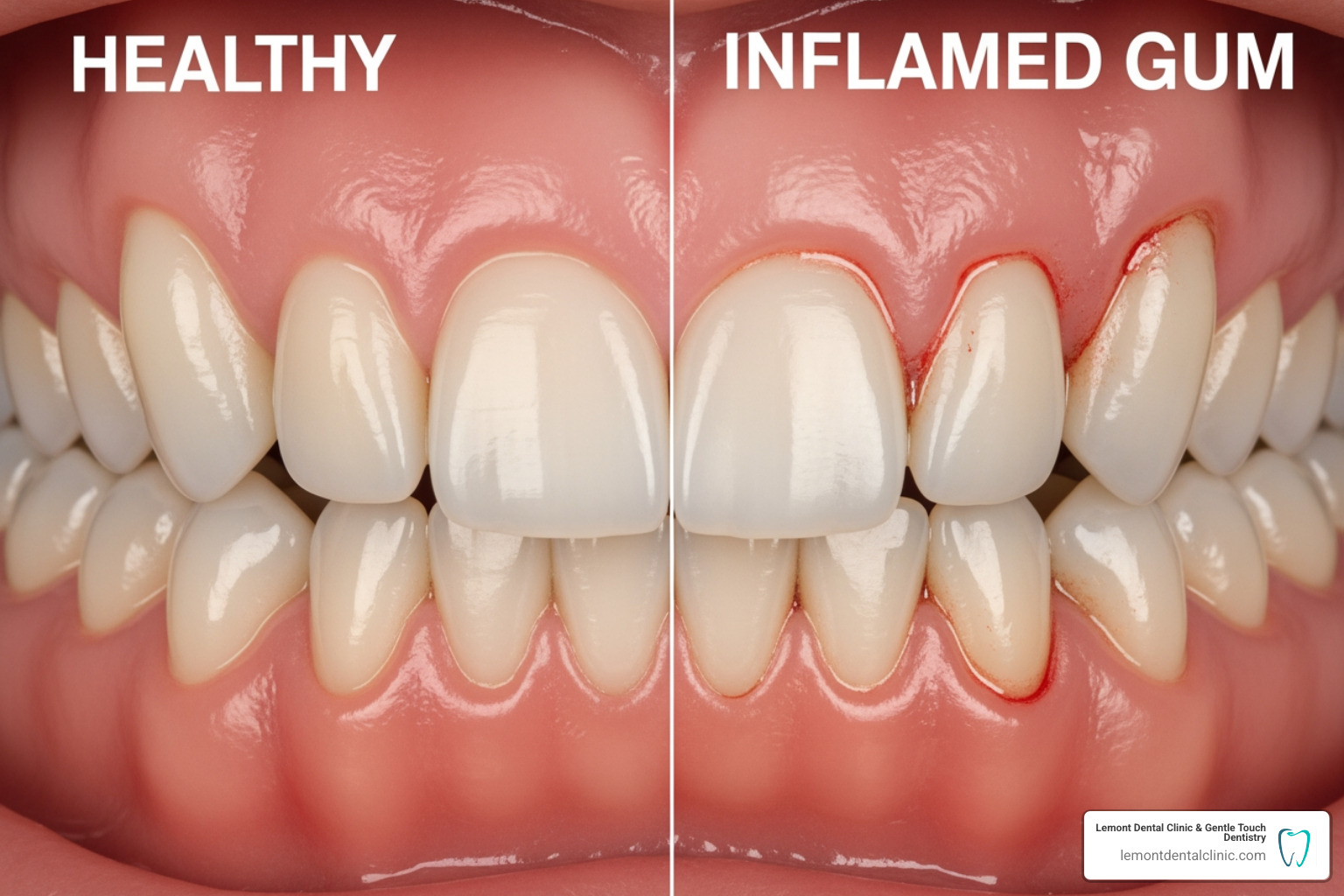
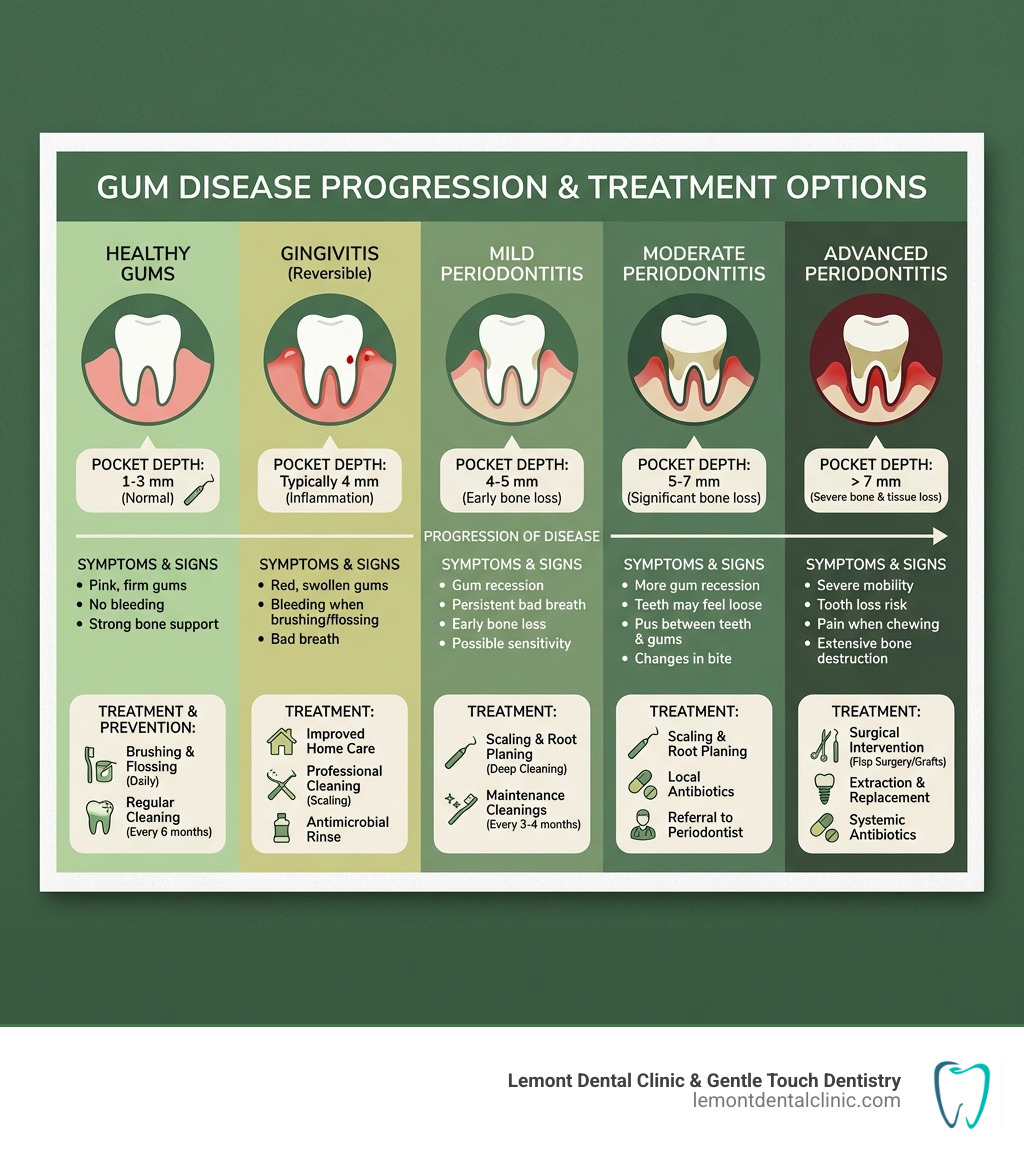
Gingivitis is the earliest stage of gum disease. It is caused by a plaque biofilm—a sticky, bacteria-filled film—that irritates the gum tissue. You might notice your gums are red, swollen, or bleed when you floss. The hallmark of gingivitis is that it only affects the soft tissue; it hasn’t yet attacked the bone. Because of this, it is often reversible with better home care and a Regular Cleaning.
Periodontitis: The Sneaky Enemy
If gingivitis isn’t treated, it progresses into periodontitis. This is where things get serious. The bacterial infection moves deeper, causing the gums to pull away from the teeth and form “pockets.” These pockets become filled with infection and tartar (calculus) that you cannot reach with a toothbrush.
As the CDC notes, periodontitis involves the irreversible loss of the bone that supports your teeth. While we can’t always grow that bone back, a professional gum disease cleaning can halt the destruction and keep you from losing your teeth. For a deeper dive into how this process works, check out our guide on Periodontal Disease: The Sneaky Enemy of Teeth.
When Do You Need a Gum Disease Cleaning?
How do we know if you need a deep cleaning versus a standard one? It all comes down to the numbers. During your exam, we use a tool called a periodontal probe to measure the space between your tooth and gum.
The 4mm Threshold
In a healthy mouth, these “pockets” are typically 1 to 3 millimeters deep. However, if your measurements are 4mm or greater, it indicates that the gum has detached and bacteria are colonizing the root. Once a pocket reaches 4mm, a standard prophylaxis (preventative cleaning) is no longer enough because the tools can’t reach the bottom of that pocket.
Signs you might need a deep cleaning include:
Bleeding gums: Gums shouldn’t bleed when you brush or floss. If they do, they are inflamed.
Receding gumline: Your teeth may look “longer” as the gums pull away.
Halitosis: Persistent bad breath that doesn’t go away with mouthwash is often caused by bacteria deep in the pockets.
Loose teeth: This is a sign of advanced bone loss.
Feature
Regular Prophylaxis
Gum Disease Cleaning (SRP)
Purpose
Prevention for healthy gums
Treatment for active disease
Target Area
Above the gumline
Deep below the gumline
Pocket Depth
1–3 mm
4 mm or deeper
Frequency
Every 6 months
Every 3–4 months (maintenance)
Anesthesia
Usually not required
Local anesthetic recommended
The Deep Cleaning Procedure: Scaling and Root Planing
If we determine you have periodontitis, we will schedule a procedure known as scaling and root planing (SRP). This is the gold standard for non-surgical gum disease cleaning.
Part 1: Scaling
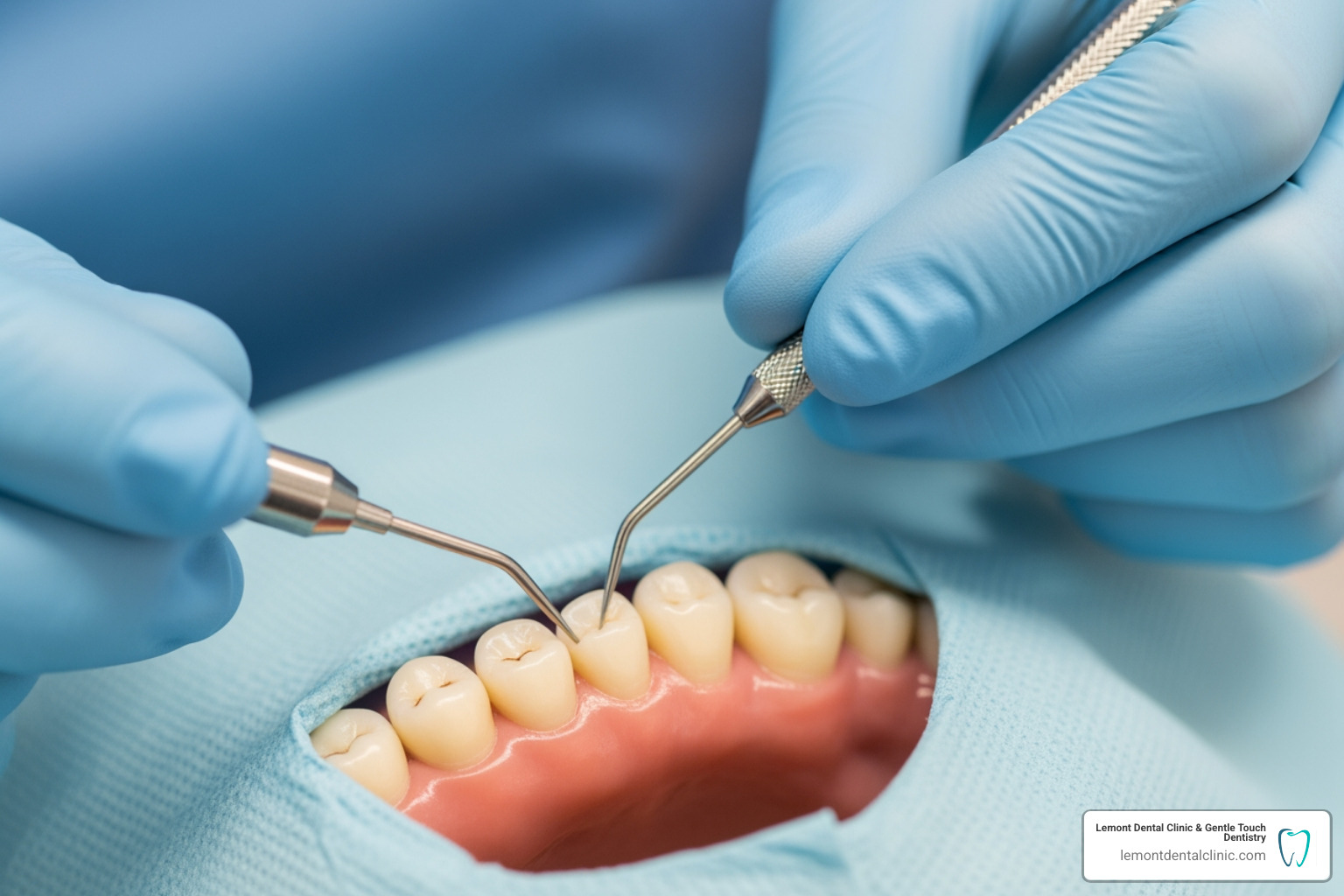
During the scaling phase, we remove the subgingival calculus (tartar). We use ultrasonic scalers—which use vibrations and water to break up large deposits—and manual curettes to meticulously scrape away the plaque and tartar from the crown and down to the very bottom of each pocket.
Part 2: Root Planing
This is the “deep” part of the cleaning. Root planing involves smoothing out the rough spots on the roots of your teeth. Bacteria love to cling to rough surfaces. By smoothing the root, we remove the “hooks” that bacteria use to hang on and create a clean surface that allows your gum tissue to heal and reattach to the tooth. According to the Cleveland Clinic, this reattachment is crucial for shrinking those deep pockets. You can learn more about the specifics on our Deep Cleaning service page.
Is a gum disease cleaning painful?
We get this question a lot! The idea of “scraping” under the gums sounds intimidating, but we prioritize your comfort. We typically use a local anesthetic to numb the area being treated so you won’t feel a thing during the procedure. For patients who feel particularly anxious, we also offer various sedation options to help you relax.
While the procedure itself is comfortable, you might experience some mild soreness or cold sensitivity for a few days afterward. If you’re worried about the sensation, read our breakdown: Does Deep Cleaning Hurt?.
How long does a gum disease cleaning take?
Because this procedure is so thorough, it takes longer than a 30-minute checkup. We usually divide the mouth into quadrants (upper right, lower right, etc.). Depending on the severity, we might treat two quadrants per visit, meaning the entire process takes two appointments. Each session typically lasts 45 to 60 minutes. This allows us to be precise without keeping you in the chair for hours on end. This is a core part of our General Dentistry Services.
Recovery and Aftercare Following Periodontal Treatment
The success of a gum disease cleaning depends heavily on what happens after you leave our office in Lemont or Palos Hills. Your gums will be healing, and they need a little extra TLC.
The First 48 Hours
Manage Soreness: Over-the-counter pain relievers like ibuprofen or acetaminophen are usually all you need for any post-visit discomfort.
Watch Your Diet: Stick to soft foods (yogurt, pasta, eggs) and avoid anything crunchy, spicy, or acidic that might irritate the tender gum tissue.
Gentle Cleaning: Continue to brush, but be very gentle around the treated areas. We may prescribe an antimicrobial mouthwash (like chlorhexidine) to keep the bacteria count low while you heal.
Long-Term Healing
It’s normal for your teeth to feel a bit more sensitive to hot and cold for about a week. Using a desensitizing toothpaste can help significantly. If you’re wondering why your teeth feel different, check out our tips on Teeth Sensitive After Cleaning What Now?.
Long-Term Maintenance and Preventing Recurrence
Once you’ve had a gum disease cleaning, you enter a phase called “Periodontal Maintenance.” Think of this as the “aftercare” for the rest of your life. Periodontitis is a chronic condition; while we can’t “cure” it and make the bone grow back, we can keep it under control.
The 3-4 Month Rule
For patients with a history of gum disease, the standard 6-month cleaning isn’t enough. Bacteria that cause gum disease repopulate quickly. Research shows that frequent cleanings every 3 to 4 months are necessary to disrupt these bacterial colonies before they can cause more bone loss. These Check-ups are vital to monitor your pocket depths and ensure the disease hasn’t returned.
Risk Factors You Can Control
Smoking: Smokers are significantly more likely to have periodontitis (about 62% of current smokers over age 30 have it). Smoking also slows down the healing process.
Diabetes: There is a strong link between gum disease and blood sugar control. In fact, the CDC’s podcast on diabetes and gum disease explains that untreated gum disease can actually make it harder to manage your blood sugar.
The benefits of regular gum disease cleaning
Beyond just saving your teeth, keeping your gums healthy has massive benefits:
Systemic Health: Reducing inflammation in your mouth may lower the risk of heart disease and stroke.
Fresher Breath: By eliminating the deep pockets where “stinky” bacteria hide, you’ll notice a major improvement in your breath.
Aesthetics: Healthy gums are pink and firm, which frames your smile much better than red, receding tissue.
Cost Savings: Maintenance is far less expensive than tooth replacements like implants or bridges.
How much does deep cleaning cost and is it covered by insurance?
The cost of gum disease cleaning is usually calculated per quadrant. While it is more expensive than a regular cleaning because of the time and skill required, most dental insurance plans cover SRP if there is a documented medical necessity (like 4mm+ pockets and bone loss shown on X-rays). Typically, insurance covers about 50% to 80% of the cost. At Lemont Dental Clinic & Gentle Touch Dentistry, we focus on quality and affordability, and we can help you navigate your insurance benefits.
When is surgery needed instead of deep cleaning?
Scaling and root planing is usually the first line of defense. However, if pockets are extremely deep (7mm or more) or if the bone loss is severe, surgery may be required.
Flap Surgery: The gum is lifted back to clean even deeper into the roots.
Bone Grafting: Using natural or synthetic bone to replace what was lost.
Guided Tissue Regeneration: Using a special membrane to encourage bone and tissue to grow back.
You can read more about advanced Gum Disease Treatment options here.
What happens if gum disease is left untreated?
Ignoring the signs of gum disease is a gamble you don’t want to take. Untreated periodontitis leads to:
Painful Abscesses: Infections that can cause facial swelling.
Tooth Loss: Gum disease is the #1 cause of tooth loss in adults.
Jawbone Degradation: As the bone dissolves, your facial structure can actually change.
Systemic Risks: Increased risk of complications with pregnancy, heart disease, and respiratory issues.
Conclusion
At Lemont Dental Clinic & Gentle Touch Dentistry, we believe that a healthy smile starts with healthy gums. Whether you are in Lemont, Palos Hills, or surrounding areas like Oak Lawn or Bolingbrook, our team is here to provide the comprehensive periodontal care you need.
Don’t wait until your teeth are loose to seek help. If you’re experiencing any of the warning signs we’ve discussed, a gum disease cleaning could be the most important step you take for your health this year. From your first consultation to your ongoing maintenance, we offer all-in-one care with the latest technology to keep your smile bright and your gums strong.
Ready to get back on track? Schedule your next Regular Cleaning or consultation with us today and let’s tackle gum disease together.