Your First Question After Leaving the Dentist’s Chair
How long after dental cleaning can I eat is one of the most common questions patients ask as they leave our office. It makes perfect sense—your teeth feel incredibly smooth and clean, but you’re also getting hungry, and you want to know when you can safely enjoy your next meal without undoing all that professional care.
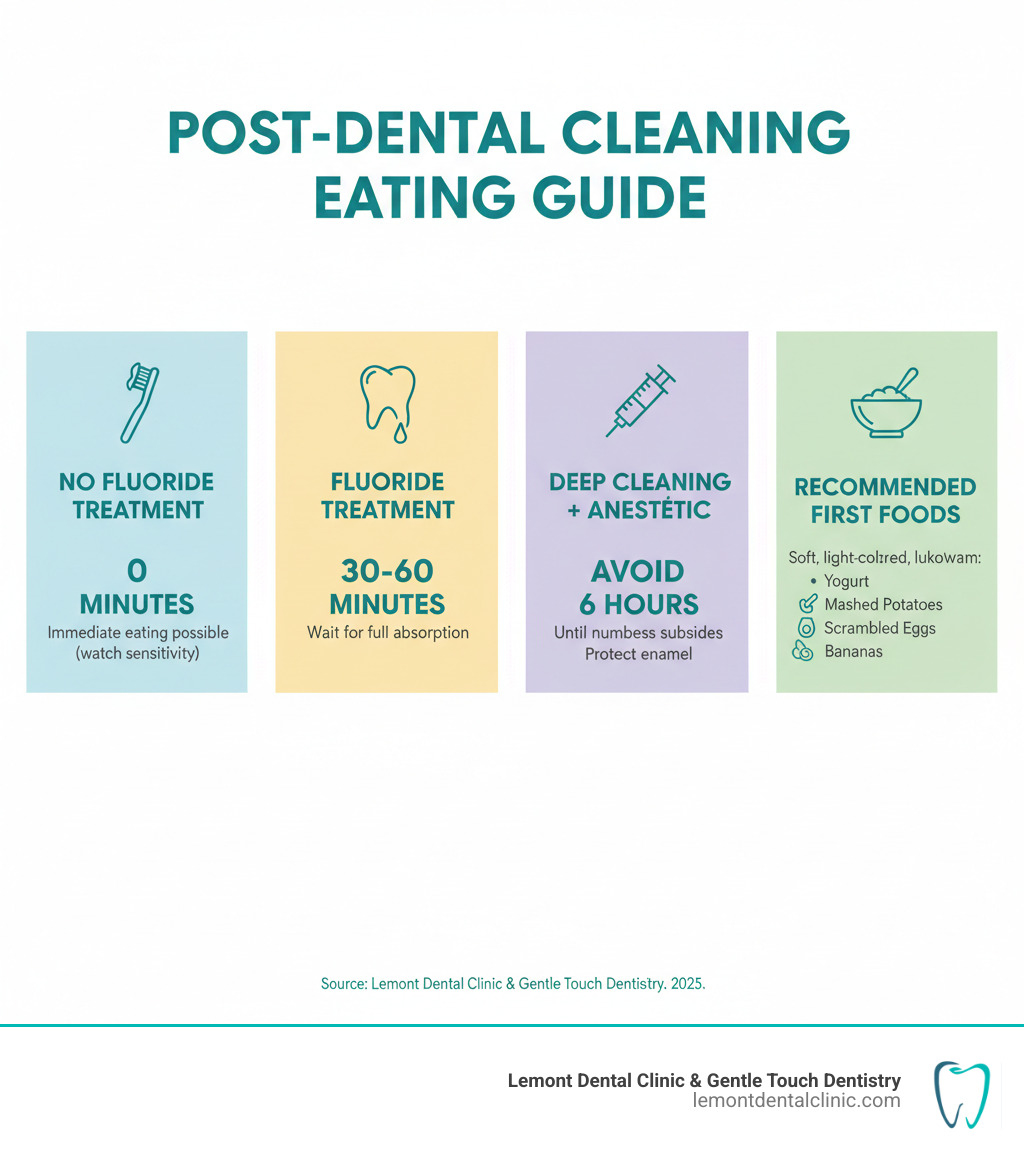
The short answer depends on the type of cleaning you received:
No fluoride treatment or anesthetic? You can eat right away, though your teeth may feel sensitive.
Fluoride treatment applied? Wait at least 30 minutes (ideally up to an hour) before eating or drinking anything except water.
Deep cleaning with local anesthetic? Wait 2-4 hours until the numbness wears off completely.
Avoiding staining foods? Wait 6 hours for coffee, tea, red wine, and other staining foods and drinks.
Your mouth has just received specialized professional care to remove plaque, tartar, and bacteria that brushing at home can’t reach. The immediate period after your cleaning is crucial for protecting those results and ensuring your teeth stay healthy and bright. Eating the wrong foods too soon can cause discomfort, interfere with treatments like fluoride application, or even stain your freshly polished teeth.
I’m Piotr Dederowski from Lemont Dental Clinic & Gentle Touch Dentistry, and I’ve guided thousands of patients through proper post-cleaning care over my years of practice. Understanding how long after dental cleaning can I eat—and what to eat—is essential for protecting your investment in professional dental care.
The Golden Rule: How Long After Dental Cleaning Can I Eat?
The answer to how long after dental cleaning can I eat isn’t one-size-fits-all—it depends entirely on what happened during your appointment. Think of it like baking: some recipes need to cool completely, while others are ready to enjoy right away.
The type of cleaning you received makes all the difference. A quick polish without any extras? You’re good to go almost immediately. But if we applied fluoride or used local anesthetic, you’ll need to exercise a bit more patience. Most patients find they need to wait anywhere from zero minutes to several hours, depending on their specific treatment.
Let me walk you through each scenario so you know exactly what to expect.
For a Standard Cleaning (Prophylaxis)
If you came in for a routine cleaning—what we call a prophylaxis in dental speak—and we didn’t apply fluoride or use any anesthetic, you can technically eat right away. Your teeth are now beautifully smooth and clean, with all that stubborn plaque and tartar gone.
That said, your teeth might feel a bit sensitive, especially if we had to work on some particularly stubborn buildup. It’s completely normal, but it might make that first bite feel a little uncomfortable. If your teeth are feeling tender, give yourself a little break before diving into your meal. There’s no harm in waiting 15 or 20 minutes for things to settle down.
Think of it as letting your mouth recover from its professional spa treatment. Want to know more about what happens during these appointments? Check out our page on regular cleaning for all the details.
With a Fluoride Treatment
Now, if we applied a fluoride treatment during your visit, the timeline changes. Fluoride is like a protective shield for your teeth—it strengthens your enamel, helps repair weak spots, and fights off early decay. But here’s the catch: it needs time to do its job properly.
We recommend waiting at least 30 minutes to an hour before eating or drinking anything except water. I know it sounds like a long time when you’re hungry, but eating too soon can wash away the fluoride before it has a chance to fully bond with your teeth. You’d essentially be rinsing away all those protective benefits we just carefully applied.
Think of it this way: if you were painting a fence, you wouldn’t lean against it while the paint was still wet, right? Same principle here. A little patience now means much stronger, healthier teeth later. The Canadian Dental Association explains the benefits of fluoride varnish and why this waiting period matters so much.
After a Deep Cleaning (Scaling & Root Planing)
Deep cleanings are a different beast altogether. When we’re treating gum disease with scaling and root planing, we work below the gum line, which means we need to use local anesthetic to keep you comfortable. And that changes everything about when you can eat.
You’ll need to wait a full 2 to 4 hours until the numbness completely wears off. I can’t stress this enough: eating while your mouth is still numb is asking for trouble. You could easily bite your cheek, tongue, or lip without even realizing it until the feeling comes back. Trust me, that’s not a fun surprise.
Beyond the numbness issue, your gums are going to be more sensitive after a deep cleaning. They’ve just been through an intensive treatment, and they need time to heal. Even after the anesthetic wears off, stick with very soft, gentle foods for the next few days to give your gums the best chance to recover comfortably.
Wondering what the procedure feels like? Our page on does deep cleaning hurt walks you through what to expect.
Here’s how regular cleanings and deep cleanings compare when it comes to aftercare:
Feature
Regular Cleaning (Prophylaxis)
Deep Cleaning (Scaling & Root Planing)
Wait Time
0-30 minutes (if no fluoride)
2-4 hours (until numbness wears off)
Food Texture
Generally normal, but gentle if sensitive
Soft foods only for several days
Sensitivity
Mild, temporary
Moderate to significant, for several days
The bottom line? The answer to how long after dental cleaning can I eat depends on your specific treatment. When in doubt, ask us before you leave the office—we’re always happy to give you personalized guidance based on exactly what we did during your appointment.
Why Waiting Is Crucial for Your Oral Health
You’ve just invested in a sparkling, healthy smile, and we want to help you keep it that way! So, while you might be wondering how long after dental cleaning can I eat because your tummy is rumbling, those few extra minutes or hours of patience really make a world of difference. Waiting isn’t just about avoiding immediate discomfort; it’s a crucial step in protecting the fantastic results of your cleaning, maximizing the benefits of any special treatments, and ensuring your long-term oral health. Eating too soon can interfere with the benefits, cause irritation, or even stain your freshly polished teeth.
Let Gums Settle and Prevent Sensitivity
Think of your gums like they’ve just had a thorough spring cleaning themselves! During your dental cleaning here at Lemont Dental Clinic & Gentle Touch Dentistry, we carefully remove all that stubborn plaque and tartar that builds up on your teeth and just beneath your gum line. While this is absolutely essential for keeping your mouth healthy, it’s completely normal for your gums to feel a little sensitive or even a touch irritated afterward.
Sometimes, areas of your teeth that were hidden by plaque might now be exposed, which can lead to a temporary feeling of sensitivity – especially to hot or cold. Giving your gums just a little bit of time to settle down before you introduce food helps prevent discomfort and lets them recover peacefully. It’s a bit like letting a small cut heal before you rub it. If you ever find your teeth feeling extra sensitive after a cleaning, don’t worry – it’s usually temporary, and our article on Teeth Sensitive After Cleaning: What Now? offers some helpful insights.
Avoid Staining Your Freshly Polished Teeth
Now, let’s talk about keeping that beautiful new sparkle! This is a really important one, especially if you enjoy things like coffee, tea, or a glass of red wine. Right after your professional cleaning, your tooth enamel is actually a little more porous than usual. We’ve removed the protective pellicle – a natural, thin film that forms on your teeth – along with the plaque and tartar. While this amazing film quickly reforms, there’s a short window where your teeth are like tiny sponges, much more eager to soak up colors and stains from what you eat and drink.
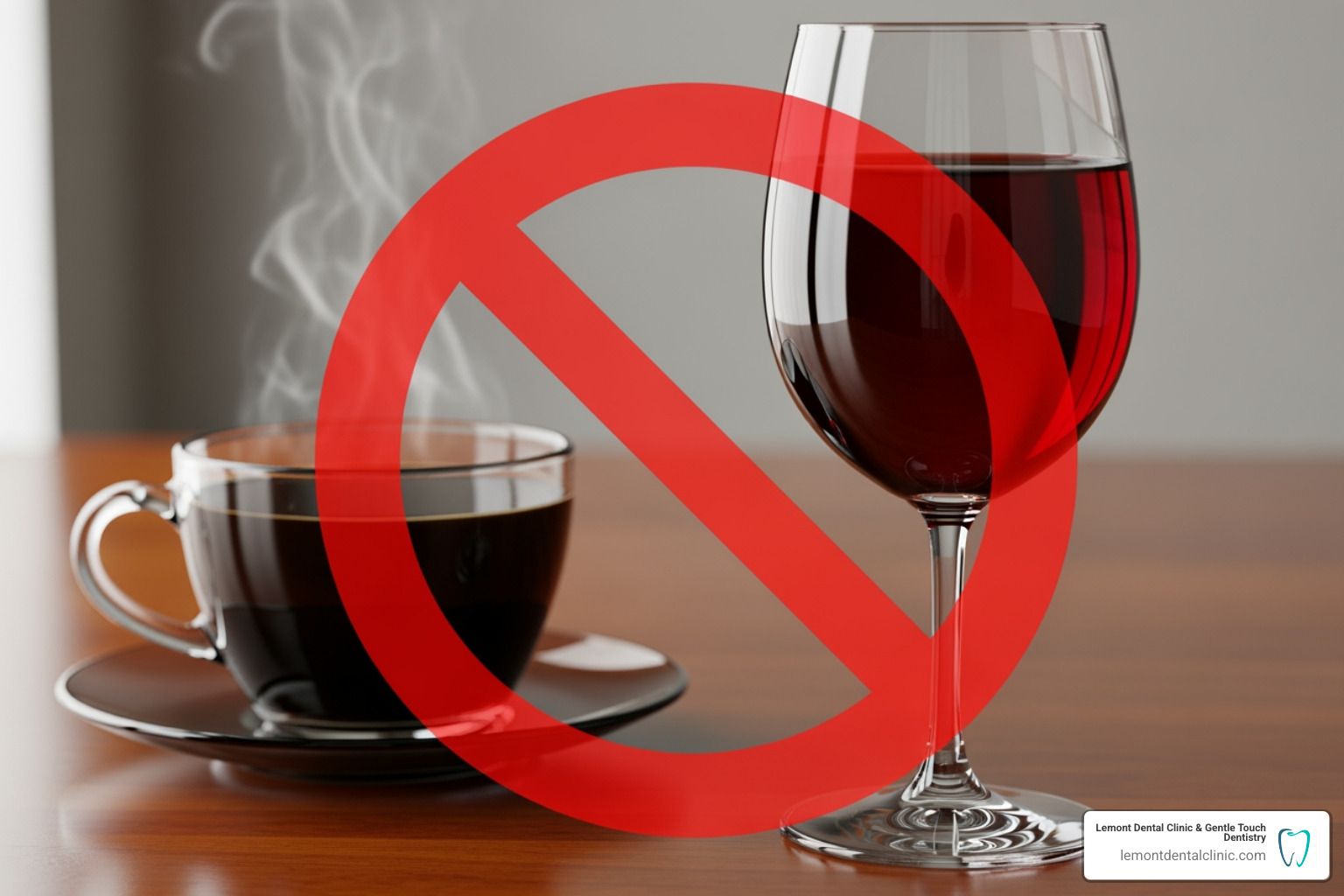
That’s precisely why we strongly recommend hitting pause on highly staining foods and beverages for at least 6 hours after your cleaning. This gives your enamel enough time to stabilize and become less receptive to discoloration, helping your bright, clean smile last much, much longer. It’s all about protecting your investment!
So, what are the main culprits to steer clear of during this “staining window”? Definitely put a hold on that morning coffee or afternoon tea. Red wine is also a big one, being both dark and acidic. You’ll also want to avoid deeply colored foods like dark berries (think blueberries or blackberries), vibrant tomato sauce, and spices like curry or paprika that can leave a strong mark. Even some sodas and sports drinks can be problematic due to their acidity and artificial colors. A little patience now means a brighter smile for longer!
Your Post-Cleaning Menu: What to Eat and What to Avoid
Alright, the waiting time is finally over, and that post-cleaning hunger is probably hitting hard! So, the big question has shifted from how long after dental cleaning can I eat to “what should I eat?” The goal now is to pick foods that are super kind to your freshly cleaned teeth and gums. We want to avoid anything that might mess with your treatment, cause discomfort, or undo that sparkling clean feeling. Don’t worry, we’ve got you covered with our “green light” and “red light” food lists.
“Green Light” Foods: Safe and Soothing Options
These are the foods your mouth will thank you for right after a dental cleaning. They’re typically soft, light-colored, and not acidic, which means they’re gentle on any sensitive areas and less likely to stain your bright new smile.
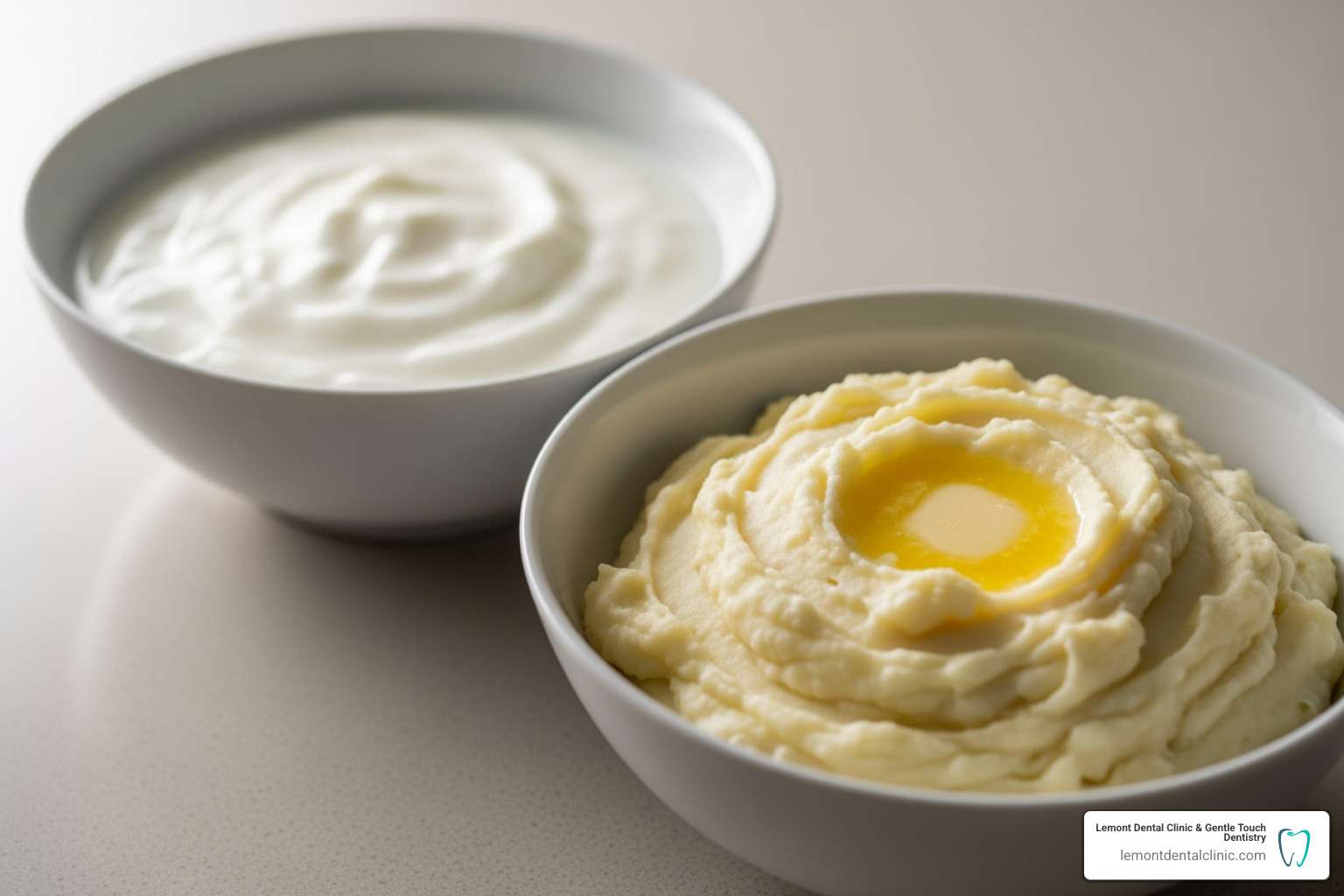
Think of comforting, creamy options like yogurt (plain or vanilla is great!) or delicious mashed potatoes. If you’re craving something cool and nutritious, a smoothie can be perfect – just try to keep it light-colored and avoid super acidic fruits if you’re worried about staining. For a hearty, gentle meal, scrambled eggs are an excellent choice, packed with protein.
Warm, soothing options like a lukewarm soup (broth-based or pureed vegetable is ideal, but make sure it’s not piping hot!) can feel wonderful. And for easy-to-eat snacks, grab a banana or some applesauce. You can also enjoy soft pasta or noodles with a mild, light-colored sauce (definitely skip the tomato sauce for now!) or a bowl of cottage cheese. Even steamed vegetables that are well-cooked until soft make a great addition to your post-cleaning menu.
“Red Light” Foods: What to Avoid and for How Long After a Dental Cleaning Can I Eat Them?
Just as important as knowing what to eat is knowing what to steer clear of. These foods can cause irritation, discomfort, or even undo the great work we just did! The time you need to avoid them can vary, depending on how sensitive your mouth feels and what type of cleaning you had.
First up are crunchy foods like chips, nuts, popcorn, or hard bread crusts. These can really irritate sensitive gums, get annoyingly stuck in newly cleaned areas, or even potentially dislodge any temporary fillings. We recommend giving these a miss for at least 24 hours, and even longer if your gums feel extra tender, especially after a deep cleaning.
Next, let’s talk about sticky foods. Think candy, caramel, or even chewing gum. These love to cling to your teeth, making them harder to clean and potentially pulling on sensitive spots. They’re also not great for preventing new plaque buildup. Best to avoid these for at least 24 hours, or even longer if you can.
Then there are acidic foods and drinks. This includes things like citrus fruits (oranges, lemons), tomatoes, pickles, and sodas. Acids can be tough on your enamel and cause discomfort to sensitive teeth, especially right after a cleaning when your enamel might be a bit more porous. Try to limit these for at least 48 hours.
Got a craving for something spicy? You might want to hold off. Spicy foods can irritate tender gums and other oral tissues. Give your mouth a break from the heat for at least 48 hours.
Your teeth might also be more sensitive to temperature changes right after a cleaning. So, avoid extremely hot or cold foods and drinks – no piping hot coffee or ice-cold beverages for at least 48 hours to prevent any sharp pains or discomfort.
And finally, remember those staining foods and drinks we talked about earlier? This is your reminder to keep avoiding things like coffee, tea, red wine, dark berries, tomato sauce, and other dark-colored items for at least 6 hours to protect your freshly polished smile from stains.
Beyond Food: Other Important Aftercare Rules
Taking care of your teeth after a professional cleaning goes beyond just watching what you eat. While we’ve covered how long after dental cleaning can I eat various foods, there are other habits and choices that can significantly impact your results. Think of your aftercare routine as a complete package—what you drink, whether you smoke, and how you care for your mouth all work together to maintain that fresh, clean feeling and protect your investment in professional dental care.
What About Drinks? How Long After a Dental Cleaning Can I Eat or Drink Normally?
Here’s some good news: you can drink water immediately after your cleaning, and we actually encourage it! Water is the perfect post-cleaning beverage because it helps rinse away any lingering debris, keeps your mouth hydrated, and won’t interfere with treatments or stain your teeth.
But when it comes to other beverages, the same principles that apply to food also apply here. Sugary drinks like sodas, fruit juices, and sports drinks feed the bacteria in your mouth and contribute to plaque formation—essentially undoing some of the hard work we just did. We recommend avoiding them for at least 6 hours after your cleaning, though limiting them in general is always a smart choice for your oral health.
Acidic beverages such as lemonade, orange juice, and even some sparkling waters can irritate freshly cleaned teeth and temporarily soften your enamel. Give your mouth at least 48 hours to recover before enjoying these drinks again.
Alcohol deserves special mention because it can dry out your mouth and may slow down gum healing, particularly if you’ve had a deep cleaning. We suggest waiting at least 2 days before having alcoholic beverages to give your gums the best chance to recover properly.
And then there’s the big one for many people: hot coffee and tea. These beverages present a double challenge after a cleaning. First, they’re among the most notorious staining culprits, and your enamel is especially vulnerable to discoloration for about 6 hours after we’ve polished your teeth. Second, their high temperature can trigger sensitivity in teeth that are already feeling a bit tender. If you’re experiencing temperature sensitivity, we recommend avoiding hot beverages for 48 hours. If you absolutely must have your coffee fix, opt for a lighter-colored brew, let it cool to lukewarm, and drink it relatively quickly rather than sipping it over an extended period.
Smoking and Tobacco Use
I know this isn’t what smokers want to hear, but the period after a dental cleaning is especially important for avoiding tobacco products. Your freshly cleaned teeth are at their most vulnerable to staining during those first few hours. The protective pellicle we mentioned earlier hasn’t fully reformed yet, and your enamel is more porous than usual. Tobacco is one of the most aggressive staining agents out there, so smoking during this window can quickly compromise the bright results of your cleaning. At a minimum, wait at least 6 hours before smoking.
But the staining issue is actually the lesser concern here. Smoking and using tobacco products significantly interfere with your gums’ ability to heal. These products reduce blood flow to your gum tissue, introduce harmful chemicals into your mouth, and create an environment where bacteria thrive. This delays healing after any dental procedure and dramatically increases your risk of developing gum disease or experiencing complications from existing gum issues.
After a deep cleaning especially, when your gums need time to heal and reattach to your teeth, tobacco use can seriously compromise your results. For the best possible outcome and long-term oral health, avoiding tobacco altogether is the ideal path forward. If you’re interested in quitting, we’re here to support you and can provide resources to help.
Frequently Asked Questions
We know you might have more questions after your visit, and that’s perfectly normal! We’re always here to provide clear, helpful answers to keep your smile healthy and bright. Here are some of the common inquiries we receive after a dental cleaning.
Can I brush my teeth right after eating post-cleaning?
It’s a great question, and the answer is usually no, not right away. We generally recommend waiting at least 30 minutes to an hour after eating before brushing your teeth, even on a normal day. Here’s why: when you eat, especially acidic foods or drinks, they can temporarily soften your tooth enamel. Brushing immediately after can, believe it or not, cause tiny bits of erosion.
After a cleaning, your teeth and gums might be a little more sensitive than usual. So, giving your mouth a bit of time to recover and for your enamel to re-harden before brushing is even more beneficial. When you do brush, always use a soft-bristle toothbrush and a fluoride toothpaste, and remember to be extra gentle around any areas that feel a bit tender.
Why do my teeth feel sensitive after a cleaning?
It’s quite common for teeth to feel a bit sensitive after a cleaning, and it’s nothing to worry about! Think of it like this: during your cleaning, we’ve done a fantastic job of removing all that built-up plaque and tartar. This buildup can act like an insulating layer. Once it’s gone, areas of your tooth roots or enamel that were previously covered are now exposed to the oral environment.
This temporary exposure can lead to increased sensitivity to things like hot or cold temperatures, or even just a breath of cool air. Rest assured, this sensitivity is usually temporary and tends to resolve within just a few days as your gums settle and your teeth adjust. If you’re experiencing discomfort, our article on Does Teeth Cleaning Hurt? can offer more context and reassurance. Of course, if the sensitivity persists or becomes severe, please don’t hesitate to reach out to us!
How often should I get my teeth cleaned?
For most people, the general recommendation for professional dental cleanings is twice a year, or every six months. This regular schedule allows us to keep a close eye on your oral health, removing plaque and tartar before they can cause serious problems like cavities or gum disease. Regular cleanings are a fantastic preventive measure, helping us catch any potential oral health issues early on, when they are typically much easier and less invasive to treat.
However, this is a general guideline. Your individual oral health needs might mean we recommend a different schedule. For example, if you have a history of gum disease, frequent cavities, or certain medical conditions, we might suggest more frequent visits to keep everything in tip-top shape. We truly believe that consistent professional care is a cornerstone of a healthy, beautiful smile. It’s a bit disheartening to know that about 36% of Americans don’t even see their dentist every year, which makes those regular check-ups even more vital. To learn more about the importance of routine check-ups and how they contribute to your overall well-being, please visit our More info about Check-ups page.
Conclusion: Keep Your Smile Bright and Healthy
You’ve just given your smile the gift of a professional cleaning, and now it’s time to protect that beautiful, refreshed feeling! Navigating the period right after your dental visit, especially understanding how long after dental cleaning can I eat, is a simple but incredibly vital step in maintaining your oral health. Whether your visit was for a routine polish or a more comprehensive deep cleaning, a little patience and mindful eating choices can go a long way in protecting your freshly cleaned teeth and ensuring the long-lasting benefits of your treatment.
So, you’ve invested in your smile’s health, and now it’s time to protect that investment! Understanding when and what to eat afterwards truly makes a difference. Remember these friendly guidelines:
If you had a standard cleaning without fluoride or anesthetic, you’re generally good to go right away, though listening to any sensitivity your mouth might have is always wise. For those who received a fluoride treatment, a little patience goes a long way – give it at least 30 minutes, or even up to an hour, to fully work its magic and strengthen your enamel. And if your visit included a more involved deep cleaning with anesthetic, your mouth needs to wake up fully; wait 2-4 hours until all numbness has completely faded to avoid any accidental bites. Finally, to truly keep that sparkle, shield your smile from staining foods and drinks for at least 6 hours – this is crucial for preventing those fresh pearly whites from picking up unwanted colors.
When it comes to what to put on your plate, think soft, non-acidic, and lukewarm – these are your smile’s best friends right after a cleaning. On the flip side, steer clear of anything crunchy, sticky, acidic, spicy, or extremely hot or cold for a while. And, of course, giving all tobacco products a wide berth is always a good idea, especially now, as they can hinder healing and cause significant staining.
By following these simple guidelines, you’re not just avoiding temporary discomfort; you’re actively contributing to the long-term health and dazzling beauty of your smile. We at Lemont Dental Clinic & Gentle Touch Dentistry are dedicated to providing high-quality, comprehensive general and restorative dental care here in Lemont and Palos Hills, IL. We combine experienced doctors, the latest technology, and competitive prices to offer all-in-one care focused on quality and affordability for our patients across Lemont, Palos Hills, Chicago Ridge, Worth, Palos Park, Hickory Hills, Oak Lawn, Orland Park, Palos Heights, Bolingbrook, Romeoville, Palisades, and Lockport Heights, IL. We truly believe that proper aftercare is an extension of the excellent service we provide, helping you maintain that confident, healthy smile for years to come.
Ready to maintain your oral health with a professional cleaning? We’re here to help! Schedule your next Regular Cleaning with us today! We look forward to helping you keep that smile bright and healthy. Explore all Our Services to see how we can care for your entire family’s dental needs.