Why Regular Dental Cleanings Matter for Your Oral Health
Annual dental cleaning is a professional procedure where your dentist or dental hygienist removes plaque, tartar, and bacteria from your teeth and gums to prevent decay and disease. Here’s what you need to know:
Most dentists recommend cleanings every six months, not annually, though some patients may need more or less frequent visits based on their oral health
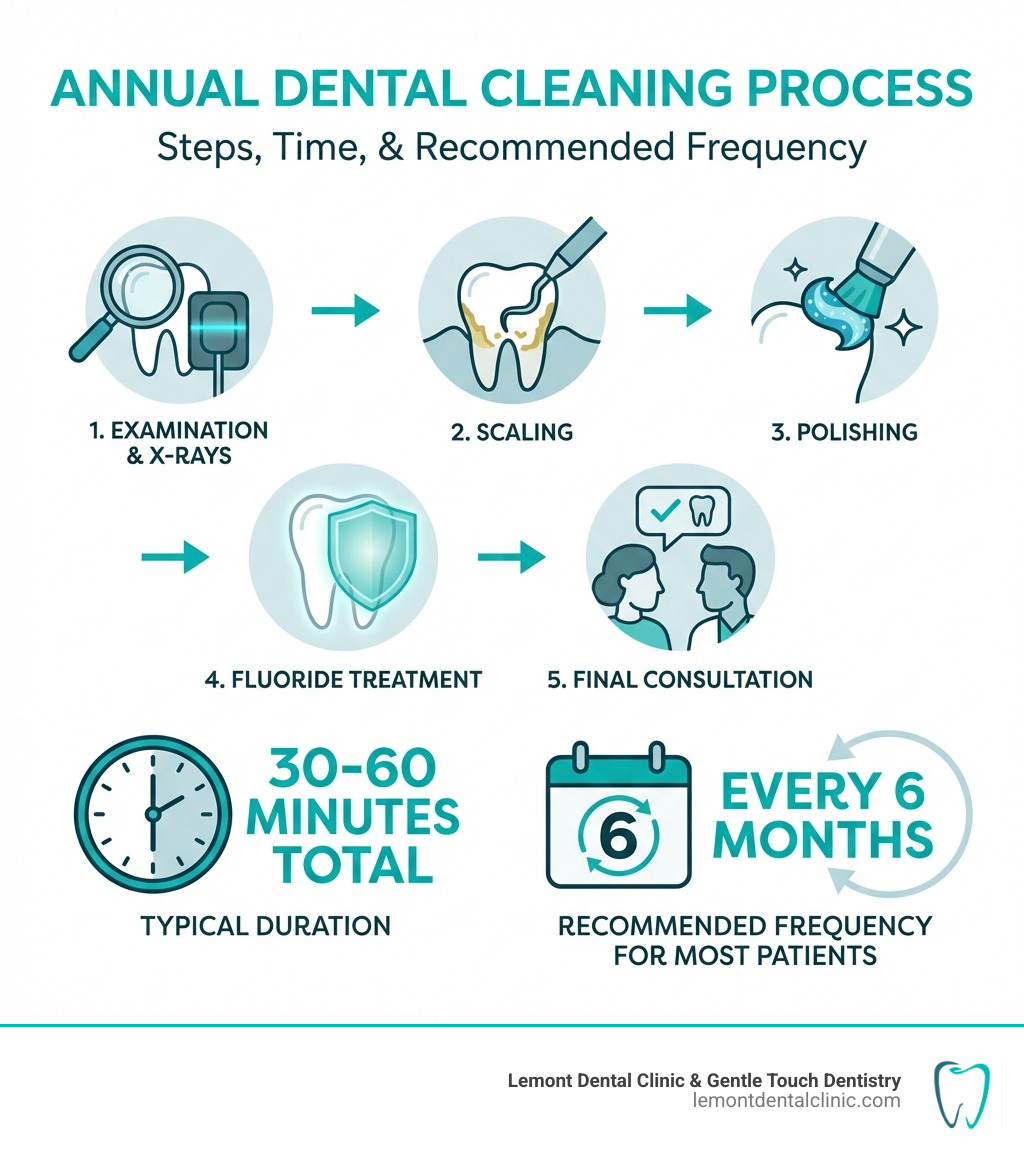
The procedure typically takes 30-60 minutes and includes scaling, polishing, fluoride treatment, and an oral exam
Regular cleanings prevent cavities, gum disease, and bad breath while catching problems early before they become expensive to fix
You may need more frequent cleanings if you have gum disease, a family history of cavities, smoke, or have certain health conditions
Think about washing a car. Spraying it with water removes dirt, but a thin film of grime stays behind. To get rid of that grime, you need to scrub. The same applies to your teeth—brushing at home is essential, but professional cleanings remove the buildup your toothbrush simply can’t reach.
Many people avoid the dentist because of anxiety or cost concerns. The truth is, regular preventive care saves you money in the long run. A small cavity caught early during a routine cleaning costs far less than a root canal or extraction down the road. Plus, research shows that maintaining good oral health reduces your risk of serious conditions like heart disease, stroke, and diabetes.
I’m Piotr Dederowski, and I’ve dedicated my career to providing compassionate, high-quality dental care at Lemont Dental Clinic & Gentle Touch Dentistry. Through years of performing annual dental cleaning procedures and preventive care, I’ve seen how regular visits transform patients’ oral health and overall confidence.
When we talk about an annual dental cleaning, we are generally referring to a professional prophylaxis. In the dental world, “prophylaxis” is just a fancy way of saying “preventative treatment.” While some patients might only come in once a year, the gold standard for maintaining a healthy smile is actually a visit every six months.
During this appointment, our team focuses on removing biofilm—that sticky, invisible film of bacteria that lives on your teeth—and calculus. You probably know calculus better as tartar. Unlike plaque, which you can brush away at home, tartar is mineralized and hard as a rock. It bonds to your enamel and can only be removed by a professional using specialized tools.
A core part of the visit is the clinical examination. We don’t just clean; we inspect. We look for early signs of decay, oral cancer, and gum disease. Following the American Dental Association guidelines, we tailor these visits to ensure your teeth and gums stay in peak condition. Whether you call it a Regular Cleaning or one of your routine Check-ups, the goal remains the same: total oral health maintenance.
Annual vs. Bi-Annual Dental Cleanings
The debate over frequency—should it be an annual dental cleaning or a bi-annual one?—really comes down to your personal risk factors. For a patient with perfect home care, no history of cavities, and rock-solid gum health, once a year might suffice in very specific cases. However, for the vast majority of our neighbors in Lemont and Palos Hills, twice a year is the sweet spot.
Why the six-month mark? Plaque can begin to harden into tartar within 24 to 48 hours. Over six months, even the best brushers will have some accumulation in hard-to-reach areas. If we wait a full year, that tartar can cause significant inflammation, leading to gingivitis or even bone loss.
Feature
Routine Prophylaxis
Deep Cleaning (Scaling & Root Planing)
Purpose
Prevention and maintenance
Treating active gum disease
Target Area
Above the gumline
Below the gumline and on the roots
Anesthesia
Usually not required
Local numbing is common
Frequency
Every 6 months
As needed, followed by maintenance
Gum Status
Healthy gums or mild gingivitis
Periodontal pockets and bone loss
Your oral health status is dynamic. It can change due to stress, diet, or new health conditions. That’s why we emphasize individualized care. We don’t believe in a one-size-fits-all approach; we believe in the right care for your mouth.
The Step-by-Step Process of a Professional Cleaning
If it’s been a while since your last visit, you might be wondering exactly what happens when you settle into the chair. We strive to make the process as transparent and comfortable as possible.
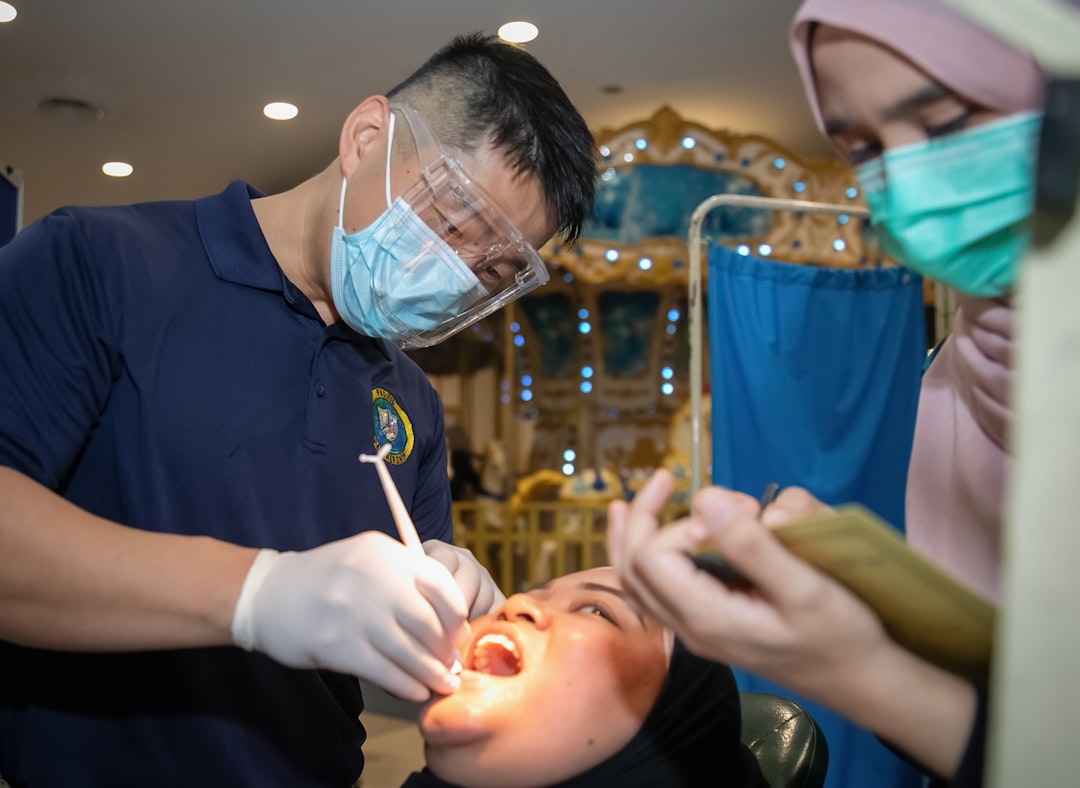
The Physical Exam: Before any tools come out, our Dental Hygienist performs a thorough visual inspection. They use a small mirror to check around your teeth and gums for any signs of inflammation, decay, or other concerns.
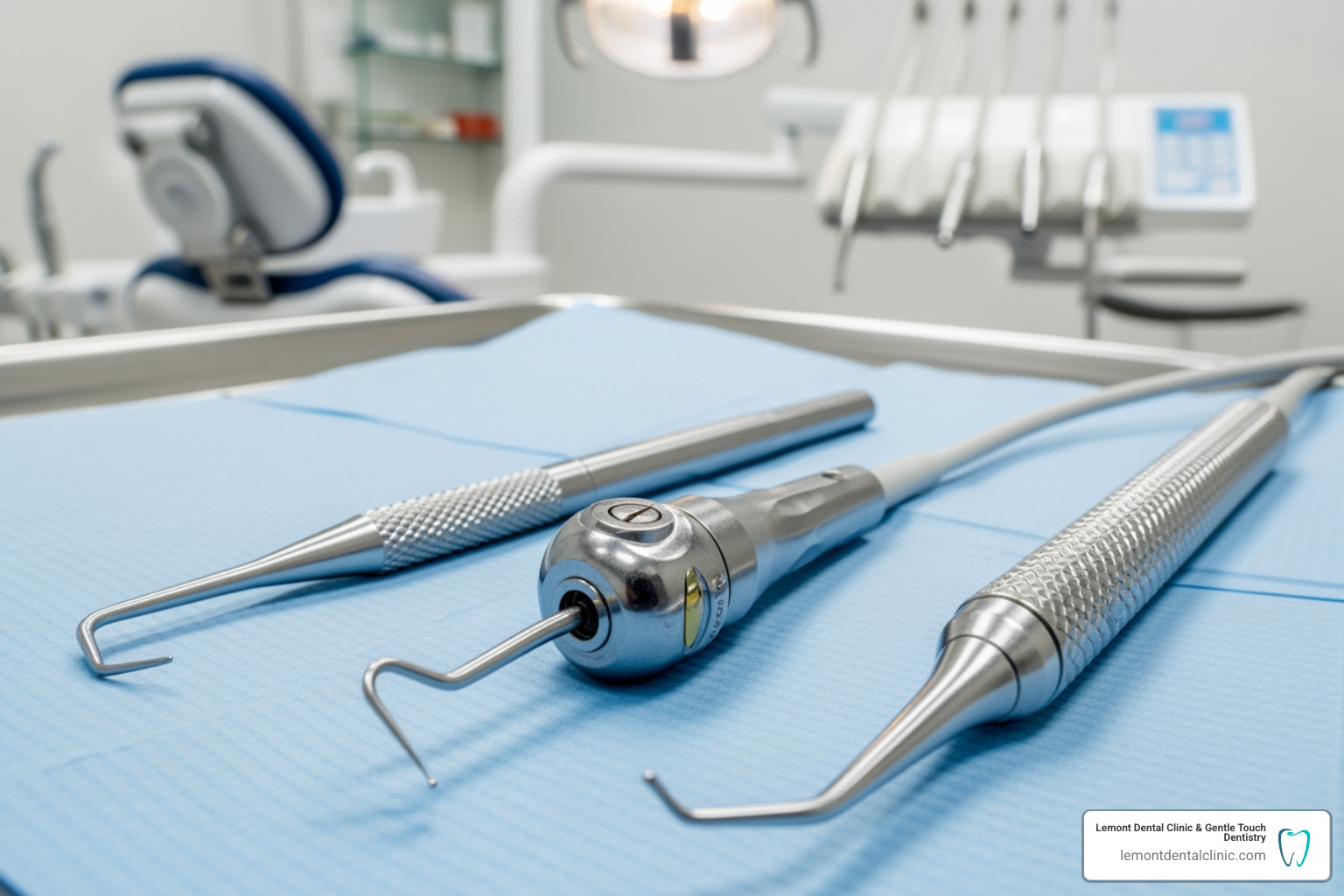
Scaling: This is the part where we remove the “grime.” We use a combination of manual hand scalers and ultrasonic scalers. Ultrasonic tools use high-frequency vibrations and a cooling water spray to gently shake tartar loose. It’s much more efficient and comfortable than old-school scraping methods.
Plaque Scraping: For any stubborn spots, the hygienist will use manual tools to ensure every surface is smooth. This prevents bacteria from having a “hook” to latch onto in the future.
Polishing and Flossing: Once the tartar is gone, we polish your teeth to a high shine.
Final Dentist Check: I, or one of my colleagues, will come in to review the hygienist’s findings, check your X-rays, and perform a final exam of your restorations (like fillings or crowns) to ensure everything is holding up well.
To see the full range of what we offer, you can explore Our Services page.
Scaling and Polishing During Your Annual Dental Cleaning
Polishing is often the patient’s favorite part because it leaves that “squeaky clean” feeling. We use a high-powered electric brush and a special gritty paste called prophylaxis paste. This grit helps scrub away surface stains from coffee, tea, or food that regular toothpaste can’t budge.
After polishing, we perform a professional flossing. This isn’t just to be thorough; it allows the hygienist to reach deep between the teeth and check for any bleeding points that might indicate gum trouble.
One of the final steps is often a fluoride treatment. Think of fluoride as a shield for your enamel. We apply it as a gel, foam, or varnish to help remineralize your teeth and protect them against acid attacks from bacteria. This is a vital part of what happens during a cleaning to ensure long-term enamel protection.
Understanding Different Types of Dental Cleanings
Not every cleaning is the same. Depending on the state of your gums, we might recommend a more intensive approach than a standard prophylaxis.
Prophylaxis: The standard cleaning for patients with healthy gum tissue.
Full Mouth Debridement: This is often necessary for patients who haven’t had a cleaning in several years. If there is so much tartar that we can’t even see the teeth to perform an exam, a debridement is used to clear the way. You can learn more about Debridement cleanings and how they differ from routine care.
Scaling and Root Planing (Deep Cleaning): This is the gold standard for treating gum disease. We go Deep Cleaning to remove bacteria and tartar from the roots of the teeth.
Periodontal Maintenance: Once a patient has been treated for gum disease, they don’t go back to “regular” cleanings. Instead, they receive periodontal maintenance, usually every three to four months, to ensure the infection doesn’t return.
When is a Deep Cleaning Appropriate?
We recommend a deep cleaning when we detect “periodontal pockets.” In a healthy mouth, the gum tissue fits snugly around the tooth. When bacteria settle in, the gums pull away, creating pockets where more bacteria hide. If these pockets are deeper than 3 or 4 millimeters, a standard annual dental cleaning won’t reach the bottom.
If left untreated, these bacteria will eventually eat away at the bone supporting your teeth, leading to tooth loss. You might worry, does deep cleaning hurt?, but rest assured, we use local anesthetics to ensure you don’t feel a thing during the procedure. Managing periodontitis is not just about your smile; it’s about your systemic health. The inflammation in your mouth can travel through your bloodstream, impacting your heart and other organs.
The Health Benefits of Maintaining an Annual Dental Cleaning Schedule
The benefits of a consistent annual dental cleaning schedule extend far beyond just having white teeth. We are firm believers that the mouth is the gateway to the body.
Cavity and Gum Disease Prevention
The most obvious benefit is stopping decay in its tracks. By removing tartar, we eliminate the primary cause of cavities and gingivitis. When we catch a weak spot in the enamel early, we can often “fix” it with fluoride or better home care before it ever needs a drill.
Heart Health: People with gum disease have a higher risk of heart attacks and strokes.
Diabetes Management: It’s a two-way street; diabetes makes you more prone to gum infections, and gum infections make it harder to control blood sugar.
Respiratory Issues: Bacteria from the mouth can be inhaled into the lungs, potentially causing pneumonia.
Halitosis Prevention
Let’s be honest: nobody wants bad breath. Most chronic bad breath (halitosis) isn’t caused by what you ate for lunch; it’s caused by bacteria living in tartar and gum pockets. A professional cleaning is the most effective way to freshen your breath for the long haul.
Cost Savings
We often tell our patients in Palos Hills and Chicago Ridge that preventive dentistry is the most affordable dentistry. A routine cleaning is a small investment that prevents the need for multi-thousand-dollar procedures like implants or bridges.
Frequently Asked Questions about Dental Cleanings
We hear many of the same questions from our patients, and we want to clear up any misconceptions.
Are dental cleanings painful?
This is the number one concern for many. The short answer is: they shouldn’t be! If your gums are healthy, you might feel some light pressure or vibration, but no pain. If you have some inflammation, you might experience slight discomfort.
If you are particularly nervous, we can use a topical numbing gel to desensitize the gums. For those who wonder does teeth cleaning hurt?, we always tell them to communicate with us. We can adjust our technique or provide breaks. If your teeth are sensitive after cleaning, it usually subsides within a day or two and can be managed with over-the-counter relievers.
How long does a dental cleaning take?
For most of our patients, the timeframe for a standard prophylaxis is between 45 and 60 minutes. This includes the exam, X-rays (if needed), scaling, polishing, and the final check with the doctor. If it’s been a long time since your last visit, or if you require a deep cleaning, the appointment length will naturally be longer—sometimes requiring two separate sessions to ensure we are thorough.
Who needs more frequent cleanings?
While many do well with two visits a year, certain risk factors mean you might need to see us more often:
Smoking: Tobacco use significantly increases the risk of gum disease and slows down the body’s ability to heal.
Weakened Immune System: Conditions like HIV or undergoing chemotherapy can make your mouth more vulnerable to infection.
Genetic Predisposition: Some people are simply more prone to tartar buildup or cavities regardless of how well they brush.
Pregnancy: Hormonal changes can lead to “pregnancy gingivitis,” making extra cleanings during the second and third trimesters a very good idea.
Conclusion
At Lemont Dental Clinic & Gentle Touch Dentistry, we take pride in being a part of the local community, serving families from Lemont to Oak Lawn and Bolingbrook. Our goal is to provide high-quality, comprehensive care that fits your life. We use the latest technology—like digital X-rays and ultrasonic scalers—to make your annual dental cleaning as efficient and comfortable as possible.
Don’t wait for a toothache to remind you to see the dentist. By then, the problem is often advanced and more difficult to treat. Take control of your health today. Whether you are in Romeoville, Lockport Heights, or right here in Lemont, we are ready to help you achieve a lifetime of healthy smiles.