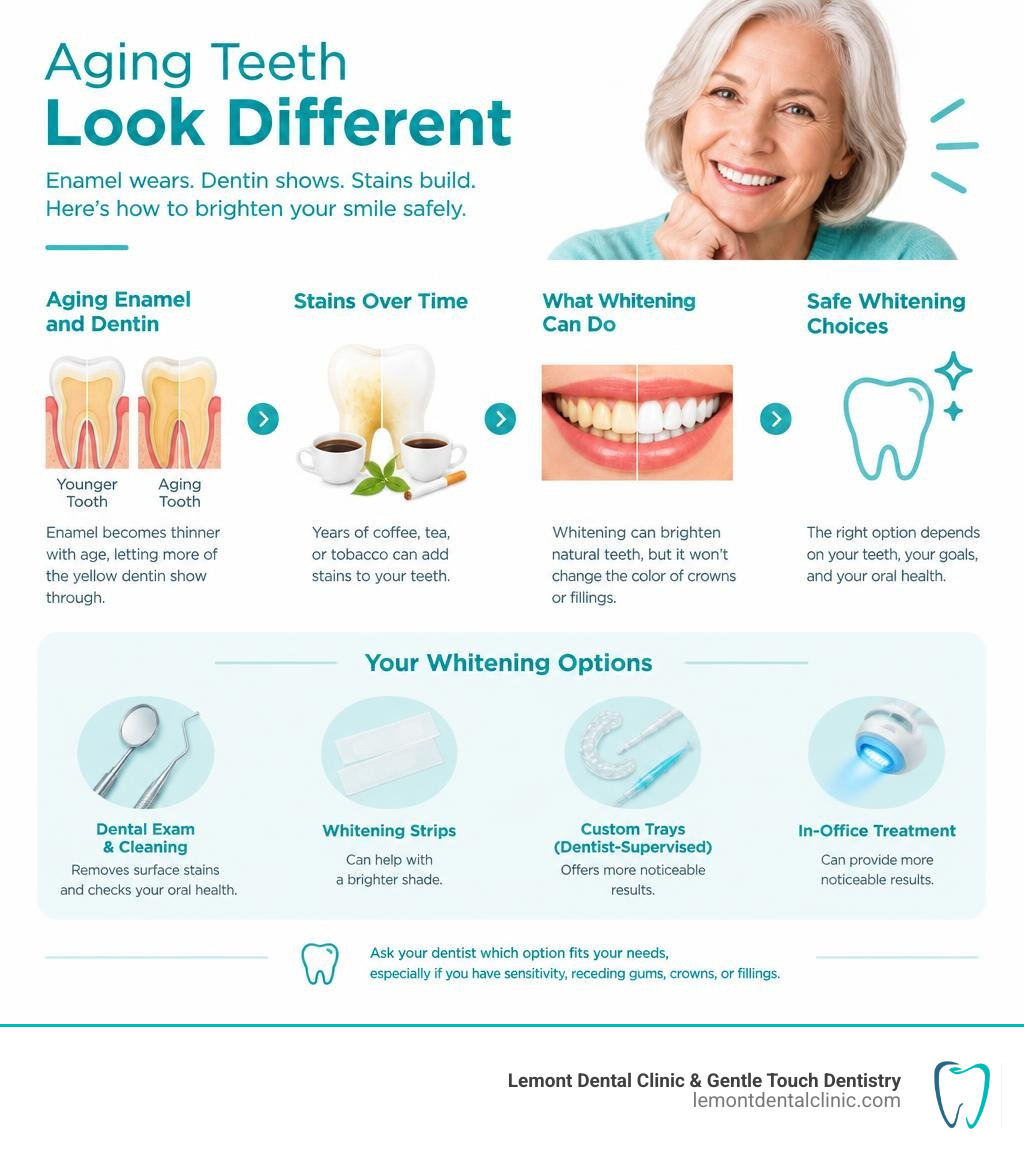
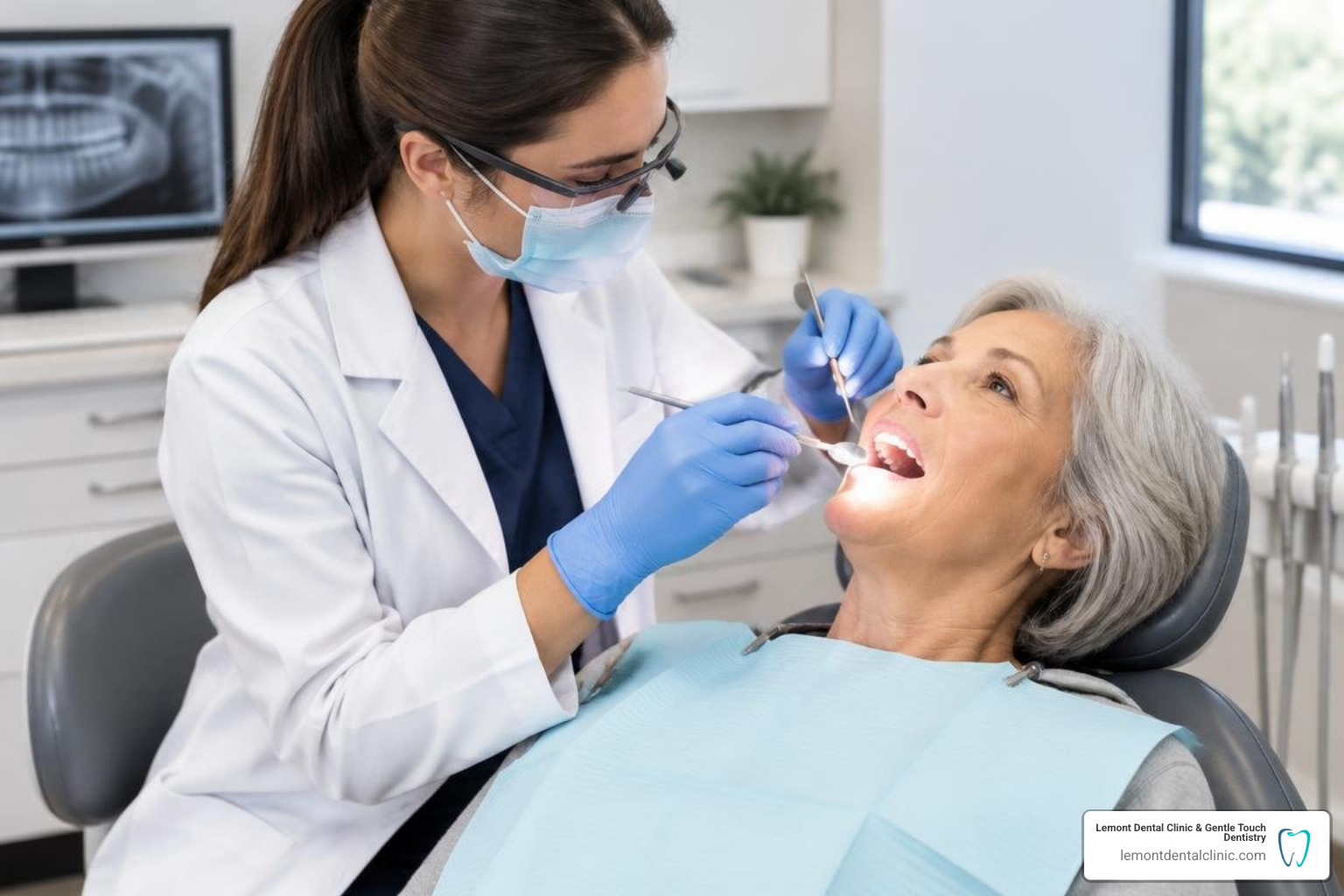
To whiten aging teeth safely, start with a dental exam and cleaning. A cleaning can remove surface stains. If you want a brighter shade, whitening strips may help, while dentist-supervised custom trays or in-office treatment can offer more noticeable results. Ask your dentist which option fits your teeth, especially if you have sensitivity, receding gums, crowns, or fillings.
Teeth often look darker with age because enamel wears thinner, showing more of the yellow dentin beneath it. Years of coffee, tea, or tobacco stains can add to the change. Whitening can brighten natural teeth, but it will not change the color of crowns or fillings.
Why Teeth Darken as We Age: Enamel, Dentin, and Staining
Our smiles evolve as the years pass. Many mature adults notice their teeth shifting from a bright, translucent ivory to a duller yellow or gray hue. Understanding why this happens requires looking inside the tooth itself.
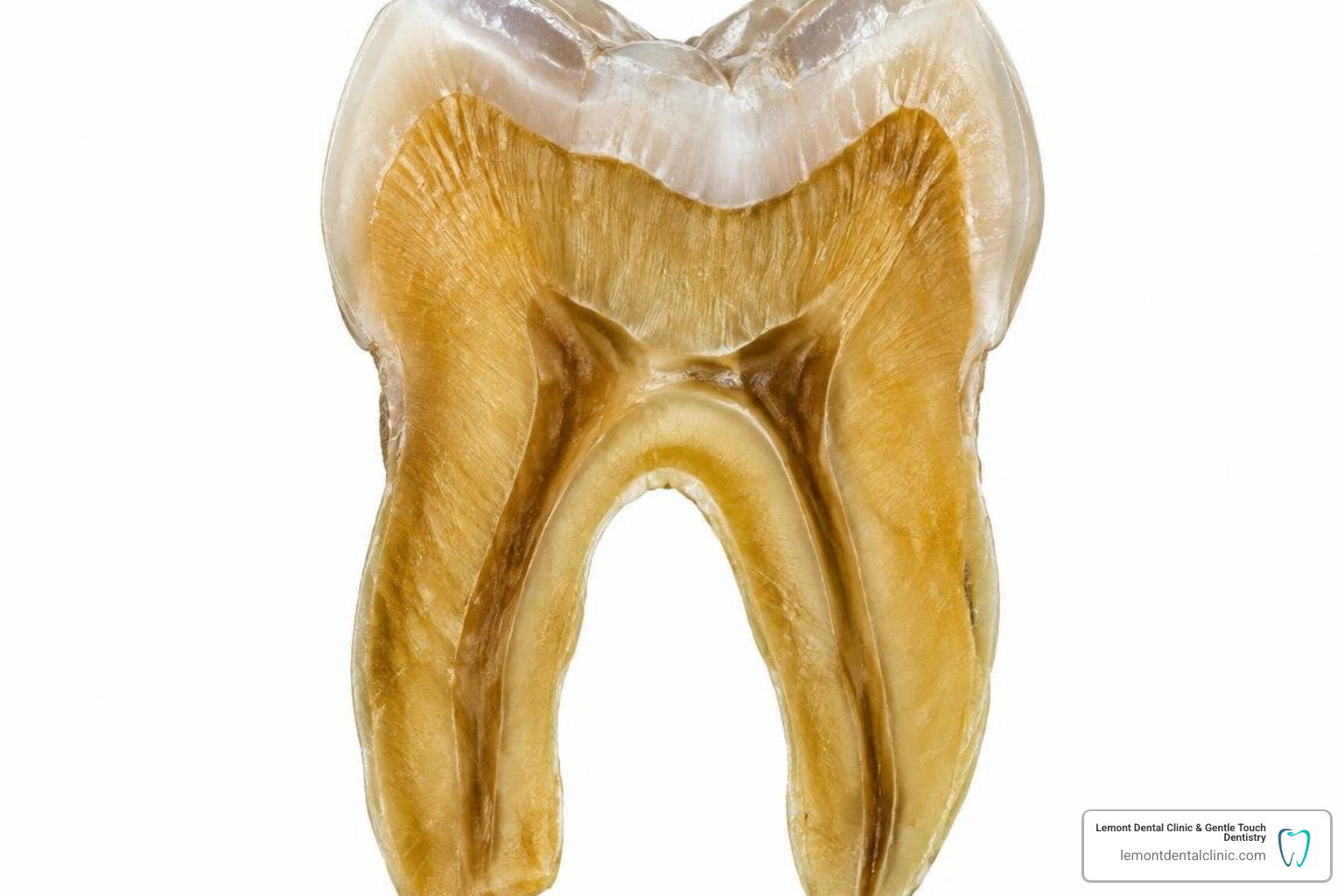
A natural tooth consists of several layers. The outermost protective shell is enamel, a hard, mineralized, semi-translucent structure. Directly beneath the enamel lies dentin, a softer tissue that makes up the bulk of the tooth. Dentin is naturally yellowish-brown.
Two primary biological changes occur over time:
Enamel Thinning and Micro-Cracking: Decades of chewing, brushing, and exposure to mild acids in everyday foods cause enamel to wear down gradually. As enamel thins, it becomes more translucent, allowing the darker, underlying dentin to show through prominently. Microscopic surface cracks also develop in the enamel matrix, creating tiny crevices where dark pigments lodge.
Secondary Dentin Deposition: Dentin does not remain static. As a natural defense mechanism against daily wear and temperature shifts, our teeth continuously produce secondary and tertiary dentin inside the pulp chamber. This process increases the overall volume and density of the dentin, making it darker, more opaque, and yellower.
On top of these internal structural changes, teeth accumulate years of extrinsic chromogens—pigmented organic molecules from coffee, black tea, red wine, berries, and tobacco. According to the ADA statement on whitening, surface stains can be polished away mechanically, but deeper intrinsic discoloration requires active chemical agents to penetrate the tooth structure and oxidize deep-seated pigments.
Research shows that smile aesthetics play a noticeable role in social perceptions. A study reported in the British Dental Journal revealed that individuals with well-maintained, bright teeth are perceived as friendlier, happier, and more confident. Furthermore, a 2019 study by researchers at Tor Vergata University of Rome and the Catholic University of Our Lady of Good Counsel in Tirana demonstrated that whiter teeth are strongly associated with perceived attractiveness and youthfulness.
Comparing Options for Whitening for Aging Teeth
When older adults decide to brighten their smiles, choosing the right method is essential. Mature teeth present unique considerations, including gum recession, exposed roots, and older dental restorations.
Peroxide-based bleaching works through the diffusion of active whitening molecules (hydrogen peroxide or carbamide peroxide) through the porous enamel rods into the dentin, breaking down complex organic pigments into smaller, colorless compounds.
Whitening Method
Active Ingredient
Treatment Timeline
Typical Shade Lift
Best For
Whitening Toothpaste
Mild abrasives, low peroxide (0.1%)
Ongoing daily use
1 shade
Removing mild extrinsic surface stains
OTC Whitening Strips
6%–10% Hydrogen Peroxide
1–3 weeks (daily)
1–2 shades
Mild yellowing without significant recession
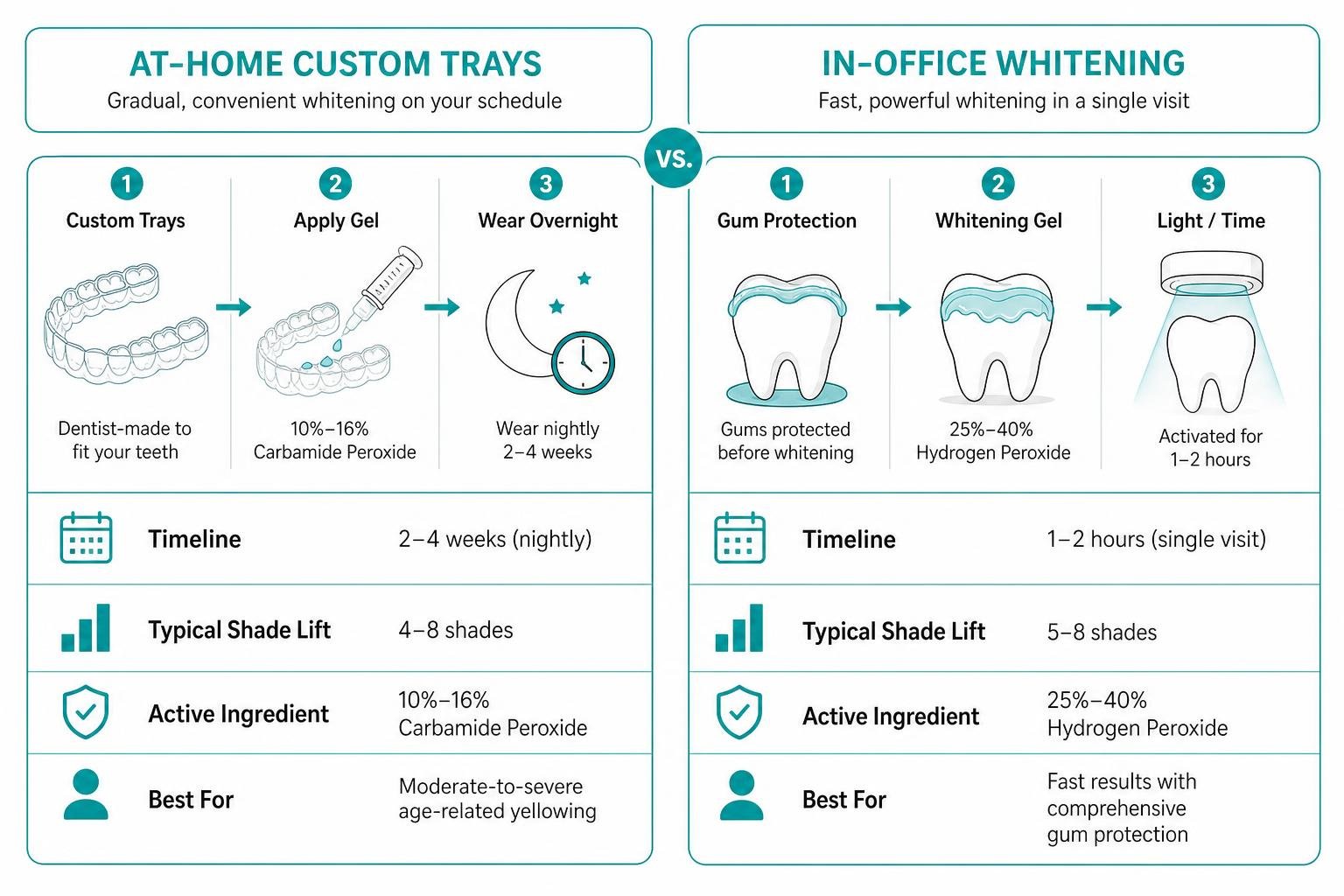
Custom Dentist Trays
10%–16% Carbamide Peroxide
2–4 weeks (nightly)
4–8 shades
Moderate-to-severe age-related yellowing
In-Office Chairside Bleaching
25%–40% Hydrogen Peroxide
1–2 hours (single visit)
5–8 shades
Fast results with comprehensive gum protection
For patients exploring local choices, discovering professional dental whitening options tailored to mature tooth structure ensures both safety and predictable results.
At-Home Whitening for Aging Teeth: Toothpastes, Strips, and Custom Trays
Dentist-supervised at-home custom trays represent the gold standard for mature smiles. These systems utilize custom-fitted appliances fabricated from flexible dental plastic that precisely match the contours of your dental arches.
The most researched and reliable agent for custom trays is 10% carbamide peroxide (Carey, 2014). Carbamide peroxide breaks down into urea and hydrogen peroxide (10% carbamide peroxide yields roughly 3.3% to 3.5% active hydrogen peroxide). Because carbamide peroxide releases about 50% of its active whitening power during the first four hours and continues working for up to ten hours, it is ideal for gentle, overnight application.
Over-the-counter (OTC) whitening strips provide a budget-conscious alternative. However, because strips are flat, two-dimensional ribbons, they often fail to make uniform contact with misaligned, rotated, or contoured aging teeth. This can leave uneven yellow margins along the gumline.
Whitening toothpastes work primarily through mechanical action. While a 2017 review published in the Journal of the American Dental Association noted that baking soda toothpastes can be effective and less abrasive than many other commercial whitening pastes, mature adults must exercise caution with gritty formulations that risk abrading thin enamel. For an in-depth clinical look at custom tray therapy, consult these clinical insights on at-home tooth whitening.
In-Office Whitening for Aging Teeth: Laser and Professional Bleaching Systems
For individuals seeking immediate improvements for upcoming milestones, in-office chairside treatments deliver significant shade improvement in a single 60-to-90-minute visit.
During professional chairside treatments, a clinician applies a protective liquid resin barrier over the gum tissue, curing it with a light to ensure the concentrated bleaching agent (25% to 40% hydrogen peroxide) touches only enamel.
Some practices offer light-assisted or laser teeth whitening to accelerate the oxidation process. While high-intensity curing lamps speed up chemical breakdown, randomized clinical trials demonstrate that the primary whitening effect comes from the high-grade peroxide formulation itself rather than the light. Ensuring rigorous tissue isolation in accordance with NHS guidelines on bleaching safety prevents soft tissue irritation during treatment.
Safety Considerations: Managing Sensitivity, Gum Recession, and Restorations
Aging teeth require a thoughtful clinical approach. Transient mild to moderate tooth sensitivity can occur in up to two-thirds of users during the early stages of bleaching. However, older adults often experience an interesting biological advantage: as pulp chambers calcify and nerve tissue naturally recedes over the decades, mature adults may report less internal pulpal sensitivity than younger patients during professional bleaching.
Nonetheless, gum recession remains a critical consideration. When gums recede, exposed root surfaces—composed of cementum and radicular dentin—become vulnerable. Radicular dentin features exposed microscopic tubules leading toward the nerve. Applying high-concentration bleaching gels directly to exposed root surfaces can trigger sharp discomfort.
To protect vulnerable areas, we recommend:
Applying a desensitizing gel containing 5% potassium nitrate and sodium fluoride prior to bleaching.
Choosing lower-concentration carbamide peroxide gels for gradual, comfortable whitening.
Designing custom bleaching trays that are precisely scalloped 0.5 to 1.0 mm short of the gumline to prevent gel from contacting exposed root margins.
The Canadian Dental Association Position on Bleaching emphasizes that comprehensive pre-treatment oral examinations are essential to detect undiagnosed cavities, defective restorations, or gum disease before applying bleaching agents.
The Impact of Whitening on Crowns, Veneers, and Fillings
A common point of confusion among older adults involves existing restorative work. Peroxide whitening agents do not change the color of dental materials such as porcelain, ceramic, or composite resin.
If you have tooth-colored fillings, crowns, or veneers on your front teeth:
Your natural tooth enamel will brighten, while existing restorations will remain their original shade.
This discrepancy can create a visible color mismatch where older restorations appear darker or yellower than the newly whitened natural teeth.
To achieve a balanced, uniform smile, we coordinate treatment in phases. First, we complete the whitening process until your natural teeth reach your desired shade. After allowing the new shade to stabilize for two weeks, we replace visible composite fillings or incorporate aesthetic solutions like cosmetic dental bonding or custom porcelain dental veneers matched precisely to your brighter enamel.
DIY Home Remedies and Abrasives Older Adults Should Avoid
The internet features many home remedies promising quick teeth whitening, but these techniques can cause irreversible harm to mature enamel:
Activated Charcoal Powders: Charcoal is highly abrasive. Brushing with charcoal scrubs away thin enamel, permanently exposing more of the darker yellow dentin beneath.
Lemon Juice and Fruit Acids: Acidic concoctions demineralize and etch enamel surfaces, speeding up tooth erosion and creating microporosities that attract deeper stains.
Pure Apple Cider Vinegar Rinses: The low pH of vinegar dissolves calcium ions from aging enamel, weakening structural integrity.
Undiluted Household Hydrogen Peroxide: Unregulated concentrations cause chemical burns on gingival tissues and severe dentinal pain.
How to Maintain Results and Prevent Future Staining
Teeth whitening results are not permanent, but with proper care, the effects can last up to 2 to 3 years. Long-term studies on 10% carbamide peroxide show that over 40% of patients maintain stable, brightened tooth shades even years after their initial treatment.
To extend the longevity of your newly brightened smile:
Practice the 30-Minute Rinse Rule: When consuming dark beverages like coffee, black tea, or red wine, rinse your mouth with plain water afterward. Avoid brushing immediately after acidic drinks to prevent scrubbing softened enamel.
Maintain Routine Hygiene: Schedule regular professional teeth cleaning to clear away extrinsic surface stains, tartar, and plaque before they penetrate into enamel fissures.
Keep Up With Preventative Care: Prioritize ongoing preventative dental care to maintain healthy gums and enamel strength.
Perform Periodic Touch-Ups: Using your custom trays for just two or three consecutive nights once a year is typically all that is needed to maintain your ideal shade.
Frequently Asked Questions About Teeth Whitening for Older Adults
Is teeth whitening safe if I have receding gums or exposed roots?
Yes, provided the treatment is carefully supervised by a dentist. Exposed root dentin does not whiten as readily as coronal enamel and can be prone to sensitivity. By using custom-scalloped trays that isolate the crowns of your teeth and shield the root margins, older adults with gum recession can whiten safely without irritation.
Will whitening treatments make my teeth look unnaturally bright?
No. Age-related intrinsic yellowing responds naturally to peroxide oxidation. Whitening lifts decades of accumulated chromogens, restoring your natural tooth color rather than creating an artificial, opaque look. The goal for mature smiles is a refreshed, healthy appearance that looks balanced and natural.
How often do older adults need whitening touch-ups?
Most mature adults find that an initial 2-to-3-week custom tray regimen maintains its vibrancy for 1 to 3 years. A brief at-home touch-up for 2 to 3 nights every 12 to 18 months easily refreshes your shade.
Conclusion
A discolored smile is not an inevitable part of aging that you simply have to accept. Modern cosmetic dentistry offers gentle, evidence-based methods to lift decades of stubborn yellowing safely.
At Lemont Dental Clinic & Gentle Touch Dentistry, we take pride in delivering comprehensive, high-quality general and cosmetic dental care across Lemont, Palos Hills, and surrounding communities including Palos Park, Hickory Hills, Oak Lawn, Orland Park, and Bolingbrook. Our experienced team uses advanced dental technology to design comfortable, personalized care plans focused on clinical excellence.
If you are ready to rejuvenate your smile safely, schedule your comprehensive consultation for professional teeth whitening with our team today.
References
Carey CM. “Tooth whitening: what we now know..” The journal of evidence-based dental practice, 2014. PMCID PMC4058574.