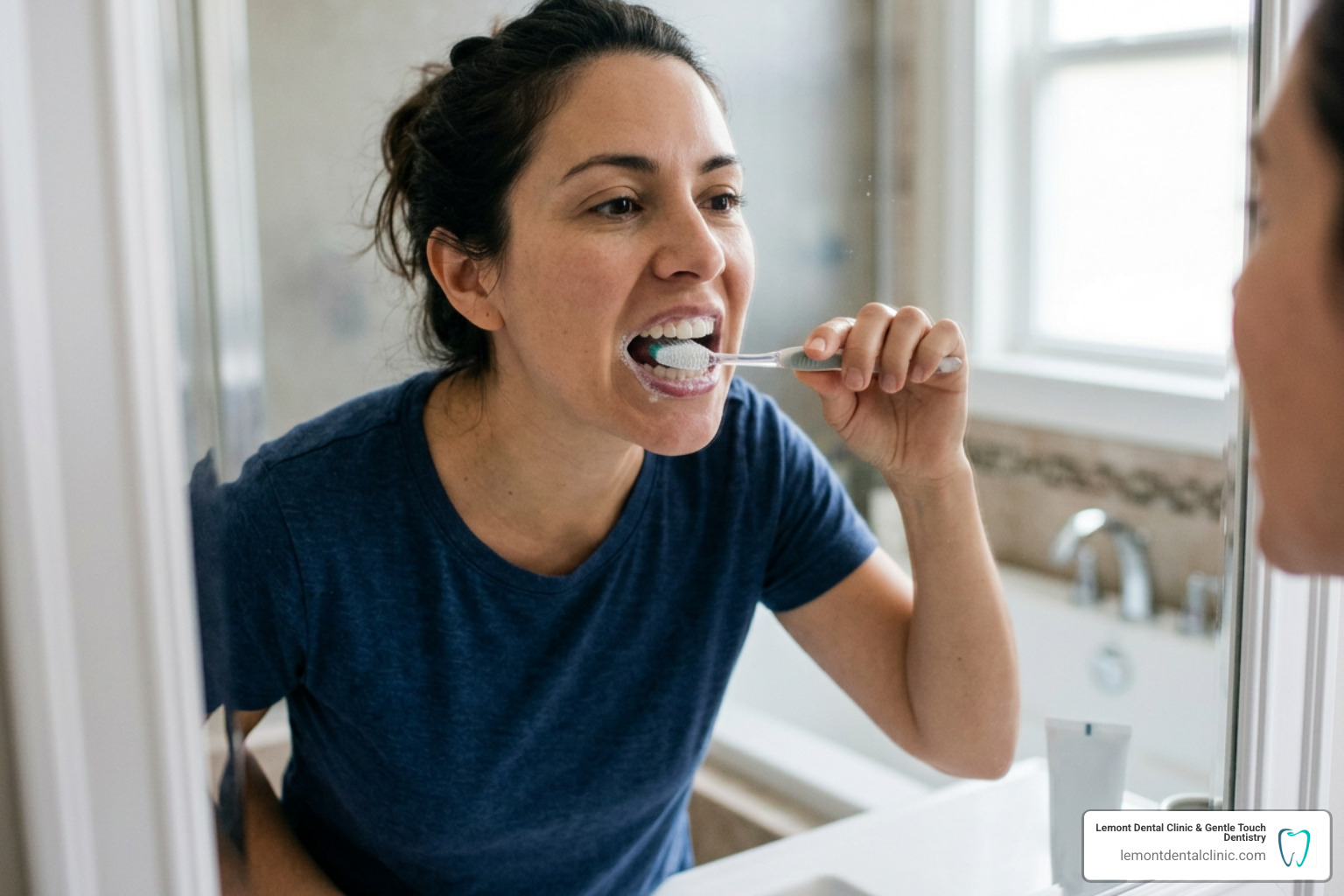
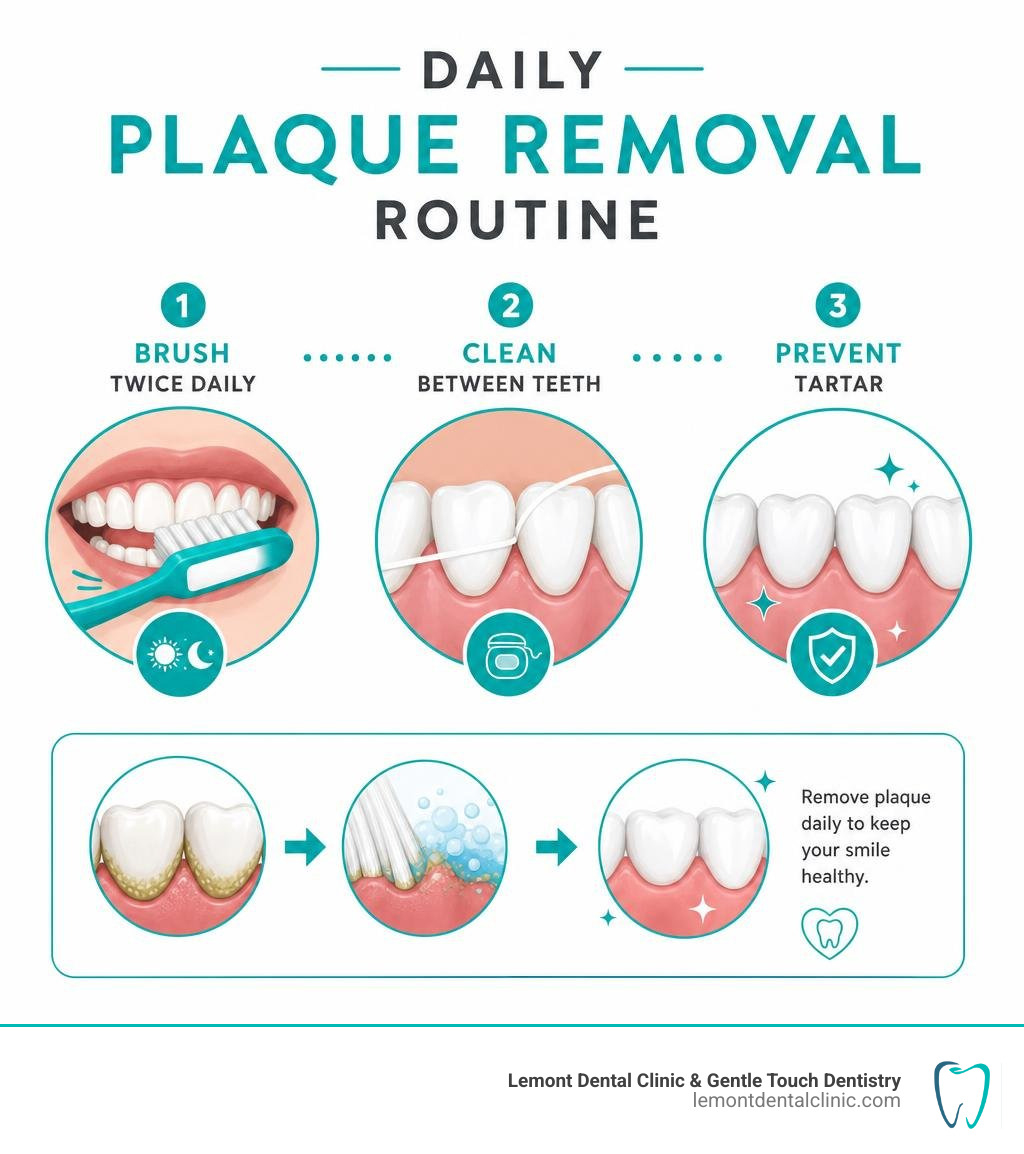
To get rid of plaque on teeth, brush twice a day for two minutes with fluoride toothpaste and a soft-bristled toothbrush, then clean between your teeth once a day with floss or another interdental tool. These habits remove soft, sticky plaque before it hardens into tartar.
Focus on the gumline, the backs of your lower front teeth, and your back molars. Plaque starts to form again within hours of brushing, so steady daily cleaning matters more than harsh scrubbing.
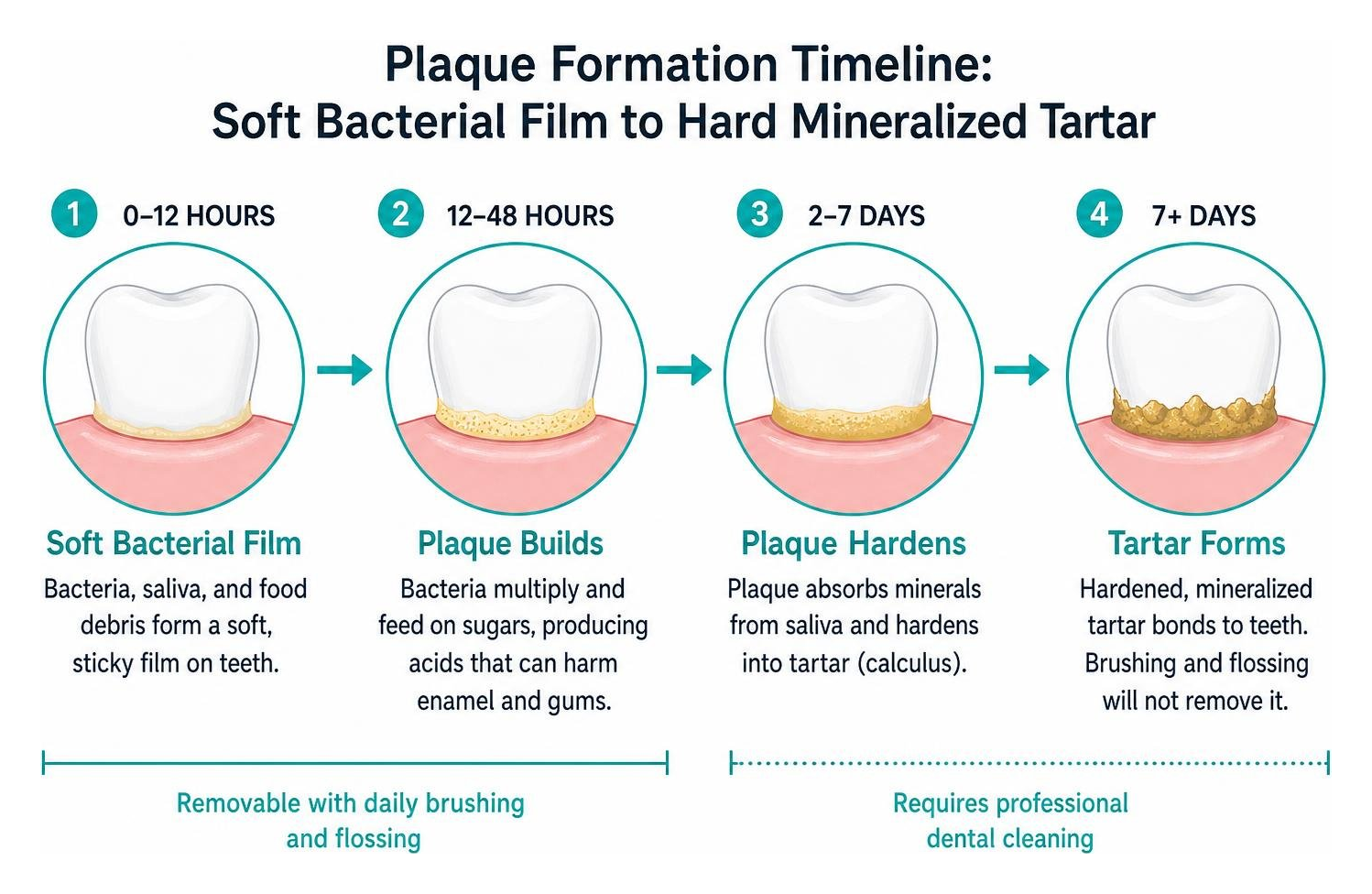
Plaque is a film of bacteria, saliva, and food debris. If it stays on teeth, the bacteria use sugars and starches to make acids that can lead to cavities and inflamed gums. Once plaque hardens into tartar, brushing and flossing will not safely remove it. That requires a dental professional.
Have you ever run your tongue across your teeth late in the evening and noticed a fuzzy, rough texture? That distinct sensation—often described as teeth wearing “tiny sweaters”—is the physical buildup of dental plaque.
Dental plaque is a living bacterial biofilm that continually forms across our teeth, gums, and tongue. Whenever we eat meals containing carbohydrates or starches, specific oral bacteria feed on these leftover particles, releasing destructive acids that strip essential minerals from our tooth enamel. When we leave this sticky film undisturbed, our oral health faces a compounding series of risks ranging from bad breath and superficial enamel erosion to advanced gum disease.
Understanding the lifecycle of dental plaque is vital. While we can easily remove fresh, soft plaque right at home using straightforward daily tools, ignoring it triggers a chemical transformation that cements the deposit in place.
Plaque vs. Tartar: What Can You Actually Clean at Home?
A fundamental reality of oral hygiene is recognizing the biological difference between soft dental plaque and hardened tartar (clinically termed dental calculus). While both harbor bacteria, their physical structure dictates what you can manage on your own and what requires clinical attention.
Characteristic
Soft Dental Plaque
Hardened Dental Tartar (Calculus)
Texture & Feel
Soft, sticky, slippery, or fuzzy
Hard, crusty, rough, and porous
Color
Colorless to pale, creamy yellow
Dark yellow, brown, or black
Location
Tooth surfaces, along the gumline
Above and below the gum margin
Removal Method
Regular toothbrushing and daily flossing
Professional dental scaling instruments
Hardening Window
Begins calcifying within 24 to 72 hours
Permanently bonded until scraped clinically
Saliva carries valuable minerals like calcium and phosphate designed to strengthen our teeth. However, when soft plaque sits undisturbed along the gum margin, it absorbs these minerals and mineralizes. In as little as 24 hours, pliable plaque starts transforming into calcified tartar.
Once tartar forms, simple brushing and flossing can no longer dislodge it. For a deeper breakdown of this calcification cycle, explore our guide on understanding hardened calculus. For clinical background on how bacteria interact with enamel, review these Cleveland Clinic insights on dental plaque.
Why DIY Tartar Scraping Is Dangerous
With the surge of internet beauty hacks and direct-to-consumer medical tools, many people purchase stainless steel dental scalers online, attempting to scrape hard calculus off their teeth at home. Doing this is dangerous.
Dental hygienists and dentists undergo years of clinical education to master tactile sensitivity, instrument angulation, and sterile protocols. Using sharp metal picks at home often leads to:
Severe Enamel Gouging: Scratching the protective outer layer of enamel creates micro-grooves where future plaque accumulates more rapidly.
Gum Laceration & Recession: Slipping with a sharp metal tool can slice delicate periodontal tissue, triggering permanent gum recession.
Pushing Infections Deeper: Improper scaling angles force calcified bacteria deep beneath the gingival margin into periodontal pockets.
Restoration Damage: Home scrapers chip existing composite fillings, veneers, and dental crowns.
Leave metal instruments to trained professionals. Your daily focus should remain strictly on disrupting soft biofilm before it mineralizes.
Proven Home Habits to Get Rid of Plaque on Teeth
Removing plaque safely and consistently comes down to mechanical disruption. The goal is not to scrub aggressively, but to gently wipe away the biofilm every day before it gains a foothold.
A high-yield routine begins with using a soft-bristled toothbrush and a pea-sized amount of fluoride toothpaste. Fluoride remineralizes fragile enamel that has been weakened by daily bacterial acids.
An essential rule many people overlook is the “spit, don’t rinse” technique. After completing your two-minute brushing routine, spit out the excess toothpaste foam, but avoid immediately rinsing your mouth with a cup of water. Leaving that thin coating of fluoride on your teeth allows it to penetrate enamel far more effectively over the next 30 minutes. To keep your mouth resilient against decay, review our best practices for preventing plaque buildup.
Daily Brushing Techniques to Get Rid of Plaque on Teeth
The way you hold and guide your toothbrush directly influences how much plaque you eliminate.
The 45-Degree Angle: Angle your toothbrush bristles at a 45-degree angle toward the gumline. This lets the tips of the bristles slide gently into the gingival margin where plaque gathers most aggressively.
Short, Gentle Strokes: Use tiny, circular or tooth-wide back-and-forth vibrating strokes rather than aggressive horizontal scrubbing. Review our guide on mastering proper brushing habits for detailed visual steps.
The Quadrant Approach: Mentally divide your mouth into four sections (upper right, upper left, lower left, lower right). Spend 30 full seconds on each quadrant to ensure you meet the clinically proven recommended brushing duration of two full minutes.
Target High-Risk Zones: Pay extra attention to the tongue-side surfaces of your lower front teeth and the cheek-side surfaces of your upper back molars. These areas sit right next to major salivary glands and accumulate mineralized deposits quickest.
While manual toothbrushes work well when used with disciplined technique, rotating-oscillating electric toothbrushes provide a clear clinical advantage. Studies demonstrate that powered rotating heads reduce plaque buildup by 11% at one to three months and up to 21% after three months compared to standard manual brushes. Built-in timers and pressure sensors also prevent you from brushing too hard.
Interdental Cleaning and Rinsing Strategies
A standard toothbrush only cleans approximately 60% of your total tooth surfaces. The remaining 40% sits in the tight contacts between your teeth—the exact spots where flossing is mandatory.
String Floss (The C-Shape): Take about 18 inches of floss, wrapping the ends around your middle fingers. Slide the floss gently between two teeth, curve it into a snug “C” shape hugging the side of the tooth, and wipe up and down from below the gumline to the tip. Repeat on the adjacent tooth surface.
Interdental Brushes: For individuals with wider spaces between teeth, bridge work, or orthodontic hardware, tiny interdental brushes provide superior mechanical plaque disruption compared to standard floss alone.
Water Flossers: Water flossers utilize targeted pulsing water streams to flush away loose food particles and disrupt subgingival bacteria. Clinical research indicates that combining an oral irrigator with daily brushing is up to 29% more effective at clearing plaque than combining manual brushing with string floss alone.
Therapeutic Mouthwash: An antimicrobial or fluoride rinse can lower overall oral bacteria counts. However, avoid using mouthwash right after brushing, as it washes away concentrated toothpaste fluoride. Learn more about timing in our guide on optimizing mouthwash use.
Home Remedies for Plaque: What Science Says Works (and What Doesn’t)
Natural home remedies generate plenty of interest, but separating scientifically validated methods from damaging fads is crucial for protecting your enamel. For a broader medical overview, check out these evidence-based plaque home treatments.
Tooth enamel begins demineralizing whenever the oral environment drops below a critical pH threshold of 5.1 to 5.5. Effective home remedies protect this balance, whereas risky trends accelerate acid wear.
Safe Natural Remedies to Get Rid of Plaque on Teeth
Baking Soda (Sodium Bicarbonate): Brushing with baking soda toothpaste safely buffs away surface biofilm. Sodium bicarbonate is naturally alkaline, neutralizing harmful dietary acids and elevating oral pH well above the dangerous 5.5 erosion mark. Research confirms baking soda significantly suppresses Streptococcus mutans, the primary bacterial culprit behind tooth decay, while staying well within safe relative dentin abrasivity limits.
Coconut Oil Pulling: Swishing a tablespoon of virgin coconut oil for 5 to 10 minutes helps capture bacteria within the lipid matrix. Coconut oil is rich in lauric acid, an organic compound celebrated for anti-inflammatory and antimicrobial properties. In clinical studies with adolescents suffering from gingival inflammation, daily oil pulling reduced visible plaque by roughly 50%. Note: Always spit used oil into a trash can to avoid plumbing clogs, and never use oil pulling as a replacement for brushing and flossing.
Xylitol Chewing Gum: Chewing sugar-free gum containing xylitol after meals stimulates saliva flow (your mouth’s natural defense wash) while preventing plaque bacteria from clinging to enamel surfaces.
Warm Saltwater Rinses: Dissolving half a teaspoon of salt in warm water creates an isotonic rinse that soothes inflamed gum tissue and naturally balances the oral microbiome without chemical irritation.
Dangerous Trends to Avoid Completely
Apple Cider Vinegar & Lemon Juice: Swishing with fruit juices or vinegar exposes enamel to concentrated acetic and citric acids with pH levels between 2.0 and 3.0. This strips mineral density from your teeth within seconds, leaving them permanently weaker and more prone to staining.
Pure Activated Charcoal Powders: Unregulated charcoal scrubs are often excessively abrasive. Over time, scrubbing with coarse charcoal particles wears away translucent enamel, exposing the naturally yellow dentin underneath and creating microscopic surface roughness that attracts more plaque.
DIY Hydrogen Peroxide Mixtures: Rinsing with unbuffered, high-concentration household peroxide can cause chemical burns on gingival margins, irritate the tongue, and disrupt healthy oral microflora.
When At-Home Cleaning Isn’t Enough: Professional Dental Care
Even with disciplined daily hygiene, natural saliva flow will eventually cause microscopic deposits to calcify in areas that home tools cannot reach. This makes routine clinical visits an essential component of total wellness.
You should schedule a professional dental evaluation if you notice:
Gums that regularly bleed during normal brushing or flossing
Persistent bad breath (halitosis) that lingers after brushing
Visible yellow, brown, or black mineral deposits along the gumline
Puffy, tender, or receding gum margins
Loose teeth or changes in how your bite feels
When plaque and tartar migrate down the tooth structure beneath the gumline, you may require specialized care. Learn more about the indications in our breakdown of when you need deep cleaning, or read our comprehensive professional cleaning guide to see how modern clinical preventative care works.
Routine Cleaning vs. Scaling and Root Planing
Understanding what takes place during your dental visits helps demystify the process:
Routine Prophylaxis (Regular Cleaning): Recommended every six months for patients with generally healthy gum tissues. The dental hygienist uses gentle ultrasonic scalers and hand instruments to clear supragingival plaque and tartar from above the gumline, followed by mechanical polishing to leave enamel smooth and glossy.
Scaling and Root Planing (Deep Cleaning): Prescribed when unaddressed plaque and subgingival tartar cause active periodontitis, creating deep periodontal pockets (typically 4mm or deeper) accompanied by bone loss. Under local numbing for complete comfort, the clinician carefully cleans deep within these infected pockets, removing hardened calculus and smoothing the rough root surfaces so the gums can heal and reattach cleanly.
Frequently Asked Questions About Plaque Removal
Can plaque below the gumline be removed at home?
Soft plaque resting right at the outer edge of the gumline can be cleaned at home with gentle, angled brushing and careful flossing. However, once bacteria travel deep below the gum margin into periodontal pockets or mineralize into subgingival tartar, home tools cannot reach them. Attempting to force tools deep beneath the gums causes tissue damage; subgingival deposits require professional clinical scaling.
How fast does plaque turn into tartar?
Plaque forms continuously and begins coating teeth within hours of eating and drinking. If it is not disrupted through brushing and flossing within 24 to 72 hours, it reacts with calcium and phosphate minerals in your saliva, hardening into calcified tartar that firmly bonds to the enamel surface.
Will baking soda damage my tooth enamel?
When formulated properly in commercial ADA-accepted toothpaste or used gently with water, baking soda is safe. It features a low relative dentin abrasivity (RDA) rating compared to many standard whitening toothpastes. However, it should never be scrubbed aggressively or mixed with acidic substances like lemon juice or vinegar.
Conclusion
Keeping your smile healthy, bright, and free of decay requires a steady commitment to daily mechanical plaque control. By brushing twice daily for two full minutes with fluoride toothpaste, using the proper 45-degree angle technique, flossing consistently, and utilizing evidence-based aids like electric toothbrushes and baking soda formulations, you can safely dislodge soft bacterial plaque before it hardens.
Home oral care and professional dental cleanings work hand-in-hand. While your daily routine manages soft biofilm, periodic clinical care removes hardened deposits and protects your overall periodontal foundation.
At Lemont Dental Clinic & Gentle Touch Dentistry, we provide high-quality, comprehensive general and restorative dental care for patients throughout Lemont, IL, Palos Hills, IL, and surrounding communities including Chicago Ridge, Worth, Palos Park, Hickory Hills, Oak Lawn, Orland Park, Palos Heights, Bolingbrook, Romeoville, Palisades, and Lockport Heights. Our experienced team uses advanced dental technology to deliver thorough, comfortable, and personalized care focused on quality and affordability.
If it has been over six months since your last professional checkup or you have noticed stubborn buildup along your gumline, take the next step for your oral health and schedule a routine regular cleaning with our team today!