Why Brushing Duration is Critical for Your Oral Health
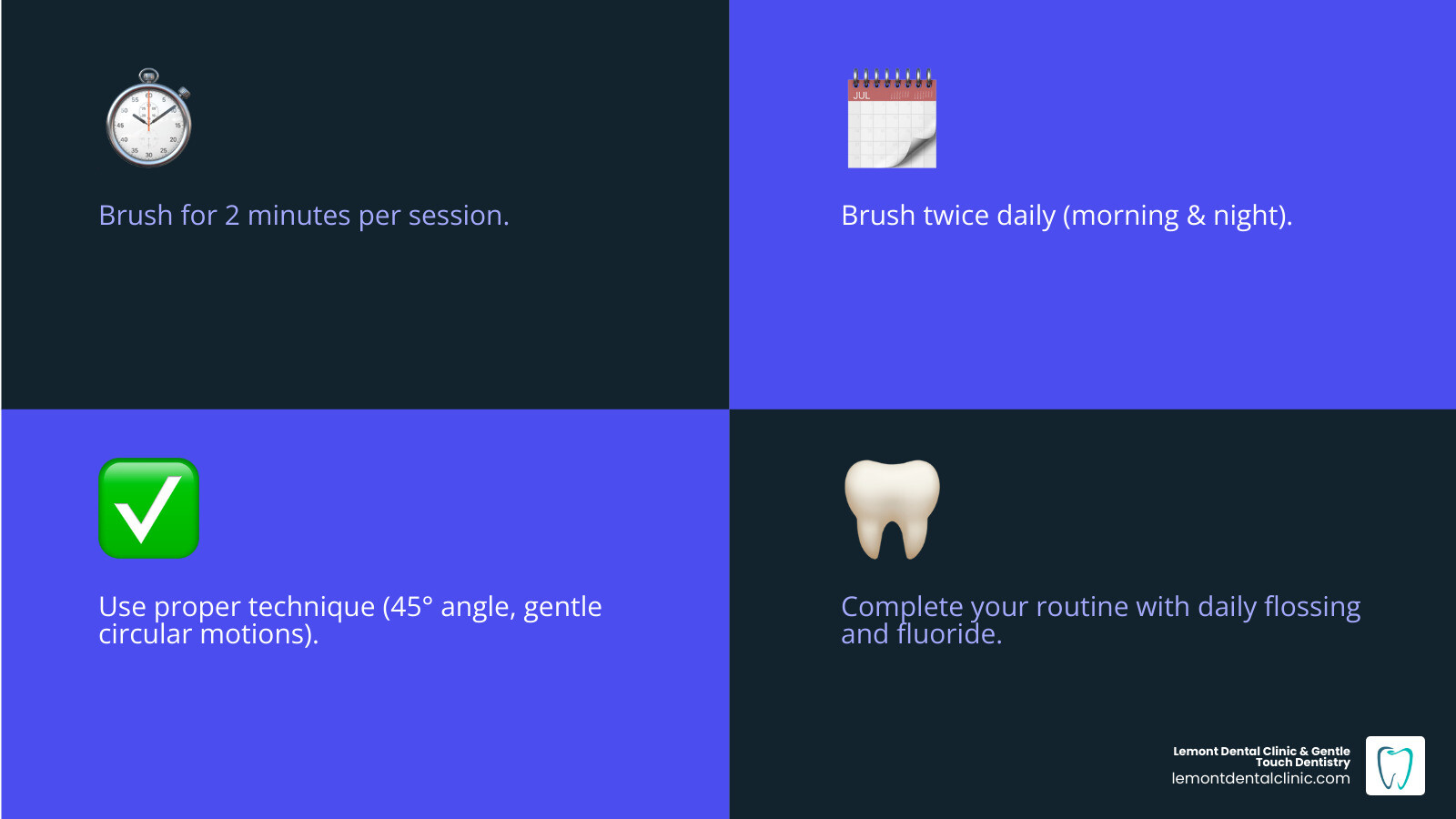
How long should you brush your teeth? The answer is straightforward: brush for 2 minutes, twice a day. This recommendation from the American Dental Association is backed by decades of dental research.
Quick Answer:
Duration: 2 minutes per session
Frequency: Twice daily (morning and night)
Method: 30 seconds per quadrant of your mouth
Tools: Soft-bristled toothbrush with fluoride toothpaste
Many people brush for less time than they think, often under a minute. However, that extra minute makes a huge difference. Brushing for the full two minutes ensures you thoroughly remove plaque—the sticky film of bacteria that causes cavities and gum disease. Rushing means you miss spots where plaque can harden into tartar, leading to costly dental problems.
Understanding how long should you brush your teeth is the first step. In this guide, we’ll explore not just the “how long,” but also the best techniques and tools to build a complete oral care routine.
I’m Piotr Dederowski from Lemont Dental Clinic & Gentle Touch Dentistry. For years, I’ve helped patients see that proper brushing duration is essential for preventing dental issues. With the right guidance, we help families establish effective habits for a lifetime of healthy smiles.
The Gold Standard: How Long Should You Brush Your Teeth?
If you’ve ever wondered how long should you brush your teeth, the answer dental professionals agree on is: two full minutes, twice a day. The American Dental Association (ADA) recommends this timing because research shows it’s the minimum needed to effectively remove plaque from all tooth surfaces.
Your mouth has a lot of real estate to cover: front teeth, back molars, and inner, outer, and chewing surfaces. Rushing means some spots get missed, allowing plaque to build up, harden into tartar, and cause cavities and gum disease.
The two-minute rule is easy to follow using the quadrant method. Divide your mouth into four sections: upper right, upper left, lower right, and lower left. Spend 30 seconds on each section to ensure equal, thorough cleaning.
While two minutes is the standard, some dentists suggest three, especially if you have braces or hard-to-reach areas. There’s no harm in taking longer if it means you’re being more thorough. The goal is completeness, not speed. What matters is cleaning the inner, outer, and chewing surfaces of every tooth.
Most people think they brush for longer than they actually do; studies show the average is under a minute. Luckily, tracking your time is easy.
Use a stopwatch: The timer on your phone is a simple, effective tool.
Play a 2-minute song: Turn brushing into a more enjoyable habit. Many streaming services have playlists designed for this.
Use a built-in toothbrush timer: Many electric toothbrushes have two-minute timers that pulse every 30 seconds to guide you through each quadrant.
Try a smartphone app: Brushing apps offer visual guides, music, and habit tracking to make your routine more engaging.
Find a method that works for you and stick with it. Mindful, timed brushing can transform your dental health.
Is it ever okay to brush for longer?
You might wonder if three minutes is better than two. It’s not about the time itself, but what you do with it. If an extra minute helps you carefully clean every tooth surface—especially tricky spots behind back molars—then absolutely, brush for three minutes. Thoroughness matters more than speed.
At Lemont Dental Clinic & Gentle Touch Dentistry, we know some patients benefit from extra time due to braces or complex dental work. Taking your time with gentle, careful attention is always better than rushing. Just remember that more time is only helpful with proper technique. Brushing too hard can cause damage, which we’ll cover next. The key is to be thorough and gentle, whether it takes two minutes or three.
Why Brushing Duration Matters: The Risks of Too Little or Too Much
Understanding how long should you brush your teeth is about actively protecting your smile. At Lemont Dental Clinic & Gentle Touch Dentistry, we see the consequences of brushing too little, which leaves plaque behind. On the other hand, brushing too long or with too much force can also cause problems. It’s a balance, and finding the right rhythm is key.
What are the consequences of not knowing how long you should brush your teeth?
When you don’t brush long enough, you leave your teeth vulnerable. The consequences range from minor issues to serious health concerns:
Plaque and Tartar: Plaque, a sticky film of bacteria, constantly forms on your teeth. If not removed, it hardens into tartar, which can only be removed with a professional cleaning.
Cavities: Plaque bacteria produce acids that attack tooth enamel, leading to cavities. You can learn more about what this feels like here: What Does a Cavity Feel Like?.
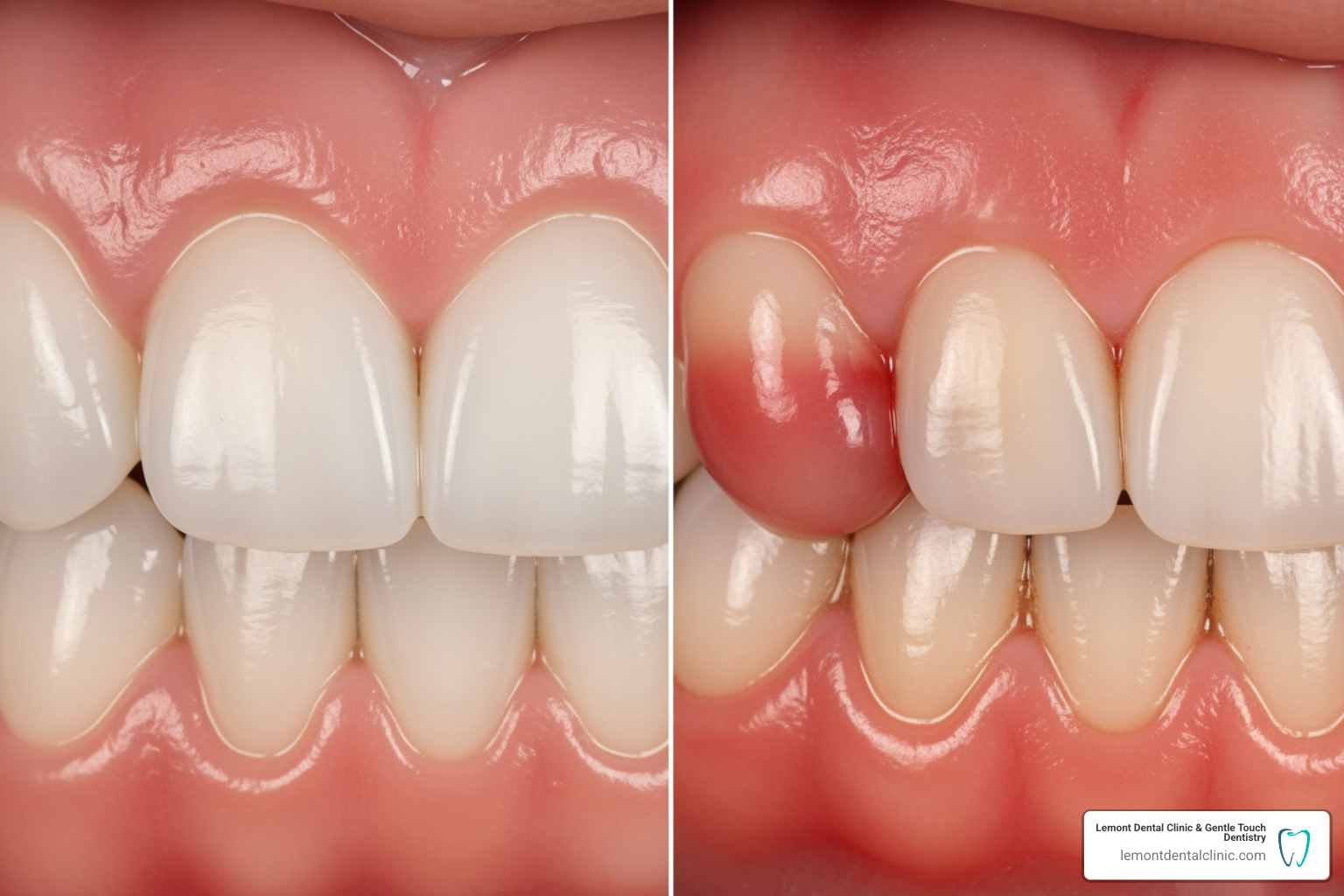
Gingivitis: Inadequate brushing irritates the gumline, causing gingivitis—the earliest stage of gum disease. Gums may become red, swollen, and bleed easily, but it’s usually reversible with better hygiene.
Periodontal Disease: If ignored, gingivitis can progress to periodontal disease, a serious infection that damages the bone and tissue supporting your teeth, potentially leading to tooth loss. It’s a “sneaky enemy,” as we explain here: Periodontal Disease: The Sneaky Enemy of Teeth.
Bad Breath (Halitosis): Lingering bacteria and food particles create unpleasant odors. Better brushing is the first step to fresher breath. Learn more on our page about Bad Breath (Halitosis).
Can you brush your teeth for too long?
This is a great question. It’s less about brushing for “too long” and more about how you brush. Brushing for 2-3 minutes with a gentle, correct technique is beneficial. However, brushing for extended periods with excessive force can cause damage.
The main consequences of brushing too hard include:
Enamel abrasion: Aggressive brushing can wear down your strong tooth enamel, exposing the softer, sensitive layer of dentin underneath.
Tooth sensitivity: When enamel wears away or gums recede, you may feel a zing of pain from hot, cold, or sweet foods.
Gum recession: Brushing too vigorously can push your gums away from your teeth, exposing the roots and making them vulnerable to decay and sensitivity.
We emphasize using proper pressure and technique. A soft-bristled toothbrush and a gentle hand are your best allies. It’s about brushing smarter, not harder.
Mastering Your Technique and Tools for an Effective Clean
You’ve learned how long you should brush your teeth, but spending two minutes with poor technique won’t get you far. To protect your smile, you need to combine the right duration with proper technique and the right tools. At Lemont Dental Clinic & Gentle Touch Dentistry, we see the difference it makes when patients brush well.
The Right Brushing Technique
Your technique can make or break your oral hygiene. Here’s how to become a brushing expert:
Position your brush at a 45-degree angle to your gums. This allows the bristles to clean both the tooth surface and just under the gumline, where plaque hides.
Use gentle, circular motions or short back-and-forth strokes. Think “massage,” not “scrub.” Aggressive brushing damages enamel and gums.
Clean all three surfaces of each tooth: the outer, inner, and chewing surfaces. For the inner surfaces of your front teeth, tilt the brush vertically and use gentle up-and-down strokes.
Don’t forget your tongue. Gently brush your tongue from back to front (or use a tongue scraper) to remove bacteria that cause bad breath.
Choosing Your Toothbrush and Toothpaste
The tools you use matter. Using the right ones can dramatically improve your results.
Always choose a soft-bristled toothbrush. Hard bristles can wear down enamel and cause gums to recede. A small head helps you reach all areas, including back molars. As for the manual versus electric toothbrush debate, both are effective with proper technique. However, electric toothbrushes often remove more plaque and come with helpful features like timers and pressure sensors, making them a great investment for many.
When it comes to toothpaste, fluoride is your friend. It strengthens enamel and prevents cavities. Look for a toothpaste with at least 1,350 parts per million (ppm) fluoride for adults. The ADA Seal of Acceptance on both your toothbrush and toothpaste ensures the product is safe and effective.
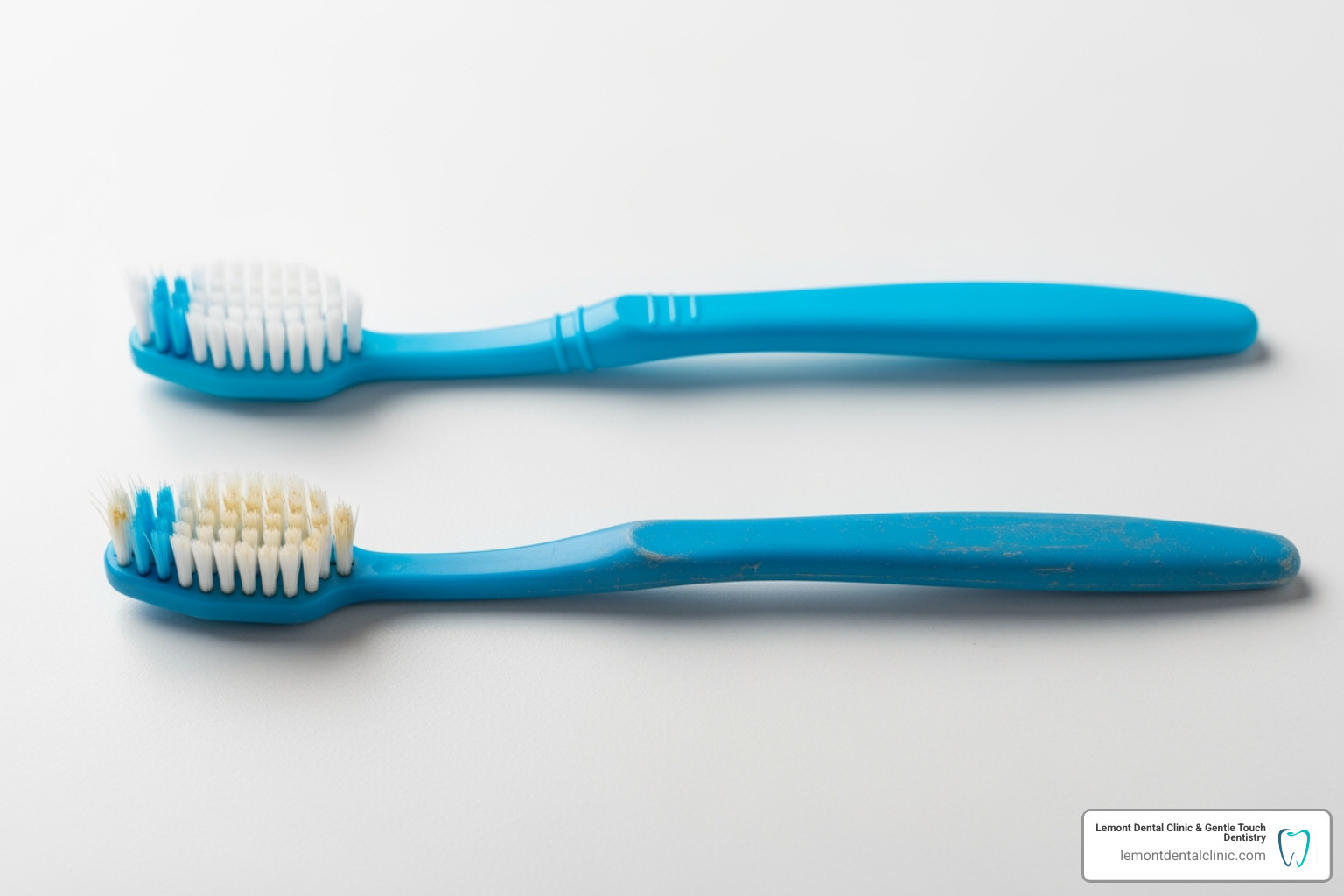
Finally, replace your toothbrush every three to four months, or sooner if the bristles are frayed. Worn bristles don’t clean effectively. Also, replace your brush after being sick to avoid reintroducing germs. Learn more about fluoride’s benefits on our Fluoridation page.
Building a Complete Oral Health Regimen
Brushing correctly is the foundation, but a complete oral health regimen includes more. It’s a holistic approach that involves when you brush, how you clean between your teeth, and what you do afterward. We’re here to help you build a routine that keeps your smile healthy for years.
Brushing Frequency and Timing: When is the best time to brush?
We’ve established that how long should you brush your teeth is two minutes. The standard frequency is at least twice a day—once in the morning and once before bed. Nighttime brushing is crucial because saliva production drops during sleep, leaving your teeth vulnerable to acid-producing bacteria. Brushing before bed removes the day’s buildup and protects your teeth overnight.
Most people brush after breakfast, but if you’ve consumed something acidic (like orange juice, soda, or citrus fruits), wait at least 30 to 60 minutes before brushing. Acids temporarily soften your enamel, and brushing too soon can wear it away. Rinsing with water immediately after can help. The Mayo Clinic offers excellent guidance on this topic: When and how often should you brush your teeth? – Mayo Clinic.
The Role of Flossing and Rinsing
Brushing alone isn’t enough. Your toothbrush can’t reach between your teeth or below the gumline, which is why flossing daily is just as vital. It removes trapped food and plaque, preventing cavities and gum disease in those hard-to-reach spots.
When you floss, gently guide the floss between your teeth, curve it into a “C” shape against one tooth, and slide it up and down, going slightly below the gumline. Use a fresh section of floss for each tooth.
Here’s a pro tip: don’t rinse with water immediately after brushing. Simply spit out the excess toothpaste. This leaves a thin layer of protective fluoride on your teeth to continue strengthening your enamel. If you use mouthwash, use it at a different time, like after lunch, to maximize the fluoride’s benefits. The American Dental Association provides more details on these practices: Home Oral Care Recommendations from the ADA.
How long should you brush your teeth: Special considerations for kids
The two-minute, twice-a-day rule also applies to children. Teaching good habits early is key.
Start early: Clean your baby’s mouth with a soft cloth as soon as the first tooth appears.
Use the right amount of toothpaste: For children under 3, use a smear of fluoride toothpaste (the size of a grain of rice). For children 3 to 6, use a pea-sized amount.
Supervise: Children need help or supervision with brushing until they are at least 7 or 8 years old to ensure they’re cleaning effectively.
Make it fun: Use a timer, play a two-minute song, or use a sticker chart to make brushing an enjoyable routine.
Regular dental visits are also essential for kids. Our team at Lemont Dental Clinic & Gentle Touch Dentistry specializes in gentle care for our youngest patients. Find more information here: Kids Dentist Near Me.
Frequently Asked Questions About Brushing
We’ve covered the essentials of how long should you brush your teeth, but you might have more questions. Here are answers to some of the most common ones we hear at Lemont Dental Clinic & Gentle Touch Dentistry.
Should I brush my tongue?
Yes, absolutely! Your tongue’s textured surface can harbor bacteria, food debris, and dead cells, which are a primary cause of bad breath. Gently brushing your tongue from back to front, or using a dedicated tongue scraper, removes this buildup and instantly freshens your breath. It only takes a few extra seconds and makes a big difference.
What if I have braces or dentures?
Both require extra attention to keep clean.
With braces: Food and plaque can easily get trapped around brackets and wires. Brush for the full two minutes, paying special attention to the areas above and below each bracket. Use interdental brushes and floss threaders or orthodontic floss to clean between teeth and under the archwire. A water flosser can also be very effective.
With dentures: Clean them daily to prevent stains, bad breath, and gum irritation. Remove your dentures and brush them with a soft-bristled denture brush and a non-abrasive denture cleaner (regular toothpaste is too harsh). Also, remember to brush your gums, tongue, and any remaining natural teeth. Soaking dentures overnight is also recommended. For more guidance, see our resources: More info about dentures.
Is an electric or manual toothbrush better?
Both can be highly effective when used correctly for the full two minutes. The best toothbrush is the one you will use properly and consistently.
Manual toothbrushes are affordable and work perfectly with good technique.
Electric toothbrushes often remove more plaque and have helpful features like built-in timers and pressure sensors. They are especially beneficial for people with limited dexterity or those who want to make their routine easier.
Choose the brush that helps you achieve a thorough clean every time.
Conclusion
We’ve covered a lot today, but the main takeaway for how long should you brush your teeth is simple: the gold standard is two minutes, twice a day.
To make those minutes count, remember these key points:
Use proper technique with a 45-degree angle and gentle motions.
Choose the right tools: a soft-bristled brush and fluoride toothpaste.
Build a complete routine that includes daily flossing.
Pay attention to special considerations for kids, braces, or dentures.
Your daily efforts are your first line of defense, but they work best when paired with professional care. At Lemont Dental Clinic & Gentle Touch Dentistry, our experienced doctors use state-of-the-art technology to complement your at-home routine with comprehensive, personalized treatments.
Take what you’ve learned and apply it every day. When it’s time for that essential professional touch, we’re here for you. Ready to give your smile the attention it deserves? Schedule your next Regular Cleaning with our friendly team in Lemont or Palos Hills, IL today!