Why Teeth Tartar Removal Matters More Than You Think
Teeth tartar removal is one of the most important — and most overlooked — parts of keeping your mouth healthy.
Here’s a quick answer if you need it fast:
How is tartar removed from teeth?
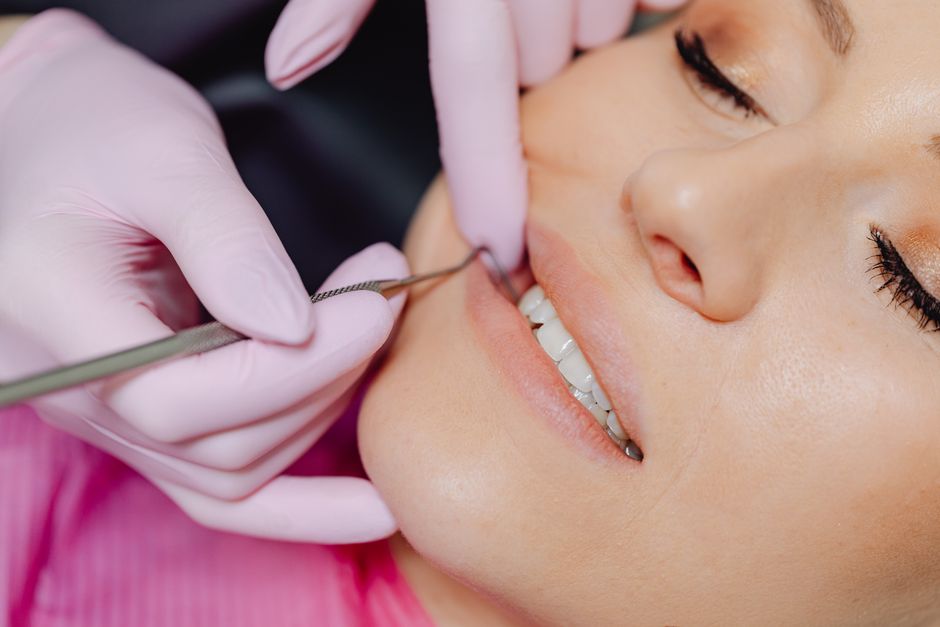
Regular professional cleaning — A dental hygienist uses special tools to scrape tartar from tooth surfaces above the gum line, then polishes your teeth.
Deep cleaning (scaling and root planing) — For tartar below the gum line, your dentist cleans deeper into gum pockets and smooths the tooth roots.
At-home care — Brushing, flossing, and tartar-control toothpaste prevent tartar from forming, but cannot remove hardened deposits once they’re there.
Bottom line: Once plaque hardens into tartar, only a dental professional can safely remove it.
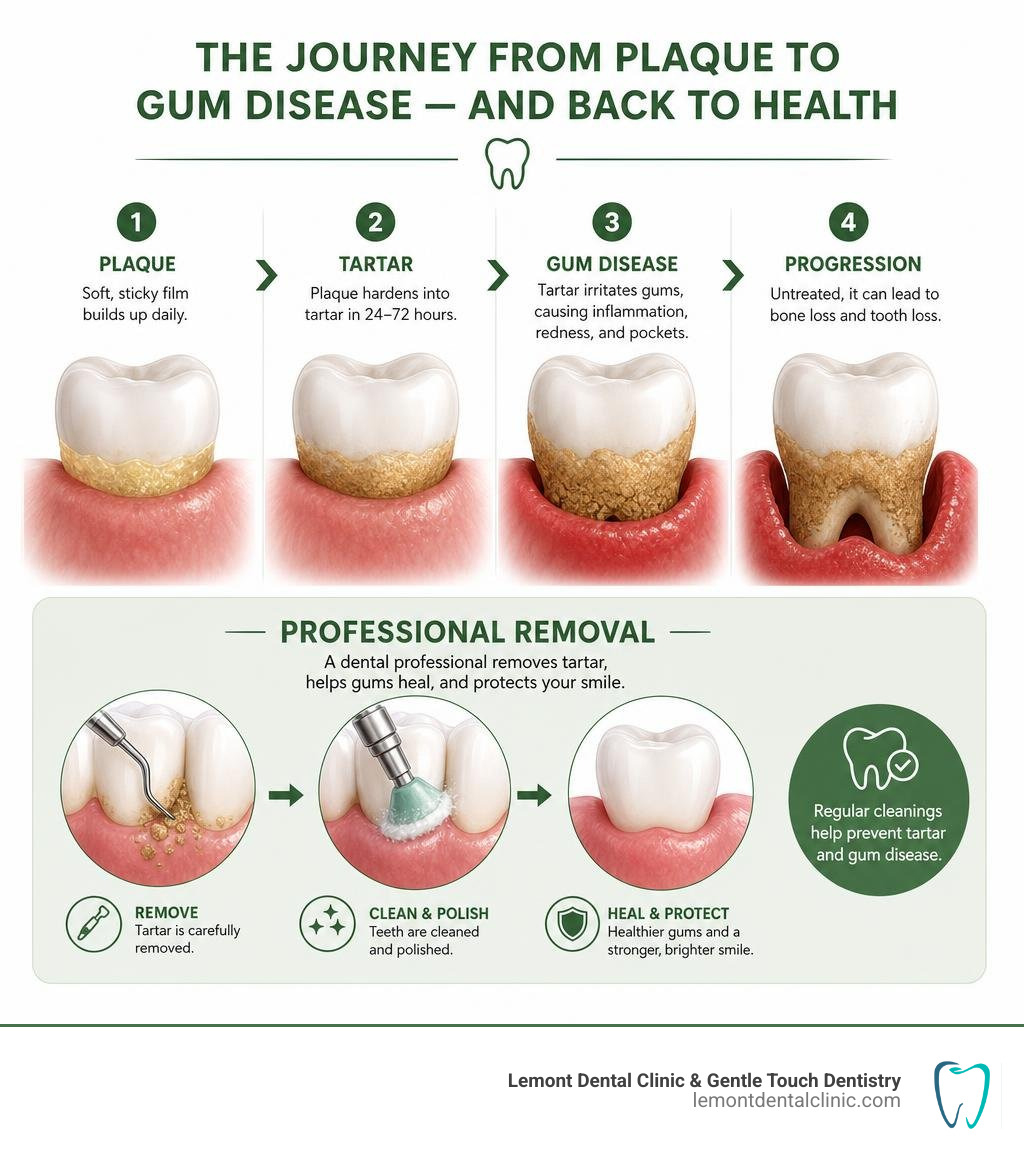
So what’s the big deal? Plaque — that soft, sticky film on your teeth — forms every single day. If it isn’t cleared away, it hardens into tartar (also called dental calculus) within just 24 to 72 hours. According to the American Dental Association, approximately 68% of adults have tartar buildup right now.
Left alone, tartar doesn’t just sit there looking yellow. It drives gum disease, bad breath, and even serious health problems beyond your mouth.
The good news: professional tartar removal is straightforward, effective, and far less uncomfortable than most people fear.
To understand how to get rid of tartar, we first have to understand what it actually is.
Every time you eat, the bacteria in your mouth feast on the leftover carbohydrates and sugars. This process creates a soft, sticky, and virtually invisible film known as dental plaque. Plaque is highly active and constantly growing. If you brush and floss thoroughly twice a day, you can sweep most of this sticky film away before it causes trouble.
However, if plaque is left on your teeth for more than 24 to 72 hours, a chemical transformation occurs. Your saliva is naturally rich in minerals designed to strengthen and protect your enamel. But when these minerals — specifically calcium phosphate, calcium carbonate, and magnesium phosphate — mix with the unremoved plaque, they begin to crystallize.
This mineralization process turns the soft, sticky plaque into a rock-hard, cement-like substance called dental tartar (or calculus). You can read more about this biological process in the medical guide on Tartar on Teeth (Dental Calculus): Causes & Removal.
Once tartar forms, it creates a rough, porous shield over your teeth. This rough surface acts like Velcro, making it much easier for new plaque, food debris, and staining agents (from coffee, tea, or tobacco) to stick to your teeth. Over time, this cycle creates layers of hardened calculus that can build up both above and below your gum line. Because it is literally mineralized onto your enamel, no amount of manual brushing or vigorous flossing can budget it. For a deeper dive into how this cycle impacts your overall oral health, explore our Dental Cleaning Complete Guide.
The Health Risks of Untreated Tartar Buildup
Leaving tartar on your teeth is not just a cosmetic issue. It is an open invitation for chronic oral infections.
Because tartar is highly porous, it houses millions of active, living bacteria right against your teeth and gums. This constant bacterial presence triggers several health complications:
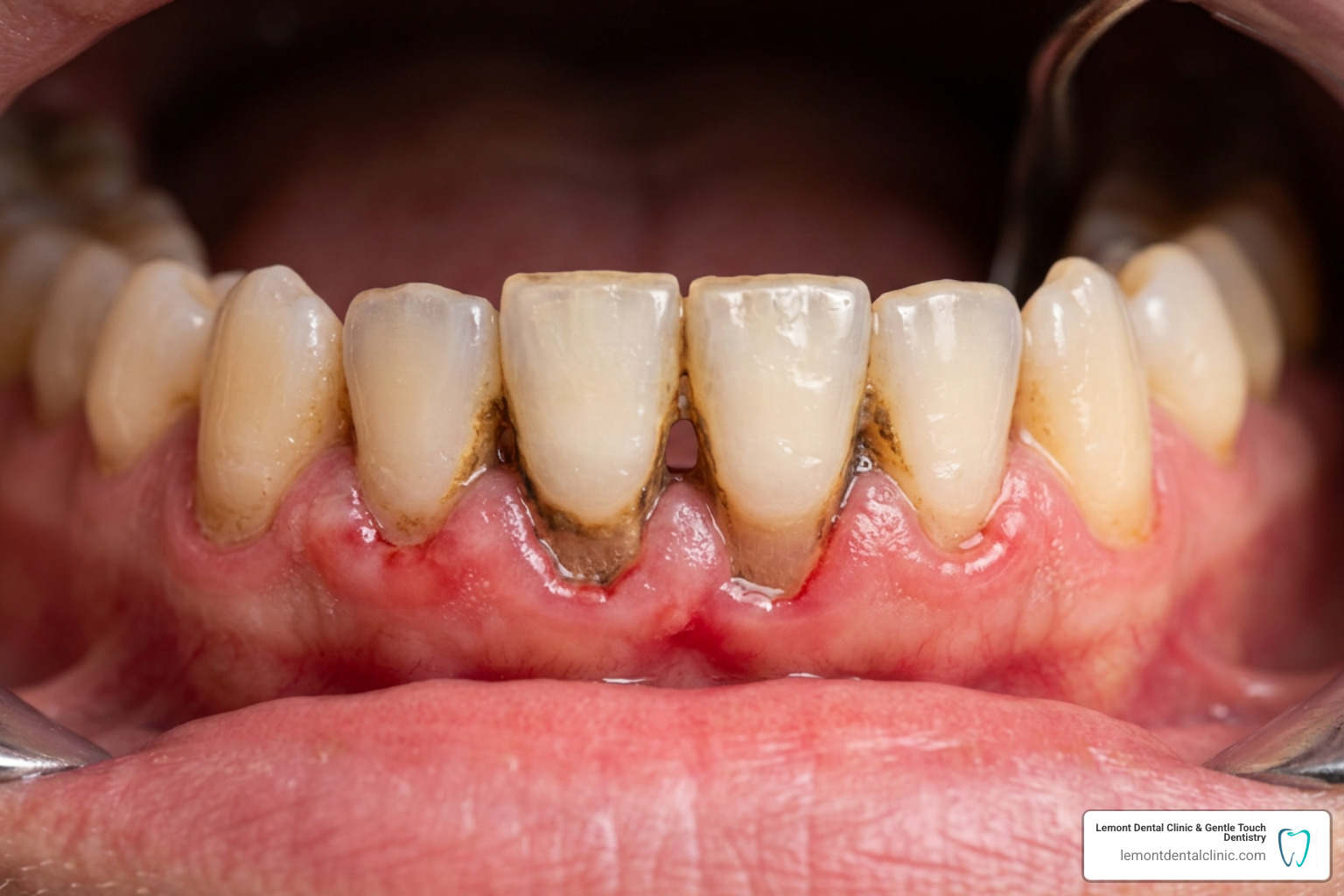
Gingivitis: The bacteria in tartar irritate the surrounding gum tissue, causing it to become red, swollen, tender, and prone to bleeding during brushing or flossing.
Periodontal Disease: If gingivitis is ignored, the inflammation worsens. The gums begin to pull away from the teeth, creating deep “pockets” where even more bacteria and tartar accumulate. Over time, over 47% of adults aged 30 and older show signs of periodontal disease linked to this tartar accumulation. Eventually, the infection destroys the supporting bone, leading to loose teeth or tooth loss.
Bad Breath (Halitosis): The bacteria living within the pockets of tartar release volatile sulfur compounds, causing a persistent, unpleasant odor that mouthwash cannot cure.
Tooth Decay: Because tartar blocks your toothbrush and toothpaste from reaching the actual tooth surface, acid-producing bacteria can quietly erode your enamel underneath the buildup, leading to hidden cavities.
The dangers of untreated tartar do not stop in your mouth. When your gums are chronically inflamed, they bleed easily. This creates a direct highway for oral bacteria to enter your bloodstream. Once in your system, these bacteria can travel to other organs, contributing to systemic health issues such as heart disease, stroke, poorly controlled diabetes, and respiratory infections.
By prioritizing regular removal of this hardened buildup, you can reduce your risk of gum disease by up to 50%. You can learn more about the best ways to manage plaque and early buildup at home in this article on How to remove plaque and tartar: Best home treatments. For cases where the buildup has already traveled beneath the gum line, a professional Deep Cleaning is required to stop the infection from destroying your jawbone.
Professional Teeth Tartar Removal: What to Expect
When you visit us for professional teeth tartar removal, you are receiving a highly targeted, therapeutic treatment designed to restore your mouth to a clean, healthy baseline.
Many patients ask us about the difference between a standard preventive cleaning and a deep cleaning. A regular cleaning (prophylaxis) is preventative and focuses on the tooth surfaces above the gum line. A deep cleaning (scaling and root planing) is a therapeutic treatment used when tartar has worked its way deep beneath the gums, causing bone loss and deep pocket depths (typically 4 millimeters or deeper).
Here is a quick comparison to help you understand what to expect:
Feature
Regular Dental Cleaning (Prophylaxis)
Deep Cleaning (Scaling & Root Planing)
Primary Goal
Prevention of decay and gum disease
Treating active gum disease (periodontitis)
Target Area
Tooth surfaces above the gum line
Deep beneath the gum line and along tooth roots
Anesthesia
Rarely needed
Often recommended (local numbing gel or injection)
Tools Used
Ultrasonic scalers, hand instruments, polishing cup
As needed; followed by maintenance every 3-4 months
Step-by-Step Guide to Professional Teeth Tartar Removal
When you sit in our chair for a professional cleaning, we follow a precise, gentle, and highly effective protocol to clear away every trace of plaque and calculus:
The Oral Examination: Before we touch a tool, we carefully examine your teeth and gums. We check for signs of decay, measure your gum pockets, and look for areas of heavy tartar accumulation.
Ultrasonic Scaling: We begin the removal process using an ultrasonic scaler. This modern device uses high-frequency vibrations combined with a gentle stream of water to instantly shatter and wash away large chunks of hardened tartar. Learn more about how this comfortable technology works by reading about Ultrasonic Teeth Cleaning.
Manual Fine-Tuning: Once the bulk of the tartar is gone, we use specialized manual hand instruments (scalers and curettes) to gently scrape away any remaining micro-deposits, especially between the teeth and just under the gum line.
Polishing: After all the hard deposits are cleared, we polish your teeth using a soft, spinning rubber cup and a gritty prophylactic paste. This step removes surface stains and leaves your enamel perfectly smooth, making it much harder for new plaque to stick.
Flossing and Fluoride: We finish by flossing between every tooth to ensure no debris remains, followed by a professional fluoride treatment if needed to strengthen your freshly cleaned enamel.
Why At-Home Teeth Tartar Removal Devices Fall Short
With the rise of online shopping, many people are tempted to buy cheap, DIY electric tartar removers, metal scrapers, or dental scaling kits to use at home. We strongly advise against this.
Using sharp steel tools or vibrating DIY devices in your own mouth without professional training is highly dangerous. It is incredibly easy to make a slip and slice your delicate gum tissue, leading to painful infections. Furthermore, scrape-at-home methods often scratch your tooth enamel. These micro-scratches actually create a rougher surface, allowing plaque and stain-causing bacteria to attach even faster than before. You also risk pushing the tartar deeper into your gum pockets, accelerating gum recession and bone loss.
While at-home products like Tartar Removal Toothpaste for Healthy Teeth and Gums are excellent tools, they are strictly preventive. These toothpastes contain pyrophosphates or zinc ions that chemically bind to the minerals in your saliva, delaying the rate at which plaque calcifies. However, they cannot dissolve or break down tartar that has already hardened onto your teeth.
Frequently Asked Questions About Tartar
Can you remove tartar at home without a dentist?
No. While you can find endless DIY tutorials online recommending baking soda pastes, apple cider vinegar rinses, or coconut oil pulling, these methods cannot remove hardened dental calculus. Baking soda and oil pulling are wonderful for reducing soft plaque and surface stains, but once minerals from your saliva have crystallized the plaque into tartar, it is chemically bonded to your enamel. Attempting to scrape it off yourself with makeshift tools will damage your teeth. Only professional scaling can safely break that bond without harming your enamel.
How often should you get professional tartar removal?
For most patients with healthy gums, a professional cleaning every six months is ideal. However, your cleaning schedule should be tailored to your unique oral health. Patients who smoke, wear orthodontic braces, have a history of periodontal disease, or naturally produce mineral-heavy saliva that forms calculus quickly may need to visit us every three to four months for maintenance.
Does professional tartar removal hurt?
Generally, no! A routine scaling and polishing should not be painful. You will feel some mild pressure, tickling vibrations from the ultrasonic tool, and hear a high-pitched sound, but it is highly manageable. If your gums are already swollen and inflamed due to tartar buildup, you might experience some mild sensitivity. In those cases, or during a deep cleaning, we can easily apply a localized numbing gel or local anesthesia to ensure you remain completely comfortable throughout the visit.
Conclusion
At Lemont Dental Clinic & Gentle Touch Dentistry, we believe that a healthy, radiant smile starts with exceptional preventive care. Our experienced team utilizes the latest dental technology to provide gentle, highly effective teeth tartar removal at competitive prices that keep your family’s budget in mind.
If you live in Lemont, Palos Hills, or surrounding communities like Hickory Hills, Worth, or Oak Lawn, let us help you keep your smile in peak condition. Don’t wait for bleeding gums or bad breath to tell you there is a problem. Keep your enamel smooth, your breath fresh, and your gums healthy by scheduling your next Regular Cleaning with us today!