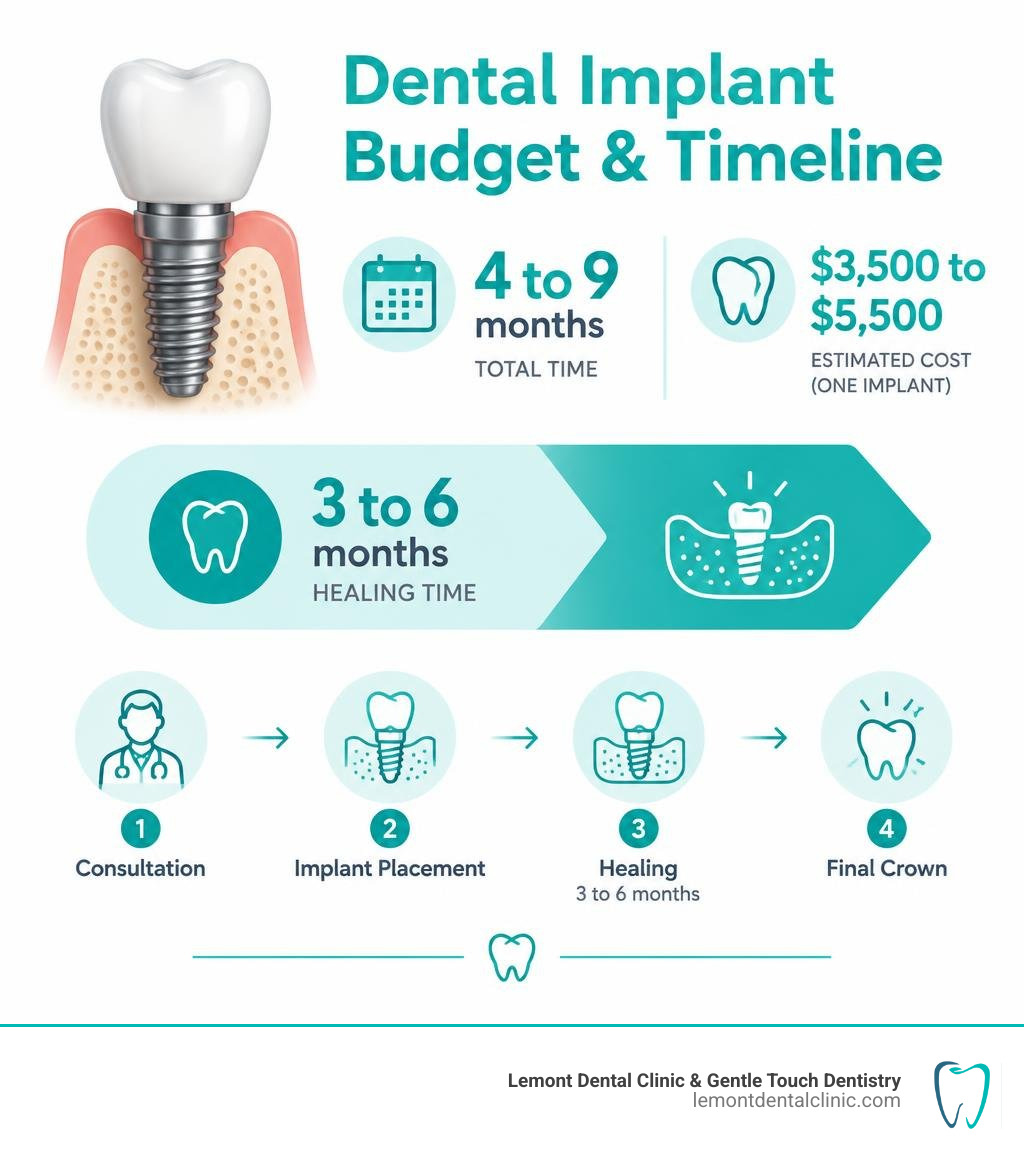
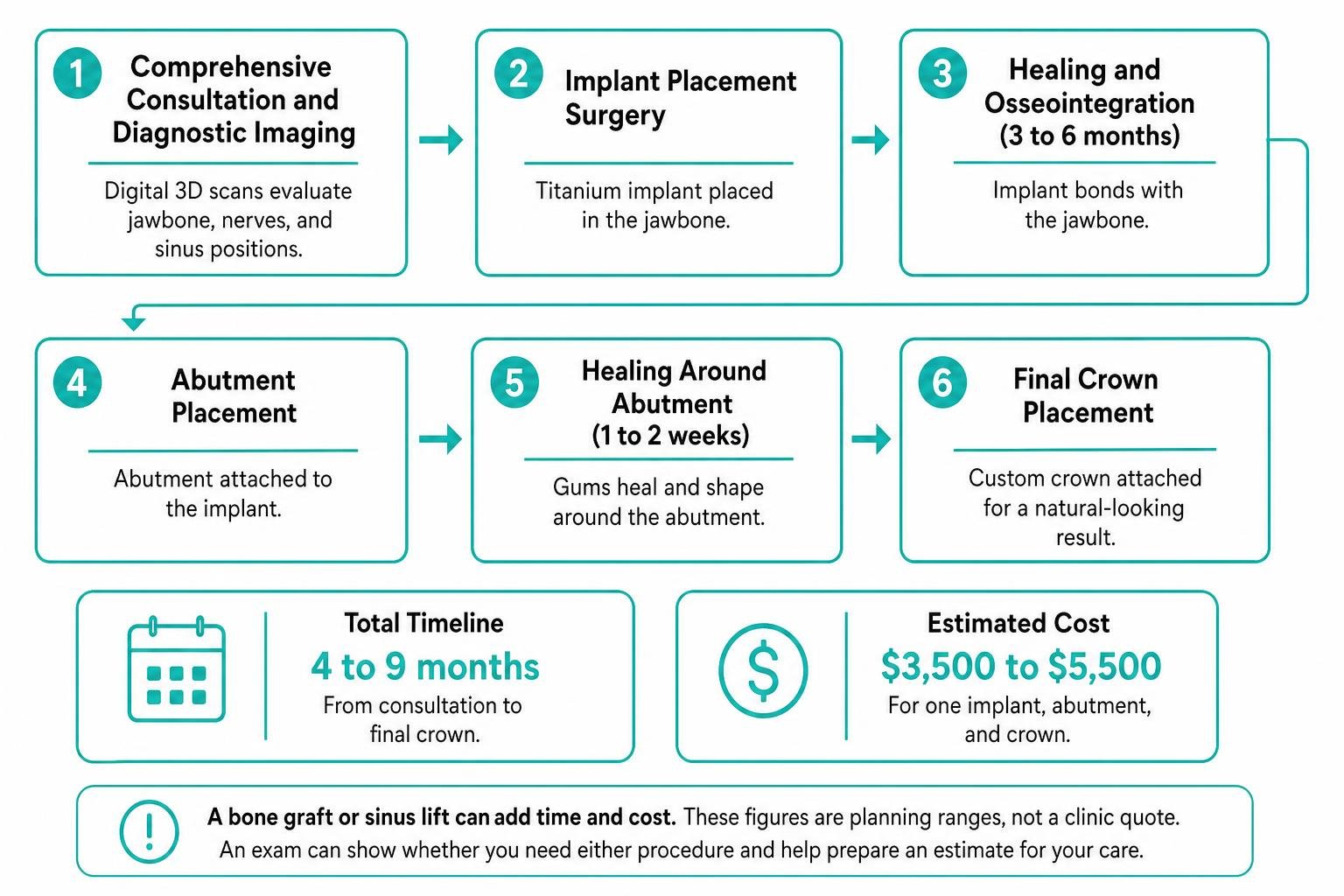
For an estimate of implant healing time and cost in Lemont, plan on 4 to 9 months from consultation to final crown and $3,500 to $5,500 for one implant, abutment, and crown. The implant usually needs 3 to 6 months to bond with the jawbone.
A bone graft or sinus lift can add time and cost. These figures are planning ranges, not a clinic quote. An exam can show whether you need either procedure and help Lemont Dental Clinic & Gentle Touch Dentistry prepare an estimate for your care.
Discover more about Lemont implant healing time estimate cost:
Understanding the Lemont Implant Healing Time Estimate Cost
When planning for tooth restoration in 2026, budgeting involves balancing financial investment with the biological timeline required for your jaw to heal. At Lemont Dental Clinic & Gentle Touch Dentistry, we guide our patients across Lemont, Palos Hills, Lockport Heights, and surrounding communities through every clinical stage so there are no surprises along the way. Obtaining a reliable dental implants cost estimate requires looking closely at what happens beneath the gumline during the entire 4-to-9 month process.
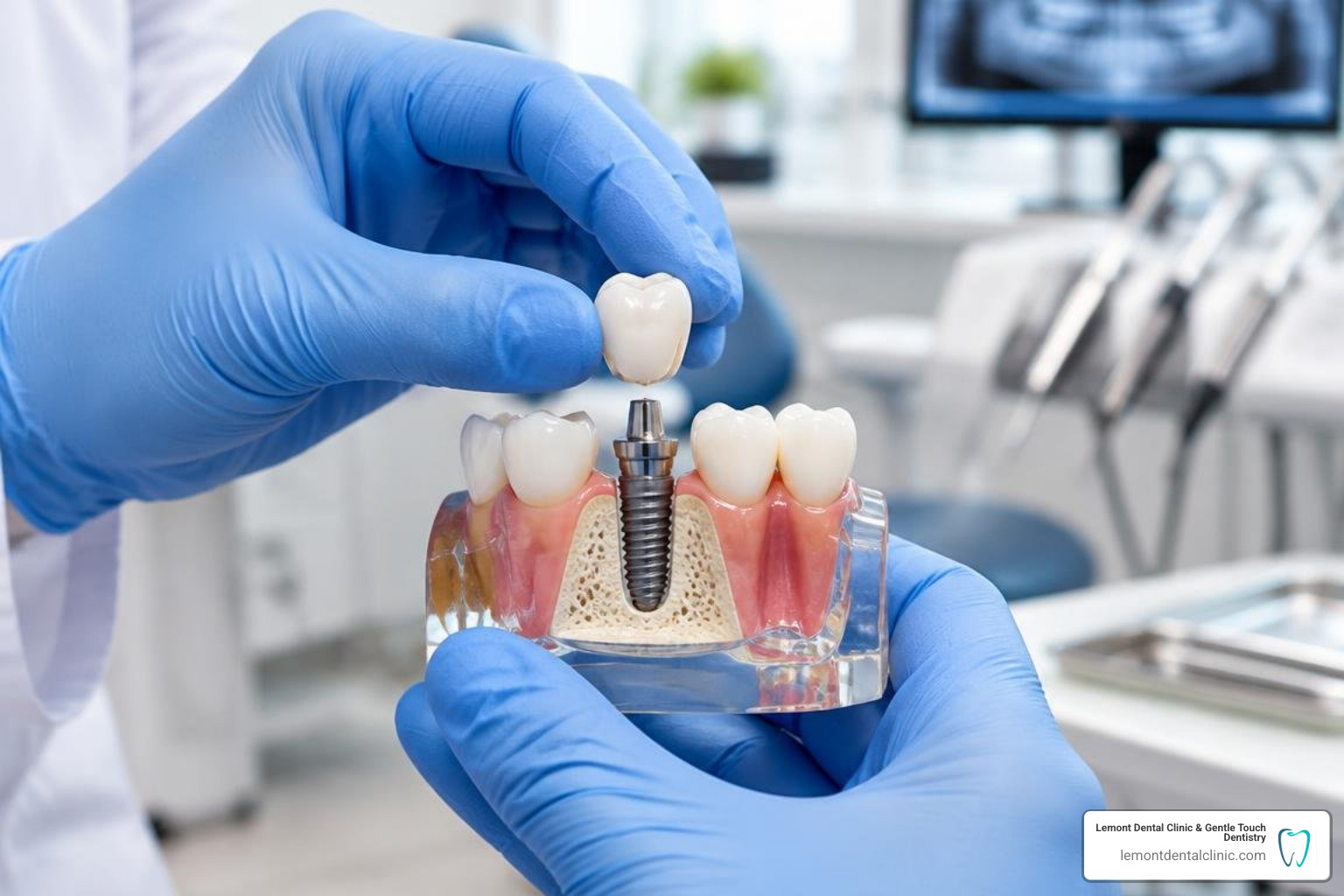
The foundation of modern implant dentistry rests on osseointegration—a biological phenomenon where titanium posts fuse directly with your natural jawbone tissue. Titanium is unique because bone cells naturally adhere to its biocompatible surface, creating an anchor that functions just like a natural tooth root. Because bone rebuilds gradually, allowing adequate healing time is essential for ensuring your replacement tooth remains sturdy for decades.
Key Phases of the Implant Surgery and Recovery Timeline
The dental implant journey consists of several predictable stages, each designed to protect the surgical site while building a functional replacement tooth:
Comprehensive Consultation and Diagnostic Imaging: We capture digital 3D scans to evaluate your jawbone density, nerve pathways, and sinus cavity positions.
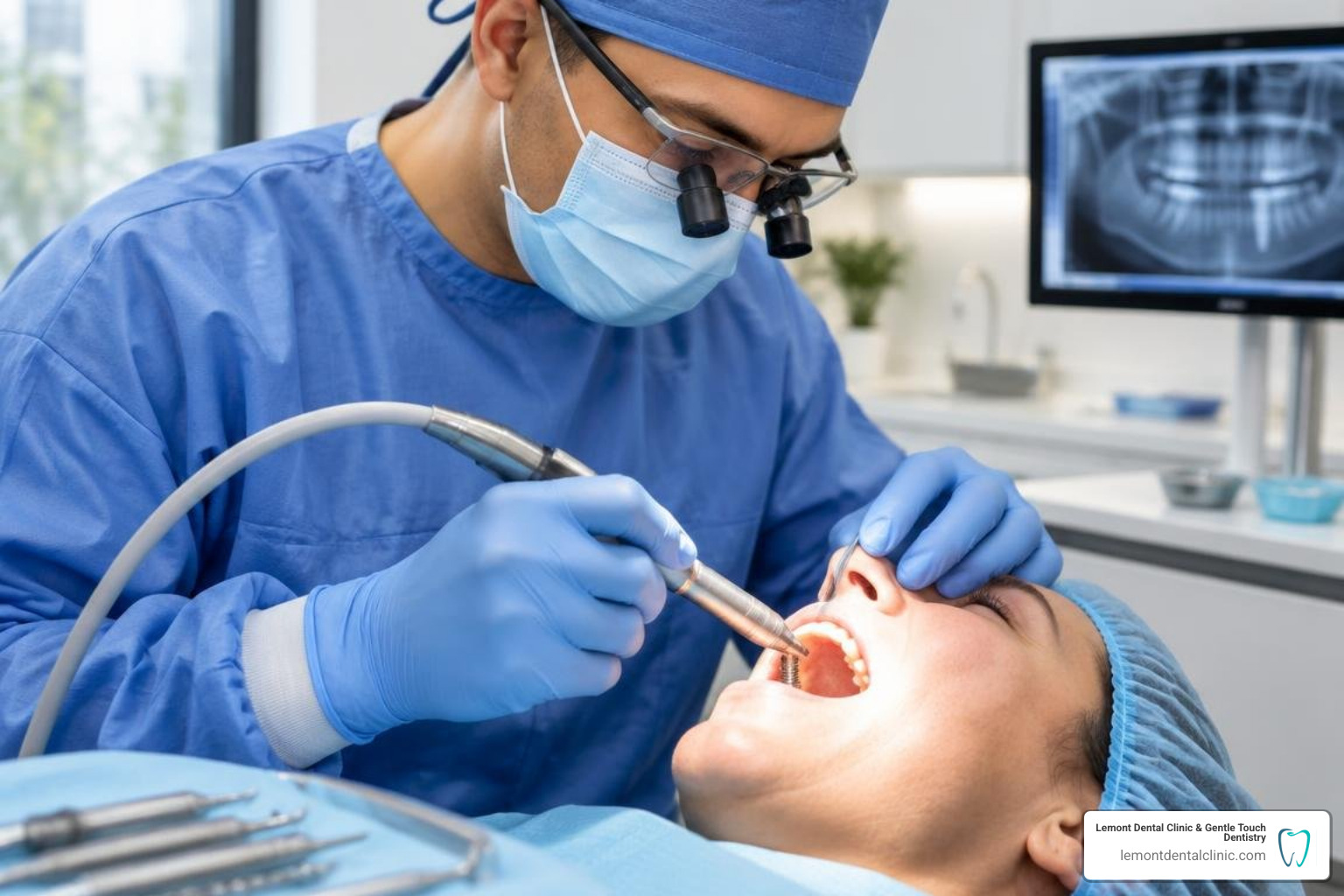
Surgical Placement: The implant fixture is positioned into the jawbone during an in-office procedure that typically takes between 30 minutes and 2 hours, performed comfortably under local anesthesia.
Osseointegration and Bone Healing: Over the next 3 to 6 months, natural bone remodeling secures the titanium fixture in place.
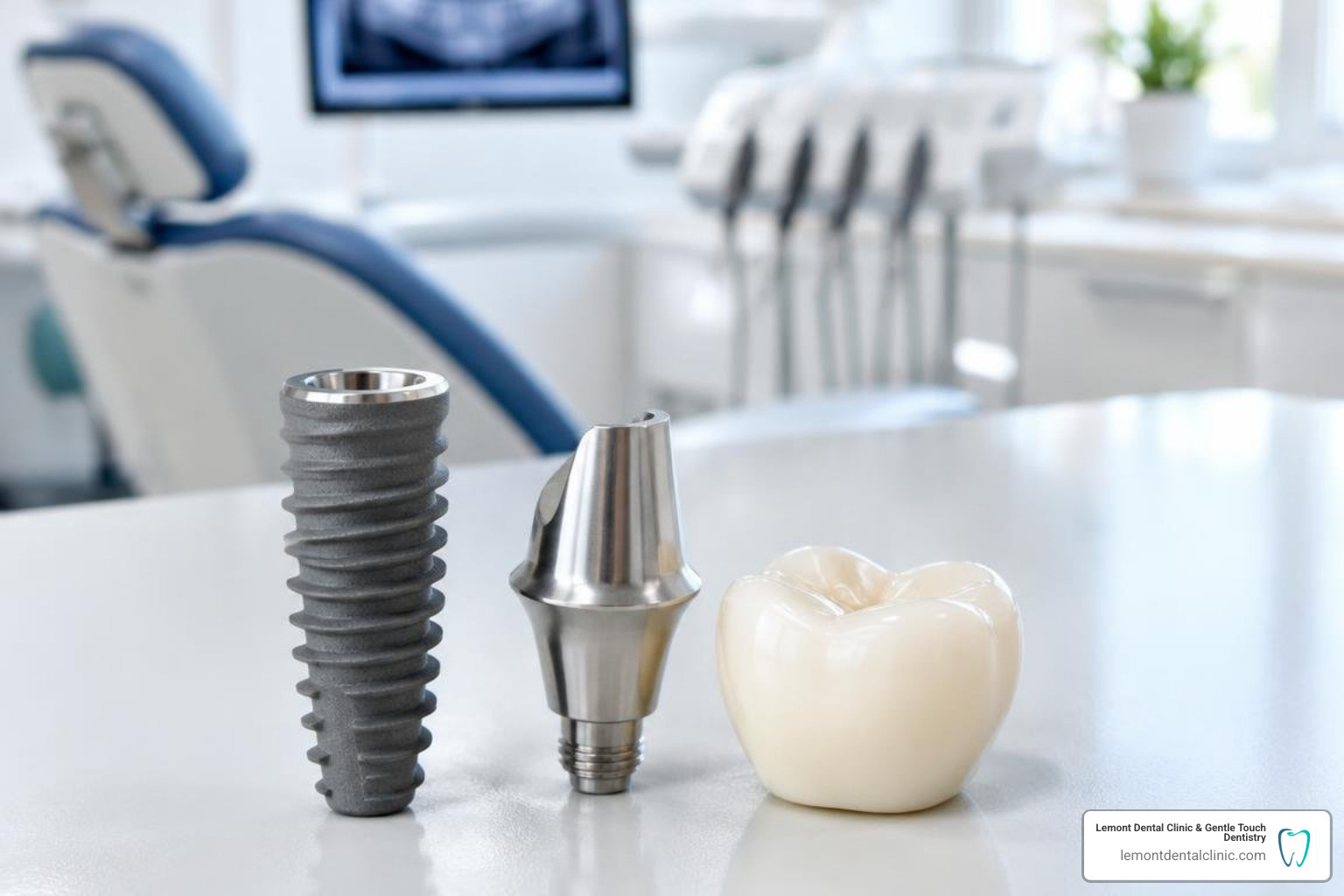
Abutment Connection: Once integration is complete, a small connector piece called an abutment is attached to the top of the implant post.
Final Restoration: Our team designs and fits custom implant crowns to match the exact shade, contour, and bite alignment of your natural smile.
How Age and Bone Health Impact Lemont Implant Healing Time and Cost
A common misconception among our older patients in Cook and Will Counties is that age alone prevents them from getting dental implants. In reality, overall systemic health and jawbone quality matter far more than chronological age. According to insights from a clinical study on age-related dental implant outcomes, seniors achieve exceptional success rates when receiving dental implants.
Natural cellular turnover slows down slightly as we get older, which means osseointegration may take a few weeks longer in seniors compared to younger adults. The table below outlines how healing periods and overall success rates typically look across different age brackets:
Age Group
Typical Healing Timeline
Clinical Success Rate
Primary Considerations
50–59 Years
4 to 5 Months
96% – 98%
Excellent baseline bone density and rapid cellular regeneration
60–69 Years
5 to 6 Months
95% – 97%
Strong osseointegration; monitor blood pressure and blood sugar
70–79 Years
6 to 7 Months
93% – 96%
Slight reduction in bone density; gentle surgical protocols
80+ Years
7 to 8+ Months
90% – 95%
Extended healing window; focus on overall systemic stability
Estimated Expenses for Implants and Preparatory Procedures
Understanding the total financial investment requires breaking down the individual components of your care. For a standard, uncomplicated single tooth restoration, our dental implants cost per tooth guide shows an average price range of $3,500 to $5,500. This investment covers the surgical fixture, the custom abutment, and the handcrafted crown.
For senior patients requiring specialized restorative care, comprehensive single implant plans often range from $6,000 to $8,000 when accounting for complex restorative components and specialized follow-up care. To help keep treatment manageable, we offer structured dental payment plans that allow you to distribute costs across monthly intervals during your treatment timeline.
Calculating Preparatory Bone Graft and Sinus Lift Expenses
When a tooth is lost or extracted, the surrounding bone begins to resorbe over time. Addressing the silent threat of jawbone deterioration early helps preserve the facial structure and ensures there is enough bone volume to support an implant.
If your jawbone volume has thinned, preparatory procedures are needed before or during implant placement:
Bone Grafting: Placing specialized grafting material rebuilds lost bone height and width. A bone graft for tooth implant typically adds $600 to $1,200 to standard treatment (or $1,000 to $2,500 for complex senior grafting procedures). Bone grafts generally require an additional 3 to 6 months of healing before or alongside implant placement.
Sinus Lift Augmentation: For missing upper molars, the sinus cavity often sits too close to the jawline. A sinus lift gently raises the sinus floor and places bone graft beneath it, costing between $1,500 and $2,500 (or $1,500 to $3,000 for complex cases). This procedure adds roughly 4 to 6 months of healing time to ensure solid bone integration.
Single Restorations vs. Full Arch Tooth Replacement Options
Patients replacing multiple missing teeth or full dental arches have several restorative options. While replacing single teeth focuses on individual crowns, comprehensive arch reconstructions use strategically placed implants to anchor an entire row of teeth. Reviewing the cost of All-on-4 dental implants helps patients budget for complete smile transformations:
Treatment Type
Estimated Cost Range
Healing & Recovery Window
Ideal Clinical Application
Single Dental Implant
$3,500 – $5,500
3 to 6 Months
Individual missing tooth with adequate bone support
Bone Grafting (Adjunct)
$600 – $1,200
Adds 3 to 6 Months
Localized bone deficiency at the implant site
Sinus Lift (Adjunct)
$1,500 – $2,500
Adds 4 to 6 Months
Insufficient vertical bone height in the upper jaw
All-on-4 Full Arch
$22,000 – $30,000
4 to 6 Months
Complete upper or lower arch replacement using 4 posts
All-on-8 Full Arch
$30,000 – $40,000
5 to 7 Months
Maximum bite force distribution using 8 supportive posts
Clinical and Lifestyle Factors That Influence Recovery
Your personal healing rate depends significantly on your underlying health and daily habits. The long-term dental implants health benefits—such as preserved bone volume and improved chewing efficiency—rely on establishing a clean, stable biological environment during recovery.
Several systemic health factors require careful management during the planning stage:
Diabetes Management: Elevated blood sugar levels can slow down collagen synthesis and bone remodeling. Well-controlled diabetes allows for safe, predictable osseointegration, whereas uncontrolled blood sugar increases the risk of infection.
Cardiovascular Health and Blood Thinners: Medications that manage blood pressure or thin the blood must be coordinated with your physician to prevent excessive bleeding during the minor surgical placement.
Osteoporosis Medications: Certain antiresorptive medications, including bisphosphonates, require review to ensure the jawbone remodels predictably after surgery.
Lifestyle Habits and Smoking Risks During Osseointegration
Lifestyle habits play a direct role in how well your body recovers from implant placement. Tobacco use constricts microvascular blood vessels in the gum tissue, depriving healing bone cells of oxygen and essential nutrients. Studies show that smoking can significantly elevate the risk of implant complications and early failure compared to non-smokers. We advise avoiding all tobacco and nicotine products before your procedure and throughout the osseointegration phase.
Equally important is daily oral hygiene. While titanium posts cannot develop traditional cavities, the surrounding gums can develop peri-implantitis—an inflammatory condition caused by bacterial plaque buildup that leads to bone loss. Gentle brushing, antimicrobial rinses, and specialized flossing protect the delicate gum seal around your implant.
Same-Day Temporary Options and Your Lemont Implant Healing Time Estimate Cost
No patient wants to walk out of our office with a visible gap in their smile. Depending on your bone quality and the location of the missing tooth, we provide provisional solutions during the healing phase.
Wearing a temporary tooth while waiting for implant integration keeps your smile looking natural while protecting the surgical site from direct biting pressure. For patients receiving complete arch replacements, temporary teeth in All-on-4 procedures deliver functional, natural-looking prosthetics attached to your implants on the day of surgery while the underlying bone fully integrates.
Post-Operative Care Protocols for Optimal Recovery
Ensuring a smooth recovery after surgery involves following several straightforward aftercare steps:
Manage Swelling and Discomfort: Apply a cold compress to the cheek in 20-minute intervals during the first 24 to 48 hours to minimize swelling. Take prescribed or recommended pain relief as directed.
Follow Antibiotic Regimens: Complete any prescribed course of antibiotics to protect the surgical site from bacterial contamination.
Maintain a Soft-Food Diet: Eat nourishing, soft foods such as smoothies, yogurts, soups, scrambled eggs, and mashed potatoes for the first one to two weeks. Avoid hard, crunchy, or chewy foods that could place excessive force on the implant.
Protect the Blood Clot: Avoid drinking through a straw, spitting forcefully, or smoking for at least 48 to 72 hours, as suction can disturb the surgical site.
Gentle Oral Rinsing: Beginning 24 hours after surgery, gently rinse with warm salt water after meals to keep the area clean without disturbing the healing gums.
Frequently Asked Questions About Implant Healing and Costs
How long does the entire implant process take from start to finish?
From your initial 3D imaging consultation to the placement of your permanent custom crown, the single-tooth implant process typically spans 4 to 9 months. If you need preparatory procedures like bone grafting or a sinus lift, the timeline may extend by 3 to 6 months to ensure a solid foundation.
Does dental insurance cover the surgical and restorative phases?
Coverage depends on your specific dental insurance plan. While traditional policies often categorize dental implants under major restorative care with annual maximum limits, some modern plans provide partial coverage for preparatory extractions, bone grafting, or the final crown. You can also explore options for medical insurance for dental implants when tooth loss results from systemic conditions or trauma. Our administrative team helps itemize and submit claims to maximize your available benefits.
What should I do if I experience pain or complications during recovery?
Mild soreness, minor bruising, and slight swelling are normal for 3 to 5 days following implant placement and respond well to over-the-counter pain relievers and ice packs. However, if you experience throbbing pain that worsens after several days, persistent bleeding, high fever, or noticeable mobility in the implant post, contact our office right away for an evaluation.
Conclusion
Restoring your smile with dental implants provides permanent stability, natural aesthetics, and vital bone preservation. By understanding the timeline and associated expenses, you can confidently plan your care from start to finish. At Lemont Dental Clinic & Gentle Touch Dentistry, our experienced team provides modern, high-quality general and restorative dentistry tailored to your personal goals and budget.
We serve patients throughout Lemont, Palos Hills, Hickory Hills, Oak Lawn, Orland Park, Romeoville, Bolingbrook, and neighboring areas across Will and Cook Counties.
Contact Our Team Today
Lemont Dental Clinic: 15531 127th St, Lemont, IL 60439 Hours: Monday – Friday: 9:00 AM – 6:00 PM | Saturday: 9:00 AM – 2:00 PM | Sunday: Closed
Gentle Touch Dentistry: 10601 SW Hwy, Palos Hills, IL 60465 Hours: Monday – Friday: 9:00 AM – 6:00 PM | Saturday: By Appointment | Sunday: Closed
Schedule a consultation with our experienced dental team to receive a comprehensive examination, customized digital imaging, and a detailed plan for your dental implants.