Losing Teeth Changes Everything — Here’s What Full Mouth Dental Implants Can Do
Full mouth dental implants are a permanent tooth replacement solution that uses titanium posts anchored in the jawbone to support a full arch of prosthetic teeth — for one or both jaws.
Quick answer: what you need to know
Question
Answer
What are they?
Titanium implants + abutments + full prosthetic arch
How many implants per arch?
Typically 4–8, depending on the system
Can you get teeth the same day?
Yes, with All-on-4 / teeth-in-a-day techniques
How long do they last?
Potentially a lifetime with proper care
Typical cost per arch
Roughly $20,000–$30,000+
Recovery time
~2 weeks initial; 3–6 months full healing
Tooth loss is about far more than gaps in your smile.
When you’re missing most or all of your teeth, everyday things become hard. Chewing is painful or awkward. Speaking clearly takes effort. And for many people, confidence takes a serious hit.
Traditional dentures help — but they come with real drawbacks. They shift. They require adhesives. Over time, they can accelerate the bone loss they were meant to replace.
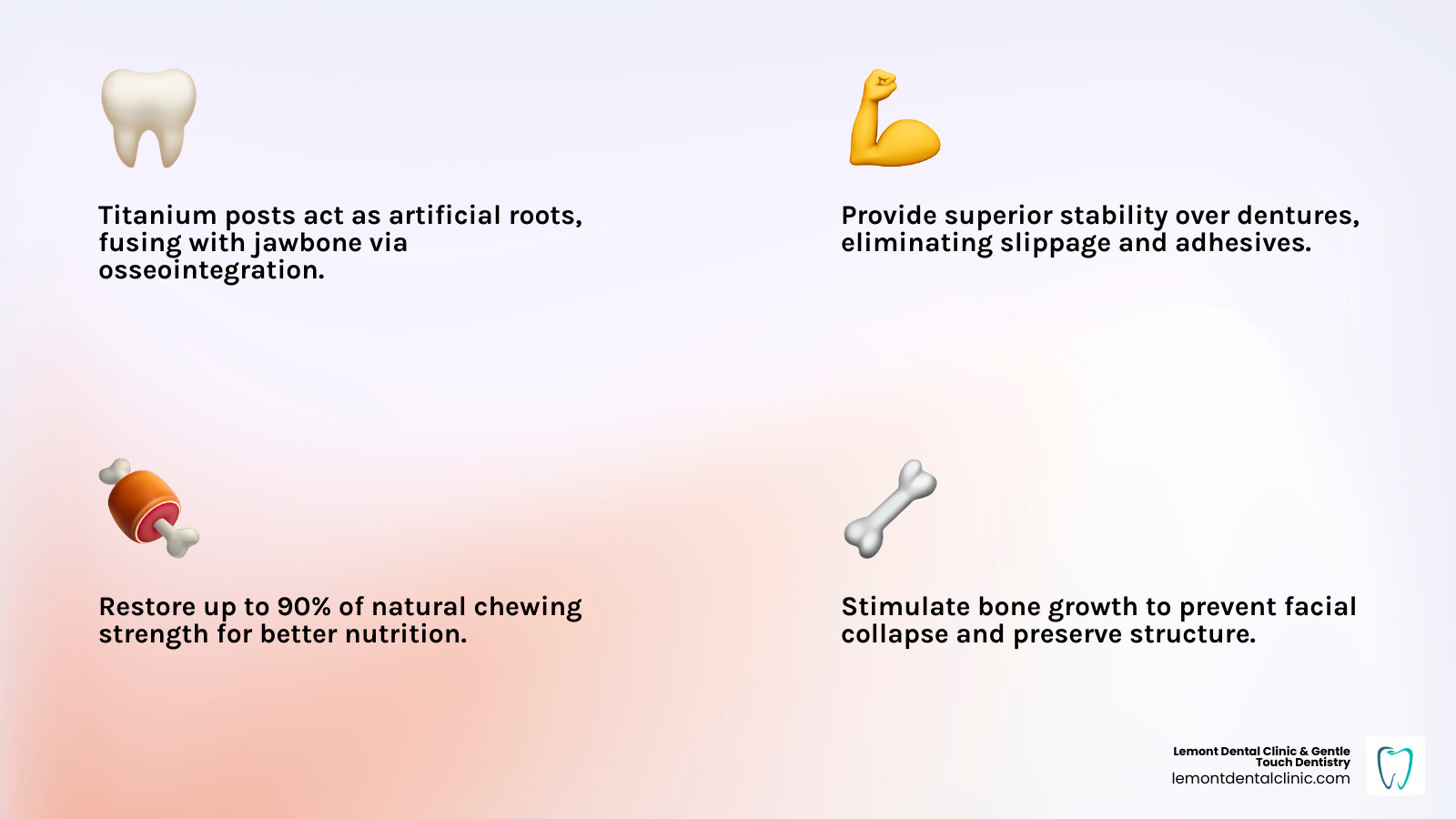
Full mouth dental implants work differently. They replace not just the visible tooth, but the root beneath it. That root stimulates the jawbone, helping preserve your facial structure and long-term oral health.
This guide walks through the honest pros and cons of full mouth restoration — so you can decide if it’s the right path for you.
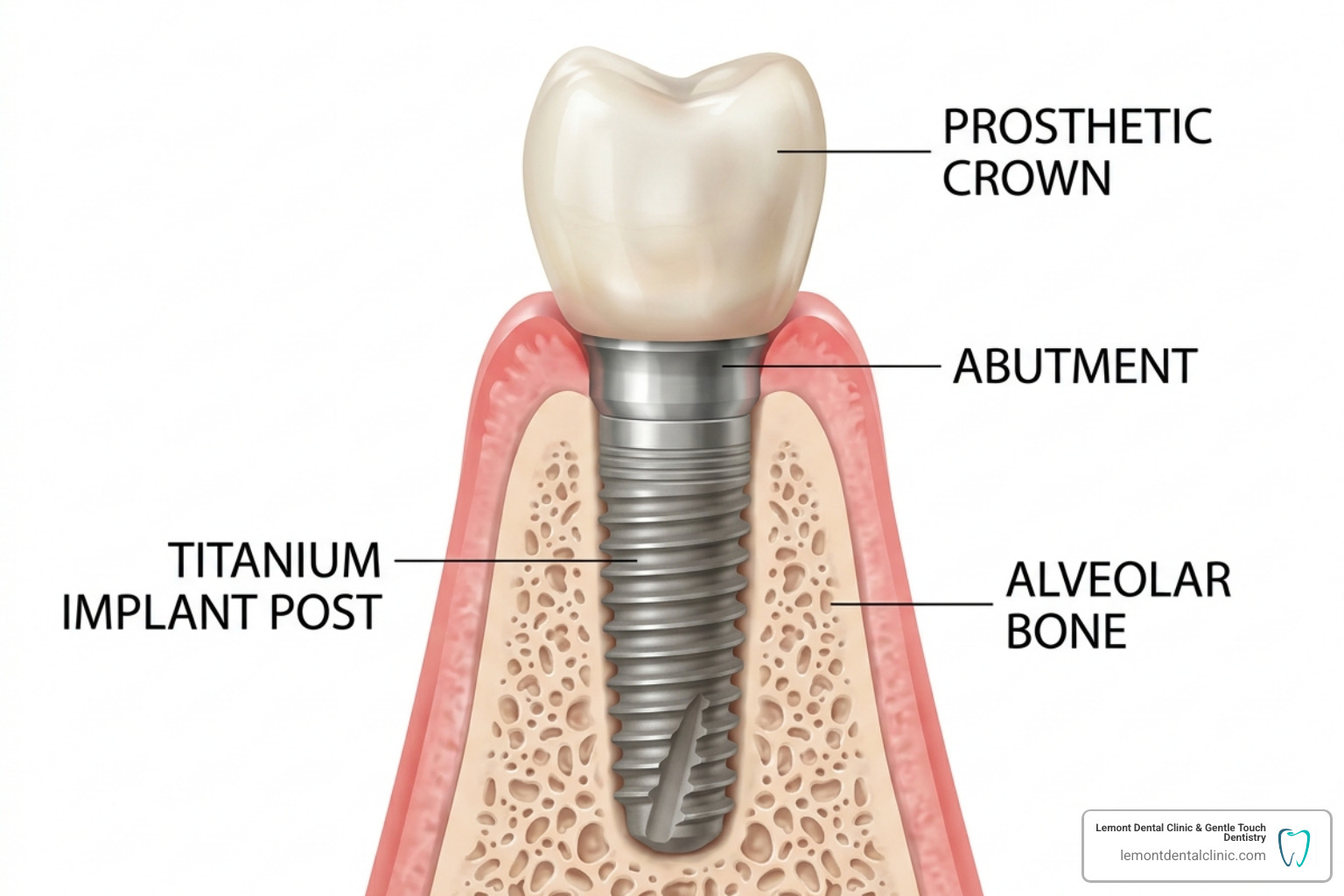
At its core, a full mouth dental implant system is a marvel of modern engineering. Unlike a single Dental Implant that replaces one tooth, full mouth restoration involves strategically placing several titanium posts throughout the upper or lower jaw to support a complete bridge of teeth.
Think of these titanium posts as artificial roots. When you lose a tooth, the jawbone underneath begins to deteriorate because it no longer receives stimulation from chewing. According to the Full Mouth Dental Implants – American Academy of Periodontology, implants are the only restoration option that actually preserves the natural bone.
The system consists of three main parts:
The Implant: A small titanium screw or cylinder that is surgically inserted into your jawbone.
The Abutment: A connector piece that sits on top of the implant and holds the new teeth in place.
The Prosthetic: The custom-made bridge or set of teeth that looks and functions like natural enamel.
Whether you are in Lemont, IL or Palos Hills, IL, our goal is to provide a solution that feels so natural you forget they aren’t your original teeth. For many of our patients, this is the ultimate “fresh start.” You can find More info about dental implants on our dedicated service page.
The Pros and Cons of Full Arch Restorations
Choosing full mouth dental implants is a significant decision. To help you weigh your options, we’ve broken down the advantages and the challenges you might face during the process.
Feature
Full Mouth Implants
Traditional Dentures
Stability
Fixed; no slipping or clicking
Can shift or fall out while speaking
Bone Health
Prevents jawbone loss
Accelerates bone resorption
Dietary Freedom
Can eat steak, apples, and crunchy foods
Limited to softer foods; sticky foods are difficult
Aesthetics
Looks like natural teeth and preserves face shape
Can look artificial; face may appear “sunken” over time
Initial Cost
Higher upfront investment
Lower initial cost
Maintenance
Brush and floss like natural teeth
Requires removal, soaking, and adhesives
Surgery
Requires surgical placement and healing
Non-surgical
The Pros: Why Patients Love Them
The most immediate benefit is the restoration of function. You can bite into a crisp apple without fear. Because the implants fuse with your bone—a process called osseointegration—they provide a foundation that is just as strong as natural teeth.
Furthermore, they preserve your facial structure. Without teeth, the lower third of the face can collapse, leading to premature wrinkles and a “shrunken” appearance. Implants keep the bone stimulated and the face looking youthful. You can learn more about whether Dental Implants are Right for You by reviewing our candidacy guide.
The Cons: What to Consider
The primary “con” for most people is the initial investment and the time required. This isn’t a “quick fix” like a removable partial. It involves surgery, and the healing process—where the bone grows around the titanium—can take several months. There is also the requirement for sufficient bone density; if you have been missing teeth for a long time, you might need a bone graft first.
Different Types of Full Mouth Dental Implant Systems
Not every mouth is the same, which is why there are several ways to approach a full restoration. We use advanced technology to determine which system fits your bone structure and lifestyle.
All-on-X (All-on-4 or All-on-6): This system uses four to six implants per arch to support a fixed bridge. It is designed to maximize the use of available bone.
Zirconia Bridges: These are often considered the “gold standard” for final restorations. Zirconia is incredibly durable, resistant to staining, and has a lifelike translucency.
PMMA Temporaries: While you wait for your permanent bridge, we often provide high-quality temporary teeth made from PMMA so you never have to be without a smile.
Choosing All-on-4 Full Mouth Dental Implants
The All-on-4 technique is a game-changer for patients with moderate bone loss. By placing the posterior (back) implants at a 45-degree angle, we can often utilize the existing bone density and avoid the need for expensive and time-consuming bone grafting.
This is frequently referred to as “Teeth-in-a-Day.” In many cases, we can extract failing teeth, place the implants, and attach a temporary fixed bridge all in one appointment. This “immediate load” capability means you walk out of our clinic in Lemont or Palos Hills with a functional smile. If you are looking for the Best All on 4 Dental Implants Near Me, our team is highly experienced in this specific protocol.
Benefits of Implant-Supported Dentures
For some patients, a removable option that is still anchored by implants is the best choice. These are often called “snap-on dentures.”
Ball Attachments: Usually involves two implants in the lower jaw that the denture snaps onto.
Bar-Retained: A custom metal bar is attached to 4-6 implants, and the denture clips onto the bar for extreme stability.
Palate-Free Design: Because the implants provide the stability, we can often remove the bulky plastic palate from the upper denture. This allows you to taste your food better and speak more clearly.
Check out our full guide on Implant Dentures for more details on these removable-yet-secure options.
The Procedure and Recovery Timeline
Getting full mouth dental implants is a journey, not a single event. Here is what you can expect when you visit us at Lemont Dental Clinic & Gentle Touch Dentistry.
Initial Consultation & CBCT Scanning: We use 3D imaging to map your jawbone, nerves, and sinus cavities. This allows for “digital surgery” before we even touch a tool.
The Surgical Phase: Any remaining failing teeth are extracted, and the titanium implants are placed. Depending on the plan, you may receive your temporary teeth the same day.
Osseointegration (3–6 Months): This is the critical healing phase. Your jawbone literally grows into the threads of the implant.
Final Restoration: Once healing is confirmed, we take final impressions for your custom zirconia or porcelain bridge.
During the first few weeks of recovery, a soft food diet is essential. Think mashed potatoes, smoothies, and scrambled eggs. This ensures the implants aren’t disturbed while they begin to fuse with the bone. Understanding the Dental Implants Health Benefits can help keep you motivated during this healing period.
Managing Pain During Full Mouth Dental Implants Surgery
One of the most common questions we hear is: “Will it hurt?”
The surgery itself is performed under local anesthesia, so you won’t feel pain during the procedure. However, because this is a significant surgery, we offer several sedation options to ensure your comfort:
IV Sedation: Often called “twilight sleep,” this allows you to remain conscious but deeply relaxed and unaware of the procedure.
Nitrous Oxide: Also known as “laughing gas,” this helps take the edge off for patients with mild anxiety.
Local Anesthesia: We ensure the surgical site is completely numb.
Post-operative discomfort is usually manageable with over-the-counter pain relievers and ice packs to manage swelling. Most patients find that the soreness lasts about a week, similar to a tooth extraction. You can read more about what to expect during your Dental Implants Consultation and Implants appointment here.
Frequently Asked Questions about Full Restorations
How long do full mouth dental implants last?
With proper care, full mouth dental implants are designed to be a lifetime solution. While the titanium posts should last forever, the prosthetic teeth (the bridge) may eventually show wear after 15–20 years and might need minor maintenance or replacement.
To ensure longevity, you must maintain excellent oral hygiene. This includes brushing twice a day and using a water flosser to clean around the abutments. Regular professional cleanings at our Lemont or Palos Hills locations are also vital. Learn more about why Dental Implants Are Worth the Investment over the long term.
Am I a good candidate for full arch treatment?
Most adults in good general health are candidates. However, certain factors can complicate the process:
Bone Density: If you lack bone, we may need to discuss bone grafts or sinus lifts.
Smoking: Smoking significantly increases the risk of implant failure because it restricts blood flow to the gums.
Medical History: Uncontrolled diabetes or certain autoimmune disorders can affect healing.
We provide a comprehensive Dental Implant Guide to help you understand the candidacy requirements in more depth.
What is the average cost of full mouth restoration?
Full arch treatment is a major investment in your health and quality of life. In the Chicago suburbs, including Oak Lawn and Bolingbrook, the cost typically ranges from $20,000 to $30,000 per arch. This price reflects the surgical expertise, the high-quality materials (like Straumann implants), and the custom laboratory work required to create your smile.
While dental insurance often views implants as a “cosmetic” procedure, some plans may cover the tooth extraction or the prosthetic bridge portion. We offer various financing options to help make this life-changing treatment more accessible. You can request a personalized Dental Implants Cost Estimate to see what your specific plan would look like.
Conclusion
At Lemont Dental Clinic & Gentle Touch Dentistry, we believe that everyone deserves a smile they can be proud of. Full mouth dental implants are more than just a dental procedure; they are a way to reclaim your ability to eat, speak, and laugh without hesitation.
Whether you are visiting us from Romeoville, Lockport Heights, or right here in Lemont, IL, our team is dedicated to providing high-quality, comprehensive restorative care using the latest technology. We combine surgical precision with a warm, patient-centered approach to ensure you feel comfortable every step of the way.