Average Cost of a Dental Implant Bridge: What to Budget
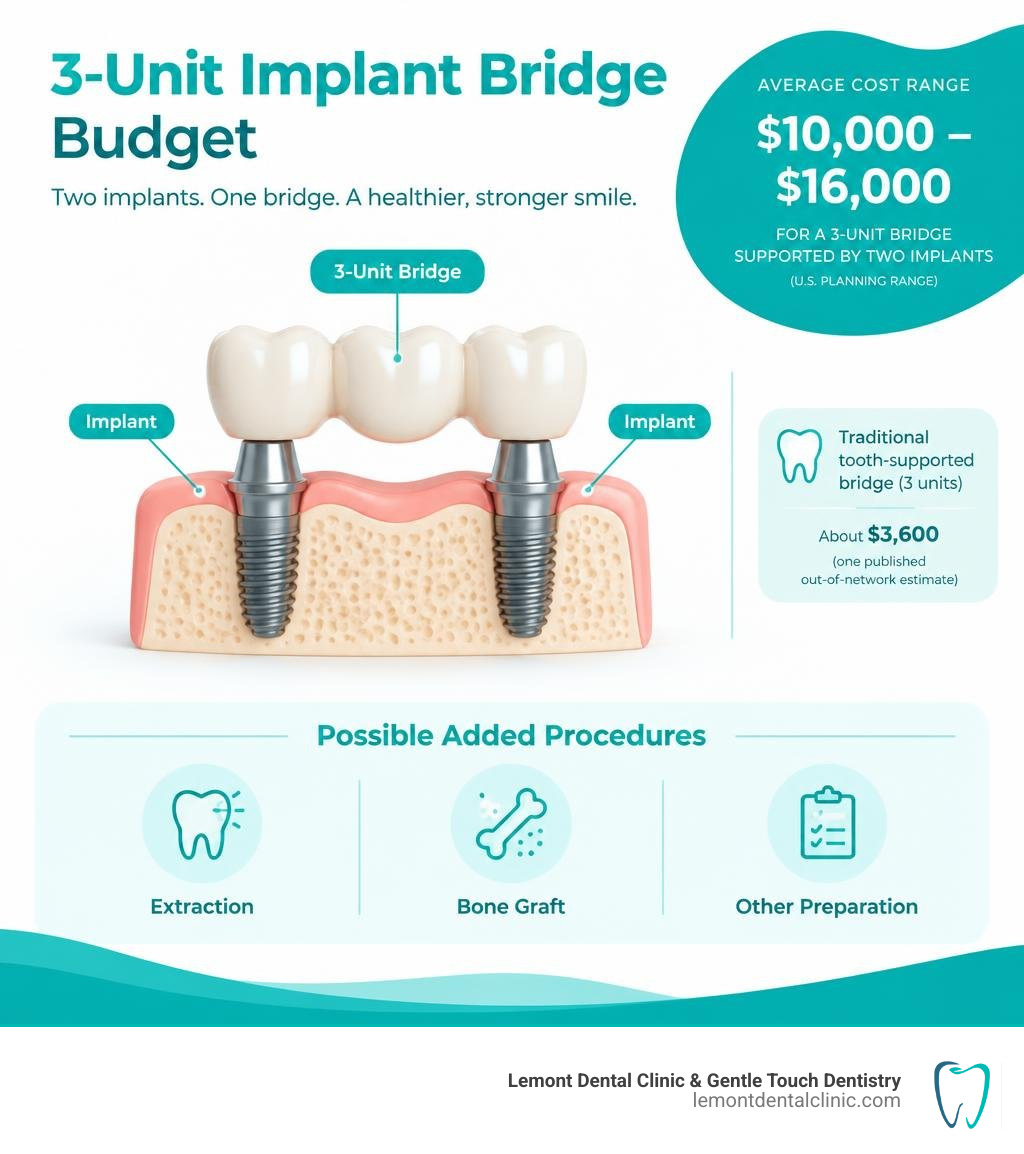
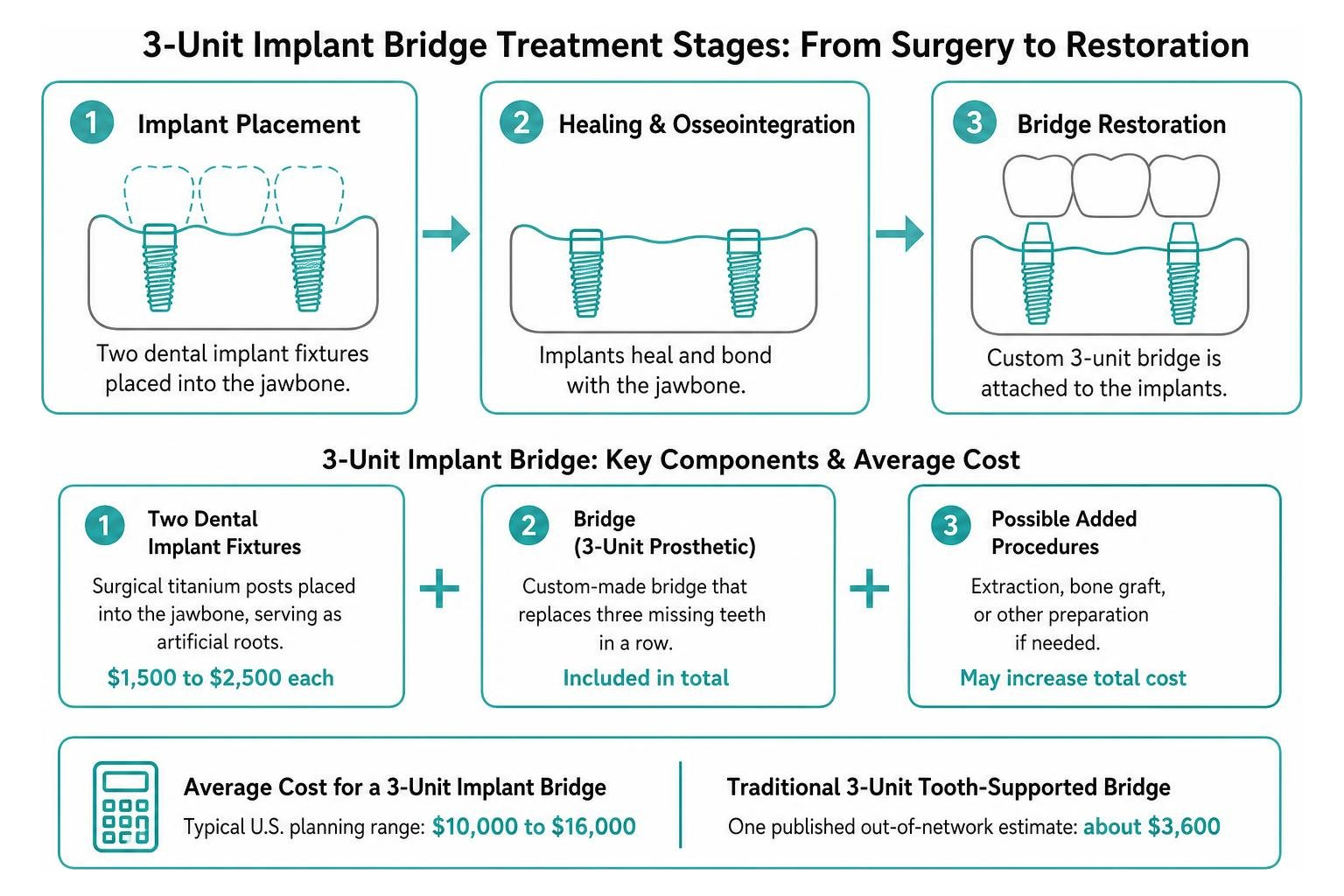
The average cost of a dental implant bridge depends on what the quote includes. For a 3-unit bridge supported by two implants, a useful U.S. planning range is $10,000 to $16,000. A traditional tooth-supported bridge usually costs less upfront; one published out-of-network estimate for a three-unit bridge is about $3,600.
The implant bridge price may rise if you need an extraction, bone graft, or other preparation. Before choosing a treatment, ask for an itemized estimate showing the implants, bridge, added procedures, and expected insurance payment. That gives you a clearer number to plan around.
Basic average cost of dental implant bridge terms:
Average Cost of a Dental Implant Bridge: 2026 Price Breakdown
When calculating your restorative budget, knowing what goes into the total investment gives you peace of mind. Across the United States, the total cost for an implant-supported bridge generally spans from $4,000 to $16,000 depending on scope, with most standard multi-unit cases landing in the $9,000 to $16,000 range. For patients seeking a standard replacement of three missing teeth in a row, planning around a typical dental implant bridge cost of $10,000 to $16,000 accounts for both surgical fixtures and the final custom prosthetic.
As documented in industry reports like How Much Do Dental Implants Cost? (2026 Prices), pricing reflects surgical placement, precision hardware, and restorative laboratory artistry. Because an implant bridge replaces multiple teeth without placing a separate implant post under every single missing crown, it represents a balanced middle ground between individual single-tooth implants and removable options.
Breaking Down the Components of a 3-Unit Implant Bridge Cost
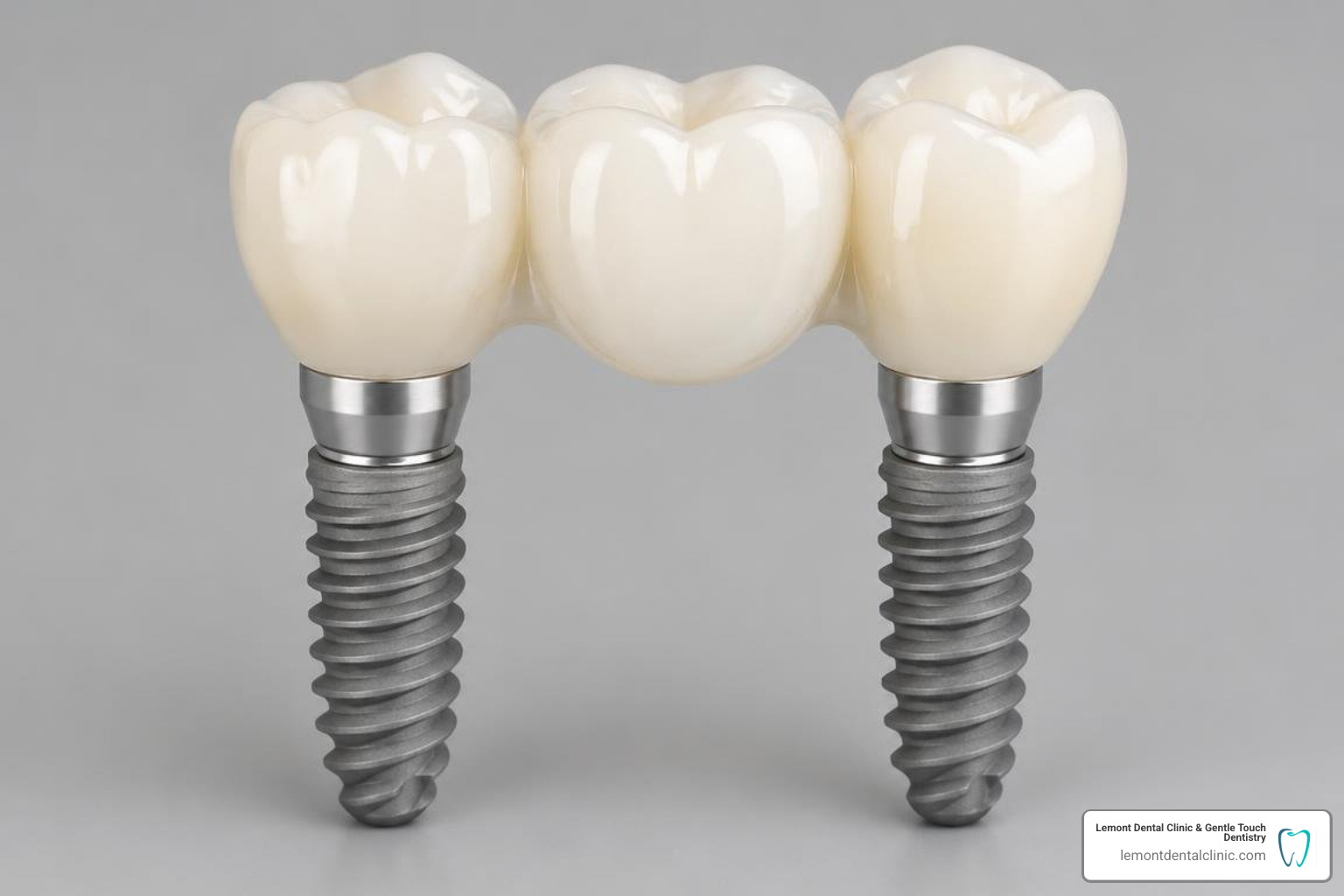
A standard 3-unit implant bridge consists of three distinct functional parts:
Two Dental Implant Fixtures: Surgical titanium posts placed directly into the jawbone, serving as artificial roots. Each implant post typically ranges from $1,500 to $2,500 on its own.
Two Custom Abutments: Connective titanium or zirconia posts attached to the top of the fixtures to secure the bridge framework.
The 3-Unit Bridge Restoration: A single, continuous prosthetic unit consisting of two outer crowns attached to the abutments and one central artificial tooth (called a pontic) spanning the gap. The bridge itself generally costs between $3,000 and $5,000 depending on material selection.
Reviewing a comprehensive dental implants cost per tooth guide shows that using two implants to restore three missing teeth can save thousands of dollars compared to placing three individual implants and crowns.
How the Average Cost of Dental Implant Bridge Units Compares to Traditional Bridges
Choosing between an implant bridge and a traditional tooth-supported bridge involves weighing immediate costs against lifelong oral health benefits. A conventional 3-unit bridge relies on grinding down two healthy natural adjacent teeth to serve as anchoring crowns. While traditional bridges carry an average national price tag of $5,197 (ranging from $4,100 to $9,650), they lack the root stimulation needed to prevent underlying bone loss.
Clinical economic studies, such as the Frontiers research on prosthodontic rehabilitation costs, demonstrate that while conventional fixed prostheses have lower initial material and surgical fees, implant-supported rehabilitations deliver significantly better long-term structural outcomes. When reviewing general guidance like How much do dental bridges cost?, the lifetime cost calculation shifts in favor of implants because they rarely require replacement of the underlying anchors.
Feature
3-Unit Traditional Dental Bridge
3-Unit Implant-Supported Bridge
Average Initial Cost
$3,600 – $5,400
$10,000 – $16,000
Anchoring Support
Shaved-down natural adjacent teeth
2 titanium implant posts in jawbone
Preservation of Bone
None (bone resorbs under pontic)
High (stimulates natural jawbone)
Typical Lifespan
5 to 10 years
20 to 25+ years (often lifetime)
Impact on Neighboring Teeth
Requires permanent enamel removal
Leaves natural adjacent teeth intact
Flossing & Hygiene
Requires specialized threaders
Simple bridge flossing & hygiene
Key Factors That Determine What You Pay for an Implant-Supported Bridge
Every patient presents a unique clinical picture, which means dental restoration estimates vary based on individual oral health requirements. Consulting a practical price of dental implants guide helps identify the major variables:
Number of Implants Required: While a 3-unit bridge needs two posts, longer bridges spanning 4 or 5 teeth may require three implants.
Pre-Existing Bone Volume: Patients with long-standing tooth loss often require bone augmentation.
Surgical Complexity: Front teeth restorations demand intricate aesthetic gum contouring compared to posterior molars.
Laboratory Artistry: Custom-milled prosthetics crafted by experienced master ceramists command higher fees than standard composite alternatives.
Prosthetic Materials: Monolithic Zirconia vs. Porcelain
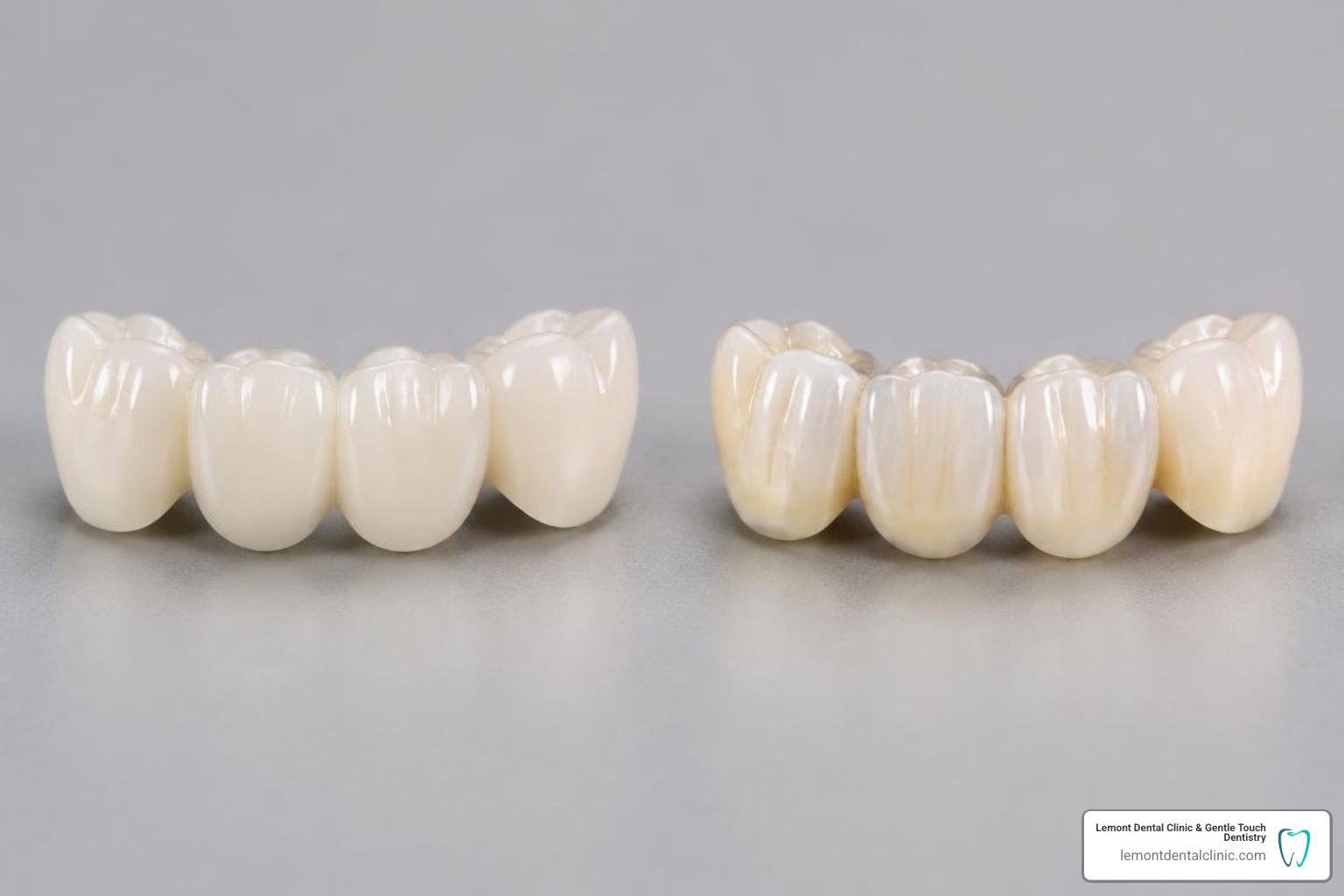
Monolithic Zirconia: The gold standard for modern restorative bridges. Milled from a solid block of ultra-durable ceramic, zirconia resists chipping, fractures, and staining while handling heavy chewing forces.
Porcelain-Fused-to-Metal (PFM): A traditional choice featuring a porcelain exterior over a metal base. While aesthetic, the porcelain layer can chip over time, and a dark metal line may become visible at the gumline.
All-Porcelain / E-Max: Highly aesthetic and natural-looking, making it ideal for front-tooth restorations, though slightly less fracture-resistant under heavy molar pressure.
Acrylic Resin: Often used for temporary transitional bridges while the implants heal. A high-grade porcelain or zirconia bridge typically costs $1,000 to $2,500 more than basic acrylic options, but provides decades of lasting wear.
Geographic Location and Provider Expertise
Dental fees vary across regions based on local overhead, lab pricing, and specialist availability. Exploring details on finding the best dental implant prices in your zip code reveals that metropolitan practices often reflect higher operational costs. In Illinois communities like Lemont, Palos Hills, Orland Park, and Bolingbrook, comprehensive dental centers that combine surgical placement and restorative fabrication under one roof provide substantial cost advantages by eliminating the need to pay separate surgical center facility fees.
Additional Clinical Procedures That Impact Your Total Budget
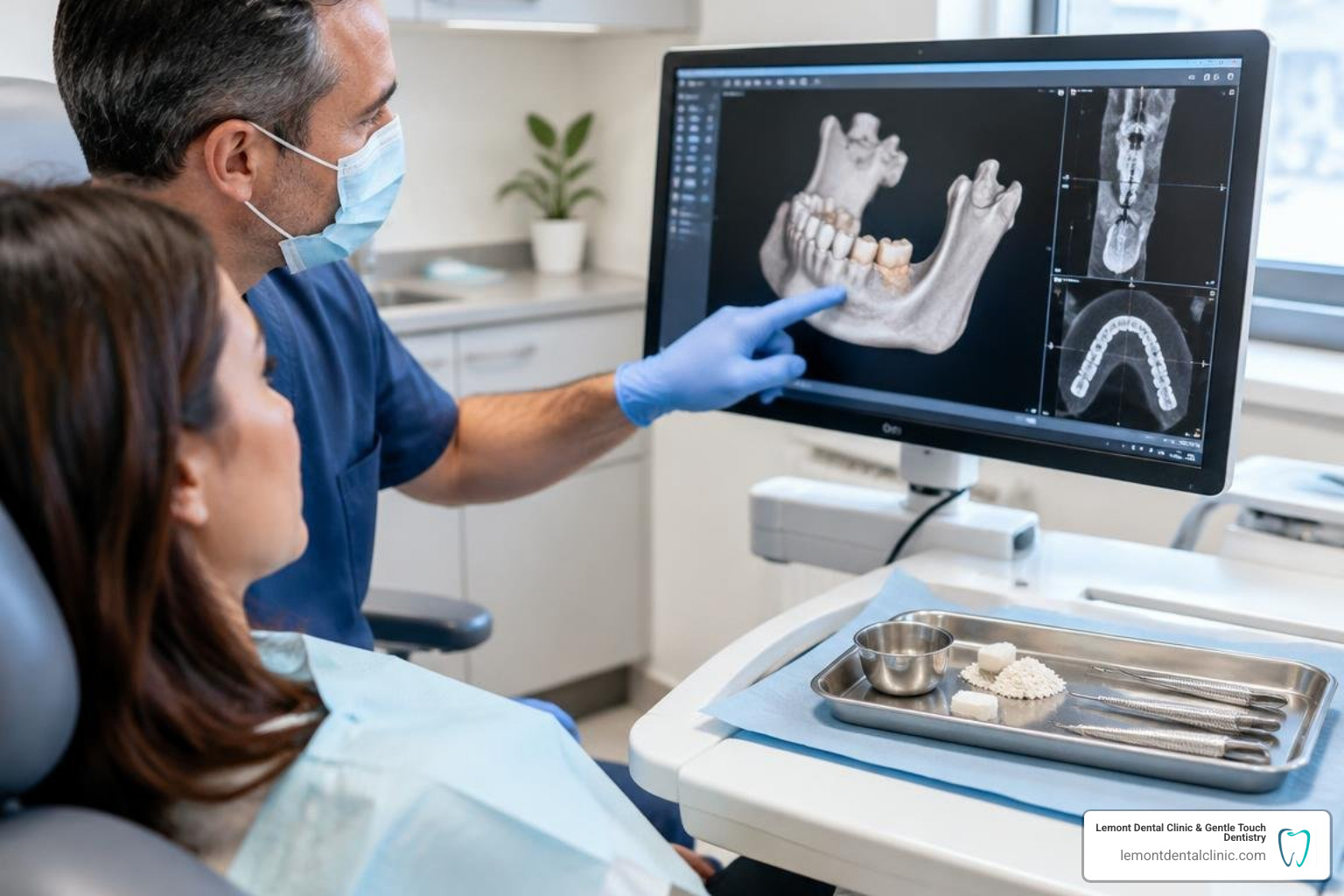
A successful implant bridge requires a healthy, stable foundation. During your initial consultation, 3D Cone Beam CT (CBCT) imaging maps your bone architecture, nerve pathways, and sinus locations to identify any preparatory steps needed before implant placement.
Bone Grafting, Sinus Lifts, and Extractions
Approximately 50% of dental implant patients require some level of site preparation to ensure long-term stability:
Tooth Extractions ($150 to $450 per tooth): Removing severely damaged, non-restorable teeth before implant placement.
Bone Grafting ($300 to $800 per site): When teeth have been missing, the surrounding bone naturally resorbs. Placing donor bone material—most commonly an allograft—creates a solid anchor for the implant posts. Learn more about how a bone graft for tooth implant procedure establishes long-term foundation strength.
Sinus Lift ($1,500 to $5,000): In the upper jaw, if the sinus floor is too close to the jawbone ridge, a sinus augmentation gently lifts the membrane and adds bone graft material underneath.
Long-Term Value: Lifespan and Bone Preservation Benefits
While traditional crowns and tooth-supported bridges cost less upfront, they often require replacement every 5 to 10 years due to recurrent decay beneath abutment crowns or structural failure. In contrast, dental implants achieve osseointegration—fusing permanently with your natural jawbone.
The substantial dental implants health benefits include preventing the sunken facial appearance caused by bone loss. Understanding the silent threat understanding jawbone deterioration underscores why investing in an implant bridge preserves your natural facial volume and eliminates the ongoing replacement cycle associated with traditional bridges.
Insurance Coverage and Financing Options for the Average Cost of Dental Implant Bridge Restorations
Maximizing Dental Insurance Benefits and Annual Maximums
Most traditional dental insurance policies feature annual maximum allowances ranging from $1,500 to $3,000 per calendar year. While some legacy plans maintain exclusions for the surgical implant post, many cover the preparatory extractions, diagnostic 3D imaging, and the restorative bridge itself at 50% to 80% under major restorative benefits.
To make the most of your benefits:
Pre-Treatment Estimates: Have our team submit a pre-authorization to your insurance provider to clarify covered codes and exact out-of-pocket liabilities.
Split-Year Treatment Planning: Because implant integration takes 3 to 6 months, surgical placement can occur in late autumn using your current year’s maximum, while bridge fabrication takes place in January to apply the following year’s renewed benefit limit.
Medical Coverage Considerations: In cases involving facial trauma or severe bone atrophy, certain medical policies may assist with surgical bone grafting costs, as explained in our guide on will your insurance pay for implants or leave you frowning. General reference guidelines from How Much Does a Dental Bridge Cost? also show how network status influences final co-pays.
Flexible Financing, Payment Plans, and HSA/FSA Funds
To bridge the gap between insurance benefits and total out-of-pocket costs, patients can utilize convenient healthcare financing strategies:
Healthcare Credit Lines (CareCredit): Third-party financing options offer interest-free promotional periods (such as 6, 12, or 24 months) or extended low-interest payment terms, breaking down an implant investment into manageable monthly sums.
Flexible Spending Accounts (FSA) & Health Savings Accounts (HSA): Paying for dental surgical fixtures and custom bridge prosthetics with pre-tax dollars effectively delivers a 20% to 35% savings depending on your tax bracket.
Structured Office Plans: Review our available dental payment plans to explore flexible staging options that fit comfortably within your household budget.
Frequently Asked Questions About Implant Bridges
How long does an implant-supported bridge last compared to a traditional bridge?
A traditional tooth-supported bridge typically lasts between 5 and 10 years before requiring repair or replacement, largely due to decay developing around the shaved anchor teeth or gradual bone loss beneath the bridge pontic. In contrast, the titanium posts of an implant-supported bridge are designed to last 25 years to a lifetime with routine oral hygiene and regular dental cleanings, while the zirconia or porcelain prosthetic bridge typically lasts 15 to 20+ years before minor maintenance might be required.
Is getting a 3-unit implant bridge painful?
The surgical placement of implant fixtures is performed under local anesthesia, ensuring you feel no pain during the procedure. Most patients report that implant placement involves less post-operative soreness than a standard tooth extraction. Any mild swelling or tenderness in the days following surgery is readily managed with over-the-counter pain relievers such as ibuprofen and cold compresses applied to the outer cheek.
How many implants are needed for a 3-unit dental bridge?
A 3-unit dental bridge requires exactly two dental implant posts. The two outer implants act as durable anchor roots, while the middle restoration—a solid pontic tooth—rests firmly over the gum tissue between them. This engineering configuration provides exceptional bite strength without requiring an individual implant for every missing tooth gap.
Conclusion: Budgeting for Your Implant Bridge Restoration
Restoring three missing teeth in a row is one of the most rewarding investments you can make in your long-term health, chewing comfort, and smile confidence. While the upfront investment for an implant-supported bridge ranges between $10,000 and $16,000, its ability to preserve your jawbone and protect your remaining natural teeth makes it the most cost-effective and durable solution over your lifetime.
At Lemont Dental Clinic & Gentle Touch Dentistry, we provide high-quality, comprehensive general and restorative dental care for families throughout Lemont, Palos Hills, and surrounding communities including Romeoville, Orland Park, Bolingbrook, and Hickory Hills. Our experienced doctors utilize the latest 3D imaging technology to deliver precision implant placement and lifelike prosthetics under one roof at competitive, transparent prices.
To explore your personalized treatment timeline and receive an itemized cost estimate, explore our detailed resource on the cost of 3 tooth bridge options and schedule your consultation with our team today.