Denture Discomfort Is Common — But You Don’t Have to Live With It
Denture pain relief is something millions of people actively need. If your dentures are causing sore gums, pressure points, or ongoing irritation, here’s a quick summary of what actually helps:
Saltwater rinse — mix ½ tsp salt in warm water, swish 4-5 times daily
Benzocaine gel (like Orajel) — apply directly to sore spots for fast numbing relief
OTC pain relievers — acetaminophen or ibuprofen can reduce inflammation temporarily
Remove dentures overnight — gives your gum tissue time to recover
See your dentist — for adjustments, relines, or a proper fit evaluation if pain persists
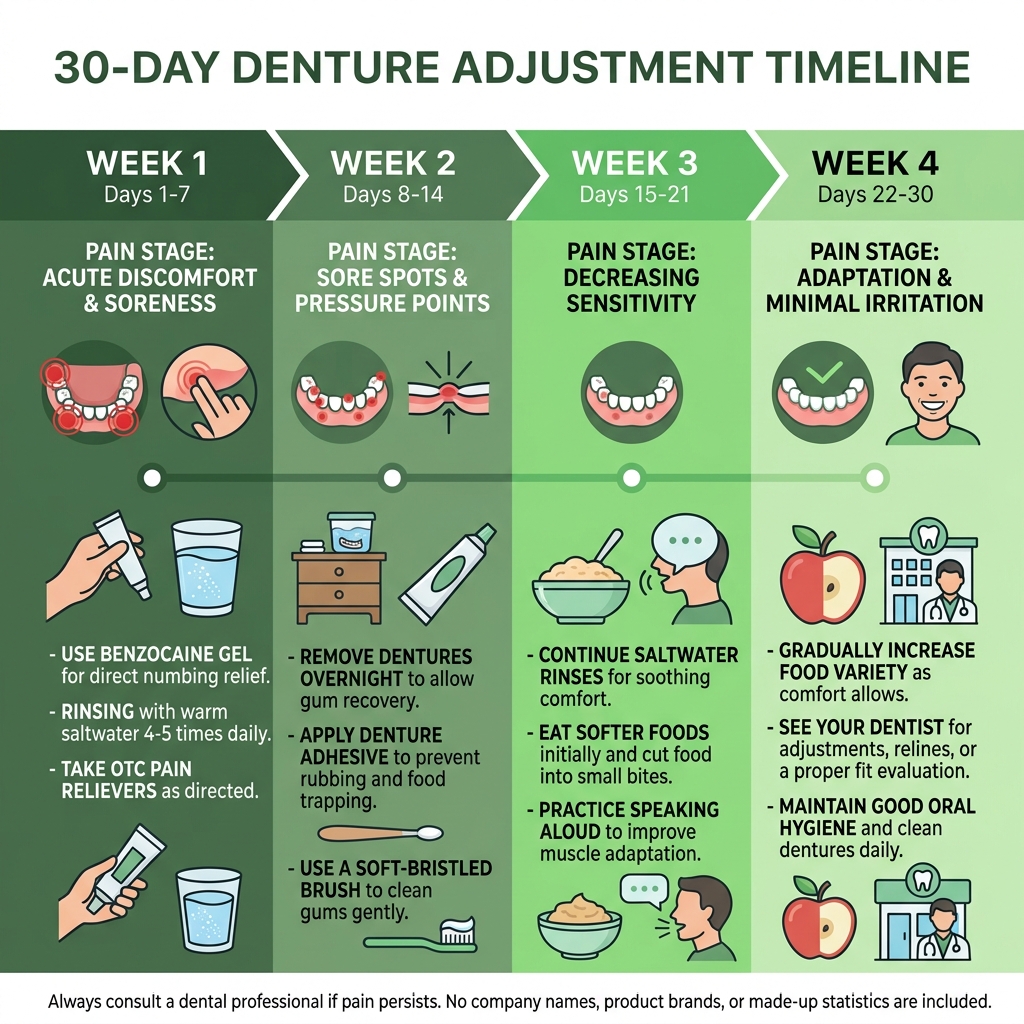
Most new denture wearers experience some discomfort. That’s normal. Your gums need time to adapt, and the surrounding muscles have to learn how to work with the prosthetic. This adjustment period can last anywhere from a few days to about 30 days.
But here’s the thing: persistent pain is not something you should just push through. It usually signals an underlying issue — a poor fit, an infection, or changes in your jawbone that need professional attention.
Research shows that denture stomatitis, a fungal condition that causes gum inflammation and pain, affects anywhere from 20% to 70% of denture wearers. That means a huge portion of people wearing dentures are dealing with discomfort that goes beyond normal adjustment soreness.
This guide walks you through everything — from quick home remedies to long-term solutions — so you can find relief that actually works.
Why Do My Dentures Hurt? Common Causes of Soreness
If you feel like your mouth is staging a protest against your new teeth, you aren’t alone. Understanding why the pain is happening is the first step toward finding denture pain relief.
Ill-Fitting Prosthetics and Rubbing
The most frequent culprit is a poor fit. When dentures don’t sit perfectly against the gums, they shift. This movement creates friction, leading to “sore spots” or painful ulcers. Think of it like a new pair of shoes that gives you blisters; the more you walk (or in this case, talk and eat), the worse it gets.
Bone Resorption and Jawbone Shrinkage
Our jawbones are alive and dynamic. When natural teeth are lost, the bone that once supported them begins to “resorb” or shrink because it no longer receives stimulation from chewing. This process is natural but annoying for denture wearers. As the bone changes shape, the denture that fit perfectly six months ago may now be loose and unstable. This instability is a major reason people seek Fixing Loose Dentures.
Denture Stomatitis and Candida
Denture stomatitis is an inflammatory condition often caused by an overgrowth of Candida albicans, a type of yeast. It affects a staggering number of people—up to 70% of wearers at some point. It often presents as bright red, swollen tissue under the denture. If you don’t clean your prosthetics thoroughly or if you wear them 24/7, bacteria and yeast build up, leading to this painful infection.
Material Allergies and Sensitivities
While rare, some patients are allergic to the acrylic resins or metals used in Removable Partial Dentures. If you experience a burning sensation or widespread redness throughout your mouth rather than just in one spot, an allergy might be the cause.
Immediate Denture pain relief: Home Remedies and OTC Options
When the pain is sharp and you can’t get to our Lemont or Palos Hills office immediately, you need “right now” solutions. Here is how we recommend managing the discomfort at home.
Saltwater Rinses: The Golden Standard
A saltwater rinse is incredibly effective. It helps reduce inflammation, cleanses the area, and draws out excess fluid from swollen gums.
Dissolve 1/2 teaspoon of salt in a cup of warm water.
Swish for 30 seconds and spit.
Repeat 4–5 times a day.
Topical Anesthetics and Benzocaine Gel
Products like Orajel provide instant, though temporary, denture pain relief. These gels usually contain 20% benzocaine, which numbs the nerve endings in the gum tissue.
Tip: Dry the sore area with a clean cotton swab before applying the gel to help it stick better. Do not reinsert your dentures until the pain has subsided slightly, and always rinse your mouth before putting the dentures back in.
Over-the-Counter (OTC) Medications
For systemic relief, we often suggest Advil Dual Action, which combines acetaminophen and ibuprofen. This combination is highly effective for dental pain because it tackles both the pain signals and the underlying inflammation. Always consult the Oral Analgesics for Acute Dental Pain guidelines or your doctor before starting a new medication.
Cushion Adhesives
If the pain is caused by the denture sliding around, a high-quality adhesive can act as a shock absorber. It fills the tiny gaps between the denture and the gums, preventing food from getting trapped and reducing friction. However, adhesives are a temporary fix—they shouldn’t be used to “mask” a seriously ill-fitting denture for months on end.
Natural Alternatives for Denture pain relief
If you prefer a more holistic approach, several natural remedies can soothe irritated tissues.
Aloe Vera Gel: Pure aloe vera (ensure it is food-grade) has powerful anti-inflammatory and antibacterial properties. Applying it to sore spots can speed up healing.
Cold Compresses: Applying a cold pack to the outside of your cheek can numb the area and reduce swelling.
Peppermint Tea: Peppermint contains menthol, which provides a natural cooling and numbing effect. You can swish cooled tea or even press a damp, cool tea bag against the sore spot.
Crushed Garlic: Garlic contains allicin, which is a natural antibiotic. While it might sting initially, it can help fight off minor bacterial infections that contribute to pain.
Greek Yogurt: Surprisingly, the healthy bacteria in yogurt can help balance the oral microbiome and fight off the yeast that causes stomatitis.
Essential Oils: Diluted clove oil or tea tree oil can be dabbed onto sores, but use them sparingly as they are very potent.
While these help with comfort, they don’t change the fit of the prosthetic. To ensure your smile looks as good as it feels, check out our guide on Natural Looking Dentures.
Professional Adjustments and Denture pain relief
Sometimes, no amount of saltwater or gel will fix the problem. That is when professional intervention is required.
What Happens During a Denture Reline?
If your jawbone has shrunk slightly, we can perform a reline. This involves adding a new layer of material to the “tissue side” of your denture to match the current shape of your gums.
Soft Relines: These use a medical-grade rubber-like material. They are excellent for patients with sensitive gums or those who are still healing from extractions.
Hard Relines: These use a permanent acrylic material and are designed to last for years.
We use specialized tools to identify “high spots” on the denture base. By trimming away just a fraction of a millimeter of acrylic, we can eliminate a pressure point that has been causing you agony. We also look at What Type of Dentures Are Most Natural Looking to ensure that any adjustments don’t compromise the aesthetics of your smile.
Long-Term Fixes for Chronic Discomfort
For some, traditional “floating” dentures will always be a struggle. If you find yourself constantly dealing with sores despite multiple relines, it might be time to look at more stable options.
Implant-Supported Solutions
Dental implants have revolutionized denture pain relief. By placing titanium posts into the jawbone, we can anchor your teeth so they don’t move at all.
Implant Dentures: These are usually fixed in place and provide the closest feeling to natural teeth.
Snap-on Dentures: These use 2–4 implants that your denture “snaps” onto. You can still remove them for cleaning, but they won’t slip while you eat.
Benefits of Overdentures
Overdentures help with bone preservation. Because the implants stimulate the jawbone, they slow down the resorption process. This means your facial structure stays more youthful, and you won’t have to deal with the constant fit changes associated with bone loss.
Preventing Pain Through Proper Maintenance and Diet
Prevention is often the best form of denture pain relief. If you take care of your dentures and your mouth, you’re much less likely to develop sores or infections.
The Nightly Routine
Your gums need to breathe! Imagine wearing shoes 24 hours a day—your feet would eventually get sore and infected. The same applies to your mouth.
Remove dentures at night: This allows the blood to circulate freely in your gum tissue.
Soak them: Use a dedicated denture cleaning solution. This kills 99% of the bacteria that brushing alone might miss.
Clean your mouth: Use a soft-bristled brush or a clean washcloth to gently clean your gums, tongue, and the roof of your mouth.
Hygiene Best Practices
Even if you don’t have natural teeth, oral hygiene is vital. Flossing any remaining natural teeth prevents the spread of bacteria to your gums. Use non-abrasive cleaners; regular toothpaste is actually too scratchy for dentures and can create microscopic grooves where bacteria hide.
Dietary Adjustments
What you eat—and how you eat it—makes a huge difference.
Soft Foods First: If you are in the adjustment phase or experiencing a flare-up, stick to eggs, yogurt, mashed potatoes, and cooked pasta.
Even Chewing: Try to chew on both sides of your mouth simultaneously. This prevents the denture from “tipping” and digging into one side of your gums.
Avoid Sticky/Hard Foods: Steak, peanut butter, and raw carrots can put immense pressure on specific points of the gum line.
If you are recovering from recent extractions, follow the protocols in After Your Oral Surgery to ensure the tissue heals smoothly before your final denture fitting.
Frequently Asked Questions about Denture Discomfort
How long does it typically take to adjust to new dentures?
It usually takes between 2 to 4 weeks for your mouth to fully settle. During the first few days, you might produce more saliva and feel like your mouth is “full.” By day 15–30, most people find that their speech has returned to normal and the initial soreness has faded. If you are still in significant pain after a month, it’s time for an adjustment.
Should dentures be worn overnight?
Generally, no. We recommend removing them for at least 6–8 hours a day. Wearing them overnight increases your risk of developing denture stomatitis and accelerates bone loss. If you must wear them for a special occasion, make sure to give your gums a “rest period” during the day instead.
When should you see a dentist for persistent denture discomfort?
You should call us if:
You have a sore spot that doesn’t heal after a week of home care.
Your dentures feel loose or “click” when you talk.
You have visible cracks or chips in the denture base.
You experience a persistent burning sensation or bad taste in your mouth.
Conclusion
At Lemont Dental Clinic & Gentle Touch Dentistry, we believe that nobody should have to suffer through daily pain just to have a functional smile. Whether you need a simple adjustment, a soft reline, or are ready to explore the stability of dental implants, we are here to help.
We provide high-quality restorative dental care with a focus on both quality and affordability. If you’ve been searching for Dentures Near Me in Lemont, Palos Hills, or the surrounding Chicago Ridge and Orland Park areas, give us a call. Let’s get you back to eating, speaking, and smiling without the pain.