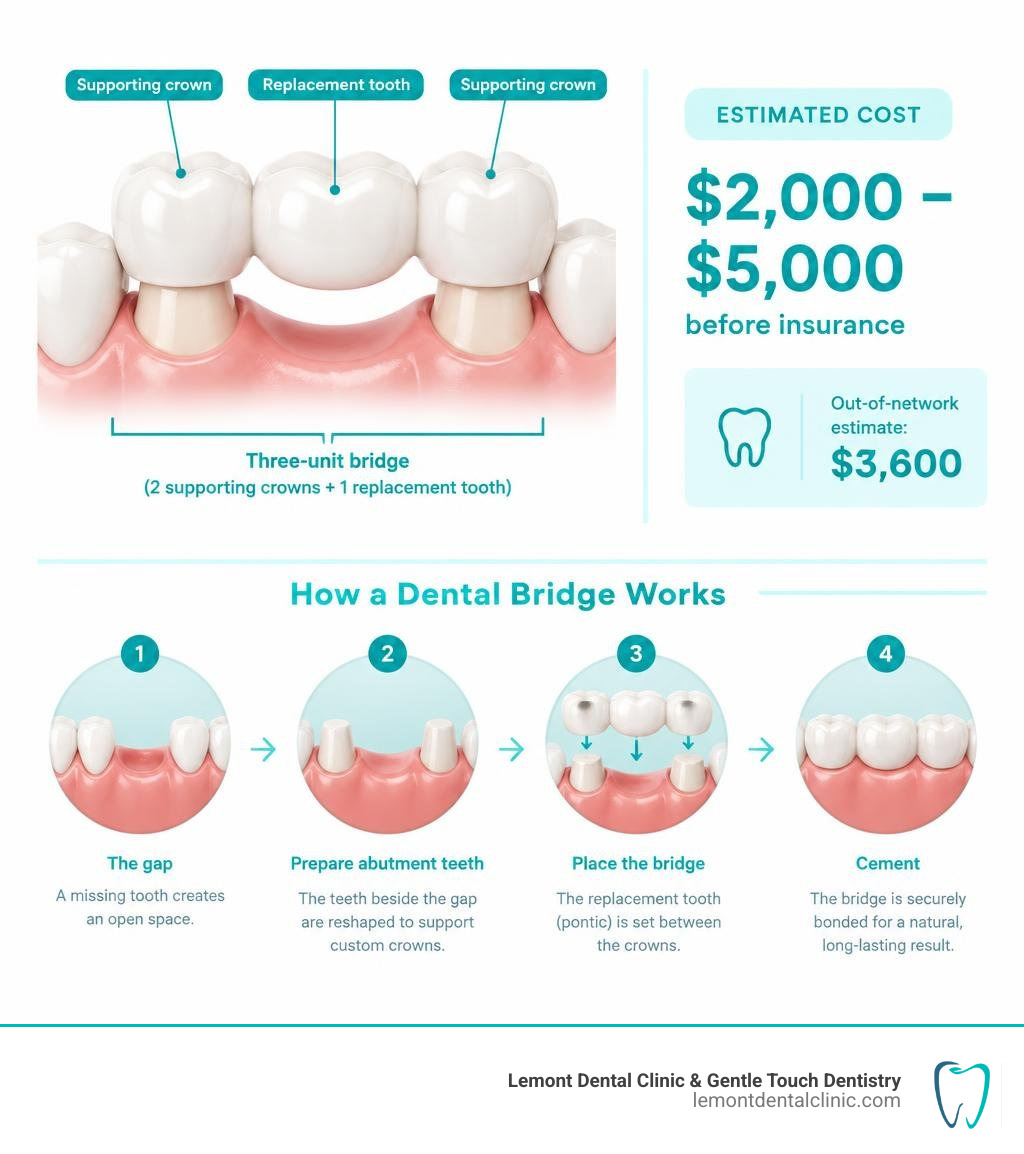
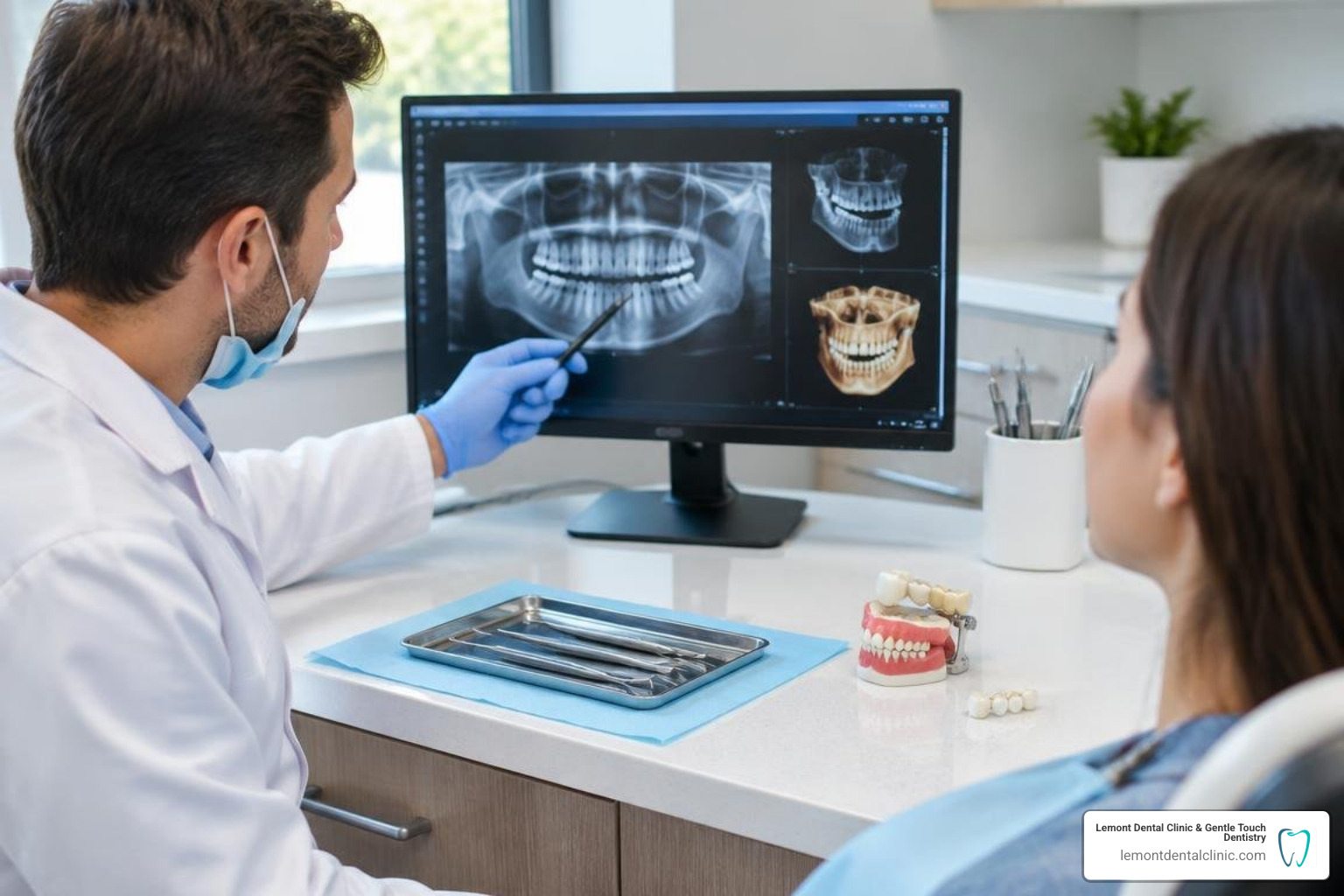
Bridge crown cost for a standard three-unit bridge is typically $2,000 to $5,000 before insurance. That price usually covers two crowns on the teeth beside the gap and one replacement tooth between them. An out-of-network estimate for this type of bridge is about $3,600. Your share may be lower with insurance, but exams, X-rays, and any needed work on the supporting teeth can add to the total.
A fixed bridge fills a gap without being removed each day. The right price depends on the bridge design, materials, and the health of the teeth that hold it. Ask for a written estimate that shows what is included and what your insurance is expected to pay.
Missing a tooth affects more than just your smile. When an open space is left unaddressed, adjacent teeth naturally tilt, drift, and migrate toward the empty pocket over time. This shifting disrupts your natural bite alignment, creates difficult-to-clean food traps, and places uneven stress across your jaw joints. Replacing missing teeth with a fixed dental bridge restores full masticatory function, protects your facial structure, and keeps your remaining natural teeth firmly in place.
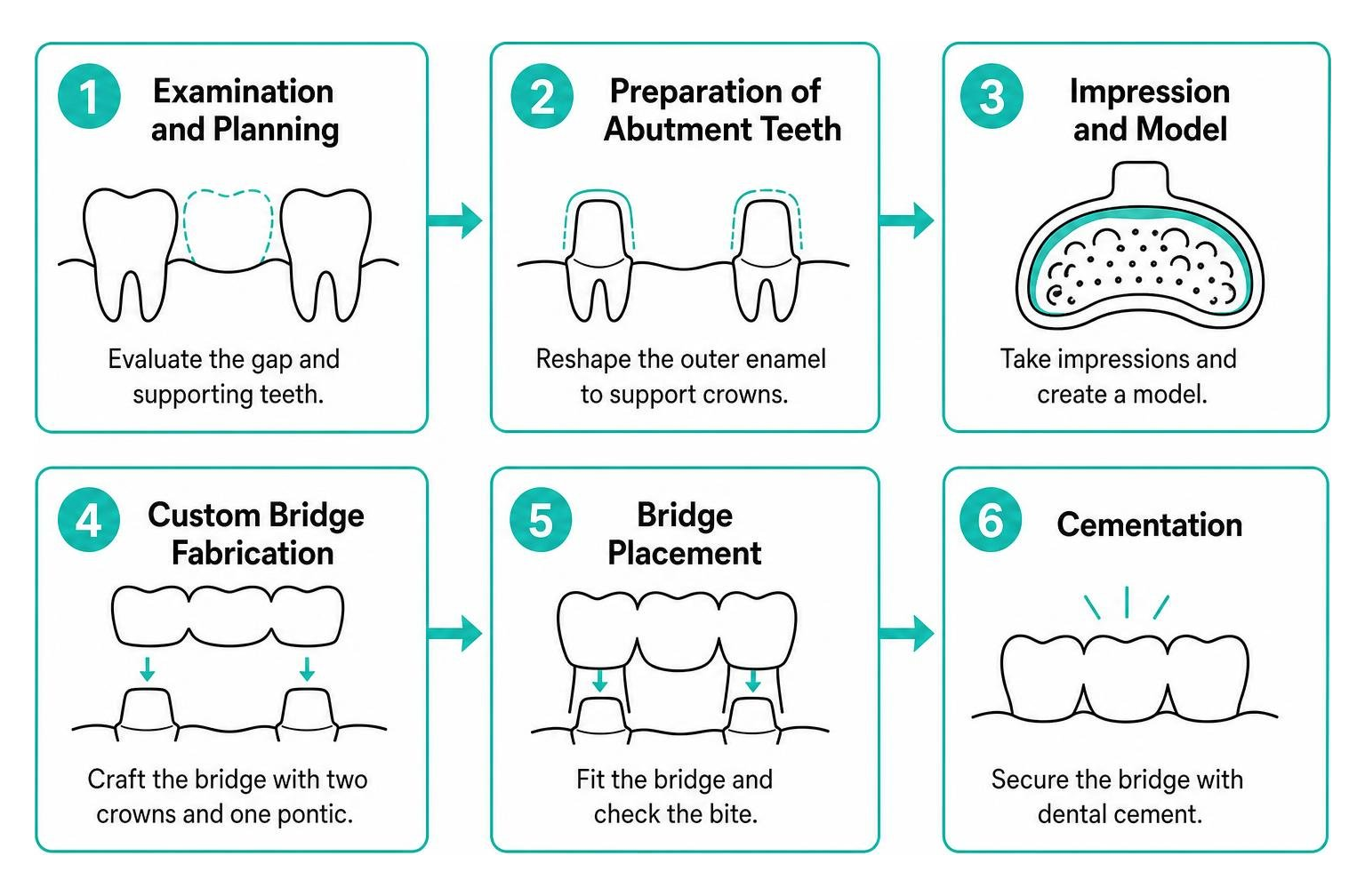
Understanding how a dental bridge functions makes it much easier to see why restorative dental treatments carry specific pricing tiers. A traditional bridge relies on two main components: abutment teeth and a pontic. The abutment teeth sit on either side of the gap and act as anchors. We prepare these teeth by carefully reshaping their outer enamel so they can support custom-fitted crowns. Suspended between these crowns is the pontic—the artificial replacement tooth shaped and shaded to blend seamlessly with your natural bite.
Total Bridge Crown Cost: Average Pricing and Unit Breakdown
When calculating dental bridge fees, dentists price the treatment per “unit.” A unit represents each individual tooth component involved in the prosthesis. For example, replacing a single missing tooth requires a three-unit bridge: two anchor crowns on the healthy abutment teeth plus one central pontic.
Our comprehensive fixed bridge cost guide 2026 outlines that traditional bridge treatments nationwide generally range between $2,000 and $5,000, with national averages hovering around $5,197 depending on case complexity and span length. In Illinois communities such as Lemont, Palos Hills, Orland Park, and Oak Lawn, typical out-of-network pricing for a standard three-unit structure sits around $3,600 to $5,400 before insurance benefits apply.
Bridge Type
Units / Anchors Required
Average Cost Range (No Insurance)
Typical Out-of-Pocket with Major Insurance (50%–80%)
Expected Lifespan
Traditional 3-Unit Bridge
3 Units (2 crowns + 1 pontic)
$2,000 – $5,000
$1,000 – $2,500
5 – 15 Years
Cantilever Bridge
2 Units (1 crown + 1 pontic)
$1,041 – $3,000
$520 – $1,500
5 – 10 Years
Maryland Resin-Bonded
1 Pontic + metal/porcelain wings
$1,500 – $2,500
$750 – $1,250
5 – 8 Years
Implant-Supported Bridge
2 Implants spanning 3–4 teeth
$5,000 – $15,000
$3,500 – $10,000
20 – 30+ Years
Understanding Material Choices and Bridge Crown Cost
The choice of restorative material directly impacts both the appearance and the total bridge crown cost. Each material offers distinct mechanical advantages depending on whether we are restoring a highly visible front tooth or a heavy-chewing rear molar.
Porcelain-Fused-to-Metal (PFM): PFM bridges combine a durable metal substructure with an outer layer of tooth-colored porcelain. They offer excellent structural strength for posterior teeth. Individual PFM units typically average $1,000 to $1,800 each.
Monolithic Zirconia: Solid zirconia has quickly become the modern standard for restorative strength. It resists chipping, handles immense biting forces, and avoids the gray metal baseline sometimes visible near the gums with PFM. Zirconia units generally range from $1,200 to $2,200 per tooth.
Lithium Disilicate (e.max): Highly prized for its unmatched translucency and lifelike aesthetics, all-ceramic lithium disilicate is ideal for front teeth. Lab fabrication costs for e.max crowns reflect their high aesthetic value, with prices averaging $1,200 to $2,000 per unit.
For an in-depth breakdown of how lab fabrication methods influence final treatment pricing, consult our dental bridge pricing guide.
Pricing by Bridge Style: Traditional, Cantilever, and Maryland
Not all dental gaps require the same mechanical approach. Dentists choose specific bridge styles based on structural load, tooth location, and the condition of adjacent teeth:
Traditional Fixed Bridge: This is the most common bridge configuration. It uses crowns placed over healthy teeth on both sides of the gap to support one or more central pontics. It provides the strongest bite distribution for molars and premolars.
Cantilever Bridge: When a patient only has a healthy natural tooth on one side of the gap, a cantilever design anchors the pontic to a single abutment crown. While averaging lower upfront costs (often around $1,041 to $2,500), cantilever bridges place higher lever-arm stress on the anchor tooth and are typically reserved for low-stress front teeth.
Maryland (Resin-Bonded) Bridge: Instead of grinding down adjacent teeth for full-coverage crowns, a Maryland bridge uses metal or ceramic “wings” bonded to the back surfaces of neighboring teeth. Averaging $1,500 to $2,500, it is a conservative option commonly used for missing incisors, though it carries a higher debonding rate over time.
The total cost of your dental restoration reflects far more than just the lab-fabricated prosthetic. Several clinical, biological, and diagnostic factors determine the final investment needed to ensure a stable, long-lasting restoration.
Clinical factors that affect overall costs include:
Diagnostic Imaging and Planning: Comprehensive digital panoramic X-rays, 3D CBCT scans, and optical impressions are necessary to evaluate bone support, root angulation, and nerve placement.
Abutment Tooth Health: If an anchor tooth has extensive decay, a composite core buildup ($250–$500) is required to rebuild sufficient structure. If decay extends into the nerve pulp, root canal therapy ($800–$1,500 per tooth) must be completed before placing a bridge.
Periodontal Health: Anchor teeth must have solid gum attachment and dense alveolar bone. Patients with active gum disease need deep scaling and root planing to stabilize the foundation before crown fabrication.
Geographic Overhead: Treatment fees reflect local operational costs. Patients in the greater Chicago metropolitan area, including suburbs like Bolingbrook, Romeoville, Lockport Heights, Palos Park, and Hickory Hills, typically see competitive regional rates aligned with Illinois fee schedules.
For more information on restorative crown preparations, review our guide to crowns and bridges.
How Insurance Coverage Affects Bridge Crown Cost
Most dental insurance policies classify dental bridges as a Major Restorative service. While preventive care (cleanings and exams) is often covered at 80% to 100%, major procedures generally receive 50% to 80% coverage up to your annual policy cap.
When estimating out-of-pocket costs, consider these standard insurance rules:
Annual Maximum Limits: Most dental plans set an annual benefit cap between $1,000 and $2,000 per calendar year. Because a three-unit bridge often totals $3,600 or more, a single bridge restoration may reach your plan maximum for the year.
Deductibles: Individual deductibles typically range from $50 to $150 before major restorative benefits activate.
Waiting Periods: If you recently enrolled in a new private or individual dental plan, you may face a 6- to 12-month waiting period before the insurer contributes toward major restorative bridge work.
Missing Tooth Clauses: Some insurance plans will not cover the replacement of a tooth that was extracted before the policy’s effective start date.
Achieving a healthy, long-lasting bridge sometimes requires preparatory steps before the permanent bridge is bonded:
Pre-Treatment Extractions: If a severely damaged or cracked tooth is still in the socket, a non-surgical extraction ($150–$350) or surgical extraction ($300–$650) is necessary.
Socket Preservation Bone Grafting: Placing donor bone material ($300–$800) into an extraction site prevents ridge collapse, keeping the gum line natural beneath the future pontic.
Custom Temporary Bridges: While the dental laboratory crafts your permanent bridge, an interim acrylic bridge protects exposed dentin and maintains your bite spacing ($200–$500, often bundled into the total bridge quote).
Maintenance and Recementation: If an older bridge loosens due to hard foods or age, professional bridge recementation typically costs between $150 and $300.
Frequently Asked Questions About Dental Bridge Costs
How long does a traditional bridge crown last before replacement?
A well-maintained traditional dental bridge typically lasts between 5 and 15 years, with many lasting 20 years or longer under optimal conditions. Bridge longevity depends heavily on daily home care. Because the pontic sits above the gum tissue rather than anchoring into the jawbone, bacteria can accumulate underneath the artificial tooth.
Patients should use floss threaders, super floss, or specialized water flossers to clean beneath the pontic and around the crown margins daily. Preventing recurrent decay at the crown margins is the single most important step in protecting your bridge investment over time.
Can dental insurance deny coverage for a replacement bridge crown?
Yes, dental insurance policies often include a frequency limitation rule (typically a 5-to-7-year replacement clause). Under this rule, an insurer will deny payment for a replacement bridge if the existing bridge was placed within the past 5 to 7 years, even if it is damaged.
Insurers also require formal pre-determinations and diagnostic X-rays showing clear clinical necessity—such as non-restorable decay beneath an abutment margin or structural fracture—before approving a replacement claim.
Conclusion
Restoring your smile with a fixed dental bridge is an investment in your long-term oral health, chewing comfort, and daily confidence. Leaving an open gap can lead to shifting teeth, uneven bite wear, and progressive bone resorption.
At Lemont Dental Clinic & Gentle Touch Dentistry, our experienced doctors provide comprehensive general and restorative care in Lemont, Palos Hills, and surrounding communities including Worth, Chicago Ridge, and Palos Heights. We focus on delivering high-quality, gentle dental restorations using modern digital technology and transparent pricing.
If you are ready to explore your restorative options, schedule a comprehensive consultation with our team today to receive a personalized treatment plan and evaluate the cost of a 3 tooth bridge tailored specifically to your smile.