Why So Many People Are Searching for Teeth Scaling Near Me
If you’ve been looking for teeth scaling near me, here’s the short answer:
Teeth scaling (also called scaling and root planing) is a deep dental cleaning that removes hardened tartar buildup from below the gumline. It treats gum disease and prevents tooth loss. A regular cleaning won’t reach those deep pockets — scaling will.
Quick facts at a glance:
What it is: A non-surgical procedure that cleans below the gumline
Who needs it: Adults with gum disease, deep gum pockets, or significant tartar buildup
How long it takes: 1–2 hours, sometimes split over two visits
Is it painful? Local anesthesia is used — most patients feel pressure, not pain
Cost: Typically $600–$1,200; often partially covered by dental insurance
How often: Once to resolve active disease, then every 3–4 months for maintenance
Here’s why this matters: 47.2% of adults over 30 have some form of periodontal disease — and most don’t know it until the damage is already underway. Tartar builds up silently below the gumline, inflaming gums and slowly destroying the bone that holds your teeth in place. Daily brushing and flossing, as good as they are, simply can’t reach it.
The good news? Scaling stops the damage in its tracks — and it’s more comfortable than most people expect.
What Is Deep Scaling and How Does It Differ From Regular Cleaning?
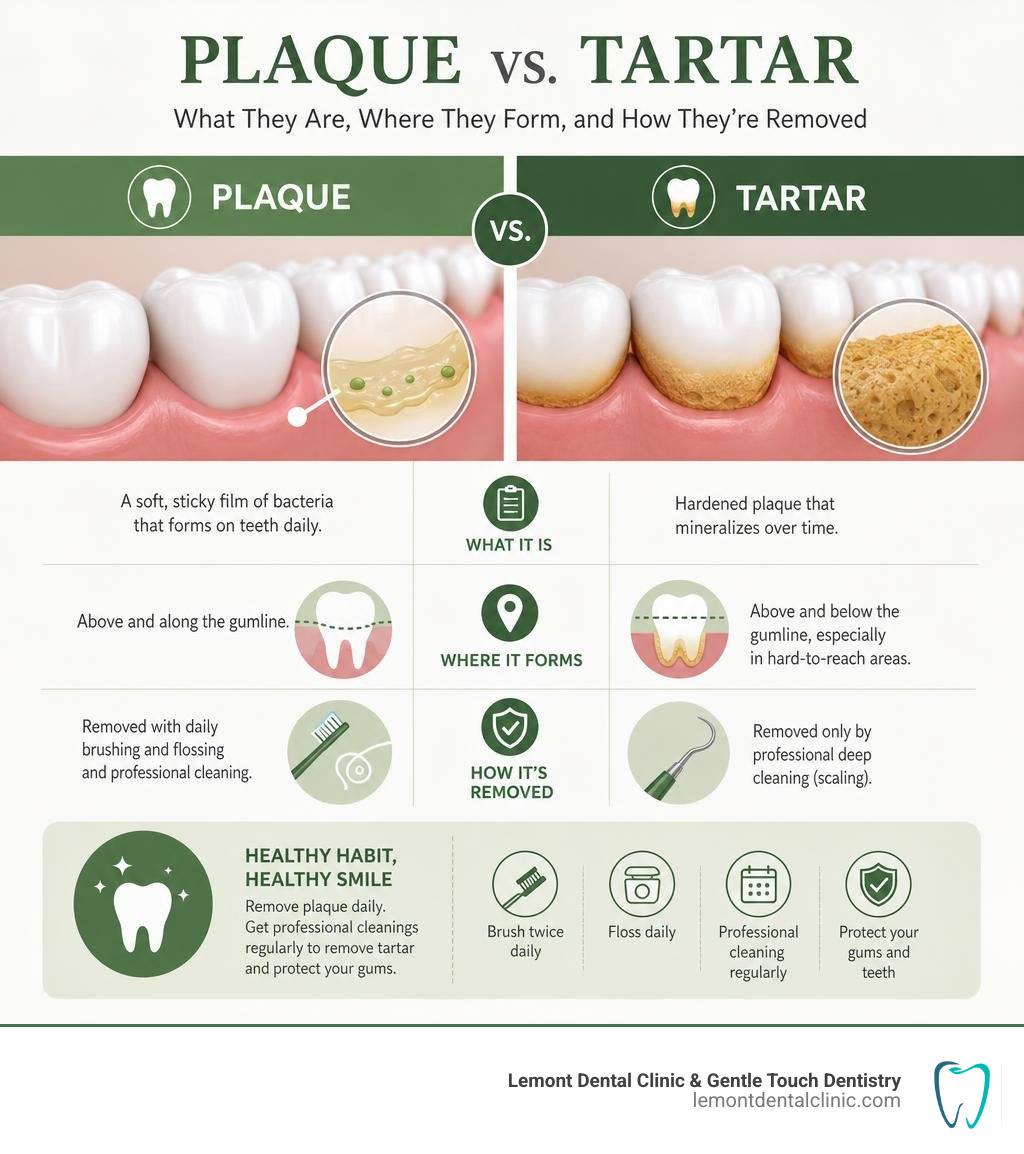
When patients visit us at our Lemont or Palos Hills offices, they often ask why a standard brushing isn’t enough to resolve deep-seated dental issues. The answer lies in the difference between soft plaque and hardened calculus (tartar). While plaque is a sticky film of bacteria that you can brush away at home, tartar is a mineralized substance that chemically bonds to your tooth enamel.
Once tartar slips below the gumline, it becomes subgingival calculus. This rough buildup acts like a magnet for more bacteria, triggering a chronic immune response that results in swollen, bleeding gums. If left untreated, this process destroys the supporting bone structure.
This is where professional scaling comes in. Unlike surface-level cosmetic polishes, scaling and root planing is a therapeutic medical treatment. It targets the root surfaces of your teeth, clearing out the toxic bacterial colonies and smoothing the roots so your gums can safely reattach. To understand this therapeutic process in greater detail, you can read The Deep Dive into Tooth Scale Removal and Root Planing or explore our comprehensive overview on Tackling Gum Disease: Everything You Need to Know About Deep Dental Cleaning.
Standard Prophylaxis vs. Deep Cleaning
It is common to confuse a standard prophylaxis with a deep cleaning, but they serve entirely different purposes. A standard prophylaxis is a preventive procedure. It is designed for patients who have healthy gum tissues with pocket depths of 1 to 3 millimeters and no signs of active bone loss. The primary goal of a regular cleaning is to polish away surface stains, remove plaque above the gumline, and keep healthy mouths healthy.
A deep cleaning (scaling and root planing), on the other hand, is an active treatment for periodontal disease. When a hygienist measures pocket depths of 4 millimeters or greater, it indicates that the gum tissue has detached from the tooth, creating a microscopic pocket where destructive bacteria thrive. A regular cleaning cannot legally or physically treat these deep pockets; doing so requires deep scaling.
For a clearer picture, let’s break down the exact differences:
Feature
Regular Cleaning (Prophylaxis)
Deep Cleaning (Scaling & Root Planing)
Primary Goal
Prevention of decay and gum disease
Treatment of active gum disease (periodontitis)
Target Area
Above and slightly around the gumline
Deep below the gumline, targeting root surfaces
Gum Pocket Depth
Healthy pockets (1 to 3 mm)
Diseased pockets (4 mm or deeper)
Anesthesia
Not required
Recommended (local anesthesia or numbing gels)
Number of Visits
Typically completed in one 45-60 minute session
Often split into two sessions (one side of the mouth at a time)
Follow-Up Care
Standard 6-month recall
Periodontal maintenance every 3 to 4 months
If you are currently experiencing healthy gums and simply need a routine check-up, you can read more about what is included in a Regular Cleaning. If you suspect you have tartar buildup hidden beneath your gums, you should learn about the specialized protocol involved in a Deep Cleaning.
When to Search for Teeth Scaling Near Me
Many patients delay searching for a teeth scaling near me provider because gum disease is notoriously quiet in its early stages. It doesn’t usually cause sharp pain the way a cavity does. Instead, it slowly degrades the supporting structures of your teeth behind a screen of minor, easily ignored symptoms.
If you live in Lemont, Palos Hills, or surrounding Chicagoland communities like Worth, Chicago Ridge, or Palos Park, paying close attention to your gums can save you from severe oral health complications. Knowing when to make that transition from a preventive mindset to an active treatment mindset is crucial. To help guide your search, check out Plaque Removal Near Me: Your Guide to Professional Teeth Cleaning and discover our specialized local services at Gum Disease Cleaning Lemont Palos Hills IL.
Recognizing the Signs of Periodontal Disease
The first stage of gum disease is gingivitis, which is characterized by red, swollen, or tender gums that bleed during brushing or flossing. If caught at this stage, the condition is entirely reversible. However, if gingivitis is ignored, it matures into periodontitis.
As periodontitis advances, the bacterial infection begins to destroy the underlying jawbone. This leads to several distinct warning signs:
Receding Gums: Your teeth may begin to look longer as the gumline pulls back to escape the bacterial toxins.
Persistent Bad Breath (Halitosis): A constant bad taste or odor in your mouth that doesn’t go away with mouthwash is a strong indicator of volatile sulfur compounds produced by subgingival bacteria.
Loose Teeth (Tooth Mobility): As the bone dissolves, teeth lose their anchor and may begin to shift, changing how your bite fits together.
Pus Between Teeth: Visible discharge when pressing on the gums is a sign of an active infection.
Beyond your mouth, untreated periodontal bacteria can enter your bloodstream through inflamed gum capillaries. This systemic spread has been clinically linked to serious systemic health issues, including heart disease, respiratory infections, and complications with diabetes. For more details on managing receding gums, read Receding Gums Teeth Cleaning.
How Often Do You Need Teeth Scaling Near Me?
How often should you undergo this treatment? Ideally, a thorough scaling and root planing procedure is performed once to control active periodontal disease. Once the deep-seated tartar is removed and the roots are smoothed, the healing process begins.
However, because periodontal disease is a chronic condition, you cannot simply return to a standard six-month cleaning schedule. Most patients who have undergone deep scaling transition to a specialized regimen called periodontal maintenance. These appointments are scheduled every 3 to 4 months. This frequency is critical because harmful oral bacteria colonies typically rebuild and begin damaging bone again within 90 to 120 days.
Your exact cleaning frequency will depend on several personal risk factors:
Tobacco Use: Smoking or chewing tobacco severely restricts blood flow to the gums, masking bleeding signs and speeding up bone loss.
Diabetes: Uncontrolled blood sugar makes it harder for your body to fight infections, including gum disease.
Dry Mouth: A lack of saliva removes your mouth’s natural defense mechanism against plaque bacteria.
If you are unsure where your oral health stands, reading about the differences between standard and frequent visits in our guide on Annual Dental Cleaning can help clarify your needs.
The Step-by-Step Guide: What to Expect During Your Appointment
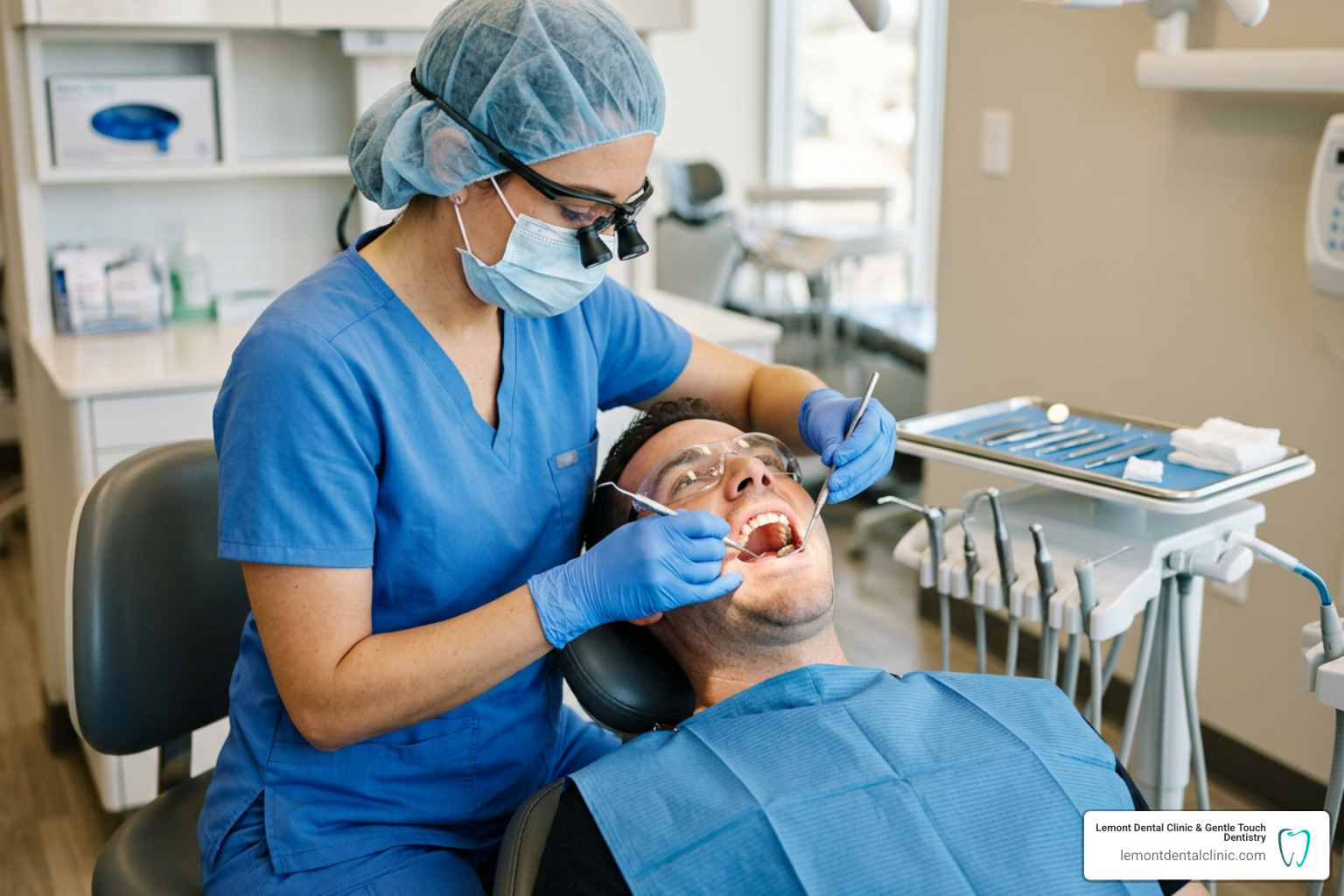
Understanding what happens during a deep scaling visit can help demystify the process and alleviate any dental anxiety. When you book a deep scaling appointment with us, we prioritize your comfort while ensuring we thoroughly remove every trace of subgingival tartar.
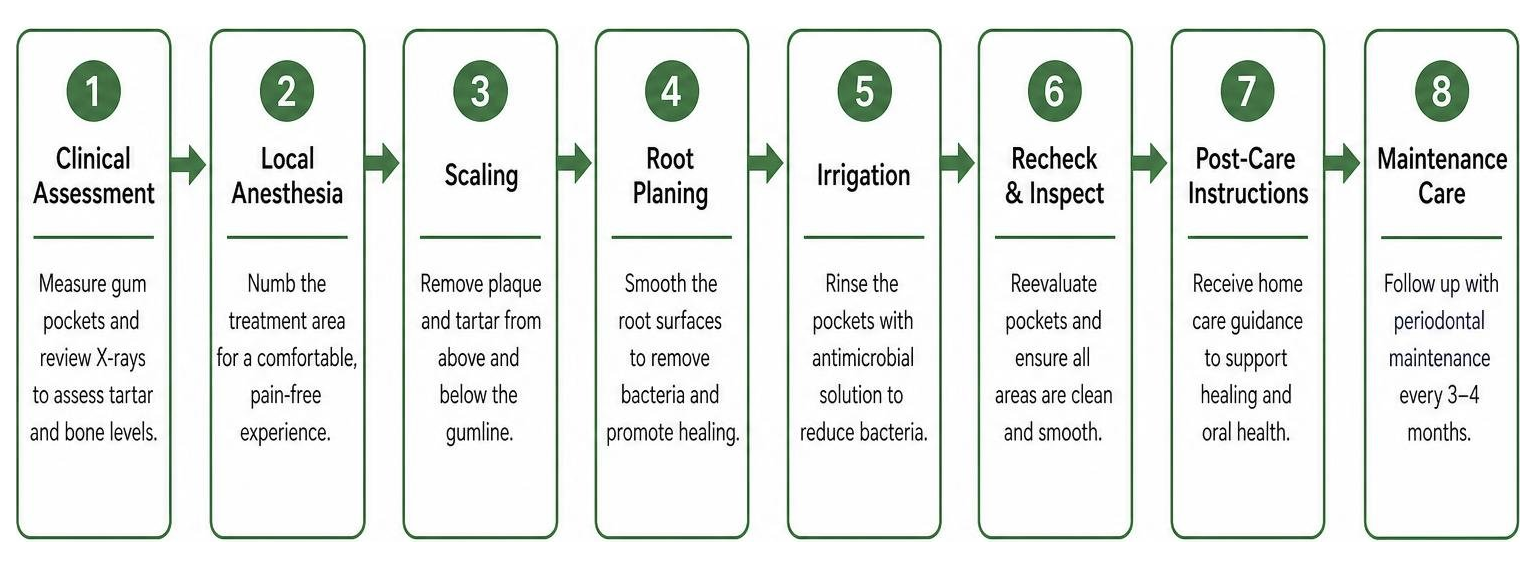
The procedure is highly structured and typically follows these key steps:
The Clinical Assessment: We measure your gum pocket depths with a specialized instrument and review digital X-rays to locate tartar deposits and assess bone levels.
Local Anesthesia: To ensure you feel absolutely nothing, we numb the target quadrant or half of your mouth using local anesthetic.
Ultrasonic Scaling: We use advanced ultrasonic scalers that emit high-frequency vibrations. These vibrations, combined with a gentle water mist, break up large tartar blocks and flush out bacterial debris from deep pocket zones.
Hand Scaling (Root Planing): We use delicate hand instruments (curettes) to carefully smooth out any remaining rough spots on the tooth roots, leaving a clean surface that encourages gum reattachment.
The most common concern patients have about deep scaling is whether it will hurt. The short answer is: no, the procedure itself should not be painful.
Because we work deep beneath the gumline, we typically use local anesthesia to completely numb your gums, teeth, and surrounding tissues before we begin. You may feel a slight pressure or a cold sensation from the water spray, but you should not feel any sharp pain. For patients with mild anxiety or minor buildup, a topical numbing gel may be used instead of local injections.
Any discomfort you might feel usually occurs after the anesthesia wears off. Your gums may feel tender, and your teeth might be sensitive to hot and cold temperatures for a few days. This is a completely normal part of the healing process. For a deeper look at managing discomfort, check out Does Deep Cleaning Hurt? and our detailed survival guide, Deep Cleanings Hurt: Complete Guide.
Healing and Recovery After Your Deep Cleaning
Once your deep scaling is complete, your body’s natural healing mechanisms take over. Over the next few weeks, you will notice your gums transforming from puffy and red to firm, pink, and healthy. As the inflammation subsides, the gum tissue will tighten and begin to hug the teeth closely again, effectively shrinking those deep pockets.
To ensure a smooth recovery, follow these post-operative care tips:
Avoid Extreme Temperatures: Stay away from very hot or ice-cold foods and drinks for the first 48 hours to minimize sensitivity.
Eat Soft Foods: Opt for softer foods (like yogurt, pasta, or eggs) and avoid sharp, crunchy, or highly acidic foods that can irritate tender gums.
Maintain Gentle Hygiene: Continue brushing and flossing daily, but be incredibly gentle around the treated areas. Use a soft-bristled toothbrush.
Rinse with Warm Salt Water: Rinsing your mouth 2 to 3 times a day with warm salt water can soothe your gum tissues and keep the area clean.
We believe that an informed patient is a healthy patient. To help you feel confident in your dental decisions, we have compiled answers to some of the most common questions we hear at our Lemont and Palos Hills offices. For a comprehensive overview of all things related to dental hygiene, you can also consult our Dental Cleaning Complete Guide.
How Much Does Teeth Scaling Near Me Cost?
The cost of scaling and root planing varies depending on the severity of your gum disease and how many quadrants of your mouth require treatment. On average, deep scaling costs between $150 and $300 per quadrant (or roughly $600 to $1,200 for a full-mouth treatment).
While this may seem like a significant investment, it is important to compare it to the cost of ignoring the problem. Untreated periodontal disease eventually leads to tooth loss, requiring expensive restorative treatments like dental implants, bridges, or dentures that can cost thousands of dollars. Furthermore, severe cases may require surgical intervention (periodontal flap surgery), which can easily cost between $1,000 and $3,000.
At Lemont Dental Clinic & Gentle Touch Dentistry, we are committed to providing top-tier care with experienced doctors, modern technology, and highly competitive pricing to ensure quality and affordability for our patients.
Does Dental Insurance Cover Scaling and Root Planing?
Yes, because scaling and root planing is classified as a therapeutic, non-surgical treatment for an active medical condition (periodontitis), most dental insurance plans cover it. While preventive cleanings are typically covered at 100%, basic periodontal treatments like deep scaling are usually covered at 50% to 80% under standard PPO plans.
Our experienced administrative team works directly with your insurance provider to maximize your benefits and give you a clear, upfront estimate of any out-of-pocket costs before your treatment begins. To learn more about navigating your dental benefits, check out The Ultimate Checklist for Preventive Dental Services.
Conclusion
Taking care of your gums is one of the most important things you can do for your overall health, confidence, and quality of life. If you have noticed bleeding gums, persistent bad breath, or if it has simply been a while since your last professional dental visit, don’t wait for pain to tell you there is a problem.
At Lemont Dental Clinic & Gentle Touch Dentistry, we provide comprehensive, high-quality general and restorative care to patients across Lemont, Palos Hills, and surrounding communities like Chicago Ridge, Worth, Palos Park, Hickory Hills, and Oak Lawn. Our team combines experienced doctors, advanced technology, and competitive pricing to deliver exceptional, affordable care.