Why Understanding Dental Preventive Services Could Save Your Smile (and Your Wallet)
What are dental preventive services? Here’s the short answer:
Dental preventive services are professional and at-home care practices designed to stop oral health problems — like cavities, gum disease, and tooth loss — before they start.
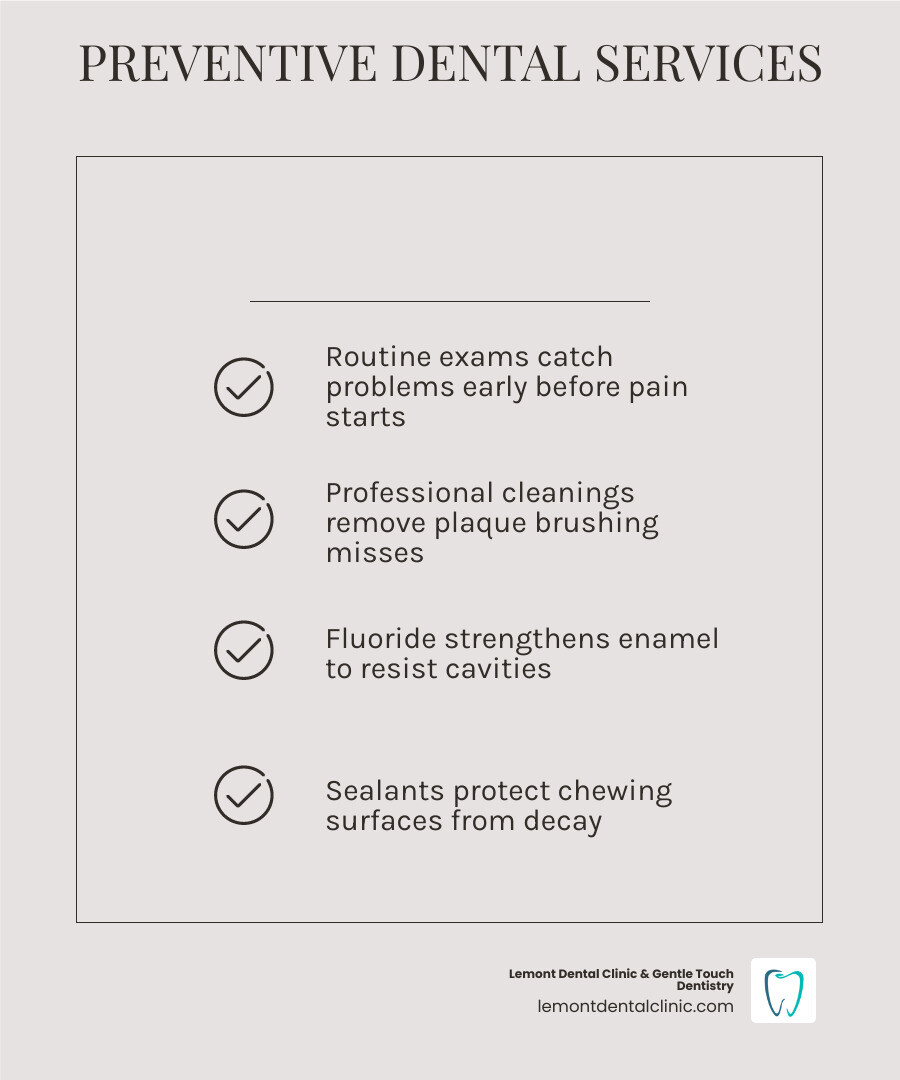
Common dental preventive services include:
Routine dental exams – checking teeth, gums, and soft tissues for early signs of disease
Professional teeth cleanings – removing plaque and tartar buildup that brushing can’t reach
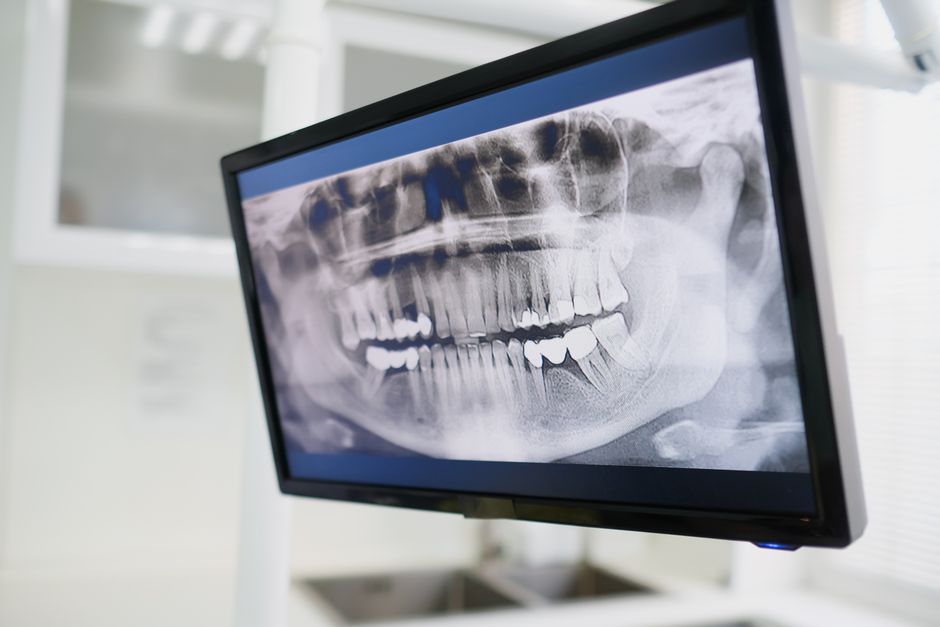
Dental X-rays – detecting hidden problems like decay between teeth or bone loss
Fluoride treatments – strengthening tooth enamel to resist cavities
Dental sealants – thin protective coatings applied to chewing surfaces to block decay
Oral cancer screenings – checking for early warning signs of abnormal tissue
Mouthguards – protecting teeth from sports injuries or nighttime grinding
Patient education – personalized guidance on brushing, flossing, and diet
Most people only think about their teeth when something hurts. By then, a simple problem has often become a costly one.
The math is hard to ignore: for every dollar spent on preventive dental care, patients can save between $8 and $50 in restorative and emergency treatments. That’s not a small difference — that’s the gap between a routine cleaning and a root canal.
And it goes beyond your mouth. Poor oral health has been linked to serious systemic conditions, including heart disease, stroke, and diabetes. Your mouth is a window into your overall health, and what happens there doesn’t stay there.
At Lemont Dental Clinic & Gentle Touch Dentistry, we believe the best dental treatment is the kind you never need. This guide breaks down exactly what preventive dental care includes, why it matters, and what a complete preventive routine looks like — so you can stay ahead of problems instead of reacting to them.
Must-know what are dental preventive services terms:
To understand why proactive care is so vital, we first need to look at how we view oral health maintenance. In the past, many people viewed the dentist as a place you only visited when you had an active toothache. Modern dentistry, however, is built on the concept of establishing a “dental home” — a trusted clinic where you receive ongoing, continuous care designed to preserve your natural smile for a lifetime.
When we talk about what are dental preventive services, we are referring to a structured, cooperative effort between you, your dentist, and the dental hygiene team. This care is designed to prevent the onset, progress, and recurrence of dental diseases. Understanding how these services fit into your overall healthcare plan is the first step toward achieving a healthy mouth, which you can read more about in our guide on Everything You Need to Know About Comprehensive Dental Care.
Defining What Are Dental Preventive Services in Modern Dentistry
In modern dental practices, preventive dentistry is divided into two main categories: professional clinical services (which we perform in our offices in Lemont and Palos Hills, IL) and your daily home care routine.
Professional preventive services are primarily diagnostic and educational. Diagnostic services allow us to monitor your oral health using advanced tools, while educational services empower you with the knowledge to care for your teeth between visits. These form the bedrock of our General Dentistry Services, ensuring that we catch potential issues while they are still easily manageable.
The Core Components of Professional Preventive Care
When you visit us for a preventive appointment, your care consists of several key elements:
Comprehensive Oral Evaluations: A thorough inspection of your teeth, gums, jaw, and surrounding oral tissues.
Routine Cleanings (Prophylaxis): The physical removal of plaque, tartar, and surface stains.
Hygiene Instruction: Tailored advice on how to improve your daily brushing and flossing habits based on the unique anatomy of your mouth.
By combining clinical expertise with personalized education, we help you establish dental hygiene habits that protect your teeth from decay and disease. You can explore how these individual elements come together during our routine visits by checking out our Service Post Consultations Prevention Reviews.
The Clinical Importance of Preventive Dental Care
Ignoring preventive care doesn’t just lead to bad breath or slightly yellow teeth; it can lead to severe clinical complications. Without regular intervention, plaque (a sticky film of bacteria) hardens into tartar, which can only be removed by a dental professional.
Over time, tartar buildup leads to gingivitis (mild gum inflammation) and can eventually progress to periodontitis (severe gum disease). Periodontitis is a leading cause of tooth loss in adults, and the statistics are eye-opening: nearly half (42%) of adults aged 30 years and older in the United States have some form of periodontitis, with severe periodontitis affecting about 8% of the adult population.
Why What Are Dental Preventive Services Matter for Systemic Health
Your mouth is not isolated from the rest of your body. The bacteria associated with periodontal disease can enter your bloodstream, triggering systemic inflammation. This inflammatory response has been directly linked to an increased risk of cardiovascular disease, stroke, and complications with diabetes.
For patients with diabetes, active gum disease can make it significantly harder to control blood sugar levels. Conversely, managing gum disease through routine preventive care can actually help improve diabetic markers. Furthermore, routine dental exams include checking for oral malignancies (oral cancer) and identifying nutritional deficiencies that often manifest first in the soft tissues of the mouth.
Pediatric vs. Adult Preventive Dentistry
While the goal of preventive dentistry is the same for everyone, the approach changes as we grow.
For children, preventive care focuses heavily on protecting developing primary teeth (baby teeth), which serve as essential placeholders for permanent teeth. It also involves monitoring developmental milestones, such as jaw growth and bite alignment. According to the AAPD Periodicity Guidelines, a child’s first dental visit should occur when their first tooth erupts, and no later than their first birthday.
Interestingly, children aged 6 to 12 are, on average, four times more likely to visit their dentist than their pediatrician. This makes the dental office a vital screening hub for overall childhood health.
For adults, the focus shifts toward managing existing restorations, preventing gum recession, checking for root decay, and monitoring the onset of periodontal disease.
The Ultimate Checklist of Common Preventive Dental Services
To keep your smile healthy and avoid complex treatments, you should be familiar with the core professional services that make up a comprehensive preventive program.
These services are designed to work together to preserve your teeth. You can read a complete breakdown of how these fit into broader dental treatments in our Dental Services Complete Guide 2026.
Professional Dental Cleanings and Exams
The most frequent preventive services you will receive are prophylactic cleanings and comprehensive exams. During a professional cleaning, our hygienists use specialized instruments to perform plaque removal and tartar elimination from areas your toothbrush simply cannot reach, particularly beneath the gumline and between the teeth.
Once your teeth are completely clean, we perform a detailed exam to check for signs of decay, gum disease, and oral cancer. To learn more about what to expect during these routine visits, you can read about our Regular Cleaning, discover the benefits of a Professional Dental Cleaning, and see how we conduct our comprehensive Check Ups.
Dental Sealants and Fluoride Treatments
For added protection against decay, we highly recommend protective treatments like sealants and fluoride.
Fluoride Treatments: Fluoride is a natural mineral that integrates into the tooth enamel, making it significantly more resistant to acid attacks from plaque bacteria. It can even reverse very early stages of tooth decay.
Dental Sealants: These are thin, plastic coatings painted onto the chewing surfaces of the premolars and molars. They act as a physical barrier, sealing out food particles and bacteria from the deep grooves of your teeth. While commonly applied to children, they are also highly effective for adults with deep grooves.
We cannot treat what we cannot see. That is why advanced diagnostic imaging is a crucial part of our preventive checklist.
At Lemont Dental Clinic & Gentle Touch Dentistry, we utilize digital dental X-rays, which offer several major benefits over traditional film X-rays:
Radiation Reduction: Digital X-rays reduce radiation exposure by at least 50% compared to traditional film.
Speed and Accuracy: Images are available instantly on our screens, allowing for a faster, more accurate diagnosis.
Early Detection: We can spot tiny areas of decay between teeth, bone loss beneath the gums, and infections at the root tips long before they cause pain.
In addition to digital X-rays, we utilize advanced laser cavity detection to catch enamel soft spots early, and we conduct thorough oral cancer screenings at every preventive visit to ensure your soft tissues remain healthy.
The Financial Benefits: How Prevention Saves Money
One of the most compelling reasons to prioritize preventive dental services is the financial savings. Many patients avoid the dentist to save money, but this strategy almost always backfires. When minor decay is left untreated, it inevitably progresses, requiring invasive and costly restorative treatments.
To put this in perspective, let’s look at how preventive costs compare to reactive, restorative treatments:
Preventive Service
Estimated Frequency
Potential Restorative Alternative (If Ignored)
Cost Impact
Routine Cleaning & Exam
Twice per year
Deep Scaling & Root Planing (Gum Therapy)
High
Digital X-Rays
Once per year
Root Canal Therapy & Crown
Very High
Dental Sealant
Once every 5–10 years
Composite Dental Filling
Medium
Fluoride Treatment
Twice per year
Emergency Extraction & Dental Implant
Extremely High
By investing in routine cleanings and exams, you avoid the need for emergency dental care, which is both stressful and expensive. Furthermore, dental insurance plans are structured to encourage prevention, making it easier to maintain your oral health without breaking the bank.
Frequently Asked Questions About Preventive Dentistry
We hear many questions from our patients in Lemont, Palos Hills, and surrounding communities like Chicago Ridge and Oak Lawn. Here are some of the most common questions about professional preventive care.
How often should I schedule preventive dental visits?
For the vast majority of patients, we recommend a recall interval of six months (twice a year). These six-month checkups allow us to clean away accumulated tartar and catch decay in its earliest stages.
However, we create personalized dental schedules for every patient. If you have a history of periodontitis, diabetes, or a weakened immune system, we may recommend that you visit us every three to four months to keep gum inflammation under control.
Does dental insurance typically cover preventive services?
Yes! Because insurance companies know that preventive care reduces the need for expensive restorative treatments later, they prioritize these services.
Many dental insurance plans cover routine exams, cleanings, and basic diagnostic X-rays at 100 percent. This means you can often receive these services with minimal to no co-pays or deductibles, making routine visits an incredibly cost-effective way to protect your smile.
What can patients do at home to support preventive dental care?
Professional cleanings are only half the battle; what you do at home matters just as much. To support your preventive care:
Master Your Brushing Technique: Brush at least twice a day for a full two minutes using a soft-bristled toothbrush. Hold the brush at a 45-degree angle to your gums and use gentle, circular motions.
Floss Daily: Brushing misses about 35% of your tooth surfaces. Daily flossing is the only way to remove plaque from between your teeth.
Use Fluoride Toothpaste: Always choose a toothpaste containing fluoride to help strengthen your enamel.
Eat a Balanced Diet: Limit sugary and acidic foods, which feed plaque-producing bacteria. Instead, focus on calcium-rich foods, leafy greens, and plenty of water.
Practice Tobacco Avoidance: Smoking and chewing tobacco greatly increase your risk of gum disease, tooth loss, and oral cancer.
Conclusion
Understanding what are dental preventive services is the key to maintaining a beautiful, pain-free smile for life. From professional cleanings and digital X-rays to dental sealants and customized home care, prevention is the most effective tool we have to fight decay and protect your systemic health.
At Lemont Dental Clinic & Gentle Touch Dentistry, we are proud to offer high-quality, comprehensive dental care to families throughout Lemont, Palos Hills, and surrounding areas like Hickory Hills and Orland Park, IL. Our experienced doctors utilize the latest technology to deliver comfortable, precise, and affordable dental services designed to keep your smile healthy without unexpected financial stress.
If it has been more than six months since your last dental cleaning or exam, don’t wait for a toothache to make the decision for you. Contact us today to schedule your next visit and experience our gentle touch firsthand. Explore all of the treatments we offer by visiting Our Services page.