Comparing Types of Instant Teeth Whitening Products
Finding the right instant teeth whitening solution means understanding how different application formats deliver active peroxide to your enamel. Over-the-counter formulations range from physical plastic films that seal against the tooth surface to painted-on serums that dry in seconds. Each style balances wear time, portability, active chemical strength, and ease of cleanup.
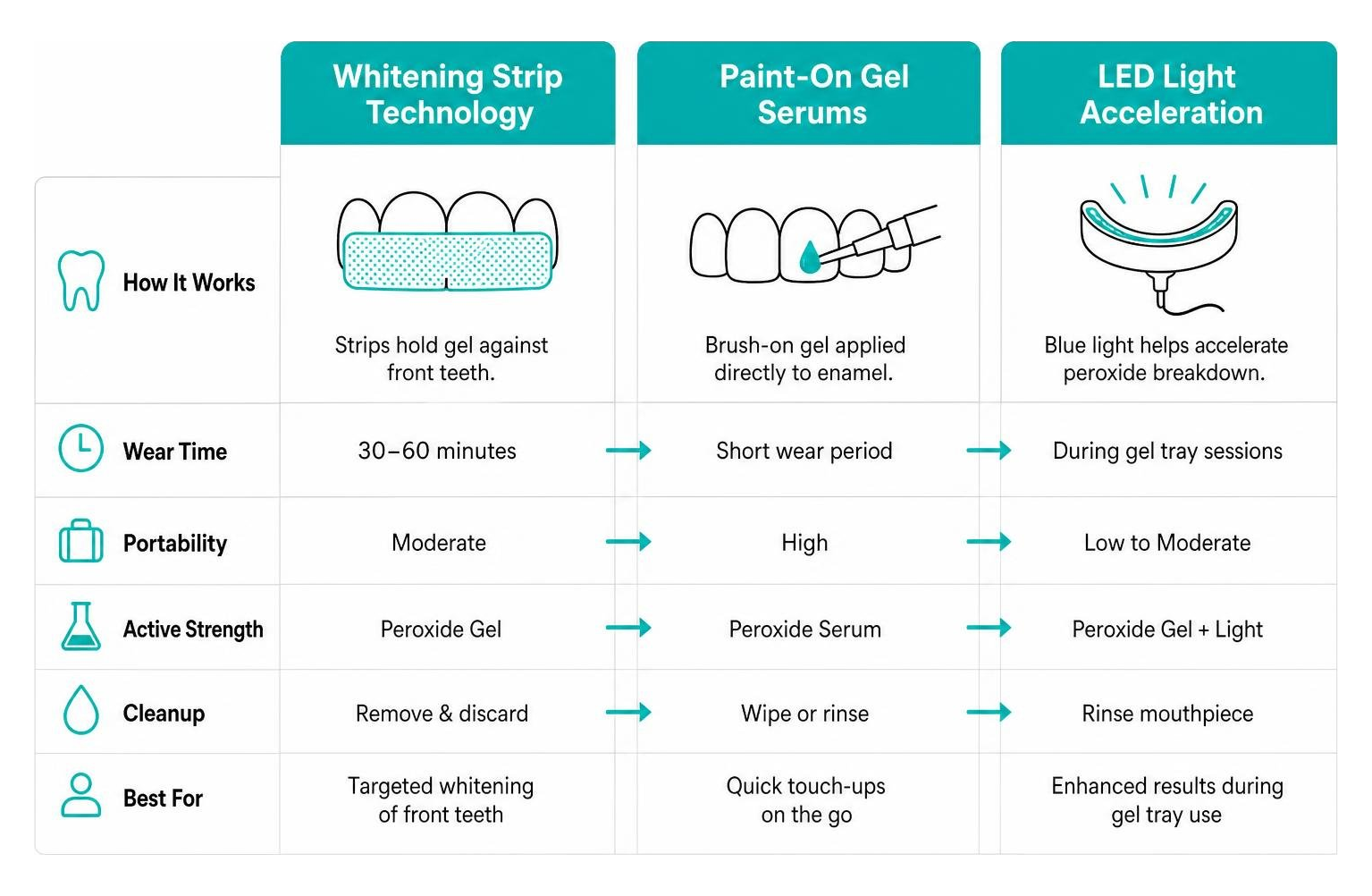
Over-the-counter options rely on distinct delivery methods:
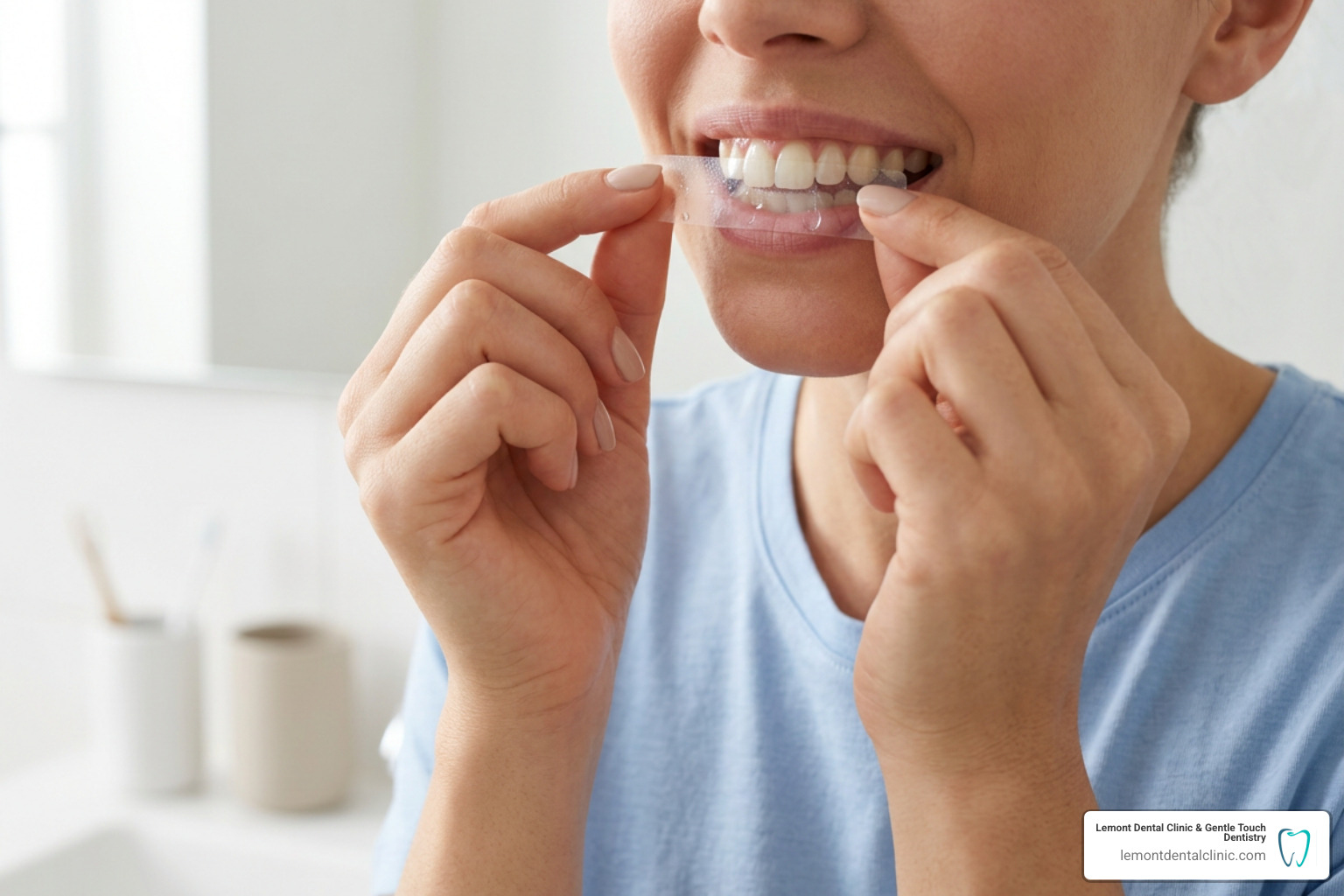
Whitening Strip Technology: Polyethylene strips hold peroxide gels against front teeth for 30 to 60 minutes.
Paint-On Gel Serums: Applied via brush tips directly to enamel; they dry quickly and decompose surface stains over a short wear period.
LED Light Acceleration: Mouthpieces emit blue light wavelengths meant to accelerate peroxide breakdown during gel tray sessions.
Format
Application Method
Speed of Visible Results
Typical Wear Time
Cleanup Needed?
Traditional Strips
Flexible plastic film
1 to 3 days
30 to 60 min
Yes (peel & rinse)
Dissolvable Films
Self-dissolving strip
15 to 30 minutes
10 to 15 min
No (dissolves fully)
Whitening Pens
Brush-on liquid gel
Immediate to 1 day
15 to 60 min
Minimal (brush/rinse)
LED Tray Kits
Custom or stock tray + light
1 to 3 sessions
10 to 30 min
Yes (rinse mouth & tray)
Whitening Strips and Dissolvable Films for Instant Teeth Whitening
Whitening strips remain a dominant choice for at-home stain removal. Traditional strips deliver a steady dose of hydrogen peroxide directly to the enamel surface. Over-the-counter strips generally feature hydrogen peroxide concentrations ranging from 6% to 14%.
Products like express 1-hour whitening strips utilize advanced seal technology. This non-slip grip allows the polyethylene film to remain firmly anchored to teeth, allowing users to talk and drink water while wearing them. Standard daily express treatments promise noticeably brighter teeth within 10 days of consistent 60-minute daily use, removing built-up surface stains.
For immediate, low-mess convenience before social events, dissolvable strip technology eliminates the need to peel off used plastic. Options like rapid dissolvable whitening strips use a concentrated 8% hydrogen peroxide formula held in a pectin matrix. They adhere to moistened teeth and dissolve completely within 15 minutes. Combining peroxide with soothing ingredients like coconut oil and enamel-supporting hydroxyapatite helps cushion gums during fast oxidation.
Similarly, platinum dissolving whitening strips offer fast express whitening. These strips melt away on teeth within 10 minutes, making them convenient for on-the-go brightening without requiring post-treatment cleanup.
On-the-Go Pens and Serums for Instant Teeth Whitening
When target accuracy and ultimate portability are required, brush-tip pens provide direct control over gel application. These compact wands allow users to target specific stained teeth or paint visible smile lines without applying gel directly onto sensitive gum tissue.
On-the-go instant whitening pens often combine carbamide peroxide and hydrogen peroxide. This dual-peroxide combination gives immediate stain-lifting power through fast-acting hydrogen peroxide, while slow-releasing carbamide peroxide maintains whitening activity across a 15- to 20-minute post-application window.
Higher-strength options, such as extra strength whitening pens, pair dual peroxides with biomimetic nano-hydroxyapatite and aloe vera. The brush applicator paints a thin coating over dry teeth that sets in 30 seconds. Users keep the gel on for up to 30 minutes before rinsing.
Over-the-counter express pens, like the Optic White Express Teeth Whitening Pen – Colgate, use quick-drying hydrogen peroxide formulas. Designed for short express routines, users dry their teeth, brush on the serum, wait 15 seconds for a clear film to form, and leave it on for 1 hour before brushing it off with plain water.
How Fast Whitening Formulas Work and Safety Guidelines
Understanding how instant teeth whitening formulations interact with oral biology helps protect enamel and oral tissues from damage. Bleaching active ingredients work through oxidation: peroxide molecules pass into the porous enamel structure, breaking down complex organic stain compounds into smaller, colorless molecules.
While effective against extrinsic coffee, wine, and tobacco stains, fast peroxide exposure can cause temporary side effects. Tooth sensitivity and mild gum irritation occur when peroxide dehydrates enamel or contacts soft mucosal tissues.
To protect your smile while using quick-whitening products, follow these safety guidelines:
Enamel Protection: Choose formulas containing nano-hydroxyapatite or potassium nitrate to help remineralize enamel surface pores and reduce nerve sensitivity.
Tissue Precautions: Wipe excess gel off gums using a cotton swab to avoid tissue irritation or localized chemical blanched spots.
Wear Time Limits: Stick strictly to package instructions. Overusing high-concentration peroxide formulas can cause transient tooth sensitivity or enamel surface damage.
Dental Restoration Limits: Peroxide formulations only react with natural organic enamel. Non-porous dental materials—including composite fillings, porcelain crowns, and veneers—will not change color.
If you experience severe tooth sensitivity after using at-home kits, stop treatment for several days, use a room-temperature rinse, and apply a desensitizing toothpaste. To understand how professional options treat deep stains safely, explore our guide on Laser Teeth Whitening Explained: Is It Right for You?.
At-Home Fast Whitening vs. Professional Dental Care
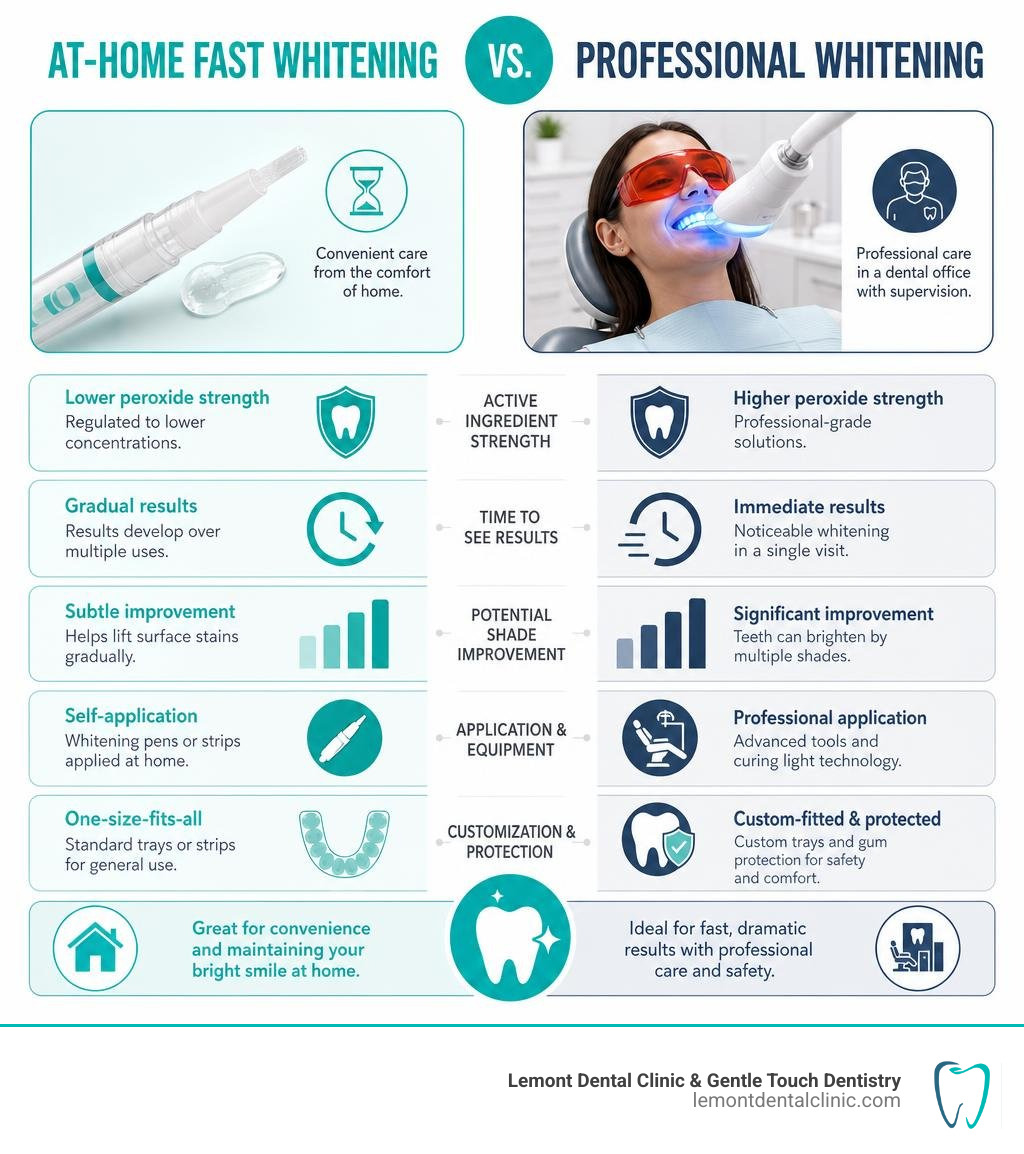
While store-bought strips and pens offer convenience, comparing retail products with professional dental care reveals distinct differences in safety, speed, and shade improvement.
Over-the-counter products are regulated to lower peroxide strengths, usually between 6% and 14% hydrogen peroxide equivalent. In contrast, in-office dental whitening procedures utilize professional-grade hydrogen peroxide solutions ranging from 25% to 40%. Because these high concentrations require light-cured gingival barriers to isolate and protect soft gum tissues, they can only be safely applied by trained dental professionals.
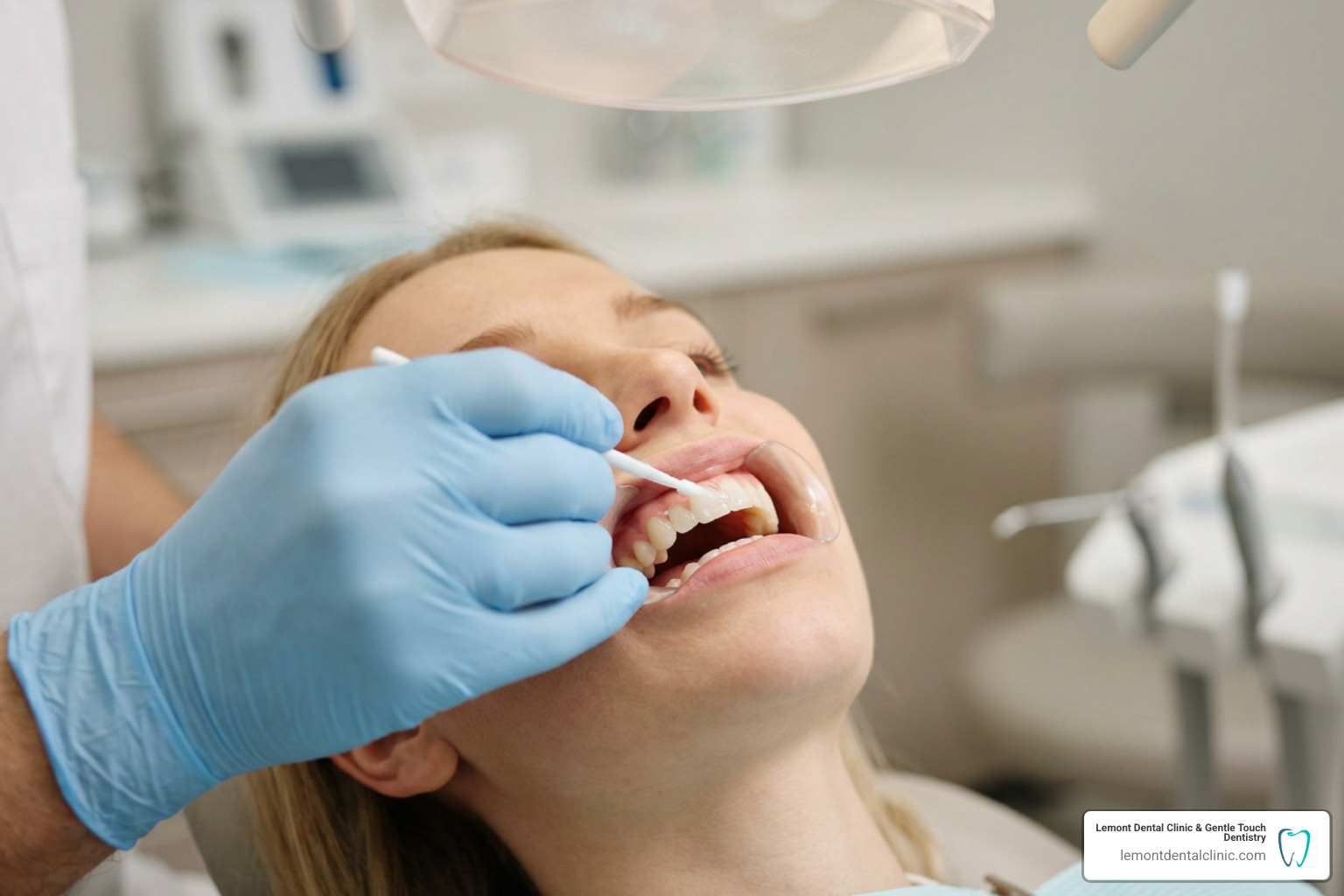
During professional in-office bleaching, teeth can brighten by 8 to 10 shades in a single 60- to 90-minute visit. The dentist applies the whitening agent evenly across the front teeth, using specialized curing lights to activate the solution safely.
Additionally, custom-fitted bleaching trays made by a dentist hold professional-strength gel against unique tooth contours while preventing gel from leaking onto surrounding gums.
Frequently Asked Questions About Fast Teeth Whitening
Can instant whitening products bleach crowns, veneers, or fillings?
No. Chemical peroxide whitening agents act exclusively on natural tooth structures by breaking down organic carbon bonds inside porous enamel. Dental restorations made from porcelain, ceramic, or composite resins are non-porous and color-stable. Whitening products will remove surface discoloration from dental work, but they cannot lighten the base shade of a crown, veneer, or composite filling. To maintain an even smile line, natural teeth should be whitened to match existing dental restorations before placing new crowns or composite work.
How quickly can noticeable results appear from quick whitening treatments?
Noticeable timing depends on product format, active chemical strength, and stain severity:
Dissolvable express strips and whitening pens can produce subtle visual brightness within 15 to 30 minutes, making them useful for immediate pre-event touch-ups.
Express 1-hour whitening strips yield noticeable shade improvements after 1 to 3 daily sessions, achieving full results in 7 to 10 days.
Professional in-office treatments deliver 8 to 10 shades of brightness in a single 60- to 90-minute dental visit.
Are natural or peroxide-free alternatives effective for quick brightening?
Natural alternatives work primarily through mechanical abrasion rather than true stain oxidation:
Baking Soda (Sodium Bicarbonate): Mildly abrasive baking soda pastes remove surface discoloration from outer enamel. However, frequent scrubbing with coarse abrasive mixtures can wear down enamel over time.
Coconut Oil Pulling: Swishing coconut oil for 15 to 20 minutes can reduce plaque bacteria like Streptococcus mutans, but it does not bleach intrinsic or dark surface stains.
Nano-Hydroxyapatite Formulations: Peroxide-free toothpaste or gels containing nano-hydroxyapatite re-bind to natural enamel pores, smoothing surface micro-scratches to make teeth reflect light better without chemical irritation.
Professional Smile Enhancement Solutions
At Lemont Dental Clinic & Gentle Touch Dentistry, we serve patients in Lemont and Palos Hills, IL, as well as surrounding communities including Orland Park, Hickory Hills, Oak Lawn, and Lockport Heights. Our team combines gentle, patient-centered care with modern dental technology to deliver bright, healthy smiles safely and comfortably.
While over-the-counter instant teeth whitening strips and pens offer temporary options for quick touch-ups, professional dental whitening provides faster, safer, and longer-lasting results under expert supervision. We isolate sensitive gums, customize active ingredient strengths to your specific enamel needs, and ensure your smile brightens evenly without damaging existing dental restorations.
Whether you need a fast in-office whitening session before an upcoming milestone or want custom take-home trays for comfortable shade maintenance, we are here to help. Explore Our Full Dental Care Services to discover how our comprehensive general, restorative, and cosmetic treatments can enhance your smile.