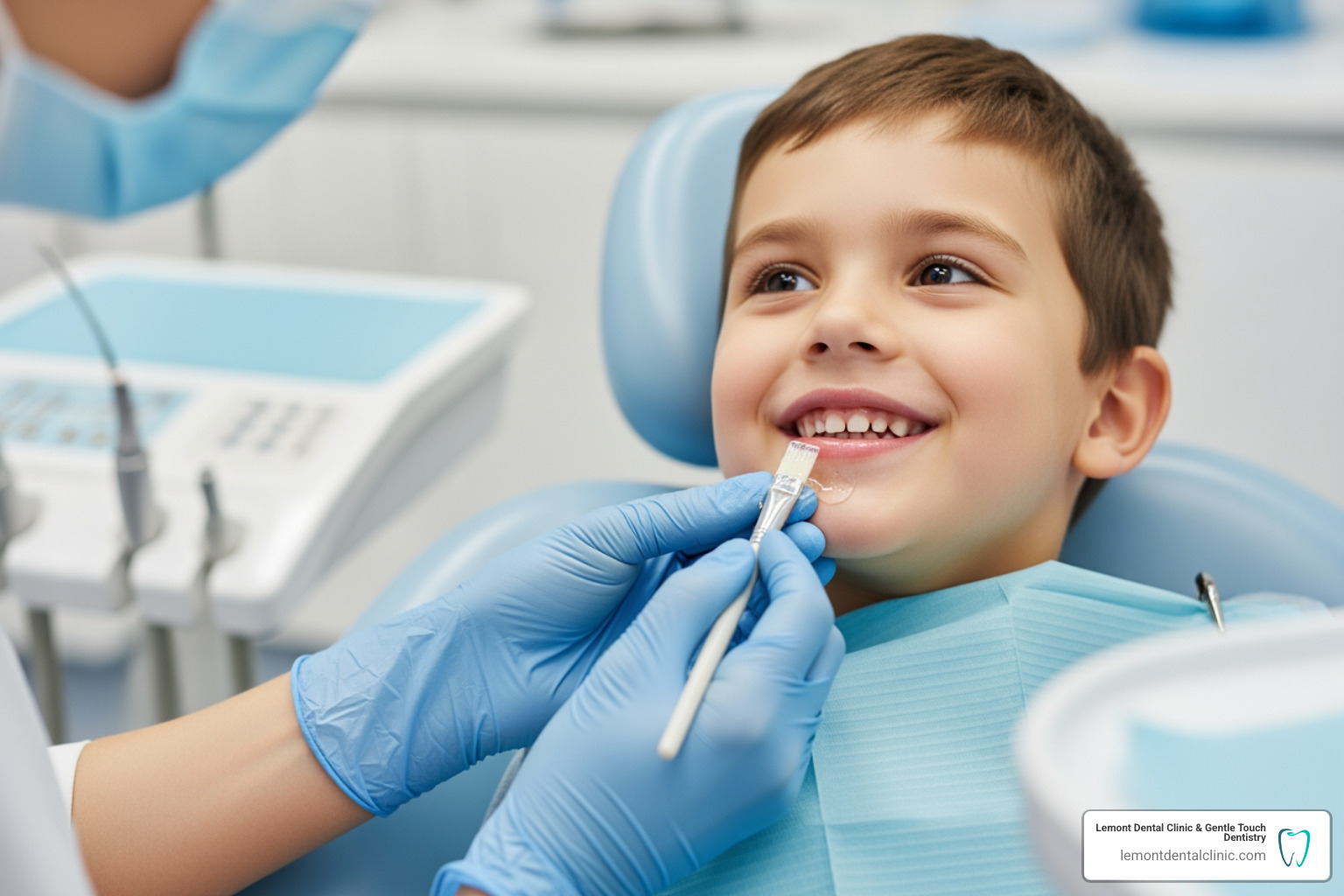
Why So Many Parents Are Searching for Gentle Dental Care for Kids
Gentle dental care for kids means more than just being careful with small teeth. It’s a whole approach — one designed to keep children calm, comfortable, and actually willing to come back.
Here’s a quick summary of what it involves and how to get started:
Quick answers for parents:
First visit: Schedule when your child’s first tooth appears, or by their first birthday
How often: Every 6 months for checkups and cleanings
What to expect: Short, friendly visits (typically 20-30 minutes) with a child-focused team
Key services: Exams, cleanings, fluoride treatments, sealants, and cavity care
For anxious kids: Options include nitrous oxide, oral sedation, or behavior-focused techniques
Cost: Most major PPO insurance plans cover pediatric preventive care; financing options are available for additional treatment costs
The numbers paint a clear picture of why this matters. More than 40% of five-year-olds already have tooth decay. That’s not a small problem — tooth decay is one of the leading causes of preventable hospital stays among children.
But here’s the thing: most of that damage is preventable. And the way a child experiences their first few dental visits can shape how they feel about dental care for the rest of their life.
At Lemont Dental Clinic & Gentle Touch Dentistry, we see this every day. A child who has a calm, positive first experience is far more likely to keep up with regular visits — and far less likely to avoid the dentist as a teenager or adult.
This guide walks you through everything you need to know: when to start, what to expect, how to prepare your child, and how to find a practice that your child won’t dread.
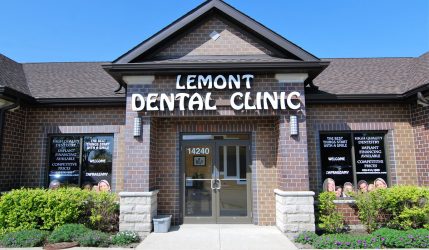
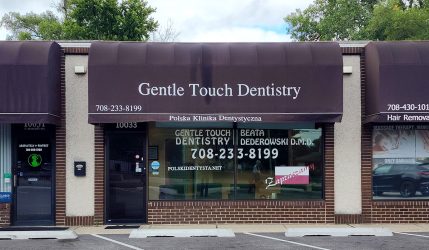
When we talk about gentle dental care kids can rely on, we aren’t just talking about a dentist with a soft voice. It is a specialized methodology that blends clinical expertise with child psychology. In our offices serving Lemont and Palos Hills, IL, we view every interaction through the lens of comfort-first care.
This approach starts with specialized pediatric training. Dentists who focus on children understand that a four-year-old’s emotional needs are just as important as their molars. We use behavior guidance techniques to help children feel in control. This includes using age-appropriate language—for example, calling the suction tool a “thirsty straw”—and building trust by never surprising a child with a procedure they aren’t ready for.
Why gentle dental care kids need is about more than being “nice”
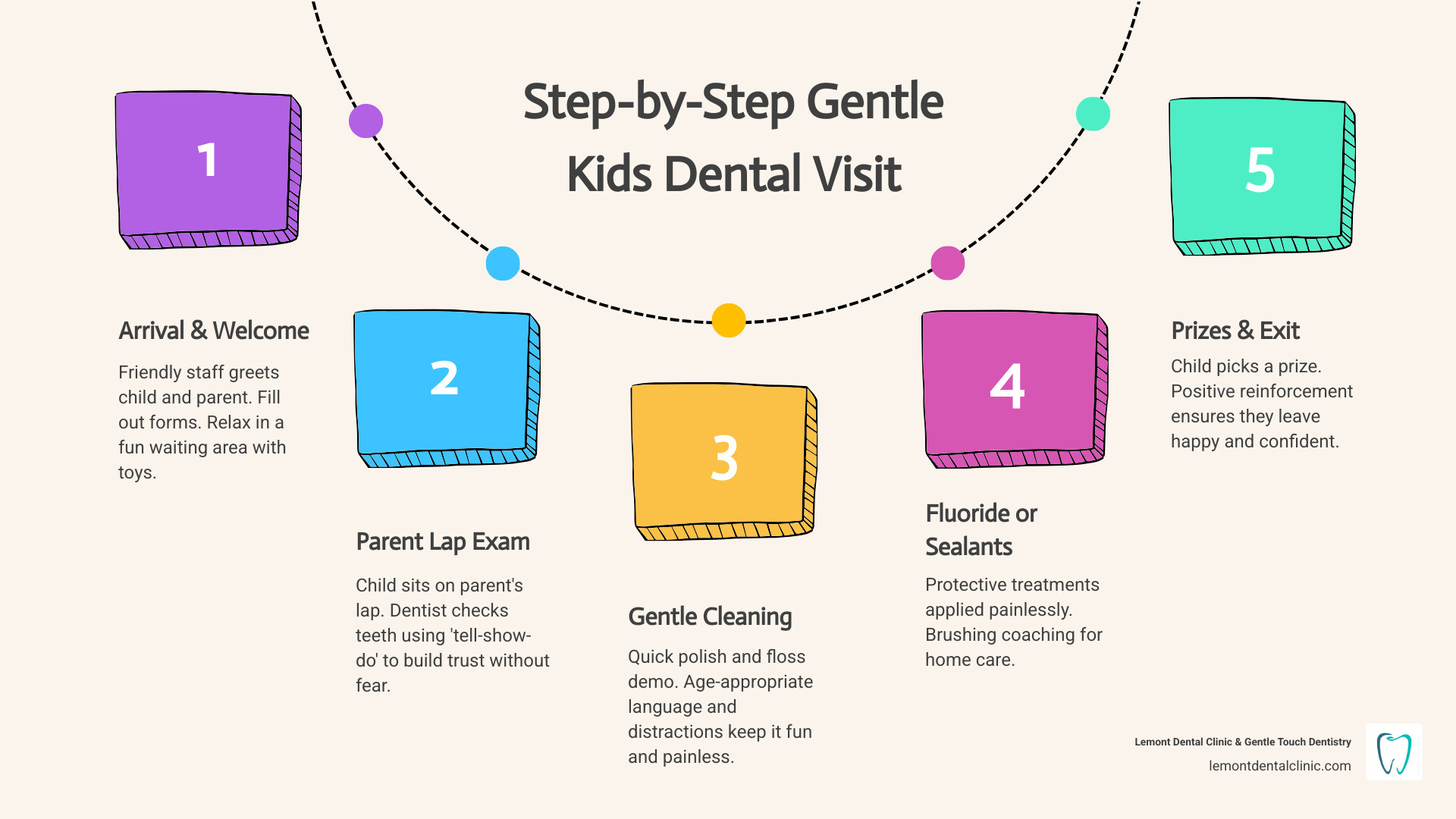
True gentle dentistry involves a specific technique called “Tell-Show-Do.” We tell the child what we are going to do using non-threatening words, show them the tool on their fingernail or a puppet, and then do the procedure exactly as described. We avoid “trigger words” like drill, needle, or shot, which can spark immediate panic.
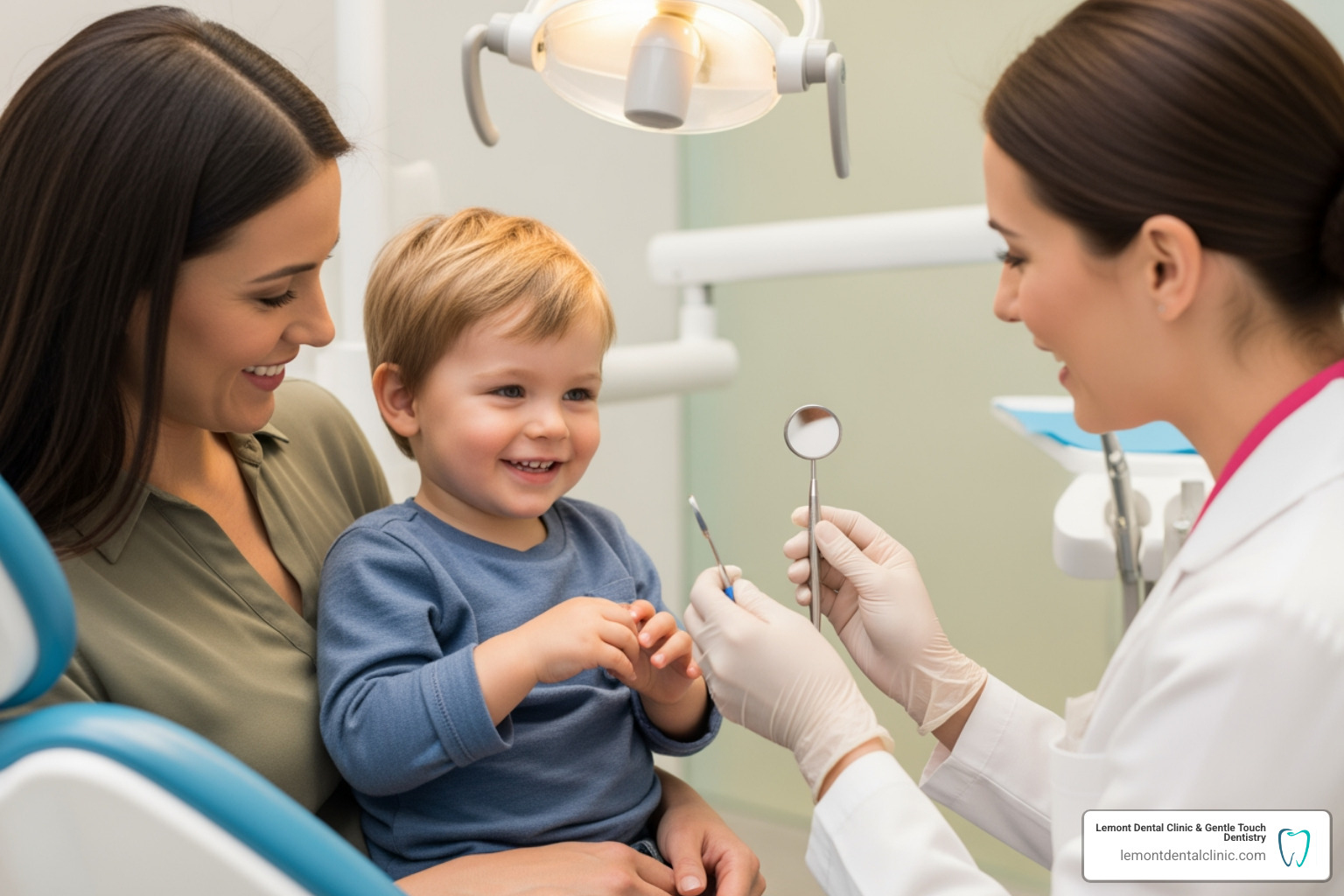
Pacing is also vital. We don’t rush. If a child needs a break to wiggle or ask a question, we give it to them. By utilizing distraction techniques and sensory comfort—like cool office decorations or a “lap exam” where a toddler sits safely with their parent—we build confidence. Every successful, tear-free visit is a brick in the foundation of their lifelong oral health.
Why early positive visits matter for lifelong oral health
Establishing a “dental home” early is the best way to prevent dental phobia. When children only visit the dentist when they are already in pain from a cavity, they associate the office with trauma. Conversely, regular preventive visits teach them that the dentist is a friendly place where we just “count and shine” teeth.
Beyond the psychological aspect, early visits are critical for monitoring jaw growth and speech development. Baby teeth, or deciduous teeth, serve as essential placeholders for permanent teeth. With statistics showing that 40% of five-year-olds suffer from decay, early intervention is the only way to ensure these “placeholders” stay healthy until they are ready to fall out naturally.
When to start and how often to go
Timing is everything in pediatric health. Many parents are surprised to learn that dental care should begin long before a child has a full mouth of teeth.
The right age for a first appointment
The American Academy of Pediatric Dentistry (AAPD) recommends that a child have their first visit by their first birthday or within six months of their first tooth erupting. This initial visit is often more of a “well-baby” checkup. We look at feeding habits, discuss teething, and check for any early signs of “bottle rot” or infant caries. For very young children, we often perform a Children’s Dentistry exam while they remain in their parent’s lap, making the experience feel safe and routine.
How often children should visit for checkups and cleanings
For most children, a visit every six months is the gold standard. These 20-30 minute appointments allow us to perform professional cleanings that remove plaque a toothbrush might miss and apply preventive treatments. If a child is at higher risk for cavities due to genetics or diet, we may suggest more frequent visits. We also use digital X-rays, which provide a tiny fraction of the radiation of traditional film—less than you’d get on a short airplane ride—to monitor development hidden beneath the gums.
How parents can prepare for a positive first visit
Your attitude as a parent sets the tone. Use simple, positive words and perhaps role-play a “dentist visit” at home with a toothbrush and a stuffed animal. We recommend scheduling morning appointments when children are well-rested and less likely to be “cranky.”
Avoid telling scary stories or using the dentist as a threat (“If you don’t brush, the dentist will have to use a big needle!”). Bringing a favorite comfort item, like a blanket or toy, is always encouraged. To make the day smoother, have your medical history and forms ready in advance. For more tips, you can read about what to look for in gentle pediatric dental care and how we ensure no more tears at the Palos pediatric dentist.
Services that matter most in gentle dental care kids can handle well
A kid-friendly practice offers specialized services tailored to growing mouths. From preventing the first cavity to managing a dental emergency on the playground, the goal is always to provide kids dental care your top choices for pediatric dentists in Lemont expect.
Preventive care that stops cavities before they start
Prevention is the heart of gentle dental care kids receive. This includes:
Fluoride Varnish: A quick, painted-on treatment that strengthens enamel and promotes remineralization.
Dental Sealants: We call these “raincoats for teeth.” We apply a thin protective coating to the deep grooves of permanent molars (usually between ages 6 and 14) to block out bacteria.
Hygiene Coaching: We teach kids (and parents!) the best ways to brush and floss, ensuring they can reach every corner of their mouth by the time they are around age seven.
Common treatments offered in kid-friendly practices
When a cavity does occur, we use specialized materials. This might include zirconia or stainless steel crowns for teeth that have significant decay. If the decay reaches the nerve, we perform “pulp therapy”—a child root canal therapy that removes only the infected part of the pulp to save the tooth. We also provide space maintainers if a baby tooth is lost too early, ensuring the permanent tooth has a clear path to erupt.
How gentle offices handle thumb sucking, cavities, and emergencies
We provide habit counseling for thumb sucking or pacifier use, which can lead to an “open bite” if it persists past age four or five. Our approach uses positive reinforcement rather than shame.
In the event of an emergency—like a knocked-out tooth or a sudden toothache—we prioritize same-day urgency. If a permanent tooth is knocked out, keep it moist in milk or saliva and get to us immediately; quick action can often save the tooth!
Signs your child needs an urgent dental visit:
Persistent pain or a toothache that wakes them up at night
Swelling in the gums or face
A tooth that has changed color (turning grey or dark)
A chipped, cracked, or loosened tooth due to trauma
Pus or signs of infection around the gumline
Pain and anxiety control: how gentle dental care kids receive stays comfortable
For some children, a friendly environment isn’t enough to overcome deep-seated anxiety or sensory sensitivities. This is where modern comfort techniques become essential.
Method
Best For
What to Expect
Tell-Show-Do
Mild anxiety / First visits
Verbal explanation and demonstration before the procedure.
Nitrous Oxide
Moderate anxiety / Gag reflex
“Laughing gas” breathed through a nose mask; child stays awake and recovers instantly.
Oral Sedation
High anxiety / Extensive work
A liquid or pill that makes the child very drowsy but still conscious.
General Anesthesia
Special needs / Severe phobia
Complete sleep, usually managed by a certified anesthesiologist.
Minimally invasive techniques that reduce pain and drilling
The best way to avoid pain is to catch issues early. Minimally invasive dentistry focuses on preserving as much natural tooth structure as possible. By using digital imaging and early detection tools, we can often treat tiny spots of decay with fluoride or small, tooth-colored restorations before they ever require a traditional drill.
When sedation may be appropriate and what parents should ask
Sedation is a safe and effective tool when managed by experienced professionals. It is often recommended for very young children with extensive treatment needs or those with special medical or developmental requirements. If you are considering Pediatric Dentistry involving sedation, always ask about the office’s safety protocols and the specific training of the staff. At our practice, we prioritize your child’s safety and informed consent above all else.
What a truly child-friendly office looks and feels like
A truly pediatric dentist Lemont IL ultimate guide practice should feel welcoming from the moment you walk in. Look for soothing colors, toys in the waiting area, and a staff that greets your child by name. Small touches, like a prize machine or a “no-cavity club” wall, turn a medical appointment into a positive milestone.
Why baby teeth are important and how to choose the right dentist
It’s a common myth that baby teeth don’t matter because they eventually fall out. In reality, these 20 teeth are the foundation for a child’s future smile.
Why baby teeth still matter even though they fall out
Baby teeth are essential for:
Nutrition: Allowing a child to chew a healthy, balanced diet.
Speech: Helping with the placement of the tongue for clear pronunciation.
Space Maintenance: Guiding permanent teeth into the correct position.
Jaw Development: Stimulating the growth of the jaw bone.
Children begin losing teeth around age 6 and won’t lose their last molars until age 12 or 13. That is a long time to live with decay or infection if they aren’t cared for properly!
What to look for when choosing gentle dental care kids won’t fear
When searching for a kids dentist near me, prioritize experience and communication. You want a team that is patient, uses digital technology to minimize discomfort, and offers a clear plan for both preventive and emergency care. Transparency regarding costs and a focus on long-term relationships are hallmarks of a quality practice.
Questions to ask about insurance, financing, and new patient costs
Dental care should be accessible. Most practices in the Lemont and Palos Hills area accept major PPO insurance plans. If you are uninsured, ask about third-party financing like CareCredit or internal payment plans. Always ask for a treatment estimate before procedures begin so there are no surprises. Finding a children dentist near me who balances quality with affordability is key to maintaining your family’s oral health without stress.
Frequently asked questions about gentle dental care kids
Are dental X-rays and fluoride treatments safe for children?
Yes. Digital X-rays use extremely low radiation, and fluoride is a naturally occurring mineral that is safe and effective in the proper doses. These are the two most powerful tools we have to prevent and detect decay early.
What happens if a baby tooth decays or falls out too early?
If a tooth is lost prematurely, the surrounding teeth may shift into the empty space. This can block the permanent tooth from coming in, leading to severe crowding. We often use space maintainers to prevent this.
What do parents usually say after a good pediatric dental visit?
Most parents express relief! They often comment on how the staff’s calm demeanor helped their child stay relaxed and how clear the explanations were. A successful visit makes the next visit even easier.
Conclusion
Choosing gentle dental care kids can feel comfortable with is one of the best investments you can make in your child’s future. By starting early, focusing on prevention, and choosing a practice that prioritizes emotional well-being, you are setting your child up for a lifetime of healthy, confident smiles.
At Lemont Dental Clinic & Gentle Touch Dentistry, we are proud to serve families across Lemont, Palos Hills, and the surrounding Illinois communities including Oak Lawn, Orland Park, and Bolingbrook. We invite you to experience the difference that compassionate, high-quality care can make.
Ready to start your child’s journey toward a healthy smile? Find a kids dentist near Palos Hills and schedule your visit with us today!