In 2026, the cost of a bridge depends on how it is supported and how many teeth it replaces. A traditional dental bridge averages about $5,197 nationally, with reported prices from $4,100 to $9,650. A Maryland bridge may cost less, while an implant-supported bridge for several missing teeth can cost much more.
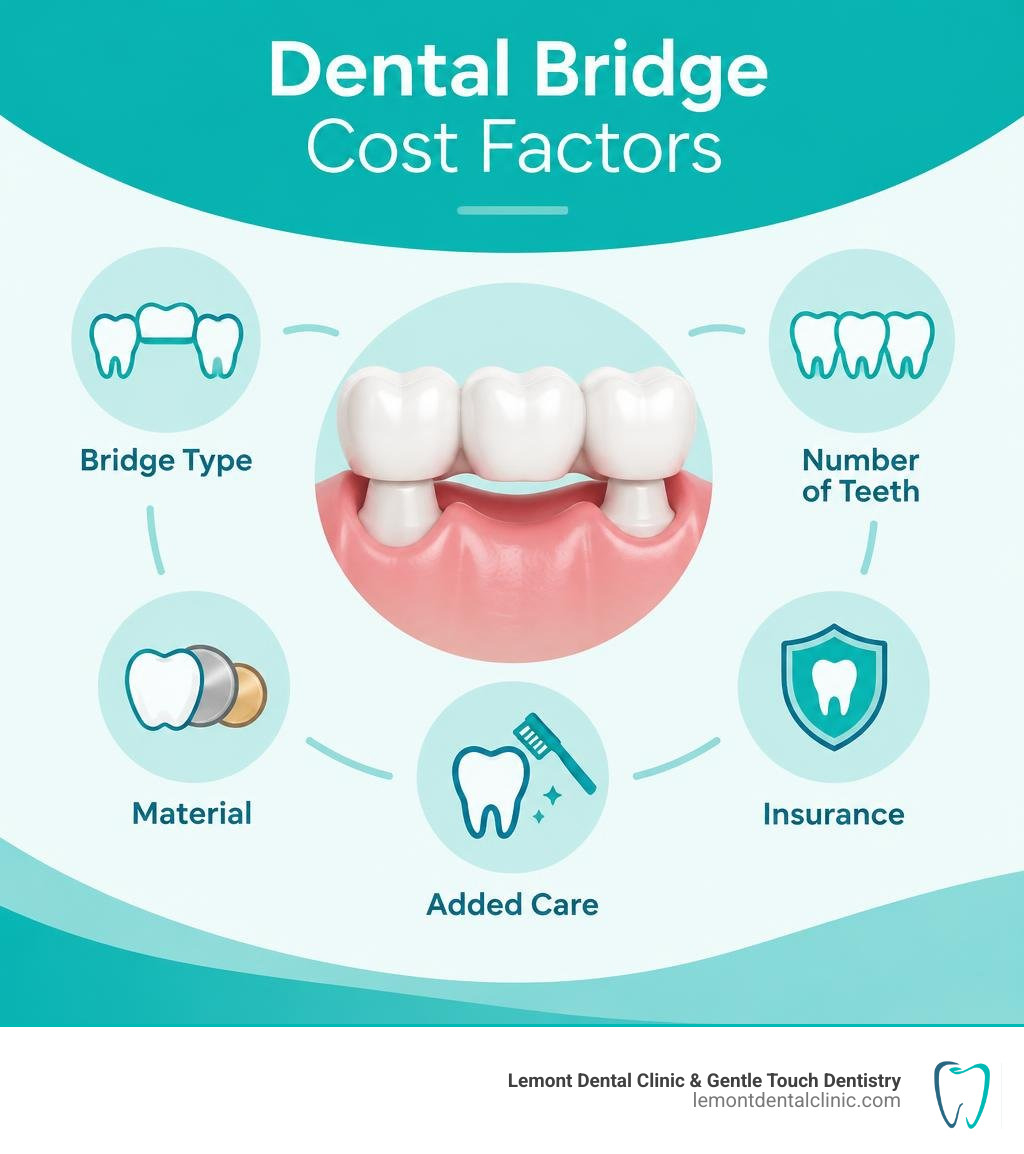
The price you pay can also change with the bridge material, the health of the supporting teeth, and your insurance benefits. An exam and a written treatment estimate will give you a more useful number than any national average.
Average Cost of a Bridge by Type in 2026
When replacing a missing tooth, prosthodontic classifications determine both the mechanical design of the appliance and the overall financial investment required. For patients living in Illinois—whether near Lemont, Palos Hills, Hickory Hills, Oak Lawn, or Orland Park—local pricing generally aligns with broader regional averages, though specific laboratory fees and restorative complexities create natural variations. For a detailed breakdown of procedural fees, our standard dental bridge pricing details outline what goes into these estimates.
Bridge Type
Typical Unit Count
Average Cost Range
Expected Lifespan
Primary Clinical Indication
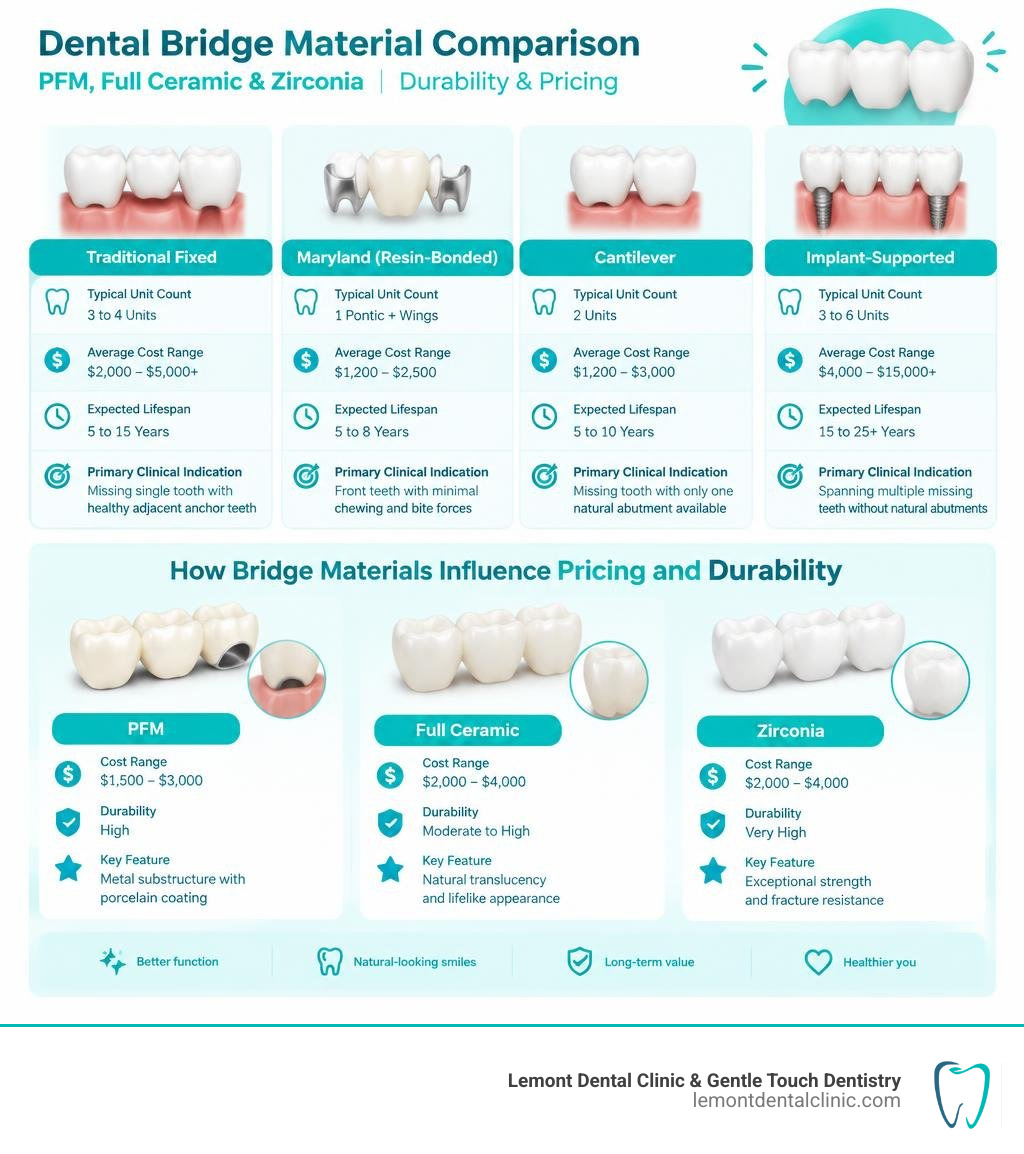
Traditional Fixed
3 to 4 Units
$2,000 – $5,000+
5 to 15 Years
Missing single tooth with healthy adjacent anchor teeth
Maryland (Resin-Bonded)
1 Pontic + Wings
$1,200 – $2,500
5 to 8 Years
Front teeth with minimal chewing and bite forces
Cantilever
2 Units
$1,500 – $3,000
5 to 10 Years
Missing tooth with only one natural abutment available
Implant-Supported
3 to 6 Units
$4,000 – $15,000+
15 to 25+ Years
Spanning multiple missing teeth without natural abutments
Traditional Dental Bridge Cost
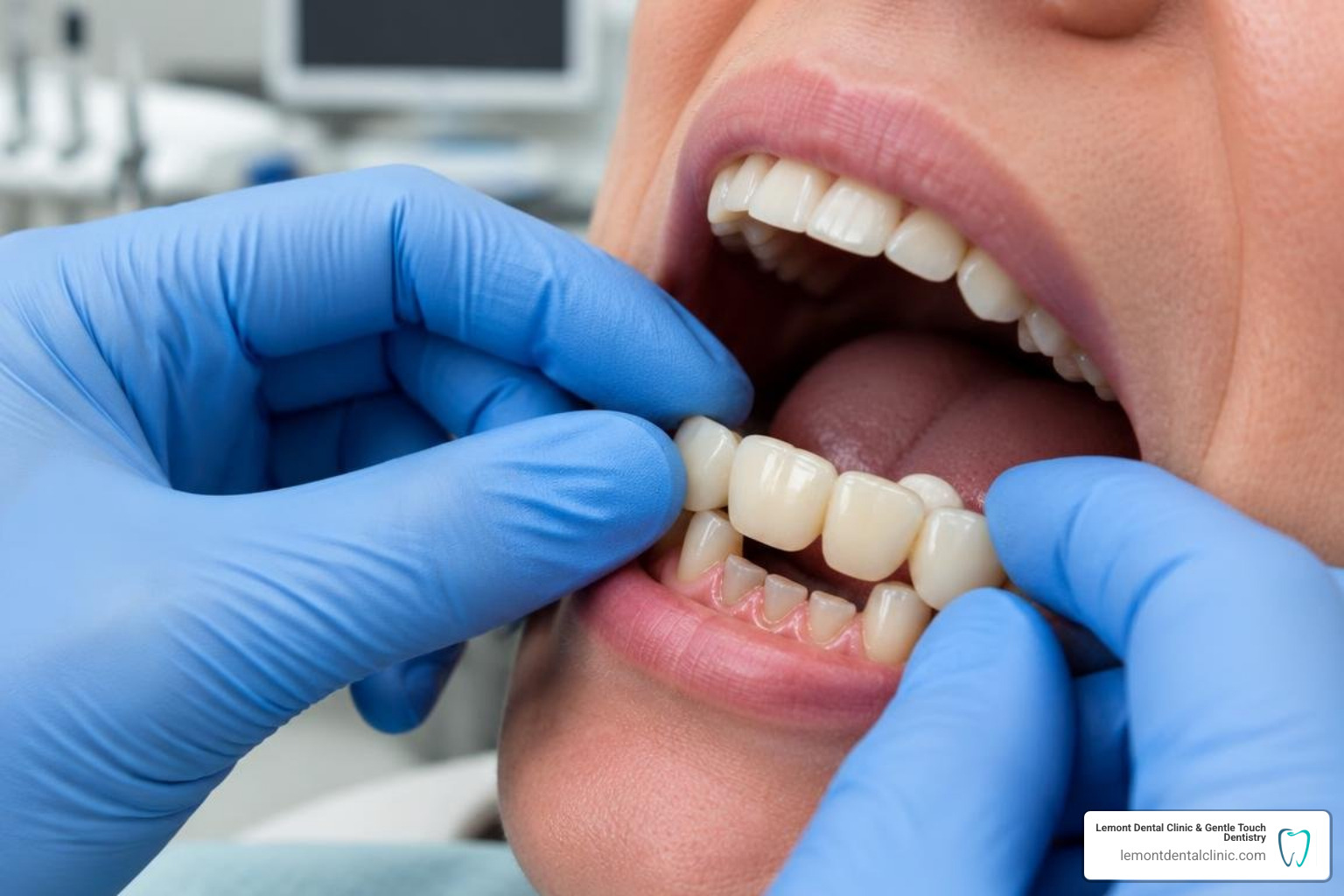
A traditional dental bridge remains the most widely placed fixed restoration in modern clinical practice. In a standard 3-unit design, two crowns are permanently cemented over the natural teeth (abutments) flanking the empty space, suspending an artificial prosthetic tooth (pontic) between them. Reviewing the specific pricing for a 3-unit fixed bridge reveals that the national average sits around $5,197, with overall out-of-pocket costs spanning between $4,100 and $9,650 depending on the complexity of the case. When extra units are required to bridge wider spaces, each additional crown or pontic unit typically increases the total bill.
Maryland and Cantilever Variations
For areas of the mouth that endure lower bite forces, alternative configurations provide less invasive treatment paths:
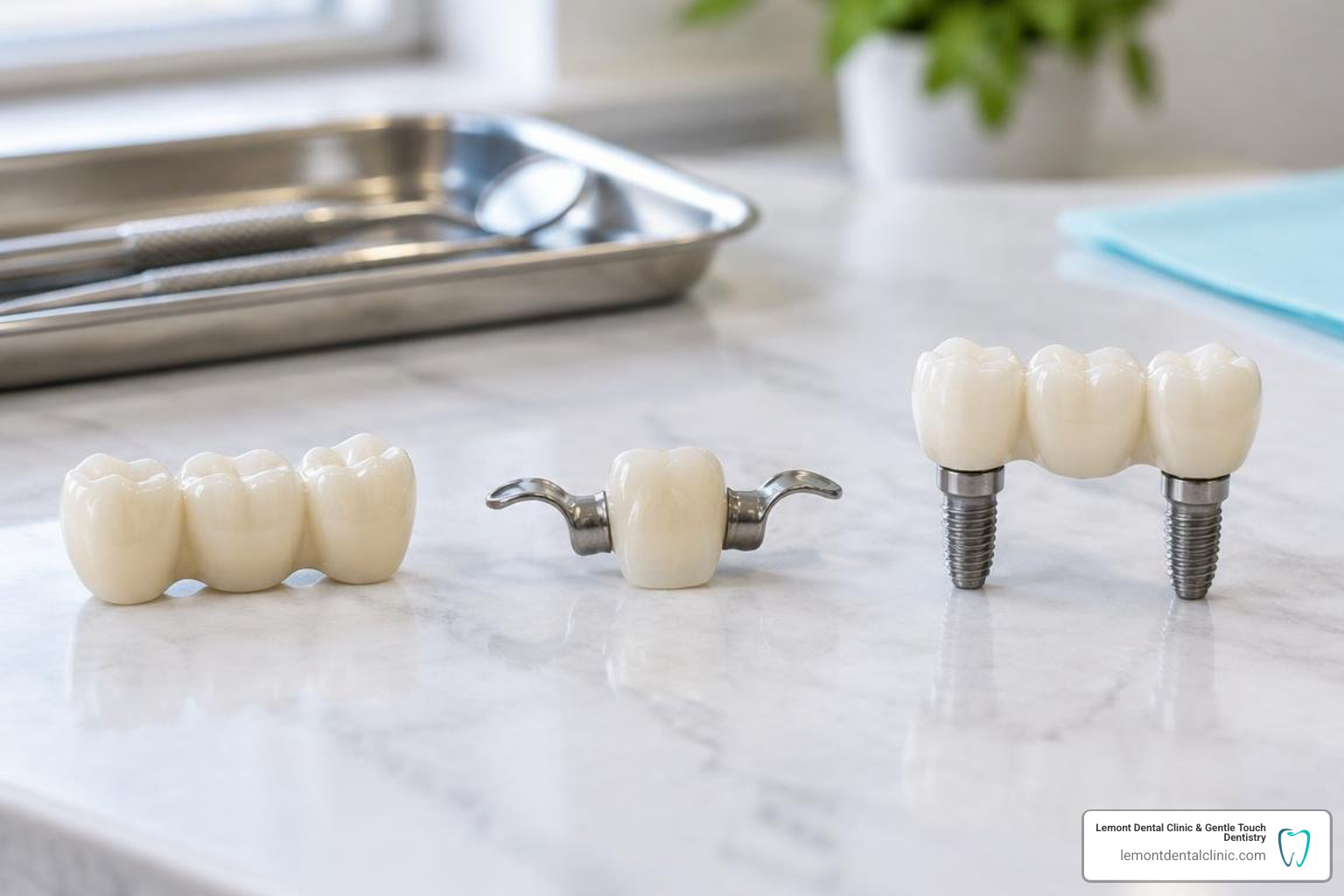
Maryland Bridges: Often referred to as resin-bonded bridges, these use conservative metal or ceramic “wings” bonded directly to the backs of neighboring teeth rather than full-coverage crowns. These typically cost between $1,200 and $2,500, preserving natural enamel on adjacent front teeth.
Cantilever Bridges: When a gap only has an anchoring tooth on one side, a cantilever bridge supports the pontic from a single end. Averaging between $1,500 and $3,000, they require careful bite evaluation to avoid excessive leverage forces.
When three or four consecutive teeth are missing, relying on natural teeth to support an extended bridge can place excessive mechanical stress on natural roots. Implant-supported bridges eliminate the need to alter healthy teeth entirely. Instead, surgical titanium fixtures are integrated directly into the jawbone to anchor a multi-unit span. While costs range from $4,000 to over $15,000, they restore bite function up to 90% of natural strength and provide exceptional structural longevity for surgical full-arch and bridge reconstructions.
How Bridge Materials Influence Pricing and Durability
The physical materials selected by your restorative dentist directly influence both aesthetic appeal and long-term fracture resistance under heavy chewing forces. Premium laboratory fabrication fees contribute significantly to the total cost.
Porcelain-Fused-to-Metal vs Full Ceramic
Porcelain-Fused-to-Metal (PFM) restorations have served as a reliable dental standard for decades. Built upon a cast metal substructure coated with tooth-colored ceramic, PFM bridges generally range from $1,500 to $3,000 per bridge. While exceptionally durable, they may occasionally reveal a dark metal margin near the gumline over time as gums naturally recede.
In contrast, full ceramic or all-porcelain options cost between $2,000 and $4,000. They deliver unmatched translucency and lifelike light reflection, making them ideal for visible smile zones. Patients can explore permanent ceramic bridge options to determine which aesthetic match suits their goals.
Premium Zirconia and the Long-Term Cost of a Bridge
Solid monolithic zirconia represents the pinnacle of modern dental material engineering. Priced between $2,500 and $5,000, zirconia restorations are virtually chip-proof, biologically inert, and exceptionally gentle on opposing natural enamel. For patients with a history of clenching or nocturnal bruxism, investing in premium zirconia substantially reduces the likelihood of mid-span fracture, preserving the long-term investment.
Key Factors and Hidden Expenses Influencing Your Final Quote
A comprehensive dental estimate accounts for far more than simply milling a restoration in a dental laboratory. Clinical evaluations require diagnostic imaging, tooth stabilization, and careful anatomical assessment. To prevent financial surprises, reviewing a detailed breakdown of unexpected bridge fees helps clarify what goes into a personalized quote.
Preparatory Treatments and Abutment Health
A bridge is only as sturdy as the natural foundation holding it in place. If an anchor tooth suffers from internal decay or deep fractures, additional clinical work must be completed prior to fabrication:
Diagnostic Imaging: Digital periapical X-rays and 3D CBCT scans ensure sufficient root structure and bone density.
Core Buildups and Post Systems: Rebuilding heavily decayed abutment teeth can add $300 to $800 per tooth.
Root Canal Therapy: Compromised nerve tissue must be treated before crowning, adding $700 to $1,500 per treated canal.
Periodontal Debridement: Resolving active gum inflammation ensures long-term tissue stability around crown margins.
Dental Insurance Coverage and Out-of-Pocket Maximums
Most private dental insurance policies classify fixed dental bridges as “Major Restorative Services.” Under standard PPO plan designs:
Coverage Percentages: Insurance typically reimburses approximately 50% of allowable fees after individual deductibles are met.
Annual Maximum Limits: Most policies maintain strict annual payout caps between $1,500 and $2,500. A single multi-unit bridge often uses up the entirety of a patient’s yearly benefit allowance.
Missing Tooth Clauses & Waiting Periods: Some policies exclude teeth lost prior to the policy start date or enforce a 6-to-12-month waiting period for major prosthetics.
To understand how benefits apply to your treatment plan, reviewing the Delta Dental bridge coverage guide provides valuable context for navigating major prosthodontic allowances.
Comparing Value: Bridge vs. Implant vs. Partial Denture
Selecting the ideal missing-tooth replacement requires weighing immediate budget realities against long-term maintenance cycles. To explore the clinical details further, read our comprehensive bridge versus implant comparison.
Feature
Fixed Dental Bridge
Single Dental Implant
Removable Partial Denture
Upfront Cost
Moderate ($2,000 – $5,000)
Moderate to High ($3,000 – $6,000)
Low ($1,200 – $2,500)
Treatment Timeline
2 to 3 Weeks
3 to 6 Months (Osseointegration)
2 to 4 Weeks
Surgical Need
Non-Surgical
Minor Outpatient Surgery
Non-Surgical
Impact on Other Teeth
Requires reshaping anchor teeth
Zero impact on adjacent teeth
Clasps cause structural wear
Jawbone Preservation
No (Bone resorbs beneath pontic)
Yes (Stimulates bone maintenance)
No (Accelerates bone resorption)
Average Lifespan
5 to 15 Years
25+ Years to Lifetime
5 to 8 Years
Evaluating Upfront Expense Against Long-Term Cost of a Bridge
While traditional fixed bridges present an attractive initial price point and a rapid two-week turnaround, long-term clinical data provides vital perspective. In a systematic review examining over 4,000 conventional bridges, researchers documented a 74% survival rate at 15 years.
Because anchor teeth must be permanently shaped to accommodate support crowns, the margins remain susceptible to microscopic recurrent decay. When a bridge fails, replacing it often involves treating damaged abutment teeth or transitioning toward implant placement. Factoring in potential replacement costs over a 30-year span helps clarify whether a bridge or an implant is the most cost-effective choice for your smile.
Removable Partial Dentures as an Alternative
Removable partial dentures (RPDs) utilize an acrylic pink base secured with cast metal or flexible clasps. While they offer a practical entry-level price point, they do not stimulate underlying alveolar bone. Over time, progressive bone resorption can lead to fit changes, requiring ongoing relines or adjustments.
Essential Aftercare and Bridge Maintenance
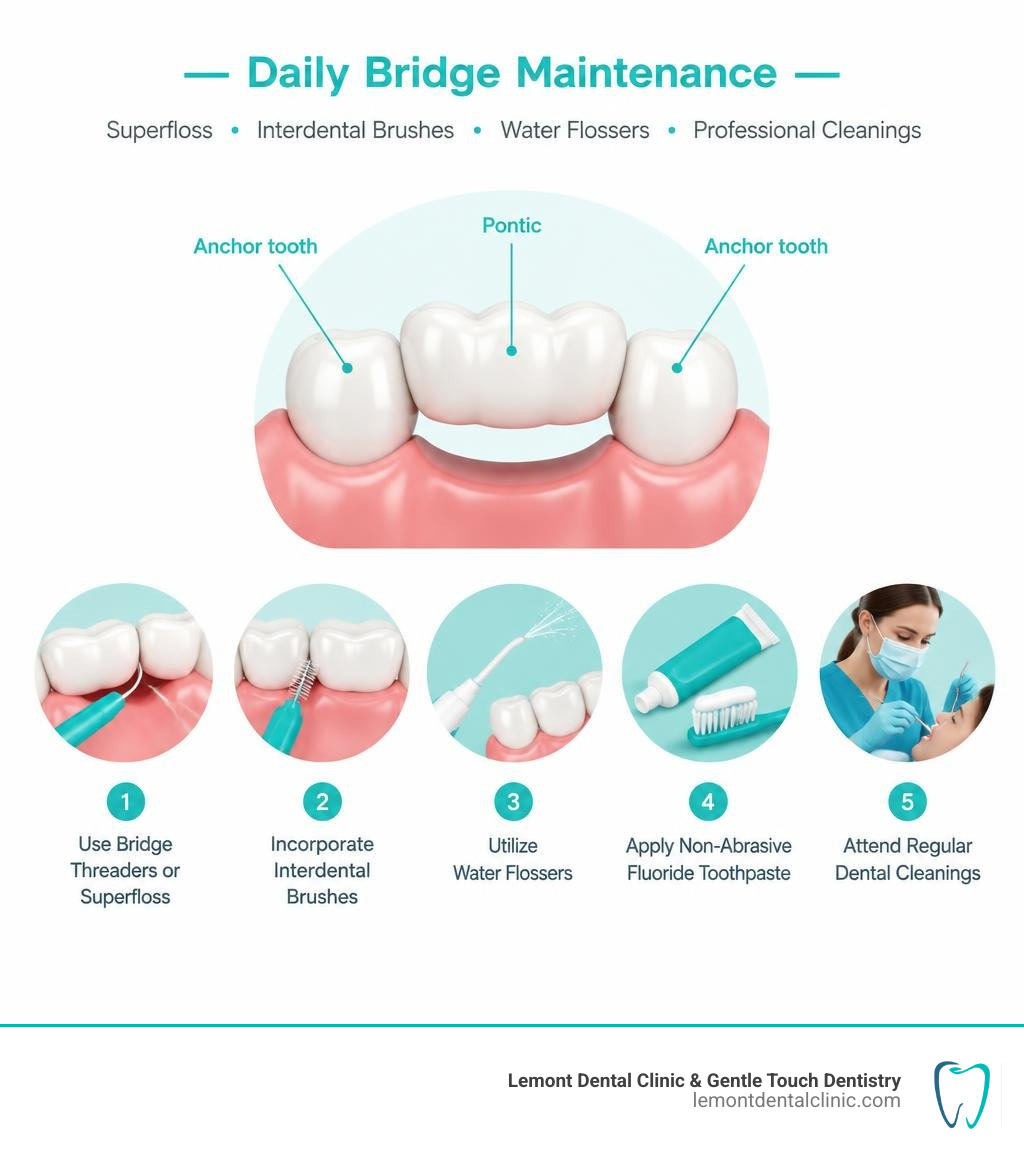
Maximizing the lifespan of a dental bridge requires consistent daily hygiene. Because the pontic sits directly above the gumline, food particles and plaque can accumulate in the micro-gap underneath.
Use Bridge Threaders or Superfloss: Thread specialized floss beneath the artificial pontic at least once daily to clear bacterial accumulation.
Incorporate Interdental Brushes: Clean the contact points where bridge crowns meet the natural gum margins.
Utilize Water Flossers: High-pressure oral irrigators flush away trapped debris from hard-to-reach angles beneath the bridge.
Apply Non-Abrasive Fluoride Toothpaste: Strengthen the exposed natural margins of your anchor teeth against acid-producing bacteria.
Attend Regular Dental Cleanings: Routine checkups allow our clinicians to check margin integrity and assess structural stability early.
Frequently Asked Questions About Dental Bridges
How long does a standard dental bridge last?
A standard fixed bridge typically lasts between 5 and 10 years, though with excellent home care and routine checkups, many restorations exceed 15 years. Longevity depends on maintaining immaculate oral hygiene around the supporting anchor teeth.
Does dental insurance cover the full cost of a bridge?
No standard dental insurance policy covers 100% of a bridge. Insurers classify fixed bridges as major prosthodontic procedures, typically reimbursing 50% of approved costs up to your plan’s annual maximum limit (which usually ranges from $1,500 to $2,500).
Can a failed bridge be replaced with a dental implant?
Yes. If an anchor tooth develops recurrent decay or fractures, the bridge can be removed and the compromised root extracted. After a healing period—which may include bone grafting to restore ridge volume—a dental implant can be placed to provide standalone, long-term support.
Conclusion
Restoring your smile after tooth loss is one of the most important investments you can make for your long-term oral health, bite alignment, and everyday confidence. Understanding how materials, tooth preparation, and insurance benefits shape your estimate gives you the clarity needed to make the right choice for your lifestyle.
At Lemont Dental Clinic & Gentle Touch Dentistry, our experienced team provides comprehensive restorative care across our modern practices in Lemont and Palos Hills, as well as for our neighboring communities throughout Bolingbrook, Romeoville, Oak Lawn, and Orland Park. We combine state-of-the-art diagnostic technology with a commitment to quality and affordability to craft durable, natural-looking restorations tailored to your anatomy.
Ready to restore your bite and explore your treatment options? Contact our friendly team today to schedule an accurate 3-tooth bridge evaluation and receive an itemized, transparent treatment plan.