Understanding Removable Dental Bridges and Their Designs
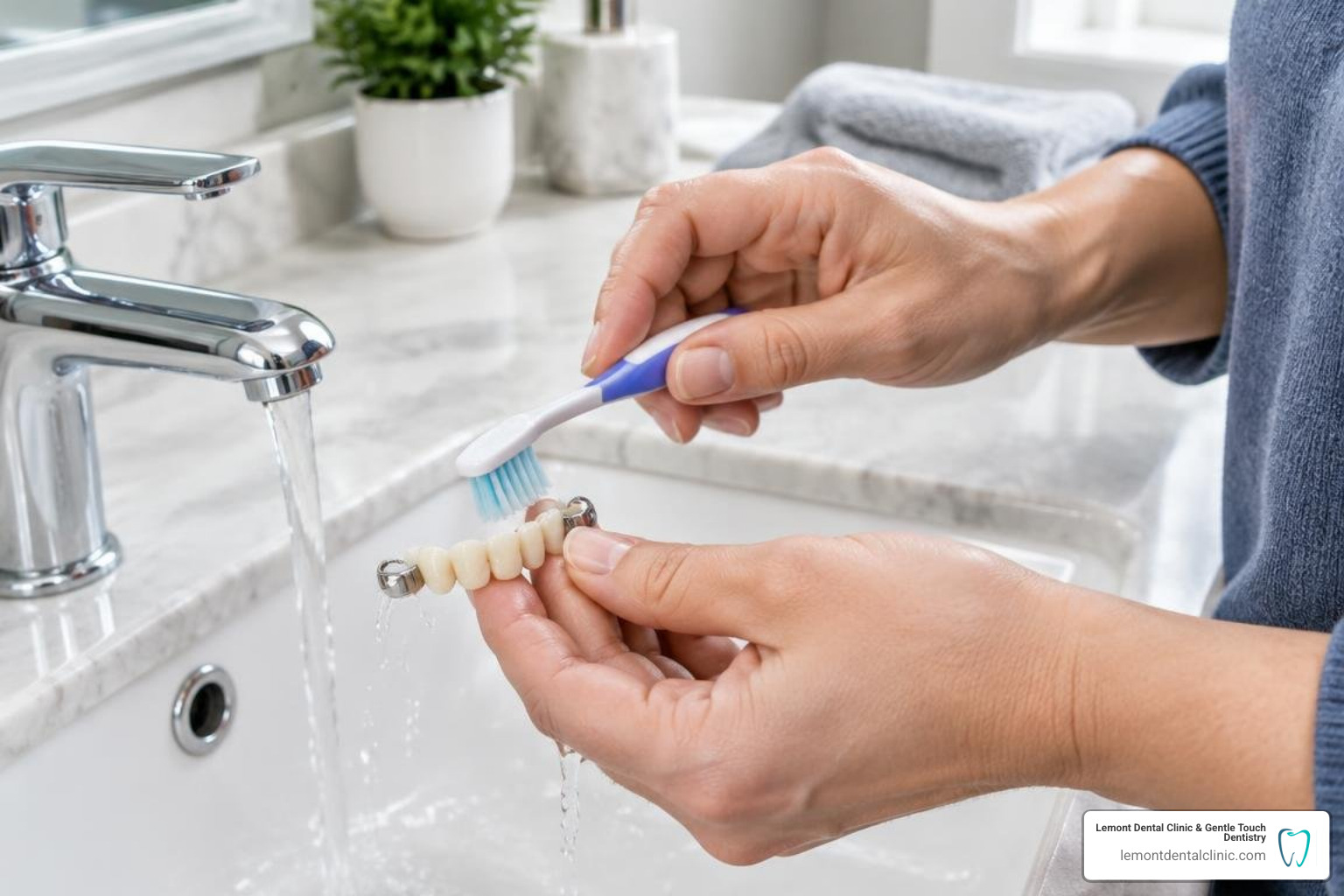
In prosthetic dentistry, a removable dental bridge—clinically known as a removable partial denture—replaces one or more missing teeth by anchoring artificial teeth (pontics) onto an acrylic, flexible, or metal base. The removable bridge for teeth cost typically ranges from $300 to $3,500 depending on the material, number of teeth replaced, and design complexity. Unlike fixed bridges that are permanently cemented to adjacent teeth, removable designs use clasps or precision attachments to grip your existing natural teeth for stability. They can be removed for cleaning after meals and before sleeping.
Choosing between fixed and detachable options often comes down to budget, mouth anatomy, and long-term restorative goals. Understanding the various types of fake teeth available helps you identify which structural approach fits your daily routine and functional needs.
Appliance Type
Primary Materials
Retention Method
Best Clinical Fit
Acrylic Partial
Acrylic resin, wrought wire clasps
Metal wire clasps
Budget-friendly option, temporary use
Cast Metal Partial
Chrome cobalt, titanium framework, acrylic base
Cast precision clasps
Long-term durability, multiple missing teeth
Flexible Partial
Thermoplastic nylon (e.g., Valplast)
Tissue-colored flexible clasps
High aesthetic demand, metal allergies
Acrylic, Metal Framework, and Flexible Prosthetics
Each material offers distinct clinical advantages depending on how many teeth you need to replace:
Acrylic Base Partials (and Flippers): Often utilized as a temporary tooth while waiting for implant integration or fixed restorations, acrylic partials feature a rigid pink base holding prosthetic teeth in place. An acrylic single-tooth flipper is an accessible short-term solution, though the material is thicker and more prone to fracture under heavy chewing forces.
Cast Metal Framework Partials: The gold standard for rigid support and longevity. These prosthetics use an ultra-thin, rigid chrome-cobalt alloy framework that rests comfortably on the natural contours of your teeth. They distribute bite pressure evenly and resist bending.
Flexible Resin Partials: Made from specialized nylon thermoplastics, flexible partials blend seamlessly with the oral mucosa. Because they use gum-colored flexible clasps rather than metal wires, they are practically invisible in the smile line.
Removable Bridge for Teeth Cost: Pricing Breakdown by Material and Design
The total cost of a removable bridge depends primarily on material selection, structural complexity, and whether you are replacing one tooth or several. Nationally, out-of-pocket expenses for removable appliances range from $300 for temporary units up to $3,500 for complex cast metal frameworks.
Removable Bridge Type
National Average Cost Range
Expected Lifespan
Key Advantage
Flipper Tooth (1–2 teeth)
$200 – $600
1 – 2 years
Fast turnaround, lower initial cost
Acrylic Partial Denture
$300 – $1,500
3 – 5 years
Easily adjusted, can add teeth later
Cast Metal Framework
$800 – $2,500
5 – 10 years
Superior strength, slim profile
Flexible Partial (Valplast)
$900 – $2,500
5 – 8 years
Excellent aesthetics, no metal wires
Cast Partial (Complex/Full Arch)
$1,500 – $3,500
5 – 10+ years
Maximum stability across large gaps
For those comparing these ranges to non-removable alternatives, reviewing our fixed bridge cost guide 2026 or an external dental bridge cost guide provides a helpful baseline for fixed prosthetic investments.
Factors That Influence Removable Bridge for Teeth Cost
Several variables shape the final fee presented on your treatment plan:
Material and Laboratory Quality: Premium materials such as biocompatible cast alloys or high-end flexible thermoplastics require specialized dental laboratory technicians, influencing the total price.
Number of Teeth Replaced: While a single missing tooth appliance is more affordable, a partial replacing multiple missing teeth across different quadrants of the arch involves more complex design work.
Preparatory Procedures: If supporting natural teeth need decay removal, periodontal treatment, or crown adjustments to accommodate resting clasps, these restorative steps add to the total investment.
Dental fees vary across geographic regions due to commercial overhead, lab logistics, and local healthcare regulations. Understanding how standard restorative dental services explained vary by region can help you evaluate care options:
United States: Standard removable bridges range from $500 to $3,000+ depending on whether you choose an acrylic or cast metal appliance.
United Kingdom: Private clinical fees generally span £300 to £2,500.
Australia: Costs typically range from AUD 800 to AUD 4,000.
India: Average expenses range between ₹10,000 and ₹50,000.
Within Illinois communities like Lemont, Palos Hills, Bolingbrook, Orland Park, and Oak Lawn, private practice fees remain competitive while giving patients direct access to experienced clinicians, modern digital impressions, and personalized adjustments.
Insurance Coverage and Long-Term Value
Dental insurance policies generally classify removable partial bridges as a “Major Restorative” service. Most plans cover up to 50% of the allowable cost for a removable bridge after you meet your deductible, subject to your plan’s annual maximum benefit (which typically ranges from $1,000 to $2,000 per year).
How Insurance Impacts Removable Bridge for Teeth Cost
To minimize surprise bills, keep these typical insurance stipulations in mind:
Waiting Periods: Many individual or employer-sponsored plans require a 6- to 12-month waiting period for major restorative care before covering prosthetics.
The Missing Tooth Clause: Some plans exclude coverage for replacing teeth extracted before your current insurance policy began.
Replacement Frequency Limitations: Most insurance carriers will only contribute toward a replacement partial denture once every 5 to 7 years.
FSA and HSA Eligibility: You can use pre-tax Flexible Spending Account (FSA) and Health Savings Account (HSA) dollars to cover deductibles, co-pays, and any balance beyond your annual insurance maximum.
Removable bridges have a typical clinical lifespan of 5 to 8 years (with cast metal models lasting up to 10 years or more). Over time, the underlying jawbone naturally undergoes gradual bone resorption because missing tooth roots no longer stimulate the bone tissue.
As your gum contours change, your appliance will require periodic maintenance:
Hard or Soft Relines: Costing $200 to $500, a reline resurfaces the underside of the acrylic to restore a snug fit against your gums every 2 to 3 years.
Clasp Adjustments and Repairs: Simple clasp tightening or adding an artificial tooth if another natural tooth is lost usually costs $100 to $300.
Daily Hygiene Supplies: Specialized denture cleaners, soft-bristle brushes, and antibacterial soaking tablets run about $50 to $100 annually.
Clinical Step-by-Step: Getting Fitted for a Removable Bridge
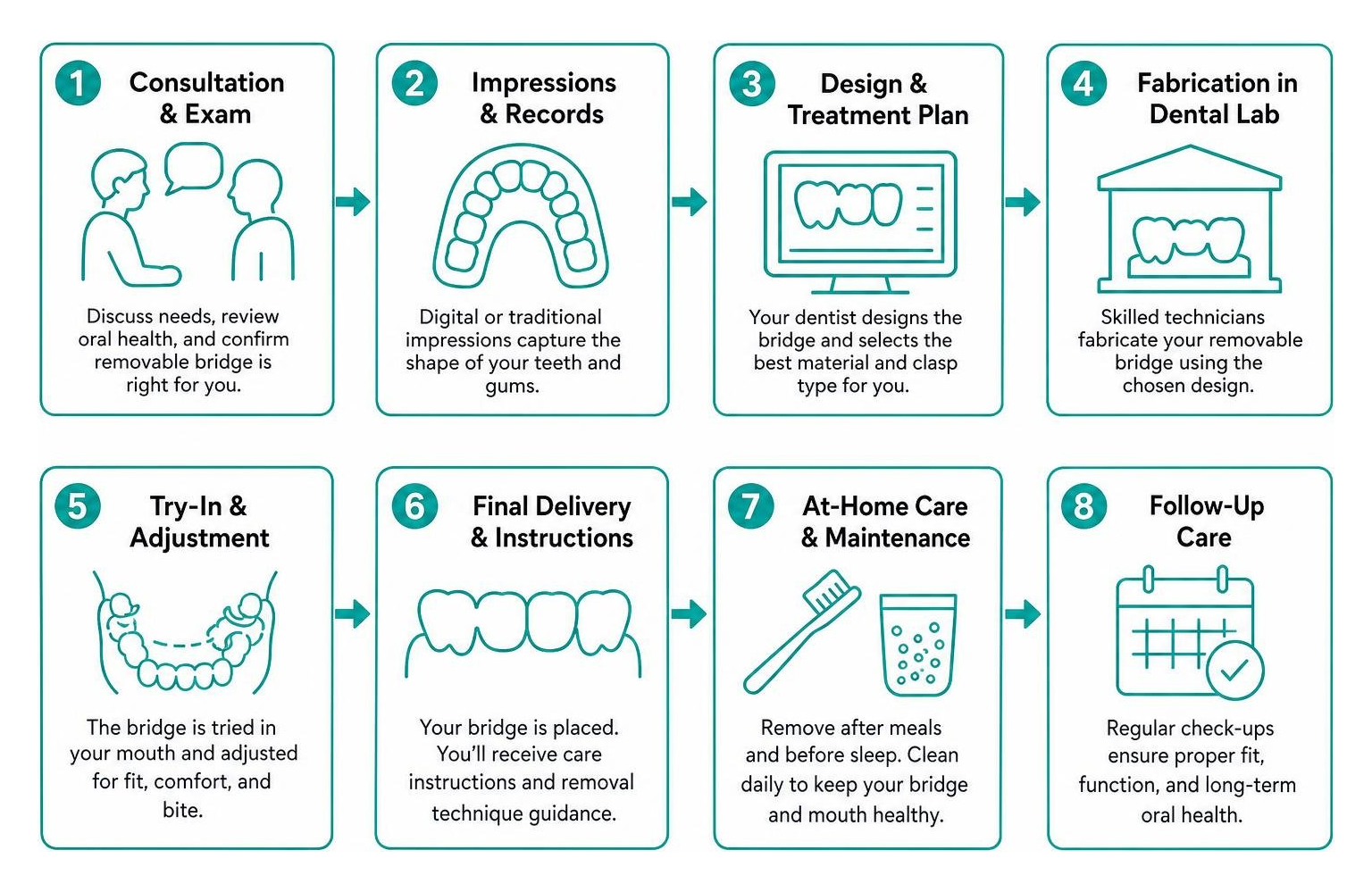
Fabricating a well-fitting, balanced removable bridge requires precision and several dental visits:
Comprehensive Examination and Treatment Plan: We evaluate your overall oral health, take digital X-rays, and check the structural soundness of your remaining anchor teeth.
Impressions and Bite Registration: High-precision physical or digital impressions capture the exact dimensions of your arches, gumline, and bite relationship.
Framework and Wax Try-In: For cast metal and flexible appliances, a trial framework or wax setup is placed in your mouth to check fit, tooth alignment, and shade matching before final curing.
Final Fitting and Delivery: We seat the completed removable bridge, adjust clasp retention, check your speech, and refine your chewing surfaces.
Follow-Up Adjustments: Gums need a short period to adapt to new pressure points. We schedule minor post-delivery visits to ease sore spots and ensure long-term comfort.
Frequently Asked Questions About Removable Dental Bridges
How long does a removable dental bridge last before needing replacement?
A removable dental bridge typically lasts between 5 and 8 years, though durable cast metal frameworks can last 10 years or longer with proper care. Because your underlying jawbone changes shape over time, periodic professional relines are necessary to keep the bridge comfortable and stable.
Can you sleep with a removable bridge in your mouth?
No, you should remove your bridge before going to bed. Wearing a removable appliance overnight prevents oxygen and saliva from circulating over your gum tissues, increasing the risk of bacterial buildup, fungal irritation (denture stomatitis), and accelerated bone loss. Store your appliance in clean water or an antibacterial soaking solution overnight.
How do I know if a removable bridge is right for me?
A removable bridge is often an ideal solution if you have multiple missing teeth, prefer a non-surgical treatment, want to preserve adjacent natural tooth enamel without placing crowns, or need a budget-conscious restorative option. A clinical evaluation helps determine whether a removable partial, fixed bridge, or implant-supported restoration best suits your oral health goals.
Conclusion
Choosing the right tooth replacement is a balance between comfort, daily functionality, aesthetic preferences, and budget. While fixed restorations and implants provide long-term stability, a custom-fitted removable bridge offers a reliable, non-invasive way to restore chewing ability, preserve smile aesthetics, and prevent remaining teeth from shifting out of alignment.
Our team provides comprehensive restorative treatments across our convenient locations in Lemont and Palos Hills, serving patients from Chicago Ridge, Worth, Palos Park, Hickory Hills, Oak Lawn, Orland Park, Palos Heights, Bolingbrook, Romeoville, Palisades, and Lockport Heights.
Ready to restore your smile with a personalized treatment plan? Contact our team at Lemont Dental Clinic & Gentle Touch Dentistry to explore your restorative options, evaluate your insurance benefits, and discuss the cost of 3 tooth bridge solutions.