Professional Scaling and Polishing for a Healthier, Brighter Smile
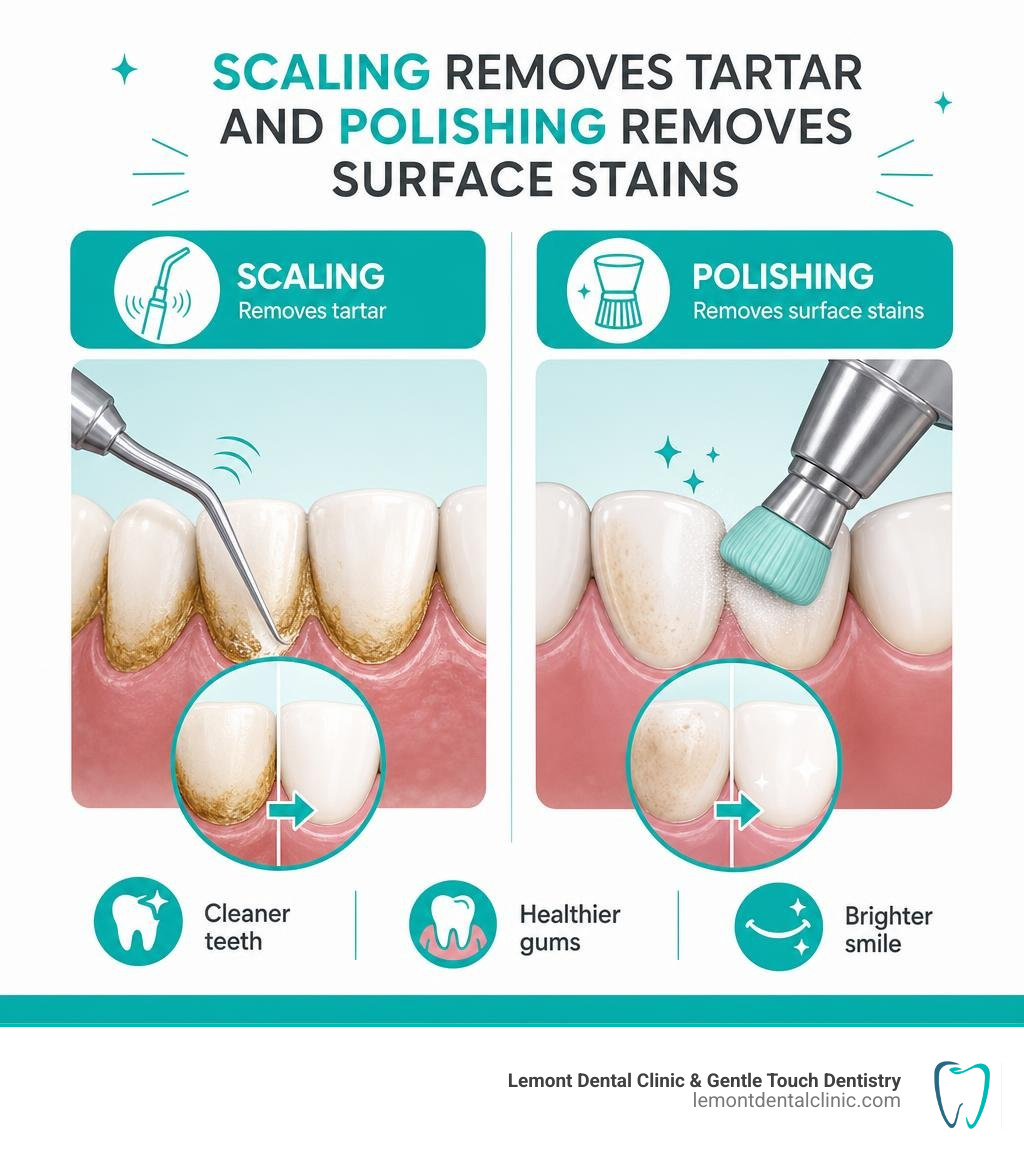
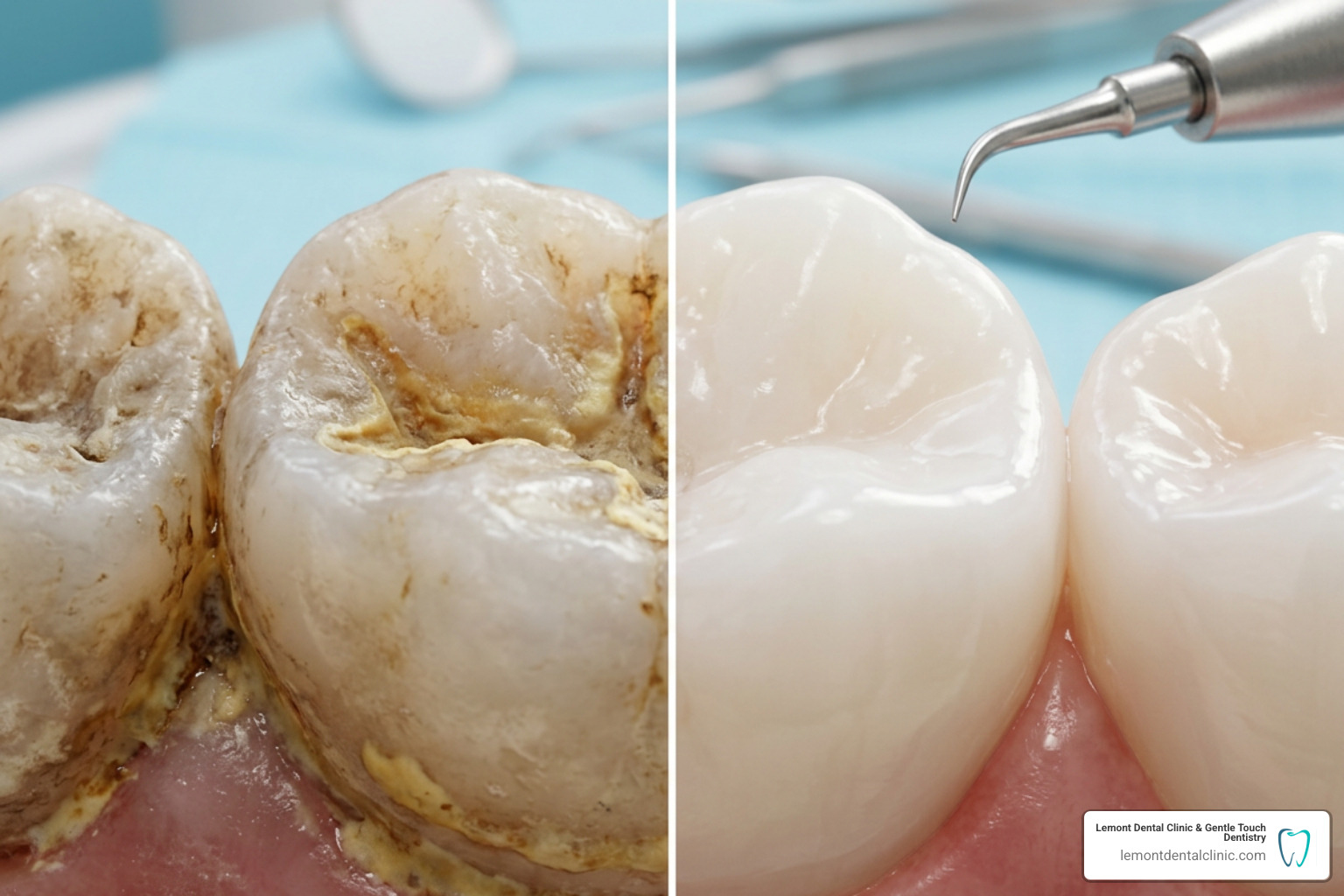
Scaling and polishing is a professional dental cleaning that removes hardened tartar (calculus), plaque, and surface stains that brushing alone cannot remove. During the visit, a dental professional carefully cleans along the gumline and between teeth, then may polish selected tooth surfaces for a smooth, fresh-feeling finish.
This care can help reduce calculus buildup and supports healthier gums when paired with daily brushing and cleaning between teeth. It is not the same as deep cleaning for periodontal disease, which treats infection below the gums and may require a different approach.
A routine appointment is also a good time to check for bleeding gums, heavy plaque buildup, sensitivity, or areas that need better home care. For healthy adults, the right schedule is personal. Some people benefit from six-month visits, while others may be suited to a longer interval based on their gum health, tartar buildup, and periodontal risk.
At Lemont Dental Clinic & Gentle Touch Dentistry, the goal is simple: gentle, thorough professional cleaning and practical guidance to help keep your smile healthy between visits.
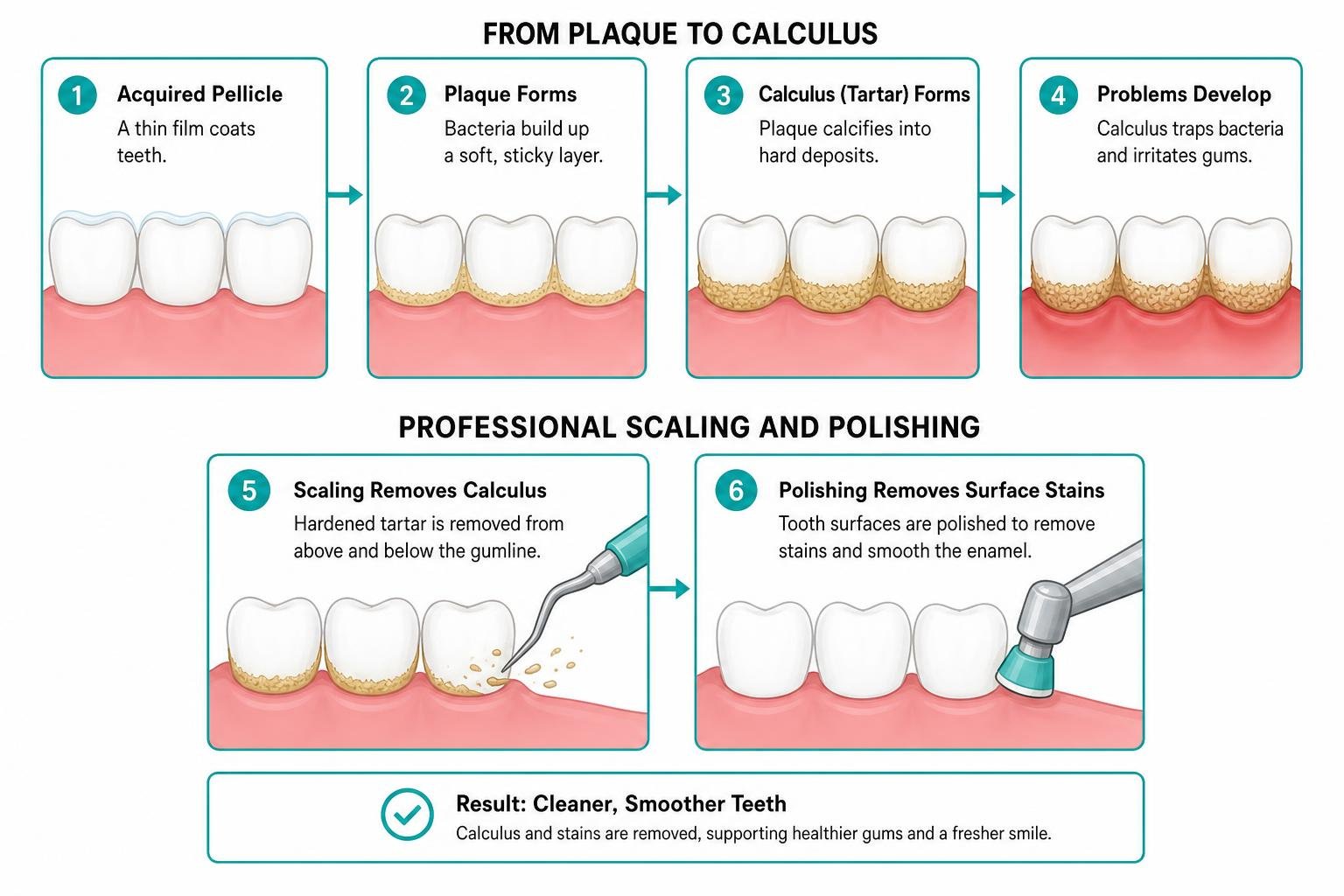
Professional mechanical maintenance lies at the heart of preventive dentistry. Every single day, a thin film of saliva, proteins, and oral bacteria—known as the acquired salivary pellicle—coats your teeth. Within hours, bacterial communities colonize this film, forming soft dental plaque biofilm. If plaque is not disrupted by regular brushing and interdental flossing, it absorbs calcium and phosphate ions naturally present in saliva. Within 24 to 48 hours, that soft layer begins to calcify into rock-hard calculus (tartar).
Once tartar forms, no manual toothbrush or floss in the world can remove it. Calculus forms rough, porous supragingival deposits above the gumline and dangerous subgingival calculus beneath the gingival margin. This mineralized scaffold acts as a microscopic retention web that harbors active bacterial toxins, triggering localized immune responses that cause red, swollen, and bleeding gums.
During a routine professional dental cleaning, our clinical team performs a targeted two-step therapy designed to eliminate these calcified deposits and restore surface health. The first phase, scaling, removes the calcified calculus from crown and root surfaces. The second phase, polishing, buffs away residual soft biofilm and extrinsic staining caused by coffee, tea, and daily foods.
According to a landmark systematic review on routine scale and polish, routine scaling and polishing consistently reduces calculus levels across clinical trials, providing patients with a measurably cleaner oral environment and establishing a clean slate for daily home maintenance.
The Mechanics of Ultrasonic Debridement
Modern dental prophylaxis has evolved far beyond the days of scraping teeth exclusively with manual hand instruments. Today, we utilize high-precision piezoelectric and magnetostrictive scalers operating at ultrasonic frequencies between 25,000 and 32,000 Hz.
These sophisticated tools rely on two primary biomechanical phenomena:
Acoustic Microstreaming: Rapid micro-vibrations generate localized fluid dynamics around the scaler tip, shattering brittle calculus bonds without requiring heavy pressure against the enamel.
Cavitation Effect: The continuous stream of water coolant produces microscopic bubbles that violently implode. This energetic collapse physically ruptures bacterial cell membranes, flushing out endotoxins and subgingival debris instantly.
We integrate advanced ultrasonic teeth cleaning with fine hand curettes to provide complete debridement with minimal tissue irritation and maximum comfort.
Prophy Paste vs. Airflow Technology
Following the scaling phase, teeth polishing is performed to eliminate lingering extrinsic pigment stains and smooth out microscopic enamel irregularities. Historically, dental polishing involved a spinning rubber cup loaded with gritty prophy paste containing pumice or silica. While effective for stain removal, coarse pastes can cause micro-abrasions on delicate cervical root surfaces if used aggressively.
Today, advanced preventive dentistry utilizes selective polishing and low-abrasive air-polishing systems. Modern airflow devices combine warm water with ultra-fine, water-soluble erythritol powder (particle size around 25 µm) or glycine powder. Rather than scouring the tooth, this focused spray gently lifts biofilm without scratching delicate surfaces.
Gingivitis affects between 50% and 90% of adults worldwide, while severe periodontitis affects roughly 10.8% of the global population (over 740 million people). Routine scaling serves as the primary barrier against the progression of periodontal disease.
A comprehensive rapid review highlighting the benefits of dental scaling in adults shows that while short-term clinical trials on healthy, low-risk adults demonstrate modest differences in gingival bleeding scores over two to three years, long-term prospective epidemiological data reveals profound health benefits. Over longitudinal follow-ups, individuals who receive regular dental scaling experience nearly half the incidence of tooth loss compared to irregular attenders (hazard ratio risk reduction of 1.87 times).
Furthermore, maintaining periodontal stability through professional debridement reduces systemic inflammatory markers. Clinical evidence links regular scaling to a lower incidence of acute myocardial infarction (1.9% vs. 3.5%) and reduced healthcare expenditures in patients managing type 2 diabetes.
Clinical Metric / Parameter
Routine Dental Prophylaxis
Periodontal Maintenance (SPT)
Target Population
Periodontally healthy adults or mild gingivitis
Patients previously treated for active periodontitis
Primary Objective
Preventive calculus and stain removal
Arresting disease progression and bone loss
Cleaning Depth
Supragingival & shallow margins (< 3 mm)
Subgingival root debridement into deep pockets (≥ 4 mm)
Typical Recall Interval
6 to 12 months (customized by risk)
Every 3 to 4 months
Anesthetic Requirement
Rarely necessary (topical numbing optional)
Often recommended for localized deep scaling
Primary Clinical Outcome
Calculus control, fresh breath, stain removal
Pocket depth stability, preventing tooth loss
Prophylaxis vs. Periodontal Scaling and Root Planing
It is essential to distinguish between a standard preventive scale and polish (prophylaxis) and therapeutic periodontal intervention. A routine prophylaxis is indicated for patients with healthy gums or localized gingivitis who exhibit normal pocket depths (1 to 3 mm) and no underlying alveolar bone loss.
When bacterial infection extends deeper into the periodontium, destroying connective attachment fibers and creating deep periodontal pockets (4 mm or deeper), a basic cleaning is no longer sufficient. In these situations, active periodontal therapy is required. This specialized deep cleaning procedure—clinically termed scaling and root planing (SRP)—involves deep subgingival debridement to smooth contaminated root cementum and remove embedded bacterial endotoxins. To understand the therapeutic nuances, explore the deep dive into tooth scale removal and root planing to see how specialized periodontal therapy halts bone loss.
Preservation of Natural Enamel and Restorations
Modern smiles frequently feature advanced restorative materials, including composite resin bonding, porcelain veneers, lithium disilicate glass-ceramics, and monolithic zirconia crowns. Protecting these materials during preventive cleanings is a vital clinical priority.
As detailed in our overview of restorative dental services explained, each restorative material responds differently to mechanical hygiene instrumentation. According to clinical guidelines on the clinical management of restorative materials, improper scaling angles can chip fragile composite margins or lift the beveled gold margins of cast crowns.
Furthermore, laboratory studies indicate that running coarse ultrasonic tips directly across glazed ceramic crowns significantly increases surface roughness (Ra values surging over 28 µm on lithium disilicate), which encourages rapid bacterial recolonization. Our hygiene team utilizes material-specific diagnostic techniques, light instrumentation forces, and specialized diamond-polishing protocols to safeguard your restorations.
Procedural Expectations, Safety, and Aftercare
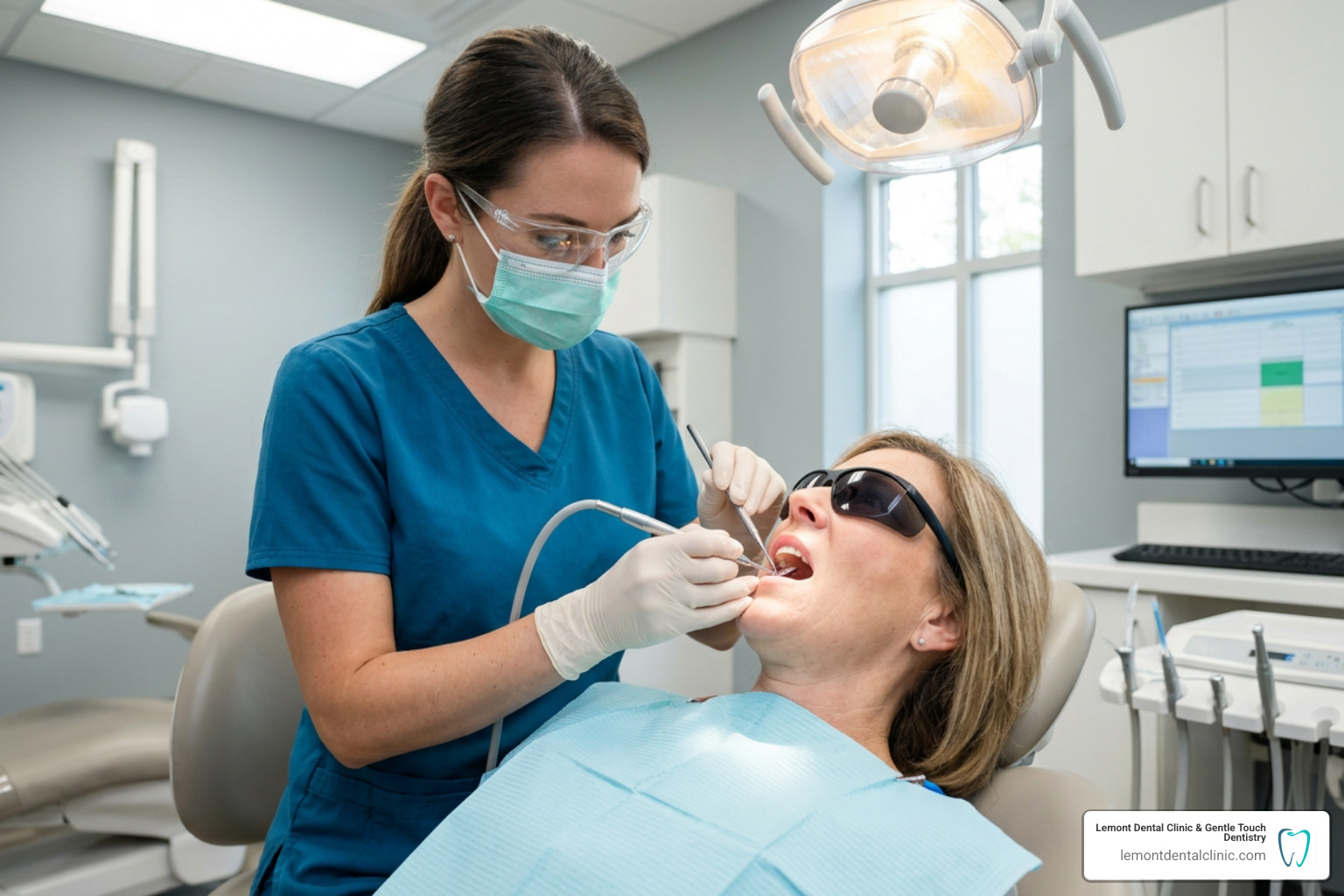
A standard preventive dental hygiene appointment typically lasts between 45 and 60 minutes. This comprehensive session includes diagnostic periodontal charting, oral cancer screening, ultrasonic scaling, hand scaling, and selective polishing.
During polishing, the natural salivary acquired pellicle is gently removed from the tooth surface. Because this protective layer takes 24 to 48 hours to fully regenerate, we conclude every preventive cleaning with a professional topical application of 5% sodium fluoride varnish. This remineralizing agent plugs microscopic dentinal tubules, neutralizes acid sensitivity, and accelerates enamel crystal maturation.
Who Performs Scaling and Polishing Procedures?
Preventive cleanings are performed by licensed dental professionals who undergo rigorous clinical training in periodontal anatomy, pathology, and instrumentation ergonomics. In our practice, scaling and polishing procedures are delivered by our dedicated team:
Registered Dental Hygienists (RDH): Specialized clinicians focused on preventive oral health, patient education, subgingival debridement, and non-surgical periodontal therapy.
General Dentists: Doctors who conduct comprehensive diagnostic exams, evaluate radiographic bone levels, check for active decay, and design personalized treatment plans.
What to Expect During Scaling and Polishing Appointments
During your cleaning, you will hear the light hum of the ultrasonic scaler, feel gentle vibrations against your teeth, and experience a refreshing water mist as calculus is flushed away. If you have sensitive gums or exposed root surfaces, we can apply a soothing topical numbing gel to ensure complete comfort throughout the procedure.
Following your appointment, it is normal to experience mild, temporary gum tenderness or slight cold sensitivity for a few days, particularly if significant calculus deposits were removed from around the root surfaces. If you notice mild temperature sensitivity, review our helpful guide on teeth sensitive after cleaning what now for practical relief strategies.
To protect your smooth enamel while your salivary pellicle reforms, follow a “white diet” for the first 24 hours. Avoid heavily pigmented foods and beverages such as black coffee, red wine, soy sauce, tomato sauce, and berries. For exact post-treatment dietary timing, read our practical overview on how long after dental cleaning can I eat to keep your smile comfortable and bright.
Frequently Asked Questions About Dental Cleaning
How often should a healthy adult schedule a scale and polish?
While semi-annual (six-month) visits remain the standard recommendation for many patients, optimal recall intervals should always be tailored to your individual periodontal risk profile. Adults with excellent daily home hygiene, minimal calculus formation, and healthy gingival tissues may maintain optimal health on a 6- to 12-month recall schedule. Conversely, individuals prone to rapid tartar accumulation, tobacco users, diabetic patients, or those with a history of periodontal disease achieve significantly better outcomes with maintenance cleanings scheduled every 3 to 4 months.
Does professional teeth scaling hurt sensitive gums?
A routine scale and polish should not be painful. However, if your gums are inflamed from gingivitis or if you have exposed root dentin, you may experience minor sensitivity. At Lemont Dental Clinic & Gentle Touch Dentistry, we prioritize patient comfort by utilizing warm-water ultrasonic scalers, light working strokes, and topical anesthetic gels to ensure a smooth, pain-free appointment.
How long do the aesthetic and health benefits of teeth polishing last?
The fresh, ultra-smooth sensation and aesthetic brightness of polished teeth typically last for several weeks to months, depending on your dietary choices and home hygiene habits. Because bacterial plaque begins recolonizing the teeth within hours of cleaning, brushing twice daily with a soft-bristled toothbrush, flossing daily, and using interdental brushes are vital to prevent new tartar from hardening on your enamel.
Conclusion
Routine professional scaling and polishing plays a foundational role in long-term oral health, systemic wellness, and smile confidence. By removing calcified calculus deposits, disrupting active bacterial biofilms, and polishing away stubborn surface stains, this preventive therapy protects your gums from chronic inflammation and preserves your natural teeth for a lifetime.
At Lemont Dental Clinic & Gentle Touch Dentistry, our experienced team provides comprehensive, gentle dental care utilizing the latest dental technology for families throughout Lemont, Palos Hills, and surrounding communities including Hickory Hills, Chicago Ridge, Worth, Bolingbrook, Orland Park, and Oak Lawn. Protect your oral wellness by scheduling your regular cleaning with our gentle team today!