Why Professional Teeth Cleaning is Essential for Your Oral Health
Professional teeth cleaning is a preventive dental service that removes plaque, tartar, and bacteria from your teeth and gums that regular brushing and flossing can’t reach. Here’s what you need to know:
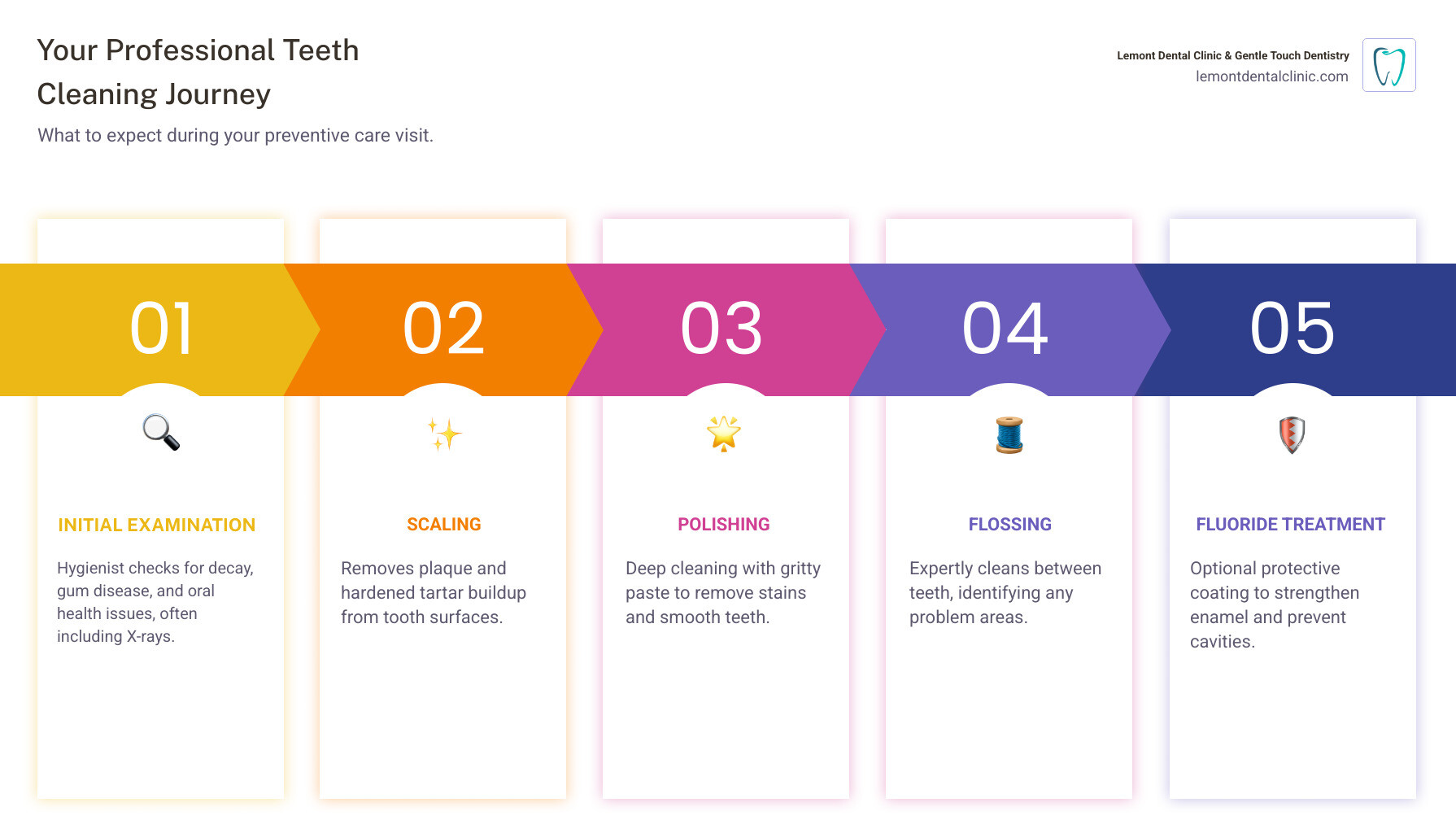
What happens during a professional teeth cleaning:
Physical examination – Your hygienist checks for signs of decay, gum disease, and other oral health issues
Scaling – Removal of plaque and tartar buildup using special instruments
Polishing – Deep cleaning with gritty paste to remove stains and smooth tooth surfaces
Flossing – Expert flossing to clean between teeth and identify problem areas
Fluoride treatment – Optional protective coating to strengthen enamel and prevent cavities
How often: Most people need cleanings every six months, though those with gum disease or other risk factors may need them more frequently.
Duration: A routine cleaning typically takes 30-60 minutes.
Many people dread teeth cleanings due to the prodding, strange noises, and occasional jaw discomfort. But for most patients, a teeth cleaning is simple and painless. Understanding what happens during your appointment can help ease anxiety and make the experience more comfortable.
The health of your teeth and mouth is vital to your overall well-being. While brushing and flossing at home are necessary, they can’t remove hardened tartar or reach every area of your mouth. Professional cleanings not only keep your smile looking its best but also help prevent costly dental problems down the road. Regular visits allow your dental team to catch issues like cavities, gum disease, and even oral cancer early when they’re easiest to treat.
As Piotr Dederowski, I’ve spent years helping families at Lemont Dental Clinic & Gentle Touch Dentistry maintain healthy smiles through compassionate, high-quality professional teeth cleaning services. Our goal is to make every appointment comfortable and stress-free, so you never have to dread your dental visit again.
The Step-by-Step Professional Teeth Cleaning Process
When you visit us for a professional teeth cleaning, we follow a systematic approach to ensure your oral health is thoroughly addressed. From the moment you sit in the dental chair, our experienced team is focused on your comfort and the meticulous care of your teeth and gums. We want you to understand each step of the process, so there are no surprises, just a clean, healthy smile.
Step 1: The Initial Examination and X-Rays
Every professional teeth cleaning begins with a comprehensive oral examination. This isn’t just a quick peek; it’s a detailed assessment of your entire mouth. Our dental hygienist will carefully examine your teeth and gums for any signs of inflammation, decay, or other dental problems. We also perform an oral cancer screening, looking for any unusual lesions or abnormalities. A gum disease evaluation is crucial, as the health of your gums is fundamental to your overall oral health. We’ll check for signs of tooth decay and assess the condition of any existing restorations, like fillings or crowns.
To get a complete picture of what’s happening beneath the surface, we often take digital X-rays. Most people need new dental X-rays every six to 36 months. These X-rays are vital for detecting cavities that aren’t visible during a visual exam, monitoring bone levels, and identifying other potential issues like impacted teeth or cysts. If a severe issue is found during this initial exam, we’ll discuss the findings with you and determine the best course of action, which might sometimes mean addressing that issue before proceeding with the full cleaning. For more details on this diagnostic tool, you can find More info about dental x-rays and safety.
Step 2: Scaling – Removing Plaque and Tartar
After the examination, the real cleaning begins with scaling. This is the crucial step where we carefully remove plaque and tartar (also known as calculus) from your teeth. Plaque is a sticky, almost invisible film of bacteria, food debris, and saliva that constantly forms on your teeth. If not removed by daily brushing and flossing, plaque hardens into tartar, a firmly attached mineral deposit that only a dental professional can remove.
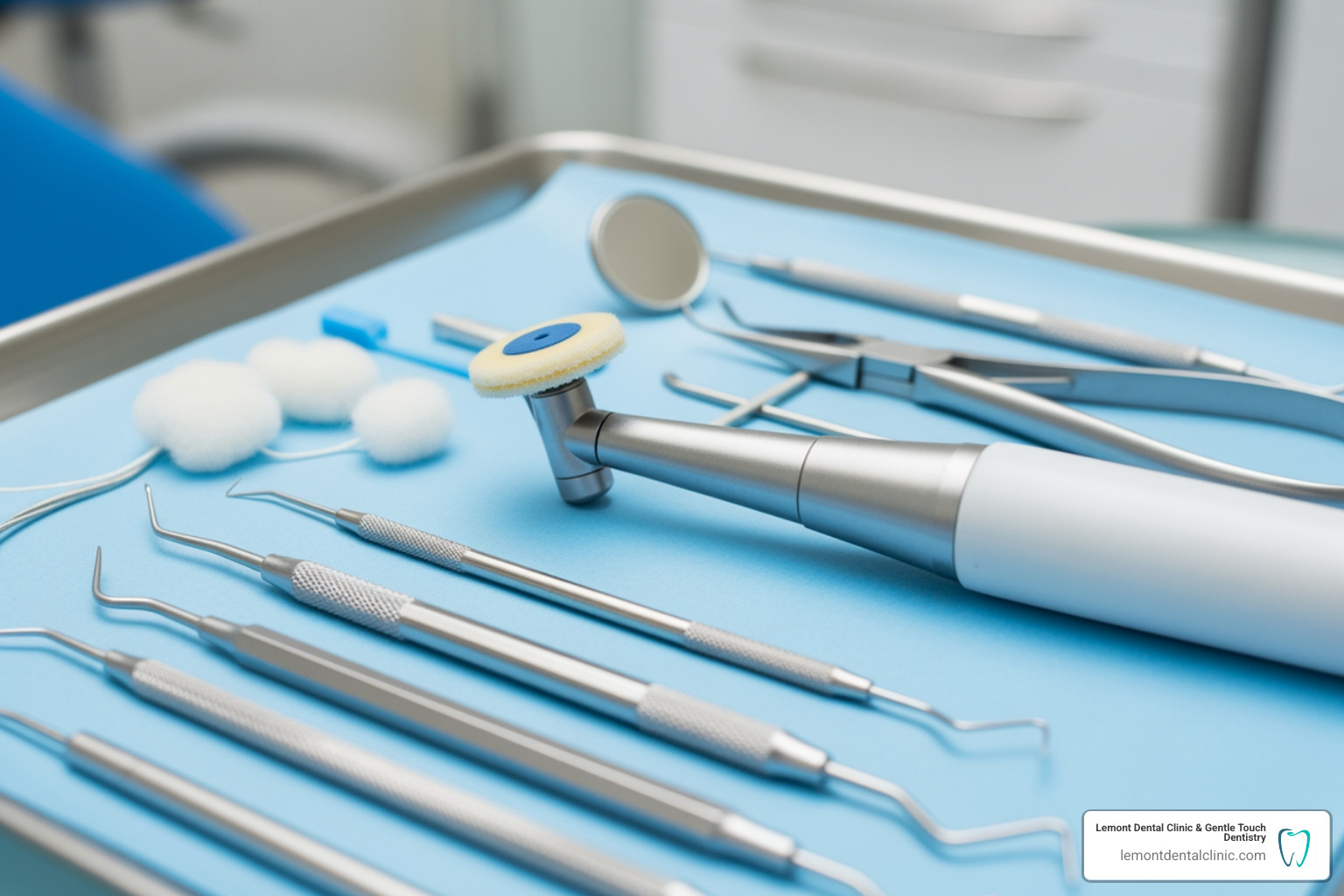
During scaling, you might hear some scraping sounds – don’t worry, this is completely normal! We use specialized tools for this process. Hand scalers are instruments designed to carefully scrape away plaque and tartar from above and below your gum line. For a more efficient and comfortable experience, we also use ultrasonic scalers. These devices vibrate at a high frequency and spray water, effectively breaking down and washing away stubborn plaque and tartar. This step is essential because the bacteria in plaque produce toxins that can inflame your gums, leading to gingivitis and, if left untreated, more severe periodontal disease.
Step 3: Polishing and Expert Flossing
Once all the plaque and tartar are removed, we move on to polishing. This step involves using a high-powered electric brush with a special gritty, mint-flavored toothpaste, also known as prophylaxis paste. This unique paste has a grainy consistency that works wonders to scrub and polish your teeth, removing any residual tartar and surface stains that regular brushing can’t tackle. This process leaves your teeth feeling incredibly smooth and helps remove biofilm and reduces plaque buildup without damaging enamel.
Even if you’re a diligent flosser at home, our expert flossing during your professional teeth cleaning is a vital step. Our hygienist will thoroughly floss between your teeth, reaching areas that might be missed during your daily routine. This not only removes any remaining paste and plaque but also allows us to identify any areas of concern, such as bleeding gums, which could indicate early signs of gum disease. We can also offer personalized advice on specific flossing techniques to optimize your home care.
The final stages of your professional teeth cleaning often include preventive treatments designed to give your teeth an extra layer of protection. The most common is a fluoride treatment. Fluoride is a natural mineral that helps strengthen your tooth enamel, making it more resistant to acid attacks from bacteria and reducing your risk of cavities. We typically apply fluoride as a foamy gel in a mouthpiece that you wear for a few minutes, or as a varnish painted directly onto your teeth. If you receive a fluoride varnish, it hardens on contact with saliva, allowing you to eat and drink immediately afterward. You can read More about Fluoridation on our website.
For some patients, especially children and adults with deep grooves in their back teeth, we might recommend dental sealants. These are thin, protective coatings applied to the chewing surfaces of molars to prevent cavity-causing bacteria from settling in those hard-to-reach areas. They act as a barrier, sealing out food particles and germs. You can learn more about Dental Sealants for Adults and how they can benefit you. These preventive measures are powerful tools in maintaining your long-term oral health.
Regular Cleaning vs. Deep Cleaning: What’s the Difference?
When we talk about professional teeth cleaning, it’s important to understand that not all cleanings are the same. Depending on the health of your gums and the amount of plaque and tartar buildup, you might need a “regular cleaning” or a “deep cleaning.” We tailor our approach to your specific needs, ensuring you receive the most effective care.
Treats gum disease (gingivitis/periodontitis), removes heavy buildup
Procedure
Removes plaque/tartar above gumline, polishing
Removes plaque/tartar above and below gumline, smooths root surfaces
Pain Level
Generally painless, mild discomfort
May require local anesthetic, more involved, potential sensitivity post-op
Number of Visits
Typically one visit
Often 2-4 visits (per quadrant of the mouth)
Who Needs It
Patients with healthy gums, minimal plaque/tartar
Patients with gum disease, significant plaque/tartar below gumline, gum pockets
When a Regular Cleaning is Enough
A regular cleaning, also known as prophylaxis, is what most people receive during their routine dental visits. This service is designed for patients with healthy gums, where there is no significant bone loss or deep gum pockets. The primary goal of a regular cleaning is preventive maintenance—to remove light plaque, tartar, and stains that accumulate above the gumline.
These biannual visits are crucial for keeping your teeth and gums in top condition and preventing issues before they start. If your gums are firm, pink, and don’t bleed easily, a regular cleaning is likely all you need. It’s a proactive step to maintain your oral hygiene and keep that sparkling smile. You can find More info about Regular Cleaning on our site.
When a Deep Cleaning is Necessary
Sometimes, due to factors like inconsistent oral hygiene, genetics, or certain health conditions, plaque and tartar can build up below the gumline, leading to gum inflammation (gingivitis) or more advanced gum disease (periodontitis). In these cases, a deep cleaning, or scaling and root planing, becomes necessary.
A deep cleaning is recommended if we observe symptoms such as heavy tartar buildup, plaque under the gums, bleeding gums, sensitive gums, or when your gum pockets (the space between your teeth and gums) are deeper than normal. During scaling and root planing, we carefully remove plaque and tartar from both above and below the gumline. Then, we smooth the root surfaces of your teeth. This smoothing helps prevent bacteria from re-attaching, allowing your gums to heal and reattach more firmly to your teeth. It’s a more intensive procedure, often requiring local anesthetic to ensure your comfort, and may be completed over several appointments. If you’re dealing with these issues, we have More info about Deep Cleaning and detailed information on Tooth Scaling and Root Planing.
The Health Benefits of Regular Professional Teeth Cleanings
The advantages of consistent professional teeth cleaning extend far beyond just a bright smile. These routine appointments are a cornerstone of preventive health, impacting not only your oral well-being but your overall systemic health too.
One of the most obvious benefits is cavity prevention. By removing plaque and tartar, we eliminate the breeding ground for bacteria that produce acids, leading to tooth decay. This also directly leads to gum disease prevention. When plaque and tartar accumulate, they irritate the gums, causing inflammation (gingivitis) and eventually leading to more severe periodontal disease, which can result in tooth loss. Regular cleanings keep your gums healthy and firm.
Beyond prevention, cleanings contribute to fresher breath by removing bacteria and food debris that cause unpleasant odors. You’ll also notice a brighter smile as surface stains from coffee, tea, and other foods are polished away. Perhaps one of the most critical benefits is early problem detection. During your cleaning and exam, we can spot potential issues like small cavities, early signs of gum disease, or even oral cancer when they are most treatable, saving you from more extensive and costly procedures down the line.
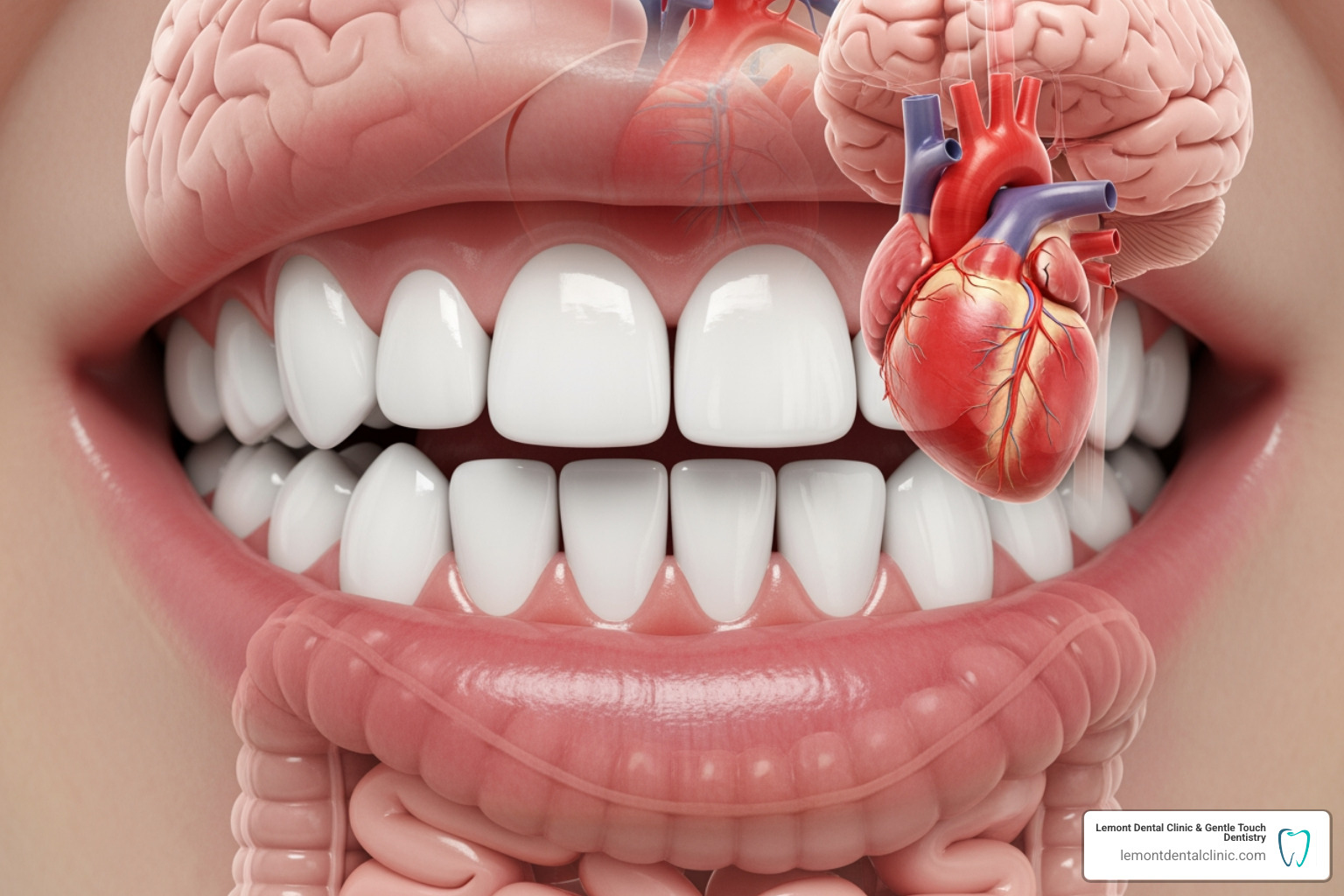
Furthermore, there’s a significant link between oral health and overall health. Good oral hygiene, maintained through regular professional teeth cleaning, is linked to a reduced risk for conditions like heart disease and diabetes. It’s truly an investment in your entire body’s well-being.
How a Professional Teeth Cleaning Prevents Cavities and Gum Disease
Our mouths are home to millions of bacteria, some beneficial, some harmful. When harmful bacteria mix with food particles and saliva, they form plaque. If plaque isn’t removed daily through brushing and flossing, it hardens into tartar. This tough, porous substance acts like a magnet for more plaque, creating a cycle of buildup.
A professional teeth cleaning breaks this cycle by carefully removing plaque buildup and preventing tartar formation. Our scaling techniques disrupt the harmful bacteria colonies, especially those hiding below the gumline. By eliminating these irritants, we significantly reduce gum inflammation, which is the hallmark of gingivitis. When your gums are healthy, they create a tight seal around your teeth, making it harder for bacteria to penetrate and cause deeper infections. This proactive approach is fundamental to preventing cavities and halting the progression of gum disease, protecting your teeth and supporting structures. Learn more about periodontal disease and how we combat it.
What to Expect from a Professional Teeth Cleaning if It’s Been a While
Life gets busy, and sometimes dental appointments fall by the wayside. If it’s been a while since your last professional teeth cleaning, please don’t feel embarrassed or worried. We understand, and our priority is to get your oral health back on track comfortably and effectively.
You might find that your appointment takes a little longer than the typical 30-60 minutes for a routine cleaning. This is because there’s likely more plaque and tartar buildup for us to address. Our hygienist will take their time to thoroughly scale your teeth, both above and potentially below the gumline. While we strive for comfort, you might experience some mild gum sensitivity during or after the cleaning, especially if there’s been significant buildup. This is a normal response as your gums heal.
In some cases, if the buildup is extensive or if we detect signs of advanced gum disease, we might recommend a deep cleaning (scaling and root planing) instead of a regular cleaning. This is a more comprehensive treatment designed to restore gum health. We’ll always discuss these recommendations with you, explaining why it’s necessary and what to expect. If you experience Teeth Sensitive After Cleaning What Now, we can offer advice and solutions. The most important thing is to take that first step back into regular care.
Frequently Asked Questions about Professional Teeth Cleaning
We know you might have questions about professional teeth cleaning, and we’re here to provide clear, reassuring answers. Here are some of the most common inquiries we receive:
How often should I get my teeth cleaned?
The American Dental Association recommends that you visit your dentist every six months for a professional teeth cleaning and check-up. This biannual schedule is ideal for most people to maintain optimal oral health, allowing us to remove plaque and tartar buildup and catch any potential issues early.
However, the frequency can vary based on individual risk factors. For example, individuals who don’t regularly brush or floss, have a history of gum disease, are prone to heavy tartar buildup, have a high cavity risk, suffer from dry mouth, or have certain medical conditions like diabetes or a weakened immune system may need more frequent cleanings—sometimes every three to four months. Smokers or those undergoing orthodontic treatment might also benefit from more regular visits. We’ll assess your specific needs and recommend a personalized schedule during your appointment. Regular Check-ups are key to this personalized approach.
Is a professional teeth cleaning painful?
For most patients, a professional teeth cleaning is not painful. You might experience some mild discomfort or pressure, especially during the scaling process as the hygienist works to remove plaque and tartar. The scraping sensations and sounds can sometimes be a bit unsettling, but they are generally not painful.
If you have particularly sensitive teeth or if there’s significant inflammation in your gums (often due to prolonged buildup), you might experience more sensitivity. In such cases, please let us know! Our team is trained to be gentle and understanding. We can adjust our techniques, take breaks, or even offer a local anesthetic to numb the area, ensuring your comfort throughout the procedure. Our goal is always a comfortable and stress-free experience. If you’re concerned about discomfort, you can read more about Does Teeth Cleaning Hurt.
How long does a typical teeth cleaning take?
The duration of a professional teeth cleaning can vary depending on several factors, but a routine cleaning typically takes between 30 minutes and an hour. This timeframe usually includes the initial examination, scaling, polishing, flossing, and any fluoride treatment.
However, if it’s been a long time since your last cleaning, or if you have significant plaque and tartar buildup, the appointment might take longer. More extensive procedures, such as a full mouth debridement (for very heavy buildup) or scaling and root planing (deep cleaning for gum disease), will naturally require more time, often spread across multiple appointments. The amount of tartar present is a big factor in how long the cleaning will take. We always aim to be thorough and efficient while prioritizing your comfort and the quality of care.
Your Partner in Lifelong Oral Health
At Lemont Dental Clinic & Gentle Touch Dentistry, we believe that professional teeth cleaning is more than just a routine appointment; it’s a vital component of your overall health and well-being. We are committed to providing high-quality, comprehensive general and restorative dental care right here in Lemont and Palos Hills, IL. Our experienced doctors and hygienists use the latest technology to ensure every cleaning is effective, comfortable, and custom to your needs.
Investing in regular preventive care, like professional teeth cleaning, is one of the best decisions you can make for your health. It helps you avoid more serious and costly dental issues down the road, keeps your smile looking its best, and contributes to your systemic health. We’re proud to offer all-in-one care, focusing on quality and affordability, so you can maintain a healthy smile for life.
After your cleaning, we’ll provide you with personalized tips and recommendations for maintaining excellent oral hygiene at home, empowering you to keep that fresh, clean feeling between visits. We are your partners in achieving and maintaining lifelong oral health.
Ready to experience the difference a thorough and gentle professional teeth cleaning can make? We invite you to Schedule your next Regular Cleaning with us today. Let us help you keep your smile healthy and radiant!