The Most Common Missing Teeth — and Why It Matters
The most common missing teeth in people are:
Wisdom teeth (third molars) — most frequently absent or removed
Upper lateral incisors — the teeth on either side of your two front top teeth
Lower second premolars — the small teeth just in front of your back molars
Upper second premolars — same position on the top arch
Lower central incisors — the bottom front teeth
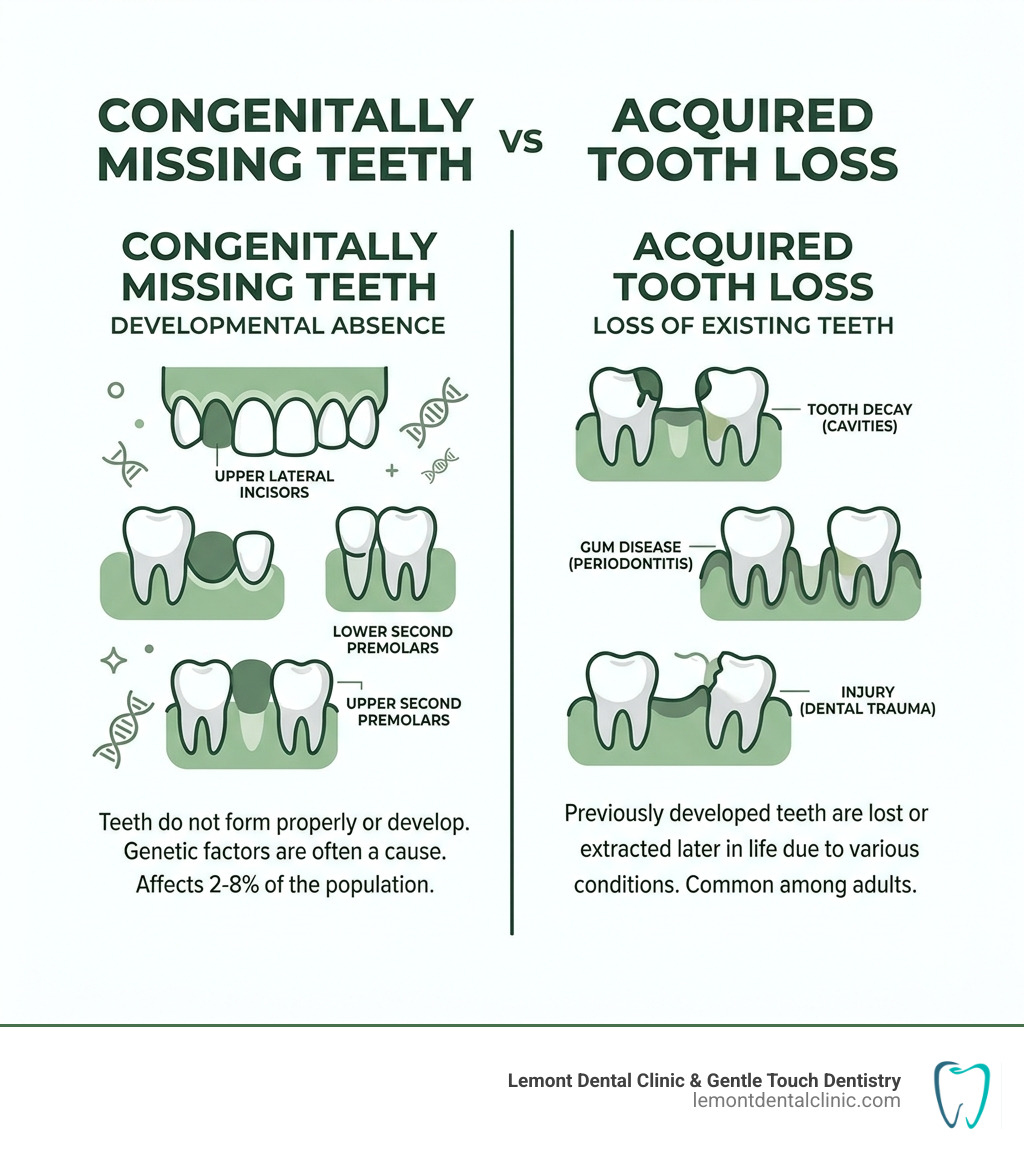
Some people are born without these teeth entirely. Others lose them later due to decay, gum disease, or injury. Both situations are more common than most people realize.
About 2–8% of the population is born missing at least one tooth (not counting wisdom teeth). And when you factor in adult tooth loss from decay and gum disease, roughly 178 million Americans are missing at least one tooth.
So if you’re staring at a gap in your smile — or an X-ray showing a tooth that never came in — you’re far from alone.
The tricky part? Whether a tooth never developed or was lost later in life, leaving that gap untreated can quietly cause bigger problems over time.
When we talk about teeth that simply never show up, we are usually talking about a condition called hypodontia. In the dental world, hypodontia is defined as the congenital absence of one to six teeth (excluding wisdom teeth). If more than six teeth are missing, we call it oligodontia, and the complete absence of teeth is known as anodontia.
According to Scientific research on tooth loss facts, tooth loss and development issues are significant public health concerns. Research shows that hypodontia affects approximately 5% to 7% of the general population. It is actually more common in permanent teeth than in baby teeth, and interestingly, statistics show a 3:2 female-to-male predilection, meaning women are slightly more likely to be born with missing teeth than men.
So, why does this happen? It usually comes down to genetics. There are over 200 genes involved in tooth development, but mutations in specific genes like PAX9 and MSX1 are often the culprits. These genes provide the instructions for the “dental lamina,” which is the layer of tissue where your teeth begin to form while you are still in the womb. If those instructions are garbled, the tooth bud simply never forms.
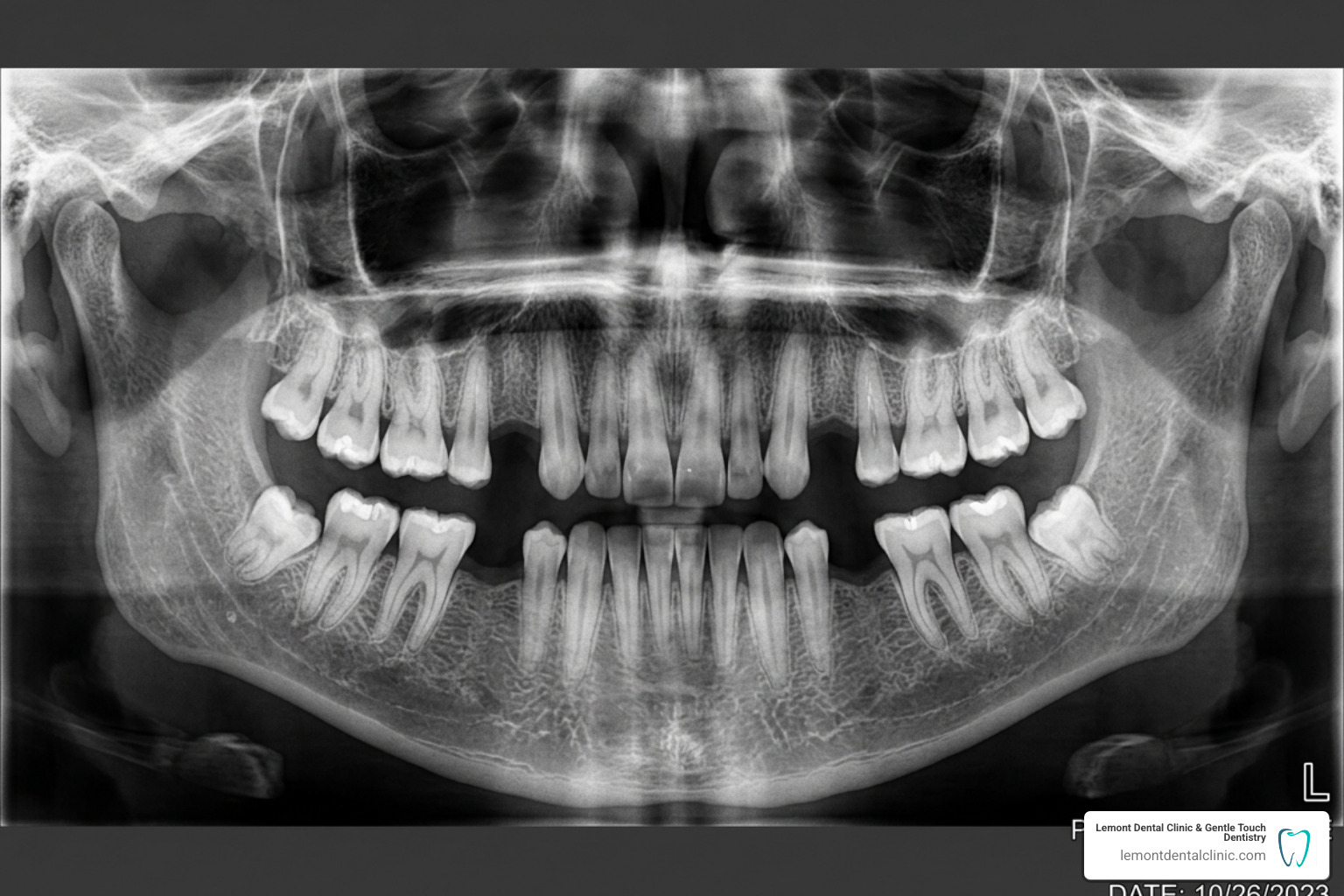
While genetics is the primary driver, environmental factors can also play a role. Issues like maternal health during pregnancy, certain infections, or even exposure to specific medications can interrupt the delicate process of dental development. If a tooth is “stuck” under the gums and doesn’t erupt, it might not be truly missing, but rather impacted. This is why we often use panoramic X-rays to see what’s going on beneath the surface. If a tooth is truly missing and the gap is causing issues, we might recommend a tooth extraction for any remaining problematic baby teeth to make room for future restorations.
The Most Common Missing Teeth in Children and Adults
It is helpful to distinguish between teeth that were never there to begin with and teeth that were lost along the way. Both result in gaps, but the treatment approach and the common “offenders” differ.
The Scientific research on missing teeth prevalence highlights that wisdom teeth are the champions of absence. Evolutionarily speaking, our jaws are getting smaller, and many people simply don’t have the room for these “third molars.”
Most common missing teeth by birth (Congenital)
If you or your child are missing a permanent tooth that should have come in by now, it is likely one of these:
Upper Lateral Incisors: These are the teeth right next to your two “bunny” teeth in the front. When they are missing, it creates a very noticeable gap. Sometimes, they aren’t completely missing but are “peg-shaped”—meaning they are much smaller and pointier than they should be.
Lower Second Premolars: These are located further back in the mouth. Often, a person will keep their baby molar for years because there is no permanent second premolar underneath it to push it out.
Upper Second Premolars: Similar to the lower ones, these are common “no-shows” in the upper arch.
These traits often run in families. If Mom or Dad was missing their lateral incisors, there is a good chance the kids might be, too. Because these teeth are vital for the aesthetics of your smile and the alignment of your bite, we monitor them closely during pediatric visits in our Lemont and Palos Hills offices.
Most common missing teeth due to decay or injury
In the adult world, the list shifts toward teeth that do a lot of heavy lifting.
First Molars: These are usually the first permanent teeth to erupt (around age 6). Because they are in the mouth the longest and handle the most chewing pressure, they are the most susceptible to deep decay and periodontal disease.
Wisdom Teeth: Even if they do grow in, they are notoriously difficult to clean. This often leads to infection or decay, resulting in their extraction.
Front Incisors: These are the “sports and accidents” victims. Physical trauma from a fall or a sports injury often targets the front teeth, leading to loss.
When these teeth are lost, we often look at restorative options like crowns and bridges to fill the gap and restore function.
Primary Causes and Risk Factors for Tooth Loss
Beyond simple genetics, several systemic conditions and lifestyle factors increase the risk of missing teeth.
Genetic Syndromes: Hypodontia is associated with over 120 different syndromes. The most common include:
Ectodermal Dysplasia: This condition affects the skin, hair, nails, and sweat glands. One of its hallmark signs is missing multiple teeth or teeth that are extremely pointed.
Down Syndrome: Individuals with Down syndrome have a higher prevalence of missing teeth and delayed eruption.
Cleft Lip and Palate: Teeth in the area of the cleft (often the lateral incisors) are frequently missing due to the disruption in the jaw’s development.
Periodontal Disease: This is the leading cause of tooth loss in adults. According to Scientific research on tooth loss statistics, severe gum disease causes the bone and tissues supporting the teeth to break down. Eventually, the teeth become loose and either fall out or must be removed.
Smoking: If you needed another reason to quit, here it is: smokers are significantly more likely to lose teeth. Research indicates that male smokers lose an average of 2.9 teeth per decade, while female smokers lose 1.5. Smoking restricts blood flow to the gums, making it harder for the body to fight off infections that lead to tooth loss.
Environmental Factors: Chemotherapy or radiation therapy at a young age can damage developing tooth buds, leading to missing permanent teeth later in life.
For those facing significant tooth loss due to these factors, dental implants have become the gold standard for restoration, providing a permanent solution that looks and feels like a natural tooth.
The Impact of Leaving Gaps Untreated
It might be tempting to ignore a missing tooth, especially if it’s in the back of your mouth where no one can see it. However, your mouth is a finely tuned machine, and when one part is missing, the rest of the system begins to struggle.
One of the most hidden dangers is bone resorption. Your jawbone needs the stimulation of a tooth root to stay healthy and dense. When a tooth is lost, the bone in that area begins to shrink (atrophy). This can eventually change the shape of your face, leading to a “sunken” appearance that makes you look older than you are.
Furthermore, teeth like to have neighbors. When there is a gap, the surrounding teeth will begin to “tip” or “drift” into the empty space. This leads to malocclusion (a bad bite), which can cause:
TMJ Disorders: Misaligned teeth put uneven pressure on the jaw joint, leading to headaches and jaw pain.
Increased Decay: Shifting teeth create new, hard-to-reach nooks and crannies where plaque can hide.
Speech Impediments: Your tongue uses your teeth as “landmarks” to create sounds. Gaps can lead to whistling or lisping.
When deciding how to fix these gaps, many patients find themselves comparing a dental implants vs bridge. While a bridge is a great fixed option, an implant is the only solution that actually replaces the tooth root and prevents that bone loss we mentioned.
Modern Solutions for Replacing Missing Teeth
The good news is that we live in the golden age of restorative dentistry. At Lemont Dental Clinic & Gentle Touch Dentistry, we use the latest technology to ensure your replacement teeth look so natural that even you might forget which ones are real.
Dental Implants: These are titanium posts that act as artificial tooth roots. They are incredibly durable and can last a lifetime with proper care. We take pride in being a top choice for best teeth implants in the Chicago Ridge and Orland Park areas.
Natural Looking Dentures: Gone are the days of “clicky,” fake-looking teeth. Modern natural looking dentures are customized to match your gum color and facial structure.
Implant-Supported Dentures: For those who want more stability than traditional “falsies,” implant dentures snap onto implants for a secure fit that won’t slip while you’re eating or talking.
All-on-4 Dental Implants: This is a technique for patients missing most or all of their teeth. We can replace an entire arch of teeth using only four strategically placed implants. You can learn more about the All-on-4 dental implants process during a consultation.
Fixed Bridges: If you have healthy teeth on either side of a gap, a porcelain bridge can “bridge” the distance, providing a functional and aesthetic fix without the need for surgery.
Frequently Asked Questions
Does dental insurance cover congenitally missing teeth?
This is a “maybe.” Insurance coverage often depends on whether the treatment is deemed “medically necessary” or “cosmetic.” If a missing tooth is causing functional issues with chewing or speech, or if it’s part of a larger orthodontic plan, there is a higher chance of coverage. However, many policies have “missing tooth clauses” or pre-existing condition exclusions. We always recommend reviewing your specific policy with our team so we can help you maximize your benefits.
When should I see a dentist for a missing tooth?
The earlier, the better! For children, we like to see them as soon as their first tooth pops up, or by age one. If a permanent tooth hasn’t appeared by the time its “twin” on the other side has been in for six months, it’s time for an evaluation. Early detection via panoramic X-rays allows us to plan for space management. For adults, if you lose a tooth due to injury or decay, you should seek help immediately. The sooner we address the gap, the more bone density we can save. You can visit our dental implant center for a comprehensive evaluation.
Can missing teeth affect my speech and nutrition?
Absolutely. Certain sounds (like “f,” “v,” “s,” and “th”) require your tongue or lips to make contact with your teeth. Without them, your speech can sound slurred or distorted. Nutritionally, missing molars make it difficult to chew fibrous vegetables and proteins like meat. Many people with missing teeth end up switching to a “soft food” diet, which can lead to nutrient deficiencies and digestive issues. Solutions like same day dental implants can often get you back to eating your favorite foods much faster than traditional methods.
Conclusion
Whether you were born without them or lost them along life’s journey, the most common missing teeth don’t have to define your smile or your health. At Lemont Dental Clinic & Gentle Touch Dentistry, we serve the communities of Lemont, Palos Hills, Oak Lawn, and beyond with a focus on high-quality, comprehensive care.
We understand that a missing tooth is more than just a gap—it’s a challenge to your confidence and your well-being. From advanced implant technology to custom-crafted dentures, our goal is to help you function and smile with ease. If you’re ready to fill in the blanks in your dental history, check out our Smile Again A Dental Implant Guide and schedule a visit with us today. We look forward to helping you rediscover your best smile!