Permanent Dentures: A Stable Option for Full Mouth Restoration
Permanent dentures can restore a full arch of teeth with a more secure fit than traditional removable dentures. For the strongest long-term option, look for a dentist who evaluates your bone health, explains fixed and removable implant-supported choices, and provides a clear treatment plan with costs, materials, and follow-up care.
Fixed full-arch dentures attach to dental implants and stay in place. They can improve chewing, speech, and confidence without daily adhesives or a denture covering the roof of the mouth. Implant-supported overdentures, often called snap-in dentures, are removable for cleaning but lock onto implants for more stability than standard dentures.
This choice matters for many people. About 40 million Americans have lost all their teeth, while an estimated 178 million are missing at least one tooth. Tooth loss can affect what you eat, how you speak, and how comfortable you feel smiling.
The word permanent can be confusing. Dental implants are designed for long-term use, but the visible bridge or denture can wear and may need replacement over time, often within about 5 to 15 years. The best solution depends on your oral health, jawbone, goals, and budget.
Top Long-Term Permanent Dentures Options for Full Arch Restoration
Restoring a full arch of missing teeth is no longer limited to standard acrylic plates that slip and slide. Modern restorative dentistry offers advanced solutions tailored to your anatomical needs, functional demands, and aesthetic desires. When reviewing the various types of dentures complete guide, it becomes clear that securing prosthetics to titanium posts transforms oral function and preserves underlying bone structures.
Without tooth roots to stimulate the jawbone, bone resorption occurs naturally over time, leading to facial sagging and ill-fitting appliances. Implant-supported systems stop this process through osseointegration—the biological fusion of biocompatible titanium with your natural bone tissue. Depending on whether you prefer a completely fixed device or a removable appliance that clicks into place, multiple clinical configurations are available.
Fixed Full-Arch Permanent Dentures with All-on-4 Technology
Fixed full-arch implant restorations represent the gold standard in non-removable tooth replacement. Often referred to as hybrid bridges or full-arch fixed bridges, these systems are securely fastened to four, five, or six strategically placed implants.
Patients searching for all on 4 dental implants near me discover that this procedure maximizes existing bone volume. By inserting the posterior implants at precise angles (typically 30 to 45 degrees), we can frequently bypass the need for extensive bone grafting and avoid sinus cavities in the upper jaw.
Key characteristics of fixed full-arch systems include:
Screw-Retained Mechanism: The prosthetic is firmly anchored directly onto multi-unit abutments using precision prosthetic screws. It does not move, shift, or come out at night—it can only be removed by a dentist during routine cleanings.
Open Palate Design: Unlike traditional upper dentures, a fixed full-arch restoration leaves the roof of your mouth uncovered. This allows you to experience natural temperature sensations and fully taste your food.
Full Chewing Efficiency: Anchoring the teeth directly into the jaw restores up to 90% of natural bite force, allowing you to enjoy crisp fruits, vegetables, and lean meats without hesitation.
Implant-Supported Overdentures and Snap-In Systems
If you prefer an option that provides significant stability while allowing easy removal for daily hygiene, snap-on dentures offer an exceptional middle ground.
These restorations rely on two to four dental implants per arch. Instead of being screwed down permanently, they utilize specialized attachments that snap firmly over the implant heads:
Locator and Ball Attachments: Individual studs or ball-retained abutments stick slightly out of the gum tissue, mating with female receptacles housed on the underside of the denture.
Bar-Retained Overdentures: A customized metal bar follows the curve of your jaw, connecting all the implants together. The overdenture clips securely over this rigid bar, minimizing any rocking or lateral shifting during mastication.
Overdentures offer a remarkable upgrade over traditional adhesive-based solutions, boosting chewing capacity to around 60% to 70% of natural teeth while making it simple to maintain gum health around the abutments.
Custom Zirconia Bridges and Premium Restorations
For the ultimate combination of structural durability and life-like aesthetics, custom monolithic zirconia bridges lead the field in high-end restorative dentistry.
While classic hybrid bridges use a titanium substructure wrapped in dental acrylic with composite resin teeth, solid zirconia restorations are custom-milled from a single block of high-strength ceramic.
Chip and Stain Resistance: Zirconia is virtually fracture-proof, resisting the chipping, micro-cracking, and staining often associated with acrylic materials over decades of wear.
Natural Translucency: The material mimics the natural light transmission, depth, and characterization of real tooth enamel.
Exceptional Biocompatibility: Zirconia promotes optimal soft-tissue response around the gingival margins, lowering plaque accumulation and encouraging long-term peri-implant health.
Comparing Fixed Denture Solutions: Stability, Longevity, and Investment
Choosing between fixed full-arch bridges, removable overdentures, and conventional plates involves balancing long-term longevity, day-to-day comfort, and upfront financial investment.
Restorative Solution
Attachment Method
Chewing Efficiency
Palate Coverage
Expected Prosthetic Lifespan
Implant Longevity
Typical Investment (Per Arch)
Fixed Full-Arch (All-on-4/6)
Screw-retained onto 4–6 implants
~90% of natural bite
None (Open palate)
10–15+ years (Acrylic) / 20+ years (Zirconia)
Lifetime with proper care
$20,000 – $50,000
Implant Overdenture (Snap-In)
Locators or bar on 2–4 implants
~60%–70% of natural bite
Minimal to partial
5–10 years (Attachments replaced every 1–2 yrs)
Lifetime with proper care
$8,000 – $20,000
Traditional Denture
Gum suction & daily adhesives
~20%–30% of natural bite
Full coverage on upper arch
5–7 years (Requires periodic relining)
N/A (Accelerates bone loss)
$1,500 – $4,000
While conventional dentures feature the lowest initial cost, they require frequent adjustments, periodic laboratory relines, and complete replacement every 5 to 7 years as jawbone shrinkage alters your facial profile. Fixed full-arch options require a higher upfront investment, but they preserve your jawbone and provide unmatched longevity.
To help make treatment manageable, our team offers flexible dental payment plans that fit predictable monthly budgets.
Clinical Candidacy and Step-by-Step Restoration Process
Restoring an entire arch requires thorough diagnostic planning and step-by-step surgical execution. Every patient’s oral anatomy is distinct, making digital assessment essential for predictable outcomes.
Who Is an Ideal Candidate for Permanent Dentures?
Determining whether you are suited for fixed full-arch therapy involves evaluating both your local oral structures and systemic health:
Adequate Jawbone Volume: You need sufficient vertical and horizontal bone density to support the posts. However, angled placement often makes treatment possible even if you have experienced moderate bone loss.
Healthy Soft Tissue: Active periodontal disease must be treated and controlled prior to surgery to minimize the risk of post-placement infection.
Controlled Systemic Health: Chronic conditions such as diabetes or cardiovascular issues must be well managed, as unmanaged conditions can impede the body’s natural healing cascade.
Non-Smoking Status: Smoking restricts microvascular blood flow, which more than doubles the risk of early implant failure. Patients are strongly advised to cease smoking prior to surgery.
For complex cases requiring extensive dental rehabilitation, a comprehensive full mouth reconstruction plan ensures that your bite, jaw joints, and facial aesthetics align harmoniously.
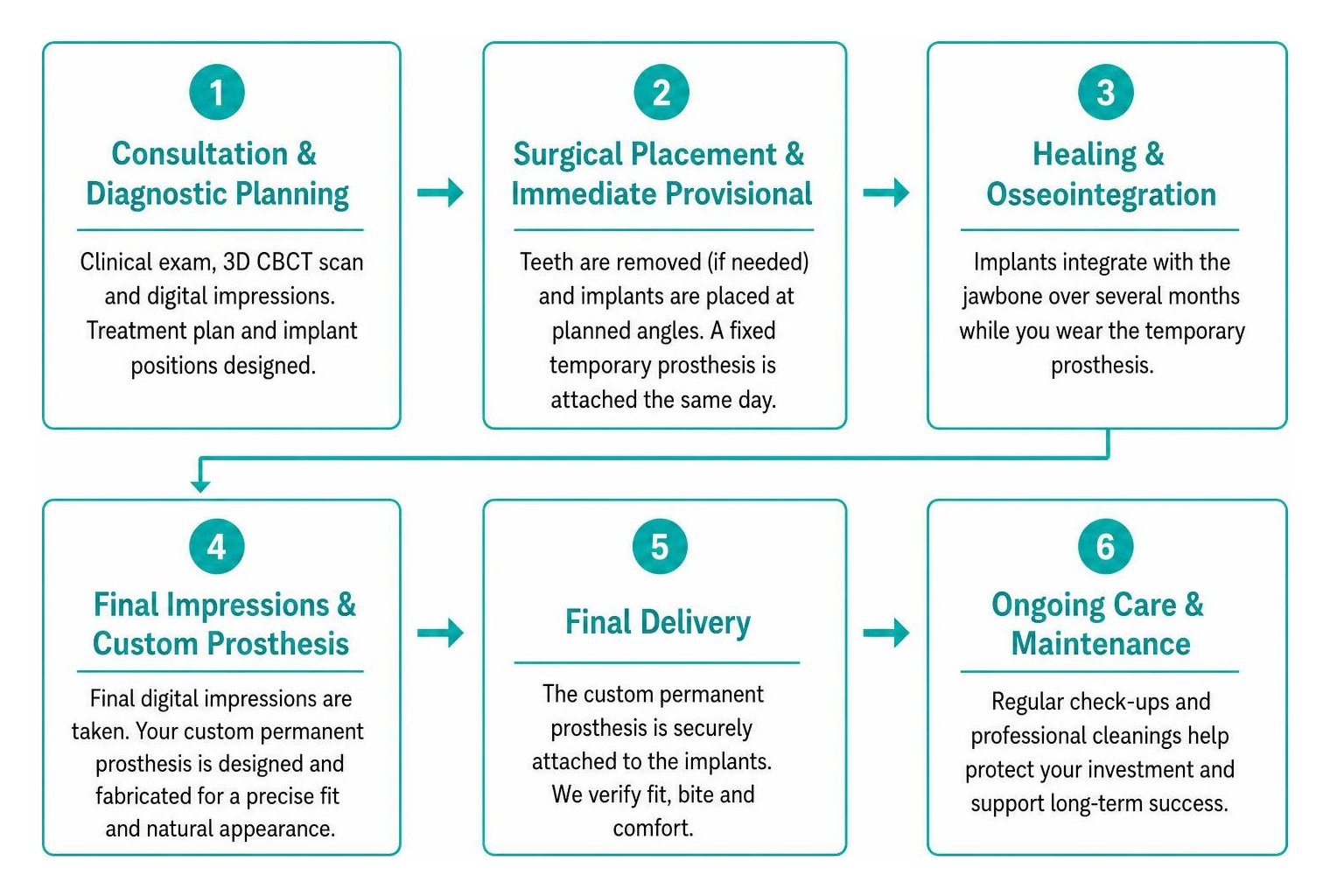
The Treatment Timeline from Consultation to Final Placement
Understanding the surgical and prosthetic phases helps eliminate uncertainty and sets clear expectations throughout your smile restoration journey.
Phase 1: Comprehensive Diagnostic Evaluation
We capture high-resolution 3D Cone-Beam Computed Tomography (CBCT) scans and digital intraoral impressions. This allows us to assess bone quality, locate nerve pathways, map sinus cavities, and virtually design the exact position of every implant.
Phase 2: Surgical Placement & Immediate Provisionalization
Under comfortable local anesthesia or IV sedation, any remaining non-restorable teeth are extracted. The dental implants are placed at planned angles. In many instances, a fully functional, aesthetic temporary provisional prosthesis is fixed to the implants on the very same day.
Phase 3: The Osseointegration Period (3 to 6 Months)
Over the next few months, your bone cells integrate directly around the micro-textured titanium surfaces. During this healing window, patients stick to a soft-food diet to avoid placing heavy functional torque on the healing fixtures.
Phase 4: Final Custom Prosthetic Delivery
Once osseointegration is verified, final precision impressions or optical scans are taken. Your custom-engineered permanent bridge (crafted from premium composite, acrylic-titanium hybrid, or solid monolithic zirconia) is securely seated and torqued into place.
Key Criteria for Selecting a Qualified Full Mouth Implant Specialist
The success of a full-mouth restoration depends on the skill, precision, and technological capabilities of your dental provider. When choosing an implant specialist in our community, consider these critical qualifications:
Advanced Surgical & Prosthodontic Credentials: Look for doctors who have completed extensive post-doctoral training in implantology, surgical extractions, and complex full-mouth prosthetics.
In-House 3D Diagnostics: A modern practice must utilize on-site 3D CBCT imaging and digital scanning to eliminate guesswork through computer-guided surgical templates.
Master Laboratory Collaboration: High-end restorations require world-class dental technicians. Ensure your provider works with certified labs that utilize premium titanium frameworks and medical-grade zirconia.
Transparent Treatment Proposals: Trustworthy practices provide clear, itemized quotes outlining every step—including extractions, bone grafting (if needed), temporary teeth, and final restorations—so you never face unexpected fees.
Frequently Asked Questions About Long-Term Denture Solutions
How long do permanent fixed teeth typically last?
The underlying titanium dental implants are designed to last a lifetime when properly integrated and maintained. The visible prosthetic bridge attached to the implants typically lasts between 10 to 15 years for hybrid acrylic designs, while monolithic zirconia bridges can last 20 years or more.
Maintaining longevity requires daily hygiene with water flossers or interdental brushes, combined with regular professional cleanings to prevent peri-implantitis (inflammation of the gums and bone surrounding the implants).
Is the surgical placement procedure painful?
Patients are pleasantly surprised by how comfortable the procedure is. The surgery is performed under profound local anesthesia, often supplemented with oral or IV sedation so you feel completely relaxed.
Post-operative discomfort peaks within the first 48 to 72 hours and is typically managed with prescribed or over-the-counter pain medications. Most individuals return to light daily activities within three to five days.
Does dental insurance cover full arch implant restorations?
Traditional dental insurance policies rarely cover the entire cost of implant surgery, as they often categorize dental implants under major elective services with low annual maximums (typically $1,000 to $2,000).
However, insurance policies may contribute toward preparatory procedures, such as extractions or the prosthetic crown/bridge portion. Some Medicare Advantage plans offer minor supplemental dental benefits. We assist patients in submitting pre-determinations to maximize their existing insurance benefits and explore third-party healthcare financing options.
Conclusion: Choosing the Right Care for Your New Smile
Restoring your smile with permanent fixed teeth is a life-changing investment that renews chewing power, enhances speech clarity, and brings back personal confidence. At Lemont Dental Clinic & Gentle Touch Dentistry, we take pride in delivering comprehensive, all-in-one restorative care. By combining advanced digital imaging, skilled surgical techniques, and high-quality materials, our experienced doctors focus on exceptional quality and clinical excellence for every patient.
If you are ready to leave slipping appliances behind and discover a stable solution tailored to your life, explore our trusted dentures near me options and schedule your consultation with our caring team today.