Why Brushing Teeth with Braces Demands Extra Care
Brushing teeth with braces requires a different approach than your regular oral hygiene routine. When you have braces, the brackets, wires, and bands create numerous hiding spots for food particles and plaque, making your teeth more vulnerable to decay and gum problems. Here’s what you need to know:
Quick Answer: How to Brush Teeth with Braces
- Brush after every meal (at least 2-3 minutes each time)
- Use a 45-degree angle at the gumline
- Clean above and below brackets by angling your brush
- Use specialized tools like interdental brushes for hard-to-reach areas
- Floss daily with a floss threader or water flosser
- Rinse with fluoride mouthwash at a different time than brushing
Getting braces is an investment in your smile’s future. You’re committing time and resources to achieve straight, healthy teeth. But that investment can be compromised if you don’t maintain excellent oral hygiene throughout your orthodontic treatment.
The challenge is real: braces create a shelf around each tooth where plaque builds up easily. Food debris gets trapped in brackets and wires. If this buildup isn’t removed properly, you risk tooth decay, gum inflammation, and permanent white spots on your teeth that will be visible once your braces come off.
This guide will walk you through everything you need to know about keeping your teeth clean and healthy while wearing braces—from the essential tools you’ll need to step-by-step brushing techniques that actually work.
I’m Piotr Dederowski from Lemont Dental Clinic & Gentle Touch Dentistry, and I’ve helped countless patients steer the challenges of maintaining oral health during orthodontic treatment, including mastering the art of brushing teeth with braces. Our team specializes in providing comprehensive care that ensures your journey to a straight smile doesn’t compromise your dental health.
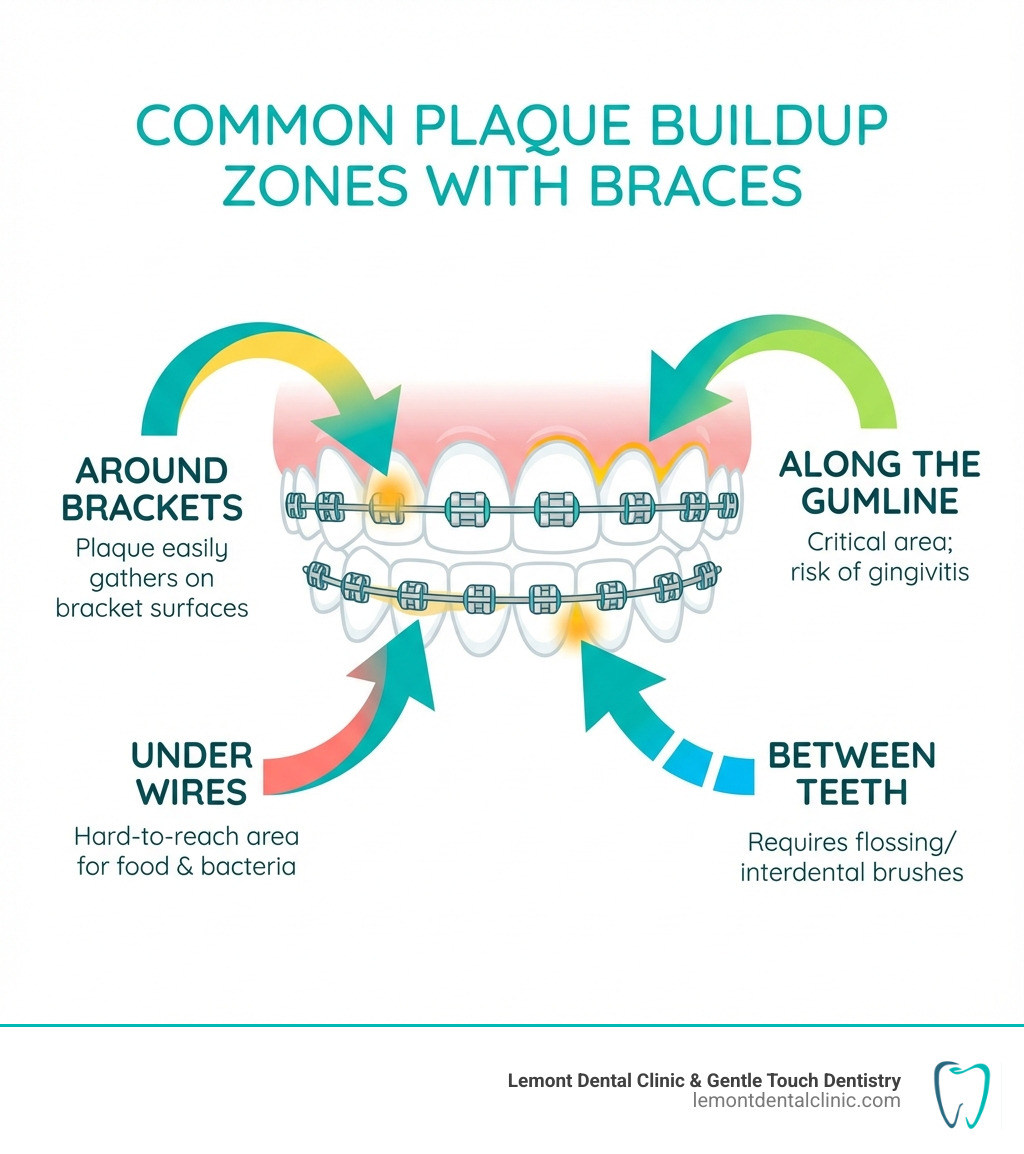
Why Cleaning is Crucial During Orthodontic Treatment
Wearing braces is an exciting step towards a beautifully aligned smile, but it also introduces unique challenges to your daily oral hygiene routine. The brackets, wires, and bands that make up your braces create numerous tiny nooks and crannies, acting as perfect “food traps” where plaque and food debris can easily accumulate. This increased surface area makes it significantly harder to clean your teeth thoroughly compared to when you don’t have braces.
Plaque, a white/yellow thin and sticky layer of bacteria, constantly forms on all surfaces of our teeth and gums. If this plaque isn’t removed diligently, it continues to build up in layers, feeding on any food debris that hasn’t been cleaned away. This unchecked plaque buildup is the root cause of several oral health problems that can undermine your orthodontic treatment and overall dental health.
One of the most significant consequences of poor hygiene while wearing braces is tooth decay, also known as dental caries. The acids produced by plaque bacteria slowly dissolve the outer surface of your teeth, the enamel. If left untreated, these small holes will grow in size, potentially delaying your orthodontic treatment and requiring additional dental interventions. Braces inherently put your teeth at a greater risk of developing decay, making vigilant cleaning non-negotiable.
Beyond cavities, neglecting oral hygiene can lead to gum inflammation, or gingivitis. When plaque accumulates around the gumline, it irritates the gums, causing them to become red, swollen, and prone to bleeding. Over time, untreated gingivitis can progress to more severe gum disease, which can damage the supporting structures of your teeth.
Another concern is demineralization, often appearing as permanent white spots on your teeth. These spots occur when plaque acids begin to erode the enamel, and they become noticeable once your braces are removed. Similarly, plaque and food particles can stain teeth, leading to uneven coloration that detracts from the straight smile you’ve worked so hard to achieve. Improper brushing can also cause visible tooth staining, which will be quite evident once your braces come off.
Orthodontic braces create specific spots where oral bacteria can stick and promote tooth decay. Not paying attention to oral hygiene while your teeth are being realigned increases the risk of gum disease and other complications. Therefore, understanding and implementing effective cleaning techniques is not just about aesthetics; it’s about ensuring that when your braces come off, you reveal not only straight teeth but healthy, vibrant ones. For more insights into preventing cavities and maintaining oral health, you can explore our resources on More about preventing cavities.
To conquer the unique cleaning challenges that come with braces, you’ll need to upgrade your oral hygiene arsenal. Having the right tools makes all the difference in effectively brushing teeth with braces and keeping your smile healthy throughout your treatment.
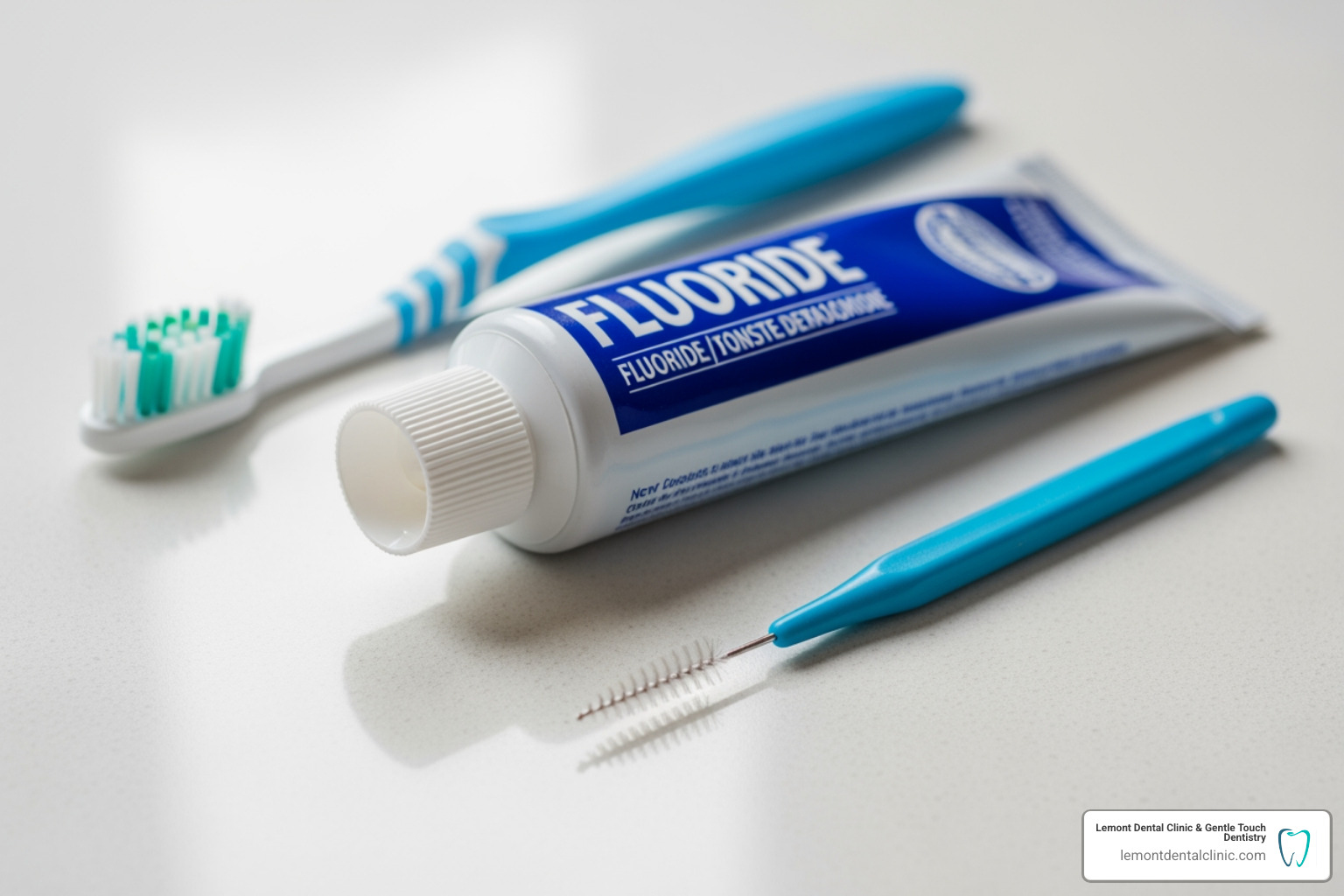
Here’s a breakdown of the essential items we recommend for your daily routine:
- Soft-Bristled Toothbrush: A soft-bristled toothbrush is paramount. Its gentle bristles effectively clean around brackets and wires without causing damage to your orthodontic appliances or irritating your gums. Some patients find an orthodontic toothbrush, which features V-shaped bristles, particularly effective for cleaning around the braces. Both manual and electric toothbrushes can be used; if you opt for an electric one, ensure it has a soft head and ideally a sensitive mode.
- Fluoride Toothpaste: Always use toothpaste with fluoride to strengthen your enamel and protect against decay. We recommend a toothpaste with a fluoride level of 1,350-1,500 parts per million (ppm). Fluoride is crucial because braces put your teeth at a greater risk of developing decay.
- Interdental Brush (Proxabrush): Often called a “Christmas tree brush” due to its shape, this small, cone-shaped brush is a game-changer. It’s designed to clean in the tiny spaces under your archwire and around each bracket, areas your regular toothbrush might miss.
- Floss Threader: Flossing with braces can be tricky. A floss threader is a flexible plastic loop that helps you guide dental floss under your archwire, allowing you to clean between your teeth effectively. It makes the process much easier and less frustrating.
- Waxed Floss or Dental Tape: When choosing floss, we recommend waxed floss or dental tape over unwaxed varieties. Waxed floss is less likely to shred or get caught on your brackets and wires, making for a smoother flossing experience.
- Water Flosser (Oral Irrigator): While not a substitute for traditional brushing and flossing, a water flosser can be a powerful supplementary tool. It uses a stream of pulsating water to dislodge food particles and plaque from around your braces and between your teeth. Many patients find it incredibly effective for reaching areas that are otherwise difficult to clean.
- Antibacterial Mouthwash: An anti-cavity, fluoride mouthwash can help reduce bacteria, fight plaque, and provide an extra layer of protection against decay. Remember to use it at a different time than brushing to avoid washing away the fluoride from your toothpaste.
Essential Items for an On-the-Go Cleaning Kit:
We understand that life happens outside the home! To maintain your oral hygiene throughout the day, especially after meals, we suggest assembling a small, portable kit:
- A travel-sized soft-bristled toothbrush
- Travel-sized fluoride toothpaste
- A small pack of floss threaders or pre-cut floss for braces
- An interdental brush
- A small mirror (optional, but helpful for quick checks)
Having these tools readily available will empower you to keep your smile sparkling clean, no matter where you are in Lemont, Palos Hills, or anywhere else in Illinois.
The Ultimate Guide to Brushing Teeth with Braces
Mastering the art of brushing teeth with braces is a skill that takes practice, but it’s absolutely essential for a healthy, beautiful smile at the end of your orthodontic journey. Your normal brushing routine will need to be adapted to thoroughly clean around all the components of your braces.
Before you even pick up your toothbrush, we recommend a quick pre-brush rinse with water. Swish water around your mouth for about 30 seconds to help dislodge any larger food particles trapped in your braces. This makes the subsequent brushing much more effective.
When it comes to duration and frequency, expect to spend a bit more time on your oral care. While a minimum of two minutes is typically recommended for brushing, with braces, it may take you longer—especially when you’re first getting into the habit. Some experts suggest spending up to three times as long as you normally would. Ideally, you should brush after every meal or snack to eliminate plaque buildup and food debris. If brushing immediately after a snack isn’t practical, a vigorous rinse with water can serve as a temporary solution until you can brush properly. For a comprehensive cleaning schedule, aim to brush at least four times daily: after breakfast, after lunch, after dinner, and right before bedtime.
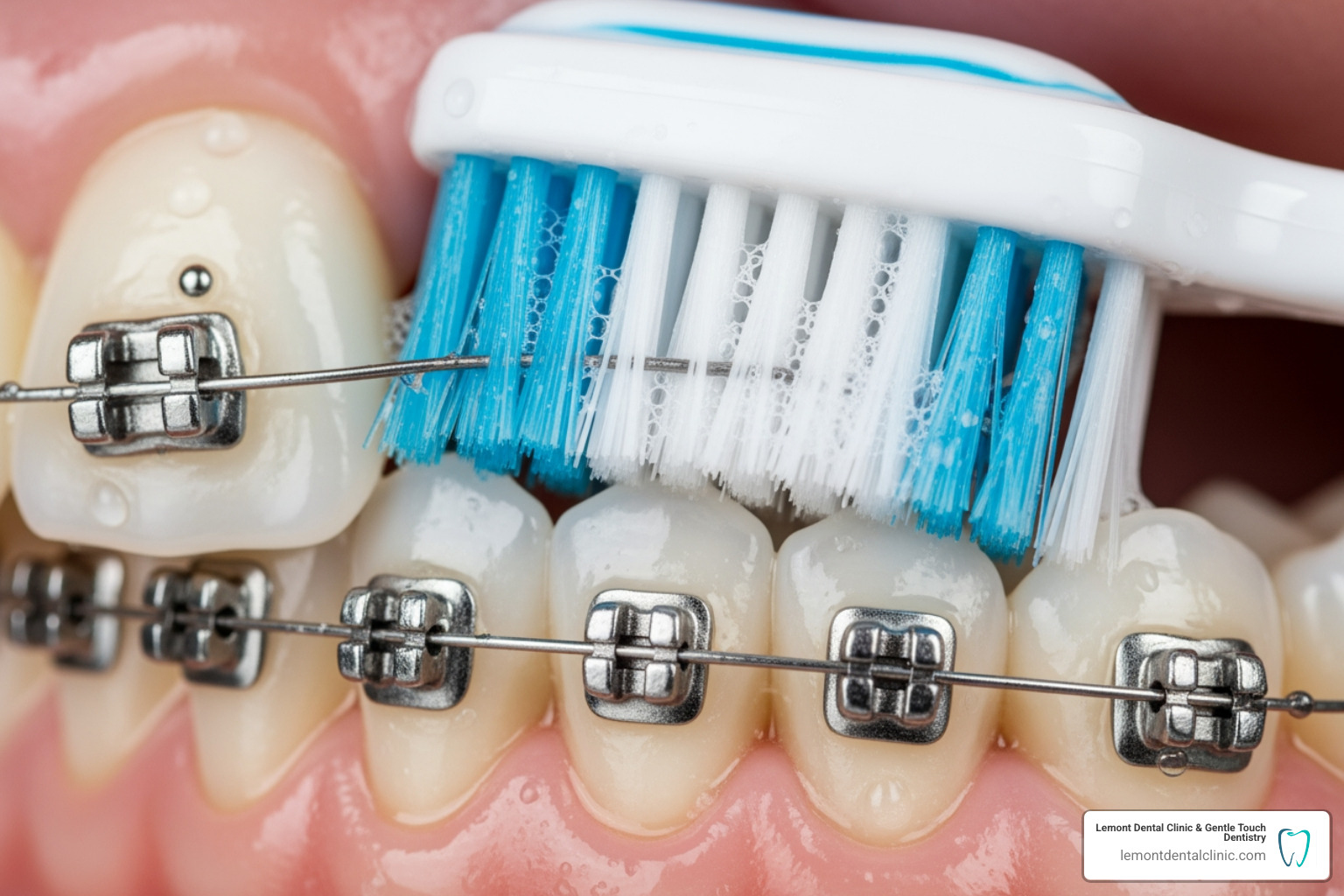
Step-by-Step Technique for Brushing Teeth with Braces
Follow these steps for a thorough and effective clean:
- Remove Elastics/Removables: If you wear any removable orthodontic appliances or elastics, take them out before you begin brushing.
- Brush at a 45-Degree Angle to the Gumline: Start by positioning your toothbrush at a 45-degree angle to your gumline. Use small, gentle circular motions to clean along the gumline of each tooth. This helps remove plaque and prevent gum inflammation, which is common with braces.
- Angle Brush Down to Clean Top of Brackets: Next, angle your toothbrush downwards, positioning the bristles above each bracket. Use a gentle, precise picking motion to sweep away food particles and plaque from the top surfaces of your brackets and the wire.
- Angle Brush Up to Clean Bottom of Brackets: Reposition your toothbrush, angling the bristles upwards from below each bracket. Use the same gentle, picking motion to clean the bottom surfaces of your brackets and the wire. Ensure you’re reaching all the way to the tooth surface beneath the bracket.
- Brush Chewing Surfaces: Don’t forget the chewing surfaces of your teeth. Use a firm back-and-forth motion to clean these areas thoroughly.
- Brush Inner Surfaces: Finally, clean the inner surfaces of all your teeth. These areas are often missed but are just as important. Use small circular motions, tilting the brush towards the gumline.
- Gentle Circular Motions: Throughout the entire process, use gentle circular motions. Aggressive scrubbing can damage your gums or even dislodge a bracket. It’s about thoroughness, not force.
Spend approximately 10 seconds on each tooth surface, ensuring every area around your braces is carefully cleaned. If you’re using an electric toothbrush, simply hold the brush head on each tooth surface, allowing the brush to do the work, and guide it gently.
Beyond your main toothbrush, incorporating specialized tools can significantly improve your cleaning efforts:
- Using an Interdental Brush: After your initial brushing, grab your interdental brush (proxabrush). This small brush is perfect for cleaning under the archwire and in the tight spaces between your brackets. Gently insert it under the wire and move it in and out, cleaning around each bracket. This is crucial for removing stubborn food particles and plaque that your regular toothbrush might miss.
- Cleaning Under the Wire and Around Each Bracket: Pay extra attention to the areas directly under the archwire and around the base of each bracket. These are prime spots for plaque accumulation. Angle your interdental brush to reach these challenging areas.
- Using Disclosing Tablets Weekly: To truly gauge the effectiveness of your brushing, we recommend using disclosing tablets once a week. These chewable tablets contain a harmless dye that stains any remaining plaque a bright color, typically red or pink. After chewing and swishing, look in the mirror to identify any areas you’ve missed. This provides instant feedback and helps you refine your technique. Just be sure to apply a little Vaseline to your lips beforehand to prevent staining.
- Checking Your Work in a Mirror: Always finish your routine by inspecting your teeth and braces in a mirror. Look for any visible food particles or plaque. If you spot anything, go back and clean it until your teeth and braces look sparkling clean.
The goal is to leave no hiding place for plaque. With practice, these steps will become second nature, ensuring your smile stays healthy and bright throughout your orthodontic journey. For more general dental care tips, visit our page on More on general dental care.
Mastering Flossing and Rinsing with Braces
While diligent brushing is paramount, it only covers about 60% of your tooth surfaces. The spaces between your teeth and under your archwire are inaccessible to even the best toothbrush, making daily flossing and rinsing absolutely crucial when you have braces. Neglecting these areas leaves them vulnerable to plaque buildup, decay, and gum disease.
Flossing with Braces: A How-To
Flossing with brackets and wires can be challenging and time-consuming at first, but it is an important step in any dental hygiene routine. Don’t be discouraged; with the right tools and technique, you’ll master it in no time.
- Using a Floss Threader: This is your best friend for flossing with braces. A floss threader is a small, flexible plastic loop. Take about 18 inches of waxed floss or dental tape and thread one end through the loop of the floss threader.
- Getting Under the Archwire: Guide the floss threader, with the floss attached, under your main archwire. Pull the threader through until the floss is positioned between two teeth and under the wire.
- Flossing Technique (C-Shape): Once the floss is under the wire, remove the threader. Gently slide the floss up and down against the side of each tooth, forming a “C” shape around the tooth. Move it gently under the gumline until you hear a “squeaky” sound, indicating a clean surface. Avoid snapping the floss, which can injure your gums or damage your braces.
- Repeat for Every Space: Carefully pull the floss out from under the archwire and repeat the process for every space between your teeth, both on the upper and lower arches. This can be time-consuming, but the thoroughness is worth it.
- Using a Water Flosser: For an added boost, or if you find traditional flossing too difficult, consider incorporating a water flosser. While it doesn’t replace manual flossing entirely, it’s excellent for dislodging food particles and plaque from around brackets, under wires, and between teeth. It cleanses with a stream of water, making it particularly useful for hard-to-reach areas.
- Being Gentle on Gums: Be gentle! Your gums might be a little sensitive, especially when you first start flossing with braces. Mild bleeding may occur initially; this often indicates gum inflammation and should improve with consistent, gentle flossing. However, if bleeding persists for several days, please let us know during your next visit.
- Flossing at Least Once Daily: We recommend flossing at least once a day. Some sources suggest flossing several times a day, especially after meals, but a thorough daily flossing session is the minimum to aim for to keep your gums and teeth healthy.
The Role of Mouthwash in Your Routine
Mouthwash can be a valuable addition to your oral hygiene routine with braces, offering extra protection and reaching areas your brush and floss might miss.
- Using Fluoride Mouthwash: We strongly recommend an anti-cavity, fluoride mouthwash. Fluoride helps reduce the amount of acid produced by bacteria in your mouth and strengthens your tooth enamel against decay.
- Rinsing at a Different Time Than Brushing: This is a crucial tip! While fluoride toothpaste is working to strengthen your teeth, rinsing immediately after brushing can wash away the beneficial fluoride. To maximize fluoride’s protective effects, use your fluoride mouthwash at a different time than brushing—for example, in the middle of the day or before bed if you haven’t just brushed. This avoids the “dilution effect.”
- Killing Bacteria and Reaching Inaccessible Areas: Mouthwash can help kill bacteria throughout your mouth, reducing plaque and contributing to overall oral health. It can also reach into crevices and around braces that are difficult for mechanical cleaning.
- Freshening Breath: As a bonus, mouthwash can help freshen your breath, which can be a concern when food particles get trapped in braces.
For more information on the benefits of fluoride and its role in maintaining strong teeth, please visit our page on Information on Fluoridation. Integrating these flossing and rinsing habits will significantly contribute to a healthier mouth while you wear braces.
Maintaining Your Smile: Long-Term Habits
Achieving a straight smile with braces is a journey, and maintaining excellent oral hygiene is a critical part of that journey. Beyond the daily brushing and flossing, certain long-term habits are essential to ensure your teeth remain healthy and strong, preventing complications that could extend your treatment or compromise your results.
Dietary Considerations
What you eat and drink can significantly impact your oral health and the integrity of your braces.
- Avoiding Sugary Foods: Sugary foods are a major culprit for tooth decay. When sugary foods get stuck in your brackets, it creates a perfect environment for bacteria to thrive and produce acids that attack your enamel. We advise limiting candies, cookies, and other sweet treats.
- Limiting Acidic Drinks: Fizzy drinks, fruit juices, and sports drinks are highly acidic. These acids can soften your tooth enamel, making it more vulnerable to erosion, especially when combined with the challenges of cleaning around braces. Milk and water are the safest and best drink choices for protecting your teeth. If you do consume acidic drinks, wait at least 30 minutes to an hour before brushing. Brushing too soon after consuming acidic foods or drinks can actually scrub away softened enamel.
- Avoiding Hard and Sticky Foods: Certain foods can directly damage your braces, leading to broken brackets or bent wires, which can prolong your treatment. We recommend avoiding:
- Hard foods: Ice, popcorn kernels, nuts, hard candies, bagels (cut into small pieces).
- Sticky foods: Taffy, caramel, gum, jellybeans, chewy candies.
- Crunchy foods: Hard chips, certain cereals.
- Foods eaten on the bone: Corn on the cob, chicken wings, ribs (cut the food off the bone first).
By being mindful of your diet, you’re not only protecting your teeth from decay but also safeguarding your orthodontic appliances from damage.
Toothbrush Replacement
Your toothbrush works hard, especially when navigating around brackets and wires. Braces tend to wear and fray toothbrush bristles much faster than usual.
- Every 2-3 Months: You should change your toothbrush approximately every 2-3 months.
- Sooner if Frayed: However, inspect the bristles routinely. If they appear frayed, bent, or splayed out, it’s time for a replacement, even if it’s been less than two months. An old, worn toothbrush is less effective at removing plaque and can even damage your gums.
Professional Dental Visits
Even with braces, regular professional dental care remains crucial. Your orthodontist is responsible for adjusting your braces, but your general dentist is vital for your overall oral health.
- Importance of Regular Check-ups: It is essential to keep seeing your dentist regularly. We recommend that individuals with braces, including children, visit their dentist twice a year for their regular cleanings and checkups. These appointments allow us to thoroughly clean areas that might be harder for you to reach, check for any signs of decay or gum disease, and ensure your oral health is on track.
- Orthodontist Appointments: Alongside your dental check-ups, ensure you attend all scheduled appointments with your orthodontist in Lemont or Palos Hills. These visits are necessary for adjustments, repairs, and monitoring the progress of your treatment. If we identify that you are at a greater risk of tooth decay, we might recommend additional fluoride treatments, such as a stronger toothpaste, fluoride varnish applications, or a fluoride mouthwash to be used at a different time than brushing.
Maintaining these long-term habits—a mindful diet, timely toothbrush replacement, and consistent professional dental care—will ensure that your investment in braces yields the best possible outcome: a healthy, straight, and beautiful smile. Don’t delay your next check-up; Schedule a Regular Cleaning with us today!
Conclusion
Starting on the journey of orthodontic treatment with braces is a significant step towards achieving the smile you’ve always dreamed of. However, as we’ve explored, this journey demands an liftd commitment to your daily oral hygiene. Brushing teeth with braces is not just a routine; it’s a meticulous process that protects your investment and ensures the health of your teeth and gums.
We’ve covered the essential tools, from soft-bristled toothbrushes and fluoride toothpaste to interdental brushes, floss threaders, and water flossers. We’ve walked through the step-by-step technique for brushing, emphasizing the critical 45-degree angle and the importance of cleaning above, below, and around every bracket. Mastering flossing, whether with a threader or a water flosser, and strategically using fluoride mouthwash are equally vital components of a comprehensive oral care regimen.
Remember the long-term habits: be mindful of sugary, acidic, hard, and sticky foods that can harm your teeth and braces. Replace your toothbrush frequently, and most importantly, maintain regular visits to both your orthodontist and your general dentist for check-ups and professional cleanings.
Your dedication to these practices will pay off immensely. When your braces finally come off, you won’t just reveal straight teeth; you’ll unveil a healthy, sparkling smile free from decay, stains, and gum issues.
At Lemont Dental Clinic & Gentle Touch Dentistry, we are committed to supporting you through every stage of your oral health journey. Our experienced doctors and state-of-the-art technology ensure you receive the highest quality care, whether it’s for your routine cleaning or specialized guidance for your braces. We are here to help you achieve and maintain that confident, radiant smile.
Book your next dental check-up and cleaning with us today!