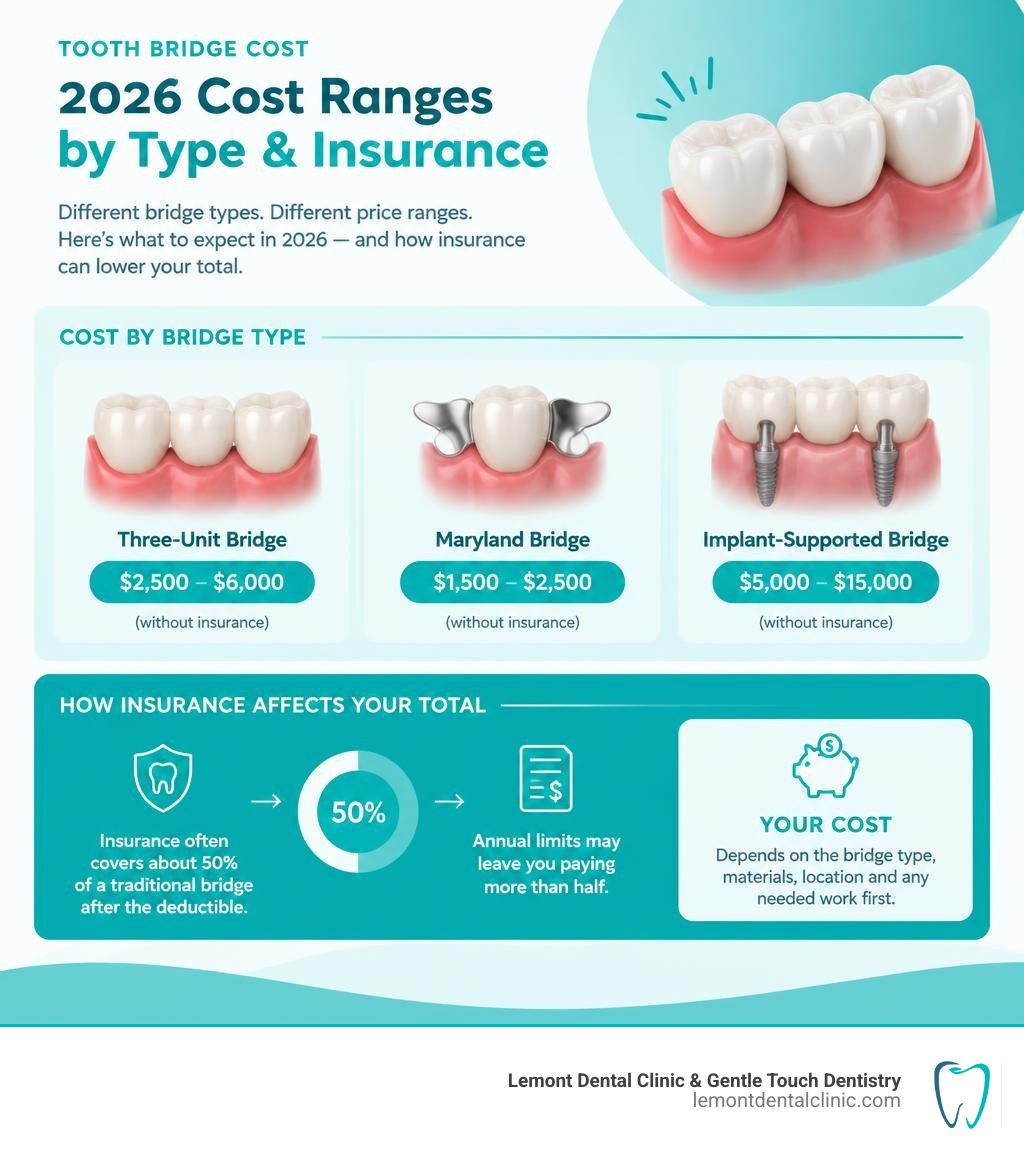
A three-unit tooth bridge typically costs $2,500 to $6,000 without insurance in 2026. That usually replaces one missing tooth with a false tooth held by crowns on the teeth beside it. A Maryland bridge may cost $1,500 to $2,500, while an implant-supported bridge can cost $5,000 to $15,000.
Your final bill depends on the bridge type, materials, your location, and any dental work needed first. Insurance often covers about 50% of a traditional bridge after the deductible, but annual limits may leave you paying more than half. This guide will help you compare options and know what to ask for in a written estimate.
Average Tooth Bridge Cost in 2026 by Bridge Type
When evaluating your tooth replacement options, understanding the national baseline helps you budget effectively. Across the United States, the overall national average cost for a dental bridge sits around $3,000 to $3,500, with typical cases ranging from $1,500 to $5,000 depending on the design and complexity. Over the last five years, restorative dental fees have increased by approximately 17.7% due to rising laboratory expenses, precision materials, and advanced clinical equipment.
The total price of any bridge depends heavily on the type of restoration recommended for your smile. To see how these figures align across different regions, you can consult a guide to nationwide dental bridge pricing.
Bridge Type
Average Cost (No Insurance)
Typical Lifespan
Ideal Clinical Use Case
Traditional Fixed Bridge
$2,500 – $6,000
10 – 15 years
Replaces 1–2 missing teeth with healthy adjacent anchor teeth.
Cantilever Bridge
$1,800 – $3,500
8 – 12 years
Replaces a tooth with only one adjacent anchor tooth available.
Maryland (Resin-Bonded)
$1,500 – $2,500
5 – 10 years
Replaces missing front teeth while preserving natural adjacent enamel.
Implant-Supported Bridge
$5,000 – $15,000
20+ years
Replaces 3+ missing teeth without modifying healthy natural teeth.
Average 3-Unit Tooth Bridge Cost Breakdown
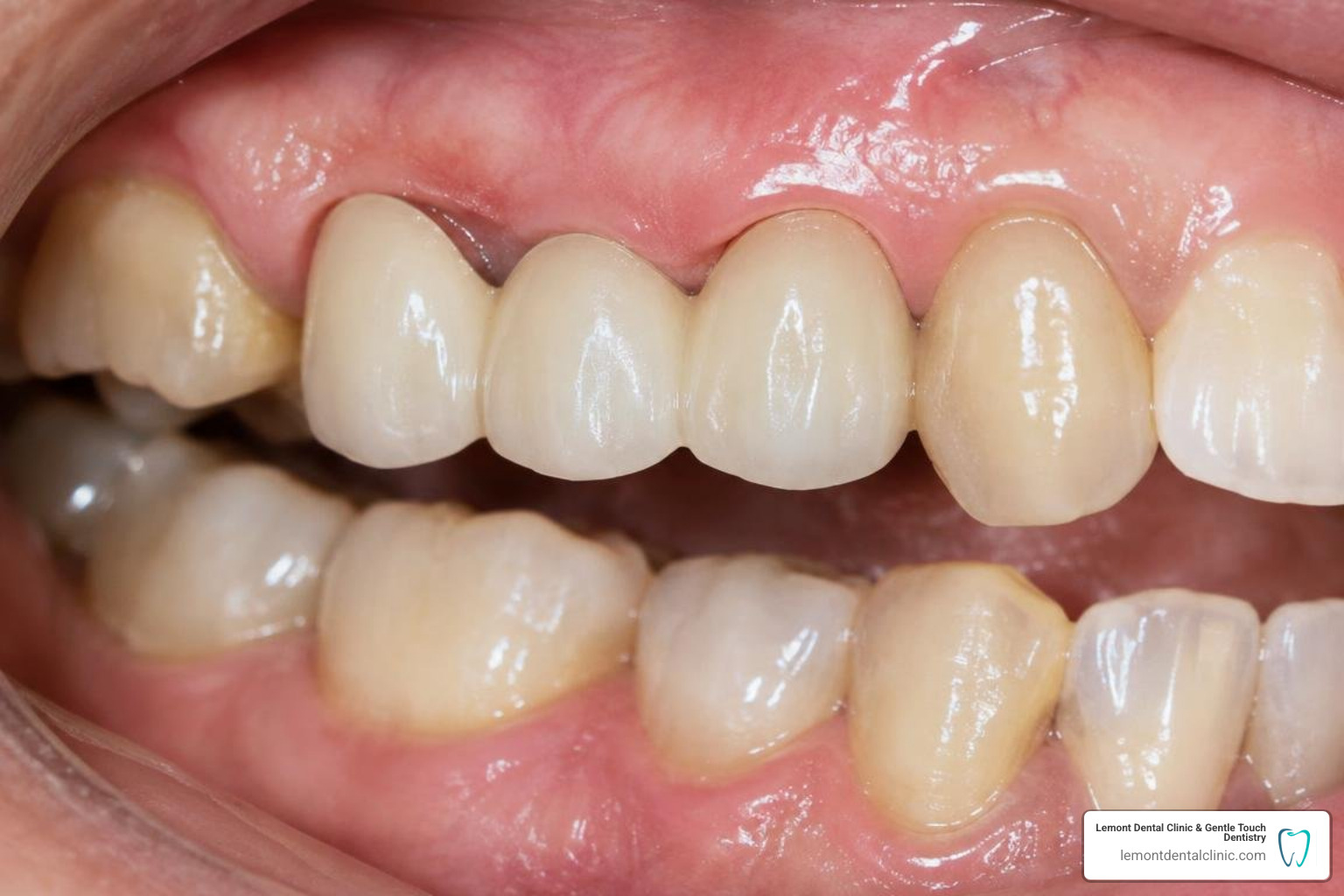
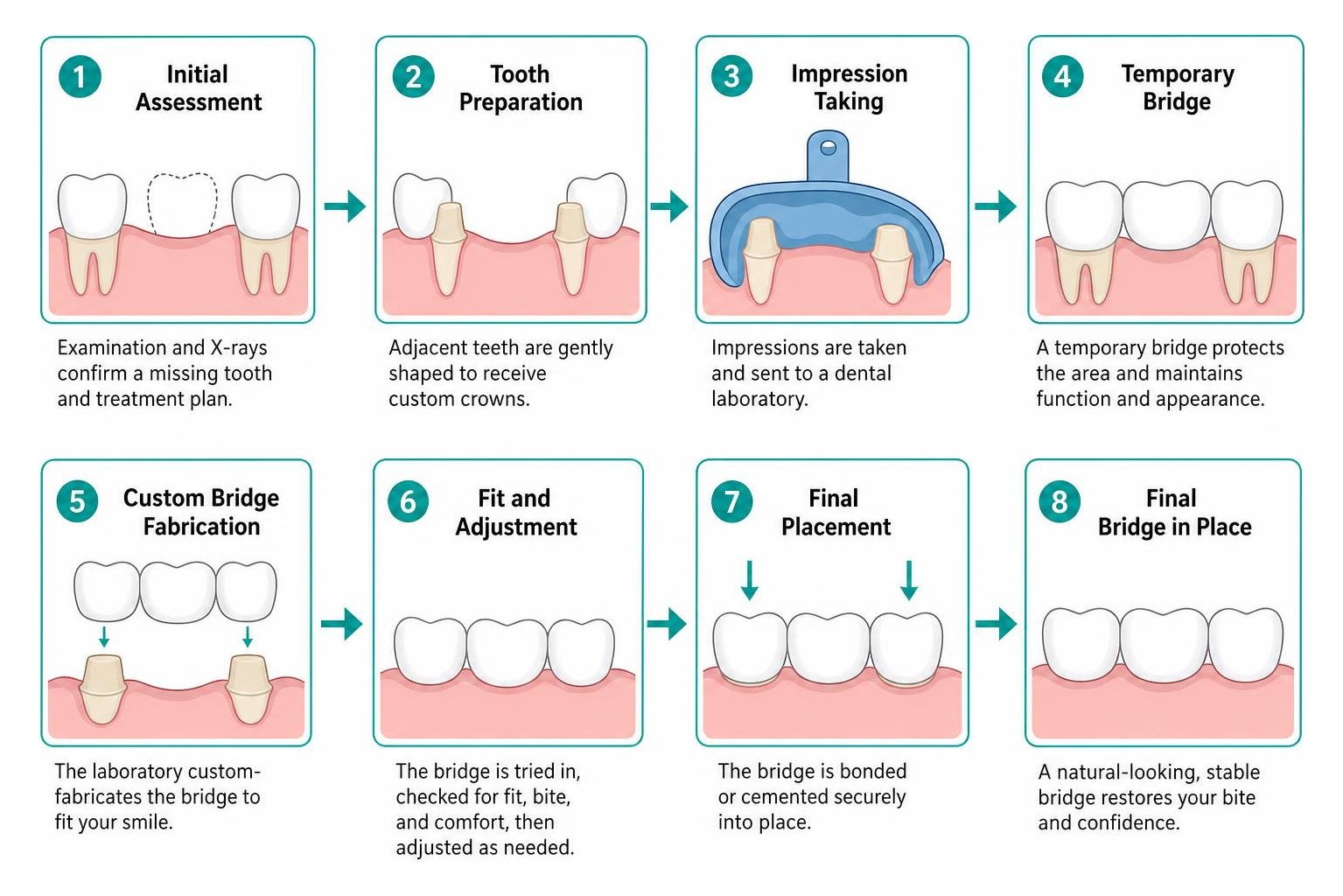
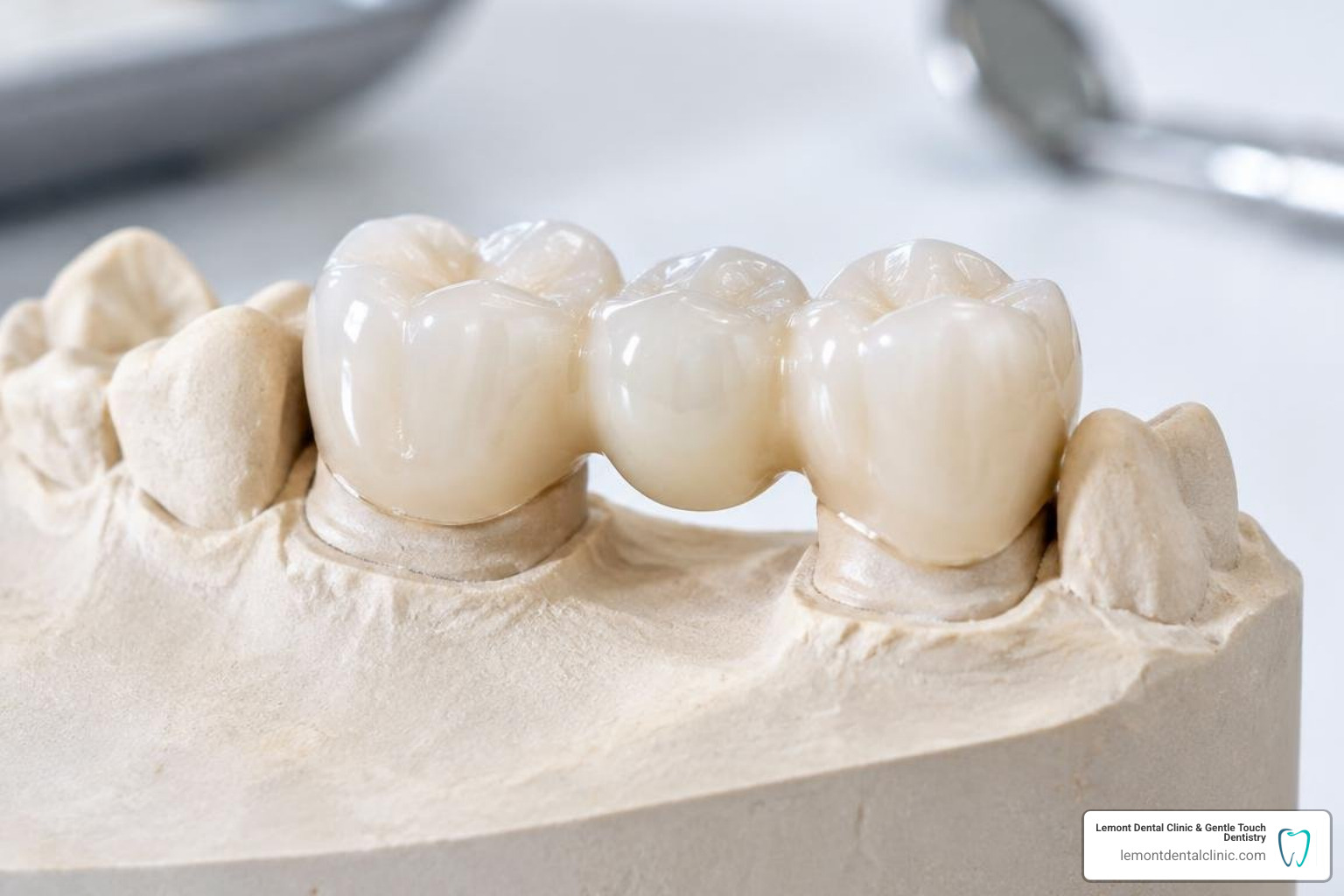
A traditional three-unit bridge remains the most common design. It replaces a single missing tooth by using two dental crowns anchored onto the neighboring natural teeth (called abutments), which suspend a realistic artificial tooth (called a pontic) across the gap.
Because each crown and pontic counts as a distinct unit, the overall fee is calculated per unit:
Porcelain-Fused-to-Metal (PFM): Ranging from $700 to $1,500 per unit, a complete 3-unit PFM bridge usually runs between $2,500 and $4,500. PFM provides excellent strength for back molars, though a slight dark metal line can sometimes show at the gumline over time.
All-Ceramic & Zirconia: Ranging from $1,000 to $2,000+ per unit, a complete 3-unit aesthetic bridge averages $3,000 to $6,000. Zirconia bridges offer exceptional fracture resistance and lifelike translucency, making them an ideal choice for both front and back teeth.
To explore specific unit pricing in detail, review our detailed guide on the cost of 3 tooth bridge restorations, or learn more about how long-lasting permanent bridge teeth can restore both your bite and your everyday confidence.
Maryland and Cantilever Bridge Alternatives
When grinding down healthy neighboring teeth is not ideal, conservative alternatives may offer effective solutions:
Maryland Resin-Bonded Bridges: Designed primarily for missing front teeth, a Maryland bridge uses metal or ceramic “wings” bonded to the back surfaces of neighboring teeth rather than full crowns. At an average self-pay cost of $1,500 to $2,500, they preserve natural tooth enamel while offering an aesthetic replacement for low-pressure bite areas.
Cantilever Bridges: A cantilever design is used when there is an anchor tooth on only one side of the gap. While slightly less common due to the rotational leverage placed on that single anchor, they range from $1,800 to $3,500 and provide a reliable option when paired with careful bite planning.
You can compare structural requirements across all design options in our fixed bridge cost guide.
Primary Factors That Influence Your Dental Bridge Quote
No two smiles share the exact same anatomy, which is why written estimates vary between patients. Several key variables shape the final fee:
Materials and Manufacturing: High-grade monolithic zirconia and hand-layered ceramics require sophisticated milling and master technician craftsmanship, costing more than basic metal alloys.
Laboratory Location: Premium domestic dental laboratories that use verified, biocompatible materials charge higher fabrication fees than overseas labs, but they deliver superior marginal fit and long-term durability.
Number of Spanning Units: Each added tooth replacement (pontic) or supporting crown adds roughly $800 to $1,800 to the total quote.
Technology Utilized: Practices equipped with modern digital intraoral scanners and advanced CAD/CAM imaging provide precise digital impressions, eliminating messy putty while ensuring exact margins.
When you review a comprehensive treatment estimate, the total fee is made up of several procedural components. A transparent quote breaks down each step:
Comprehensive Examination & Diagnostics: Digital periapical and panoramic X-rays to assess the internal root stability and bone support of your anchor teeth.
Tooth Preparation: Carefully shaping the abutment teeth so the supporting crowns slide seamlessly over them without feeling bulky.
Core Build-Ups: If an anchor tooth has an old, failing filling or deep decay, your dentist will place a composite core build-up ($150 to $450 per tooth) to rebuild structural foundation before shaping.
Custom Temporary Bridge: Fabricated and cemented during your first visit to protect your prepared teeth and maintain your smile while the dental lab crafts your permanent bridge.
Final Delivery and Occlusal Adjustment: Precision bonding of the custom restoration followed by bite adjustments to ensure comfortable chewing.
If an anchor tooth or the extraction site requires care before placing the bridge, your treatment plan may include:
Tooth Extractions: Removing a non-restorable tooth prior to bridge placement ($150 to $400+ per tooth).
Periodontal Therapy: Treating gum inflammation or uneven tissue levels around anchor teeth to establish a stable, healthy baseline.
Root Canal Therapy: Required if an anchor tooth has deep decay near the nerve or experiences severe trauma ($800 to $1,500 per tooth). Addressing internal tooth health early prevents having to cut through a brand-new bridge down the road.
Dental Insurance Coverage and Out-of-Pocket Bridge Expenses
Most dental PPO plans classify dental bridges as major restorative services, typically covering 50% of the negotiated fee once you have met your annual deductible (usually $50 to $100).
However, your annual maximum benefit (often between $1,000 and $2,000 per calendar year) caps how much your insurer pays annually. Because a multi-unit bridge frequently costs more than standard annual maximums, your true out-of-pocket share may exceed 50%.
Before beginning care, always request a pre-treatment estimate from your provider. Review our practical guide to comparing bridge costs and use a verified resource for calculating out-of-pocket dental bridge costs to understand your policy’s waiting periods, missing-tooth clauses, and replacement time limits (typically once every 5 to 7 years).
Strategies to Maximize Benefits and Financing
Restoring your smile represents an important personal investment. Practical ways to manage your out-of-pocket expenses include:
Benefit Year Timing: If your treatment begins in late autumn, you can complete diagnostic preparation and temporary placement in November or December using your current year’s maximum, then seat the permanent restoration in January to apply the next year’s fresh benefit allowance.
Structured Payment Plans: Third-party healthcare financing options like CareCredit provide structured monthly payment arrangements to help distribute out-of-pocket costs over time.
In-House Membership Plans: For patients without traditional insurance, many modern practices offer dental membership plans that provide direct savings on restorative procedures without claim denials or waiting periods.
Frequently Asked Questions About Tooth Bridge Costs
How long does a dental bridge typically last before replacement?
A well-crafted dental bridge typically lasts between 10 and 15 years, and many last even longer with dedicated oral care. The longevity of your bridge depends primarily on keeping the underlying anchor teeth free from decay.
Because the pontic is connected to adjacent crowns, you cannot clean between the teeth using traditional top-down flossing. Using bridge floss threaders, interdental brushes, or a water flosser daily—combined with routine professional dental hygiene checkups every six months—will protect your investment and maintain gum health.
What questions should patients ask during a bridge consultation?
To ensure total clarity before your procedure begins, bring this quick checklist to your consultation:
Is this estimate fully itemized, including exams, core build-ups, temporaries, lab fees, and follow-up bite adjustments?
What specific material do you recommend for my bridge (e.g., layered zirconia, all-ceramic, or porcelain-fused-to-metal), and why?
Are the supporting abutment teeth healthy, or will they need root canal therapy or periodontal care first?
Does your office use a certified domestic dental laboratory for custom fabrication?
What warranty or follow-up policy do you provide if a crown chips or needs re-cementing?
Can bridge treatment be split across calendar years to maximize insurance?
Yes. If you have significant restorative needs planned near the end of the year, ask your dental team whether two-stage scheduling is clinically appropriate. By completing preliminary steps before December 31st and seating the final bridge in early January, you can utilize two separate annual insurance maximums toward your overall restorative care.
Conclusion
Missing teeth can affect your everyday comfort, chewing function, and long-term oral alignment. Choosing a high-quality dental bridge restores your smile’s strength and natural appearance for years to come.
At Lemont Dental Clinic & Gentle Touch Dentistry, our team provides comprehensive restorative treatments using modern digital diagnostics, premium materials, and clear, transparent pricing. Serving patients throughout Lemont, Palos Hills, and surrounding communities including Palos Park, Orland Park, Oak Lawn, and Bolingbrook, we are dedicated to helping you achieve a healthy, complete smile.
Ready to explore your tooth replacement options? Schedule a consultation for 3 tooth bridge costs with our experienced team today to receive a personalized, itemized treatment plan tailored to your needs.