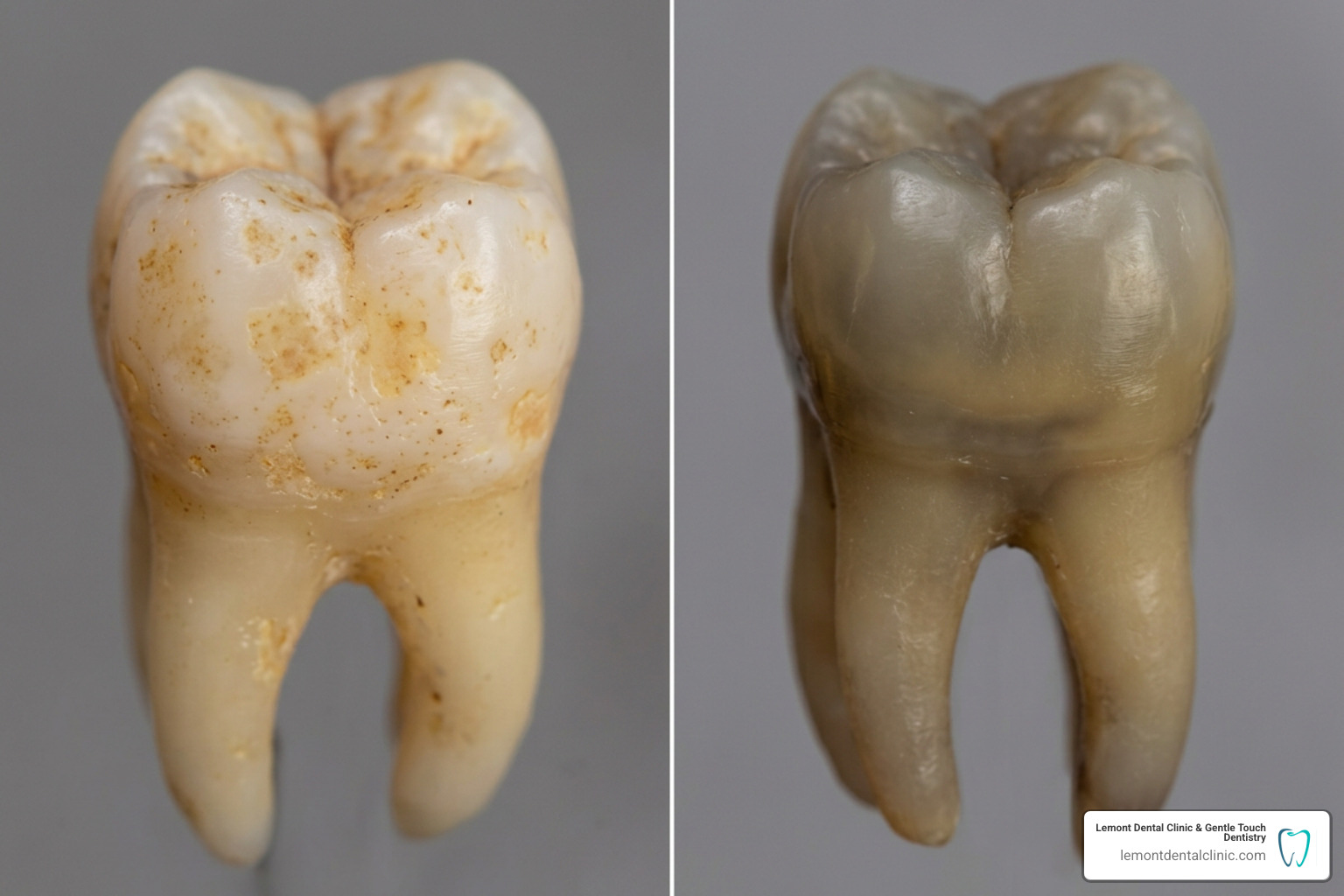
To effectively remove yellow stains on teeth, the most reliable methods combine professional dental cleanings to remove surface tartar, peroxide-based whitening treatments to lift deeper discoloration, and consistent daily brushing paired with dietary adjustments. While treating stains requires targeted care, understanding what causes tooth discoloration helps you choose the right approach. In general, your enamel comes into contact with chromogens (pigmented chemical compounds found in foods and beverages) every day. Over time, these chromogens bond with the microscopic pores in your dental enamel.
The primary culprits behind tooth discoloration include:
- Dietary Chromogens and Tannins: Dark beverages like coffee, black tea, red wine, cola, and deeply pigmented foods like soy sauce, berries, and turmeric easily attach to tooth enamel. Tannins found in tea and wine make it even easier for these staining compounds to latch on.
- Tobacco Use: Both smoking and chewing tobacco introduce tar and nicotine to your oral cavity. While nicotine is naturally colorless, it turns yellow when mixed with oxygen. Studies show that 28% of smokers experience moderate to severe tooth discoloration, compared to only 15% of non-smokers.
- Natural Enamel Aging: Your outer enamel layer naturally wears down over decades of chewing, brushing, and exposure to acids. As enamel thins, the underlying dentin—which is naturally yellowish or light brown—becomes far more visible.
- Genetic Factors: Some people are genetically blessed with thicker, naturally whiter enamel, while others inherit thinner, more translucent enamel or darker underlying dentin from birth.
- Excess Fluoride Exposure (Dental Fluorosis): Ingesting high levels of fluoride during early childhood while teeth are forming under the gums can cause fluorosis, which manifests as subtle white streaks or yellowish-brown patches on permanent teeth.
- Medical Conditions and Treatments: Certain systemic conditions, pediatric illnesses, or medical interventions like chemotherapy and radiation to the head and neck can alter enamel structure and cause discoloration.
To explore more clinical details regarding the biological mechanisms of staining, take a look at this comprehensive research on tooth discoloration causes.
Extrinsic vs. Intrinsic Staining Differences
Understanding where discoloration originates is essential before attempting any whitening regimen. Tooth stains fall into two primary categories: extrinsic and intrinsic.
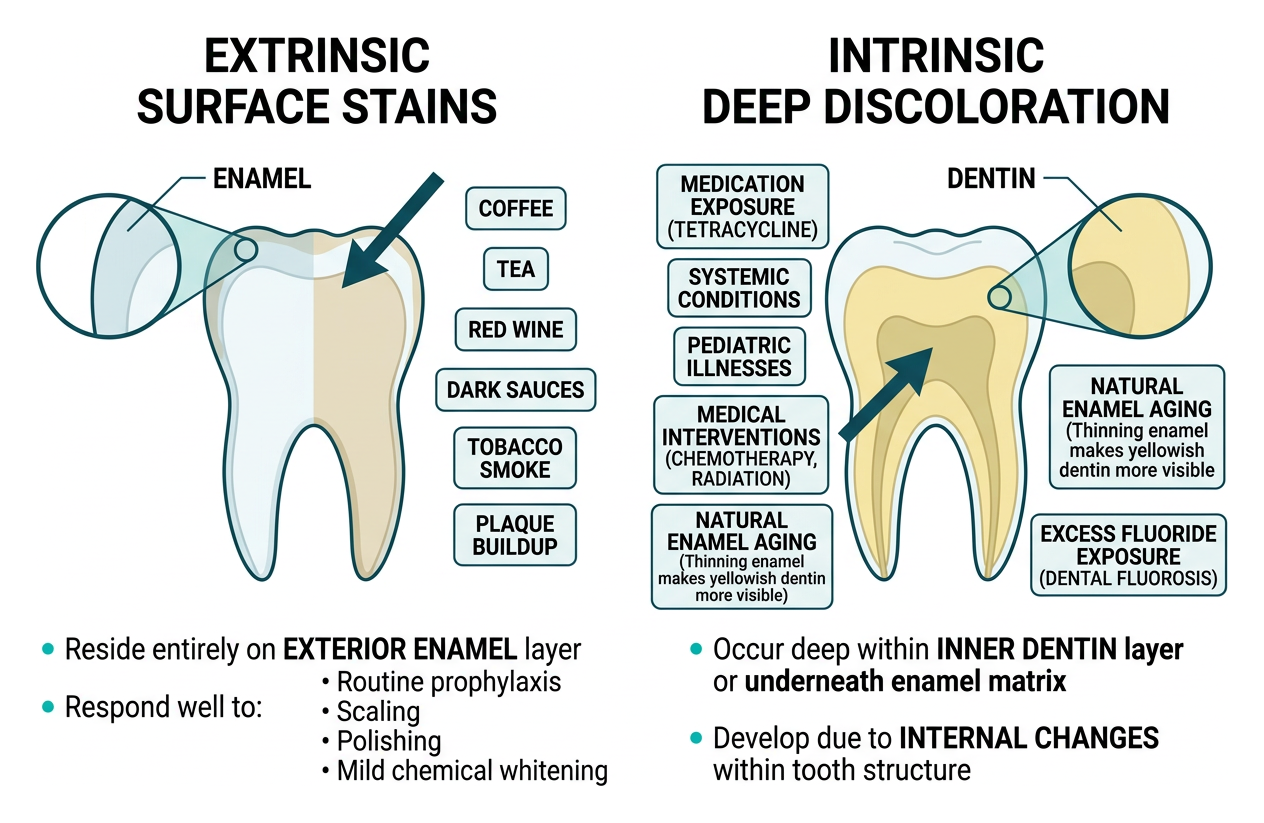
Extrinsic stains are surface-level discolorations that reside entirely on the exterior enamel layer. They are typically caused by external factors such as coffee, tea, red wine, dark sauces, tobacco smoke, or plaque buildup. Because extrinsic stains sit on the outside of the tooth, they respond exceptionally well to routine prophylaxis, scaling, polishing, and mild chemical whitening treatments.
Intrinsic stains, by contrast, occur deep within the inner dentin layer or underneath the enamel matrix. These stains develop due to internal changes within the tooth structure, such as:
- Medication Exposure: Early childhood use of tetracycline or adult use of certain systemic antibiotics.
- Oral Rinse Reactions: Prolonged use of mouth rinses containing cetylpyridinium chloride (CPC) or chlorhexidine can bind with dietary tannins to create stubborn yellow-brown surface and subsurface staining (Jackson & Taylor, 2019).
- Dental Trauma: Physical impact or injury to a tooth can cause internal nerve death or bleeding inside the pulp chamber, resulting in a single tooth turning gray, yellow, or dark brown.
- Pulp Calcification: As teeth age or recover from low-grade trauma, the pulp chamber may deposit excessive reparative dentin, giving the tooth a dense, opaque yellow appearance from the inside out.
Why Brushing Daily Might Not Stop Yellow Stains on Teeth
It is common to feel frustrated when teeth appear yellow despite brushing twice every single day. A frequent misconception is that daily brushing guarantees snow-white enamel. In fact, a 2018 survey noted that 44% of adults under 34 assume discolored teeth indicate poor personal hygiene, but that is often far from true.
If you brush regularly and still notice yellowing, one of these factors may be at play:
- Enamel Thinning from Over-Brushing: Brushing too aggressively or using hard-bristled toothbrushes can wear away protective enamel. When enamel thins, the deeper yellow dentin shines through more prominently.
- Acidic Erosion: Frequent consumption of citrus fruits, carbonated sodas, sports drinks, and kombucha softens enamel minerals. Brushing immediately after consuming acidic items scrubs away softened enamel before it can remineralize.
- Nocturnal Teeth Grinding (Bruxism): Clenching or grinding your teeth wears down the biting edges and surface enamel, exposing the yellow dentin core.
- Improper Brushing Technique: Rushing through your routine in less than two minutes leaves behind sticky plaque along the gumline and between teeth, which hardens into yellowish tartar (calculus). Learning how to brush your teeth properly with gentle circular strokes and a soft-bristled brush protects both enamel and gums.
Professional Treatments to Remove Tooth Discoloration
While over-the-counter products help with mild maintenance, in-office dental procedures provide the safest, fastest, and most predictable results for yellowing. In fact, global interest in brightening smiles has surged, with teeth whitening treatments expanding steadily over the past decade.
Professional treatments utilize medical-grade active ingredients—such as high-concentration hydrogen peroxide or carbamide peroxide—under controlled clinical conditions. This safeguards your sensitive gums while penetrating deep through the enamel matrix into the dentin to lift years of embedded stains.
In-Office Whitening and Advanced Dental Cleaning
For extrinsic yellowing caused by food, drinks, or hardened tartar, a two-step clinical approach is most effective:
- Professional Dental Prophylaxis (Scaling & Polishing): Before any whitening procedure, your dental hygienist uses ultrasonic scalers and fine polishing pastes to lift stubborn plaque, calcified tartar, and superficial stains. Booking a routine professional teeth cleaning creates a clean slate and is often enough to brighten your smile by one or two shades naturally.
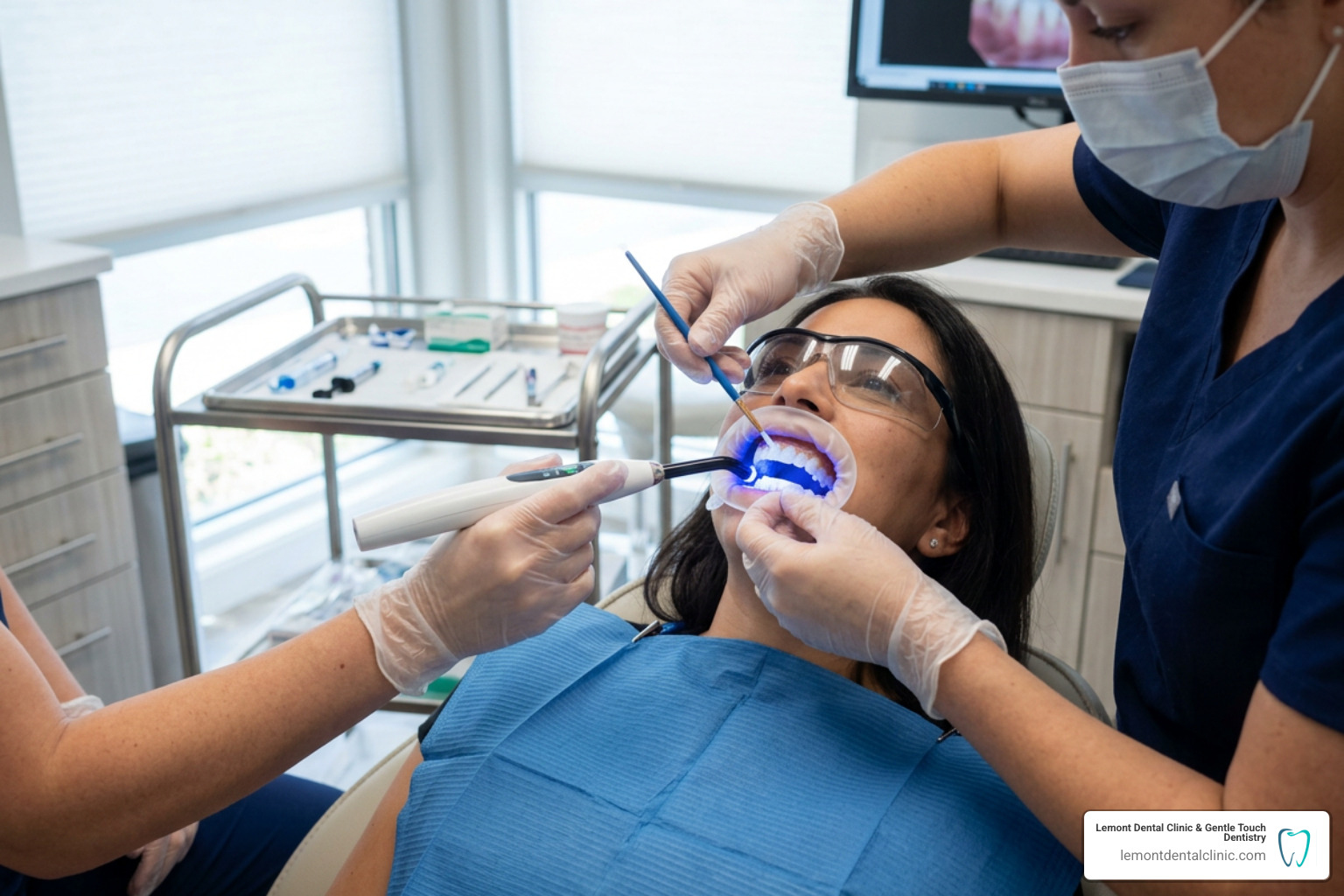
- In-Office Professional Bleaching: During an in-office session, a high-strength whitening gel (typically 25% to 40% hydrogen peroxide) is carefully applied to the teeth while the gums and lips are shielded with a protective barrier. Special LED or laser lights may be used to accelerate the oxidation process. The procedure delivers dramatic shade improvements in about 60 to 90 minutes. Explore our full range of advanced teeth whitening options to see what fits your lifestyle.
Restorative Dental Solutions for Deep Stains
When discoloration is intrinsic—such as deep tetracycline banding, trauma-related nerve changes, or extensive enamel loss—traditional bleaching gels may not provide full coverage. In these scenarios, restorative and cosmetic dentistry solutions offer permanent, natural-looking aesthetic corrections:
- Composite Dental Bonding: A tooth-colored composite resin is applied directly over the discolored tooth, sculpted to a natural contour, and cured with a high-intensity light. Bonding is an affordable, conservative option that lasts 5 to 7 years.
- Porcelain Veneers: Custom-crafted, ultra-thin ceramic shells are bonded to the front surface of the teeth. Porcelain resists future stains much better than natural enamel and provides a uniform, lifelike smile for 10 to 15 years or longer.
- All-Ceramic Crowns: If a single tooth is discolored due to previous root canal therapy, severe trauma, or structural decay, an all-ceramic crown covers the entire visible portion, restoring both natural color and structural strength.
Safe At-Home Methods and Prevention Strategies
Maintaining a bright smile between dental visits involves a mix of smart dietary habits, safe at-home whitening methods, and consistent hygiene.
| Whitening Method |
Best For |
Typical Timeframe |
Enamel Safety |
| In-Office Dental Whitening |
Deep intrinsic & stubborn extrinsic stains |
60–90 minutes |
Very High (Clinically Supervised) |
| Custom Dentist Take-Home Trays |
Moderate discoloration & regular touch-ups |
10–14 days (daily use) |
Very High (Custom Fitted) |
| ADA-Approved Whitening Strips |
Mild to moderate surface stains |
1–2 weeks |
High (Follow Label Directions) |
| Whitening Toothpastes |
Daily removal of fresh surface chromogens |
2–6 weeks |
High (Choose Low RDA Value) |
| Baking Soda Paste (DIY) |
Occasional surface polishing |
2–4 weeks (use weekly) |
Moderate (Abrasive if Overused) |
| Activated Charcoal Powder |
Superficial stain absorption |
Variable / Inconsistent |
Low to Moderate (Can Abrade Enamel) |
For further reading on what works, check out this evidence-based guide to home remedies for yellow teeth.
At-Home Methods to Safely Reduce Yellow Stains on Teeth
If you want to lighten minor surface stains at home, safety should be your top priority. Enamel does not grow back once eroded, so avoid harsh abrasive scrubs or unbuffered acidic mixtures.
- ADA-Accepted Whitening Strips and Gels: Look for products carrying the American Dental Association (ADA) Seal of Acceptance. These typically use safe, low-dose hydrogen peroxide (3% to 10%) or carbamide peroxide that lightens stains without stripping minerals.
- Baking Soda (Sodium Bicarbonate): Brushing gently with a mixture of baking soda and water once a week can help lift superficial stains. Baking soda has a low relative dentin abrasivity (RDA) and creates an alkaline oral environment that hinders stain-causing bacteria.
- Dilute Hydrogen Peroxide Rinses: A mild 1.5% to 3% hydrogen peroxide rinse swished for 60 seconds before spitting can assist in stain control. Never swallow peroxide solutions.
- Cautions Regarding Activated Charcoal and Fruit Acids: Charcoal powders and acidic DIY pastes (like lemon juice or crushed strawberries) are heavily promoted online. However, dental organizations caution that charcoal is often too abrasive, creating microscopic scratches that trap future stains faster, while fruit acids dissolve the protective calcium in your enamel.
Keeping up with daily plaque control is the single best way of preventing plaque buildup before it hardens into dark yellow calculus.
Daily Habits to Prevent Future Stains
Simple daily adjustments go a long way in preserving a clean, bright smile:
- Rinse with Water After Eating: Swish plain water vigorously around your mouth immediately after finishing coffee, dark tea, wine, or tomato-based pasta dishes to wash away lingering pigments.
- Use a Reusable Straw: Drinking iced coffee, tea, and dark sodas through a straw directs liquids past your front teeth, minimizing direct enamel contact.
- Wait 30 to 60 Minutes Before Brushing After Acids: If you enjoy wine, citrus, or soda, wait at least half an hour before brushing. This gives your saliva time to neutralize acids and remineralize your enamel.
- Quit Smoking and Vaping: Eliminating tobacco stops the ongoing accumulation of yellow nicotine and dark tar on your dental surfaces.
- Stay Up to Date on Preventive Cleanings: Regular checkups and preventative dental care routines ensure that any newly formed tartar is removed before it permanently discolors the teeth.
Frequently Asked Questions About Yellow Teeth
Are yellow teeth always unhealthy or a sign of poor hygiene?
No, yellow teeth are not automatically a sign of disease or poor hygiene. Natural enamel ranges in shade from light gray to warm off-white and pale yellow. Because healthy enamel is translucent, the yellowish color of the underlying dentin naturally shows through. People with naturally thinner enamel will have a warmer, more yellow smile even if their teeth and gums are in peak physical health.
Can yellow teeth become completely white again?
In most cases, yes! Extrinsic stains caused by dietary pigments, smoking, and plaque deposits can be removed through professional cleanings and bleaching. Intrinsic yellowing can also be lightened significantly with peroxide-based bleaching systems, or masked completely using composite bonding or porcelain veneers. However, unrealistic “paper-white” shades are rarely natural; the goal of professional cosmetic dentistry is to restore a bright, radiant, and authentic smile.
When should I see a dentist for tooth discoloration?
You should schedule a clinical evaluation if you notice:
- A single tooth that turns dark yellow, gray, or brown following an injury or sports trauma.
- Discoloration accompanied by tooth pain, lingering temperature sensitivity, or bad breath.
- Localized dark spots near the gumline or chewing surfaces, which may indicate active decay.
- Bleeding, swollen, or tender gums alongside stain accumulation.
Conclusion
Yellow tooth discoloration is an incredibly common concern influenced by diet, aging, natural genetics, and lifestyle habits. While surface stains respond well to gentle at-home care, proper brushing techniques, and ADA-approved products, stubborn or deep-set discoloration requires the precise touch of a dental professional.
At Lemont Dental Clinic & Gentle Touch Dentistry, our team provides comprehensive general and restorative care across Lemont and Palos Hills, IL, as well as our neighboring communities in Bolingbrook, Orland Park, and Romeoville. We utilize advanced dental technology and personalized treatment plans to help you achieve a healthy, confident smile at every stage of life.
Ready to restore the natural radiance of your teeth? Contact our friendly team today to schedule regular professional cleanings and explore customized whitening solutions that work best for you!
References
Jackson BA, Taylor CD. “Sudden Onset of Tooth Discoloration..” The Journal of clinical and aesthetic dermatology, 2019. PMCID PMC6937148.