Missing Teeth? Here’s What You Need to Know About Denture vs implants
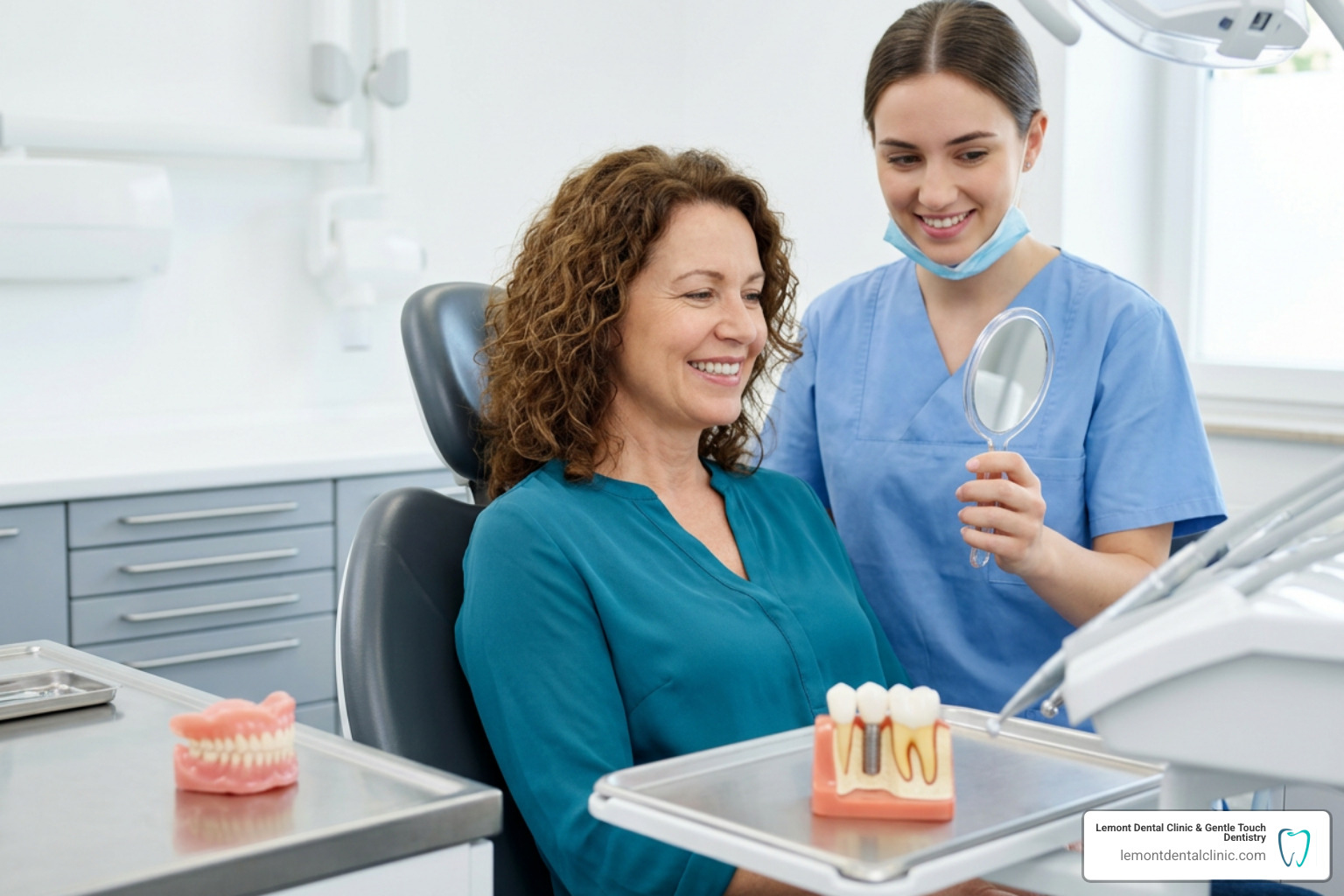
When weighing denture vs implants, the core difference comes down to this: dentures are removable appliances that rest on your gums, while implants are permanent titanium posts surgically anchored into your jawbone. Both replace missing teeth — but they do it in very different ways, at very different price points, with very different long-term outcomes.
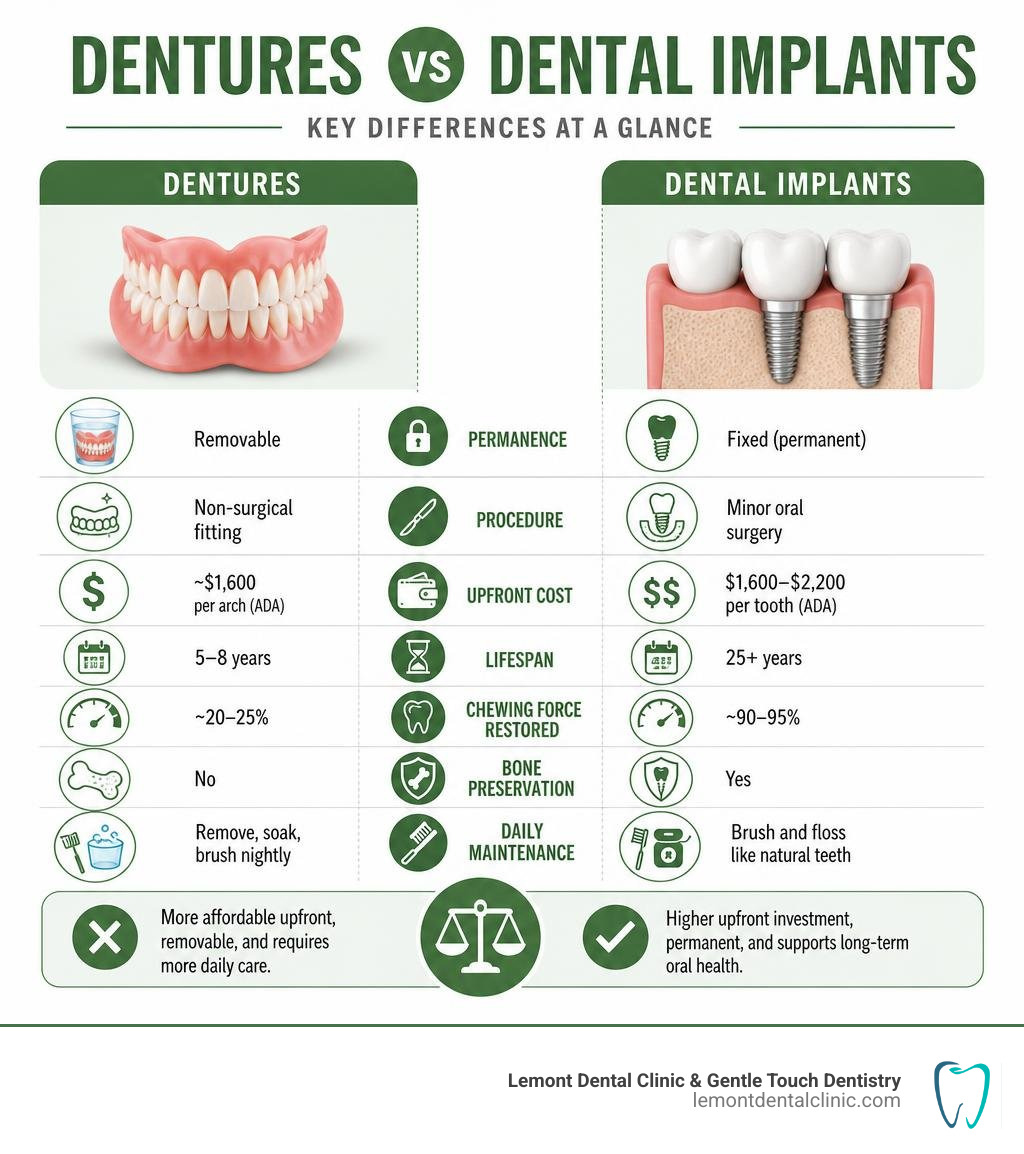
Here’s a quick side-by-side to help you orient fast:
Factor
Dentures
Dental Implants
Permanence
Removable
Fixed (permanent)
Procedure
Non-surgical fitting
Minor oral surgery
Upfront cost
~$1,600 per arch (ADA)
$1,600–$2,200 per tooth (ADA)
Lifespan
5–8 years
25+ years
Chewing force restored
~20–25%
~90–95%
Bone preservation
No
Yes
Daily maintenance
Remove, soak, brush nightly
Brush and floss like natural teeth
The right choice depends on your health, your budget, and what you want your life to look like after treatment. There is no single answer that fits everyone.
Tooth loss affects far more than your smile. It changes how you eat, how you speak, and — over time — the actual shape of your face. Acting on it with the right solution matters more than most people realize.
This guide walks you through everything: procedure differences, real costs, bone health impacts, candidacy factors, and hybrid options like snap-in overdentures — so you can make a confident, informed decision.
Denture vs implants: Key Differences in Procedure, Permanence, and Function
To truly understand how each option will impact your daily life, we have to look beneath the surface. Traditional dentures and modern dental implants are built differently, function differently, and require entirely different approaches to install.
Understanding Traditional Dentures
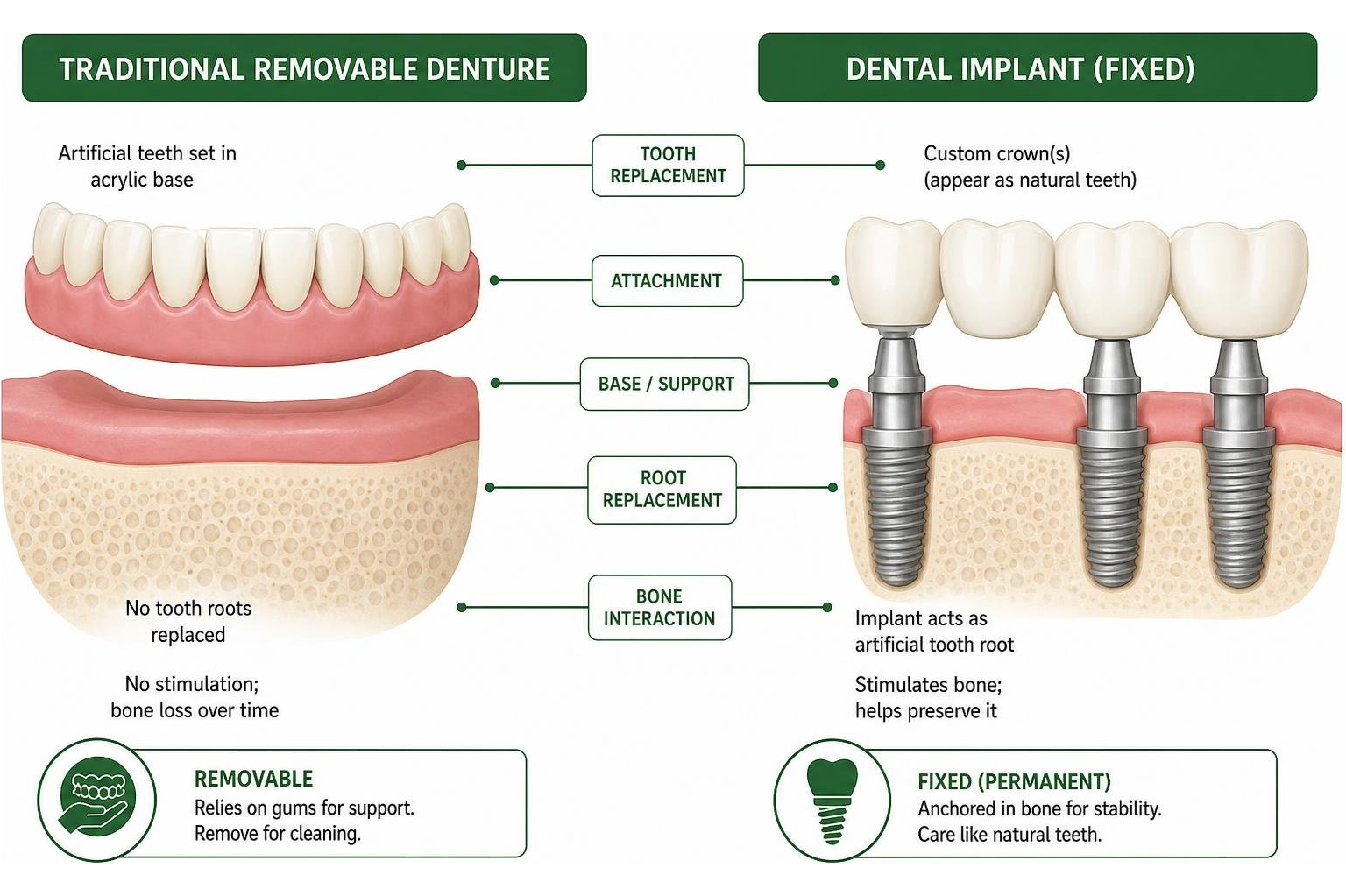
Traditional dentures are removable dental appliances designed to replace missing teeth. They consist of artificial teeth (typically made of acrylic or porcelain) set into a flesh-colored acrylic base that fits over your gums.
A complete denture replaces all the teeth on your upper or lower jaw. Because they rest directly on top of your gum tissue, they rely on natural suction, muscle control, and often dental adhesives to stay in place. While modern materials make them look highly realistic, they do not replace the roots of your teeth.
This lack of root support means traditional dentures sit on the gums, compressing the tissue. Over time, this constant pressure, combined with the lack of stimulation to the underlying bone, causes the jawbone to shrink. As the bone structure shifts, the fit of the denture changes, requiring regular adjustments and eventual replacement. If you are exploring this route, our Types of Dentures Complete Guide covers the differences between partial, complete, and immediate options.
For patients in Oak Lawn, IL, having a well-crafted prosthetic is essential for minimizing discomfort. Our team provides custom-crafted dentures designed to fit comfortably, restore function, and look completely natural.
Understanding Dental Implants
A dental implant is a permanent, surgical solution that replaces both the visible tooth and its invisible root. The process relies on a biological phenomenon known as osseointegration, where a biocompatible titanium post is surgically placed into the jawbone. Over the course of three to six months, your natural bone actually fuses with this titanium fixture, creating an incredibly strong, stable anchor.
Once the implant post is fully integrated, an abutment (connector) is attached, which holds a custom-made porcelain or zirconia crown. Because they are anchored directly into the bone, implants function exactly like natural teeth. They do not slip, click, or shift, and they prevent the jawbone from deteriorating.
If you are considering this permanent route, we offer comprehensive options for Dental Implants at our offices to restore both function and aesthetics. For residents in nearby communities, including Palos Park, IL, we provide specialized implant consultations to help you find the right missing tooth replacement solution.
The Financial Reality: Upfront Costs vs. Long-Term Value
Sticker shock is the most common hurdle patients face when comparing denture vs implants. At first glance, dentures look like the obvious budget-friendly winner. However, looking only at the initial price tag can lead to poor financial planning. We always encourage our patients to look at the “total cost of ownership” over a 20-to-30-year period.
Upfront Costs of Denture vs implants
According to the American Dental Association (ADA), the average cost of a complete set of upper dentures is slightly more than $1,600, and lower dentures cost about the same. This means you can replace an entire arch of teeth for under $2,000 upfront.
On the other hand, the ADA reports that a single dental implant typically costs between $1,600 and $2,200 per tooth. When you factor in the abutment, the custom crown, and any necessary imaging or extractions, the national average cost for a fully restored single implant can range from $3,000 to $6,500. If you require a full-arch restoration using implants (such as All-on-4), the upfront cost can range from $20,000 to $30,000 per arch.
While traditional dentures are much cheaper upfront, they come with hidden, recurring costs that pile up over the years. Because the jawbone continuously shrinks when teeth are missing, traditional dentures must be professionally relined every 2 to 3 years to maintain their fit.
Furthermore, the ADA recommends replacing traditional dentures every 5 to 7 years. Over a 20-year period, a patient will likely need to purchase three to four sets of dentures, pay for up to ten professional relines, and buy hundreds of dollars worth of dental adhesives and specialized cleaning solutions.
In contrast, a well-placed dental implant can last 25 years or even a lifetime with proper oral hygiene and regular checkups. While the crown on top may experience wear and tear and need replacement after 10 to 15 years, the underlying titanium post remains intact. Over a 20-year horizon, the cumulative cost of maintaining and replacing dentures often narrows the price gap with dental implants significantly, making implants a highly cost-effective long-term investment.
For a deeper look at this financial comparison, you can read Dentures vs. Implants: How to Choose, which outlines how lifestyle and long-term value intersect.
Biological Impact: Jawbone Health and Facial Structure Over Time
The biological differences between these two treatments are where the comparison becomes truly stark. Your jawbone requires constant stimulation to maintain its density and volume. In a healthy mouth, this stimulation comes from the physical pressure of chewing, which travels down the tooth roots into the bone.
Bone Resorption and “Denture Face”
When you lose a tooth, that local stimulation stops. Studies show that patients lose an average of 25% of their jawbone’s ridge width within the very first year after tooth extraction. If multiple teeth are missing, this bone loss (known as resorption) continues indefinitely.
Because traditional dentures sit on top of the gums rather than replacing the tooth roots, they do not stimulate the bone. In fact, the constant rubbing and compression of a moving denture can actually accelerate bone loss.
As the jawbone shrinks over a decade or two, the distance between the nose and the chin collapses. This leads to a sunken, prematurely aged facial structure often referred to as “denture face,” characterized by deep wrinkles around the mouth, thinning lips, and sagging jowls. For patients living in the southwest suburbs, understanding these biological changes is key. We detail these shifts in our Dentures Lemont IL Complete Guide.
How Implants Preserve Bone Density
Dental implants are the only tooth replacement option that actively stops bone resorption. Because the titanium post fuses directly with your jawbone, it mimics the function of a natural tooth root.
Every time you bite or chew, the implant transfers that mechanical force deep into the jawbone. This signals your body to continue sending essential nutrients and minerals to the bone tissue, preserving your natural facial structure, preventing jaw shrinkage, and protecting adjacent teeth from shifting.
Lifestyle and Daily Experience: Comfort, Stability, and Diet
A smile is about more than just aesthetics; it is about how comfortably you live your life. The choice of denture vs implants directly dictates what you can eat, how clearly you speak, and how confident you feel in social situations.
Chewing Efficiency and Dietary Restrictions
The functional difference between a removable prosthetic and a bone-anchored implant is massive:
Traditional Dentures: Restore only about 20% to 25% of your natural bite force. Because they can easily dislodge under pressure, denture wearers must navigate significant dietary restrictions. Hard, crunchy, or sticky foods — like apples, raw carrots, steak, and nuts — are often entirely off the menu.
Dental Implants: Restore approximately 90% to 95% of your natural bite force. Because they are anchored directly into the jawbone, they allow you to eat a completely unrestricted, healthy diet. You can bite into an apple or chew a steak without ever worrying about your teeth moving.
Additionally, upper dentures require an acrylic plate that covers the roof of your mouth. This plate insulates your palate, which can significantly dull your sense of taste and make it harder to enjoy hot beverages. Implants do not cover the roof of your mouth, keeping your sensory experience completely natural.
Daily Maintenance and Upkeep of Denture vs implants
The daily care routines for these two options represent two entirely different lifestyles:
Denture Maintenance:
Must be removed every single night to give your gum tissues a chance to rest and recover from compression.
Must be brushed daily with a soft-bristled brush and a non-abrasive denture cleaner (standard toothpaste is too abrasive and creates microscopic scratches where bacteria can breed).
Must be soaked overnight in water or a specialized cleaning solution to prevent them from drying out and losing their shape.
Gums and tongue must be brushed daily to remove residual denture adhesive.
Implant Maintenance:
Brushed at least twice a day with a soft-bristled toothbrush and standard toothpaste.
Flossed daily, using specialized implant floss or a water flosser around the implant crowns.
Cleaned just like natural teeth during your routine professional dental cleanings twice a year.
Candidacy and Alternative Solutions: Finding Your Perfect Fit
Not everyone is an immediate candidate for dental implants, and traditional dentures are not always the only alternative. Finding the right fit requires a thorough clinical evaluation of your bone structure, overall health, and personal goals.
Who is a Good Candidate for Each Option?
To be a strong candidate for dental implants, you must meet several key criteria:
Adequate Bone Density: Because implants rely on osseointegration, there must be enough healthy bone volume to support the post. If you have been missing teeth for years, you may require a bone graft or sinus lift first to rebuild the bone structure.
Good Systemic Health: Chronic conditions like uncontrolled diabetes can slow down the healing process and increase the risk of implant failure.
Non-Smoking Status: Smoking impairs blood flow to the gums and bone, significantly increasing the risk of implant failure. Peer-reviewed studies show that implant failure rates range from 6.5% to 20% in smokers, compared to just 2% to 5% in non-smokers.
If you have severe bone loss and prefer to avoid invasive bone grafting surgeries, or if you have medical conditions that make minor surgery risky, traditional dentures may be the safer, more practical choice.
For residents in nearby areas like Hickory Hills, consulting an experienced dentist at our clinic is the best way to determine your eligibility and explore your options.
Exploring Hybrid and Alternative Solutions
If you want the stability of implants but are working within a tighter budget, or if you lack the bone density for a full set of individual implants, hybrid options provide an excellent middle ground:
Snap-In Overdentures: Also known as Snap-On Dentures, this solution uses two to four strategically placed implants to secure a removable denture. The denture “snaps” onto the implants, restoring about 50% to 60% of your chewing force and eliminating the need for messy adhesives, while still being removable for easy cleaning. You can learn more about how these work by reading our Snap-On Dental Implants Complete Guide.
Implant-Supported Fixed Bridges: For patients missing a short row of teeth, a bridge can be anchored to implants on either side, avoiding the need to grind down healthy adjacent teeth. We break down these trade-offs in our Dental Implants vs Bridge guide and our Dental Bridge vs Implant comparison.
Temporary Partial Dentures (Flippers): These are lightweight, inexpensive removable acrylic plates used as a temporary aesthetic solution while waiting for an implant to heal.
Frequently Asked Questions about Dentures and Implants
Can I transition from traditional dentures to dental implants?
Yes, absolutely! Many of our patients in Lemont and Palos Hills start with traditional dentures and transition to implants later. However, because wearing dentures leads to progressive bone loss, we will need to capture a 3D CBCT scan to evaluate your remaining bone volume.
If significant bone loss has occurred, you may need a bone graft before we can place the implants, or we can look into strategic implant systems that bypass the need for grafting. Transitioning to Implant Dentures is a life-changing upgrade that completely eliminates denture slippage and restores your natural chewing ability.
What are the common risks or complications associated with each?
Like any dental treatment, both options carry specific risks:
Traditional Dentures: The most common issues are chronic gum irritation, painful sore spots from friction, difficulty speaking clearly, and embarrassing slippage. Over time, as the jawbone shrinks, dentures will naturally become looser and require adhesive to stay in place.
Dental Implants: The primary risk is implant failure, which occurs in about 5% to 10% of cases. Failure is typically caused by poor osseointegration or a localized infection called peri-implantitis (gum disease around the implant), which is usually preventable with excellent oral hygiene.
For patients looking for local care in nearby Chicago Ridge, our clinic offers comprehensive consultations to discuss implant safety, procedures, and personalized treatment plans.
How long do dentures and implants typically last?
Traditional dentures typically last 5 to 8 years before they need to be professionally relined or entirely remade due to changes in your jaw structure.
In contrast, a well-placed dental implant post is designed to last 25 years, and very often lasts a lifetime. The custom prosthetic crown on top of the implant is subjected to daily wear and tear from chewing and typically lasts 10 to 15 years before needing a simple, cost-effective replacement.
Choosing between dentures and dental implants is a deeply personal decision that shapes your health, your lifestyle, and your budget for decades to come. Traditional dentures offer a quick, non-surgical, and accessible upfront option, while dental implants provide a permanent, biological replacement that preserves your jawbone and restores your natural bite force.
At Lemont Dental Clinic & Gentle Touch Dentistry, we believe in providing comprehensive, high-quality general and restorative care tailored to your unique needs. We serve patients across Lemont, Palos Hills, and surrounding southwest suburbs — including Chicago Ridge, Worth, Palos Park, Hickory Hills, Oak Lawn, Orland Park, and Bolingbrook — combining experienced doctors, advanced dental technology, and competitive pricing.
If you are ready to explore your options and find the perfect fit for your smile, we invite you to take the first step. Visit our Dentures Near Me page or our Dental Implants Near Me guide to schedule a personalized consultation with our team today.