Whiter Teeth Are Possible — Even If Yours Are Sensitive
Teeth whitening for sensitive teeth is absolutely achievable — you just need the right approach.
Here are the gentlest, most effective options to start with:
Sensitive-formula whitening strips (like Crest 3DWhitestrips Sensitive & Gentle) — 30 min/day for 18 days
Whitening toothpaste with potassium nitrate (like Sensodyne Clinical White or Opalescence Sensitivity Relief) — 2 shades whiter in 2–8 weeks
Professional whitening with custom trays — dentist-controlled gel concentration, lowest sensitivity risk
Overnight whitening pens with carbamide peroxide — slow-release formula, gentle on sensitive enamel
In-office whitening with desensitizing agents — fastest results with professional sensitivity protection
A brighter smile is one of the most common things people want from their dentist. But if your teeth ache when you sip hot coffee or bite into ice cream, the idea of whitening treatment can feel like a non-starter.
Here’s the good news: sensitivity doesn’t have to rule out whitening. It just means you need a smarter plan.
The key is understanding why whitening causes sensitivity in the first place — and choosing products or treatments designed to work around it. Whether you’re considering a professional treatment or an over-the-counter kit, there are proven options that deliver real results without the pain.
This guide walks you through everything — from the science behind sensitivity to the best products and professional treatments available in 2026.
Teeth whitening for sensitive teeth terms made easy:
To understand why teeth whitening can feel like a sudden shock to your system, it helps to look closely at what goes on beneath the surface of your smile.
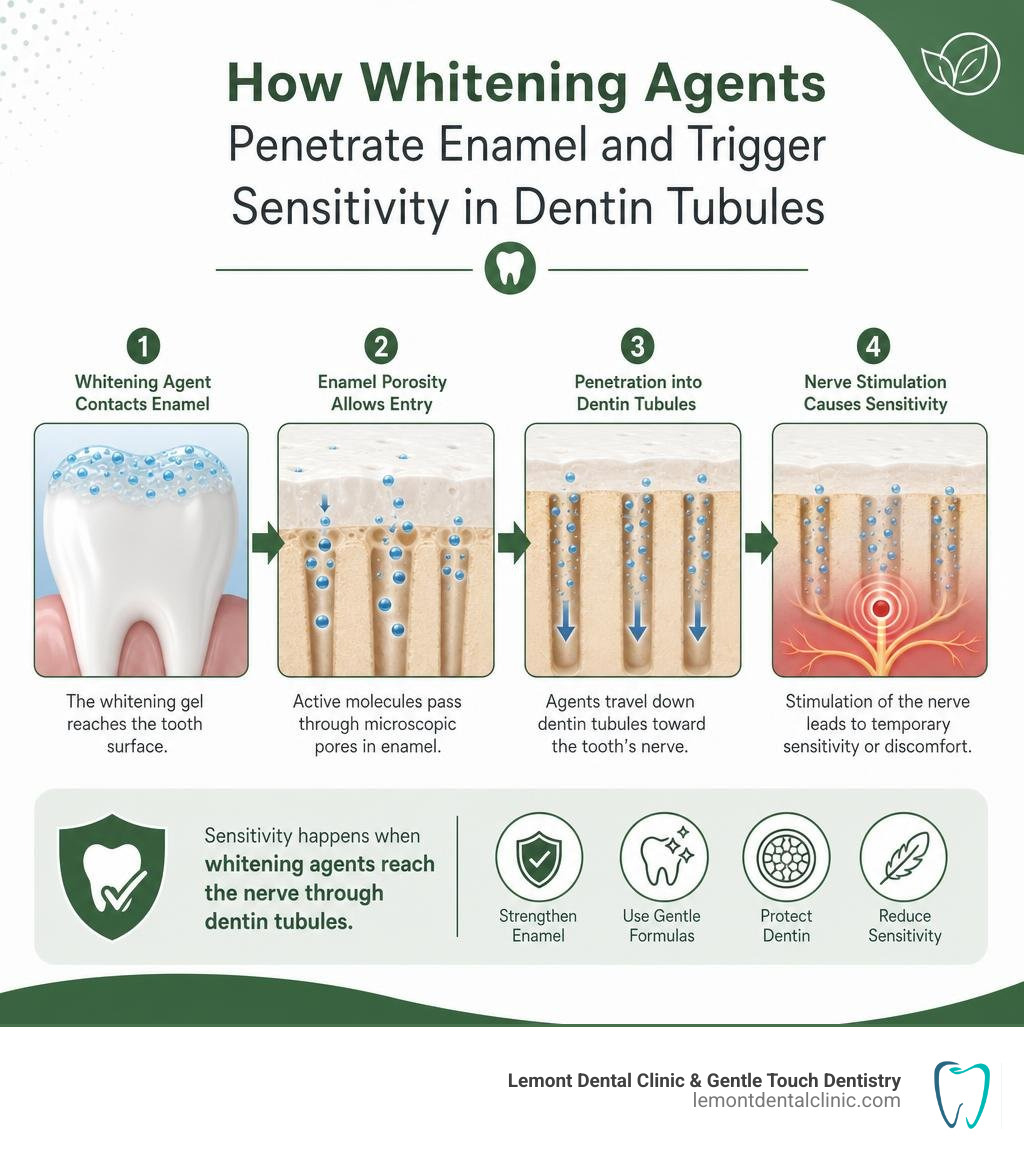
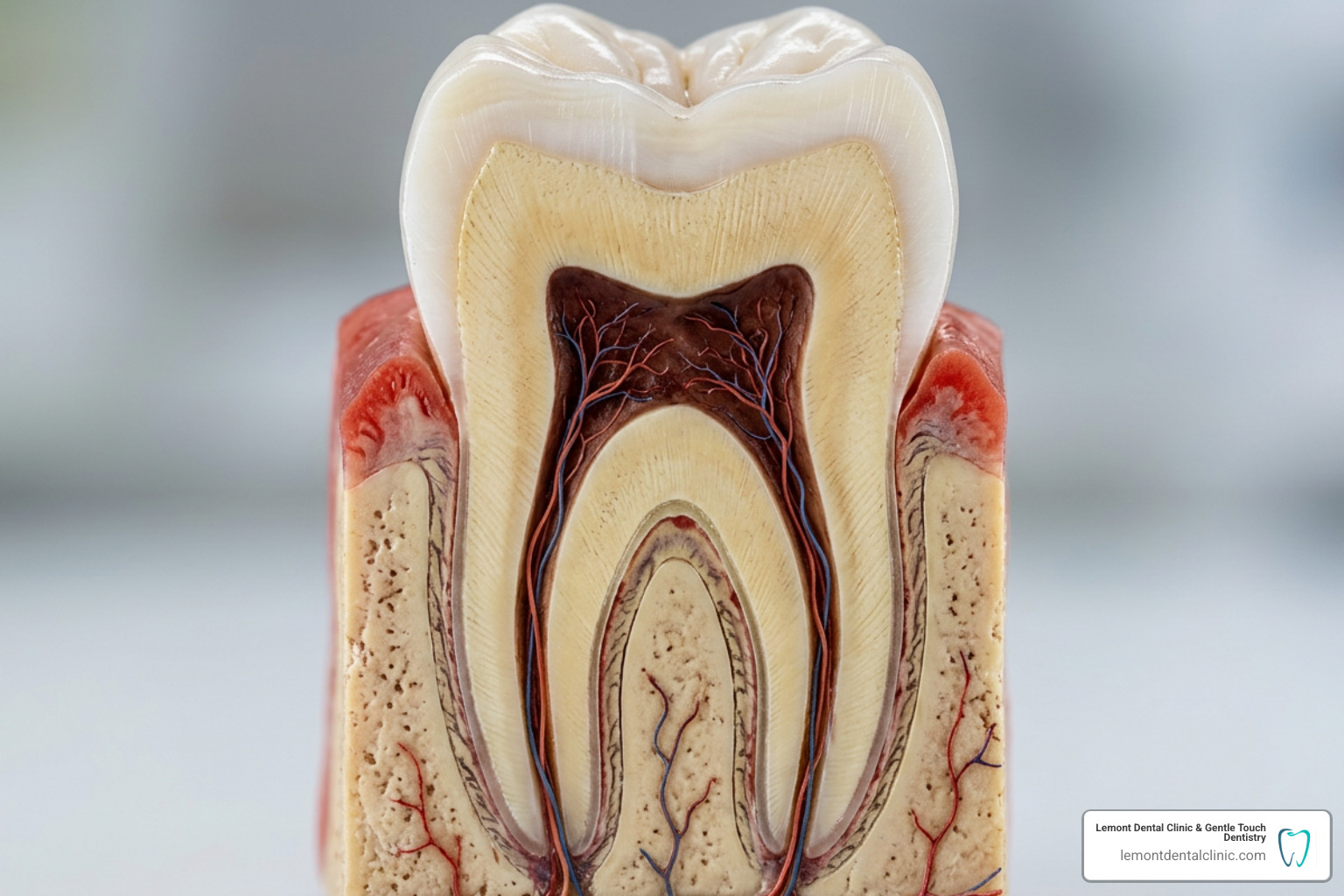
Your teeth are made of layers. The outer layer is enamel, a highly mineralized, protective shell. Underneath the enamel lies the dentin, a softer layer that contains thousands of microscopic pathways known as dentin tubules. These tubules lead directly to the tooth’s pulp, which houses the nerves and blood vessels.
When you use a whitening product, active ingredients like hydrogen peroxide or carbamide peroxide pass through the enamel to break down deep-seated stains. However, this process also temporarily dehydrates the tooth and opens up those microscopic dentin tubules. With the pathways to your nerves temporarily exposed, everyday triggers like cold air, hot tea, or sweet treats can cause sharp, sudden nerve irritation.
The type of bleaching agent used plays a major role in how you feel this reaction:
Hydrogen Peroxide: This is a fast-acting bleaching agent. Because it breaks down rapidly, it delivers quick results but can cause a more sudden spike in sensitivity.
Carbamide Peroxide: This agent breaks down into hydrogen peroxide much more slowly (at about one-third of the strength). It is highly favored for sensitive teeth because it releases its whitening power gradually over several hours, giving the nerves time to adjust.
Is Teeth Whitening for Sensitive Teeth Safe?
Yes, teeth whitening is entirely safe for people with sensitive teeth, provided you use the right methods and products. The sensitivity experienced during a whitening treatment is almost always temporary and does not cause permanent damage to your enamel or the internal structure of your teeth.
However, safety depends heavily on how you approach the process. Attempting to aggressively whiten your teeth with highly concentrated over-the-counter products or unverified DIY hacks can lead to long-term enamel wear and severe gum irritation. When you customize your approach—using lower concentrations of peroxide or seeking professional guidance—you can safely Discover the Brilliance of Teeth Whitening Services without compromising your oral health.
Professional Teeth Whitening for Sensitive Teeth
If you have naturally sensitive teeth, professional dental whitening is often the safest and most comfortable path to a brighter smile.
When you receive a professional treatment, we don’t just apply a generic gel and hope for the best. Instead, we carefully evaluate your oral health and customize every step of the process to minimize discomfort.
One of the most effective ways we achieve this is through custom-fitted take-home trays. Unlike stock trays found in store-bought kits, custom trays are molded precisely to your teeth. This ensures that the whitening gel stays directly on your enamel and does not leak onto your sensitive gums. It also allows us to prescribe professional-grade, lower-concentration gels that are specifically formulated with desensitizing agents like potassium nitrate or fluoride to block pain signals before they start.
If you live in the surrounding areas, including Palos Hills, Palos Park, Oak Lawn, Chicago Ridge, or Worth, our team is dedicated to helping you achieve a brighter smile safely. We provide customized professional treatments designed to protect your sensitive teeth while delivering beautiful, lasting results.
Professional vs. At-Home Whitening
To help you decide which route is best for your sensitive smile, let’s compare how professional treatments stack up against typical over-the-counter options:
Feature
Professional Dental Whitening
At-Home Over-the-Counter Kits
Peroxide Concentration
Tailored to your needs (typically lower for sensitive teeth)
Fixed concentrations (often too high for sensitive users)
Tray Customization
100% custom-fit to prevent gum irritation and uneven whitening
One-size-fits-all plastic trays or generic moldable options
Moderate to high if gel overflows onto soft tissues
By opting for professional care, you gain complete control over the whitening process. This makes it much easier to find The Best Places to Get Teeth Whitened Near Me Right Now and enjoy a bright, beautiful smile without the fear of sudden, painful zingers.
At-Home and Over-the-Counter Solutions
If you prefer to whiten your teeth in the comfort of your own home, there are several gentle, over-the-counter products designed specifically for sensitive teeth.
The key to at-home success is patience. Unlike professional treatments that can whiten your teeth by several shades in a single visit, sensitive-safe home products are designed to lift stains gradually. This slower pace is much easier on your enamel and significantly reduces the risk of nerve irritation.
Before starting any at-home regimen, it is highly beneficial to understand how different technologies work, such as how Laser Teeth Whitening Explained Is It Right for You compares to daily topical treatments.
At-Home Teeth Whitening for Sensitive Teeth Options
When shopping for at-home options, look for products that are explicitly formulated for sensitive smiles. Here are the most reliable choices available in July 2026:
Whitening Strips: Standard whitening strips can be incredibly harsh on sensitive teeth because they use a high concentration of hydrogen peroxide. However, choosing a specialized kit like the Crest 3D Whitestrips Sensitive & Gentle At-home Teeth Whitening Kit | Crest allows you to gently remove years of built-up stains. This kit is widely recognized by dental professionals for its mild, enamel-safe formulation.
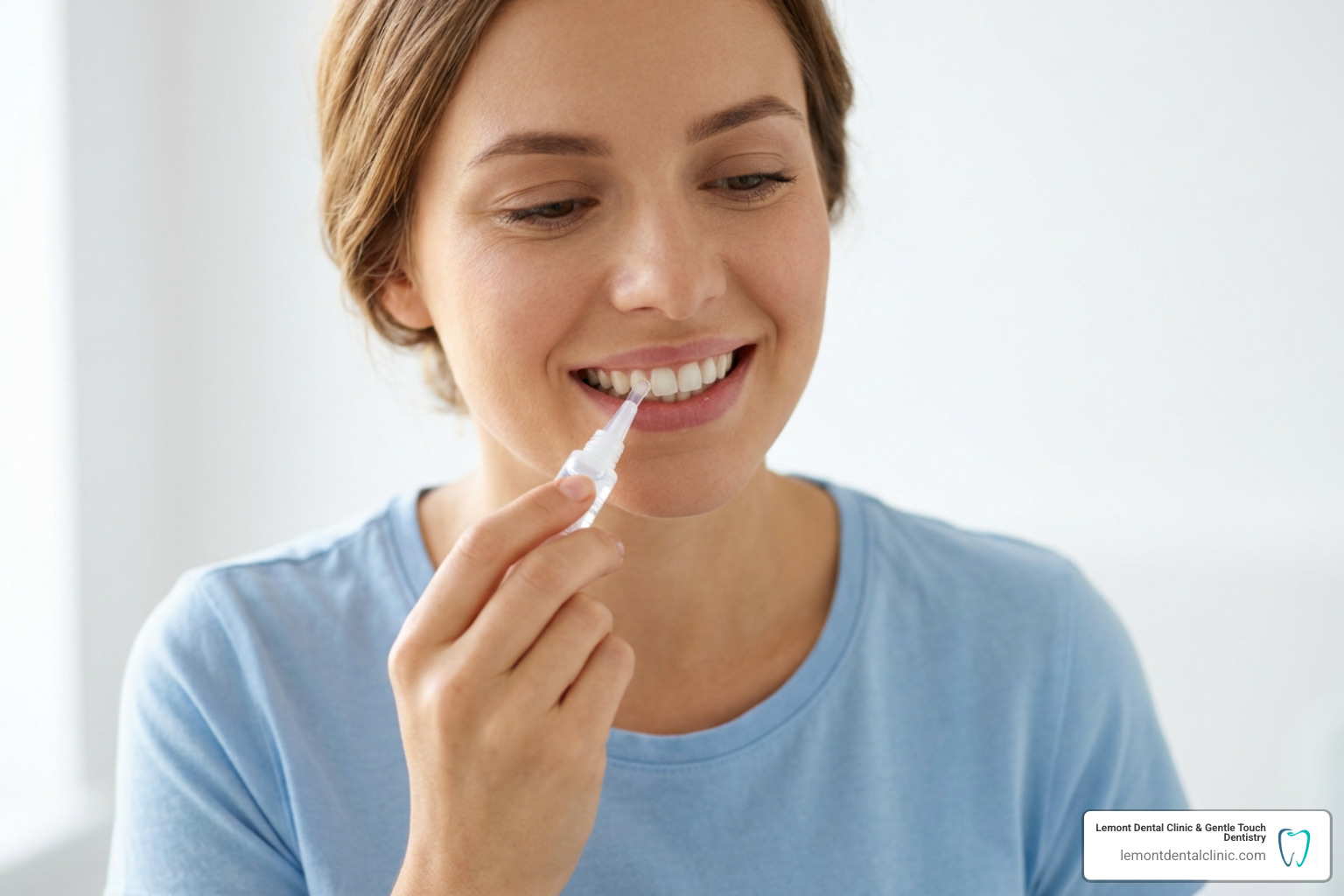
Whitening Pens: For targeted, highly controlled applications, whitening pens are an excellent choice. The Teeth Whitening Pen For Sensitive Teeth | SNOW – SNOW® Oral Care is formulated with slow-release carbamide peroxide, potassium nitrate, and hydroxyapatite. It allows you to paint the whitening serum directly onto the surfaces of your teeth, avoiding your gums entirely.
Sensitive Whitening Toothpastes: Daily brushing is the easiest way to maintain a bright smile. For a dual-action option, Colgate Sensitive Whitening Toothpaste helps soothe exposed nerves while gently lifting surface stains.
Sensitivity Relief Whitening Toothpastes: Another dentist-designed favorite is Whitening Toothpaste for Sensitive Teeth – Opalescence . Formulated with 5% potassium nitrate, it can whiten your teeth up to 2 shades in just 2 weeks while actively soothing sensitive nerves.
How to Minimize and Prevent Sensitivity
Whitening sensitive teeth requires a proactive approach. By preparing your teeth beforehand and adjusting your daily routines, you can dramatically reduce — or even entirely prevent — discomfort during your whitening journey.
To get started on the right foot, check out Your Guide to Finding Top Rated Teeth Whitening Treatments Nearby to find a dentist who can evaluate your teeth before you begin. A professional evaluation ensures your teeth and gums are healthy enough for whitening and helps you choose the safest method for your sensitivity level.
Key Ingredients That Reduce Sensitivity
When selecting any whitening product or toothpaste, always check the ingredient label. The most effective products for sensitive teeth contain active desensitizing agents:
Potassium Nitrate: This ingredient penetrates the enamel to reach the nerves inside your teeth, temporarily blocking the pain signals from traveling to your brain.
Fluoride (such as Stannous Fluoride): Fluoride helps remineralize your enamel, making it stronger and sealing off the open dentin tubules that lead to the nerves.
Hydroxyapatite: A biomimetic mineral that naturally makes up 97% of your tooth enamel. It acts like a protective shield, filling in microscopic enamel defects and reducing sensitivity.
Using a toothpaste containing these ingredients for at least two weeks before starting any whitening treatment is one of the best ways to prepare your teeth for a comfortable experience.
What to Avoid When Whitening Sensitive Teeth
To protect your enamel from painful irritation, there are several common whitening traps you should actively avoid:
High-Concentration Peroxide Strips: Avoid any standard over-the-counter strips that contain more than 10% hydrogen peroxide unless specifically supervised by a dentist.
Abrasive Charcoal or Baking Soda: While DIY charcoal powders and baking soda scrubs are highly marketed for stain removal, they are incredibly abrasive. They can scratch away your protective enamel, exposing the yellow dentin underneath and making your teeth permanently more sensitive.
Acidic Foods and Drinks: Avoid consuming highly acidic items — like lemons, oranges, vinegar, or carbonated sodas — immediately before or after whitening. Acid temporarily softens your enamel, making it highly vulnerable to wear and irritation. For a complete look at how to protect your enamel while lifting stains, consult our Teeth Stain Removal Dentist Guide From Yellow to Mellow.
Frequently Asked Questions about Whitening Sensitive Teeth
How long does sensitivity last after whitening?
For most people, temporary tooth sensitivity after a whitening treatment typically lasts between 24 to 72 hours.
During this recovery window, you can easily manage any mild discomfort by:
Brushing gently with a soft-bristled toothbrush and lukewarm water.
Avoiding extremely hot or ice-cold foods and beverages.
Using a desensitizing toothpaste containing potassium nitrate.
Taking over-the-counter pain relievers, like ibuprofen, if recommended by your doctor.
You should always consult a dentist before starting any teeth whitening regimen, especially if you have naturally sensitive teeth.
A pre-whitening dental exam is crucial because sensitivity can sometimes be a warning sign of underlying dental issues, such as:
Undetected cavities or cracked teeth.
Severe gum recession exposing highly sensitive tooth roots.
Active gum disease.
Whitening over an active dental issue can cause severe, long-lasting pain. To learn more about cosmetic dental costs and the value of a professional evaluation, check out How Much for That Hollywood Smile.
Can I whiten my teeth if I have dental restorations?
It is important to know that whitening agents only work on natural tooth enamel.
If you have dental restorations on your front teeth, such as:
Porcelain veneers
Dental crowns
Composite dental bonding
Tooth-colored fillings
These materials will not change color when exposed to bleaching gels. If you whiten your natural teeth, your restorations may suddenly stand out and appear darker. If you are planning to get new restorations or want to update your smile, we recommend discussing a comprehensive plan to match your restorations to your newly whitened teeth. Learn more about how we manage these treatments by visiting our guide on Whitening.
Conclusion
Achieving a bright, beautiful smile doesn’t have to come at the cost of your comfort. By understanding the science behind tooth sensitivity, choosing gentle products formulated with desensitizing ingredients, and seeking professional guidance, you can safely lift years of stains without the pain.
At Lemont Dental Clinic & Gentle Touch Dentistry, we specialize in high-quality, comprehensive general, restorative, and cosmetic dental care for patients in Lemont, Palos Hills, and the surrounding Illinois communities. We focus on providing personalized, all-in-one care using the latest dental technology at highly competitive prices.
Ready to brighten your smile comfortably? Schedule your consultation today to find a sensitivity-safe whitening plan tailored just for you.