Why So Many People Are Searching for a Teeth Stain Removal Dentist
Seeing a teeth stain removal dentist is the most reliable way to get rid of discoloration that brushing alone can’t fix. Here’s a quick overview of what a dentist can do for stained teeth:
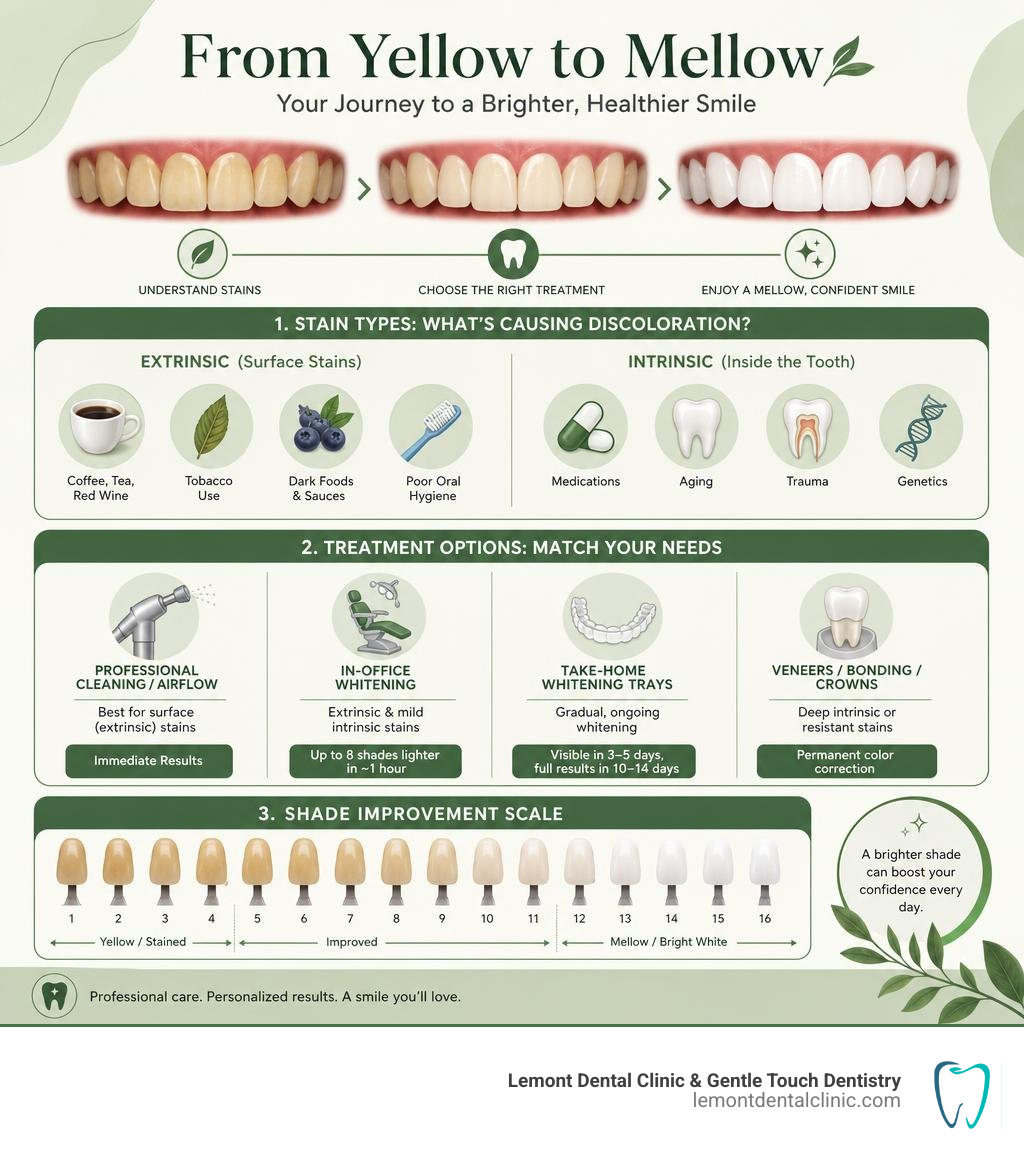
Professional teeth stain removal options at a glance:
Treatment
Best For
Results
Professional cleaning / Airflow
Surface (extrinsic) stains
Immediate, same visit
In-office whitening
Extrinsic & mild intrinsic stains
Up to 8 shades lighter in ~1 hour
Take-home whitening trays
Gradual, ongoing whitening
Visible in 3-5 days, full results in 10-14 days
Veneers / bonding / crowns
Deep intrinsic or resistant stains
Permanent color correction
You’re not alone if your smile bothers you. A National Smile Month survey found that 48% of people are unhappy with their teeth — and of those, 64% say discoloration is the main reason. Meanwhile, the American Association of Orthodontics reports that 90% of dental patients ask about teeth whitening.
That’s a lot of people staring at their reflection wishing things looked a little different.
The good news? Stained teeth are one of the most treatable cosmetic concerns in dentistry. A single professional whitening session can improve tooth color by up to eight shades — and that’s just one of several options available.
This guide walks you through everything you need to know: what causes stains, which treatments actually work, and how to keep your results lasting as long as possible.
Understanding Tooth Discoloration: The Three Main Types of Stains
Before we can send those stubborn stains packing, we have to understand exactly what we are dealing with. Teeth do not just turn yellow or brown for one single reason. In fact, dentists categorize tooth discoloration into three distinct types. Knowing which type of stain you have is the secret to choosing the right treatment.
Our teeth are made of layers. The outer layer is the enamel, which is the hardest substance in the human body. Even though it is incredibly tough, enamel is semi-translucent and has microscopic pores that can absorb color pigments over time.
Beneath the enamel lies the dentin, a naturally darker, more yellow structure. When we talk about tooth stains, we are looking at whether the discoloration is sitting on top of the enamel, locked deep inside the dentin, or a combination of both.
Extrinsic Stains: Surface Discoloration
Extrinsic stains are the most common culprits behind a dull smile. These stains live entirely on the outer surface of your teeth—the enamel. They are caused by the dark pigments in the things we consume every day.
Every time you enjoy your morning cup of coffee, sip on black tea, or unwind with a glass of red wine, tannins and chromogens (highly pigmented chemical compounds) cling to your enamel. Over time, these pigments build up, turning your pearly whites into a shade of light yellow or dark brown.
Tobacco use is another massive contributor to extrinsic staining. Nicotine and tar from smoking or chewing tobacco quickly penetrate the enamel pores, leaving behind dark, stubborn yellow and brown marks. If you are struggling with these surface marks, you can read more about how we tackle them in our guide on how to say goodbye to tobacco stains with these proven teeth cleaning methods.
The good news about extrinsic stains is that because they are on the surface, they are the easiest to remove. A professional dental cleaning or a targeted whitening treatment can lift them away relatively quickly.
Intrinsic Stains: Deep Within the Tooth
Unlike surface stains, intrinsic stains originate deep within the tooth, specifically inside the dentin layer. Because these stains are locked beneath the protective enamel barrier, no amount of regular brushing, flossing, or over-the-counter whitening toothpaste will ever touch them.
Intrinsic discoloration can happen for several reasons:
Dental Trauma: If you experience an injury to a tooth—perhaps from a sports accident or a fall—the internal blood vessels can rupture. As the pulp tissue inside the tooth degrades or dies (pulp necrosis), it releases dark pigments that stain the dentin from the inside out, often turning the tooth a dark gray, brown, or even black color.
Medications: Exposure to certain medications during tooth development can cause permanent intrinsic staining. For example, if a child takes tetracycline antibiotics while their permanent teeth are still forming under the gums, they may grow up with distinct gray-blue bands across their teeth.
Excessive Fluoride: While fluoride is excellent for preventing cavities, consuming too much of it during early childhood can lead to fluorosis, which causes white splotches or brown streaks inside the enamel structure.
Treating these deep stains requires specialized professional intervention. For teeth that have darkened after a root canal, we often use a highly targeted technique known as internal bleaching. This involves placing a specialized whitening agent directly inside the tooth structure to lift the stain from the inside out. You can read more about the clinical efficacy and safety of this procedure in this detailed review on Internal Tooth Whitening – StatPearls – NCBI Bookshelf.
Age-Related Stains: Thinning Enamel
As we blow out more candles on our birthday cakes, our smiles naturally change. Age-related staining is actually a combination of both extrinsic and intrinsic factors.
Over decades of chewing, brushing, and exposure to acidic foods, the outer enamel layer of our teeth naturally thins out. As the enamel wears down, it becomes more transparent. This allows the underlying dentin—which naturally darkens and becomes more yellow as we age—to show through more prominently.
Additionally, older teeth have had a lifetime to accumulate deep extrinsic stains, making age-related discoloration a unique challenge that responds best to a customized treatment plan designed by a professional teeth stain removal dentist.
When to See a Teeth Stain Removal Dentist Instead of Using OTC Products
When you walk down the oral care aisle of any grocery store in Lemont or Palos Hills, you are bombarded with hundreds of boxes promising a blindingly white smile in just days. From strips and gels to charcoal pastes and LED light kits, the options seem endless.
However, there is a massive difference between what you can buy off a shelf and what we can achieve in a clinical setting.
The primary difference lies in the concentration of the active bleaching agents—usually hydrogen peroxide or carbamide peroxide. Over-the-counter (OTC) products are designed for the masses, meaning they must use very low, weak concentrations (typically between 3% and 10% hydrogen peroxide) to prevent widespread injuries.
In contrast, a professional teeth stain removal dentist can safely use medical-grade whitening gels containing 10% to 40% hydrogen peroxide. Because these professional gels are so strong, they can only be applied under the direct supervision of a trained dentist who protects your delicate oral tissues.
In the age of social media, DIY dental hacks are everywhere. Many online creators advocate for “natural” stain removal remedies like brushing with baking soda, scrubbing with activated charcoal, or rubbing lemon juice on your teeth.
As dental professionals, we strongly advise against these DIY methods. Here is why:
Activated Charcoal: While it may temporarily lift some surface stains due to its highly abrasive nature, charcoal acts like sandpaper on your teeth. It permanently scratches and wears away your precious enamel. Once that enamel is gone, it never grows back, leaving your teeth highly sensitive and actually making them look more yellow as the dark dentin underneath is exposed. Furthermore, charcoal particles can become permanently embedded in microscopic cracks in your teeth, causing dark, unsightly lines.
Acidic Remedies (Lemon Juice, Apple Cider Vinegar): Acid is the ultimate enemy of tooth enamel. Rubbing highly acidic fruit juices on your teeth literally dissolves the enamel structure, leading to rapid tooth decay, extreme sensitivity, and permanent damage.
Baking Soda: While less harmful than acid, using baking soda too frequently is highly abrasive and can cause premature wear on your enamel and gum recession.
Why Professional Supervision Matters for Safety and Speed
Choosing a professional teeth stain removal dentist is not just about getting whiter teeth; it is about protecting your oral health.
When you get your teeth whitened professionally, we begin with a thorough examination to ensure you do not have any active cavities, cracked teeth, or gum disease. Applying strong bleaching agents to an untreated cavity can reach the nerve of the tooth, causing agonizing pain and requiring root canal therapy.
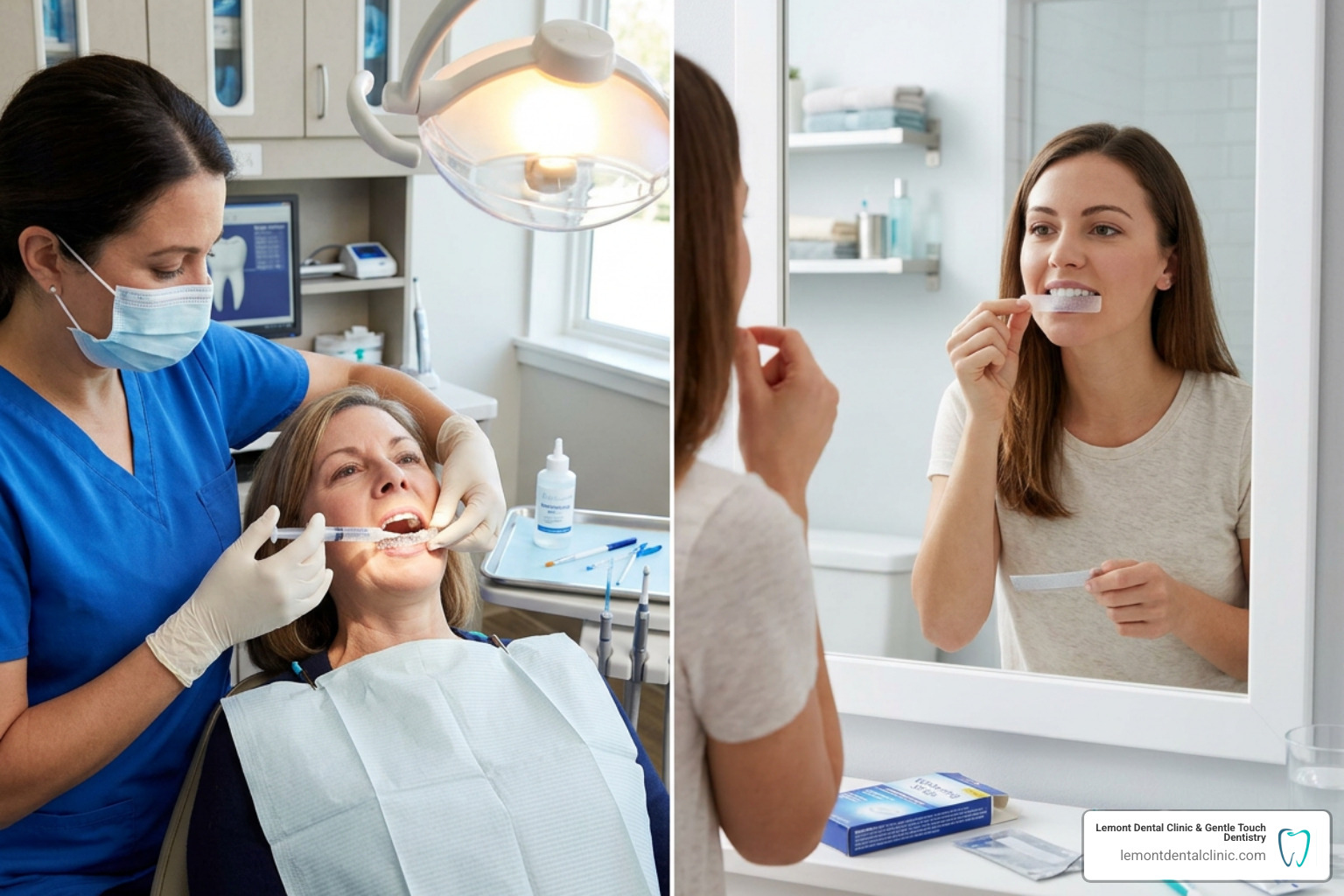
During an in-office treatment, we use specialized paint-on rubber barriers and cotton rolls to completely isolate your gums, lips, and cheeks from the whitening gel. This prevents the chemical burns and painful gum irritation so commonly associated with ill-fitting OTC whitening strips.
Plus, professional treatment delivers immediate, dramatic results in a single, comfortable appointment lasting about an hour, compared to weeks of messy at-home applications.
Professional Treatments and Restorations for Brighter Teeth
If you are ready to transition your smile from yellow to mellow, we have several highly effective clinical pathways to choose from. The right treatment depends entirely on the cause of your staining, your budget, and your ultimate aesthetic goals.
Treatment Option
Primary Target
Average Treatment Time
Longevity of Results
Best Suited For
Professional Cleaning & Air Polishing
Heavy surface stains (tobacco, tea, coffee), plaque, and tartar
30 to 45 minutes
3 to 6 months (with good hygiene)
Patients with healthy teeth who just need extrinsic stain removal
In-Office Teeth Whitening
Deep extrinsic and mild-to-moderate intrinsic yellowing
60 to 90 minutes
1 to 3 years (with maintenance)
Patients looking for immediate, dramatic results for a special event
Take-Home Professional Trays
Gradual whitening of extrinsic and intrinsic stains
10 to 14 days (30-60 mins daily)
1 to 3 years (with maintenance)
Patients who prefer to whiten comfortably at home with professional-grade gel
Porcelain Veneers / Crowns
Severe tetracycline staining, fluorosis, or structurally damaged teeth
2 appointments (over 2 weeks)
10 to 15+ years
Patients with permanent intrinsic stains that do not respond to bleaching
Choosing a Teeth Stain Removal Dentist for Professional Treatments
For patients dealing with heavy surface stains from years of coffee drinking or tobacco use, a standard scale and polish might not be enough. In our clinics, we utilize advanced tools to gently lift these stubborn marks without scratching your enamel.
One of the most exciting advancements in dental hygiene is Airflow technology. This system uses a controlled stream of warm water, compressed air, and a very fine, low-abrasive powder (often glycine or erythritol) to gently spray away plaque, biofilm, and deep surface stains from the nooks and crannies of your teeth.
Before we perform any whitening, we always start with a comprehensive cleaning to ensure the whitening gel can make direct contact with your clean enamel. To know what to expect during your prep visit, read our breakdown of a professional teeth cleaning what to expect when you book.
If you live in the Hickory Hills or Palos Park, IL area, you can easily schedule a comprehensive checkup and professional cleaning with our team to get your teeth in peak condition before starting any cosmetic treatments.
How a Teeth Stain Removal Dentist Manages Sensitivity and Complications
The most common side effect of teeth whitening is temporary tooth sensitivity. This happens because the peroxide gel temporarily opens up the microscopic pores (dentinal tubules) in your enamel to reach the stains within the dentin. This allows hot and cold sensations to travel more easily to the nerve.
As your teeth stain removal dentist, we have several ways to prevent and manage this discomfort:
Customized Gel Strengths: We can adjust the concentration of the whitening gel based on your history of sensitivity.
Desensitizing Gels: We apply specialized potassium nitrate or fluoride varnishes immediately after your treatment to block the nerve pathways and soothe your teeth.
Light-Activated Systems: Modern in-office systems use specialized light activation to accelerate the whitening process, meaning the gel has to sit on your teeth for a much shorter period, significantly reducing post-treatment sensitivity.
How Crowns, Veneers, and Fillings Respond to Whitening
A crucial piece of information that many patients do not realize is that dental bleaching agents only work on natural tooth enamel. They have absolutely no effect on synthetic materials like porcelain, composite resin, or acrylic.
If you have existing dental work—such as crowns, porcelain veneers, or tooth-colored fillings—in the front of your mouth, whitening your natural teeth will create a color mismatch. Your natural teeth will get brighter, while your restorations will remain their original, darker color.
To avoid this, we always recommend whitening your natural teeth first to achieve your desired shade. Once your new, brighter color has stabilized (usually about two weeks after whitening), we can then replace your old crowns, veneers, or fillings to perfectly match your gorgeous new smile.
If you are looking for local care in our surrounding communities like Worth, Palos Hills, Oak Lawn, or Chicago Ridge, IL, our team is here to help you plan this process and ensure your restorations perfectly match your bright new smile.
Frequently Asked Questions about Teeth Stain Removal
How long do the results of professional teeth stain removal last?
Typically, the results of a professional whitening treatment can last anywhere from six months to three years. The exact lifespan of your bright smile depends heavily on your lifestyle and dietary habits. If you smoke, drink red wine daily, or drink black coffee without a straw, stains will return much faster.
To extend your results, we recommend using custom-fitted take-home trays for quick, overnight touch-up treatments every few months.
Can teeth whitening damage my natural tooth enamel?
When performed under the supervision of a dental professional, teeth whitening is incredibly safe and does not damage your enamel. The active peroxide ingredients simply break down the carbon bonds of the staining molecules inside your tooth; they do not dissolve or weaken the physical structure of the enamel.
To ensure safety, always look for products that carry the American Dental Association (ADA) Seal of Acceptance, or better yet, let us handle the application for you!
Do I need to get a professional cleaning before teeth whitening?
Yes, absolutely! Trying to whiten teeth that have a layer of plaque or tartar on them is a waste of time and money. The whitening gel cannot penetrate through hard tartar buildup, which means you will end up with uneven, splotchy results.
A professional cleaning removes all plaque, tartar, and surface debris, giving us a clean slate to achieve the brightest, most uniform shade possible. You can read more about why this step is so critical in our guide to plaque removal near me your guide to professional teeth cleaning.
Conclusion
At Lemont Dental Clinic & Gentle Touch Dentistry, we believe that you shouldn’t have to choose between enjoying your life and having a beautiful, confident smile. You don’t have to completely give up your favorite morning coffee or evening tea to maintain a bright smile—you just need the right preventive habits and a trusted dental team in your corner.
Simple lifestyle tweaks can make a massive difference in preventing future stains:
Rinse with Water: After drinking coffee, tea, or red wine, swish some plain water around your mouth to wash away staining pigments before they can bind to your enamel.
Use a Straw: When drinking iced coffee, tea, or soda, use a straw to minimize direct contact with your front teeth.
Add a Splash of Milk: Adding a bit of milk or cream to your coffee or tea can bind to the staining tannins, making them less likely to stick to your teeth.
Keep Up with Home Care: Brush twice daily with an electric toothbrush, floss daily, and never skip your routine dental visits.
If you are ready to take the first step toward a brighter, healthier smile, we are here to help. Schedule a professional cleaning today with our experienced, friendly team, and let us help you transform your smile from yellow to mellow!