Understanding Professional Dental Cleaning and Why You Need It
Dental cleaning is a professional procedure performed by a dentist or dental hygienist to remove plaque, tartar, and bacteria from your teeth. Here’s what you need to know:
What it is: A thorough cleaning that removes hardened buildup your toothbrush can’t reach.
How often: Every 6 months for most people, more frequently if you have gum disease or other risk factors.
Duration: 30-60 minutes for a routine cleaning.
Benefits: Prevents cavities, gum disease, bad breath, and reduces the risk of related health issues like heart disease and stroke.
Many people dread dental cleanings, but professional dental cleanings are essential for maintaining both your oral health and your overall well-being. They remove the hardened plaque (called tartar or calculus) that brushing and flossing at home simply cannot eliminate.
Without regular cleanings, bacteria accumulate beneath your gum line, leading to inflammation, gum disease, and eventually tooth loss. Research shows that routine dental cleanings can help reduce your risk for serious health conditions. Your mouth is a gateway that can either protect or compromise your overall health.
At Lemont Dental Clinic & Gentle Touch Dentistry, our team helps patients understand the critical role that Dental cleaning plays in preventive care. Through comprehensive exams and professional cleanings, we’ve helped countless individuals overcome their dental anxieties and achieve healthier smiles.
Why a Professional Dental Cleaning is Essential for Your Health
At Lemont Dental Clinic & Gentle Touch Dentistry, we believe a healthy smile is a cornerstone of a healthy life. Regular dental cleaning is not just about keeping your teeth shiny; it’s a critical part of a proactive approach to your overall health.
Think of it this way: brushing and flossing are crucial daily maintenance, but a professional cleaning is like an expert servicing that reaches areas and removes substances that home care simply can’t.
Our general dentistry services are designed to address all your oral health needs, ensuring your smile contributes positively to your overall well-being. More info about our general dentistry services.
The Role of Plaque and Tartar
To understand why professional dental cleaning is so important, we need to talk about plaque and tartar.
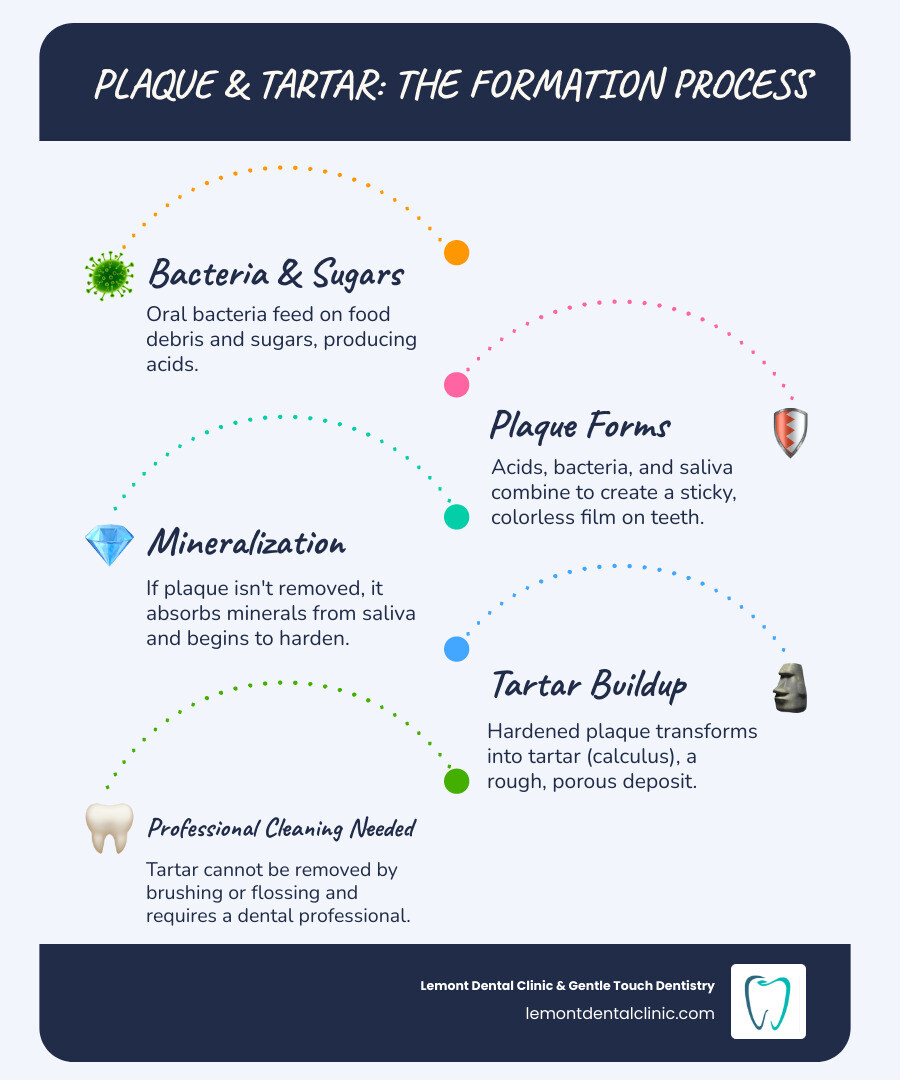
Plaque is a sticky film of bacteria that constantly forms on your teeth. These bacteria produce acids that attack tooth enamel, leading to cavities, and release toxins that irritate your gums, causing gingivitis (the first stage of gum disease).
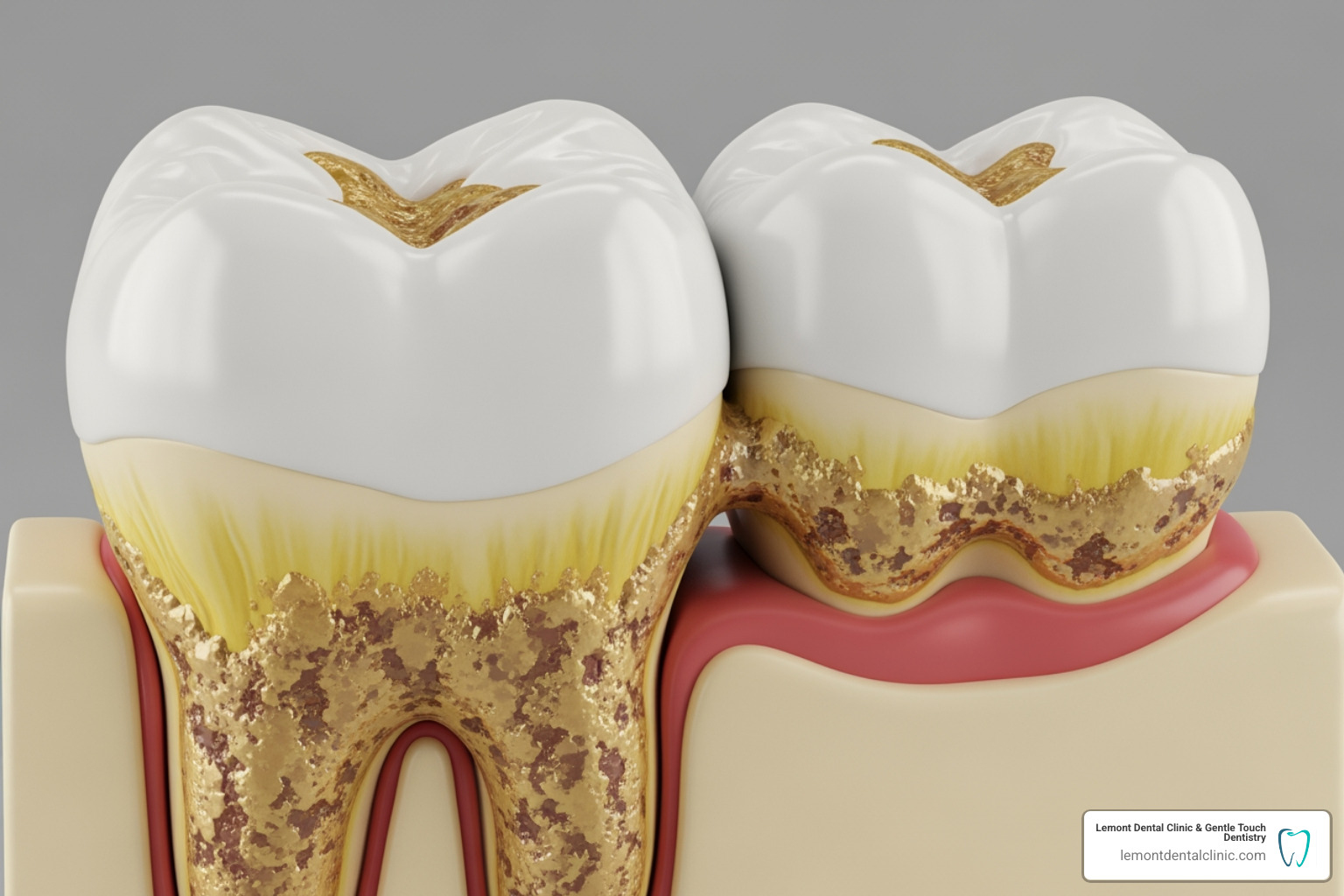
If plaque isn’t removed, it hardens into tartar (calculus), a rough substance that attaches to teeth above and below the gum line. Once tartar forms, it can no longer be removed by your toothbrush and requires specialized dental instruments.
Without professional removal, tartar continues to accumulate, leading to more advanced gum disease (periodontitis) and potential tooth loss.
The Link Between Oral and Overall Health
The connection between your oral and overall health is undeniable. Your mouth is a gateway to your body, and bacteria from gum disease can enter your bloodstream, contributing to inflammation and other chronic health conditions. Routine dental cleanings can significantly reduce your risk for serious systemic issues, including:
Heart Disease and Stroke: Chronic gum inflammation is linked to an increased risk of cardiovascular problems, as oral bacteria can contribute to plaque buildup in arteries.
Dementia: Research suggests a potential link between poor oral health and an increased risk of cognitive decline.
Diabetes: Gum disease can make it harder to control blood sugar levels, and those with diabetes are at a higher risk for periodontitis.
Respiratory Infections: Bacteria from the mouth can be inhaled into the lungs, potentially leading to respiratory infections.
At Lemont Dental Clinic & Gentle Touch Dentistry, we emphasize regular dental cleanings as a preventative measure for your entire body’s well-being. For more scientific insights into this connection, you can refer to relevant research on oral hygiene: Scientific research on Oral Hygiene.
What to Expect During Your Dental Cleaning Appointment
We strive to make your dental cleaning appointment at Lemont Dental Clinic & Gentle Touch Dentistry as comfortable and informative as possible. A routine cleaning usually takes 30-60 minutes.
Your appointment begins with a thorough exam. Your dentist or hygienist will check for signs of tooth decay, gum disease, and perform an oral cancer screening. We may also review X-rays to detect issues not visible to the naked eye, like decay between teeth or bone loss.
This initial assessment helps us tailor the cleaning to your needs. For more information about regular visits, see our page on More info about dental check-ups.
Step 1: Scaling to Remove Plaque and Tartar
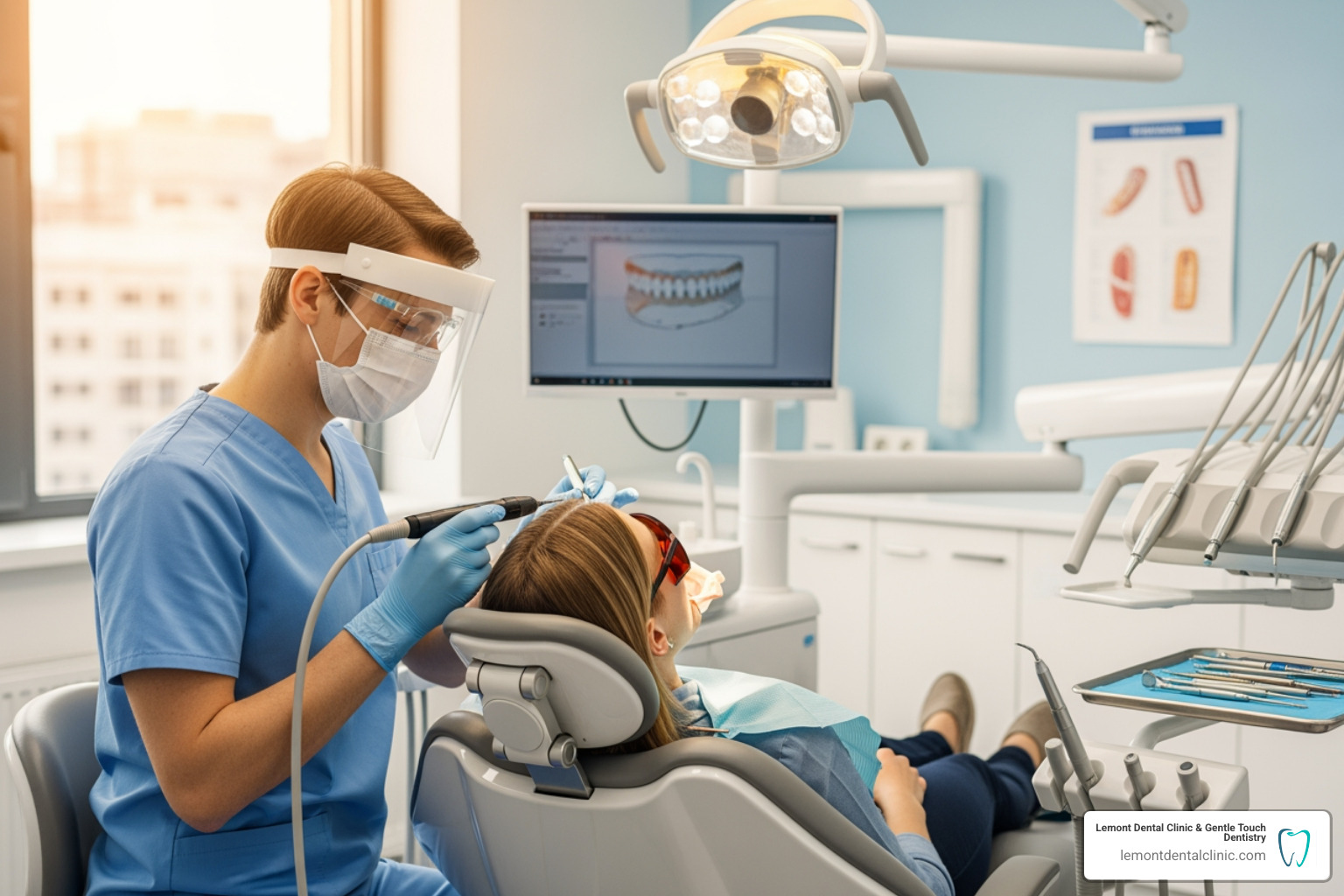
This is the core of the cleaning, where we remove plaque and tartar. We use specialized tools for this process:
Hand Scalers: Fine, manual instruments to carefully scrape away deposits.
Ultrasonic Scalers: A device using high-frequency vibrations and a water stream to break up stubborn tartar, which many patients find more comfortable.
You may hear scraping sounds or feel light pressure, but our hygienists are gentle and will ensure your comfort.
Step 2: Polishing, Flossing, and Rinsing
Once your teeth are scaled, we polish, floss, and rinse.
Polishing: We use a special gritty toothpaste (prophy paste) and a high-powered brush to remove surface stains, leaving your teeth smooth and shiny.
Flossing: Our hygienist will expertly floss to remove any remaining debris from between your teeth.
Rinsing: A final rinse washes away any loosened particles, leaving your mouth feeling fresh.
Step 3: Fluoride Treatment
The final step is often a fluoride treatment, which acts as a protective shield for your teeth. Fluoride is a natural mineral that strengthens enamel and makes it more resistant to cavities.
We apply it as a varnish painted onto your teeth or as a gel. This quick, effective treatment gives your teeth an added boost of protection. You can learn more on our dedicated page: More info about fluoridation.
Types of Dental Cleanings: Routine vs. Deep Cleaning
When we talk about dental cleaning, it’s important to understand that not all cleanings are the same. The type of cleaning you receive depends on the health of your gums and the amount of plaque and tartar buildup you have. At Lemont Dental Clinic & Gentle Touch Dentistry, we assess your individual needs to recommend the most appropriate treatment.
The main distinction often lies between a routine cleaning (prophylaxis) and a deep cleaning (scaling and root planing), especially if you’re dealing with periodontal disease. Periodontal disease, or gum disease, is an infection of the tissues that hold your teeth in place, characterized by inflammation, bleeding, and the formation of “gum pockets” – spaces between your teeth and gums where bacteria can collect.
Here’s a comparison to help you understand the differences:
Feature
Routine Cleaning (Prophylaxis)
Deep Cleaning (Scaling and Root Planing)
Purpose
Preventive care for healthy gums and minimal buildup.
Therapeutic treatment for gum disease (gingivitis or periodontitis).
Procedure
Removes plaque, tartar, and stains from above the gum line.
Removes plaque and tartar from above and below the gum line, smooths tooth roots.
Duration
Typically 45-60 minutes.
Usually takes at least two appointments, 60-90 minutes each.
Patient Need
Recommended for individuals with generally healthy gums.
For patients with gum inflammation, bleeding, or deeper gum pockets.
Routine Dental Cleaning (Prophylaxis)
A routine dental cleaning, also known as a prophylaxis, is what most people receive during their regular check-up appointments. This type of cleaning is primarily preventive and is recommended for individuals with generally healthy gums that show no signs of active gum disease.
During a prophylaxis, our hygienists focus on removing plaque, tartar, and surface stains from the visible parts of your teeth, above the gum line. It’s a thorough cleaning designed to maintain good oral hygiene, prevent the onset of cavities, and keep your gums healthy and firm. This regular maintenance is crucial for preventing plaque from hardening into tartar and keeping your mouth free from harmful bacteria.
If your gums are healthy, pink, and don’t bleed when brushed or flossed, a routine cleaning is likely all you need to keep your smile in top condition. We encourage you to visit us regularly for this essential preventive care. Learn more about what a regular cleaning entails: More info about regular cleaning.
Deep Cleaning (Scaling and Root Planing)
When signs of gum disease, such as persistent inflammation, bleeding, or the presence of deeper gum pockets, are detected, we might recommend a deep cleaning, formally known as scaling and root planing. This procedure is a more intensive therapeutic treatment designed to address active gum disease and prevent its progression.
A deep cleaning goes beyond the surface. It involves two main parts:
Scaling: This is the meticulous removal of plaque and tartar not only from above the gum line but, crucially, from below it, within the gum pockets. We use specialized instruments to reach these areas that are inaccessible during a routine cleaning.
Root Planing: After scaling, the root surfaces of your teeth are carefully smoothed. This helps to remove any remaining bacterial toxins and makes it more difficult for plaque to reattach, allowing your gums to heal and reattach more firmly to your teeth.
Because deep cleaning involves working beneath the gum line, we often use a local anesthetic to ensure your comfort during the procedure. It’s typically done in sections of your mouth over one or more appointments, allowing for thoroughness and proper healing. This comprehensive approach is vital for treating gum disease, reducing inflammation, and preventing further bone and tissue loss.
If you’ve been diagnosed with gum disease, a deep cleaning followed by regular periodontal maintenance cleanings (often every 3-4 months) can be a game-changer for your oral health. For more detailed information on this procedure, please visit: More info about deep cleaning and Details on Tooth Scaling and Root Planing.
After Your Cleaning: Recovery and Potential Side Effects
After your dental cleaning, your teeth will feel incredibly smooth and your mouth will feel fresh. For most people, recovery is immediate, though our team will provide any specific post-cleaning instructions, like waiting 30 minutes to eat or drink after a fluoride treatment.
It’s also normal to experience some temporary side effects, especially if you had significant tartar buildup. These typically resolve within a day or two:
Gum Soreness: Your gums might feel a bit tender.
Tooth Sensitivity: With tartar removed, your teeth may be temporarily more sensitive to hot or cold temperatures.
These sensations are usually mild and short-lived.
Managing Post-Cleaning Sensitivity
If you experience sensitivity or soreness after your dental cleaning, it’s a common and temporary issue. Here are some tips to help manage it:
Over-the-counter pain relievers can help with mild gum soreness.
Avoid very hot, cold, or sugary foods for a day or two.
Use a desensitizing toothpaste to reduce discomfort.
Brush and floss gently around sensitive areas.
Rinse with warm salt water to soothe sore gums.
When to contact your dentist: While mild discomfort is normal, you should contact us at Lemont Dental Clinic & Gentle Touch Dentistry if your pain is severe or doesn’t improve, your gums continue to bleed, or you develop swelling. For more detailed advice, please refer to our page: What to do if you have teeth sensitive after cleaning.
Frequently Asked Questions about Dental Cleanings
We understand you might have questions about dental cleanings. Here are answers to some of the most common ones we hear at Lemont Dental Clinic & Gentle Touch Dentistry.
How often should I get a professional dental cleaning?
For most people, a professional dental cleaning every six months is the standard recommendation. However, the ideal frequency depends on your individual needs. Your dentist may suggest more frequent cleanings (every 3-4 months) if you have risk factors like:
A history of gum disease
A tendency to build up tartar quickly
Certain medical conditions like diabetes
Smoking
Orthodontic treatment (braces)
Your dentist will recommend a personalized schedule that best suits your oral health.
Does a dental cleaning hurt?
For most people, a routine dental cleaning is painless. You might feel some mild pressure or discomfort, especially if you have significant tartar buildup or inflamed gums. This sensitivity is often a sign that the cleaning is necessary to help your gums heal.
Your comfort is our priority at Lemont Dental Clinic & Gentle Touch Dentistry. Our hygienists are gentle and will check in with you. If you feel any discomfort, please tell us. We can use a topical numbing gel or, for deep cleanings, a local anesthetic to ensure a pain-free experience. We also offer sedation options for patients with dental anxiety. For more information, visit: Does teeth cleaning hurt?.
How long does a dental cleaning take?
The duration of a dental cleaning varies based on your oral health.
Routine Cleaning (Prophylaxis): Typically takes 45 to 60 minutes for individuals with healthy gums.
Deep Cleaning (Scaling and Root Planing): This treatment for gum disease is more intensive and may require two or more appointments, each lasting 60 to 90 minutes.
The amount of plaque and tartar buildup is the main factor affecting the duration. Regular visits and good home care usually result in quicker, more comfortable cleanings.
Conclusion: Invest in Your Smile and Health
As we’ve explored, a professional dental cleaning is far more than just a cosmetic procedure; it’s a vital investment in your oral health and, by extension, your overall well-being. Regular cleanings are your first line of defense against cavities, gum disease, and bad breath, and they play a crucial role in reducing your risk for serious systemic conditions like heart disease, stroke, and even dementia.
By consistently removing the plaque and tartar that your toothbrush can’t reach, we help you maintain strong, healthy teeth and gums, ensuring your smile remains vibrant for years to come. This proactive approach also translates into long-term savings, as preventing major dental issues is always more affordable than treating them down the road.
At Lemont Dental Clinic & Gentle Touch Dentistry, we are committed to providing high-quality, comprehensive general and restorative dental care right here in Lemont and Palos Hills, IL. Our experienced doctors, coupled with the latest technology, ensure that you receive top-tier care focused on quality and affordability. We believe in offering all-in-one care, making your journey to a healthier smile as convenient and effective as possible.
We invite you to experience the difference that professional, personalized dental cleaning can make. Let us help you protect your smile and safeguard your health.