Understanding Deep Dental Cleaning: What You Need to Know
A scale and clean dentist provides two distinct types of dental cleaning procedures, and understanding the difference could save your teeth. Here’s what you need to know:
Routine Scale and Clean (Prophylaxis)
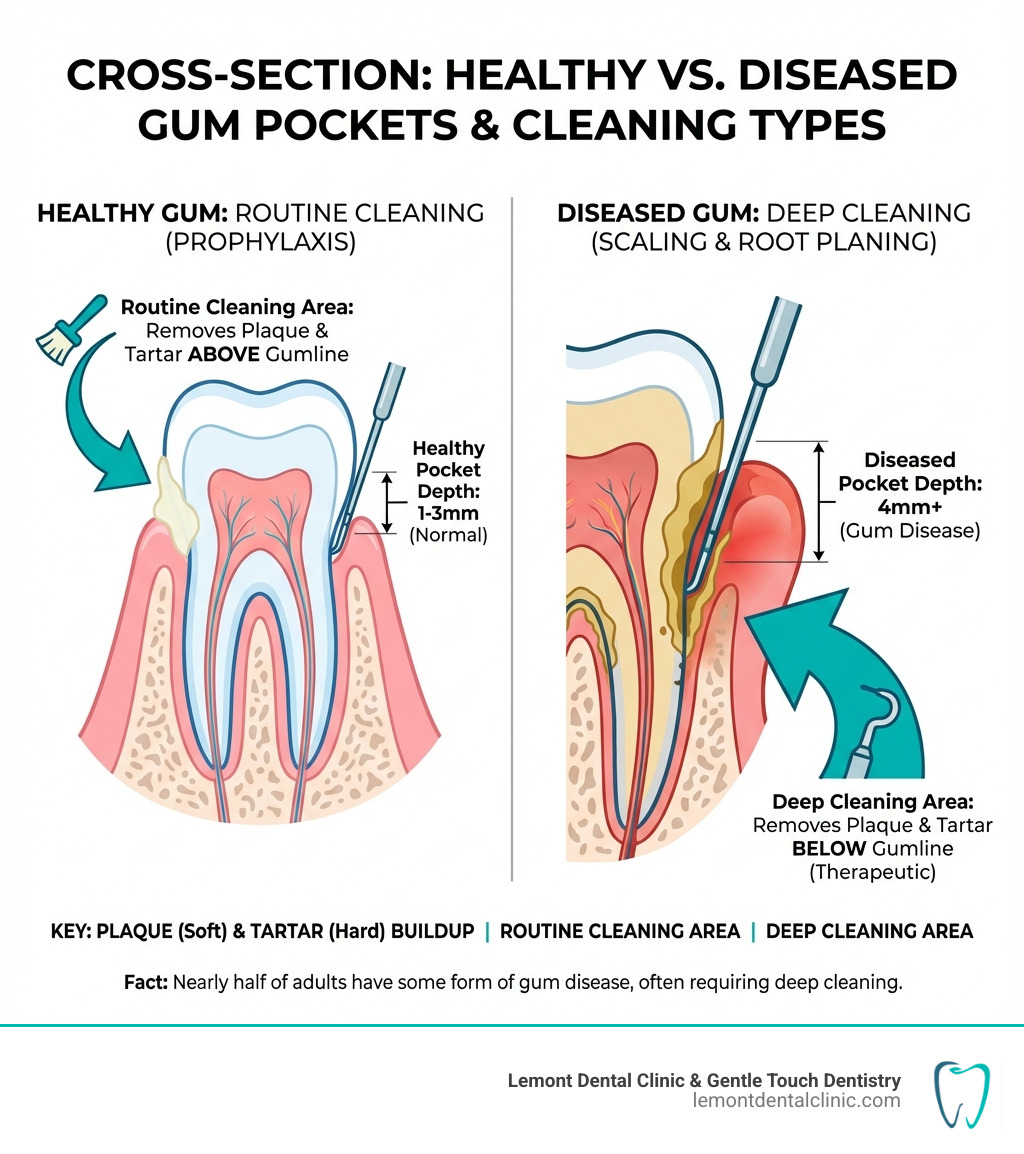
Removes plaque and tartar above the gumline
Preventative maintenance procedure
Recommended every 6 months
Takes 30-60 minutes
Generally pain-free
Deep Cleaning (Scaling and Root Planing)
Removes plaque and tartar below the gumline
Therapeutic treatment for gum disease
Recommended when gum pockets exceed 4mm
May require local anesthesia
Takes 1-2 visits to complete
Most people think a dental cleaning is just a dental cleaning. But there’s a crucial difference between the routine cleaning you get twice a year and a deep cleaning that treats active gum disease. The research shows that nearly half of American adults have some form of gum disease, yet many don’t realize they need more than a standard cleaning until their dentist measures their gum pockets.
A routine scale and clean polishes your teeth and removes surface buildup. It’s preventative care—like changing your car’s oil. A deep cleaning with a scale and clean dentist goes beneath the gumline to remove infection and smooth tooth roots. It’s therapeutic treatment—like fixing an engine problem before it causes complete failure.
The stakes are higher than you might think. Untreated gum disease doesn’t just lead to tooth loss. Research links oral bacteria from periodontal infections to heart disease and other serious health conditions throughout your body. That’s why understanding when you need more than a basic cleaning matters so much.
Many patients feel anxious about dental procedures, especially when they hear terms like “deep cleaning” or “scaling and root planing.” It’s natural to worry about discomfort or cost. But knowing what to expect—and why the procedure matters—can help you make confident decisions about your oral health.
I’m Piotr Dederowski, and I’ve spent years helping patients understand their dental treatment options as part of the team at Lemont Dental Clinic & Gentle Touch Dentistry, where we regularly perform both routine and therapeutic cleanings with a skilled scale and clean dentist approach. My goal is to take the mystery out of these procedures so you can protect your smile and your overall health.
Routine Cleaning vs. Deep Cleaning: What’s the Difference?
When we talk about dental cleanings, understand that not all cleanings are created equal. The primary distinction lies in whether we’re performing a preventative measure or a therapeutic treatment. Both aim to combat the effects of plaque and tartar (also known as calculus), but they target different areas and stages of oral health.
Plaque is a sticky film of bacteria that constantly forms on our teeth. If not removed daily through brushing and flossing, it can harden into tartar, which cannot be removed by home care alone. This buildup is the main culprit behind gum disease. You can learn more about maintaining your oral health from the CDC.
The Standard Scale and Clean: A Preventative Measure
A standard scale and clean, often referred to as prophylaxis, is our frontline defense against oral health issues. This routine cleaning focuses on removing plaque and tartar from the surfaces of your teeth and just above the gumline. It’s designed to prevent problems from developing or to address very early signs of gingivitis, which is the mildest form of gum disease.
During this procedure, our dental hygienists and dentists use specialized tools, including electric scalers and hand instruments, to gently scrape away any hardened deposits. After scaling, we carefully polish your teeth to remove any remaining plaque and surface stains, leaving your teeth feeling incredibly smooth and fresh. This polishing also creates a smoother surface, making it harder for plaque to adhere in the future.
This preventative care is crucial for maintaining overall oral health. It helps prevent cavities, keeps your gums healthy, and even contributes to fresher breath. For most individuals, we recommend a standard scale and clean every six months. This frequency is widely supported, with a survey in Western New York State showing that 86% of general dental practitioners recommend scaling and polishing every six months for ‘low-risk’ patients. These regular visits allow us to keep a close eye on your oral health, catching any potential issues while they are still minor.
Deep Cleaning (Scaling and Root Planing): A Therapeutic Treatment
When gum disease progresses beyond gingivitis, it becomes periodontitis, a more serious condition where the gums pull away from the teeth, forming “pockets” that become infected. In these cases, a standard cleaning isn’t enough. That’s when a deep cleaning, formally known as scaling and root planing (SRP), becomes necessary. This is a therapeutic procedure specifically designed to treat active gum disease.
Unlike a routine cleaning, SRP goes below the gumline. Our scale and clean dentist or hygienist will carefully remove plaque, tartar, and bacteria from the root surfaces of your teeth within these deeper pockets. Following the scaling, we perform root planing, which involves smoothing out the rough spots on the tooth roots. This smoothing helps to remove bacterial toxins and makes it more difficult for bacteria to reattach, encouraging your gum tissue to heal and reattach firmly to the teeth. This gum reattachment is vital for restoring the health of your gums and preventing further bone and tooth loss.
The Global Burden of Diseases study of 2010 estimated that the global age-standardized prevalence of severe periodontitis was 10.8%, affecting hundreds of millions worldwide. Here in Illinois, we see many patients who benefit from this targeted treatment. SRP is a non-surgical approach aimed at halting the progression of gum disease and restoring your periodontal health. It’s a more intensive procedure, often requiring local anesthesia for your comfort and typically completed in one or two visits, depending on the extent of the disease.
Signs You Might Need More Than a Standard Cleaning
How do you know if you need a routine cleaning or if it’s time for a more involved deep cleaning? Your body often sends us signals that your gums need extra attention. While a routine check-up with your scale and clean dentist is the best way to determine your specific needs, being aware of common signs and symptoms can help you understand when to seek help.
Gum inflammation, if left unchecked, can quickly escalate from gingivitis to periodontitis. Gingivitis is incredibly common, with global values ranging from 50% to 90% prevalence in most populations. Early detection and intervention are key to preventing irreversible damage.
Common Warning Signs of Gum Disease
We encourage our patients in Lemont, Palos Hills, and surrounding areas like Chicago Ridge and Oak Lawn to pay attention to these indicators:
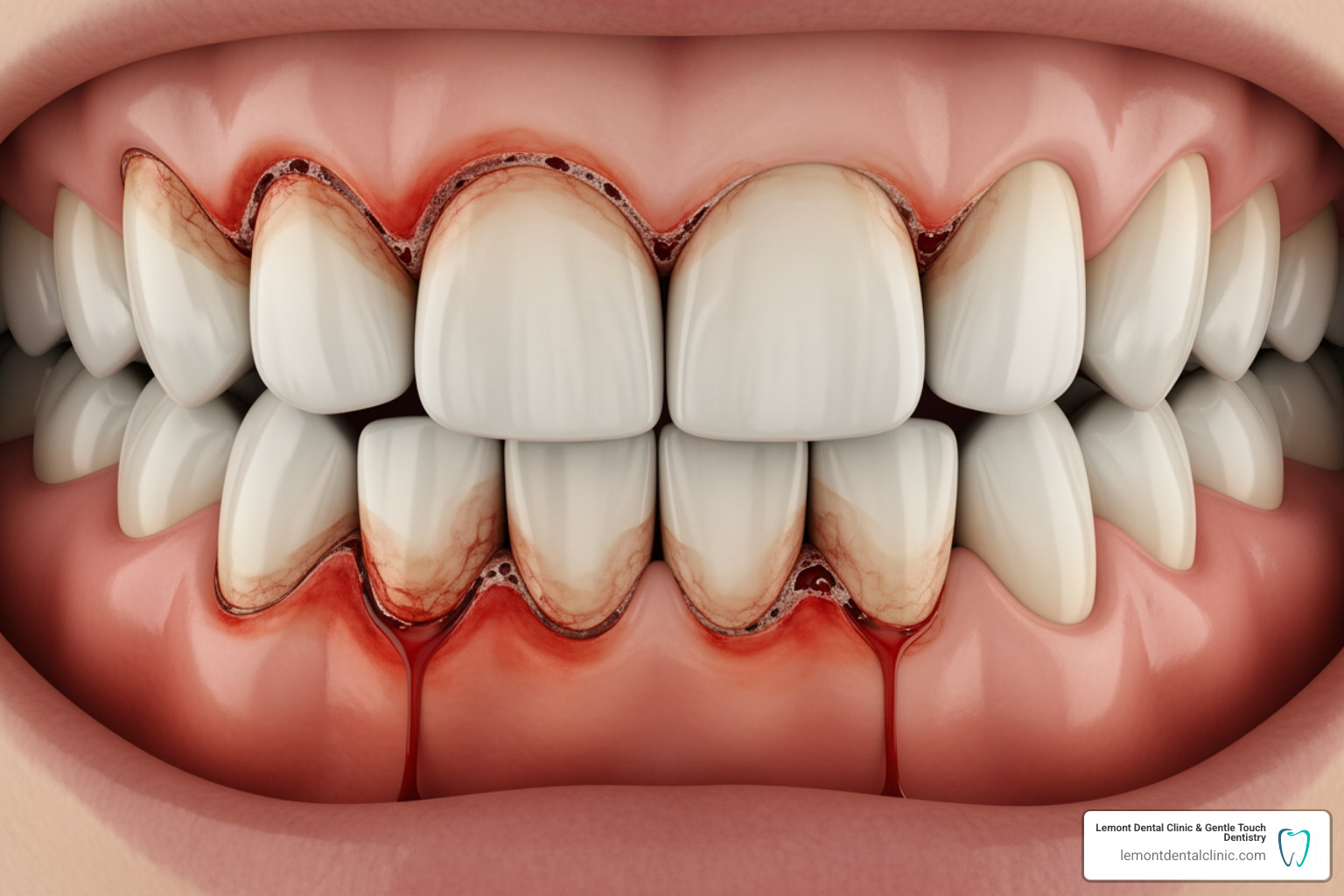
Bleeding Gums: Healthy gums shouldn’t bleed when you brush or floss. If you notice blood, it’s a significant sign of gingivitis or early periodontitis.
Persistent Bad Breath (Halitosis): While many factors can cause bad breath, a persistent, foul odor can be a sign of bacterial accumulation below the gumline.
Red or Swollen Gums: Gums that appear puffy, tender, or a darker red than their usual healthy pink are a common symptom of inflammation.
Receding Gums: If your teeth appear longer, or you notice your gumline pulling away from your teeth, it indicates gum recession, often a sign of advancing gum disease.
Tooth Sensitivity: Exposed tooth roots due to gum recession can lead to increased sensitivity to hot or cold temperatures.
Loose Teeth: This is a more advanced sign, indicating significant bone loss around the teeth, which is a hallmark of severe periodontitis.
Pain or Irritation While Eating and Drinking: Discomfort during meals can be a symptom of gum inflammation or exposed roots.
Pus Between Teeth or Along Gums: This is a clear sign of infection and requires immediate attention from a scale and clean dentist.
How Your Dentist Diagnoses the Need for a Deep Clean
At Lemont Dental Clinic & Gentle Touch Dentistry, our dentists and hygienists perform a thorough examination to accurately diagnose your periodontal health. This involves several key steps:
Clinical Examination: We visually inspect your gums for signs of inflammation, redness, swelling, and recession.
Periodontal Probing: This is a crucial diagnostic step. We use a tiny ruler (a periodontal probe) to gently measure the depth of the pockets around each tooth. Healthy gums attach tightly to the tooth, resulting in pocket depths of 1 to 3 millimeters. If we find pocket depths of 4 millimeters or more, especially with bleeding, it indicates the presence of gum disease and often signals the need for a deep cleaning. Statistics from the UK show that 45% of adults have some periodontal pocketing of 4 mm or more.
X-rays: Dental X-rays allow us to evaluate the bone supporting your teeth. Bone loss is a definitive sign of periodontitis and helps us assess the severity of the disease.
Based on these findings, we will recommend the appropriate course of action, ensuring you receive the precise care needed to restore your gum health.
The Deep Cleaning Procedure with a Scale and Clean Dentist
If our examination reveals that you have gum disease requiring more than a routine cleaning, we will recommend a deep cleaning, or scaling and root planing. This non-surgical treatment is a highly effective form of periodontal therapy designed to get your gums back to a healthy state. Our priority is always your comfort, and we take every measure to ensure a positive experience.
What to Expect During Your Appointment
Because deep cleaning involves working below the gumline, it can be more intensive than a standard cleaning. Here’s what you can generally expect:
Local Anesthesia: To ensure your comfort, we often administer a local anesthetic to numb the area we’ll be working on. This significantly reduces any potential discomfort during the procedure.
Multiple Visits: While some cases of moderate gum disease might be treated in a single longer session, deep cleanings are usually done in one or two visits, especially if multiple areas of your mouth are affected. We often divide the mouth into quadrants (sections) and treat one or two quadrants per appointment. This allows for a more thorough cleaning and makes the experience more manageable for you.
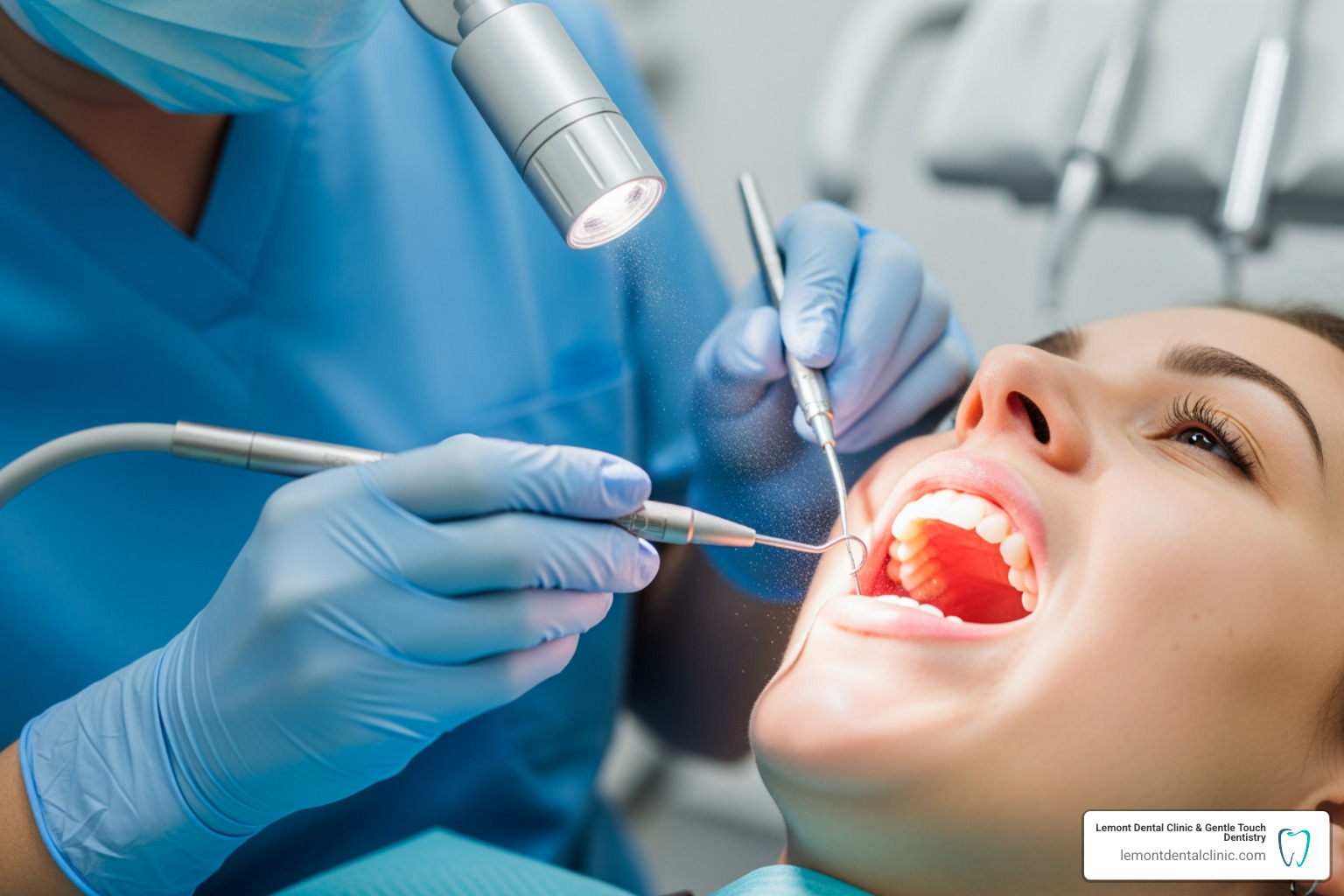
Advanced Tools: Our scale and clean dentist team uses both advanced ultrasonic scalers and specialized manual instruments. Ultrasonic scalers use high-frequency vibrations and a water spray to efficiently break up and wash away plaque and tartar. Manual instruments are then used to carefully clean and ensure all deposits are removed, even in hard-to-reach areas.
Procedure Duration: Each deep cleaning appointment typically lasts longer than a routine cleaning, varying based on the amount of buildup and the severity of the gum disease.
The Two-Step Process of a Deep Scale and Clean Dentist
The deep cleaning procedure itself consists of two primary steps: scaling and root planing.
Scaling Process: This is the first crucial step where we remove all the accumulated plaque, tartar, and bacteria. Using our specialized instruments, we carefully clean both above and, critically, below the gumline, reaching down into the periodontal pockets. The goal is to eliminate the disease-causing agents that have built up on the tooth surfaces and within these pockets.
Root Planing: After scaling, we proceed with root planing. This step involves smoothing the rough surfaces of your tooth roots. The root surfaces can become irregular and pitted, making them ideal breeding grounds for bacteria. By carefully planing and smoothing these surfaces, we remove any remaining bacterial toxins and create a clean, smooth surface that makes it harder for bacteria to reattach. This also encourages your gum tissue to reattach firmly to the cleaned root surfaces, reducing pocket depths and promoting a healthier oral environment. In some cases, we may also apply antimicrobial agents directly into the cleaned pockets to further reduce bacteria and aid healing.
This meticulous two-step process is designed to create a clean, healthy environment for your gums to heal, preventing further progression of periodontitis and safeguarding your overall oral health.
Benefits, Recovery, and Aftercare
Undergoing a deep cleaning with a scale and clean dentist is a significant step towards restoring your gum health. The benefits extend beyond just your mouth, and understanding the recovery process and crucial aftercare steps will help you maximize the positive outcomes. We adhere to the American Academy of Periodontology guidelines to ensure the highest standard of care.
Key Benefits of Scaling and Root Planing
The advantages of addressing gum disease with SRP are substantial:
Halts Gum Disease Progression: This is the most critical benefit. By removing bacteria and tartar below the gumline and smoothing root surfaces, we stop the destructive cycle of periodontitis, preventing further damage to your gums and supporting bone.
Prevents Tooth Loss: Untreated gum disease is the number one cause of tooth loss in the developed world. SRP helps preserve your natural teeth by restoring the health of the surrounding tissues.
Reduces Gum Inflammation: The procedure significantly reduces the redness, swelling, and bleeding associated with gum disease, leading to healthier, firmer gums.
Improves Bad Breath (Halitosis): The bacteria responsible for gum disease often produce foul odors. Removing these bacteria dramatically improves chronic bad breath.
Protects Overall Health: Research increasingly highlights the link between oral health and systemic health. Oral bacteria from periodontal infections can enter the bloodstream and have been linked to serious conditions like heart disease, stroke, and lung infections. By treating gum disease, we’re helping to protect your overall well-being.
Recovery and Aftercare Following Your Deep Cleaning
Recovery from a deep cleaning typically involves some temporary side effects. Most people experience mild discomfort or sensitivity for a few days, with full recovery usually taking one to two weeks. Our team will provide detailed aftercare instructions custom to your needs, but here’s a general guide:
| Side Effect | Typical Duration | Aftercare Recommendation What Why:** The purpose of this source is to inform users about its advertising practices and to ensure transparency and trust by stating that ads do not imply endorsement.
Source 11 (Oral-B – The Details of Dental Scaling):
Two basic methods for scaling teeth: handheld instruments (dental scaler and curette) and ultrasonic instruments.
Handheld: scrapes plaque using metal tool.
Ultrasonic: vibrating tip, water spray to chip off and wash away tartar.
Nearly half of American adults have gum disease.
Scheduling dental scaling as needed helps battle unseen plaque.
Source 12 (Perio.org – Nearly half of American adults have gum disease):
Dental scaling is a very common treatment for patients with gum disease.
Nearly half of American adults have gum disease.
Scheduling dental scaling as needed can help battle unseen plaque and maintain a cleaner mouth.
Source 13 (Palos Smiles – Dental Exam & Cleaning in Palos Hills, IL): Service page, general info. Use local focus.
Source 14 (Family Dental of Lincoln – Deep Cleanings (Scaling & Root Planing) | Dentists In Chicago, IL): Service page, general info. Ignore Chicago, focus on IL.
Source 15 (Baptist Family Dental – Periodontal Scaling & Root Planing | Chicago Ridge, Illinois): Service page, general info. Use local focus.
Source 16 (All Smiles — Trusted Dentist in Worth, IL | New Patients Welcome): Service page, general info. Use local focus.
Source 17 (Bailey Dental: Dentist in Palos Park, IL): Service page, general info. Use local focus.
Source 18 (Signature Dental Care: Personalized Dental Care in Hickory Hills, IL): Service page, general info. Use local focus.
Source 19 (Dentalogic Smiles: Scaling and Root Planing Oak Lawn, IL | Gum Disease Treatment): Service page, general info. Use local focus.
Source 20 (Lemont Dental Clinic Internal Links): These are internal links for the client, to be used where relevant for the CTA.
Okay, I have a solid plan. I will now proceed to write the article following these guidelines.