Why Professional Teeth Cleaning Matters for Your Oral Health
Dentist teeth cleaning is a professional procedure where a dental hygienist or dentist removes plaque, tartar, and stains from your teeth that regular brushing and flossing cannot reach. Here’s what happens during a typical cleaning:
Initial Examination – Visual inspection of teeth and gums for signs of decay or disease
Scaling – Removal of hardened plaque (tartar) using specialized tools
Polishing – Cleaning with gritty toothpaste to remove surface stains
Flossing – Expert flossing between all teeth
Fluoride Treatment – Application of protective fluoride to strengthen enamel
Many people dread teeth cleanings. Between the scraping sounds, occasional discomfort, and jaw fatigue, it’s easy to understand the apprehension. But here’s the truth: even if you brush twice daily and floss religiously, you still need professional cleanings.
Why? Because your toothbrush can’t do everything.
Daily brushing and flossing often leave plaque, food particles, and bacteria behind. Over time, this plaque hardens into tartar (also called calculus), which can only be removed with professional dental instruments. Skip your cleanings, and you’re inviting cavities, gum disease, bad breath, and potentially serious oral health issues.
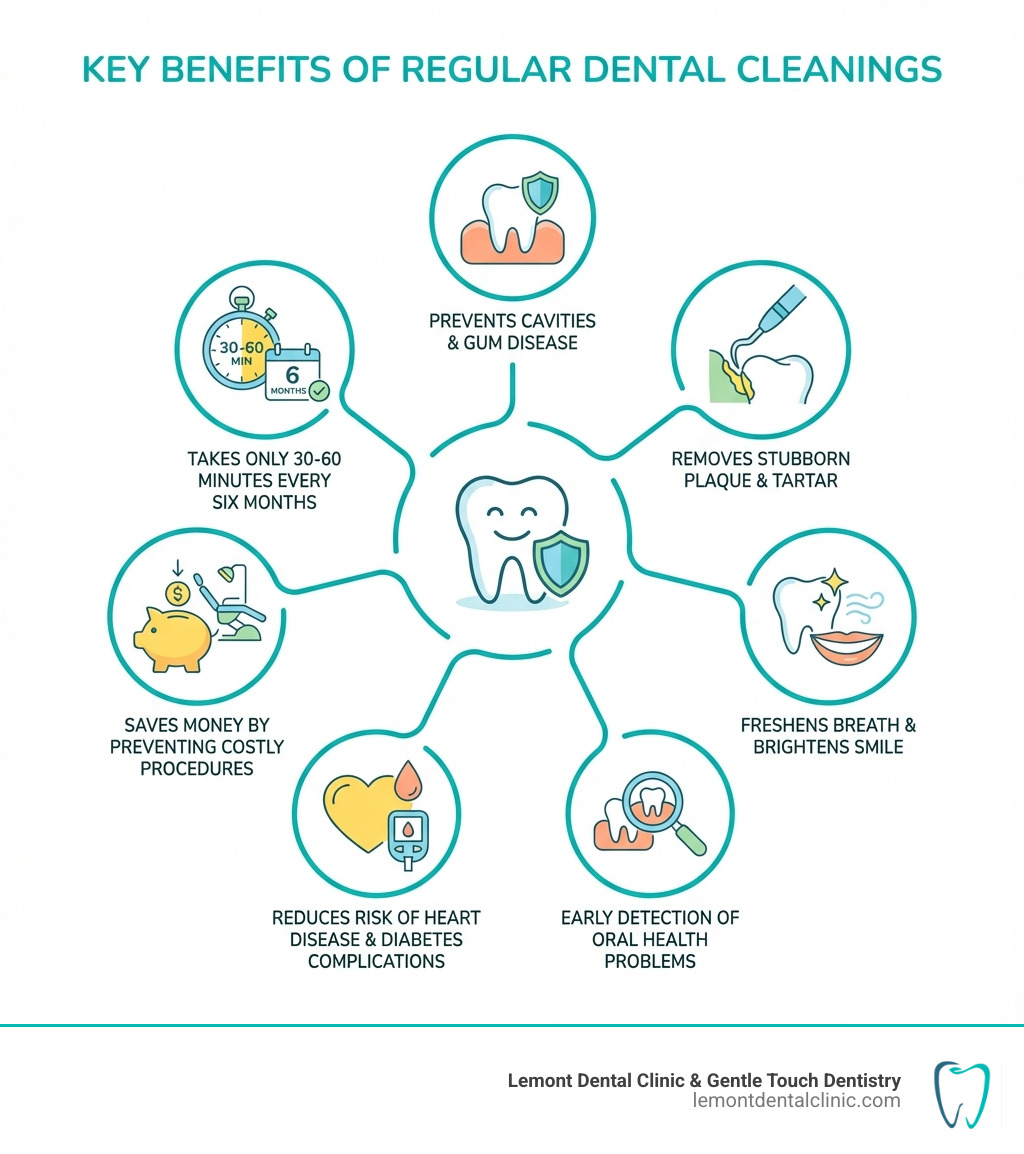
Professional teeth cleanings aren’t just about a brighter smile. They’re about prevention. Regular cleanings help catch problems early, when they’re easier and less expensive to treat. They also play a crucial role in your overall health, with links to reduced risk of heart disease, stroke, and diabetes complications.
The American Dental Association recommends professional cleanings every six months for most people. Some individuals—those with gum disease, diabetes, or a history of frequent cavities—may need more frequent visits.
I’m Piotr Dederowski, and at Lemont Dental Clinic & Gentle Touch Dentistry, we’ve helped thousands of patients maintain optimal oral health through comprehensive dentist teeth cleaning services. Our goal is to make every cleaning appointment comfortable and stress-free while ensuring your teeth stay healthy for life.
What is a Professional Dental Cleaning and Why is it Essential?
A professional dental cleaning, also known as prophylaxis, is a cornerstone of preventive dental care. It’s a comprehensive procedure performed by our skilled dental hygienists and dentists at Lemont Dental Clinic & Gentle Touch Dentistry, using specialized tools to achieve a level of clean that home care can’t match.
This essential service involves carefully removing the buildup of plaque and tartar (hardened plaque) from your teeth. While daily brushing and flossing are crucial, they can’t reach every crevice or remove tartar once it has formed. A professional dentist teeth cleaning is designed to:
Remove Stubborn Plaque and Tartar: Only professional instruments can safely remove tartar (calculus) from above and below the gumline, preventing cavities and gum disease.
Polish Away Stains: The procedure removes surface stains from coffee, tea, and other foods, leaving your smile brighter.
Freshen Your Breath: By eliminating the bacteria trapped in plaque and tartar, cleanings are a powerful tool against chronic bad breath (halitosis). You can find More info about Bad Breath (Halitosis).
How Dental Cleanings Impact Your Overall Health
The benefits of a clean mouth extend far beyond your smile. Research shows a strong connection between oral health and your overall systemic health. Chronic gum inflammation (periodontitis) has been linked to serious health conditions, including:
Heart Disease and Stroke
Diabetes Complications
Respiratory Diseases
Adverse Pregnancy Outcomes
By investing in regular professional dental cleanings, you’re not just taking care of your teeth; you’re taking a proactive step toward safeguarding your entire body. To learn more about how gum disease can affect your overall health, please read More info about Periodontal Disease. The American Dental Association also provides excellent resources on maintaining your oral health, such as Brushing and Beyond: Key Oral Health Tips for Anyone with a Smile.
The Step-by-Step Dentist Teeth Cleaning Process
Understanding what happens during your dentist teeth cleaning appointment can help alleviate any anxiety. At Lemont Dental Clinic & Gentle Touch Dentistry, we prioritize your comfort while providing a thorough and effective cleaning that typically takes between 30 to 60 minutes. If you’re wondering if a cleaning might hurt, we have a resource on Does Teeth Cleaning Hurt? that might ease your mind.
Step 1: The Initial Examination
Every cleaning begins with a comprehensive examination. Our hygienist or dentist will visually inspect your teeth and gums for any signs of inflammation, cavities, or other concerns. They will also assess your gum health by gently measuring the space between your teeth and gums. If needed, we’ll review dental X-rays to check for issues not visible to the naked eye, such as decay between teeth or bone loss. This initial check-up is a key part of our preventive approach. For more details, visit More info about Check-ups.
Step 2: Scaling – Removing Plaque and Tartar
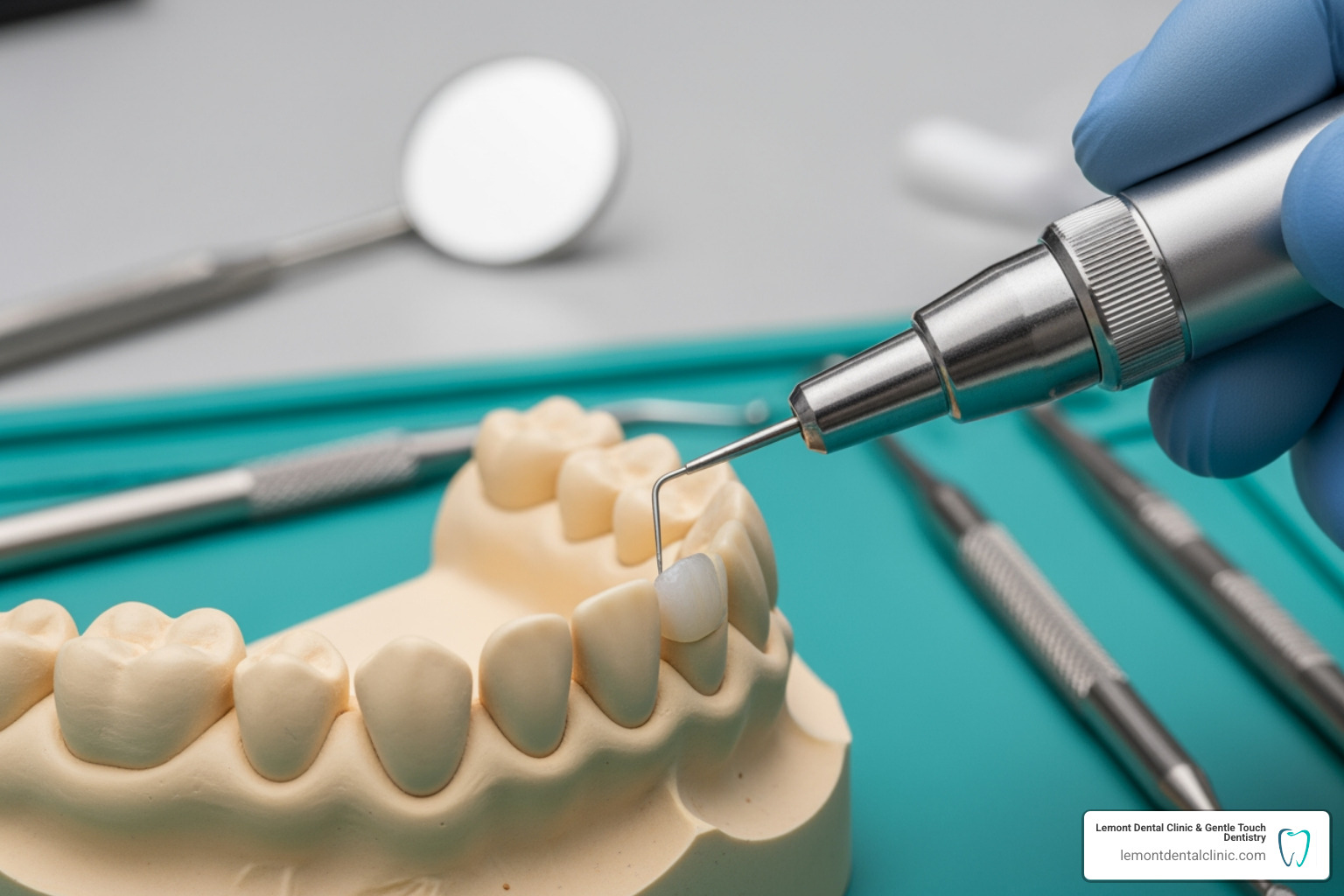
This is the core of the dentist teeth cleaning. Using specialized hand instruments (scalers) and an ultrasonic tool, the hygienist will carefully remove plaque and hardened tartar (calculus) from your tooth surfaces, both above and below the gumline. The ultrasonic scaler uses gentle vibrations and a water spray to break up larger deposits, while hand tools allow for fine-tuned, detailed cleaning. This step is crucial because tartar cannot be removed with a regular toothbrush.
Step 3: Polishing, Flossing, and Rinsing
After scaling, your teeth are polished using a slow-speed handpiece with a soft rubber cup and a special gritty toothpaste called prophylaxis paste. This smooths the tooth surfaces and removes any remaining plaque and surface stains. Next, the hygienist will expertly floss between your teeth to ensure all debris is gone. A final rinse washes everything away, leaving your mouth feeling fresh and clean.
Step 4: Fluoride Treatment
The final step in many cleanings is a fluoride treatment. Fluoride is a mineral that helps strengthen your tooth enamel, making it more resistant to decay. It can be applied as a gel or a varnish that is painted onto your teeth. This quick, painless step is a powerful tool in preventing cavities. You can find out more about the benefits of Fluoridation.
Routine vs. Deep Cleaning: What’s the Difference?
Not all dental cleanings are the same. The type you need—either a routine cleaning (prophylaxis) or a deep cleaning (scaling and root planing)—depends on the health of your gums. A routine cleaning is a preventive measure for healthy mouths, while a deep cleaning is a treatment for active gum disease.
The key difference lies in whether we are cleaning above or below the gumline. Routine cleanings address the visible parts of your teeth, while deep cleanings are needed when infection has moved into the pockets between your teeth and gums. For a comprehensive overview, you can refer to Tooth Scaling and Root Planing.
Understanding a Routine Cleaning (Prophylaxis)
A routine dentist teeth cleaning is for patients with healthy gums or mild gingivitis. The focus is on removing plaque and tartar from the surfaces of your teeth above the gumline to prevent cavities and gum disease from developing. It’s the standard cleaning most people receive every six months to maintain good oral health. To learn more about what a regular cleaning entails, visit More info about Regular Cleaning.
Understanding a Deep Cleaning (Scaling and Root Planing)
A deep cleaning is a therapeutic treatment for patients with periodontitis (advanced gum disease). This procedure is necessary when plaque and tartar have accumulated below the gumline. It involves scaling (removing tartar from the tooth roots) and root planing (smoothing the roots to help gums reattach). This process is more extensive, often requires local anesthesia, and may be split into multiple appointments. It is essential for stopping the progression of gum disease and preventing further damage. For more detailed information, please refer to More info about Deep Cleaning.
Here’s a quick comparison of routine vs. deep cleaning:
Feature
Routine Cleaning (Prophylaxis)
Deep Cleaning (Scaling and Root Planing)
Purpose
Preventive maintenance
Treatment for active gum disease
Focus Area
Above the gumline
Below the gumline and on tooth roots
Patient Need
Healthy gums or mild gingivitis
Moderate to advanced gum disease (periodontitis)
Anesthesia
Not usually needed
Local anesthetic is typically used
Visits
One appointment
Often two or more appointments
After Your Cleaning: Post-Appointment Care and Preparation
Congratulations! You’ve just completed a vital step in maintaining your oral and overall health. Now that your teeth are sparkling clean, it’s natural to wonder what comes next. At Lemont Dental Clinic & Gentle Touch Dentistry, we want to ensure you’re fully informed about post-cleaning care and how to prepare for your future appointments.
What to Expect Immediately After a Cleaning
It’s completely normal to experience a few minor sensations right after your dentist teeth cleaning. These are usually temporary and indicate that your mouth has received a thorough, deep clean.
Temporary Sensitivity: Your teeth might feel a bit sensitive to hot or cold temperatures. This is especially common if you had a significant amount of tartar removed and typically subsides within a few days. If you experience prolonged or severe sensitivity, please don’t hesitate to contact us. We have more information on what to do if your Teeth Sensitive After Cleaning, What Now?.
Minor Gum Soreness: Your gums might feel a little tender, particularly if you had some inflammation before the cleaning. This is also normal and should resolve within a day or two.
Smooth and Clean Feeling: The most immediate and satisfying sensation you’ll notice is how incredibly smooth and clean your teeth feel.
Eating and Drinking Guidelines: If you received a fluoride treatment, we generally recommend waiting at least 30 minutes before eating or drinking to allow the fluoride to fully absorb and strengthen your enamel.
Preparing for Your Next Dentist Teeth Cleaning Appointment
While professional cleanings are essential, the care you provide your teeth at home between appointments is equally important. Think of it as a partnership: we do the heavy lifting twice a year, and you maintain the good work daily.
Here’s how you can prepare for your next dentist teeth cleaning and ensure the best possible results:
Maintaining At-Home Hygiene: This is your daily defense against plaque and tartar. Brush your teeth twice a day for two minutes, floss at least once a day, and limit sugary foods and drinks.
Disclosing Medical History: Always inform our team about any changes to your medical history, medications, or allergies. This information is crucial for your safety and allows us to tailor your treatment appropriately.
Dental Anxiety Communication: If you experience any anxiety about dental appointments, please let us know when you schedule your visit. Our compassionate team at Lemont Dental Clinic & Gentle Touch Dentistry is here to make your experience as comfortable as possible.
Frequently Asked Questions about Professional Teeth Cleanings
We understand that you might have questions about professional dentist teeth cleaning. Here, we address some of the most common inquiries to provide you with clarity and confidence in your oral health journey.
How often should I get my teeth professionally cleaned?
For most people, the general recommendation for a professional dentist teeth cleaning is every six months. This frequency is widely supported by the American Dental Association to effectively prevent cavities and gum disease.
However, your individual needs might require a different schedule. We may recommend more frequent cleanings (e.g., every three or four months) if you have certain risk factors, such as:
Gum disease (periodontitis or gingivitis)
A family history of plaque buildup or cavities
A weakened immune system or other illnesses like diabetes
Smoking or tobacco use
Our dentists at Lemont Dental Clinic & Gentle Touch Dentistry will assess your specific condition to recommend the ideal cleaning frequency for you. Regular check-ups are crucial for maintaining long-term oral health, so be sure to See your dentist regularly.
How do dental cleanings compare to at-home oral hygiene?
While diligent at-home oral hygiene is the foundation of good dental health, it cannot fully replace the comprehensive care provided by a professional cleaning. Here’s why both are necessary:
Tartar Removal: Plaque that isn’t removed daily hardens into tartar (calculus). Once formed, tartar cannot be removed by brushing or flossing alone. Only a dental professional with specialized instruments can safely remove it.
Hard-to-Reach Areas: Even with perfect technique, there are areas in your mouth that are difficult to clean thoroughly at home. A professional cleaning ensures these spots are addressed.
Comprehensive Examination: A cleaning appointment also includes a thorough dental exam to check for cavities, gum disease, oral cancer, and other issues you might not notice on your own. Early detection is key to simpler, less costly treatment.
At-home care and professional cleanings are a team effort. By combining your daily habits with our expertise, you create the strongest defense against oral health problems.
Are there any risks or side effects of dental cleanings?
A professional dentist teeth cleaning is a very safe and routine procedure with minimal risks. The benefits far outweigh any potential minor side effects. Our trained hygienists and dentists at Lemont Dental Clinic & Gentle Touch Dentistry adhere to strict safety protocols to ensure your well-being.
Common, temporary side effects can include:
Gum Irritation: Your gums may feel sore or bleed slightly, especially if you had significant plaque buildup. This usually subsides within a day or two.
Tooth Sensitivity: Teeth may feel more sensitive to hot or cold for a few days, particularly after tartar removal. Desensitizing toothpaste can help.
The risks associated with not getting regular cleanings—such as advanced gum disease, tooth loss, and related systemic health issues—are far more significant. The importance of having a qualified professional perform your cleaning cannot be overstated.
Conclusion
We hope this extensive guide has shed light on the invaluable role of professional dentist teeth cleaning in maintaining not just a beautiful smile, but your overall health. We’ve seen how these routine visits go far beyond surface-level aesthetics, acting as a powerful preventative measure against cavities, gum disease, and even systemic health issues like heart disease and diabetes.
From the meticulous examination to the thorough scaling, polishing, and fluoride application, each step of the cleaning process is designed to give you a fresh start and protect your teeth from the invisible threats of plaque and tartar. We’ve also clarified the crucial distinction between a routine cleaning for maintenance and a deep cleaning for addressing active gum disease, ensuring you understand the custom care you might need.
At Lemont Dental Clinic & Gentle Touch Dentistry, we are committed to providing high-quality, comprehensive general and restorative dental care right here in Lemont and Palos Hills, IL. Our experienced doctors, state-of-the-art technology, and patient-focused approach ensure that your dental health is in the best hands. We believe in empowering our patients with knowledge, so you can take an active role in your oral health journey.
Don’t underestimate the power of prevention. Regular professional cleanings, combined with diligent at-home care, are your best defense against future dental problems and a pathway to a healthier, happier life. Take control of your oral health today.