Understanding Overdentures: Your Path to a Secure Smile
What are overdentures? Overdentures are removable dental prostheses that attach to and rest on remaining natural teeth, tooth roots, or dental implants, providing superior stability compared to traditional dentures. Unlike conventional dentures that simply sit on your gums, overdentures “snap” securely into place, eliminating the need for messy adhesives and the embarrassment of dentures that slip while you eat or speak.
Quick Answer:
- Definition: A removable denture that attaches to dental implants or prepared natural teeth
- Key Feature: Snaps securely into place for improved stability
- Main Benefit: No slipping, improved chewing ability, and preserved jawbone health
- Types: Tooth-supported (rests on natural tooth roots) or implant-supported (anchored by dental implants)
- Typical Implants Needed: 2-4 implants for lower jaw, 4+ for upper jaw
If you’ve struggled with loose dentures that click during conversations or make eating your favorite foods a challenge, you’re not alone. Many patients come to us frustrated by traditional dentures that shift and slide, forcing them to avoid certain foods or feel self-conscious in social situations. Overdentures solve these problems by combining the affordability of dentures with the stability of dental implants.
According to research, implant-supported overdentures have become a standard of care for patients missing all their teeth, with survival rates ranging from 91% to 100% over periods spanning 1 to 10 years. The McGill consensus statement even designates mandibular two-implant overdentures as the first choice for edentulous patients.
The benefits extend beyond just stability. Overdentures help preserve your jawbone by stimulating it through the remaining tooth roots or implants, preventing the bone loss that typically occurs with traditional dentures. This means maintaining your facial structure and avoiding the sunken appearance that many long-term denture wearers experience.
I’m Piotr Dederowski, and at Lemont Dental Clinic & Gentle Touch Dentistry, I’ve helped countless patients in Lemont and Palos Hills restore their confidence and quality of life through comprehensive restorative dental care, including overdentures. Understanding what are overdentures and how they can transform your daily life is the first step toward reclaiming the comfort and function you deserve.
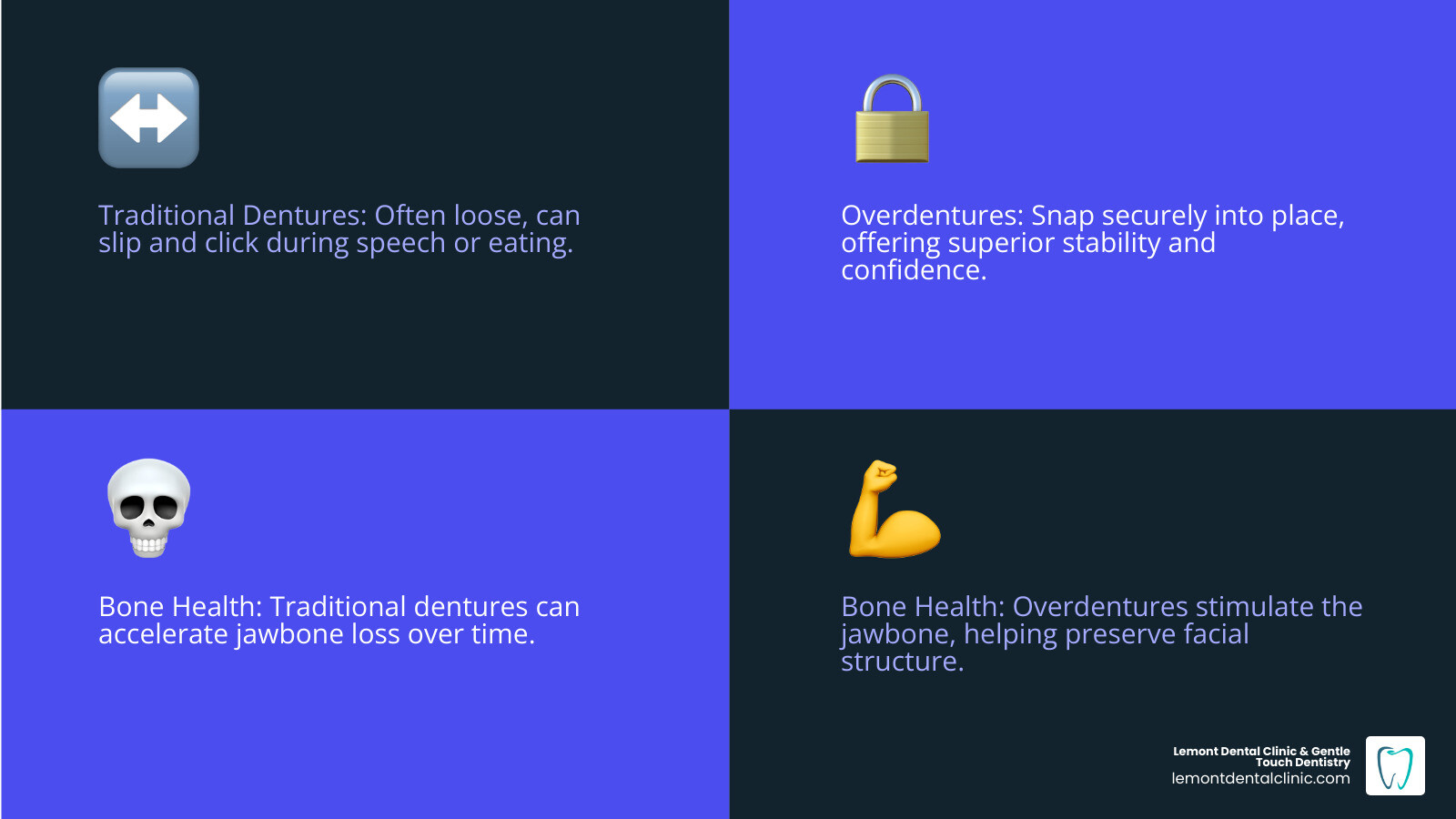
What are overdentures terms to remember:
What are Overdentures? A Comprehensive Guide
An overdenture is a removable dental prosthesis that replaces missing teeth, offering significantly improved stability compared to conventional dentures. Its defining characteristic is that it rests on and attaches to either a few remaining natural teeth or, more commonly, dental implants. This design allows the prosthesis to “snap” into place, providing a secure fit that traditional dentures often lack.
The primary goal is to improve quality of life by restoring aesthetics and crucial functions like chewing and speaking. As a removable prosthesis, it allows for easy daily cleaning and promotes better oral hygiene.
How Overdentures Differ from Traditional Dentures
To appreciate the value of overdentures, it’s helpful to see how they differ from traditional dentures. While both replace missing teeth, their support mechanisms are fundamentally different, leading to different patient experiences.
Traditional dentures rely solely on suction and the underlying gum ridge for retention. This often results in movement, slipping, and the need for messy adhesives. Over time, the jawbone beneath traditional dentures tends to resorb (shrink) due to lack of stimulation, leading to a poorer fit, discomfort, and a sunken facial appearance.
Overdentures, on the other hand, derive their stability from their attachment to either natural tooth roots or dental implants. This connection provides a much firmer foundation, eliminating the common issues associated with traditional dentures.
Here’s a comparison to highlight the key differences:
| Feature |
Traditional Dentures |
Overdentures |
| Stability |
Rests on gums, prone to slipping and movement |
“Snaps” securely onto implants or natural teeth, highly stable and secure |
| Biting Force |
Significantly reduced (approx. 10-20% of natural) |
Greatly improved (closer to natural teeth, allowing a wider diet) |
| Bone Health |
Accelerates bone loss due to lack of stimulation |
Preserves jawbone by stimulating it through implants or remaining roots |
| Comfort |
Can cause sore spots, irritation, and gag reflex |
More comfortable, reduces pressure on gums, less bulk, no adhesives needed |
| Maintenance |
Requires adhesives, frequent relines due to bone loss |
Daily removal for cleaning, implant/attachment care, attachments may need periodic replacement |
| Adhesives |
Often necessary for retention |
Not needed, prosthesis is securely retained |
This improved stability means no more embarrassing slips. Patients can enjoy a wider variety of foods, improving nutrition and overall health. Preserving the jawbone helps maintain facial structure for a more youthful appearance. If you’re struggling with unstable traditional dentures, we offer solutions for Fixing Loose Dentures and can discuss how overdentures provide a superior, long-term fix.
What are the Different Types of Overdentures?
Overdentures are versatile, coming in different forms depending on what they are supported by. The two main categories are tooth-supported and implant-supported overdentures. Understanding these types is crucial when considering which option might be best for you.
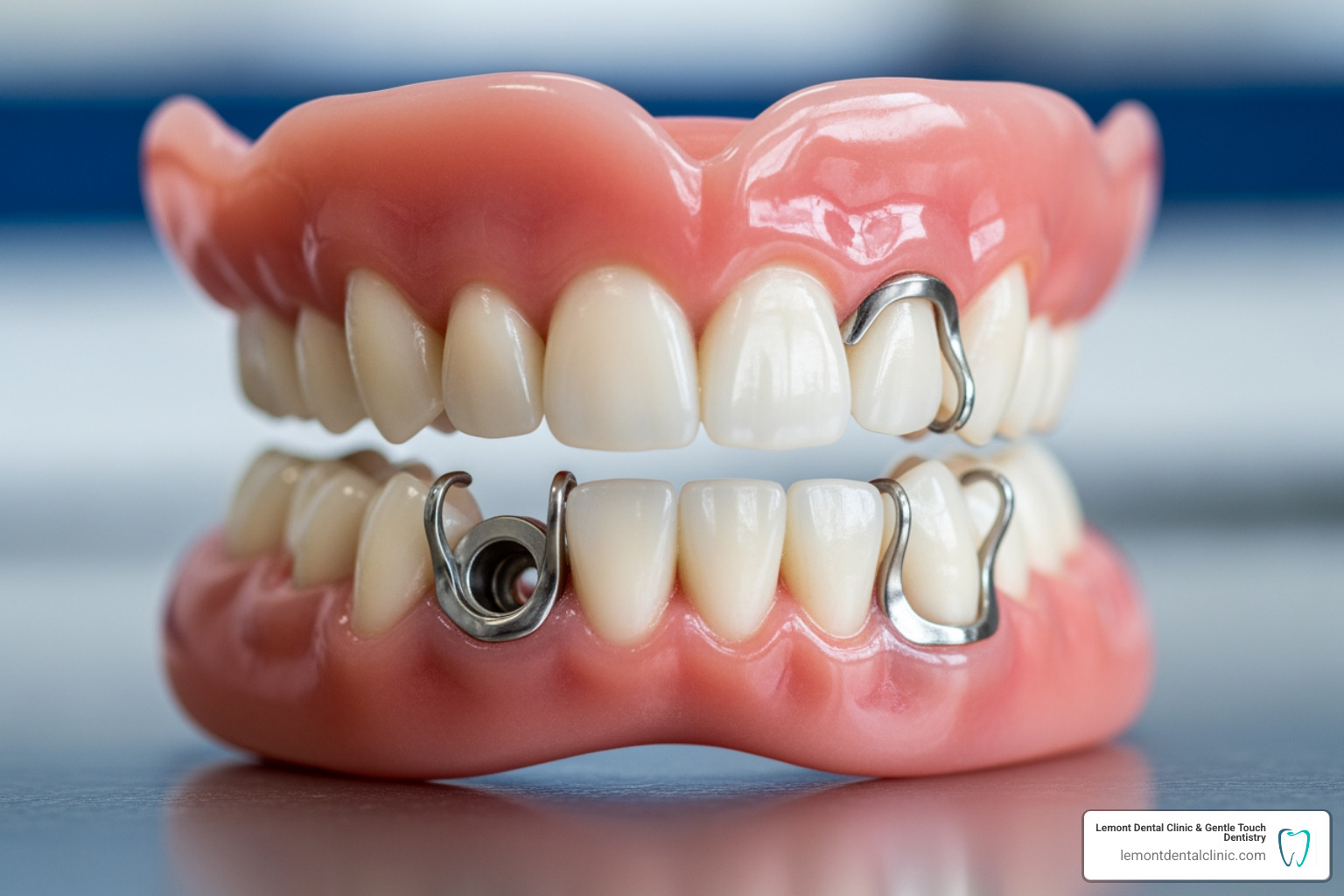
Tooth-Supported Overdentures
Tooth-supported overdentures use a few remaining natural teeth as anchors. These teeth are prepared (often with root canal treatment) to support small attachments, which the overdenture snaps onto.
- Abutment Teeth: The remaining natural teeth that support the overdenture are called abutment teeth. Ideally, these are healthy teeth with strong roots, often canines, which can provide excellent support. The selection of abutment teeth depends on factors like their location (one per quadrant is often ideal) and prognosis (they should be healthy and free of decay or severe gum disease). According to the University of Illinois Chicago, abutment teeth should be healthy with manageable gum issues to ensure long-term retention.
- Root Preservation: This approach is considered a practical measure in preventive dentistry because it helps to preserve the alveolar bone around the natural roots. This is significant because the presence of natural tooth roots helps to maintain the jawbone, delaying the bone loss that is inevitable once teeth are fully extracted.
- Proprioception (Sensation): An often-overlooked benefit of tooth-supported overdentures is the preservation of proprioception. The periodontal membrane around natural tooth roots contains nerves that provide sensory feedback, allowing patients to sense biting forces and the texture of food more accurately. This improves chewing efficiency and overall comfort.
Implant-Supported Overdentures
Implant-supported overdentures are more common, especially when no suitable natural teeth remain. Small titanium posts (dental implants) are surgically placed into the jawbone. Once they integrate with the bone (a process called osseointegration), they provide a stable foundation for the overdenture.
- Dental Implants as Anchors: The implants serve as strong anchors, to which various attachment systems (like ball attachments, locator attachments, or bar attachments) are connected. The overdenture then securely snaps onto these attachments. This provides a level of stability and retention that is best by traditional dentures.
- Osseointegration: This is a biological process where the titanium implant fuses directly with the surrounding jawbone. It typically takes 3-6 months and is crucial for the long-term success and stability of the implant. This fusion not only secures the implant but also stimulates the bone, preventing the bone resorption that occurs when teeth are lost.
- Number of Implants Needed: The number of implants required varies depending on the arch (upper or lower jaw) and individual patient needs.
- Mandibular (Lower Jaw): For a mandibular overdenture, support is significantly better with two implants than with just one. Many studies support the use of two implants for optimal stability and patient satisfaction in the lower jaw.
- Maxillary (Upper Jaw): The most common number of implants used to stabilize a maxillary (upper jaw) overdenture is four. While some cases might use more or fewer, four implants provide robust support for the larger surface area of an upper denture.
- Survival Rates: The survival rate for implants supporting overdentures is remarkably high. Studies show that the survival rate of implants supporting overdentures in the mandible ranges from 91.7% to 100% over a 10-year period. This speaks to the reliability and long-term success of this treatment option.
For a deeper dive into how dental implants can transform your smile, explore our page on More info about Implant Dentures. We use the latest technology and experienced doctors at our Lemont and Palos Hills locations to ensure the highest quality care for our patients.
The Benefits and Drawbacks of Overdentures
Deciding on any significant dental treatment involves weighing the pros and cons. Overdentures offer a host of advantages, particularly for those who struggle with traditional dentures, but they also come with certain considerations. We believe in providing a balanced view so you can make the most informed decision about your oral health.
Research consistently demonstrates high patient satisfaction rates with overdentures, largely due to their superior stability and functional improvements. The survival rates for the implants themselves are impressive, with studies showing 91.7% to 100% success over extended periods.
What are the Benefits of Choosing Overdentures?
The advantages of choosing what are overdentures are numerous and directly address many of the common complaints associated with conventional dentures:
- Improved Stability and Confidence: This is arguably the most significant benefit. By snapping onto implants or natural teeth, overdentures remain firmly in place, eliminating embarrassing slips, clicks, or wobbles. This newfound stability allows you to speak, laugh, and socialize with confidence.
- Improved Speech and Chewing Ability: With a stable foundation, overdentures significantly improve your ability to chew and bite. You can enjoy a wider variety of foods, including those you might have avoided with traditional dentures, such as crunchy vegetables or tougher meats. This also contributes to clearer speech, as the denture no longer moves around in your mouth.
- Halts Jawbone Resorption: One of the most critical long-term benefits, especially with implant-supported overdentures, is the preservation of your jawbone. Dental implants stimulate the bone, preventing the natural process of bone loss (resorption) that occurs when teeth are missing. This is a major factor in maintaining oral health and facial structure.
- Preserves Facial Structure: By preventing jawbone loss, overdentures help maintain the natural contours of your face. Traditional dentures often lead to a sunken or aged appearance over time as the jawbone recedes. Overdentures help you maintain a more youthful and natural facial profile.
- Better Nutrition and Food Choices: The increased biting force and stability mean you can eat a more diverse and healthier diet. This can significantly improve your nutritional intake and overall well-being, allowing you to enjoy foods like apples or corn on the cob that might have been impossible with conventional dentures.
- Increased Comfort: Without the need for adhesives and with reduced movement, overdentures typically fit more comfortably. They distribute chewing forces more evenly, reducing pressure spots on your gums.
- Removable for Easy Cleaning: While stable in your mouth, overdentures are designed to be easily removed by you for thorough daily cleaning, promoting excellent oral hygiene and preventing issues like denture stomatitis.
The scientific community also supports the efficacy of overdentures. For more in-depth research, you can explore studies like those found at Scientific research on implant-supported overdentures, which highlight the clinical benefits and outcomes.
Potential Complications and What to Expect
While overdentures offer significant advantages, it’s important to be aware of potential drawbacks and complications:
- Higher Initial Cost than Traditional Dentures: Overdentures, especially implant-supported ones, involve a more complex procedure and materials, leading to a higher upfront investment compared to conventional dentures. However, many patients view this as a worthwhile investment in their long-term oral health and quality of life, considering the reduced need for frequent relines and adhesives.
- Requires a Surgical Procedure (for Implant-Supported): Getting implant-supported overdentures involves minor oral surgery to place the dental implants. While generally safe and performed under local anesthesia, any surgery carries inherent risks, such as infection or temporary discomfort.
- Longer Treatment Timeline: The process for implant-supported overdentures typically spans several months. This includes the healing period for implants (osseointegration), which can take 3-6 months before the denture can be fully loaded.
- Regular Maintenance Needs: While overdentures are easier to clean than fixed implant bridges, they still require diligent daily cleaning and regular professional check-ups. Neglecting hygiene can lead to issues around the implants or natural abutment teeth.
- Attachment Wear and Replacement: The attachments that connect the overdenture to the implants or natural teeth are subject to wear and tear. These components, often made of plastic or nylon, typically require replacement every 1-2 years to maintain optimal retention. This is a normal part of maintenance and helps ensure the longevity of your overdenture.
- Risk of Mucositis or Loose Attachments: As with any dental prosthetic, complications can arise. Mucositis (inflammation of the gum tissue around implants) is a possibility if oral hygiene is not maintained. Attachments can also become loose over time, which necessitates a visit to our clinic for adjustment or replacement. According to a 2017 study, common complications of implant-supported prostheses include loss of retention, mucositis, abutment screw loosening, and fracture.
Despite these considerations, for many patients in Lemont, Palos Hills, and surrounding Illinois communities, the benefits of overdentures far outweigh the potential drawbacks, offering a life-changing improvement in oral function and confidence.
The Process: From Consultation to a Confident Smile
Starting on the journey to a more stable and confident smile with overdentures is a multi-step process that requires careful planning and execution. At Lemont Dental Clinic & Gentle Touch Dentistry, we guide our patients through each phase, ensuring comfort and clarity from your initial consultation to the final fitting. The success of your overdenture largely depends on the expertise of your dental team and your commitment to the treatment plan.
The Step-by-Step Journey to Getting Overdentures
Here’s what you can expect during the process of getting your overdentures:
- Initial Consultation and Oral Health Evaluation: Your journey begins with a comprehensive examination. Our experienced doctors will assess your overall oral health, review your medical history, and discuss your goals and concerns. We’ll examine your remaining teeth (if any), gum tissue, and jawbone density. This is the stage where we determine if what are overdentures is the right solution for you.
- 3D Imaging and Treatment Planning: To ensure precise placement and optimal outcomes, we use advanced 3D imaging, such as CT scans. This allows us to visualize your jawbone structure, nerve pathways, and sinus cavities in detail. Based on this, we’ll develop a personalized treatment plan, including the number and exact placement of implants (if needed) or the preparation of natural abutment teeth.
- Abutment Tooth Preparation or Implant Placement Surgery:
- For Tooth-Supported Overdentures: If you have suitable natural teeth, they will be prepared. This typically involves root canal treatment and reducing the tooth to just above the gum line. Attachments are then placed on these prepared roots.
- For Implant-Supported Overdentures: This involves a minor surgical procedure where titanium dental implants are carefully placed into your jawbone. This step is performed with local anesthesia to ensure your comfort.
- Healing and Osseointegration Period (3-6 months): Following implant placement, a crucial healing period begins. During this time, the implants integrate with your jawbone through osseointegration, forming a strong, stable foundation. We may provide a temporary denture during this phase, so you won’t be without teeth.
- Denture Fabrication and Fitting: Once the implants have fully integrated (or your natural abutment teeth are ready), we’ll take precise impressions of your mouth. These impressions are sent to a dental lab where your custom overdenture is carefully crafted to match your natural gums and complement your facial features.
- Final Adjustments: During your fitting appointments, we’ll ensure your new overdenture fits perfectly, feels comfortable, and provides optimal function. We’ll make any necessary adjustments to ensure your bite is correct and your smile is beautiful.
This structured approach ensures that every aspect of your overdenture treatment is handled with the utmost care and precision at Lemont Dental Clinic & Gentle Touch Dentistry.
Who is an Ideal Candidate for This Solution?
While overdentures offer remarkable benefits, they are not suitable for everyone. We carefully evaluate each patient to ensure the best possible outcome. You might be an ideal candidate for what are overdentures if you:
- Have Complete or Significant Tooth Loss: Overdentures are designed for individuals who are missing most or all of their teeth in one or both arches.
- Are Unhappy with Traditional Dentures: If you’re experiencing discomfort, instability, or difficulty eating and speaking with your conventional dentures, overdentures can provide a significant upgrade.
- Possess Sufficient Jawbone Density: For implant-supported overdentures, adequate jawbone is necessary to support the implants. If bone density is insufficient, bone grafting may be an option to create a suitable foundation.
- Maintain Good Overall and Oral Health: Successful implant integration and the longevity of your overdenture depend on your general health and commitment to oral hygiene. Conditions like uncontrolled diabetes or certain medications might affect candidacy.
- Are a Non-Smoker: Smoking can significantly impair healing and increase the risk of implant failure. While not an absolute contraindication, it’s strongly advised to quit smoking before and after implant procedures.
- Are Committed to Oral Hygiene: Maintaining excellent daily oral hygiene and attending regular dental check-ups are crucial for the long-term success of both tooth-supported and implant-supported overdentures.
Our team at Lemont Dental Clinic & Gentle Touch Dentistry, serving Lemont, Palos Hills, and surrounding areas like Chicago Ridge, Worth, and Orland Park, will conduct a thorough assessment to determine if overdentures are the right solution to restore your smile and confidence.
Living with Your Overdentures: Care, Maintenance, and Longevity
Once you’ve received your overdentures, the journey doesn’t end there. Proper care and maintenance are paramount to ensuring their longevity, maintaining your oral health, and maximizing the benefits you gain from your new smile. We’ll provide you with all the guidance you need to keep your overdentures in top condition. For more information on various Types of Dentures and Cost, we have resources available.
Daily Care and Cleaning Routine
Caring for your overdentures is a straightforward process, but it requires consistency. Unlike fixed dental solutions, the removability of overdentures makes daily cleaning simple and effective.
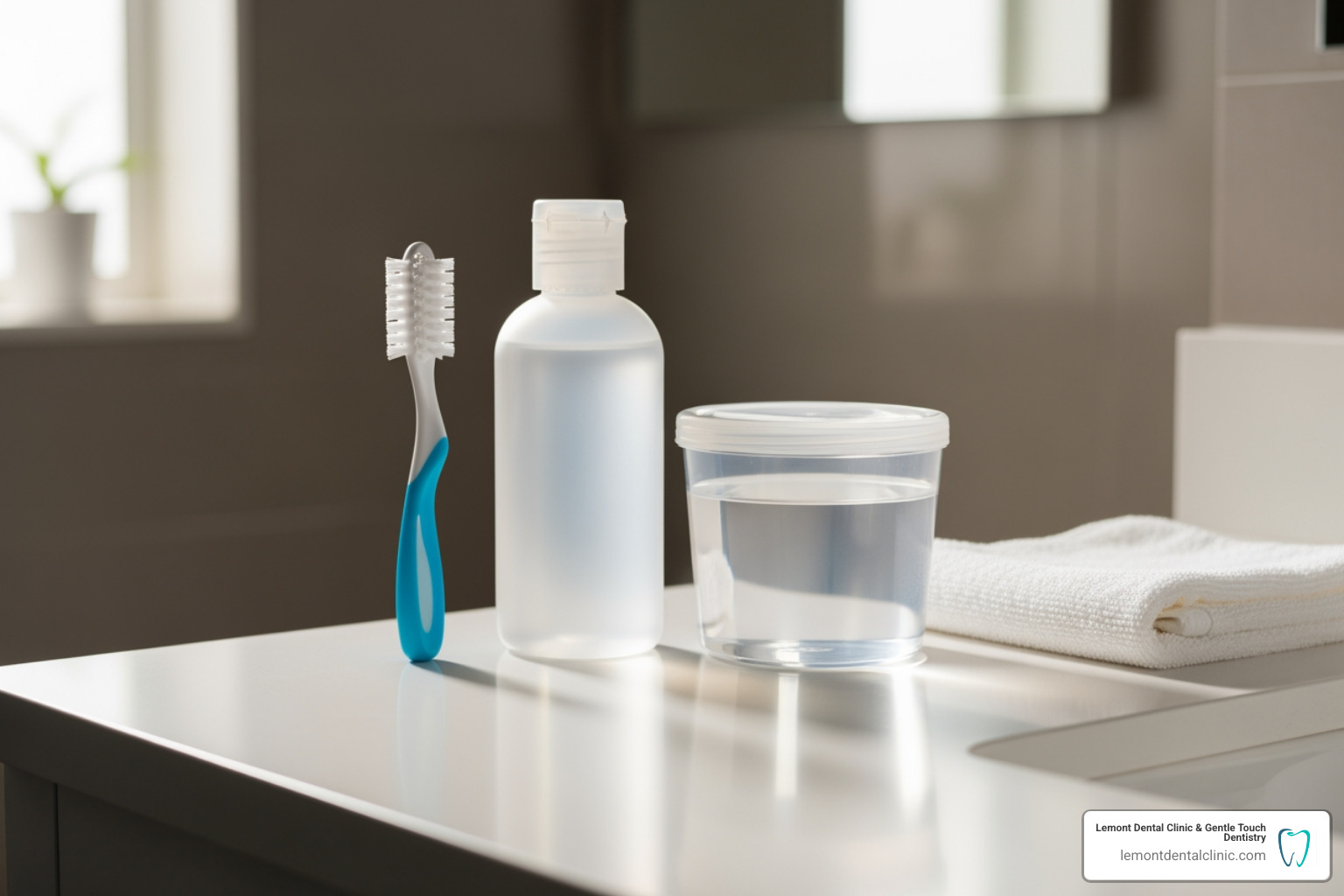
- Daily Removal for Cleaning: The most important step is to remove your overdentures every day. This allows you to thoroughly clean both the prosthesis and your mouth. Wearing dentures 24/7 is not advised after the initial adjustment period, as gum tissue needs air exposure and rest. Not removing them can lead to trapped bacteria, gum inflammation, and even yeast infections.
- Brushing the Prosthesis: Gently brush all surfaces of your overdenture with a soft-bristled brush and a non-abrasive denture cleaner or mild antibacterial soap. Avoid regular toothpaste, as it can be too abrasive and scratch the denture material. Rinse the denture under running water before brushing to remove any loose food particles.
- Cleaning the Abutments and Attachments in Your Mouth: If you have tooth-supported overdentures, gently brush your natural abutment teeth and gum tissue with a soft toothbrush and regular fluoride toothpaste. For implant-supported overdentures, carefully clean around the implant attachments (e.g., ball, bar, or locator attachments) and the surrounding gum tissue. Special interdental brushes or floss threaders may be recommended to reach tight areas.
- Soaking the Denture Overnight: After cleaning, soak your overdenture in clean water or a denture cleansing solution overnight. This keeps the material moist, preventing it from drying out and potentially warping. If your overdenture has metal components, ensure your soaking solution is compatible to avoid tarnishing.
- Rinsing Before Reinsertion: Always rinse your overdenture thoroughly with water before reinserting it into your mouth to remove any residual cleansing solution.
Beyond daily care, regular dental check-ups are essential. We will monitor the fit of your overdenture, the health of your gums and implants, and the condition of the attachments. Sometimes, a reline may be necessary if your gums change shape over time. Find out more about What Happens During a Denture Reline?.
How Long Do Overdentures Last?
The longevity of your overdentures involves a few different components, each with its own lifespan:
- Denture Lifespan: The acrylic or resin portion of the overdenture itself typically lasts about 5-7 years. Over time, factors like chewing forces, cleaning habits, and natural changes in your mouth can lead to wear and tear, necessitating replacement.
- Attachment Components: The small components that connect the overdenture to the implants or natural teeth (such as O-rings, clips, or locator inserts) are designed to be replaceable. These attachments bear the brunt of the daily “snap-in” and “snap-out” action and chewing forces. They generally require replacement every 1-2 years to maintain optimal retention and prevent excessive wear on the underlying implants or abutments. This is a routine part of overdenture maintenance.
- Dental Implants: The dental implants themselves are designed for long-term success. With proper care and good oral hygiene, dental implants can last several decades, often a lifetime. Their survival rate for supporting overdentures is very high, ranging from 91.7% to 100% over 10 years, as noted in various studies. This high success rate makes them a durable foundation for your overdenture.
A review article published in the Journal of Advanced Prosthodontics in 2012 stated that the survival rate of overdentures varied between 91% and 100% over the duration ranging from 1 year to 10 years. This comprehensive data underscores the reliability of overdentures as a long-term tooth replacement solution. For further details on survival rates and research, you can refer to this Review article on overdenture survival rates.
At Lemont Dental Clinic & Gentle Touch Dentistry, we are committed to helping our patients in Lemont, Palos Hills, and surrounding Illinois communities maintain their overdentures for as long as possible through regular check-ups and professional advice.
Conclusion: A Stable Smile is Within Reach
We hope this comprehensive guide has helped explain what are overdentures and illuminated the significant benefits they offer. For many individuals suffering from extensive tooth loss or the frustrations of traditional dentures, overdentures represent a life-changing solution. They provide unparalleled stability, restore powerful chewing function, improve speech, and most importantly, contribute to the preservation of your jawbone and facial structure. The confidence that comes with a secure, natural-looking smile is truly invaluable.
Unlike conventional dentures that rely on suction and adhesives, overdentures “snap” into place, giving you the freedom to eat, speak, and laugh without worry. Whether supported by a few healthy natural tooth roots or by state-of-the-art dental implants, the outcome is a dramatically improved quality of life. While they involve a higher initial investment and a more involved process than traditional dentures, their long-term benefits in comfort, health, and confidence make them a worthwhile consideration for many.
If you’re in Lemont, Palos Hills, or any of the surrounding Illinois communities, and are curious about whether overdentures could be the right choice for you, we invite you to schedule a consultation at Lemont Dental Clinic & Gentle Touch Dentistry. Our experienced team uses the latest technology and a patient-centered approach to provide comprehensive restorative care. We’ll thoroughly assess your unique situation, discuss your options, and help you start on the path to a stable, healthy, and confident smile.
Find out if overdentures are right for you by scheduling a consultation for dentures near me.