Brushing teeth is one of the most important daily habits for maintaining oral health. Here’s what you need to know to master the technique:
Essential Brushing Guidelines:
Frequency: Brush twice daily for 2 minutes each time
Technique: Hold your toothbrush at a 45-degree angle to your gums
Motion: Use gentle, short strokes in a circular pattern
Coverage: Clean all tooth surfaces—outer, inner, and chewing surfaces
Tools: Use a soft-bristled brush and fluoride toothpaste
Don’t forget: Brush your tongue to remove bacteria
Getting your teeth cleaned professionally feels like a dental health reset, but what happens at home makes the real difference. Many people brush their teeth every day, yet still develop cavities or gum disease. The problem isn’t usually if you’re brushing—it’s how you’re brushing.
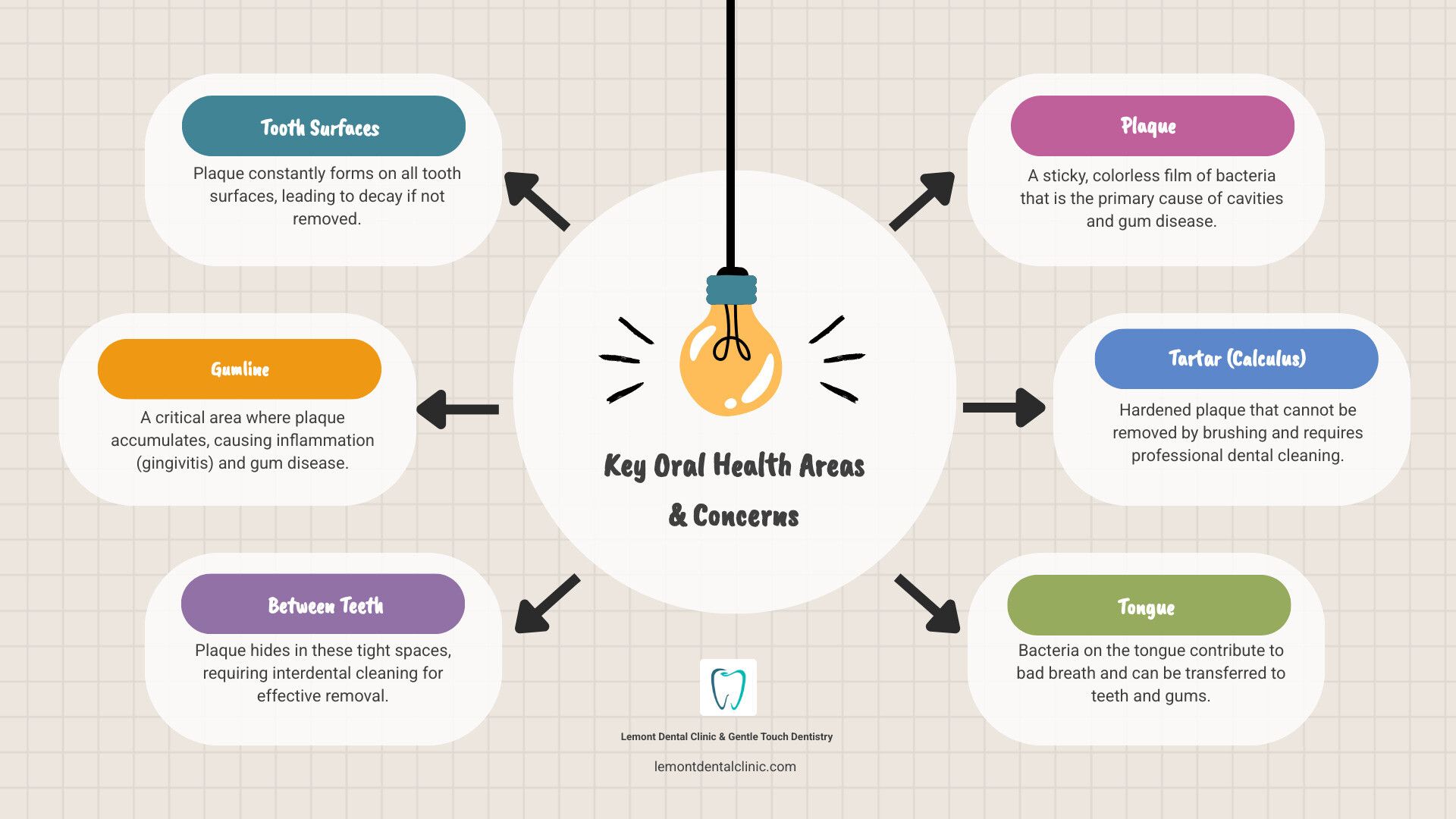
Brushing teeth isn’t just about scrubbing away yesterday’s dinner. It’s about removing plaque—a sticky film of bacteria that constantly forms on your teeth and gumline. When plaque isn’t removed properly, it hardens into tartar (also called calculus), which only a dental professional can remove. This buildup can lead to gum inflammation, tooth decay, and eventually gum disease and tooth loss.
Poor oral hygiene has been linked to heart disease, diabetes, and other systemic health conditions. Mastering proper brushing isn’t just about a bright smile—it’s about protecting your entire body.
I’m Piotr Dederowski of Lemont Dental Clinic & Gentle Touch Dentistry. I’ve helped countless patients understand that effective brushing teeth starts with proper technique, not expensive products. We’ll walk through what you need to know to keep your teeth and gums healthy for life.
Mastering the Art of Brushing Teeth: A Step-by-Step Guide
Effective brushing teeth is a skill, not just a habit. At Lemont Dental Clinic & Gentle Touch Dentistry, we see patients who brush regularly but still struggle with cavities and gum problems because they lack the proper technique. Understanding the fundamentals turns a daily chore into powerful protection for your smile. Let’s walk through the essentials.
Choosing Your Tools: Toothbrush and Toothpaste Essentials
Having the right tools matters. When you’re in the toothbrush aisle, what actually matters is choosing soft bristles. Medium and hard bristles are too aggressive for your enamel and gums, causing damage over time. A soft-bristled brush removes plaque just as effectively without wearing down teeth or irritating gum tissue.
The toothbrush head size should fit comfortably in your mouth and reach all areas easily. If you’re straining to reach your back molars, the brush is probably too large.
Regarding the manual versus electric toothbrush debate: both work beautifully when used correctly. Electric toothbrushes can make the job easier, especially if you have arthritis or limited hand mobility. The built-in timer helps ensure you brush for the full two minutes. But if you prefer the simplicity of a manual brush, you’re not missing out. The technique you use matters far more than the price tag.
Fluoride toothpaste is essential. Fluoride strengthens your tooth enamel and helps reverse early decay through a process called remineralization. The American Dental Association recommends toothpaste with at least 1,350 parts per million (ppm) fluoride for adults. Children can use the same family toothpaste with 1,350 to 1,500 ppm fluoride. You can read more about the role of fluoride in preventing decay and find how our Fluoridation services support your preventative care.
When choosing products, look for the ADA Seal of Acceptance. This seal means the product has been tested and meets strict safety and effectiveness standards, taking the guesswork out of shopping. You can find ADA-Accepted products through their searchable database.
The Correct Technique for Brushing Teeth
Getting the technique right transforms brushing teeth from a rushed routine into genuine protection.
The magic starts with the 45-degree angle. Position your toothbrush so the bristles meet your teeth at a 45-degree angle toward your gumline. This angle allows the bristles to clean both the tooth surface and gently sweep under the gumline where plaque loves to hide.
Once positioned, use gentle, short strokes—about tooth-wide—or small circular motions. The key word here is gentle. Aggressive scrubbing wears down your enamel and irritates your gums, creating more problems than it solves.
You need to cover every surface of every tooth. Start with the outer surfaces facing your cheeks, then move to the inner surfaces facing your tongue. Don’t forget the chewing surfaces. For the inner surfaces of your front teeth, tilt the brush vertically and use gentle up-and-down strokes.
Finally, brush your tongue. This removes bacteria and food particles that contribute to bad breath. Start from the back and brush forward gently.
If you’d like a visual guide, the ADA How to Brush Guide breaks down each step with helpful illustrations.
Timing is Everything: How Often and When to Brush
Perfect technique requires consistency. Brushing teeth often and long enough is what keeps your mouth healthy.
The standard recommendation is twice a day for two minutes each time. That two-minute mark is the time needed to thoroughly clean all surfaces of your teeth. Try dividing your mouth into four sections (upper right, upper left, lower right, lower left) and spending 30 seconds on each. Most people are surprised to find they’ve been brushing for only 30 to 45 seconds total.
The most important brushing session is before bed. During sleep, saliva production drops dramatically, allowing bacteria to feast on any remaining plaque and food debris. That’s why nighttime brushing is non-negotiable. Your morning brushing can happen whenever it fits your routine.
Don’t brush immediately after consuming acidic foods or drinks. Sodas, citrus fruits, and wine temporarily soften your enamel. If you brush while your enamel is softened, you can brush away tiny amounts of it. Wait about an hour to give your saliva time to neutralize the acid and let your enamel re-harden. You can learn more about why you should wait to brush after acidic foods from the Mayo Clinic.
After brushing teeth, spit out the excess toothpaste but don’t rinse with water. Rinsing washes away the concentrated fluoride that’s still working to protect your teeth. Just spit and let that fluoride do its job. If you use mouthwash, use it at a different time of day—perhaps after lunch—rather than immediately after brushing.
The Unseen Dangers: Consequences of Improper Brushing
When you skip brushing teeth or use the wrong technique, you open the door to oral health problems that can sneak up on you. These issues often start small but can snowball into serious conditions.
Plaque is the villain—a sticky, colorless film of bacteria constantly forming on your teeth. These bacteria feed on sugars and starches, producing acids that attack your tooth enamel.
When you don’t remove plaque through regular brushing teeth and flossing, it hardens into tartar, also called calculus. This rough, yellowish deposit forms along your gumline. Once tartar forms, your toothbrush can’t touch it; only a professional dental cleaning can remove it. Tartar also makes it easier for more plaque to accumulate.
The acid attacks from plaque bacteria eventually create small holes we call cavities. At first, you might not feel anything. But as the cavity grows, you’ll start to notice. If you’ve wondered what does a cavity feel like?, the answer ranges from mild sensitivity to sharp pain. Left untreated, cavities can lead to infections, abscesses, and tooth loss.
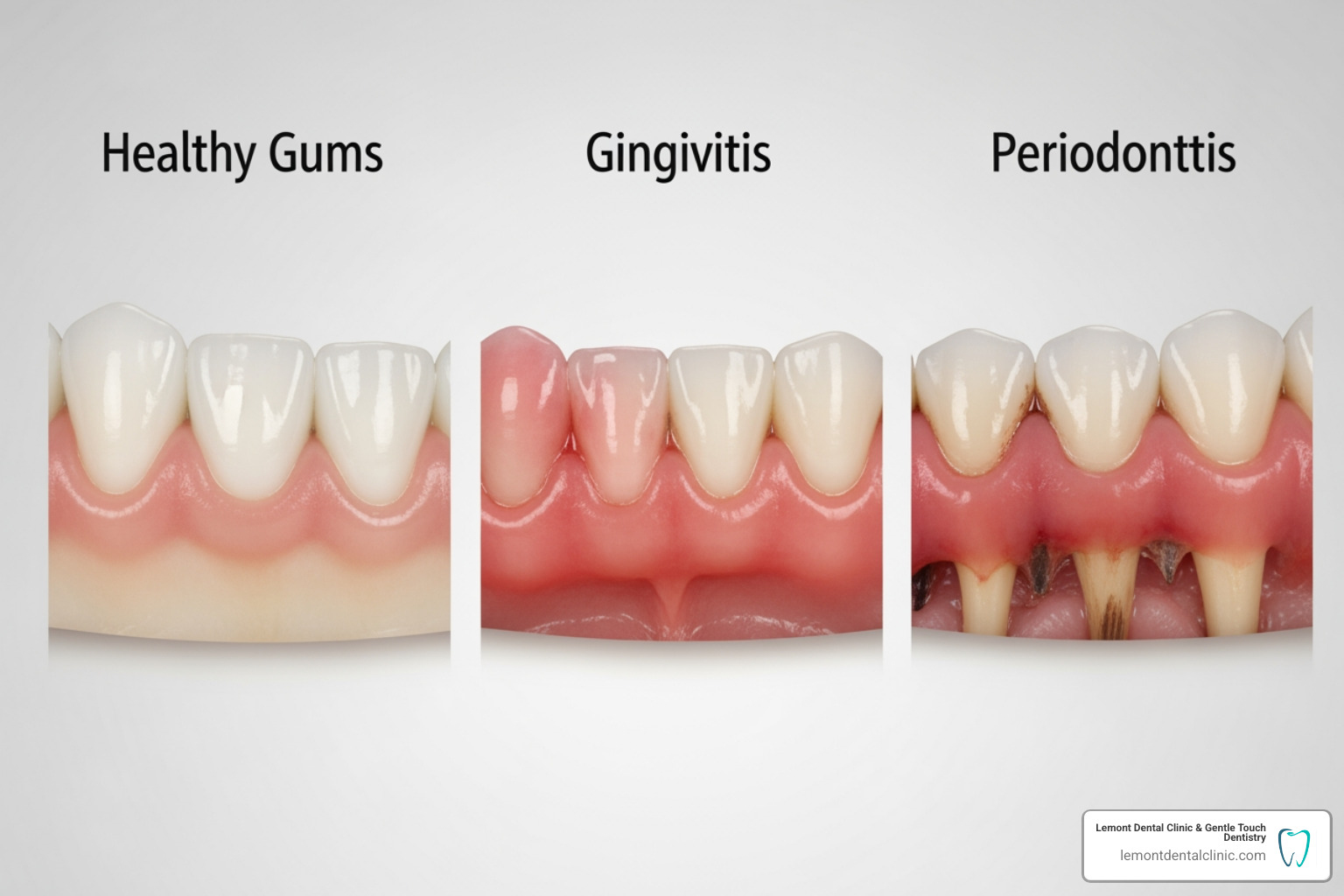
Your gums are also vulnerable. When plaque and tartar accumulate along the gumline, they irritate the gum tissue, causing gingivitis, the earliest stage of gum disease. You’ll notice red, swollen, and tender gums that might bleed when you’re brushing teeth.
The good news is that gingivitis is reversible with improved daily oral hygiene and professional cleanings at Lemont Dental Clinic & Gentle Touch Dentistry. But if ignored, gingivitis progresses to the far more serious periodontitis.
In periodontitis, the infection spreads below the gumline, causing gums to pull away from your teeth. The infection attacks the bone and tissues that hold your teeth in place. This is why Periodontal Disease is The Sneaky Enemy of Teeth—it often advances silently until teeth become loose.
The consequences of periodontitis can extend beyond your mouth, with research linking it to heart disease, diabetes, and stroke. The inflammation and bacteria can enter your bloodstream, affecting your entire body.
Then there’s bad breath, or halitosis. While it might seem minor, chronic bad breath can be embarrassing. It’s caused by bacteria on plaque and your tongue. Mints won’t fix the root cause, which requires proper brushing teeth and tongue cleaning.
The good news is that all of these problems are largely preventable. Consistent, proper brushing teeth, combined with flossing and regular professional care, can stop this cascade of problems. Your daily routine is your most powerful defense.
Brushing and Beyond: A Complete Oral Hygiene Routine
Brushing teeth twice a day is the foundation, but it’s not the whole story. At Lemont Dental Clinic & Gentle Touch Dentistry, we see the best outcomes when patients accept a complete routine that goes beyond the toothbrush.
Your daily habits, the foods you eat, and professional care all work together. When one piece is missing, the whole picture suffers. The ADA offers a helpful Daily Routine guide, and we’re here to help you understand how each piece fits your unique situation.
The Importance of Cleaning Between Your Teeth
Brushing teeth alone cleans only about 60% of your tooth surfaces. The other 40% is between your teeth, where bristles can’t reach. Interdental cleaning is essential for preventing gum disease and cavities.
Flossing remains the gold standard. Technique matters. Take about 18 inches of floss, wrap most of it around your middle fingers, and use a couple of inches to work with. Gently guide the floss between your teeth, then curve it into a C-shape against one tooth. Slide it up and down, dipping slightly below the gumline. Repeat on the adjacent tooth before moving on.
For larger gaps or orthodontic work, interdental brushes can be incredibly effective. These tiny brushes are easier to use than floss for some people and are helpful for bridgework or implants.
Water flossers are excellent at dislodging food particles and can be gentler on sensitive gums, especially with braces or bridges. However, it’s important to understand their limitations. Water flossers rinse away debris but may not remove sticky plaque as effectively as traditional floss. Think of them as a powerful supplement, not a complete replacement.
If you have significant tartar buildup, you might need a professional Deep Cleaning to reset your oral health before your daily routine can be fully effective.
Adapting Your Brushing Teeth Routine for Special Needs
Life sometimes requires customized approaches to oral hygiene. At Lemont Dental Clinic & Gentle Touch Dentistry, we help patients adapt their routine. The goal is the same—clean, healthy teeth and gums—but the path may differ.
If you wear braces, you know food finds new hiding places. You’ll need to brush more frequently, ideally after every meal. A soft-bristled brush is your friend, and pay special attention to the area around each bracket. A proxabrush can get into tight spots. Flossing becomes more challenging, often requiring floss threaders to get under the archwire.
For those with arthritis or limited hand mobility, holding a manual toothbrush can be difficult. An electric toothbrush can be transformative, as it does most of the work. If you prefer a manual brush, adding a foam grip or sliding the handle through a rubber ball can make it easier to grasp.
Sensitive teeth can make brushing teeth uncomfortable. Use a soft-bristled brush and sensitivity toothpaste. Brush gently; scrubbing harder only increases discomfort. If you’ve noticed increased sensitivity after a professional cleaning, check out our article on Teeth Sensitive After Cleaning What Now? to understand why.
If you wear dentures, your oral hygiene routine doesn’t end. Remove your dentures nightly and brush them with a denture brush and non-abrasive cleaner. Store them in water or a denture solution overnight. If you’re curious about options, we’ve written about What Are Different Types of Dentures.
Helpful tools exist for nearly every situation: ergonomic electric toothbrushes, one-handed floss holders, interdental brushes, and tongue scrapers. The right tool can make a difficult routine manageable.
The Mouth-Body Connection: How Brushing Affects Overall Health
Your mouth is connected to your entire body. At Lemont Dental Clinic & Gentle Touch Dentistry, we take this connection seriously, as the implications go beyond a pretty smile.
Bacteria from an unhealthy mouth can enter your bloodstream through inflamed gums, traveling throughout your body and triggering inflammation and disease. Research has established clear connections between poor dental health and various health conditions.
Heart disease and stroke have documented links to gum disease. The chronic inflammation from periodontitis can contribute to hardening of the arteries.
The relationship between diabetes and oral health is a two-way street. If you have diabetes, you’re more susceptible to gum disease. Severe gum disease can also make it harder to control your blood sugar levels. Managing one condition helps manage the other.
Pregnancy complications including premature birth and low birth weight have been associated with untreated gum disease. Hormonal changes during pregnancy increase the risk of gingivitis, making meticulous oral hygiene especially important.
Your diet plays a starring role. Sugary foods and drinks feed plaque bacteria, leading to acid that erodes enamel. A balanced diet with limited sugar, combined with drinking fluoridated water, provides continuous protection.
The bottom line: your daily brushing teeth routine, interdental cleaning, and mindful eating aren’t just about preventing cavities. They protect your heart, help manage chronic conditions, support healthy pregnancies, and contribute to your overall wellbeing. That’s a significant return for a few minutes of care each day.
Frequently Asked Questions about Brushing
Over the years at Lemont Dental Clinic & Gentle Touch Dentistry, we’ve heard countless questions about brushing teeth. Some come up more than others, and we want to address them here because they’re likely on your mind too.
How often should I replace my toothbrush?
Here’s a simple rule: replace your toothbrush every three to four months. If you notice the bristles starting to fray or bend outward before that, replace it sooner. Think about it this way—when the bristles on your toothbrush start splaying out like a used broom, they’re no longer doing their job effectively. Those worn bristles can’t properly remove plaque from your teeth, and they might even irritate your gums rather than clean them. A fresh toothbrush is one of the easiest ways to ensure your brushing teeth routine is actually working.
Is an electric toothbrush better than a manual one?
This is one of the most common questions we hear! The honest answer is that technique is what matters most. Both electric and manual toothbrushes can be equally effective at removing plaque and keeping your mouth healthy—as long as you’re using the correct brushing method we discussed earlier. That said, many of our patients find that electric toothbrushes make it easier to do a thorough job. The built-in timers help ensure you’re brushing for the full two minutes, and the rotating or vibrating bristles do some of the work for you. If you have arthritis, limited hand mobility, or dexterity issues, an electric toothbrush can be especially helpful. The “better” toothbrush is simply the one you’ll use consistently and correctly, twice a day, every day.
Should I rinse with water after brushing?
This one surprises a lot of people, but here’s what we recommend: after brushing teeth, spit out the excess toothpaste, but don’t rinse your mouth with water right away. It might feel a bit strange at first, but there’s good science behind it. When you rinse immediately, you wash away the concentrated fluoride that’s sitting on your teeth, ready to strengthen your enamel and protect against decay. By leaving that thin layer of fluoride toothpaste on your teeth, you give it time to work its protective magic. If you prefer using mouthwash, we suggest doing so at a different time of day—perhaps after lunch—rather than right after brushing. This way, you get the preventative effects of both products without one canceling out the other.
Partnering in Your Oral Health Journey
We’ve walked through quite a journey together, haven’t we? From understanding why brushing teeth matters so much, to mastering the 45-degree angle technique, to recognizing how your oral health connects to your entire body. The truth is, effective brushing teeth isn’t complicated—it just requires the right knowledge and consistent daily effort.
Think of everything we’ve covered as your foundation: brushing twice a day for two minutes with a soft-bristled brush and fluoride toothpaste, cleaning between your teeth daily, and being mindful of timing (especially after acidic foods). These simple habits, practiced consistently, are your strongest defense against cavities, gum disease, and the cascade of health problems that can follow.
But here’s something important to remember: even the most diligent home care routine has its limits. No matter how perfectly you brush and floss, some plaque will inevitably harden into tartar in those hard-to-reach spots. That’s where we come in. Regular professional Check-ups and cleanings aren’t just about catching problems—they’re about preventing them in the first place. We can remove that stubborn tartar buildup, spot early warning signs you might miss, and give you personalized guidance custom to your unique situation.
At Lemont Dental Clinic & Gentle Touch Dentistry, we’ve built our practice around the idea that quality dental care should be accessible and comprehensive. Whether you’re in Lemont, Palos Hills, or the surrounding Illinois communities, our experienced team combines the latest technology with genuine care. We’re not here just to fix problems when they arise—we’re here to help you avoid them altogether.
Your role in this partnership is your daily commitment to proper brushing teeth and oral hygiene. Our role is providing the professional care and expertise that complements your efforts at home. Together, we can address your specific concerns—whether that’s adapting your routine for braces, managing sensitive teeth, or simply making sure you’re using the most effective technique.
The best time to prioritize your oral health is right now, before small issues become big problems. We invite you to schedule your next professional cleaning with us. Let’s work together to keep your smile healthy, bright, and strong for all the years ahead. Your mouth—and your whole body—will thank you for it.