Why Understanding Dentistry Matters for Your Health
Dentistry is the branch of medicine focused on your teeth, gums, and mouth. It involves the study, diagnosis, prevention, and treatment of diseases and conditions affecting your oral cavity and the surrounding structures.
Key aspects of dentistry include:
- Scope: Treats dental caries (tooth decay) and periodontal disease (gum disease) — the two most common oral diseases
- Health Connection: Links directly to overall health, with gum disease associated with increased risk of diabetes, heart disease, and preterm birth
- Services: Ranges from preventive cleanings to complex procedures like root canals, dental implants, and orthodontics
- Professionals: Includes general dentists and specialists in areas like oral surgery, endodontics, and pediatric dentistry
- Modern Practice: Incorporates digital technology, AI, and evidence-based approaches for better patient outcomes
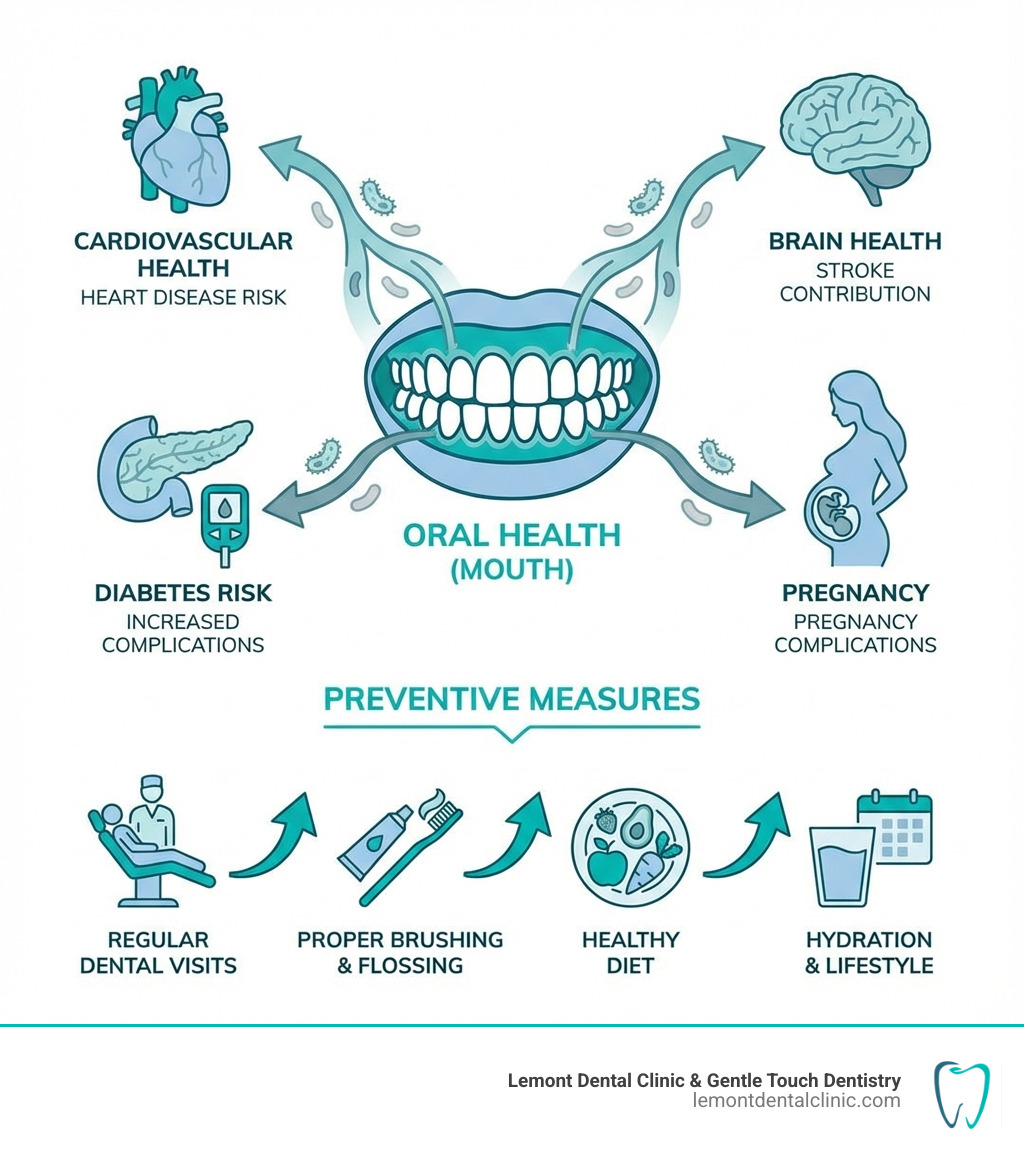
Your oral health is not separate from your overall health. Research consistently shows that many studies have demonstrated gum disease is associated with an increased risk of serious conditions including diabetes, heart disease, and complications during pregnancy. The bacteria in your mouth can enter your bloodstream and affect other parts of your body.
Regular dental visits help prevent problems before they start and catch issues early when they’re easiest to treat. In recent years, the average dentist has provided oral health care to 1,000 different patients each year with an average of 63 patient visits each week, addressing everything from routine cleanings to emergency care.
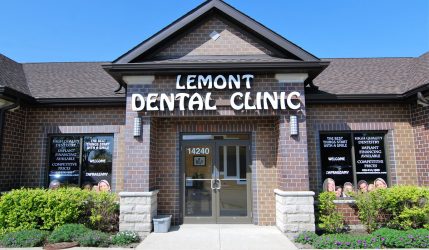
I’m Piotr Dederowski, and I’ve dedicated my career to providing high-quality general and restorative dental care at Lemont Dental Clinic & Gentle Touch Dentistry, where we combine modern techniques with compassionate service to help patients overcome anxiety and achieve healthy smiles. Understanding dentistry empowers you to make informed decisions about your oral health and recognize its vital role in your overall wellness.
Know your dentistry terms:
The Comprehensive World of Modern Dentistry
This section explores the vast scope of dental care, from routine check-ups to complex specialized treatments that maintain and restore oral health. At Lemont Dental Clinic & Gentle Touch Dentistry, we pride ourselves on offering all-in-one care, ensuring that most of your dental needs can be met right here in Lemont and Palos Hills, IL.
What Does Dentistry Encompass?
At its heart, dentistry, also known as dental medicine or oral medicine, is a vital branch of healthcare dedicated to the oral cavity. It’s not just about fixing teeth; it’s a comprehensive field that involves the meticulous study, accurate diagnosis, proactive prevention, and effective treatment of diseases, disorders, and conditions that affect your mouth. This includes your teeth (dentition), gums (oral mucosa), and the intricate network of bones, muscles, and tissues that make up your maxillofacial area and other adjacent and associated structures.
Think of it this way: your mouth is a complex ecosystem, and we are the guardians of its balance and health. We evaluate your oral health, diagnose any potential issues, and work tirelessly to prevent problems before they become serious. When issues do arise, we offer a range of treatments to restore your oral health and overall well-being.
Common Dental Treatments and Procedures
When you visit us, you’ll find a wide array of treatments designed to keep your smile healthy and radiant. The majority of dental treatments we perform are aimed at preventing or treating the two most common oral diseases: dental caries (tooth decay) and periodontal disease (gingivitis or periodontitis).
Here’s a look at some of the common dental procedures we offer:
-
Preventive Care: These are your first line of defense against oral disease.
- Regular Cleanings: Essential for removing plaque and tartar buildup, preventing cavities and gum disease. Find out more about Regular Cleaning and if Does teeth cleaning hurt?.
- Dental Sealants: A protective coating applied to the chewing surfaces of back teeth to prevent decay. We offer Sealant options, including Dental Sealants for Adults.
- Fluoridation: Strengthens tooth enamel and makes teeth more resistant to decay. Learn about Fluoridation.
-
Restorative Care: When teeth need a little help getting back to their best.
- Fillings: Used to repair holes in teeth caused by decay, restoring their structure and function. We provide various Fillings options, including Tooth Fillings Palos Hills and Lemont.
- Crowns & Bridges: Crowns are caps that cover damaged teeth, while bridges replace one or more missing teeth by anchoring to adjacent ones. Find our Crowns and Bridges services.
-
Endodontics: Focusing on the inside of your tooth.
-
Prosthodontics: Replacing missing teeth to restore function and aesthetics.
-
Oral Surgery: For more complex needs.
-
Orthodontics: Straightening your smile.
- Braces/Aligners: To correct misaligned teeth and jaws, improving both appearance and function. Considering Invisalign Near Me?
-
Cosmetic Procedures: Enhancing the beauty of your smile.
- Teeth Whitening: Bleaching to lighten the color of your teeth. Explore our Teeth Whitening Services.
- Veneers: Thin, custom-made shells applied to the front surface of teeth to improve their appearance. Find if Are veneers worth it?.
Branches and Specialties in Dentistry
Just like medicine, dentistry has many specialized areas. While we provide comprehensive general dentistry services, understanding these specialties helps you appreciate the depth of care available.
- General Dentistry: This is the foundation of oral healthcare. General dentists diagnose, treat, and manage your overall oral health needs, including gum care, root canals, fillings, crowns, and preventive education. They often coordinate with specialists when needed.
- Endodontics: Focuses on the dental pulp and tissues surrounding the roots of a tooth. Endodontists perform root canal treatments to save infected or damaged teeth.
- Orthodontics and Dentofacial Orthopedics: Specializes in correcting misaligned teeth and jaws (malocclusion) using braces, aligners, and other devices to improve bite, function, and aesthetics.
- Periodontics: Deals with the prevention, diagnosis, and treatment of gum disease (periodontal disease) and the placement of dental implants.
- Prosthodontics: Specializes in restoring and replacing missing teeth and oral structures with prostheses like dentures, bridges, and dental implants.
- Oral and Maxillofacial Surgery: Focuses on surgical procedures involving the mouth, jaws, face, and neck, including wisdom tooth removal, dental implant placement, and corrective jaw surgery.
- Pediatric Dentistry: Dedicated to the oral health of children from infancy through adolescence, including those with special healthcare needs.
- Dental Public Health: Concerned with preventing and controlling dental diseases and promoting oral health through organized community efforts.
- Oral and Maxillofacial Pathology: Involves the diagnosis and management of diseases affecting the oral and maxillofacial regions through clinical, microscopic, radiographic, and biochemical examinations.
- Oral and Maxillofacial Radiology: Focuses on the production and interpretation of images (X-rays) of the oral and maxillofacial region to diagnose diseases and conditions.
- Dental Anesthesiology: A newer specialty focused on providing pain and anxiety control for dental procedures, ensuring patient comfort and safety.
The Evolution and Future of Oral Healthcare
Dentistry has a rich history and an exciting future, driven by technological innovation and a deeper understanding of oral science. We’ve come a long way from ancient practices, and the journey continues to bring more effective and comfortable care to our patients in Lemont and Palos Hills.
A Journey Through the History of Dentistry
The story of dentistry is as old as humanity itself, tracing back to some of the earliest civilizations. The earliest evidence of dental treatment dates back to between 7000 BC and 5500 BC. Imagine a time when the prevailing belief was the “tooth worm” theory – that tiny worms caused tooth decay! This idea persisted for centuries, even influencing treatments.
Ancient Egyptians were among the first to show advanced dental practices. They had “doctors of the tooth” and evidence suggests they attempted to secure loose teeth with gold wire and even lanced dental abscesses. The Etruscans, an ancient Italian civilization, were known for using dental appliances, bridges, and even early forms of dentures.
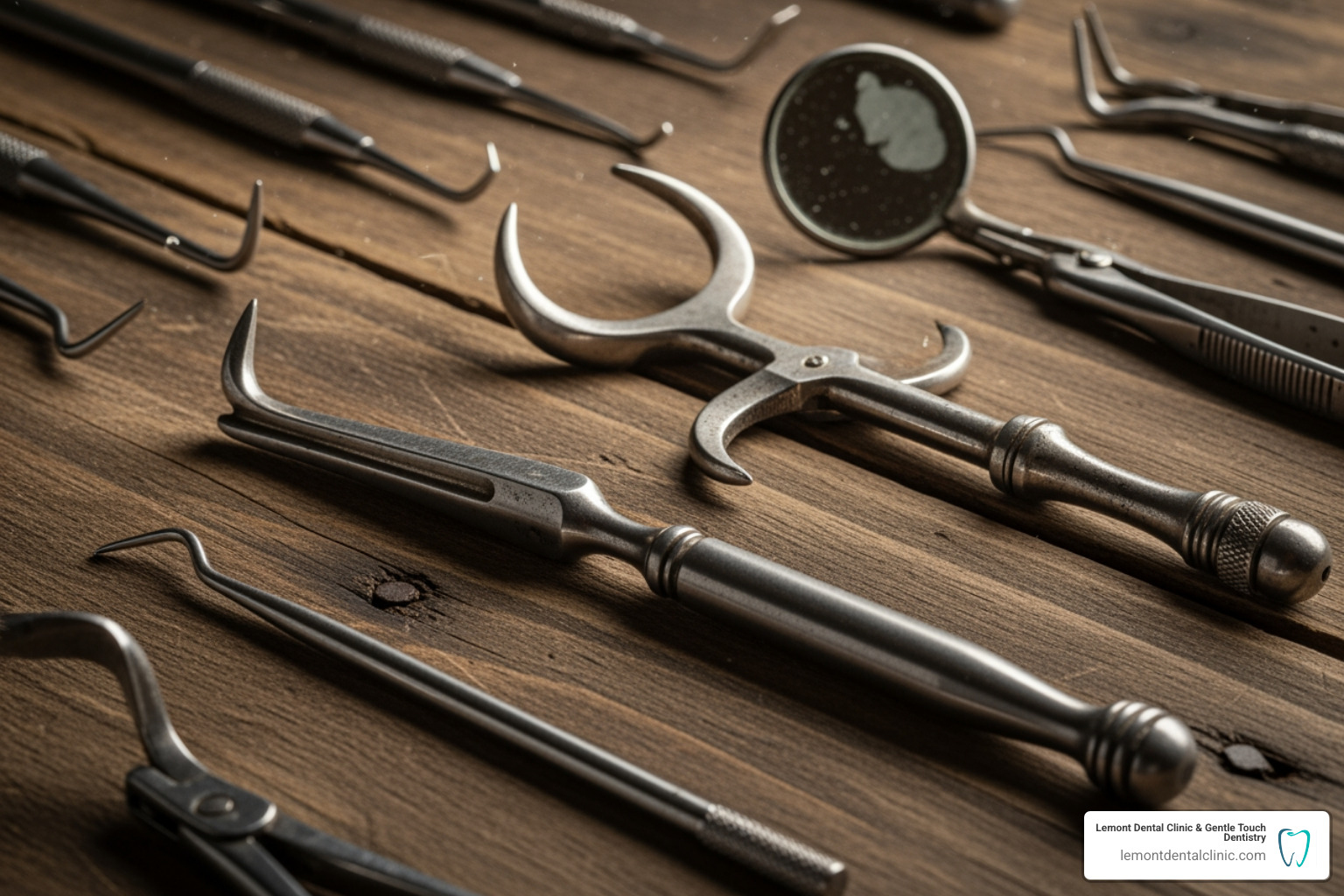
For much of history, dental care was rudimentary and often painful. Tools like the dental pelican and the tooth key, designed for extractions, were common but crude. It wasn’t until the 18th century that dentistry began to transform. Pierre Fauchard, a French surgeon, is widely regarded as the “Father of Modern Dentistry.” In 1728, he published “The Surgeon Dentist,” a comprehensive text that described basic oral anatomy, dental operations, and even instruments he improvised from watchmakers’ and barbers’ tools. He emphasized conservation over extraction and introduced the concept of dental prosthetics.
The 19th and 20th centuries brought advancements, particularly with the development of anesthesia, making dental procedures significantly less painful. From the first dental school established in Bainbridge, Ohio, in 1828, to the continuous innovation in materials and techniques, dentistry has steadily evolved into the sophisticated, patient-focused field we know today.
The Impact of Technology and AI
Today, we’re living through an exciting era of digital change in dentistry. Technology is not just changing how we work; it’s enhancing the precision, efficiency, and comfort of your dental experience.
- Digitalization: Our practice, like many larger dental centers, is rapidly adopting digital solutions. This means less paperwork, more streamlined processes, and better communication.
- CAD/CAM Technology: Computer-Aided Design and Computer-Aided Manufacturing allow us to design and create crowns, veneers, and other restorations with incredible accuracy and often in a single visit. Imagine walking in with a damaged tooth and leaving with a perfectly fitted crown, all made right here in our office!
- 3D Printing: This technology is revolutionizing the creation of dental models, surgical guides for implants, and even some restorative components, offering unparalleled customization and speed.
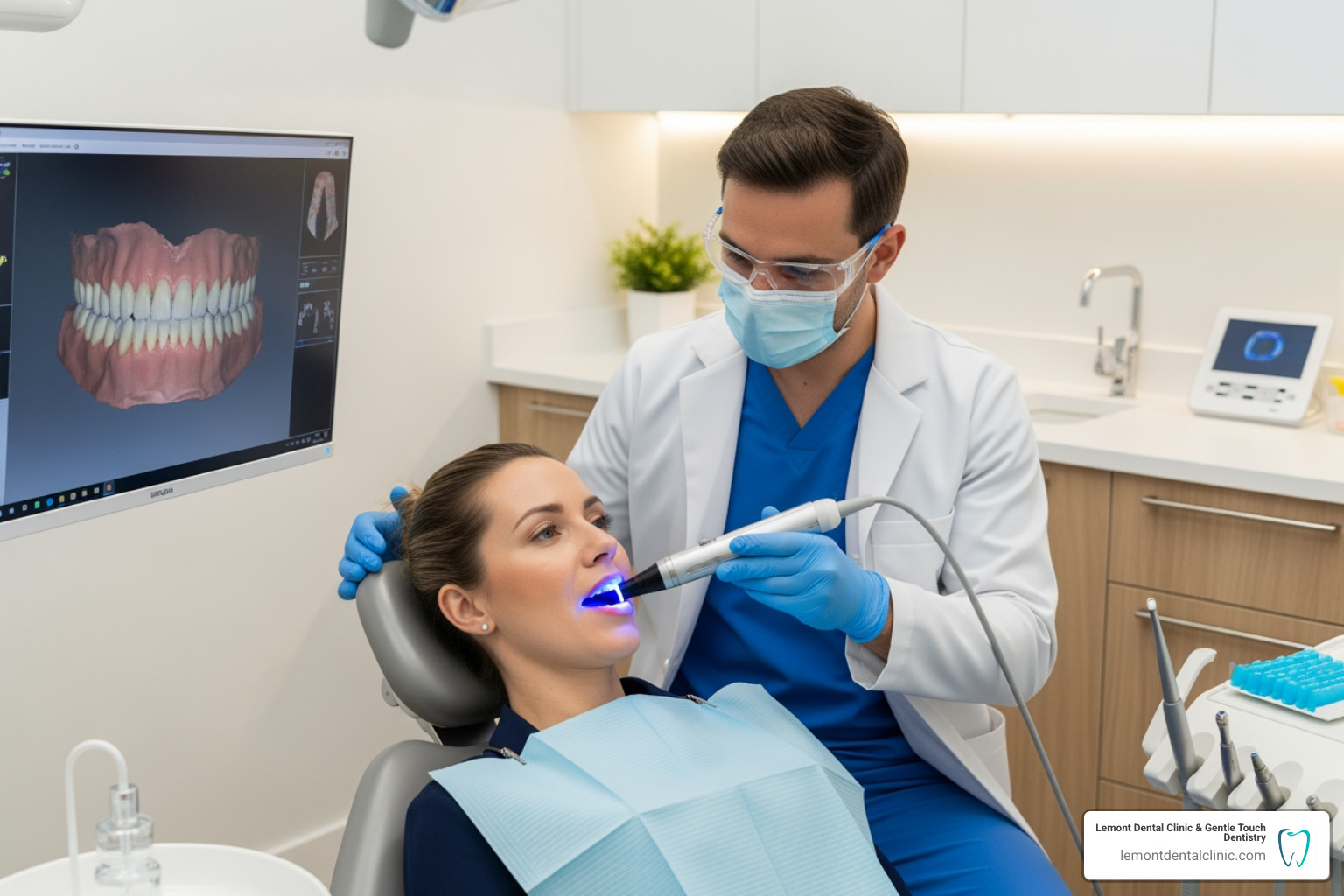
- Intraoral Scanners: Say goodbye to goopy impressions! Intraoral scanners create highly accurate 3D digital models of your teeth and gums quickly and comfortably. This is a game-changer for everything from crowns to orthodontic treatments.
- Teledentistry: While less common for direct treatment, teledentistry can facilitate initial consultations, follow-ups, and remote monitoring, improving access to care.
- Artificial Intelligence (AI): AI is beginning to assist in diagnostics, helping us analyze X-rays and other images to detect subtle issues that might be missed by the human eye. This means earlier detection and more precise treatment planning.
- Laser Dentistry: Lasers are increasingly used for a variety of procedures, offering less pain, faster healing, and reduced need for anesthesia for certain soft tissue treatments.
According to research on digital adoption in dentistry, larger dental centers are embracing these solutions more quickly. We are proud to be at the forefront of these advancements, ensuring our patients in Lemont and Palos Hills receive the best care possible.
Current Trends and Future Directions
The future of dentistry is bright, with several exciting trends shaping how we will provide care:
- Minimally Invasive Dentistry: Our goal is always to preserve as much of your natural tooth structure as possible. This approach uses advanced techniques and materials to treat dental issues with the least possible intervention.
- Regenerative Dentistry: Imagine being able to regrow damaged tooth tissue! This emerging field explores biological approaches to repair and regenerate oral tissues, moving beyond traditional repair methods.
- Personalized Dental Medicine: Tailoring treatments and preventive strategies to your unique genetic makeup, lifestyle, and risk factors. This means even more precise and effective care for you.
- Focus on Prevention: While fluoride and improved dental techniques have led to a decline in tooth decay, especially among children and teens, prevention remains paramount. We emphasize patient education and regular check-ups to keep your smile healthy.
- Periodontal Disease as a Major Threat: Despite advances, periodontal disease continues to affect a significant portion of the adult population—three out of four adults, in fact. Our focus on early detection and comprehensive periodontal therapy remains critical.
- Biomaterials: Ongoing research into new, biocompatible materials for fillings, implants, and prostheses promises even more durable, aesthetic, and body-friendly solutions.
These trends underscore our commitment to lifelong learning and adopting the best practices for our patients.
Becoming a Dental Professional
The path to becoming a dentist is rigorous, involving extensive education, a commitment to lifelong learning, and adherence to high ethical standards. It’s a journey we’ve undertaken with passion and dedication.
Education and Licensing Requirements
Becoming a licensed dentist is a demanding but rewarding process. It typically involves:
- Undergraduate Degree: Aspiring dentists first complete a bachelor’s degree, often in a science-related field like biology or chemistry.
- Dental Admission Test (DAT): This standardized test assesses academic ability, scientific comprehension, and perceptual ability.
- Dental School (DDS or DMD): This is the core of dental education. In North America, dental schools award either a Doctor of Dental Surgery (DDS) or Doctor of Medicine in Dentistry (DMD) degree. Both degrees involve the same rigorous curriculum and training, typically lasting four years. During dental school, students gain comprehensive knowledge in oral anatomy, physiology, pathology, pharmacology, and various dental procedures.
- National Board Dental Examinations: These comprehensive exams assess a candidate’s scientific knowledge and clinical judgment.
- State or Regional Licensure: After graduating and passing national exams, dentists must obtain a license from the specific state or region where they wish to practice. This often involves additional clinical exams to ensure proficiency. For us, this means meeting the stringent requirements set by the state of Illinois.
- Continuing Education (CE): The learning doesn’t stop after graduation. Licensed dentists are required to complete continuing education courses throughout their careers to stay updated on the latest techniques, technologies, and research in dentistry. This ensures we maintain our clinical competence and provide the best possible care.
This extensive training ensures that every dentist is equipped with the knowledge and skills to provide high-quality oral healthcare.
A Day in the Life of a Dentist
No two days are exactly alike, and that’s one of the things we love about dentistry! Our days are a dynamic blend of clinical care, patient interaction, and practice management.
A typical day might involve:
- Patient Examinations: Thoroughly assessing oral health, often utilizing advanced diagnostic tools like digital X-rays and intraoral cameras.
- Diagnosing Oral Conditions: Identifying issues like cavities, gum disease, infections, and other oral pathologies.
- Developing Treatment Plans: Collaborating with you to create personalized treatment strategies that meet your needs and goals.
- Performing Procedures: This is where our hands-on skills come into play, from placing fillings and crowns to performing root canals or extractions.
- Managing a Clinical Team: Working closely with our dental hygienists, assistants, and administrative staff to ensure a smooth and efficient patient experience.
- Patient Education: Empowering you with the knowledge and tools to maintain your oral health at home.
- Practice Management: Overseeing the day-to-day operations of the clinic, ensuring everything runs smoothly.
As a statistic shows, the average dentist has provided oral health care to 1,000 different patients each year with an average of 63 patient visits each week. This high volume of patient interaction means we’re constantly engaged, solving diverse oral health challenges, and building lasting relationships within our communities in Lemont and Palos Hills. We often find ourselves making creative decisions, selecting appropriate procedures and materials with a fine eye for detail, blending the scientific with the artistic.
Ethics, Hazards, and Evidence-Based Practice
The practice of dentistry is built on a foundation of strong ethical principles, a commitment to patient safety, and a dedication to evidence-based care.
-
Ethical Considerations and Medicolegal Responsibilities: Our practice is guided by ethical principles such as patient autonomy (respecting your right to make informed decisions), beneficence (acting in your best interest), and non-maleficence (doing no harm). We also adhere strictly to medicolegal responsibilities, ensuring patient confidentiality, accurate record-keeping, and informed consent for all treatments. We believe in transparency, accessibility, and fairness in all our work.
-
Occupational Hazards: We, as dental professionals, face unique occupational hazards.
- Ergonomic Issues: The precise nature of our work can lead to musculoskeletal problems. We combat this with ergonomic equipment and proper posture.
- Noise Exposure: Dental tools, such as high-speed drills, can generate noise levels that, over long periods, could contribute to hearing loss. While NIOSH recommends exposure limits for noise at 85 dBA, and OSHA limits permissible noise exposure to 8 hours at 85 dBA, we use hearing protection and ensure our equipment is well-maintained to minimize risks.
- Chemical Hazards: We work with various chemicals daily. For example, glutaraldehyde, a common disinfectant, can cause allergic reactions in a small percentage of dental professionals (around 10.9%). Dental amalgam contains approximately 50% elemental mercury, which can release toxic vapor. Other materials like methacrylates and nickel in dental appliances also require careful handling. We implement strict safety protocols, including proper ventilation and personal protective equipment, to mitigate these risks.
- Biological Hazards: Due to the nature of our work, we are exposed to aerosols and potential infectious agents. This is where rigorous infection control protocols are crucial.
-
Infection Control Protocols: Patient and staff safety is paramount. We follow strict infection prevention and control guidelines, including those from the CDC, to prevent the spread of infections. This includes meticulous sterilization of instruments, use of disposable barriers, and appropriate personal protective equipment (PPE).
-
Evidence-Based Dentistry (EBD): This is the cornerstone of modern dental practice. EBD means we integrate the best available scientific evidence with our clinical expertise and your unique needs and preferences to make informed treatment decisions. This ensures that the care you receive is effective, safe, and custom to you.
Frequently Asked Questions about Dentistry
We often hear similar questions from our patients, and we love answering them! Here are some of the most common inquiries we receive:
How often should I visit the dentist?
We generally recommend visiting us for a check-up and cleaning every six months. For many people, this schedule is ideal for preventing problems and catching any issues early. However, your specific needs might differ. If you have certain risk factors, such as a history of gum disease, frequent cavities, or systemic health conditions that impact your oral health, we might recommend more frequent visits. The key is to establish a personalized schedule with us that helps you maintain optimal oral health and allows for the early detection of problems like cavities and gum disease.
Is modern dental work painful?
It’s completely normal to feel a little anxious about dental procedures, but we want to assure you that modern dentistry is designed to be as comfortable and pain-free as possible. We have incredible advancements in pain management at our disposal. Local anesthetics are highly effective at numbing the treatment area, so you won’t feel a thing during your procedure. For those with dental anxiety, we also offer various sedation options to help you relax and feel at ease. We encourage open communication – please, tell us if you’re nervous or uncomfortable. Your comfort is our priority, and we have many techniques to ensure a positive experience.
Why is oral health so important for my overall health?
This is a fantastic question, and one we are passionate about! Your mouth is truly a window to your overall health, and the connection between your oral health and systemic health is undeniable.
- The Mouth-Body Connection: Your mouth is home to millions of bacteria. While many are harmless, some can cause gum disease. If left untreated, these bacteria can enter your bloodstream through inflamed gums.
- Link to Systemic Conditions: Research has shown a strong link between gum disease and serious systemic conditions. For example, gum disease is associated with an increased risk of heart disease, diabetes, and even preterm birth in pregnant individuals. Dentists are often the first healthcare professionals to spot systemic diseases like hypertension and cancer, as their early signs can manifest in the mouth.
- Oral Bacteria and Bloodstream: Once in the bloodstream, oral bacteria can contribute to inflammation and affect various organs. For instance, in heart disease, these bacteria can contribute to plaque buildup in arteries.
- Impact on Quality of Life: Beyond systemic links, poor oral health can impact your ability to chew, speak, and smile confidently, affecting your nutrition, social interactions, and overall quality of life.
Maintaining good oral hygiene and regular dental visits are not just about pretty teeth; they are crucial components of your overall health and well-being.
Conclusion
Dentistry is a dynamic and essential healthcare field dedicated to maintaining the health of your teeth, gums, and mouth, which is integral to your overall well-being. From its ancient roots to its high-tech future, the goal remains the same: to help you achieve and maintain a healthy, functional, and confident smile for life. For comprehensive care that combines experience with modern technology, consider the expert team at Lemont Dental Clinic & Gentle Touch Dentistry. Learn more about our comprehensive dental services.