Restoring Your Complete Smile: Understanding Your Options
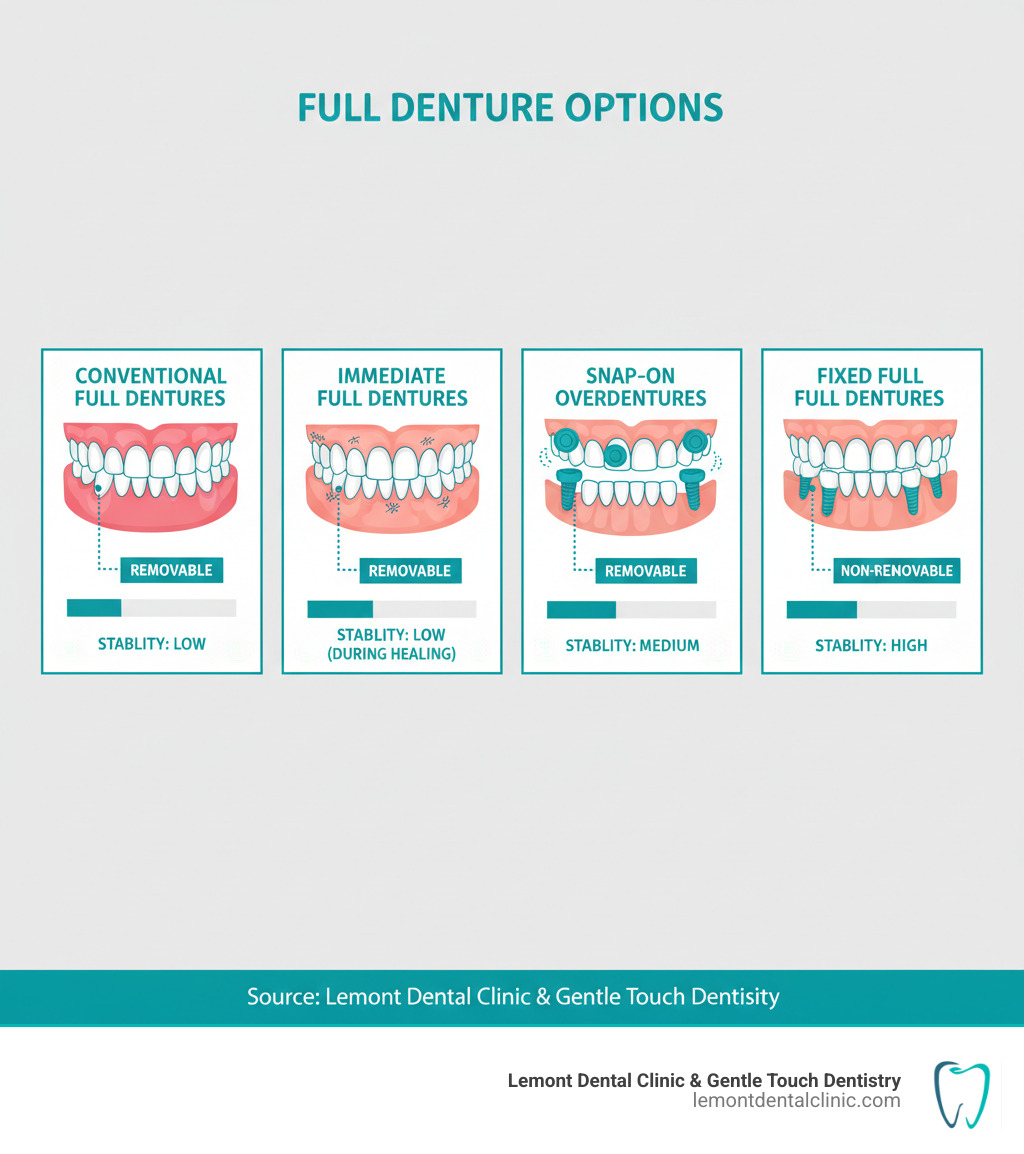
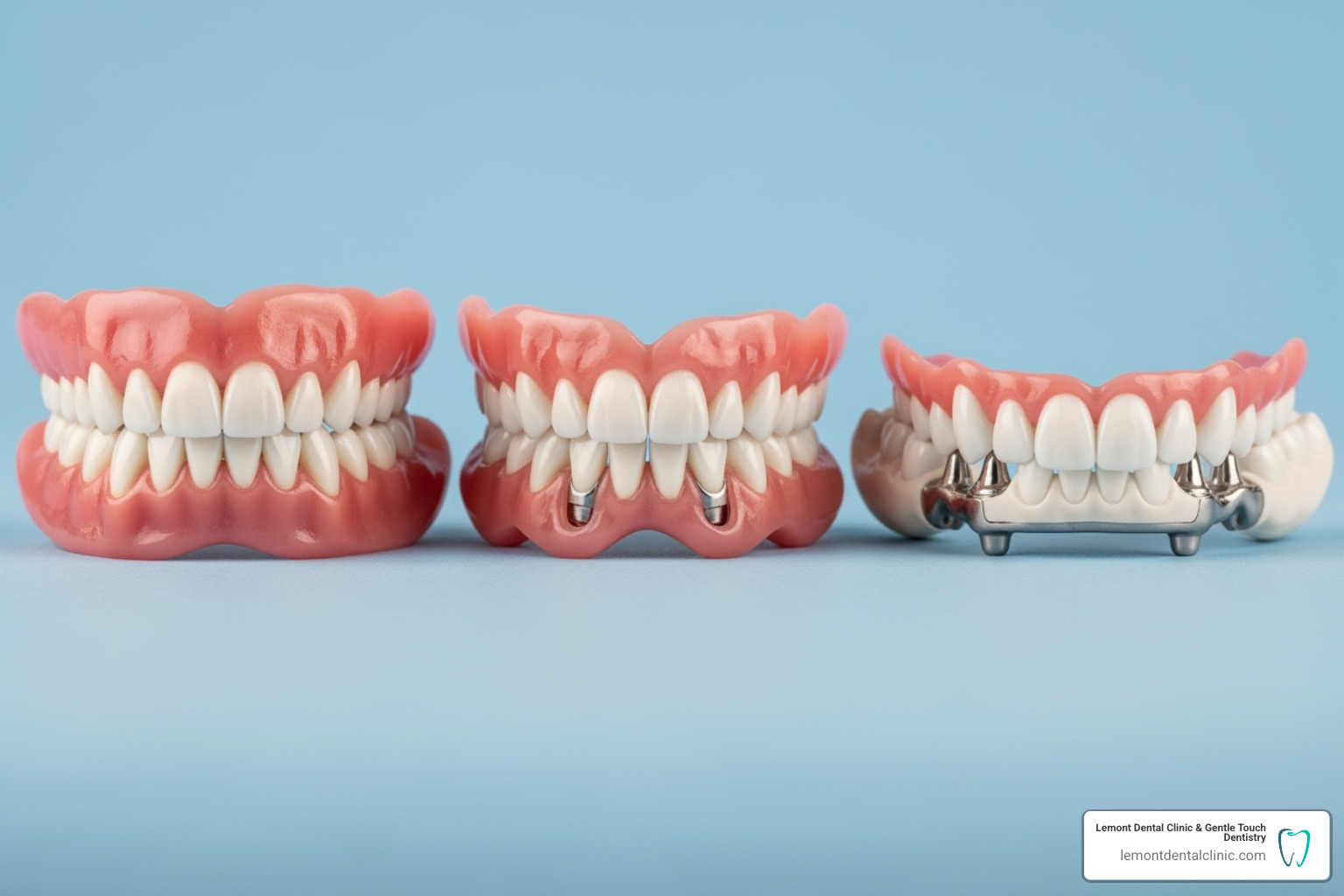
What are the different types of full dentures available today? The main categories are:
Conventional Full Dentures – Custom-made removable dentures placed after gums have healed from tooth extraction
Immediate Full Dentures – Temporary dentures placed the same day as tooth extraction, worn during healing
Implant-Supported Overdentures – Removable dentures that snap onto dental implants for increased stability
Fixed Full Dentures – Non-removable dentures permanently attached to dental implants (also called hybrid prosthetics or All-on-4)
Losing all your teeth in one or both jaws affects more than just your ability to eat or speak clearly. It impacts your facial structure, your confidence, and your quality of life. Modern denture technology has evolved far beyond old stereotypes, offering custom-crafted prosthetics designed to restore function, aesthetics, and comfort.
The right type of full denture depends on your jawbone health, budget, and lifestyle. Whether you need teeth immediately after extraction or want the most stable surgical option, understanding the differences between conventional, immediate, and implant-supported dentures is key to making an informed decision.
I’m Piotr Dederowski of Lemont Dental Clinic & Gentle Touch Dentistry. I’ve helped countless patients find the right denture solution to restore their smile and confidence. Education is the first step, and this guide breaks down each option in clear, practical terms.
What are the different types of full dentures terms simplified:
The Main Categories: What Are the Different Types of Full Dentures?
When you’re facing complete tooth loss, understanding what are the different types of full dentures available helps you make the best choice for your lifestyle and needs. Not all dentures are created equal. Some rest directly on your gums, while others anchor to dental implants for extra security. Let’s walk through the main categories together.
Conventional Full Dentures: The Time-Tested Solution
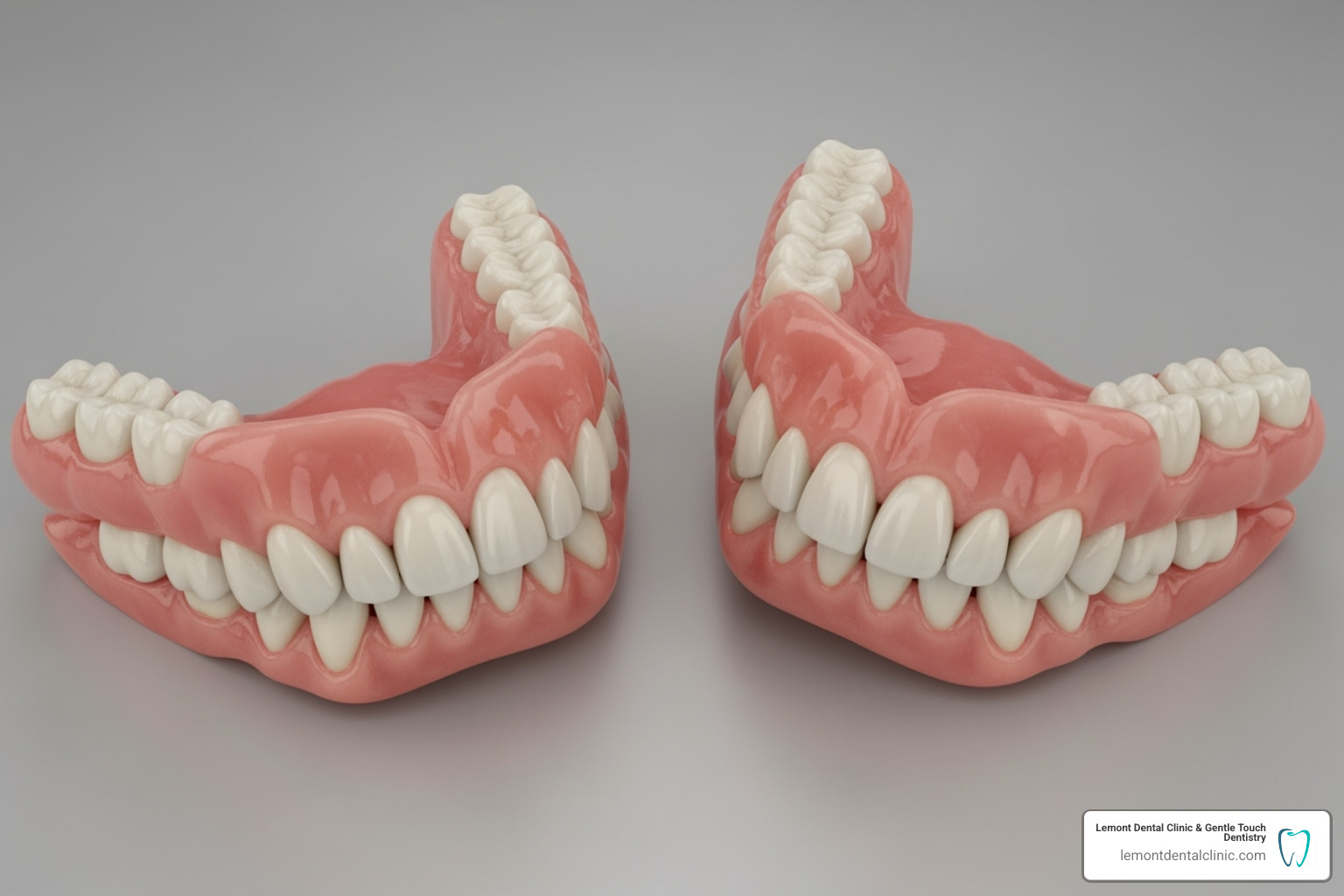
If you picture a classic denture, you’re probably thinking of conventional full dentures. These removable appliances replace all missing teeth in an arch. They are made from artificial teeth set into a gum-colored acrylic base that mimics your natural gums.
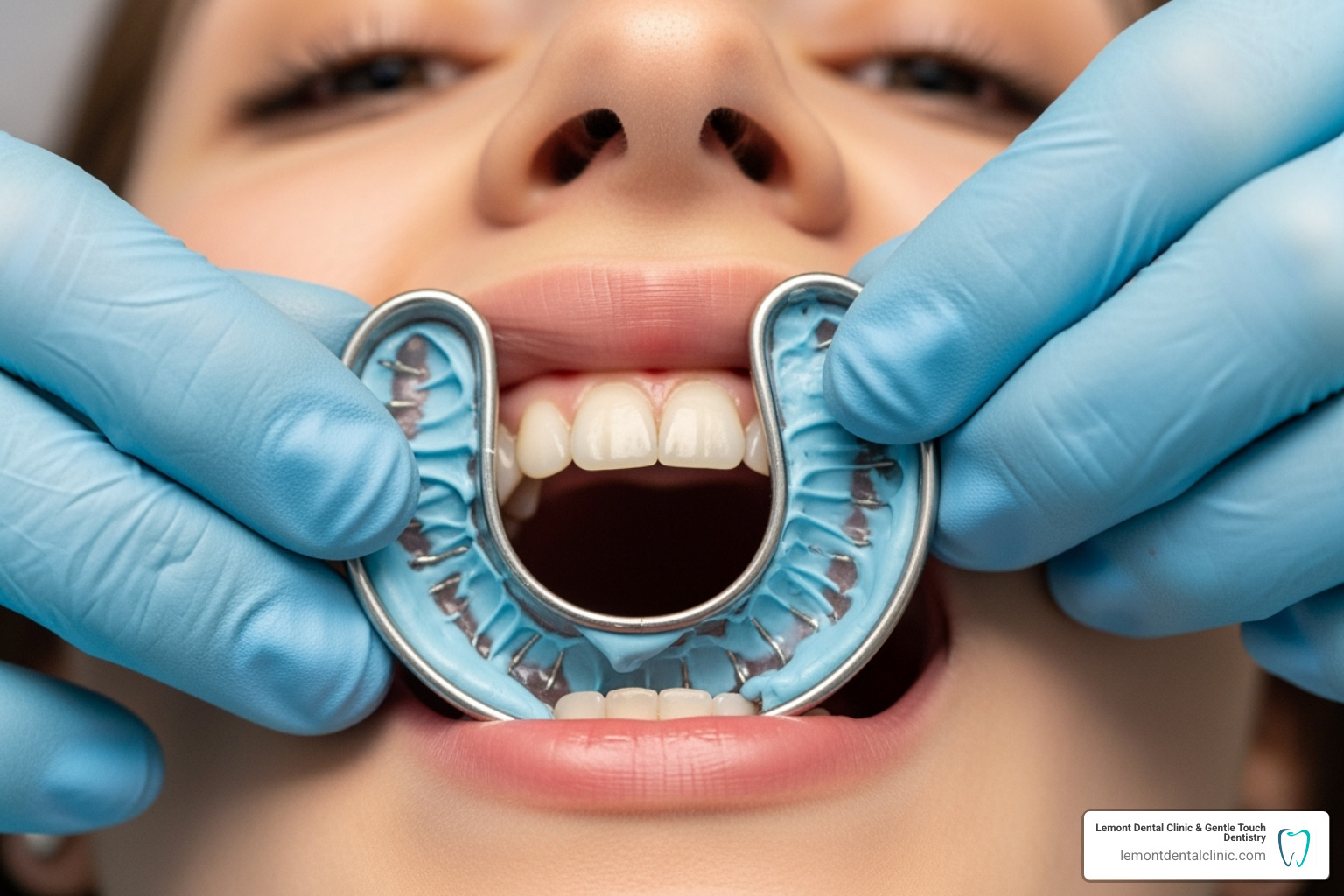
After any remaining teeth are extracted, your gums need several weeks or months to heal completely. During this healing period, gum tissue shrinks and reshapes. Once healed, our team takes detailed dental impressions of your mouth to serve as the blueprint for your custom fit dentures. The acrylic base is designed to rest snugly against the contours of your mouth—your palate for upper dentures and the jawbone ridge for lower ones. When fitted properly, conventional dentures restore your ability to eat, speak, and smile with confidence.
The main limitation is potential movement, as they only sit on your gums and your jawbone continues to change over time. Some patients use denture adhesive for extra security, particularly with significant bone loss.
Conventional dentures have helped people restore their smiles for generations and remain a reliable, straightforward solution. You can explore more details in our guide on different types of dentures.
Immediate Full Dentures: A Smile from Day One
Immediate full dentures are a bridge to a complete smile while your mouth heals, so you never have to go without teeth.
Unlike conventional dentures, immediate dentures are created before your tooth extraction. We take impressions while your natural teeth are still in place and place the dentures immediately after your extractions. You walk out of our office with a full set of teeth.
This temporary solution also acts as a protective bandage over your healing gums, helping control bleeding and reduce swelling.
As your gums heal and bone shrinkage occurs, these temporary dentures will loosen. Your mouth changes shape during the first few months, requiring several adjustments and relining appointments to maintain a comfortable fit. Think of immediate dentures as transitional teeth. Once your mouth has fully healed, you’ll transition to permanent dentures—either conventional or implant-supported—for the best long-term fit.
For more information about dentures in general, the American Dental Association’s MouthHealthy resource offers helpful insights.
Implant-Supported Options: The Gold Standard for Stability
For dentures that feel more like natural teeth, dental implants are a game-changer. Instead of relying on your gums, implant-supported dentures anchor to small titanium posts surgically placed in your jawbone.
Through a process called osseointegration, your jawbone fuses with the implant, creating a rock-solid foundation. This jawbone integration prevents slipping when you eat, talk, or laugh, providing dramatically improved stability and chewing power. Many patients can finally enjoy foods like steak or corn on the cob again.
A key benefit is that dental implants prevent bone loss. When you lose teeth, your jawbone shrinks because it’s no longer stimulated by tooth roots. Implants mimic natural roots, keeping your jawbone active and healthy. This helps maintain your facial structure and prevents the sunken look that can develop with traditional dentures.
While implant-supported options require a bigger initial investment and oral surgery, they are the closest thing to having your natural teeth back. The improvement in quality of life—better eating, speaking, and confidence—is significant.
We offer comprehensive implant solutions at Lemont Dental Clinic & Gentle Touch Dentistry. Learn more about how Implant Dentures could transform your smile.
A Closer Look at Implant-Supported Full Dentures
Once you understand the basic categories of what are the different types of full dentures, it’s time to explore what makes implant-supported options so special. These advanced solutions transform the denture experience, offering stability and comfort that conventional dentures can’t match. At Lemont Dental Clinic & Gentle Touch Dentistry, we’ve seen how these options change lives for our patients in Lemont and Palos Hills, IL.
Removable Overdentures (Snap-On Dentures)
Removable overdentures—often called snap-on dentures—offer the stability of implants with the convenience of being removable for cleaning. They represent a sweet spot between traditional and fully fixed solutions.
Small attachments called locators are placed on dental implants in your jaw. Your denture has corresponding components that create a satisfying snap as it clicks securely into position. This simple, secure snapping mechanism provides increased stability that eliminates the worry of your dentures slipping while eating or laughing. Many patients report a dramatic improvement in their quality of life and social confidence.
One of the most exciting benefits, particularly for upper dentures, is the palate-less upper denture option. Traditional upper dentures cover the roof of your mouth, which can interfere with taste and feel bulky. A palate-less design allows you to taste food more fully and enjoy a more natural sensation.
Because these dentures are removable for cleaning, you can maintain excellent oral hygiene by taking them out daily to clean both the denture and the implant sites. This accessibility makes maintenance straightforward.
To learn more about this practical and stable option, visit our detailed guide on Snap-On Dentures.
Fixed Full Dentures (Hybrid Prosthesis)
For the closest experience to having natural teeth, fixed full dentures—also called hybrid prosthetics—are the pinnacle of denture technology. These are non-removable by the patient and stay permanently in your mouth. Only your dentist can remove them for professional maintenance, typically once or twice a year.
The most well-known approach is the All-on-4 concept. This technique uses just four strategically placed dental implants per arch to support an entire set of teeth. By angling the implants, we can maximize the use of existing bone, often eliminating the need for extensive bone grafting. A scientific review of the All-on-Four concept demonstrates its impressive success rates and reliability.
Fixed full dentures are screwed into implants with exceptional precision, providing maximum stability that eliminates any movement. You can bite into an apple, enjoy a steak, or chew sticky foods without a second thought. The natural feel is so extraordinary that many patients forget they’re not their original teeth.
Because they don’t cover your palate or rest on your gums, they feel remarkably natural and allow you to fully taste your food. There’s no bulky acrylic, no adhesives, and no social anxiety about your dentures.
Oral hygiene requirements for fixed dentures are similar to caring for natural teeth. You’ll need to brush and floss daily, paying special attention to cleaning around the implants and underneath the prosthetic. Special brushes, floss threaders, or water flossers make this process straightforward. Most patients find the diligent routine quickly becomes second nature.
When patients ask us what are the different types of full dentures and which offers the most natural experience, fixed full dentures consistently top the list.
Materials and Customization: Crafting a Natural Appearance
When patients ask me what are the different types of full dentures are made from, I explain how far we’ve come from old-fashioned, fake-looking teeth. Today’s dentures are crafted from sophisticated materials chosen for strength and how beautifully they mimic nature. At Lemont Dental Clinic & Gentle Touch Dentistry, we are passionate about creating dentures that look incredibly natural.
What are the different types of full dentures made from?
Every full denture has two main components: the base and the teeth. The denture base is the gum-colored portion that rests against your gum tissue. We craft this from acrylic resin, a biocompatible material that can be tinted to match your natural gums and provides the structural integrity to support the teeth.
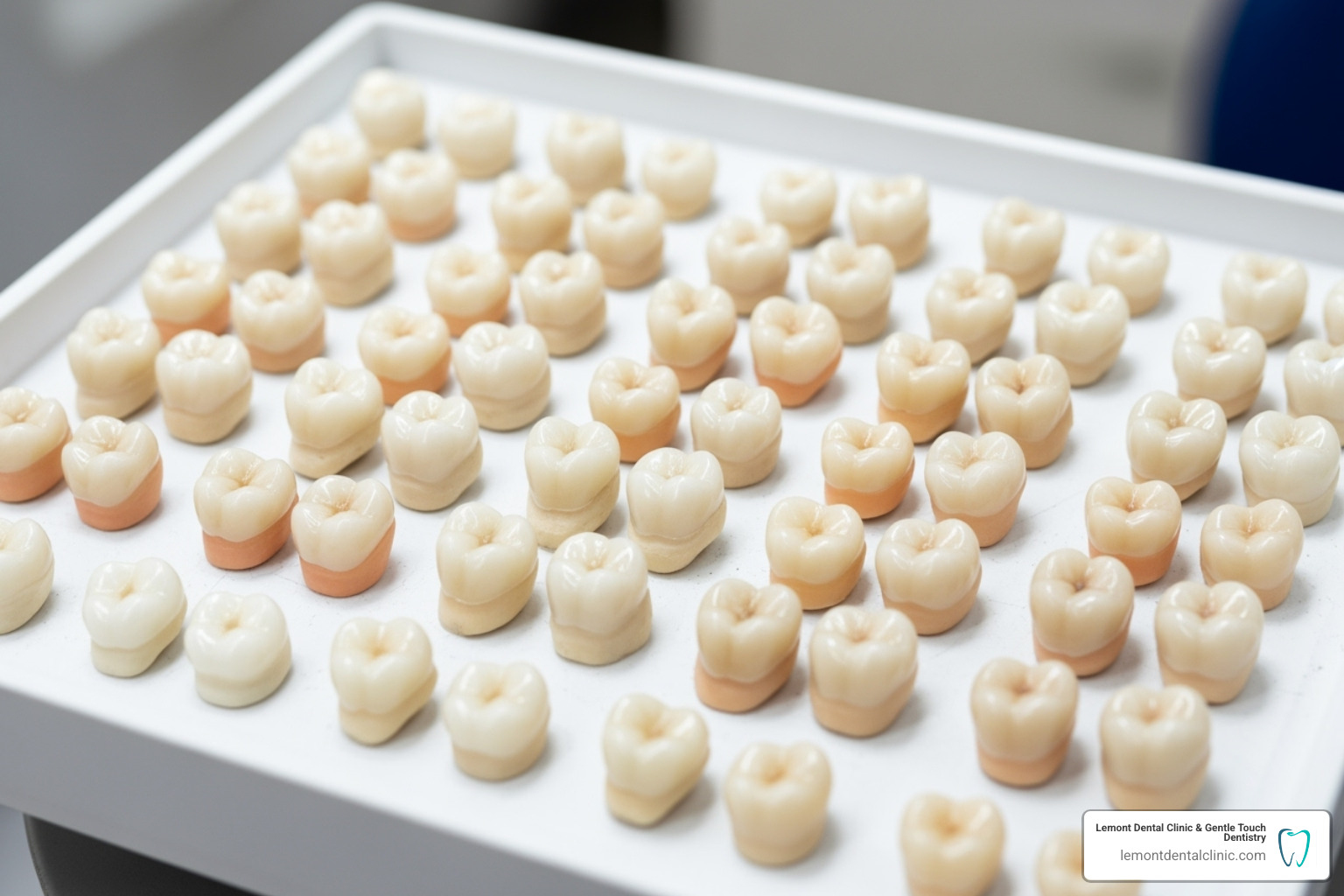
The artificial teeth themselves are where material science shines. Porcelain was once the gold standard because it has a natural translucency and resists stains well. However, porcelain can be brittle and may be harsh on opposing natural teeth during chewing.
Today, most denture teeth are crafted from high-grade acrylic. These modern materials are multi-layered to rival porcelain in appearance while offering practical advantages. They are durable, stain-resistant, lighter, and less likely to chip than porcelain. Acrylic is also gentler on opposing teeth or dentures and can be sculpted and shaded to create remarkably lifelike results.
The Art of Customization for a Lifelike Smile
The customization process transforms a dental appliance into your smile. We avoid a cookie-cutter approach because your face and personality are unique, and your dentures should be too.
Tooth shade matching is more nuanced than just picking “white.” We help you select a shade that looks natural for your age and complexion, creating harmony with your skin tone. Old photographs of your natural smile are invaluable guides.
Tooth shape and size are selected to be proportionate to your facial structure. We carefully choose artificial teeth that complement your features for a balanced and authentic look.
Our lab technicians demonstrate their skill in the gum contouring of the acrylic base. We replicate the natural contours and subtle color variations of healthy gum tissue, making the transition from your denture to your natural tissues nearly invisible.
Most importantly, well-designed dentures improve your facial feature harmony. By restoring support to facial muscles, they can fill out your cheeks and lips, smoothing away a hollowed look and often taking years off your appearance.
Getting new full dentures is a journey, and understanding the process helps ensure your satisfaction. At Lemont Dental Clinic & Gentle Touch Dentistry, we guide you through every step.
From Impression to Final Fitting
Creating your custom full dentures is a multi-step process requiring several visits to our Lemont or Palos Hills office to achieve a perfect fit and natural appearance.
Your journey starts with a comprehensive consultation. We’ll examine your mouth, take X-rays to assess jawbone health, and discuss your medical history and goals. This allows us to determine the best denture type for you and create a personalized treatment plan.
Next come the dental impressions—precise molds of your mouth that serve as the blueprint for your custom dentures. For immediate dentures, these are taken before any teeth are extracted.
A key appointment is the wax try-in. Our lab creates a wax prototype of your dentures for you to try on. This is your opportunity to give feedback on the tooth size, shape, and shade. We encourage you to bring old photos or a trusted friend to help ensure you are thrilled with the look before we finalize the denture.
We also perform bite registration to record how your jaws come together, ensuring your dentures align for comfortable chewing. Once you approve the wax try-in, it goes to the lab for final processing, where the wax is replaced with durable acrylic resin.
At your final fitting, we place the completed dentures, checking for comfort, stability, and proper bite. Initial adjustments are normal. We’ll provide detailed care instructions and are always here for follow-up adjustments.
The process for conventional full dentures involves taking impressions after healing is complete (typically 6-8 weeks), resulting in a more stable initial fit. With immediate full dentures, they are placed the same day as extractions, but require more adjustments as your gums heal before you transition to a permanent denture.
Lifespan and Essential Maintenance
With proper care, full dentures typically last five to ten years. The American Dental Association recommends replacement every five to seven years, as natural changes in your jaw can affect the fit.
Daily cleaning is essential. Remove your dentures nightly and clean them with a soft-bristled denture brush and non-abrasive denture cleanser. Never use regular toothpaste, as it can scratch the acrylic. Brush all surfaces to remove food, plaque, and bacteria.
Soak your dentures overnight in a cleaning solution to keep them moist, disinfected, and prevent warping. While your dentures are out, clean your gums, tongue, and palate with a soft toothbrush or gauze to remove bacteria and stimulate circulation.
A small amount of denture adhesive can provide extra security if your dentures feel slightly loose. However, if you need excessive amounts of adhesive, it’s a clear sign you need a professional adjustment or relining, as adhesive should not replace a proper fit.
Regular dental check-ups remain important. We recommend periodic visits to check your dentures’ fit and examine your oral tissues for any signs of irritation or disease.
Over time, your jawbone naturally shrinks without tooth roots to stimulate it. This causes dentures to loosen, leading to discomfort, sore spots, and difficulty eating. A denture reline solves this by adding a new layer to the denture’s base, restoring a snug fit. We recommend a reline every one to two years or whenever you notice looseness. Learn more about fixing loose dentures and what happens during a denture reline on our website.
By following these maintenance routines, you’ll extend the life of your full dentures. Understanding what are the different types of full dentures and how to care for them ensures the best possible outcome.
Conclusion: Choosing the Right Full Denture for Your Life
Understanding what are the different types of full dentures is the first step, but choosing the right one is where the change begins. We’ve covered conventional full dentures, immediate full dentures, implant-supported overdentures, and fixed full dentures (hybrid prosthetics).
Each solution serves a purpose, whether your priority is budget, timeline, comfort, or functionality. There is a full denture option designed for your specific needs.
The most important factor is having a trusted dental professional who understands your life, concerns, and goals. At Lemont Dental Clinic & Gentle Touch Dentistry, that’s our commitment to you.
Our experienced team assesses your oral health, including jawbone density and gum condition, and listens to your lifestyle needs. We then develop a personalized treatment plan that aligns with your goals. With our advanced technology and commitment to quality and affordability, we ensure you receive exceptional care.
The journey to a restored smile doesn’t have to be overwhelming. We’re here to guide you every step of the way, from consultation to final fitting and beyond. Our goal is to help you refind the confidence that comes with a healthy, beautiful smile.
If you’re ready to explore your options, we invite you to connect with us. Find high-quality, affordable dentures near you at Lemont Dental Clinic & Gentle Touch Dentistry. We proudly serve our communities in Lemont, Palos Hills, and the surrounding areas, offering the expert guidance and compassionate care you deserve. Your new smile is waiting—let’s make it happen together.