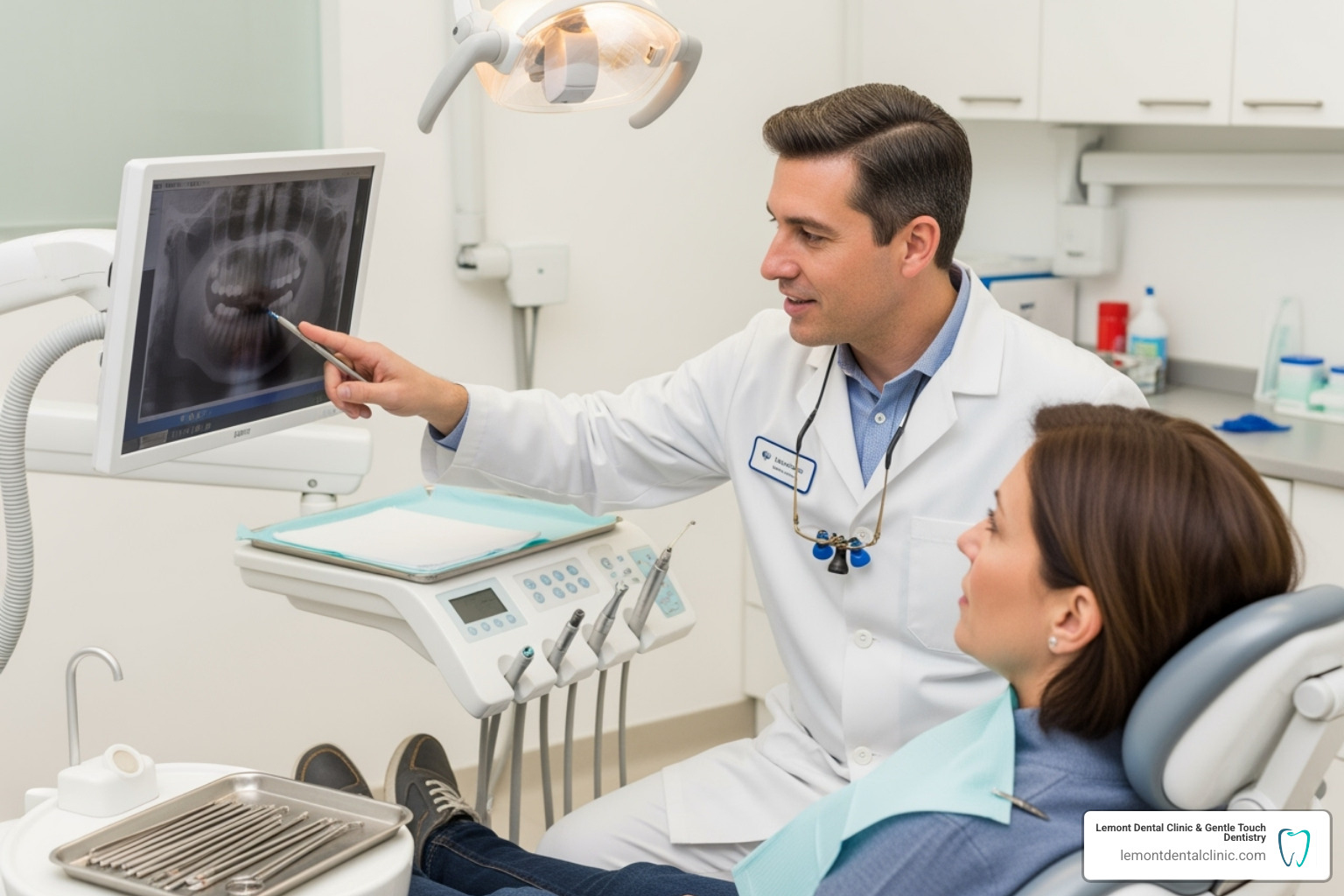
Custom Dentures – High-quality and personalized for a natural look.
Losing teeth can impact your confidence and comfort, but modern dentures have come a long way. Today’s options are natural-looking, comfortable, and custom to your needs, helping you eat, speak, and smile with confidence again. The challenge is navigating the choices, from traditional removable dentures to advanced implant-supported solutions. Understanding the differences is key to selecting the best option for your lifestyle and budget.
As Piotr Dederowski from Lemont Dental Clinic & Gentle Touch Dentistry, I’ve helped countless patients find solutions that restore both function and confidence. This guide breaks down the types of dentures to help you make an informed decision about your smile.
The Fundamental Choices: Full vs. Partial Dentures
When exploring types of dentures, the first question is how many teeth need replacing. This guides us toward either complete or partial dentures, each serving a distinct purpose.
Complete (Full) Dentures: For a Total Smile Restoration
If you’ve lost all teeth in your upper jaw, lower jaw, or both, complete dentures are the solution. They replace an entire arch, resting on your gums with a gum-colored acrylic base that uses natural suction to stay in place. A precise fit is crucial for comfort and confidence.
There are two timing options for getting complete dentures:
Conventional Dentures: After any remaining teeth are removed, your mouth heals completely (usually 6-8 weeks, but sometimes longer). Once the gums and jawbone have stabilized, we take impressions for your custom dentures. This approach provides the most stable, long-lasting fit, but requires a healing period without teeth.
Immediate Dentures: These are made before your remaining teeth are extracted and placed on the same day. You leave the office with a full smile. They act as a protective covering for healing gums, help control bleeding, and can closely match the look of your natural teeth. However, as your gums heal and shrink, these dentures will loosen. You’ll need adjustments and relining to maintain a secure fit. Some patients use them as a permanent solution, while others transition to conventional dentures after healing.
For more insight into achieving a smile that looks and feels natural, take a look at our page on Natural Looking Dentures.
Partial Dentures: Seamlessly Filling the Gaps
If you’re missing some teeth but still have healthy ones, partial dentures are the ideal solution. They fill the gaps left by one or more missing teeth, using your existing teeth as anchors.
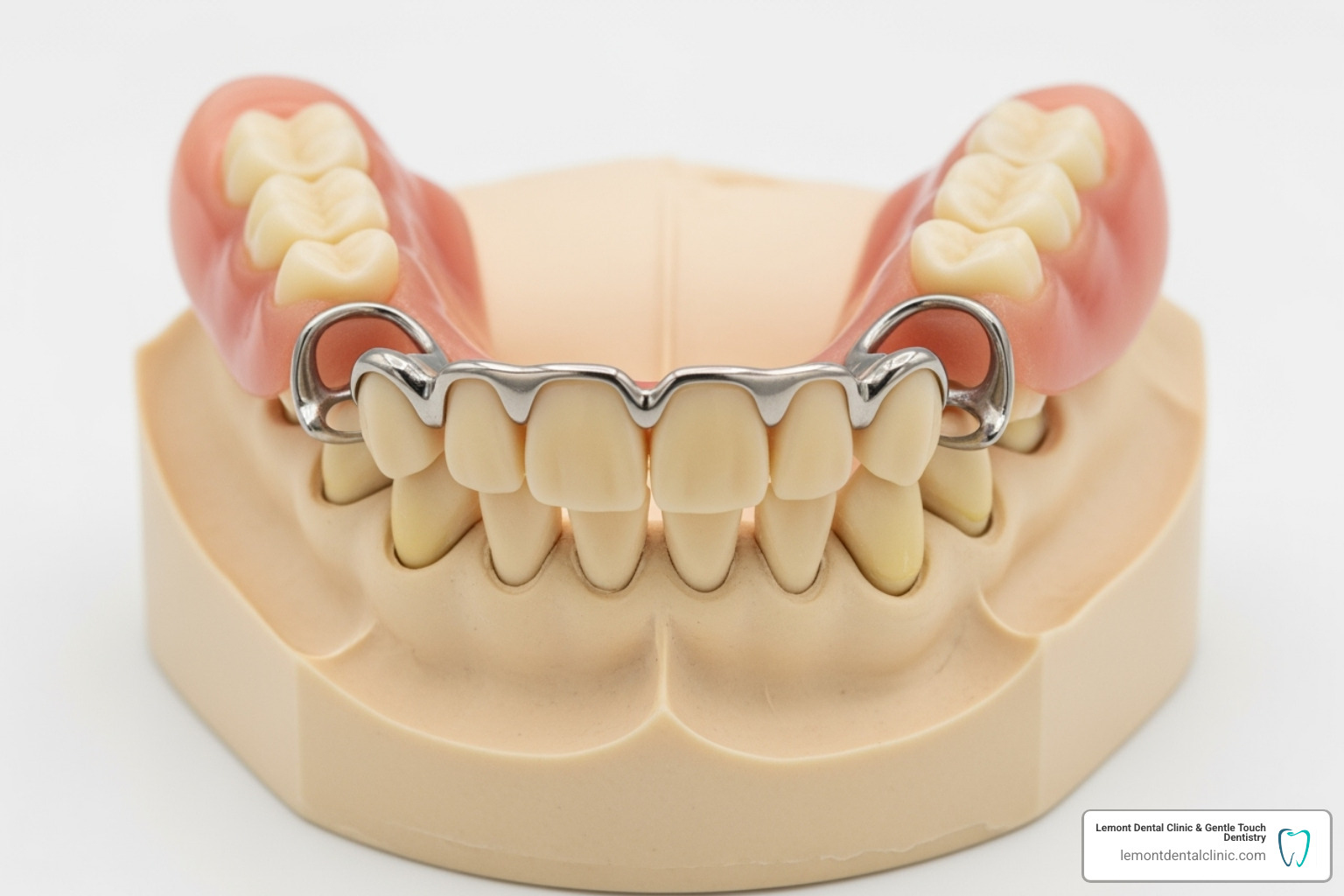
Partial dentures consist of replacement teeth on a base, which can be acrylic or a stronger acrylic-and-metal framework. Beyond aesthetics, they serve a vital function: preventing your teeth from shifting into empty spaces, which can cause bite problems and other issues. They stay in place with small clasps that fit around your natural teeth. Like full dentures, they are removable for easy cleaning.
The goal is to restore your smile, confidence, and oral health with a partial that blends seamlessly with your natural teeth.
Exploring Advanced and Specialized Types of Dentures
Beyond traditional options, modern dentistry offers specialized types of dentures that improve stability, comfort, and appearance.
Implant-Supported & Snap-On Dentures: The Ultimate in Stability
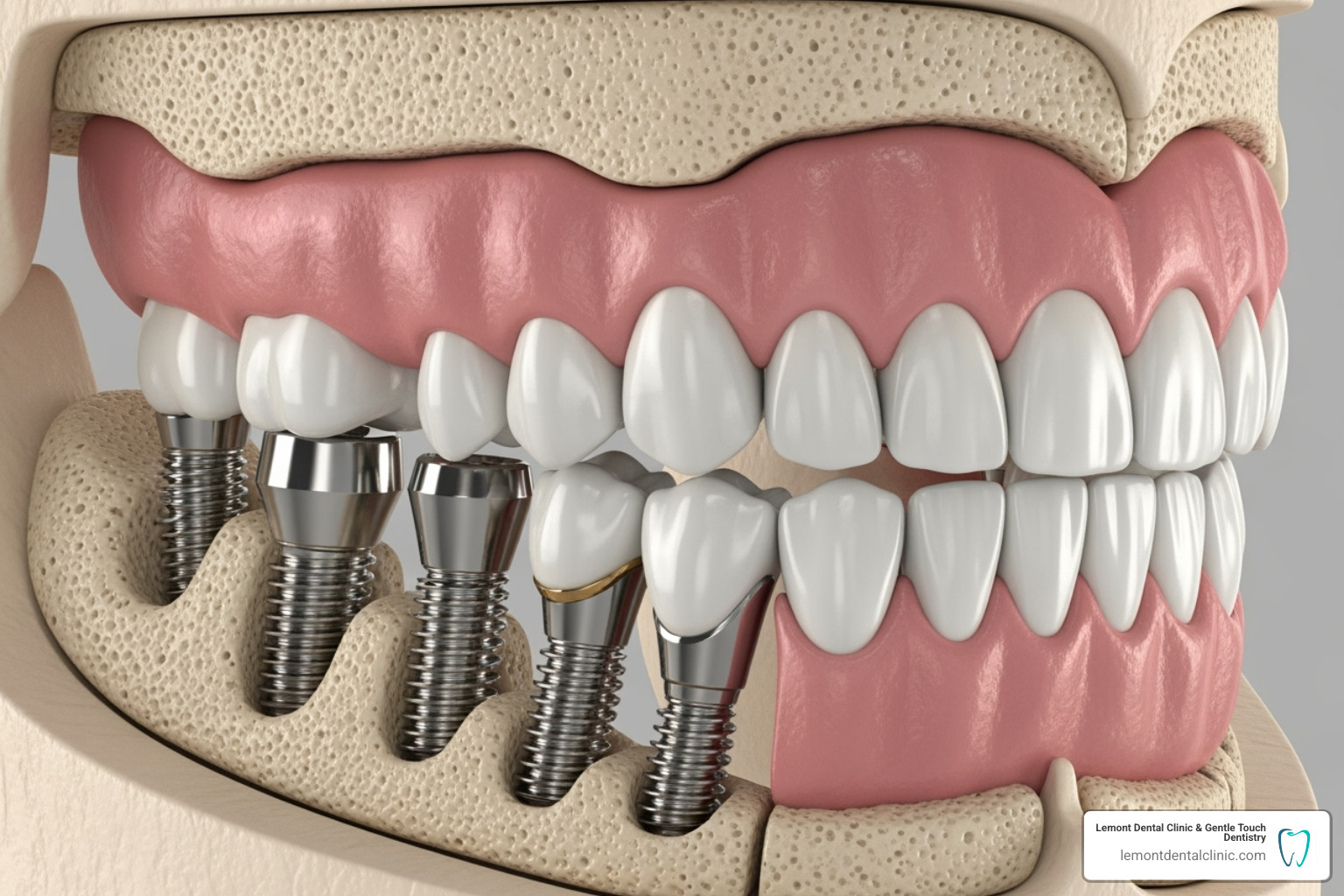
If you worry about dentures slipping, implant-supported solutions offer best stability. These advanced types of dentures anchor to dental implants—small titanium posts surgically placed in your jawbone that fuse with the bone over time.
This secure foundation allows you to bite and chew with confidence. Implants also stimulate the jawbone, preventing the bone loss that can alter your facial structure over time. There are two main types:
Fixed Implant-Supported Dentures: These are permanently attached to your implants and can only be removed by your dentist. They feel and function most like natural teeth.
Snap-On Dentures: These are removable dentures that snap securely onto implants. They offer excellent stability but can be taken out for easy cleaning.
While the upfront investment is higher (implant-supported dentures average $3,976; snap-on dentures average $2,480), many patients find the improved quality of life and long-term benefits to be a worthwhile investment.
Flexible Dentures: A Comfortable, Metal-Free Alternative
For those with metal allergies or who prefer a metal-free option, flexible dentures are an innovative choice among types of dentures. Made from a lightweight, flexible thermoplastic material, these partials use thin, gum-colored extensions that hug your natural teeth instead of metal clasps.
The result is a virtually invisible and comfortable partial denture that blends seamlessly with your gums. The flexible material adapts to your mouth’s contours, and the lightweight design adds to the comfort. They are an excellent solution for partial tooth replacement, with an average cost of around $1,761.
Not all dentures are created equal. When exploring types of dentures, it’s important to understand how quality impacts fit and appearance.
Custom Dentures: These premium dentures are carefully crafted for a personalized fit and natural appearance. Using high-quality materials like advanced resins or porcelain, they are designed to match your facial features and provide optimal function. The process involves multiple try-ins to ensure a perfect result. With an average cost of $6,514, they are an investment in superior comfort, aesthetics, and durability.
We believe in transparent conversations to help you find a balance between quality and affordability. Learn more about What Type of Dentures Are Most Natural-Looking to help guide your decision.
At Lemont Dental Clinic & Gentle Touch Dentistry, we’ll help you understand what you’re getting at each price point so you can make a choice that feels right for your situation.
Your Guide to Getting, Paying For, and Caring for Dentures
Understanding the practical side of getting and maintaining dentures is as important as knowing the different types of dentures.
Factors to Consider When Choosing Your Denture
Selecting the right denture is a collaborative process. At Lemont Dental Clinic & Gentle Touch Dentistry, we consider several factors together:
Number of missing teeth: Determines whether you need a full or partial denture.
Jawbone health: Crucial for implant-supported options. We’ll assess your bone density with X-rays.
Budget and long-term value: We provide transparent costs to help you weigh upfront investment against long-term benefits.
Lifestyle and comfort: Do you prefer a fixed or removable solution? Your daily needs are a top priority.
Aesthetic goals: We discuss the level of customization you desire for a natural-looking smile.
The Journey to Getting Dentures: What to Expect
Getting new dentures is a multi-step process designed for a precise fit and your satisfaction.
Initial Consultation: We examine your mouth, discuss your goals, and determine the best denture type for you.
Dental Impressions: We take accurate molds of your mouth, which serve as the blueprint for your custom dentures.
Wax Model Try-In: You’ll try a wax version of your dentures to check the fit, bite, and appearance. We can make adjustments at this stage.
Final Fitting: We place your finished dentures, make any final adjustments, and provide care instructions.
Follow-Up Adjustments: It’s normal to need minor adjustments as your mouth adapts. If your dentures ever feel loose, we’re here to help. Learn more about Fixing Loose Dentures.
Understanding the Cost of Different types of dentures
The cost of dentures varies based on the type, materials, and complexity of your case. We believe in full transparency and will provide a detailed breakdown.
Here’s a general cost overview for different types of dentures:
Denture Type
Average Cost (USD)
Range (USD)
Traditional Full Dentures
$1,968
$1,520 to $3,648
Partial Resin Dentures
$1,738
$1,333 to $3,283
Partial Metal Dentures
$2,229
$1,728 to $4,203
Implant-Supported Dentures
$3,976
$3,055 to $7,294
Overdentures
$3,136
$2,436 to $6,014
Flipper Dentures
$605
$471 to $1,164
Snap-On Dentures
$2,480
$1,901 to $4,729
Premium Custom Dentures
$6,514
$5,000 to $12,438
Partial Flexible Dentures
$1,761
$1,360 to $3,451
Costs are influenced by materials, case complexity (e.g., extractions or implants), and geographic location. Many dental insurance plans cover a portion of the cost, and we can help you steer your benefits. For a detailed look at pricing, visit our guide on Types of Dentures and Cost.
Denture Care and Long-Term Maintenance
Proper care is essential to ensure your dentures last, typically for seven to 10 years.
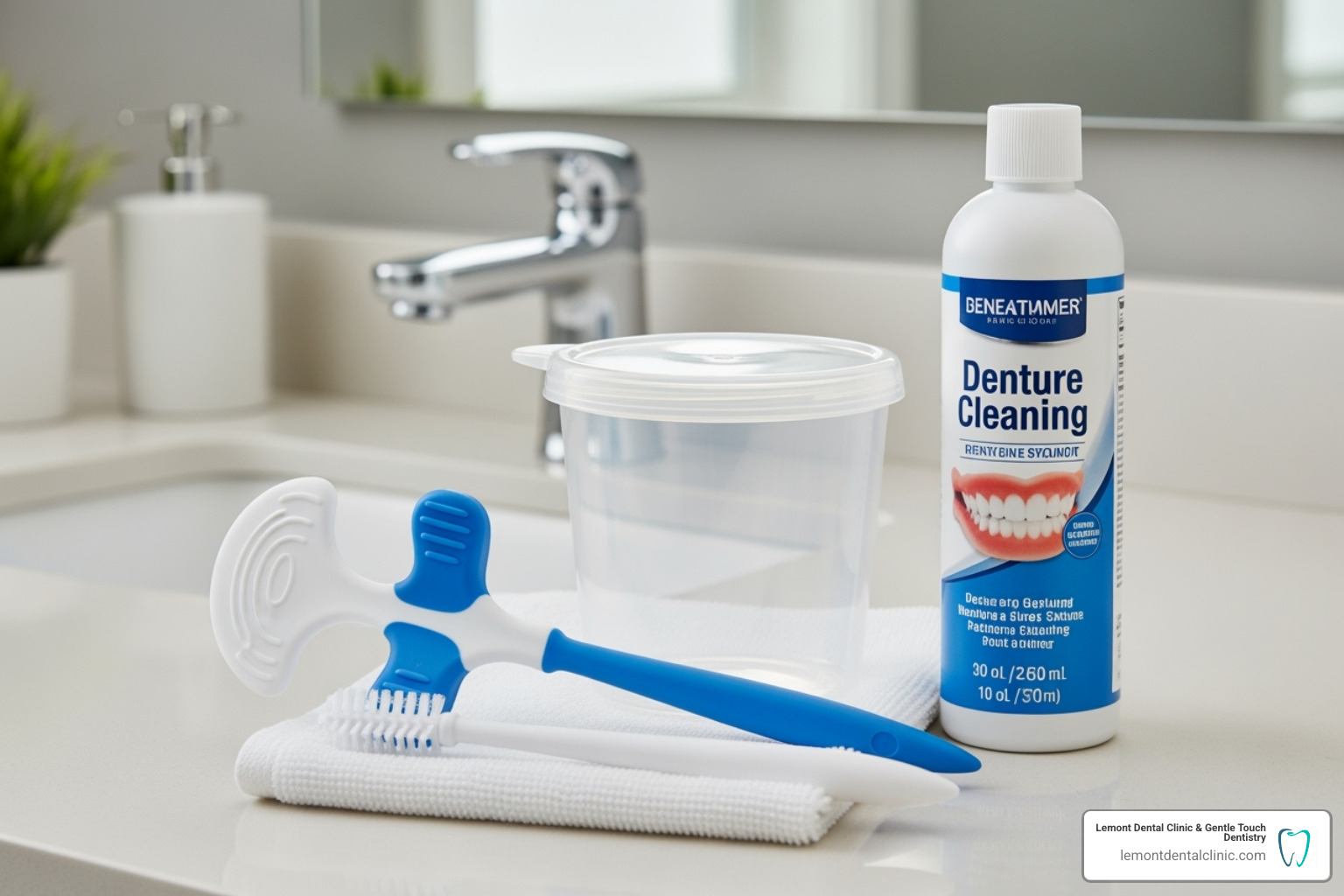
Daily Cleaning: Brush your dentures with a soft-bristled denture brush and non-abrasive cleanser. Avoid regular toothpaste.
Soak Overnight: Remove your dentures at night and soak them in water or a recommended solution to give your gums a rest. Never use hot water.
Handle Carefully: Clean your dentures over a folded towel or sink of water to prevent breakage if dropped.
Clean Your Mouth: Brush your gums, tongue, and palate daily. If you have a partial, give your remaining teeth meticulous care.
Regular Check-ups: Visit us at least annually to check your oral health and the condition of your dentures.
Denture Relining: Your jaw changes over time, causing dentures to loosen. A reline every one to two years readapts the fit. Learn more about What Happens During a Denture Reline.
We know you may still have questions about the different types of dentures and what to expect. Here are answers to some common concerns.
How long do dentures typically last?
Most dentures last between seven to 10 years, but their lifespan depends on the quality of the materials and how well you care for them. Your jaw and gums also change over time, which can affect the fit. To maintain comfort and extend the life of your dentures, denture relining is typically needed every one to two years to readapt the fit to your mouth’s current shape.
Is it difficult to eat or speak with new dentures?
There is an adjustment period. Initially, eating and speaking will feel different, but most people adapt within a few weeks.
Eating: Start with soft foods cut into small pieces. Chew slowly on both sides of your mouth to keep the denture stable. You’ll gradually be able to eat more challenging foods.
Speaking: You might have a slight lisp at first. Practice by reading aloud or talking with family. Your tongue and muscles will quickly adapt.
A properly fitted denture is key. If you experience persistent pain or looseness, contact us for an adjustment. Most patients find that once adjusted, their dentures significantly improve their ability to eat and speak.
What are the main alternatives to traditional types of dentures?
While dentures are an excellent solution, there are other options depending on your needs.
Dental Bridges: These are a fixed, non-removable option for replacing one or a few missing teeth in a row. They are anchored to healthy teeth on either side of the gap.
Standalone Dental Implants: This is the most natural-feeling solution for a single missing tooth. A titanium post acts as an artificial root, which is topped with a crown. Implants are also a fixed option and help preserve jawbone health.
Both bridges and implants feel more like natural teeth because they are not removable. During your consultation at Lemont Dental Clinic & Gentle Touch Dentistry, we can discuss whether one of these alternatives or one of the many types of dentures is the best solution for you.
Find Your Perfect Fit and Restore Your Smile
Choosing among the various types of dentures is an investment in your confidence and quality of life. The right solution will restore function and aesthetics in a way that fits your needs and budget.
We know the process can seem complex, which is why we’re here to help. At Lemont Dental Clinic & Gentle Touch Dentistry, our team partners with you to restore your smile. We listen to your concerns and explain every option in clear, straightforward language—no pressure, just honest guidance.
Our clinics in Lemont and Palos Hills, IL, combine experienced doctors with the latest technology to deliver high-quality, affordable care. You don’t have to live with the limitations of missing teeth. With the right dentures, you can eat, speak, and smile with confidence again.
Your journey to a restored smile starts with a conversation. We’ll assess your oral health, discuss your goals, and help you steer all available types of dentures to find your perfect fit.