Understanding Your Options for a Secure, Lasting Smile
Types of denture implants fall into two main categories:
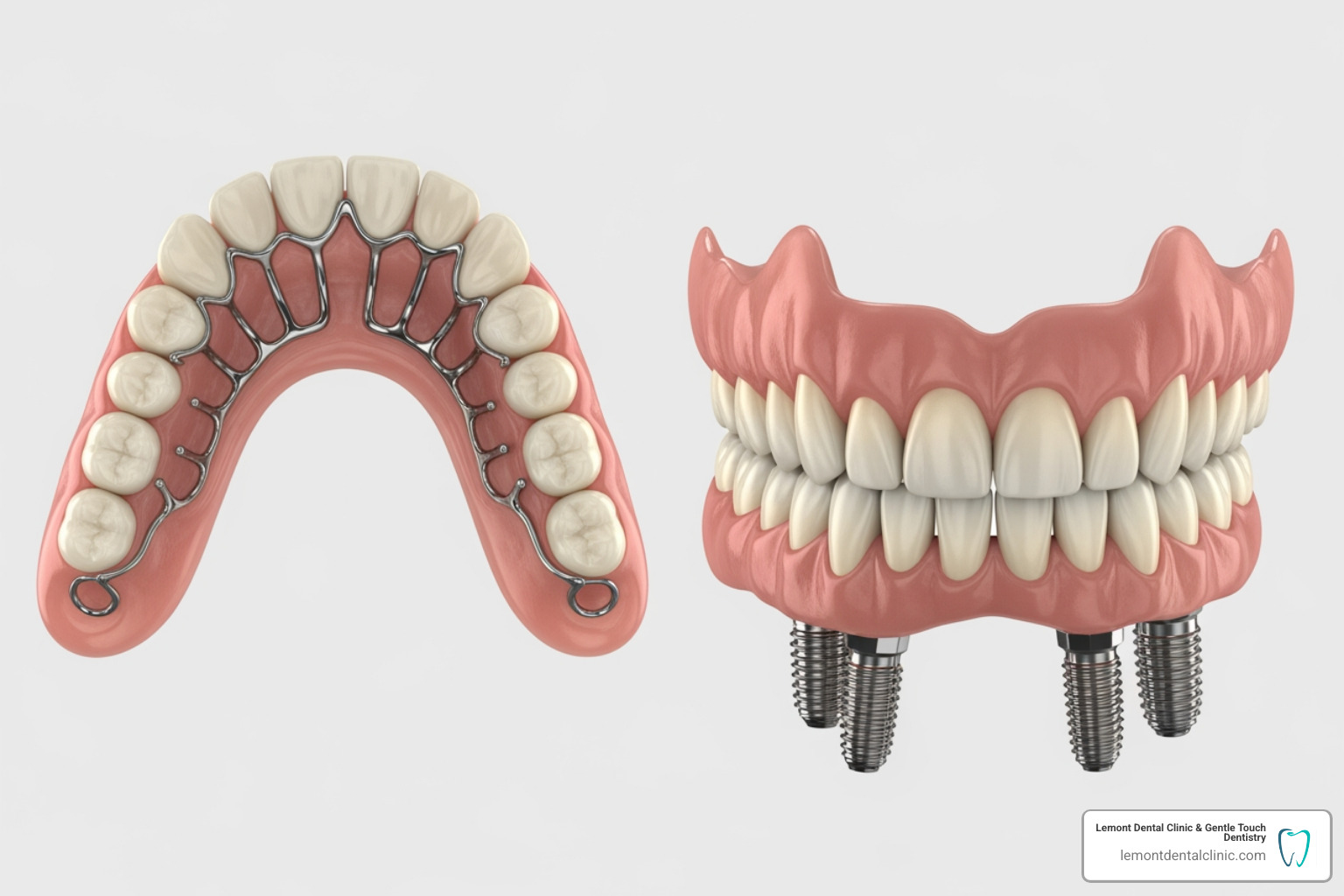
Removable (Snap-In) Denture Implants: Also called overdentures, these snap onto 2-5 implants in your jaw. They offer excellent stability without adhesives and can be removed for cleaning.
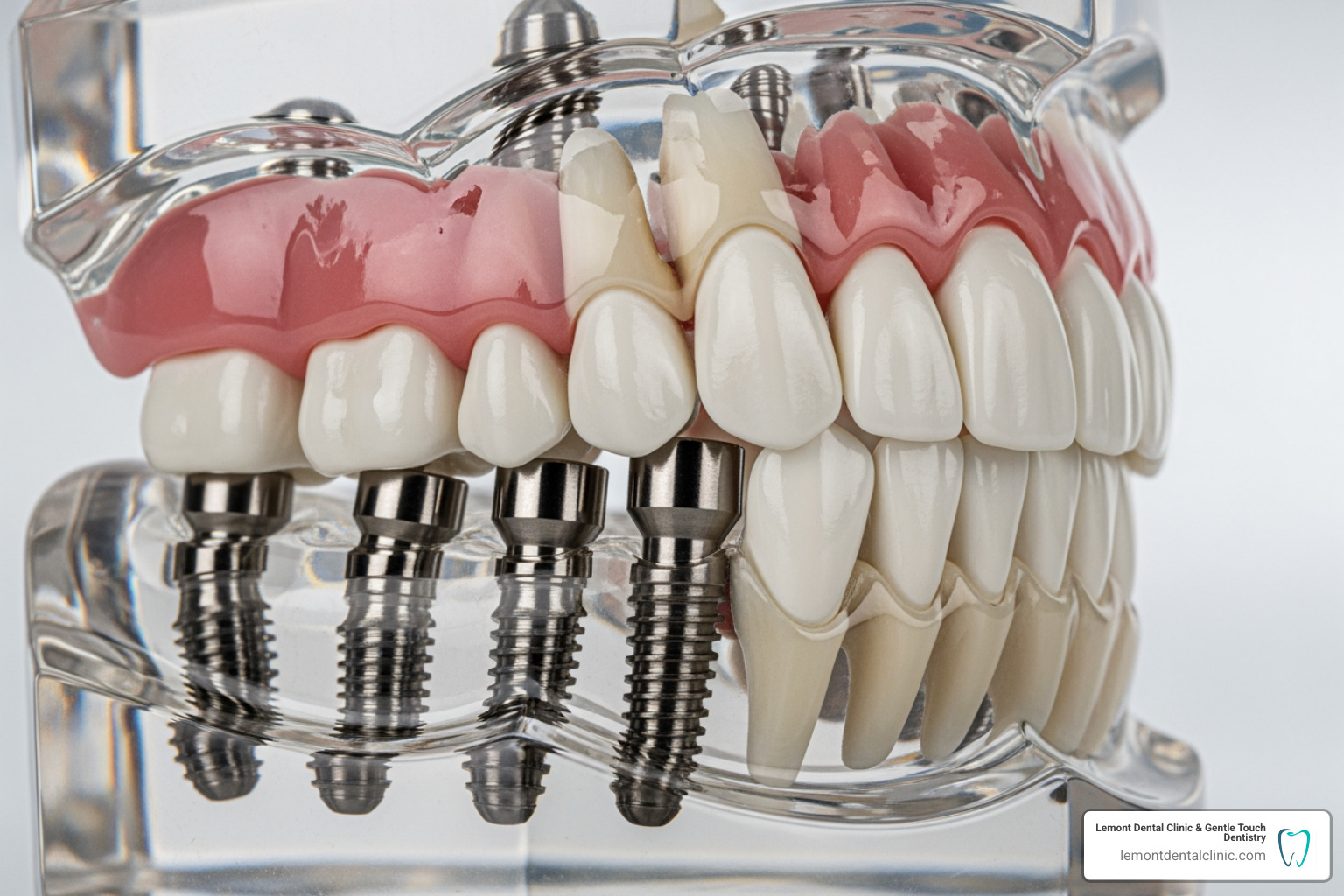
Fixed (Screw-In) Denture Implants: Also known as hybrid dentures, these are permanently attached to 4-8 implants and can only be removed by a dentist. They provide maximum stability and feel the most like natural teeth.
All-on-4 Implants: A popular fixed option that uses just four implants to support a full arch, often allowing for same-day temporary teeth.
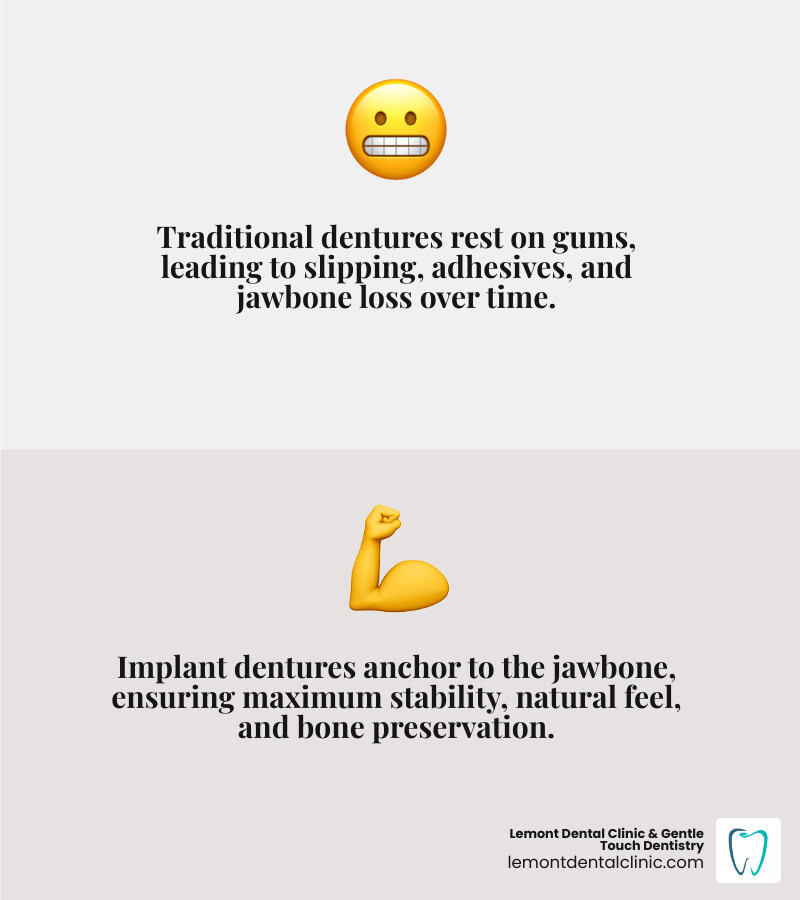
Unlike traditional dentures that rest on the gums, both options replace the tooth root. This stimulates the jawbone, preventing the bone loss that can cause facial sagging over time. Implant solutions anchor directly into your jaw, providing stability and preserving your facial structure.
The difference is significant: traditional dentures restore only 20-30% of chewing power, while implant dentures can restore up to 90%. This allows you to eat, speak, and smile with confidence, knowing your teeth won’t shift.
The investment is real, but so are the results. Implant-supported dentures can cost between $3,000 and $28,000 per arch, depending on the type and number of implants. While traditional dentures are initially cheaper, they require frequent replacement and don’t solve the underlying issue of bone loss.
I’m Piotr Dederowski, and at Lemont Dental Clinic & Gentle Touch Dentistry, I help patients understand the different types of denture implants to find the best solution for their needs. My goal is to provide clear information so you can make an informed decision about your oral health.
Traditional dentures often come with frustrations like slipping, messy adhesives, and a constant worry about stability. Types of denture implants offer a fundamentally different solution by anchoring directly into your jawbone.
This direct connection provides several key advantages:
No More Slipping or Adhesives: Because they are secured to titanium posts in your jaw, implant dentures stay put. You can laugh, speak, and eat without the nagging worry that your teeth will move.
Improved Chewing Power: Traditional dentures restore only 20-30% of natural chewing ability. Implant dentures can restore up to 90%, allowing you to enjoy foods like steak, corn on the cob, and fresh apples again.
Restored Taste: Many traditional upper dentures cover the palate, which dulls your sense of taste. Most implant-supported designs are open-palate, letting you fully experience the flavor of your food.
Preserved Facial Structure: When you lose teeth, the jawbone begins to shrink from lack of stimulation, leading to a sunken, aged appearance. Dental implants act like natural tooth roots, stimulating the bone and preventing this bone loss. This preserves your facial structure and is a true long-term solution.
The Dental Implants Health Benefits lead to an improved quality of life. Patients report feeling more confident in social situations, enjoying meals with family, and smiling without hesitation. While traditional dentures need replacement every 5-7 years, the implants themselves can last a lifetime with proper care. At Lemont Dental Clinic & Gentle Touch Dentistry, we’ve seen this change countless times.
Exploring the Main Types of Denture Implants
When exploring types of denture implants, the main choice is between removable and fixed options. Each offers a different level of function and convenience to fit your lifestyle. Both use dental implants as an anchor, but they function differently in daily life. Whether you need a full or partial solution, Implant Dentures can transform how you eat, speak, and smile.
Removable (Snap-In) Types of Denture Implants
Also known as overdentures or Snap-On Dentures, these options combine implant stability with the convenience of being removable. They snap onto two to five implants per arch, providing excellent stability without slipping. This makes the procedure less invasive and often more affordable than fixed options. You can remove them nightly for easy and thorough cleaning.
Attachments are either ball-retained (implant tops fit into sockets in the denture) or bar-retained (a metal bar connects the implants, and the denture clips onto it for added support). For more details, you can learn more about snap-in dentures. For many, this is the perfect compromise between stability and convenience.
Fixed (Screw-In) Types of Denture Implants
For an experience that comes closest to natural teeth, fixed (or hybrid) dentures are the ideal solution. They are permanently secured to your implants and stay in your mouth 24/7. Because they are non-removable by you, there is zero concern about slippage, providing maximum stability and function. They truly feel most like natural teeth because the connection is solid and there is no bulky plate covering your palate.
Fixed dentures typically require four to eight implants per arch. The popular All-on-4 concept uses just four strategically placed implants to support a full arch, often allowing for temporary teeth on the same day as surgery. We can discuss the Cost of All-on-4 Dental Implants Near Me during your consultation.
Fixed dentures represent the gold standard for those seeking a permanent, highly functional solution that completely restores confidence.
[TABLE] Comparing Snap-In vs. Screw-In Dentures
Here’s a side-by-side look at how these two primary types of denture implants compare:
Comparison Criteria
Removable (Snap-In) Dentures
Fixed (Screw-In) Dentures
Removability
Removable by patient for daily cleaning
Non-removable by patient; only by a dentist
Number of Implants
Typically 2-5 implants per arch
Typically 4-8 implants per arch (e.g., All-on-4)
Stability
Excellent; significantly better than traditional dentures
Maximum; feels most like natural teeth
Maintenance
Removed and cleaned like traditional dentures
Brushed and flossed like natural teeth; professional cleanings
Typical Cost
Moderate; generally more affordable than fixed options
Higher; reflects increased stability and permanence
Chewing Efficiency
Very good; restored significantly from traditional dentures
Excellent; closest to natural chewing ability
The Process and Candidacy for Denture Implants
Understanding the journey to getting types of denture implants can help you feel confident in your decision. At Lemont Dental Clinic & Gentle Touch Dentistry, our “all-in-one” approach means you’ll work with the same trusted team from your first consultation to your final smile reveal.
The first step is determining if implants are right for you. Modern techniques make this treatment possible for more people than ever before.
Who is a Good Candidate?
During your initial visit, we’ll evaluate several factors to determine your candidacy. Many people who think they aren’t candidates actually are. We start with a comprehensive assessment to answer the question: Are Dental Implants Right For You?
An ideal candidate generally has:
Sufficient jawbone density to support the implants. If you’ve experienced bone loss, procedures like bone grafting can often rebuild the necessary foundation.
Good overall health. Uncontrolled conditions like diabetes can affect healing, so we’ll review your medical history.
Healthy gums free from periodontal disease.
A commitment to oral hygiene to ensure the long-term success of your investment.
Smoking is a significant risk factor for implant failure, but it is not an absolute disqualifier. We will discuss this openly with you. While some patients with severe bone loss or uncontrolled systemic diseases may not be suitable, our experienced team will explore every possible solution.
The Journey to a New Smile: Step-by-Step
Getting denture implants is a multi-step process that unfolds over several months. Here’s what to expect:
1. Initial Consultation & 3D Imaging: During your Dental Consultation and Implants, we perform a thorough exam and use advanced 3D CBCT scans. This creates a precise blueprint of your jaw to plan the exact placement of your implants.
2. Treatment Planning: We create a personalized plan outlining the best implant type for you, the number of implants required, any preparatory procedures, and a clear timeline and cost breakdown.
3. Implant Placement Surgery: This outpatient procedure is performed with local anesthesia for your comfort. The titanium posts are carefully placed into your jawbone according to the surgical plan.
4. Osseointegration (Healing): Over the next 3-6 months, the implants fuse with your jawbone in a process called osseointegration. This creates the strong foundation for your new teeth. You will wear a temporary denture during this time.
5. Abutment Placement: After healing, we perform a minor procedure to attach small connectors called abutments to the implants. These will hold your final denture in place.
6. Final Denture Fitting: We take final impressions to create your custom denture. We then fit and adjust it carefully to ensure a perfect fit, natural appearance, and comfortable function.
The entire journey happens right here in our office with a team you know and trust. That’s our commitment to “all-in-one” care—we’re with you every step of the way.
Cost, Durability, and Maintenance of Denture Implants
When considering types of denture implants, it’s important to understand the investment, lifespan, and required care.
Cost Considerations
The cost of denture implants varies based on several factors:
Type of denture: Fixed (screw-in) options generally cost more than removable (snap-in) ones.
Number of implants: More implants provide greater stability but increase the cost.
Materials: The quality of the implants and prosthetic teeth affects the price.
Preparatory procedures: Bone grafting or extractions will add to the overall expense.
For our patients in Lemont, Palos Hills, and surrounding Illinois communities, we offer competitive pricing while maintaining the highest standards. During your consultation, we’ll provide a personalized quote based on your needs and discuss financing options. For more information, visit our Dental Implants Price page.
Durability and Lifespan
Dental implants offer remarkable durability. The titanium implants themselves are designed to last a lifetime. They fuse with your jawbone, creating a permanent foundation with a success rate of over 90% after 10 years.
The prosthetic denture attached to the implants, however, will experience normal wear and tear. It typically needs replacement every 5 to 15 years. Think of it as a long-lasting foundation that supports a house that gets a refresh every decade or so.
Maintenance
Proper care is essential for protecting your investment. The routine depends on the type of implant denture you have.
For snap-in dentures: Remove them daily for cleaning with a denture brush and cleaner. You’ll also need to carefully clean around the implant sites in your mouth to keep your gums healthy.
For screw-in dentures: Treat them like natural teeth. Brush and floss daily, paying special attention to the area where the denture meets the gum line. We may recommend special tools like floss threaders.
Professional maintenance is crucial. Regular check-ups and cleanings allow us to monitor your implants, gums, and denture, catching any potential issues early. A commitment to daily hygiene and professional care will help you enjoy the benefits of your new smile for decades.
Frequently Asked Questions about Denture Implants
Here are answers to the most common questions we hear from patients about the different types of denture implants.
How long do denture implants last?
The titanium implant posts that are placed in your jawbone are designed to last a lifetime with proper care. They fuse with the bone, becoming a permanent part of your body. The prosthetic denture attached to them, however, experiences daily wear and typically needs to be replaced every 5 to 15 years. Replacing the denture is a much simpler process than the initial implant placement.
Can you eat normally with denture implants?
Yes, absolutely. This is one of the biggest benefits. While traditional dentures restore only 20-30% of chewing power, implant dentures can restore up to 90%. This means you can confidently eat steak, apples, corn on the cob, and other foods you may have been avoiding. The stability provided by the implants allows you to chew comfortably and without worry. We do advise caution with extremely hard or sticky foods.
Is the denture implant procedure painful?
The procedure itself is not painful. We use local anesthesia to completely numb the area, so you will only feel pressure or movement. Afterward, you can expect some manageable discomfort, swelling, or bruising, similar to what you’d feel after a tooth extraction. This is typically controlled with over-the-counter pain medication and subsides within a few days. Most patients agree the temporary discomfort is well worth the long-term results.
Begin Your Journey to a Confident Smile
Choosing the right types of denture implants is about more than just replacing teeth—it’s about reclaiming your quality of life. The benefits are life-changing: improved stability, better chewing power, preserved facial structure, and a major boost in confidence.
While implant dentures are a significant investment, the implants themselves can last a lifetime. You are investing in your long-term health, appearance, and well-being. The value of being able to eat, speak, and smile without worry is immeasurable.
At Lemont Dental Clinic & Gentle Touch Dentistry, we make this change accessible to our Lemont, Palos Hills, and surrounding Illinois communities. Our “all-in-one” approach means our experienced team provides comprehensive care with the latest technology, all under one roof. We combine quality with competitive pricing because we believe in making excellent dental care available to our patients.
We are committed to guiding you through this journey, answering your questions, and ensuring you feel comfortable with your decision. Your new smile is waiting. Find out more about our denture solutions and schedule your consultation with our compassionate team. We’re ready to help you live with confidence again.