Why Dental Anxiety Shouldn’t Keep You from a Healthy Smile
If you’ve been searching for sleep dentistry near me, you’re likely one of the millions who experience fear or anxiety about dental visits. Here’s what you need to know right away:
Sleep dentistry (also called sedation dentistry) uses medication to help you relax during dental procedures. You can:
- Remain calm and comfortable throughout treatment
- Have multiple procedures completed in fewer visits
- Experience little to no memory of the appointment
- Choose from different sedation levels based on your anxiety and treatment needs
Common sedation options include:
- Nitrous oxide (laughing gas) – minimal sedation, quick recovery
- Oral sedation – take a pill before your appointment
- IV sedation – deeper relaxation administered through a vein
- General anesthesia – completely asleep for complex procedures
You’re not alone in your dental fears. Research shows that 10-20% of North Americans are dental phobic, and up to 50% have some reservations about visiting the dentist. Many people avoid necessary dental care because of anxiety, which can lead to serious oral health problems down the road.
Sleep dentistry changes that equation. Instead of white-knuckling through a procedure or skipping appointments entirely, you can receive the care you need in a relaxed, stress-free state. Whether you need a simple filling or extensive restorative work, sedation options make it possible to get treatment without the fear.
I’m Piotr Dederowski, and at Lemont Dental Clinic & Gentle Touch Dentistry, we’ve helped countless anxious patients find how sleep dentistry near me searches led them to finally overcome their dental fears and achieve healthy smiles. Our experienced team specializes in making every visit comfortable, from routine checkups to complex procedures requiring sedation.
Related content about sleep dentistry near me:
What is Sleep Dentistry and Who Can Benefit?
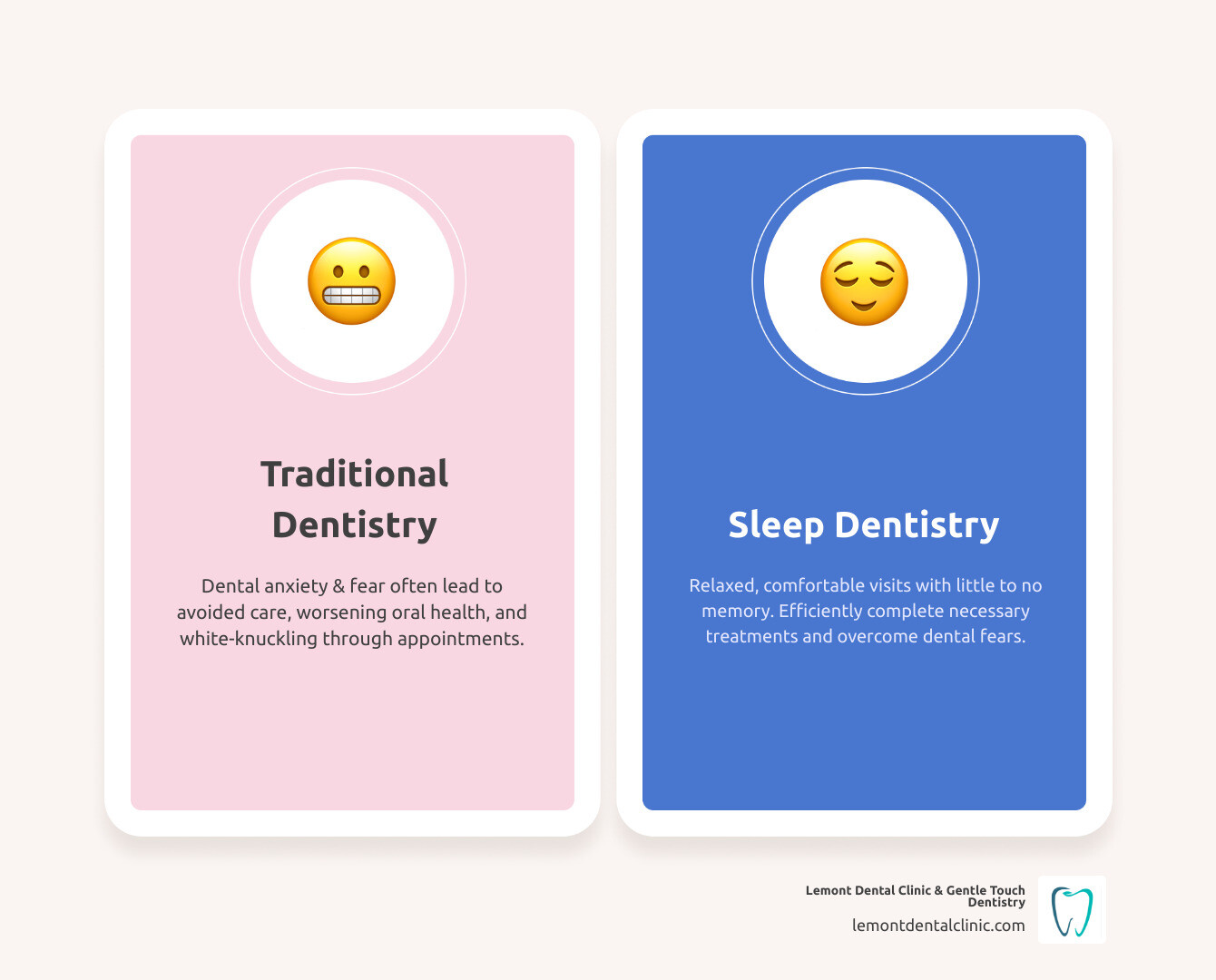
When we talk about “sleep dentistry,” we’re really talking about sedation dentistry – the practice of using medication to help you relax during dental procedures. The goal isn’t always to put you completely to sleep, but rather to alleviate anxiety and discomfort, making your dental experience positive and stress-free. So, how does it differ from traditional dentistry?
In traditional dentistry, you’re typically awake and fully aware during your procedure, relying on local anesthesia to numb the treatment area. While effective for pain management, it doesn’t address dental anxiety, fear of needles, or discomfort from long appointments. This is where sleep dentistry steps in. We use various levels of sedation to calm your nerves, reduce awareness of the procedure, and sometimes even induce a state where you have little to no memory of the treatment itself.
It’s estimated that 36 percent of people worldwide suffer from dental fear, and here in North America, 10-20% are considered dental phobic, with up to 50% harboring some reservations about visiting the dentist. This fear can lead to avoided appointments, neglected oral health, and ultimately, more complex and costly problems down the line. We believe that no one should sacrifice their oral health due to anxiety.
For more insights into dental fear, you can refer to this Scientific research on dental fear.
Who is a Good Candidate?
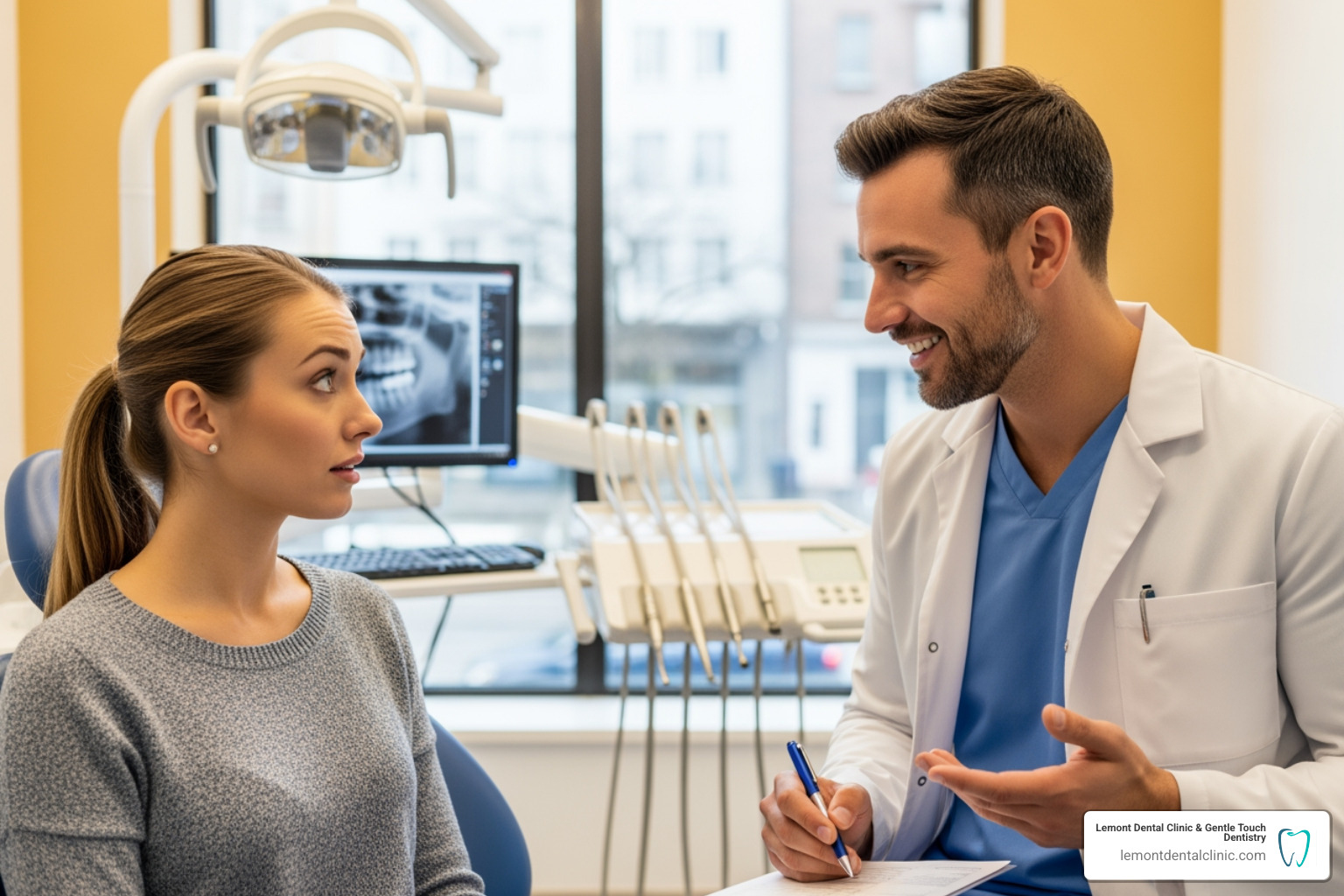
Sleep dentistry is a wonderful solution for a wide range of patients. You might be an ideal candidate if you experience any of the following:
- Dental Phobia or High Anxiety: If the mere thought of a dental visit fills you with dread, or if you’ve been avoiding the dentist for years, sedation can help you overcome that fear.
- Low Pain Tolerance: For those who find dental procedures inherently uncomfortable, even with local anesthesia, sedation can significantly improve your comfort.
- Sensitive Gag Reflex: A strong gag reflex can make even routine cleanings difficult. Sedation can suppress this reflex, allowing for more relaxed treatment.
- Difficulty Sitting Still: If you struggle to remain still for extended periods, perhaps due to restlessness, back pain, or other conditions, sedation can help you relax throughout longer appointments.
- Special Needs Patients: Individuals with certain physical, cognitive, or behavioral challenges may find it easier to receive necessary dental care with the aid of sedation.
- Patients Requiring Extensive Dental Work: If you need multiple procedures, complex treatments, or a lengthy appointment, sedation can help us consolidate your treatment into fewer, more comfortable visits. This means less time in the dental chair overall!
How Sleep Dentistry Helps Anxious Patients
The primary benefit of sleep dentistry is its ability to transform a potentially stressful experience into a calm, even pleasant one. Here’s how it helps:
- Stress Reduction: Sedation medications work to calm your nervous system, reducing feelings of stress and panic before and during your appointment. You’ll feel a profound sense of relaxation.
- Eliminating Fear: By mitigating anxiety, we can help you address the root of your dental fear. Many patients find that after a positive sedation experience, their overall apprehension about dental visits decreases over time.
- Positive Dental Experiences: When you’re relaxed and comfortable, you’re more likely to have a good experience. This helps build trust and encourages you to maintain regular dental care.
- Completing Necessary Care: For those who have deferred dental work due to fear, sleep dentistry provides a pathway to finally get the treatments you need, preventing minor issues from escalating into major problems.
- No Memory of Procedure: Depending on the level of sedation, you may have little to no recollection of the actual procedure. This is particularly beneficial for those with traumatic past dental experiences, as it helps erase those negative associations. You can literally “sleep your fears away” and “say goodnight to dental fear.”
The Different Levels of Sedation in Dentistry
We offer a complete range of sedation options to ensure your comfort, tailoring the approach to your individual needs, anxiety levels, and the complexity of your dental procedure. “Sleep dentistry” is a broad term, and the level of sedation can vary significantly.
Here’s a comparison of the four main types of sedation we use:
| Level of Sedation |
Consciousness |
Administration |
Recovery |
| Minimal |
Awake and relaxed, fully responsive |
Inhaled (Nitrous Oxide/Laughing Gas) |
Effects wear off within minutes; can drive yourself home |
| Moderate |
Very drowsy, may doze off but easily roused |
Oral (Pill taken before appointment) |
Effects last several hours; require an escort and rest for the day |
| Deep |
On the edge of consciousness, “twilight sleep” |
Intravenous (IV into a vein) |
Effects last longer; require an escort and rest for at least 24 hours |
| General Anesthesia |
Completely unconscious, no memory |
IV, mask, or injection; administered by anesthesiologist |
Full recovery can take 24 hours or more; require an escort and close monitoring |
Minimal Sedation: Nitrous Oxide
Nitrous oxide, commonly known as “laughing gas,” provides a mild level of sedation. It’s administered through a small mask placed over your nose, and you simply breathe normally. Within minutes, you’ll feel a sense of calm and relaxation, often accompanied by a euphoric feeling. You remain awake and able to respond to our team throughout your procedure.
Key benefits of nitrous oxide:
- Fast-acting: Effects begin almost immediately.
- Easily adjustable: We can control the exact amount of sedation you receive.
- Quick recovery: The effects wear off rapidly once the mask is removed, usually within minutes. You can typically drive yourself home and resume your normal activities shortly after your appointment.
- Non-invasive: No needles are involved for administration.
- Suitable for all ages: It’s a gentle and effective option for both adults and children with mild to moderate anxiety.
Moderate Sedation: Oral Conscious Sedation
Oral conscious sedation involves taking a prescribed pill, such as Halcion or Valium, about an hour before your appointment. This medication helps you achieve a deeper state of relaxation. You’ll feel very drowsy, may doze off during the procedure, but you’ll still be able to respond to verbal cues or gentle nudges from our team. Many patients report remembering little to nothing about their treatment, which is a huge advantage for those with dental phobia.
Important considerations for oral conscious sedation:
- No needles: This is an excellent option for patients who fear injections.
- Amnesia effect: You’ll likely have little to no memory of the procedure, making it ideal for those with past traumatic experiences.
- Escort required: The effects of the medication can last for several hours, so you must arrange for a responsible adult to drive you to and from your appointment and stay with you for the remainder of the day. We recommend resting for at least 24 hours.
- Less invasive, less debilitating: Compared to deeper sedation methods, it’s generally considered less intense while still providing significant anxiety relief.
Deep Sedation: IV Sedation
Intravenous (IV) sedation delivers medication directly into your bloodstream, allowing for a deeper level of relaxation, often referred to as “twilight sleep.” This method is incredibly effective for patients with moderate to severe anxiety, those undergoing lengthy procedures, or those with a strong gag reflex. With IV sedation, you’ll be in a profoundly relaxed state, often unaware of your surroundings, though you may still be able to respond to our team.
Advantages of IV sedation:
- High level of control: We can precisely adjust the medication dosage to achieve the optimal level of sedation for your comfort.
- Fast onset: The medication takes effect very quickly, usually within minutes.
- Deeper relaxation: It provides a more profound sense of calm than oral sedation, making it suitable for more complex or extended treatments.
- Makes time fly: An hour-long visit can feel like just a few minutes, as you’ll have little to no memory of the procedure.
- Close monitoring: Throughout your procedure, our trained team will closely monitor your vital signs, including blood pressure and oxygen levels, to ensure your safety.
- Dental anesthesiologist: In some cases, especially for deeper levels of IV sedation, a dental anesthesiologist may be present to administer and monitor the sedation.
General Anesthesia
General anesthesia is the deepest form of sedation. Under general anesthesia, you are completely unconscious and have no awareness or memory of the procedure. This option is typically reserved for very complex surgical procedures, extremely anxious patients who cannot be treated with other sedation methods, or young children and special needs patients who require extensive dental work.
Key aspects of general anesthesia:
- Completely unconscious: You are fully “asleep” and unresponsive to pain or external stimuli.
- Specialized setting: General anesthesia usually requires administration in a hospital setting or a specialized dental clinic equipped for this level of care.
- Administered by an anesthesiologist: A medical anesthesiologist or a highly trained dental anesthesiologist will administer the medication (via IV, mask, or injection) and continuously monitor your vital signs throughout the entire procedure.
- Longer recovery: Full recovery can take 24 hours or more, and you will need a responsible adult to drive you home and assist you during the initial recovery phase.
The Sleep Dentistry Experience: From Consultation to Recovery
Your journey with sleep dentistry at Lemont Dental Clinic & Gentle Touch Dentistry is carefully planned to ensure your safety, comfort, and peace of mind at every step. From your initial consultation to your recovery, we prioritize a seamless and reassuring experience.
Your Initial Consultation and Preparation
The first step is always a thorough consultation. This is where we get to know you, understand your dental history, and most importantly, listen to your concerns and anxiety levels.
- Medical History Review: We’ll review your complete medical history, including any current medications, allergies, and health conditions. This is crucial for determining the safest and most effective sedation option for you. For instance, individuals with cardiac disease, respiratory disease, diabetes, or hypertension may need clearance from their primary care provider or may not be suitable candidates for certain types of sedation.
- Discussing Anxiety Levels: We’ll openly discuss your level of dental anxiety, your past experiences, and what makes you uncomfortable. This helps us tailor a sedation plan that truly meets your needs.
- Choosing Sedation Type: Based on your health, anxiety, and the planned dental procedure, we’ll recommend the most appropriate type of sedation. We’ll explain each option in detail, answering all your questions so you feel fully informed and comfortable with your choice.
- Pre-Appointment Instructions: Once your sedation type is chosen, we’ll provide clear instructions for before your appointment. This often includes:
- Fasting: For oral, IV, or general anesthesia, you’ll typically need to refrain from eating solid foods for eight hours prior and clear fluids up to four hours prior.
- Arranging Transportation: For any sedation beyond nitrous oxide, you must arrange for a responsible adult to drive you to and from your appointment. They should also be available to stay with you for several hours afterward.
- Comfortable Clothing: We recommend wearing loose, comfortable clothing with short sleeves to your appointment.
- No Jewelry/Nail Polish/Contact Lenses: For safety during monitoring, please remove all jewelry. Nail polish can interfere with pulse oximeter readings (a finger sensor that measures oxygen levels), so we ask that you avoid wearing it. Contact lenses should also be removed.
- Questions Answered: We encourage you to ask any questions you have during this consultation. We want you to feel completely at ease and confident in our care.
What to Expect During and After Your Appointment
On the day of your appointment, our compassionate team will greet you and guide you through the process, ensuring your comfort from the moment you arrive.
- During the Procedure:
- Sedation Administration: Depending on your chosen method, you’ll either inhale nitrous oxide, take an oral pill, or have IV medication administered.
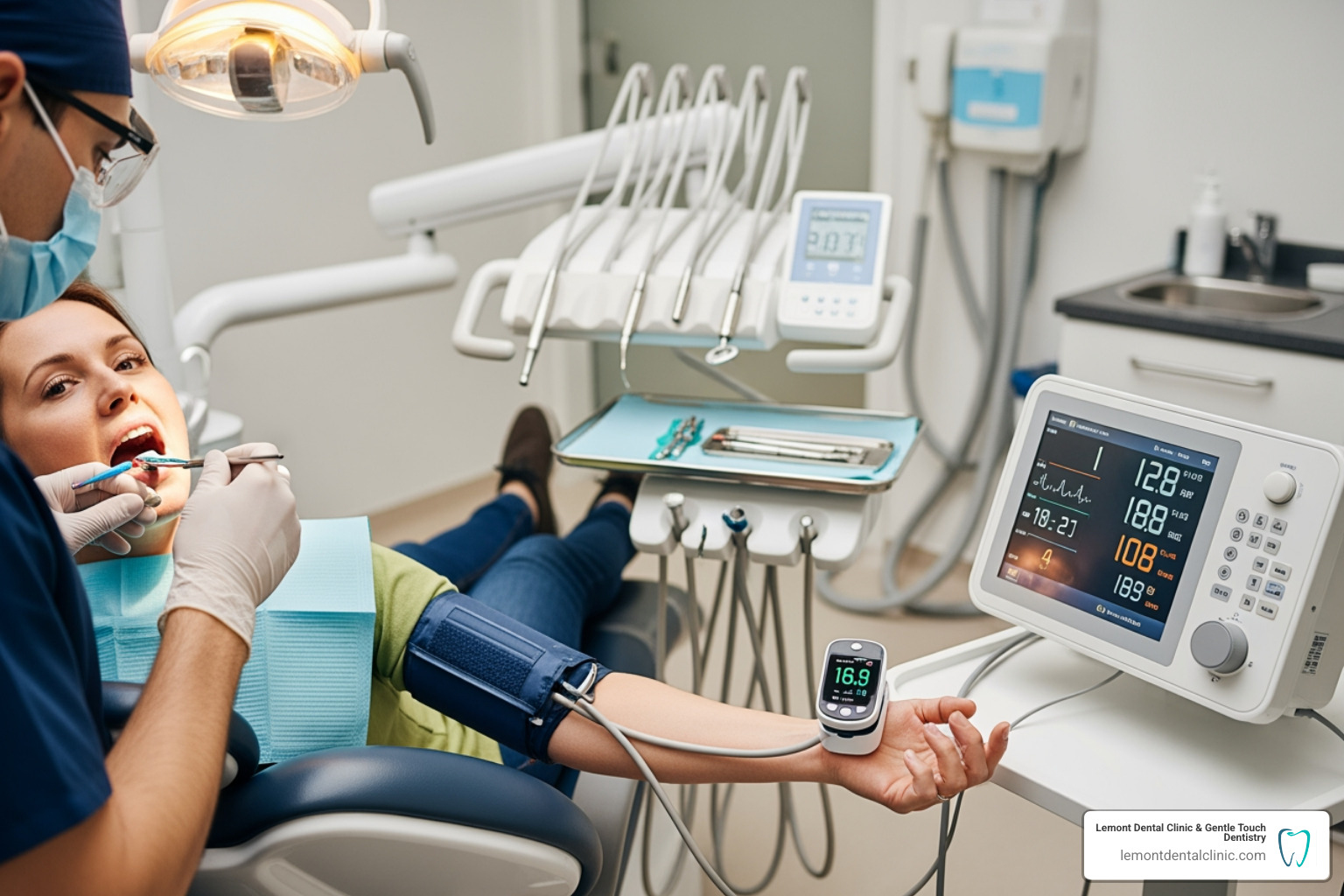
- Vital Signs Monitoring: Throughout your entire procedure, our team will closely monitor your vital signs, including your blood pressure, heart rate, and oxygen saturation levels (using a finger sensor). Your safety is our utmost priority.
- Comfort: We strive to create a warm and quiet environment. You might even be offered a cozy blanket to improve your relaxation.
- Perception of Time: Patients often report that time seems to pass very quickly, or they remember little to nothing about the procedure, even if they were technically “awake.” This is a common and welcomed benefit of sedation.
- After the Procedure:
- Drowsiness and Disorientation: After oral, IV, or general anesthesia, it’s normal to feel drowsy, a bit groggy, or slightly disoriented for a period of time (e.g., 30-60 minutes after IV sedation).
- Recovery Time Variation:
- Nitrous Oxide: The effects wear off within minutes, and you’ll feel normal almost immediately. You can typically drive yourself home.
- Oral Sedation: The effects can last for several hours. You’ll need your pre-arranged escort to drive you home, and we recommend resting for the remainder of the day, avoiding driving or operating machinery for at least 24 hours.
- IV Sedation / General Anesthesia: These have longer-lasting effects. You’ll need your escort, and it’s crucial to rest for at least 24 hours. Follow all post-operative instructions carefully.
- Potential Side Effects: While generally safe, some common side effects of sedation medications can include mild nausea, dizziness, or headache. We’ll provide you with specific post-care instructions to manage any potential side effects and ensure a smooth recovery.
Finding and Affording a Provider for Sleep Dentistry Near Me
When you’re searching for “sleep dentistry near me,” find a qualified provider who can offer safe, effective, and compassionate care. We understand that quality care and affordability are key concerns.
How to Find a Qualified Provider for Sleep Dentistry Near Me
Finding the right dental home for your sedation needs involves a bit of research, but it’s well worth the effort for your peace of mind. Here’s what we recommend:
- Search Locally: Start by searching online for “sleep dentistry Lemont IL,” “sedation dentist Palos Hills IL,” or “dentist with sedation Chicago Ridge IL,” depending on your specific location within our service areas of Lemont, Palos Hills, Chicago Ridge, Worth, Palos Park, Hickory Hills, Oak Lawn, Orland Park, Palos Heights, Bolingbrook, Romeoville, Palisades, and Lockport Heights.
- Check Credentials and Experience: Look for dentists and dental teams with specific training and experience in administering sedation. For IV sedation or general anesthesia, ensure that a qualified dental anesthesiologist or medical anesthesiologist is involved. Our experienced doctors are well-versed in advanced sedation techniques, utilizing the latest technology to ensure your comfort and safety.
- Read Patient Reviews: Testimonials from other anxious patients can provide valuable insights into a clinic’s approach to comfort and care. Look for reviews that highlight a reassuring and gentle environment.
- Schedule a Consultation: Don’t hesitate to schedule an initial consultation to meet the team, discuss your fears, and ask questions about their sedation options. This is your chance to assess if the clinic is the right fit for you. We welcome new patients and are always ready to discuss how we can make your dental experience comfortable.
Understanding the Costs and Insurance Coverage for Sleep Dentistry Near Me
The cost of sleep dentistry can vary depending on several factors, and it’s a common question we receive.
- Cost Variation:
- Type of Sedation: Minimal sedation (nitrous oxide) is generally the least expensive, while IV sedation and general anesthesia involve higher costs due to the specialized medications, equipment, and professional fees of the administering anesthesiologist.
- Procedure Duration: Longer appointments or more complex procedures may incur higher sedation costs.
- Clinic Specifics: Prices can also vary between dental practices. We pride ourselves on offering competitive prices without compromising on quality or the latest technology.
- Insurance Coverage: Many dental insurance providers often consider sedation dentistry a “luxury” item, meaning it might not be fully covered. However, there are important exceptions:
- Medical Necessity: If sedation is deemed medically necessary due to a patient’s disability (e.g., cerebral palsy, autism) that makes dental care otherwise impossible, or for very complex procedures (like multiple tooth extractions), your insurance might provide coverage.
- Specific Procedures: Some plans may cover sedation when it’s integral to a covered surgical procedure.
- Checking Your Plan: We always recommend contacting your dental insurance provider directly to confirm your specific benefits and coverage for sedation dentistry. Our knowledgeable team is also here to help you steer your insurance questions and understand your options.
- Affordable Financing: We believe that financial considerations shouldn’t prevent you from receiving necessary dental care. That’s why we accept most insurance plans and offer various financing options to make quality dental treatment affordable. We aim for stress-free dentistry in every aspect, including payment.
Frequently Asked Questions About Sleep Dentistry
We know you might have more questions about sleep dentistry, and we’re here to provide clear, straightforward answers.
A wide range of dental procedures can be comfortably performed with sleep dentistry, from routine care to extensive treatments. This is one of the greatest advantages – allowing you to get all the care you need without fear or discomfort.
We can use sedation for:
- Routine Treatments: Dental cleanings, examinations, and fillings.
- Restorative Dentistry: Crowns, bridges, dentures, and inlays/onlays.
- Complex Procedures: Root canal therapy, wisdom tooth extractions, and dental implant placements (single, multiple, or full arch).
- Cosmetic Dentistry: Veneers, teeth whitening, and full-mouth reconstruction.
- Periodontal Care: Gum therapy and deep cleanings.
Essentially, if you need it done, we can likely do it more comfortably with sedation, allowing us to consolidate multiple procedures into fewer, more efficient appointments.
Is sleep dentistry safe for children?
Yes, sleep dentistry can be very safe and highly beneficial for children when administered by a trained and experienced professional. Children often experience heightened anxiety about dental visits, or they may have difficulty sitting still for extended periods.
We carefully assess each child’s medical history and specific needs. Sedation can be particularly recommended for:
- Children with extreme dental fear or anxiety.
- Very young children who are unable to cooperate.
- Children with special needs that make traditional dental treatment challenging.
- Children requiring extensive dental work that would be too overwhelming to complete without sedation.
Our team ensures their safety and comfort by asking thorough questions and watching their vital signs throughout the entire process.
How long does recovery take after sleep dentistry?
The recovery process after sleep dentistry largely depends on the type and depth of sedation you received:
- Nitrous Oxide (Minimal Sedation): This is the quickest recovery. The effects wear off within minutes of removing the mask. You’ll feel back to normal almost immediately and can typically drive yourself home and resume your daily activities.
- Oral Conscious Sedation (Moderate Sedation): The effects of oral medication can last for several hours. You’ll need a responsible adult to drive you home, and we recommend resting for the remainder of the day. Avoid driving, operating machinery, or making important decisions for at least 24 hours.
- IV Sedation (Deep Sedation) / General Anesthesia: These deeper forms of sedation have longer-lasting effects. You will definitely need an escort to drive you home, and it’s crucial to plan for a full day (at least 24 hours) of rest. You should avoid strenuous activities, driving, or making critical decisions during this recovery period. We will provide detailed post-care instructions to ensure a smooth and safe recovery.
Conclusion: A Stress-Free Path to a Healthy Smile
Your oral health is a cornerstone of your overall well-being, and we firmly believe that dental anxiety should never stand in the way of receiving the care you need. At Lemont Dental Clinic & Gentle Touch Dentistry, we’re dedicated to making your dental experience comfortable, positive, and stress-free.
Sleep dentistry offers a powerful solution, allowing you to:
- Overcome Dental Fear: Transform your apprehension into relaxation, making dental visits manageable and even pleasant.
- Receive Efficient Treatment: Consolidate multiple procedures into fewer appointments, saving you time and stress.
- Experience Improved Comfort: Eliminate pain, discomfort, and the memory of your treatment, even for extensive work.
Whether you’re looking for sleep dentistry near me for a routine cleaning or a complex restorative procedure, our experienced team in Lemont and Palos Hills, IL, is here to provide high-quality, comprehensive care with your comfort as our top priority. We use the latest technology and offer a range of sedation options custom to your needs, ensuring a safe and effective path to a healthy, confident smile.
Don’t let dental anxiety dictate your health any longer. We invite you to contact us to discuss how sleep dentistry can help you achieve the healthy smile you deserve.
More info about our dental services