Why Your Jaw Needs a Strong Foundation for Dental Implants
A bone graft for tooth implant is a surgical procedure that rebuilds the jawbone to create a stable foundation for dental implants. When you lose a tooth, the supporting bone begins to deteriorate. Without enough bone, a dental implant won’t have the support it needs to succeed.
Quick Answer: What You Need to Know
What it is: A procedure that adds bone material to your jaw where bone loss has occurred.
Why it’s needed: To provide enough bone volume for an implant to fuse properly.
Healing time: Typically 3-9 months before implant placement.
Success rate: Over 90% with proper care.
Types available: Autograft (your own bone), allograft (donor bone), xenograft (animal-derived), or synthetic materials.
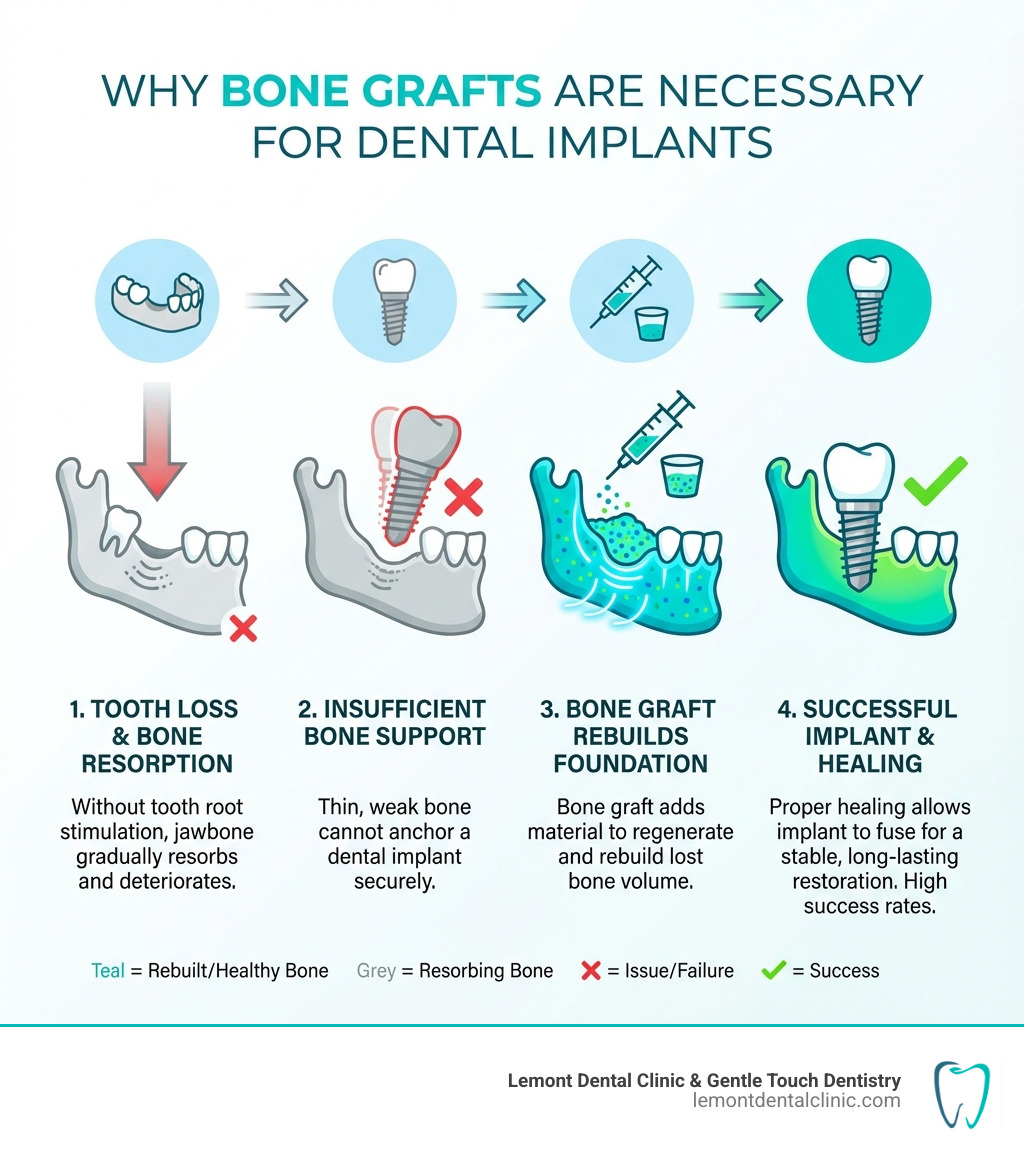
When a tooth is lost, the bone that anchored it resorbs gradually without stimulation from the tooth root, making a bone graft essential for rebuilding the jaw. While many patients worry about the procedure, modern techniques have made it more predictable and comfortable than ever. The process involves placing bone material into the jaw to stimulate natural bone growth, creating a solid base for your future dental implant.
I’m Piotr Dederowski of Lemont Dental Clinic & Gentle Touch Dentistry, and I’ve helped hundreds of patients rebuild their smiles with dental implants and bone grafts. Understanding this process is the first step toward restoring your confident smile and full chewing function.
Understanding the Foundation: What is a Dental Bone Graft and Why is it Needed?
At Lemont Dental Clinic & Gentle Touch Dentistry, we explain that your jawbone is like a house’s foundation. For a dental implant to last, it needs a solid base. A dental bone graft is a procedure designed to replace bone in areas of your jaw that have experienced bone loss. This increases the bone’s volume and density, providing the necessary support for dental implants.
The primary reason for a tooth implant bone graft is to ensure osseointegration—the process where the jawbone fuses with the titanium implant. Without sufficient jawbone, this fusion cannot happen effectively, leading to implant instability or failure.
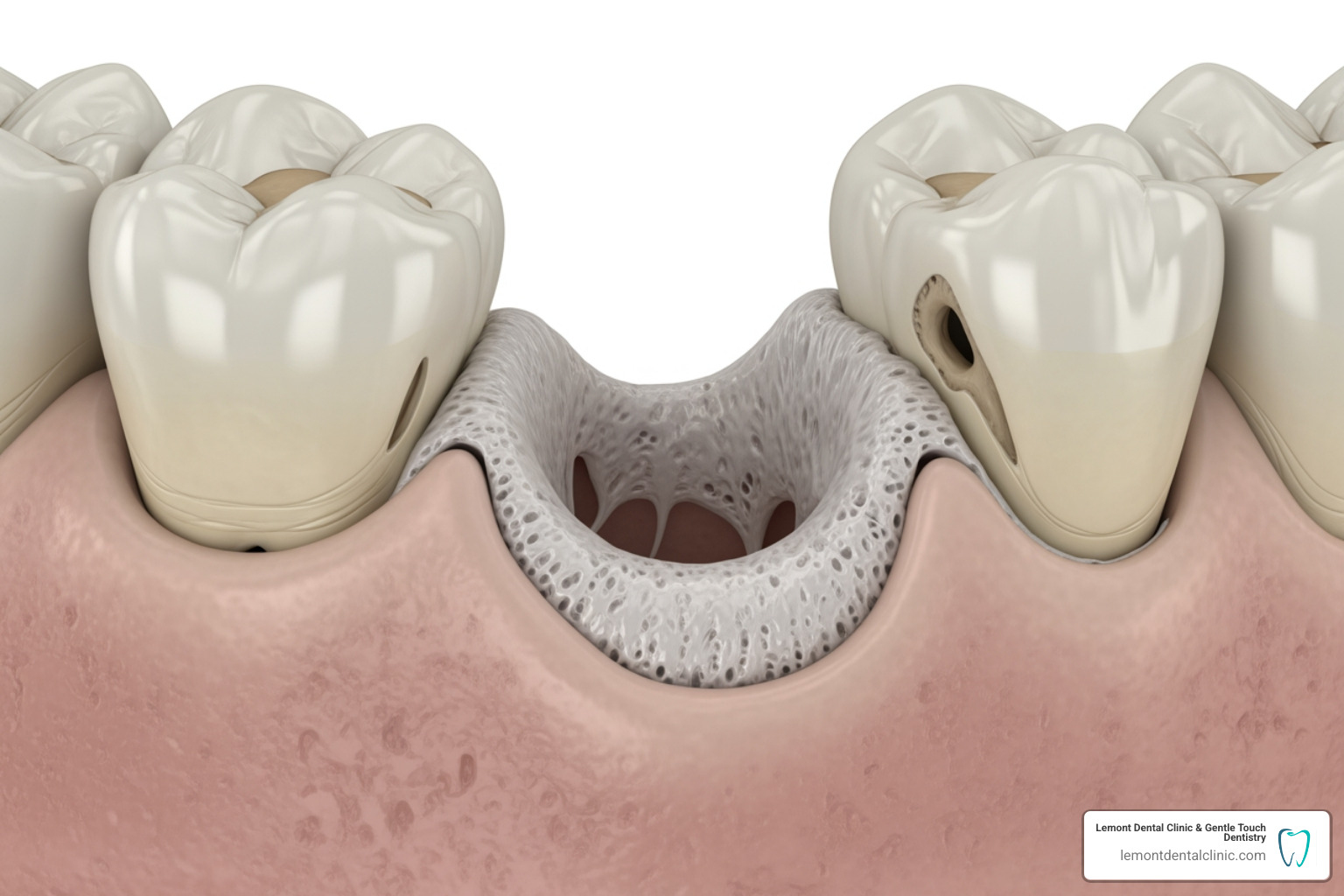
The alveolar ridge, the part of the jawbone that holds your teeth, can shrink after a tooth is lost because it no longer receives stimulation from chewing. Our goal with a dental bone graft is to rebuild this ridge, creating a robust environment for your future implant.
Illustration of jawbone loss following tooth extraction.
A dental bone graft creates a solid base for the implant and your overall oral health. It helps maintain your facial shape, supports adjacent teeth, and ensures your new smile looks and feels natural. For more on how dental implants compare to other options, read our article on Dental Implants vs Bridge.
Why a bone graft for tooth implant is sometimes necessary
Several factors can lead to insufficient jawbone, making a bone graft for tooth implant a necessary step.
Tooth Loss: This is the most common reason. When a tooth is lost and not replaced, the surrounding bone resorbs, or “melts away.” This bone does not grow back on its own, leaving insufficient material for an implant to anchor securely. The National Institute of Dental and Craniofacial Research confirms that bone grafting can strengthen this spot for a future implant.
Gum Disease (Periodontal Disease): Advanced gum disease attacks and destroys the bone supporting your teeth. This can lead to a receding jawbone and loose teeth. As the Mayo Clinic highlights, bone grafting can help restore the damaged bone and prepare the area for dental implants.
Trauma or Injury: Accidents or even chronic habits like severe teeth grinding (bruxism) can damage the jawbone. Bone grafting can repair these defects, restoring the bone structure needed for implants.
Jawbone Atrophy: This refers to the general shrinkage of the jawbone over time due to prolonged tooth loss or aging. When the jawbone atrophies, it becomes too thin or shallow to support an implant.
Understanding if dental implants are right for you is a conversation we’re ready to have. Find more insights in our guide, Are Dental Implants Right For You.
Exploring the Different Types of Dental Bone Grafts
There are several types of dental bone grafts, each suited to specific needs. The choice depends on the location and extent of bone loss and the patient’s health.
Here are the most common types:
Socket Preservation (Alveolar Ridge Preservation): Often done immediately after a tooth extraction, we place bone graft material directly into the socket. This preserves the bone’s height and width, preventing the natural resorption that occurs and making future implant placement much simpler.
Ridge Augmentation: If the alveolar ridge has already lost significant height or width, this procedure rebuilds it. It increases the jawbone’s dimensions, creating a broader and taller foundation for implants.
Sinus Lift (Sinus Augmentation): The upper back jaw often has thin bone near the maxillary sinuses. A sinus lift involves gently lifting the sinus membrane and placing bone graft material into the space, increasing bone height for implant placement.
Block Bone Grafts: For significant bone defects, a block of bone (often harvested from another area of the patient’s jaw) is secured to the site with small screws. This provides substantial structural support in cases of severe bone loss.
The materials used for these grafts also vary:
Type of Graft Material
Source
Properties
Advantages
Disadvantages
Autograft
Patient’s own body (e.g., jaw, hip, tibia)
Osteogenic (contains living bone cells), Osteoinductive (stimulates new bone growth), Osteoconductive (provides scaffold)
“Gold standard” for success, no immune rejection, contains living cells
Requires a second surgical site for harvesting, limited quantity, potential for donor site morbidity and pain
Allograft
Human donor (processed bone)
Osteoinductive, Osteoconductive
Readily available, no second surgical site
Risk of disease transmission (though very low due to processing), slower integration, less predictable
Xenograft
Animal source (e.g., cow, pig, equine)
Osteoconductive (provides scaffold)
Abundant supply, no second surgical site
Slower integration, no living cells, potential for immune reaction (rare)
Alloplastic
Synthetic materials (e.g., calcium phosphate)
Osteoconductive
No disease transmission risk, unlimited supply, no second surgical site
No living cells, may resorb faster or slower than natural bone, less osteoinductive
We carefully select the most appropriate material for each patient’s unique situation, prioritizing your safety and the best possible outcome. For a deeper dive into the science, you can explore resources like Bone grafting materials in dentoalveolar reconstruction.
The Bone Graft for Tooth Implant Procedure: A Step-by-Step Guide
Undergoing a bone graft for tooth implant might sound daunting, but our team at Lemont Dental Clinic & Gentle Touch Dentistry makes the process as smooth and comfortable as possible, using the latest technology to ensure predictable results.
The journey begins with a consultation and evaluation, including a comprehensive oral exam and advanced 3D imaging (CT scans). These scans allow us to assess bone loss, identify critical structures like nerves, and create a personalized treatment plan. This meticulous planning is crucial for success. For more on this, check out our insights on Dental Consultation And Implants.
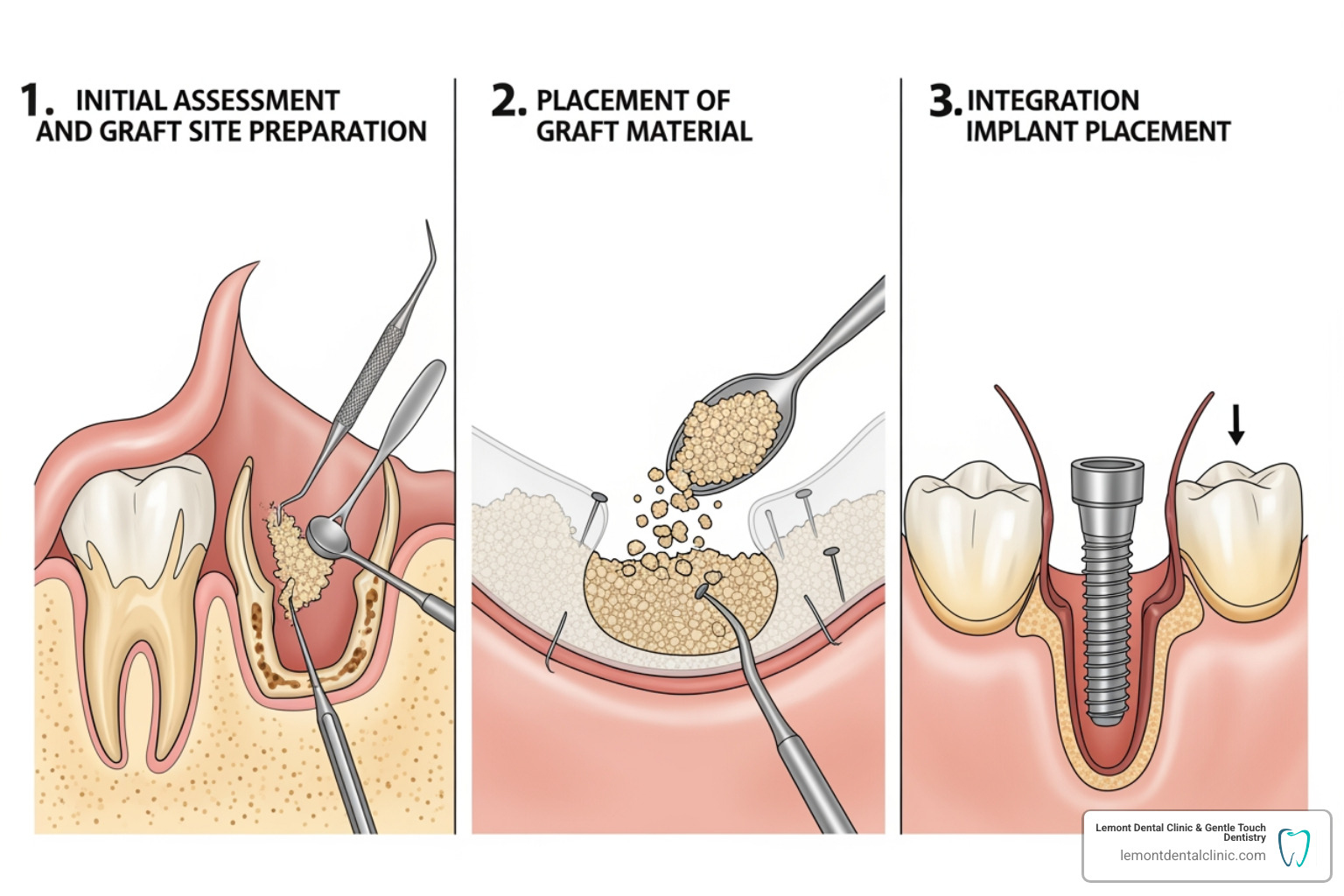
A visual representation of the bone grafting process.
Before and During the Surgery
Once your treatment plan is finalized, we’ll guide you through the preparation:
Preparing for the procedure: You may need to take antibiotics before surgery. We will provide detailed pre-op instructions, including potential dietary or medication adjustments.
Anesthesia administration: The procedure is performed under local anesthesia to numb the area completely. We also offer sedation options, like oral or IV sedation, to help you relax.
Incision and site preparation: A small incision is made in your gum tissue to expose the jawbone. The site is then carefully prepared to receive the graft material.
Graft material placement: The chosen bone graft material is placed into the prepared area, acting as a scaffold to encourage new bone growth.
Securing with a membrane: Often, a protective membrane is placed over the graft. It contains the material and prevents gum tissue from growing into the site, ensuring only bone cells populate the area.
Suturing the site: The gum tissue is sutured back into place. These sutures may be dissolvable or require removal at a follow-up appointment.
Potential risks and side effects of a bone graft for tooth implant
While dental bone grafting is a routine and safe procedure, it carries some potential risks. We believe in transparency and want you to be fully informed:
Infection: Though rare, we minimize this risk with sterile techniques during surgery and by prescribing antibiotics.
Bleeding: Light bleeding is normal for the first 24-48 hours. Report excessive or prolonged bleeding to us immediately.
Swelling and bruising: This is common and typically peaks 2-3 days after the procedure, gradually subsiding over a week or two.
Nerve damage: In very rare cases, there’s a minimal risk of temporary or permanent nerve damage, causing numbness in the lip, chin, or tongue. Our advanced imaging and careful planning greatly reduce this risk.
Graft failure: There’s a small chance the graft may not integrate successfully. Factors like smoking or poor oral hygiene can increase this risk.
Sinus complications: For a sinus lift, there’s a small risk of the sinus membrane tearing, which we can address during the procedure.
We will discuss all potential risks with you in detail during your consultation and take every measure to ensure your safety.
Navigating Recovery: Healing and Post-Operative Care
The healing process after a bone graft for tooth implant is a critical phase that requires patience and following our post-operative instructions. Your body needs time to integrate the new bone material.
Initial recovery takes about one to two weeks, as discomfort and swelling subside. Mild pain can be managed with over-the-counter or prescription medication. We often prescribe antibiotics to prevent infection, and it’s crucial to complete the full course.
The bone graft itself needs much longer to heal and mature—from three months for small grafts to nine months or more for larger ones. During this period, the graft material is gradually replaced by your own living bone, becoming strong enough to support a dental implant.
It’s important to distinguish normal side effects (mild pain, swelling, small graft particles dislodging) from complications (persistent or excessive symptoms). We’re here to guide you through recovery. For more insights, refer to our Smile Again A Dental Implant Guide.
Essential Post-Operative Care Instructions
Following our post-operative care instructions is paramount for a successful outcome. Here’s a general guide:
Do’s:
Apply ice packs: For the first 24-48 hours, apply ice packs to your jaw (20 minutes on, 20 off) to reduce swelling.
Eat soft foods: Stick to a soft diet (soups, yogurt, smoothies) for the first few days to avoid pressure on the graft site.
Lift your head: Keep your head liftd with extra pillows when resting to minimize swelling.
Maintain oral hygiene: Gently brush your teeth, avoiding the surgical site. We may recommend a special mouthwash or gentle saltwater rinses after 24 hours.
Take medications as prescribed: This includes pain relievers and the full course of any antibiotics.
Get adequate rest: Your body needs energy to heal.
Don’ts:
Disturb the site: Avoid touching the surgical area with your fingers or tongue.
Drink alcohol: Avoid alcohol for at least two weeks, as it can interfere with healing.
Engage in strenuous activity: Refrain from heavy exercise for at least 48 hours to prevent bleeding.
Vigorous rinsing or spitting: This can dislodge the blood clot or graft material.
Smoke or vape: Smoking and vaping significantly impair healing and increase the risk of graft failure.
When to Contact Your Dentist After a Bone Graft
While some discomfort is normal, contact us at Lemont Dental Clinic & Gentle Touch Dentistry immediately if you experience any of the following:
Excessive pain or swelling: Severe pain not managed by medication, or swelling that increases after the first 3 days.
Persistent bleeding: Heavy bleeding that doesn’t stop after applying pressure with gauze.
Signs of infection: Fever, pus discharge from the site, or a foul taste/odor in your mouth.
Graft material dislodging: If you notice a significant amount of graft material coming out.
Allergic reaction: A rash, hives, or difficulty breathing requires immediate medical attention.
We are here to support you throughout your recovery to ensure it progresses smoothly.
Long-Term Success: Benefits and Longevity of Your Bone Graft
A successful bone graft for tooth implant is an investment in your long-term oral health. The benefits extend far beyond replacing a missing tooth, contributing to the stability and aesthetic appeal of your smile.
Comparison of a jaw with sufficient bone for an implant versus a jaw with bone loss requiring a graft.
A robust bone graft provides the essential foundation for your dental implant to integrate fully and function reliably for decades. This fusion ensures the implant is a permanent, stable replacement, unlike removable dentures or bridges. A successful graft is a vital step in achieving this. For more on the value of implants, explore 5 Reasons Why Dental Implants Are Worth The Investment.
How Long Does a Dental Bone Graft Last?
Once successfully integrated, a dental bone graft can last a lifetime. The new bone is your body’s own living tissue, which continues to adapt like your natural bone.
However, timing is crucial. Once your bone graft has healed (typically after 3-12 months), it’s best to have your dental implant placed within a year. If the newly grown bone isn’t stimulated by an implant, it can begin to shrink again over time. The implant provides the necessary stimulation to maintain bone health, a point highlighted by resources like Colgate’s article on Understanding Bone Grafts for Dental Implants.
Following our recommendations for timely implant placement ensures the long-term success of both the graft and your new dental implant.
The Long-Term Benefits for Your Oral Health
The long-term benefits of a successful bone graft and implant are numerous:
Stable Foundation for Implants: A dense jawbone securely anchors your implant, providing stability for comfortable chewing, clear speech, and a confident smile.
Prevents Facial Collapse: When teeth are missing, the jawbone resorbs, which can lead to a “sunken” facial appearance. A bone graft helps maintain your natural facial contours.
Restores Chewing Function: A strong implant supported by healthy bone allows you to enjoy all your favorite foods again, improving your nutrition and quality of life.
Supports Adjacent Teeth: Bone loss can cause neighboring teeth to shift or become loose. A bone graft and implant help stabilize the dental arch, protecting your remaining teeth.
Improved Overall Oral Health: By preventing further bone loss, bone grafting contributes to a healthier oral environment. Our article on Dental Implants Health Benefits digs deeper into these advantages.
Frequently Asked Questions about Bone Grafts
We understand you have questions about bone graft for tooth implant procedures. Here are some common ones we hear at Lemont Dental Clinic & Gentle Touch Dentistry:
Does a dental bone graft procedure hurt?
During the procedure itself, you should experience no pain. We use local anesthesia to completely numb the surgical area and offer sedation options for anxious patients.
Afterward, it’s normal to experience some discomfort, tenderness, and swelling as the anesthesia wears off. This typically subsides within a few days to a week and is manageable with pain relievers. We will provide detailed instructions to ensure your recovery is as smooth as possible.
How successful are bone grafts for dental implants?
Dental bone grafts have a very high success rate, often exceeding 90%, especially when performed by an experienced team and when patients diligently follow post-operative instructions.
Key factors for success include:
Patient Health: Your overall health and natural healing capacity play a role.
Smoking: This is a significant risk factor that can compromise healing and reduce the success rate.
Aftercare Adherence: Following all post-operative instructions is crucial.
Surgeon’s Experience: The skill of the dental surgeon is paramount. Our doctors have experience in bone grafting techniques.
Type of Graft Material: The chosen material also contributes to the outcome.
We thoroughly evaluate each patient to determine the most suitable approach to maximize the chances of success.
How soon after a bone graft can I get a dental implant?
The timeline for placing a dental implant after a bone graft varies depending on the individual and the size of the graft.
Healing Time Variance: The healing period can be as short as 3-4 months for small grafts, while larger grafts may take 6 to 9 months, or even up to a year, for the new bone to mature.
Typical Wait Time: Generally, we wait four to six months for the bone to become strong enough to support an implant.
Dentist’s Evaluation: We will closely monitor your healing with check-ups and scans. We only proceed with implant placement once we are confident the new bone is sufficiently dense and stable.
While some clinics offer “same-day” options, these are typically for patients who already have enough bone. If a bone graft is necessary, patience during healing is key to long-term success. You can learn more in our article on Dental Implants In A Day Near Me.
Conclusion
At Lemont Dental Clinic & Gentle Touch Dentistry, we understand that a bone graft for tooth implant can seem complex. We hope this guide has clarified the procedure, its importance, and what to expect on your journey to a healthier, more confident smile.
A bone graft is a vital step in rebuilding your smile’s foundation when bone loss has occurred. It ensures your dental implant has the stable, healthy base it needs to last a lifetime, restoring function and aesthetics while preventing further bone loss.
We offer all-in-one care with experienced doctors and the latest technology in Lemont and Palos Hills, IL. Our team is dedicated to providing high-quality, comprehensive restorative dental care, focusing on your comfort and the best possible outcomes.
If you have missing teeth or are considering dental implants, we invite you to take the next step. Let us evaluate your unique situation and discuss how a bone graft can pave the way for a successful and lasting dental implant.