Why Dental Implants Cost More Than You Think — And Whether It’s Worth It
Dental implants cost is one of the first things people research when they’re facing tooth loss — and for good reason. The numbers can feel overwhelming at first glance.
Here’s a quick answer to what most people want to know:
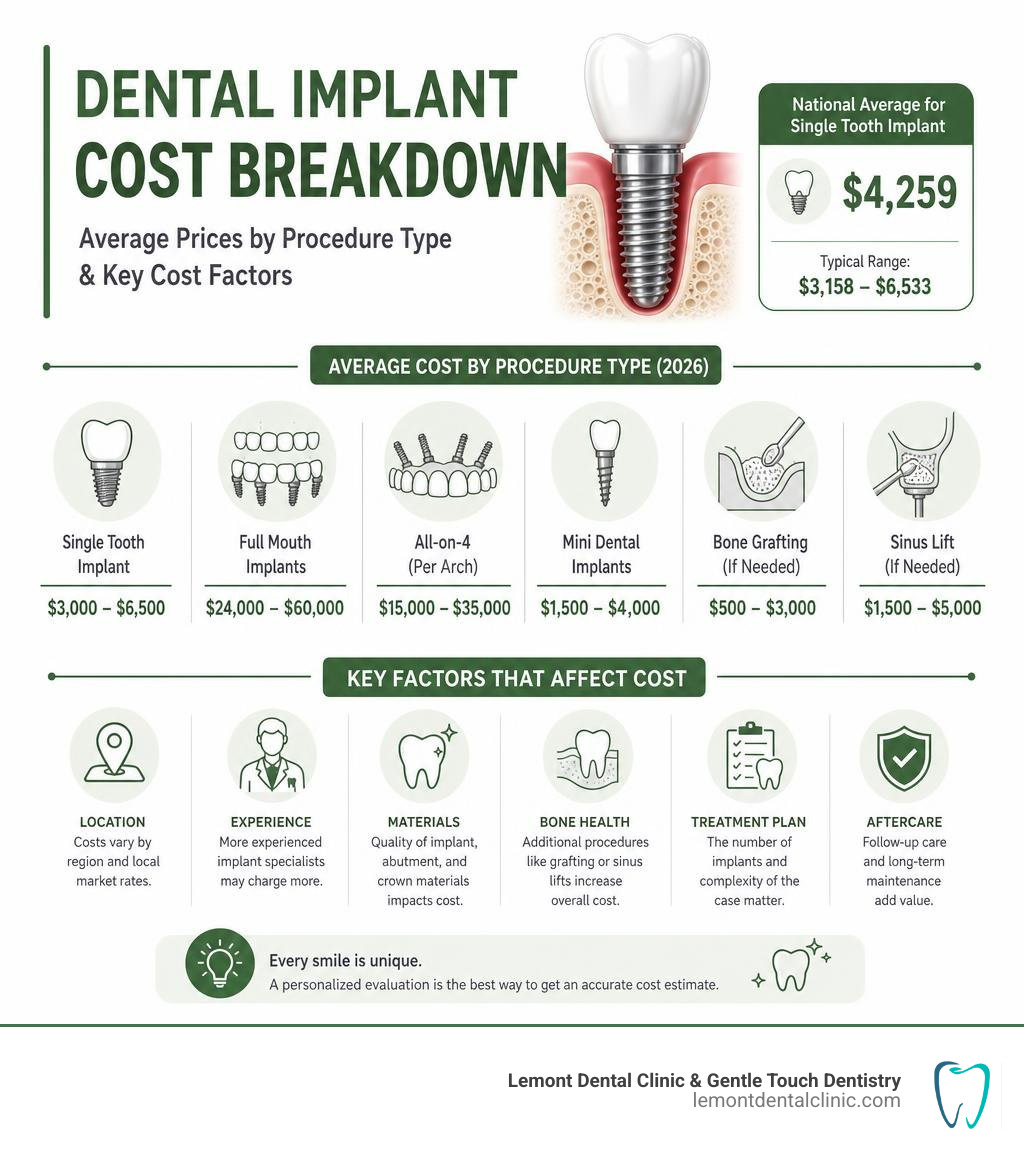
Procedure
Typical Cost Range (2026)
Single tooth implant (post + abutment + crown)
$3,000 – $6,500
Full mouth implants (both arches)
$24,000 – $60,000
All-on-4 per arch
$15,000 – $35,000
Mini dental implants
$1,500 – $4,000
Bone grafting (if needed)
$500 – $3,000
Sinus lift (if needed)
$1,500 – $5,000
The national average for a single tooth implant sits around $4,259, though prices range from roughly $3,158 to $6,533 depending on where you live, your bone health, and what your treatment actually includes.
That wide range is exactly what confuses most patients. One dentist quotes $3,000. Another says $6,500. And neither quote necessarily includes the same things.
This guide breaks down every piece of that number — what drives it up, what you can realistically expect to pay out of pocket, and how to compare quotes fairly so there are no surprises.
What is the Average Dental Implants Cost in 2026?
When we look at the average dental implants cost in 2026, the numbers can feel like a moving target. If you are browsing online, you might see figures ranging from a couple of thousand dollars to the price of a luxury SUV. Why is there such a massive spread?
To understand the baseline, we have to look at both national benchmarks and what is happening locally right here in the Chicago southwest suburbs. Nationally, the average price patients pay out of pocket for a complete single dental implant is $4,259, but the full range spans from $3,000 to $6,500. For a quick look at how these averages compile, tools like the Dental Implant Cost Calculator (2026) | CostFigure can help you visualize the baseline.
In Illinois, and specifically across our service communities in Lemont, Palos Hills, Oak Lawn, and Orland Park, local pricing averages match these national trends closely. A single complete dental implant in the Chicago metro area typically runs between $3,000 and $6,000. To dig deeper into how these prices are structured, you can read our comprehensive More info about the price of dental implants resource.
The core reason for the price variation is that a dental implant is not a single off-the-shelf product. It is a multi-step surgical and restorative process customized entirely to your unique anatomy.
Single Tooth Dental Implants Cost Breakdown
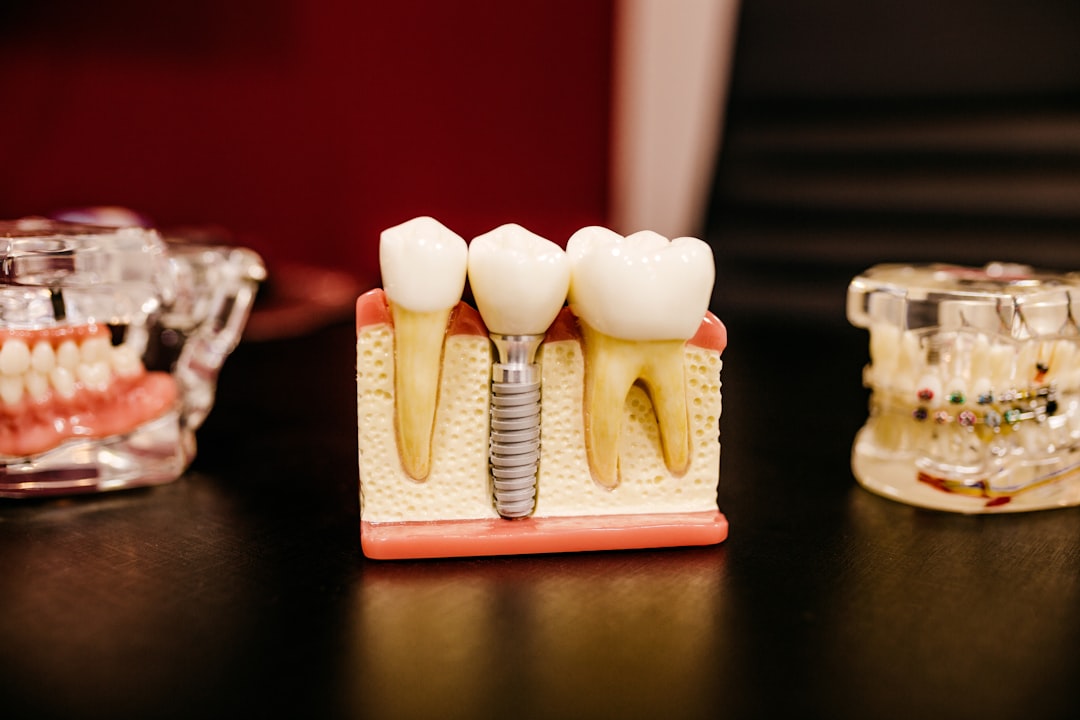
To understand what you are actually paying for, it helps to look at the physical components of the implant itself. A single tooth replacement is made of three distinct pieces, each with its own cost:
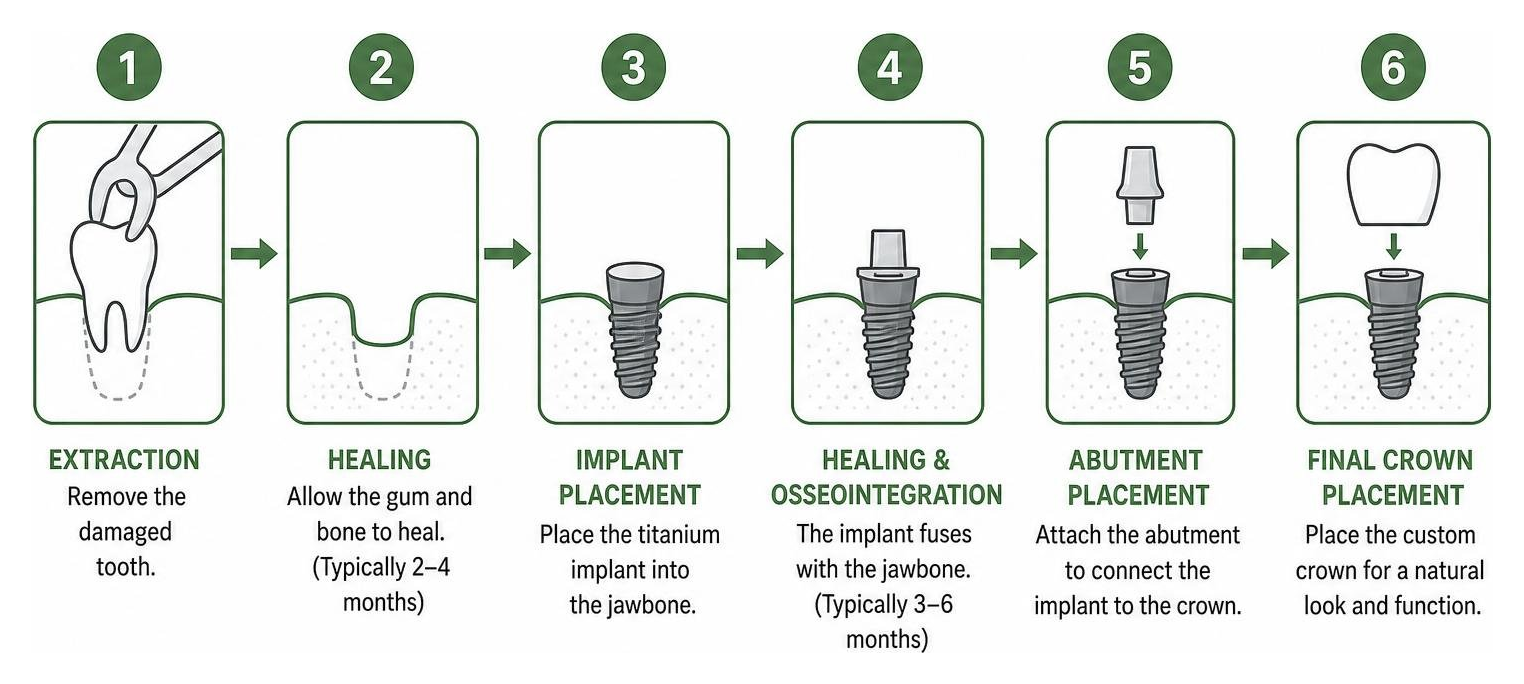
The Implant Post (The “Root”): This is a small, screw-like post made of biocompatible medical-grade titanium or zirconia. It is surgically placed into your jawbone, where it fuses with the bone over a period of three to six months (a process called osseointegration). The post alone typically costs between $1,500 and $3,000.
The Abutment (The “Connector”): Once the post is securely fused, a small connector piece called an abutment is attached to the top of the post. This acts as the anchor for your new tooth. Abutments can be stock (pre-fabricated) or custom-made to match your gum line. They typically cost between $300 and $1,000.
The Ceramic Crown (The “Tooth”): This is the visible part of the tooth that matches your natural smile. It is custom-designed by a dental lab to fit perfectly between your existing teeth. A high-quality ceramic or porcelain crown usually costs between $1,000 and $3,000.
When you add these components together, along with surgical planning, digital 3D imaging, and follow-up visits, the total standard price ranges from $3,000 to $6,500 per tooth. For a more detailed breakdown of these individual components, take a look at our guide on More info about dental implants cost per tooth.
Full-Mouth and All-on-4 Dental Implants Cost
For patients who are missing most or all of their teeth in an arch (upper or lower jaw), placing individual implants for every single missing tooth is rarely recommended. It is both surgically unnecessary and financially impractical. Instead, modern restorative dentistry utilizes full-mouth reconstruction systems.
All-on-4 / All-on-X Decoded: This technique involves strategically placing four to six titanium implants across the jawbone to support a full, permanent arch of teeth. Because the implants are placed at precise angles, they maximize the use of available bone, often eliminating the need for expensive bone grafts.
The Cost Range: An All-on-4 or All-on-X solution typically costs between $15,000 and $35,000 per arch. If you require full-mouth restoration (both top and bottom arches), the total investment generally ranges from $24,000 to $60,000+.
Materials Matter: The wide range in full-mouth pricing is heavily driven by the materials used for the final bridge. An acrylic hybrid arch (acrylic teeth over a titanium bar) is the more budget-friendly option, while a custom-milled zirconia arch is the premium standard. Zirconia is incredibly durable, resists staining, looks highly natural, and can add $2,500 to $7,000 per arch to the total cost.
Implant-Supported Snap-On Dentures: If you are looking for a more cost-effective alternative to a fixed bridge, snap-on dentures are an excellent option. These utilize two to four implants to securely snap a removable denture into place, preventing the slipping and sliding of traditional dentures. This option typically costs between $6,000 and $30,000 for both arches.
Key Factors That Influence Your Total Treatment Price
It is incredibly rare for two patients to walk into our clinics in Lemont or Palos Hills and receive the exact same line-item bill for their dental implants. That is because your physical health, your dental history, and your aesthetic goals dictate the complexity of your surgical plan.
Before we can safely place an implant, we must ensure your mouth has a healthy, infection-free foundation. For many patients, this requires preparatory steps that add to the overall dental implants cost:
Tooth Extractions: If you have a decaying, cracked, or failing tooth that needs to be removed before the implant can be placed, a surgical extraction will add $200 to $700 to your treatment plan.
Bone Grafting: If a tooth has been missing for a while, the surrounding jawbone naturally begins to resorb (shrink). Implants require a certain depth and width of bone to stay securely anchored. A bone graft uses biocompatible material to rebuild your jawbone. This procedure typically adds $500 to $3,000 to the total cost.
Sinus Lifts: If you need implants in your upper back jaw, we may find that your sinus cavities are too close to where the implant needs to go. A sinus lift gently raises the sinus floor and adds bone tissue underneath, costing between $1,500 and $5,000.
Sedation Options: While local anesthesia is included in standard surgical fees, many patients prefer extra comfort. Options like nitrous oxide (laughing gas), oral conscious sedation, or IV sedation can range from $200 to $2,500 depending on the depth and duration of the sedation.
Geographic Location and Provider Expertise
Where you receive your dental care plays a significant role in the quote you receive.
Local Overhead: Operating a state-of-the-art dental practice in high-cost-of-living areas like the Chicago metro area (including Orland Park, Oak Lawn, and Bolingbrook) comes with higher real estate, labor, and compliance costs than operating in rural downstate Illinois. You can compare these regional differences using the Cheapest States for Dental Implants & Costs by State 2026 index.
Provider Expertise: Implant placement is a highly delicate surgery. A general dentist who has taken a weekend course will likely charge less than a highly experienced implantologist or oral surgeon who has placed thousands of implants and manages complex bone reconstruction in-house. Paying a premium for an experienced provider is often the best insurance against implant complications or failure.
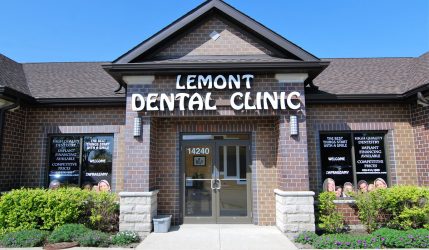
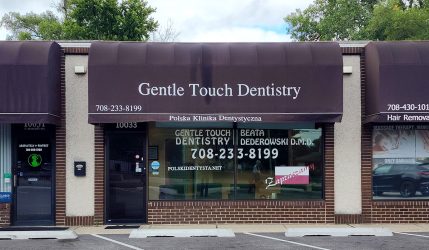
The “One-Roof” Advantage: At Lemont Dental Clinic & Gentle Touch Dentistry, we focus on providing comprehensive, all-in-one care. This means your 3D imaging, surgical placement, and final crown fabrication can often be handled by our experienced team without the need to refer you out to expensive external specialists. This streamlined care helps keep our quality high and our pricing highly competitive.
Insurance Coverage and Financing Options for Dental Implants
“Does my insurance cover dental implants?” This is the most common question we hear. The short answer is: partially, but rarely completely.
Historically, insurance companies viewed dental implants as an “elective” or “cosmetic” procedure. Thankfully, the industry has evolved. Most modern dental plans recognize that implants are the healthiest, most stable way to replace missing teeth and will cover a portion of the treatment.
Navigating Dental Insurance and Out-of-Pocket Expenses
Even if your insurance plan covers dental implants, you will still face out-of-pocket costs due to how dental benefits are structured:
The Annual Maximum Limit: Most traditional dental insurance policies cap their annual payouts at $1,000 to $2,500. Because this limit has not kept pace with inflation since the 1970s, a single implant procedure will easily max out your insurance benefits for the year.
The “Major Procedure” Category: Implants are almost always classified as major services. This means your insurance will typically cover 40% to 50% of the cost, leaving you to pay the remaining balance.
Strategic Treatment Phasing: For patients who need multiple implants or preparatory work, we can sometimes split your treatment across two calendar years (e.g., performing the extraction and bone graft in December, and placing the implant and crown in January). This allows you to utilize two years of annual insurance maximums, saving you thousands of dollars out of pocket.
Because dental implants are an investment in your long-term health, we work closely with patients in Lemont, Palos Hills, Romeoville, and surrounding suburbs to make treatment highly accessible:
HSA and FSA Accounts: You can use pre-tax dollars from your Health Savings Account (HSA) or Flexible Spending Account (FSA) to pay for your implants. Depending on your tax bracket, this can instantly save you 20% to 30% on your total out-of-pocket costs.
Third-Party Financing: We partner with reputable healthcare lending platforms like CareCredit. These services offer flexible monthly payment plans, often with 0% promotional interest rates for 6 to 24 months, allowing you to break your treatment cost down into manageable monthly investments.
Phased Treatment Plans: Since the implant process naturally takes 3 to 9 months to allow for bone healing, you do not have to pay the entire bill upfront. You pay for each stage of the procedure as it happens (e.g., paying for the surgical placement in month one, and the final crown in month six).
Long-Term Value: Implants vs. Bridges and Dentures
When comparing the upfront dental implants cost to alternatives like traditional bridges or removable dentures, implants will always look like the most expensive choice. However, when you look at the 10-to-20-year cost horizon, the financial reality flips.
The Hidden Costs of Traditional Bridges and Dentures
Traditional tooth replacements carry ongoing costs that many patients do not consider until years down the road:
The Bridge Replacement Cycle: A dental bridge requires your dentist to grind down the healthy enamel of the two adjacent teeth to support the dental crowns holding the replacement tooth in place. This compromises healthy teeth and makes them more susceptible to decay. Because bridges typically last only 7 to 10 years, you will likely have to pay to replace the bridge multiple times over your lifetime.
The Denture Reline and Replacement Cost: Removable dentures do nothing to stimulate your jawbone. Over time, your jawbone naturally shrinks, causing your dentures to lose their tight fit. This leads to slipping, painful sore spots, and the need for frequent professional relines ($300–$500 each) and complete denture replacements every 5 to 7 years.
The Value of Bone Preservation: Because dental implants act like natural tooth roots, they actively stimulate your jawbone and prevent bone loss. This preserves your natural facial structure, preventing the “sunken” look that often ages denture wearers prematurely.
Frequently Asked Questions about Dental Implant Pricing
What hidden or add-on costs should I watch out for in a quote?
When shopping around for dental implants, a common trap is falling for “teaser” prices advertised online. Some practices will advertise an “implant for $1,999,” but when you read the fine print, you realize that price only covers the surgical placement of the titanium post. It does not include the 3D CBCT imaging, the custom abutment, the final ceramic crown, or the essential follow-up appointments.
To avoid surprise bills, always ask for an all-inclusive, itemized treatment plan that explicitly lists:
3D digital imaging and surgical guides
Extractions and bone grafting (if needed)
The implant fixture, abutment, and final custom crown
Temporary restorations (if you need a temporary tooth while healing)
Why do dental implant prices vary so much between providers?
The price variation typically comes down to three things: technology, materials, and business models.
Technology: Practices that invest in 3D Cone Beam CT scanners and digital surgical guides can place implants with extreme precision, resulting in higher success rates and faster recovery times, though this advanced technology is reflected in the surgical fee.
Materials: Premium, globally recognized implant brands (such as Straumann or Nobel Biocare) invest heavily in clinical research and offer lifetime warranties on their titanium components. Lower-cost practices may use generic, off-brand implants that lack extensive clinical backing.
In-House Care vs. Referrals: Some general dentists perform the entire procedure under one roof, while others must refer you to an outside oral surgeon for the surgery, meaning you will receive separate, higher bills from two different offices.
How can I get an accurate, itemized quote for my procedure?
The only way to get a completely accurate quote is to schedule a comprehensive physical evaluation that includes a 3D CBCT scan. Without high-resolution 3D imaging, a dentist cannot see the density of your jawbone, the location of your nerves, or the position of your sinus cavities. This imaging is crucial to determining whether you need preparatory procedures like bone grafting, which directly impacts your final price.
Conclusion
At Lemont Dental Clinic & Gentle Touch Dentistry, we believe that high-quality, life-changing restorative dental care should be both exceptional and accessible. Serving our neighbors in Lemont, Palos Hills, Hickory Hills, Oak Lawn, and across the southwest Chicago suburbs, we focus on providing comprehensive, all-in-one care.
Our experienced doctors utilize the latest digital technology to plan your treatment with maximum precision, keeping our procedures highly efficient and our pricing competitive. We work closely with you to navigate your dental insurance benefits, maximize your yearly coverage, and establish flexible payment options that fit your life.
Your smile is a lifetime investment. If you are ready to explore your options and get a clear, personalized treatment plan with no surprise fees, Schedule a dental implant consultation today with our warm and welcoming team.