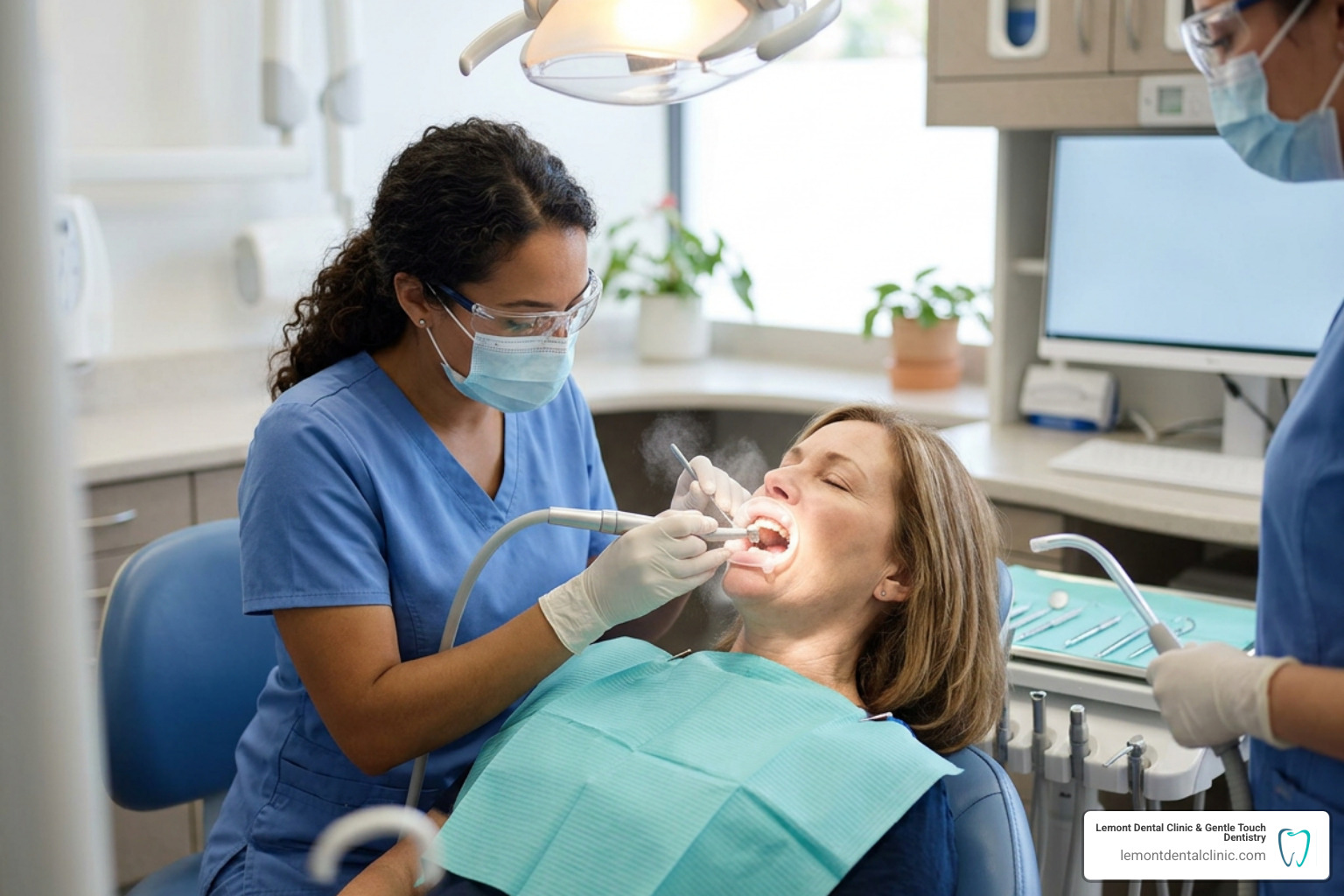
Air polishing is an advanced hygiene technique designed to clean tooth surfaces without the harsh friction associated with standard rubber-cup polishing. The system works by generating a precise, slurry-like stream that combines compressed air, a fine jet of warm water, and specialized micro-particles. When directed at your teeth, this micro-spray safely disintegrates soft deposits, lifts stubborn surface discoloration, and flushes out trapped food debris.
The slurry uses ultra-fine powders—most commonly naturally derived erythritol or glycine. Erythritol is a sweet-tasting sugar alcohol with small, rounded particles that feel extraordinarily soft against tooth enamel and gum tissue. Glycine, an amino acid derivative, offers a similarly gentle finish. Unlike older sodium bicarbonate formulations that could taste salty or feel slightly abrasive, these modern fine powders glide smoothly over surfaces.
This combination allows clinicians to perform both supragingival (above the gumline) and effective subgingival (below the gumline) cleaning. It accesses tight interdental spaces and shallow pockets that conventional tools often struggle to reach. For comprehensive plaque management, air polishing is often paired with an ultrasonic teeth cleaning to address both soft bacterial buildup and hard mineral deposits. You can read more about air polishing technology and biofilm removal to see how modern practices implement this gentle cleaning approach.
Modern Biofilm Removal with Air Polishing Teeth Near Me
Oral biofilm is a complex, sticky matrix of bacteria that adheres to enamel, dental restorations, and under the edges of the gums. If left unmanaged, this bacterial biofilm leads to tooth decay, halitosis (bad breath), and gum inflammation (gingivitis).
Modern air polishing goes beyond standard cleaning by actively disrupting this microscopic biofilm. Studies show that air-polishing protocols can remove up to 100% of harmful biofilm bacteria. Some powder mixtures are enriched with a tiny amount of chlorhexidine antiseptic to enhance bacterial reduction and support long-term gum health.
Because the micro-fine spray cleans without scratching or stripping away healthy tooth structure, it leaves the natural enamel intact. This non-abrasive action encourages natural enamel remineralization, as your saliva can more effectively interact with clean, unobstructed enamel surfaces. Searching for air polishing teeth near me connects you with dental teams equipped to lift away these invisible bacterial layers safely.
Air Polishing vs. Traditional Scaling and Polishing
Traditional dental cleanings rely heavily on manual metal scraping tools (scalers) to pick off hard calculus, followed by a rotating rubber cup loaded with gritty prophy paste to scrub away surface stains. While effective, the sound of metal tools and the friction of coarse pastes can be uncomfortable for many patients.
Air polishing shifts the focus of the appointment. It targets soft plaque and stains using fluid dynamics rather than mechanical scraping. Research shows that air polishing devices are remarkably efficient—often cleaning tooth surfaces up to three times faster than traditional hand instruments alone.
Feature / Aspect
Traditional Scaling & Polishing
Modern Air Polishing
Primary Tools
Manual metal scrapers, ultrasonic tips, rubber cup with prophy paste
Compressed air stream, warm water jet, fine erythritol/glycine powder
Hydro-spray lifts up to 100% of biofilm effortlessly
Treatment Efficiency
Takes longer due to step-by-step surface scraping
Up to 3x faster for soft plaque and stain removal
Patient Comfort
Can cause vibration, metal noise, and cold sensitivity
Warm water mist; tickling sensation with minimal noise
Safety on Restorations
Metal tools can scratch implants, crowns, and veneers
Completely safe on porcelain, composite, and titanium
Hard Tartar Removal
Essential for heavy, calcified tartar (calculus)
Used alongside scaling for targeted tartar removal
While air polishing excels at clearing soft biofilm and discoloration, hardened calculus (tartar) still requires removal by a trained scale and clean dentist. In modern hygiene visits, air polishing is performed first to remove the soft layers, allowing your hygienist to perform targeted, minimal hand or ultrasonic scaling only where hardened calculus remains.
Benefits and Candidate Selection for Air Polishing Teeth Near Me
One of the greatest advantages of air polishing is how comfortable it feels. Traditional cleaning sprays often use cold water that triggers sharp discomfort in sensitive teeth. Modern air polishing units use temperature-controlled, lukewarm water spray. This eliminates thermal shock, making the procedure pleasant even for patients with mild root exposure or sensitive dentin.
If you struggle with dental anxiety, the absence of metal scraping noises and intense vibrations transforms the hygiene experience. It turns what used to be a nerve-wracking chore into a quick, spa-like freshening routine.
Furthermore, air polishing is exceptional at removing stubborn surface stains caused by daily lifestyle habits. Whether your tooth discoloration comes from morning coffee, evening black tea, dark red wine, or tobacco use, the pressurized micro-mist sweeps away pigment deposits trapped in enamel microscopic grooves. If you have ever wondered, “does teeth cleaning hurt?” air polishing offers a reassuring, virtually pain-free answer.
Is Air Polishing Safe for Implants, Braces, and Veneers?
A common concern among dental patients is whether advanced air-spray cleanings could damage expensive cosmetic or restorative dental work. Fortunately, gentle air polishing with low-abrasive powders (such as erythritol) is completely safe for smiles featuring:
Porcelain Veneers and Crowns: Traditional prophy pastes or harsh metal edges can scratch delicate ceramic glazes. Air polishing lifts plaque without compromising the shine or structural surface of dental porcelain.
Dental Implants and Bridges: Metal scalers can scratch titanium implant posts, creating microscopic crevices where bacteria thrive. Air polishing cleans around implant abutments and underneath bridge spans safely, helping prevent dangerous peri-implantitis (inflammation around implants).
Orthodontic Braces and Clear Aligners: Brushing around brackets, archwires, and bands is notoriously difficult. The air-water stream easily slips behind wires and around brackets to blast away hidden food debris and soft plaque that hand brushes miss.
Finding Local Practices Offering Air Polishing Teeth Near Me
When searching for air polishing teeth near me, look for practices committed to integrating modern preventive hygiene options. Advanced technology allows dental teams to deliver thorough care while prioritizing patient comfort. If you are located in the greater Chicago area, you can easily find a dental provider near Chicago Ridge or check neighboring communities like Lemont, Palos Hills, Hickory Hills, Oak Lawn, and Orland Park for offices equipped with fine-powder air polishing systems.
The Step-by-Step Air Polishing Procedure and Recovery
Understanding what happens during an air polishing visit helps eliminate any lingering uncertainty. Here is how a typical appointment unfolds:
Comprehensive Oral Assessment: Your dental clinician evaluates your gums, teeth, and existing dental work to ensure air polishing is ideal for you.
Biofilm Revealing (Disclosing Dye): In many modern practices, a harmless, vegetable-based purple or blue disclosing solution is applied to your teeth. This dye highlights invisible bacterial biofilm, giving both you and your hygienist a clear visual map of target areas.
Targeted Air Polishing: The clinician glides the ergonomic air-polishing handpiece a few millimeters away from your teeth, applying the warm micro-mist across tooth surfaces, between teeth, and along the gumline.
Selective Scaling: If any spots of hardened tartar remain, the hygienist gently removes them with an ultrasonic or hand scaler.
Final Rinse and Inspection: Your mouth is rinsed clear, leaving your teeth feeling silky smooth.
The entire air polishing phase often takes just 20 to 30 minutes, making it ideal for busy working professionals. There is zero post-treatment downtime, meaning you can resume your day immediately. To learn more about appointment timing, read our guide on how long does a dental cleaning take?
What to Expect During and Immediately After Treatment
During the air polishing process, most patients describe feeling a gentle tickling sensation accompanied by a pleasant, lukewarm mist. There is no sharp scraping, friction, or gritty residue left behind.
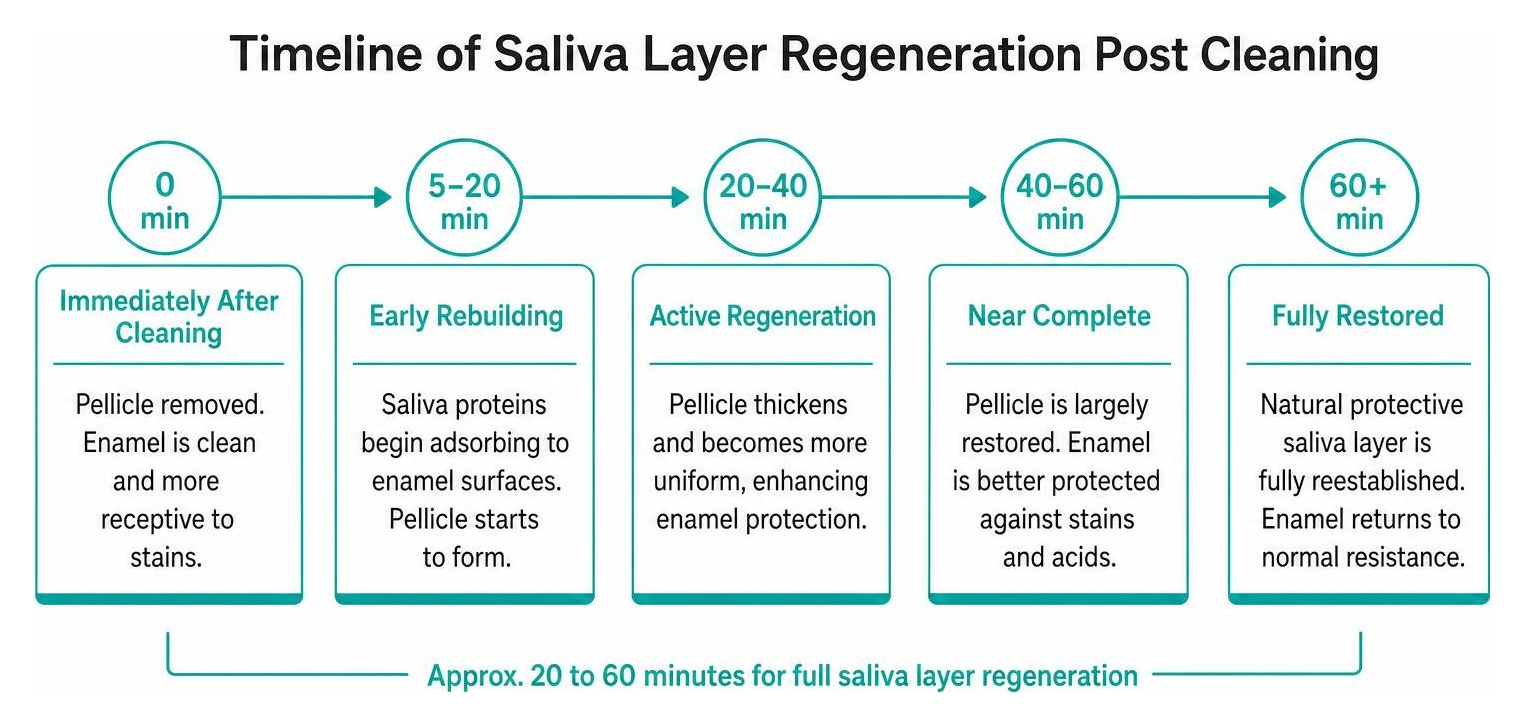
Immediately after treatment, your teeth will feel noticeably smoother when you run your tongue over them. Because the treatment strips away surface biofilm, it also temporarily removes the acquired pellicle—a natural, thin layer of protective saliva proteins resting on your enamel.
It takes approximately 20 to 60 minutes for your natural saliva to rebuild this protective protein coating. During this initial hour, your tooth enamel is slightly more receptive to staining pigments. For post-cleaning dietary advice, review our helpful guide on how long after dental cleaning can I eat?
Post-Procedure Guidelines and Maintenance Frequency
To preserve your clean, bright results, follow these straightforward post-care recommendations:
The 1- to 3-Hour Rule: Refrain from consuming dark, heavily pigmented foods and beverages—such as coffee, black tea, red wine, soy sauce, berries, or cola—for 1 to 3 hours after treatment while your saliva rebuilds its protective layer.
Avoid Tobacco: Avoid smoking or using tobacco products immediately following your appointment to prevent instant restaining.
Routine Home Hygiene: Maintain your results by brushing twice daily with a soft-bristled toothbrush and flossing daily.
Recommended Schedule: For most healthy adults, air polishing is recommended every 3 to 6 months as part of standard routine care. Patients with braces, dental implants, or a history of gum disease may benefit from visits every 3 months.
If you ever experience mild, temporary sensitivity after hygiene visits, check our resources on teeth sensitive after cleaning: what now? for practical relief steps.
Cost, Insurance, and Comparing Advanced Cleaning Techniques
The cost of dental hygiene cleanings can vary based on location, individual oral health needs, and whether introductory preventive exams or digital X-rays are included. Across Illinois and the broader US, standard adult hygiene cleanings typically range from $90 to $180 without insurance.
Many dental insurance plans cover routine preventive care—including standard cleanings and plaque removal—at 100% or with minimal co-pays, typically allowing two cleanings per year. When air polishing is integrated into standard preventive hygiene or periodontal maintenance appointments, it is frequently included as part of your regular visit.
When researching advanced hygiene care, you might encounter terms like Guided Biofilm Therapy (GBT) or AIRFLOW® technology. GBT is a clinical protocol developed by EMS (Electro Medical Systems) that uses the AIRFLOW® device to execute an 8-step cleaning process centered around biofilm disclosing dye, erythritol air polishing, and targeted Piezon scaling.
While AIRFLOW® and GBT are specific brand names, modern fine-powder air polishing systems utilize the exact same hydro-dynamic principles: using warm water, air, and soft powders to clear biofilm safely and comfortably. To explore comprehensive hygiene options, read our main article on professional dental cleaning or learn more about Airflow dental cleaning guidelines.
Frequently Asked Questions About Air Polishing
Can air polishing remove deep intrinsic tooth stains?
Air polishing is exceptionally effective at removing extrinsic surface stains—the dark discoloration built up on the outer layer of enamel from dark drinks, foods, and tobacco. However, it cannot alter intrinsic stains, which lie deep within the inner dentin structure of the tooth (such as aging, trauma, or childhood antibiotic staining). Removing intrinsic discoloration requires professional chemical whitening treatments, such as custom take-home whitening gels or in-office bleaching procedures.
How long do the results of air polishing typically last?
The smooth feeling and stain-free appearance resulting from air polishing generally last between 6 to 9 months. Longevity depends heavily on your lifestyle habits and daily oral hygiene routines. If you brush twice daily, floss consistently, and limit heavy stain-causing beverages, your bright results will last significantly longer.
Are there any side effects or limitations to air polishing?
Air polishing is extremely safe for the vast majority of patients, but there are a few minor limitations and precautions:
Respiratory Conditions: Patients with severe chronic obstructive pulmonary disease (COPD), severe asthma, or active respiratory infections should inform their hygienist, as inhaling fine airborne dust mist might trigger coughing.
Sodium-Restricted Diets: While modern practices primarily use erythritol or glycine powders, older sodium bicarbonate powders are avoided for patients on strict low-sodium diets.
Advanced Periodontitis / Deep Cavities: Air polishing does not remove hard, calcified subgingival tartar in deep periodontal pockets on its own; it works best alongside ultrasonic or manual scaling. It also cannot treat open cavities, which require restorative fillings.
Temporary Gum Sensitivity: Occasionally, patients with pre-existing gum inflammation may experience temporary, mild tickling or minor gum redness that resolves within a few hours.
Transform Your Smile with Advanced Hygiene Care
Maintaining a healthy, vibrant smile does not require enduring uncomfortable metal scraping or harsh cleaning pastes. By choosing advanced technology, caring for your teeth can be a comfortable, refreshing experience.
At Lemont Dental Clinic & Gentle Touch Dentistry, our experienced doctors provide all-in-one general and restorative care for families throughout Lemont, Palos Hills, Hickory Hills, Oak Lawn, Orland Park, Bolingbrook, and neighboring Illinois communities. We combine modern preventive care with a gentle touch to ensure your visit is as easy and stress-free as possible.
Whether you are due for your semi-annual checkup, looking to lift stubborn beverage stains, or seeking gentle care around your dental implants or braces, we are here to help. Schedule your appointment for a regular cleaning today and discover how pleasant routine dental care can be!