Why Restorative Dental Services Matter for Your Oral Health
What are restorative dental services? They are professional dental treatments designed to repair or replace teeth that have been damaged, decayed, or lost — restoring both the function and appearance of your smile.
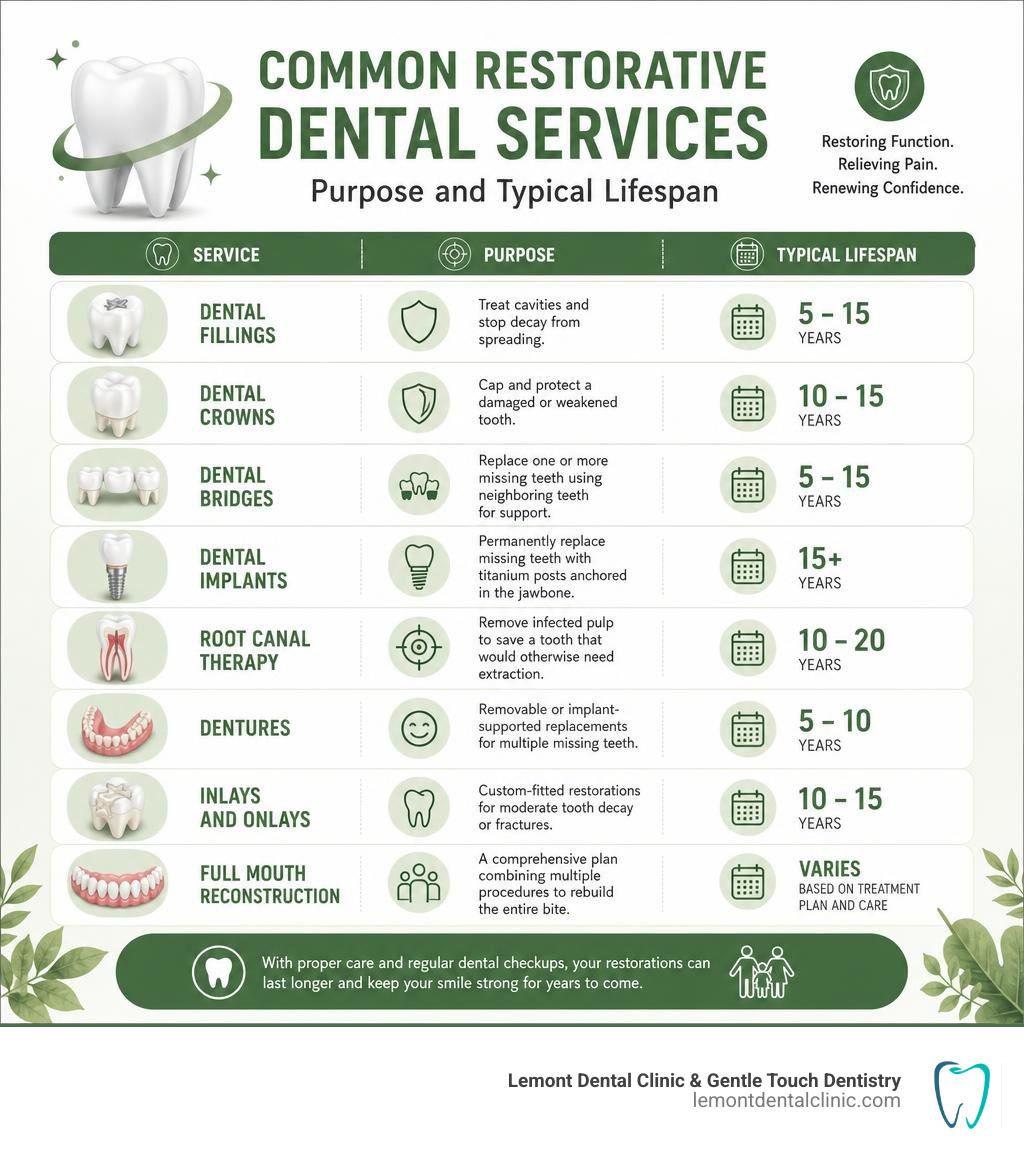
Here is a quick overview of the most common restorative dental services:
Dental fillings – treat cavities and stop decay from spreading
Dental crowns – cap and protect a damaged or weakened tooth
Dental bridges – replace one or more missing teeth using neighboring teeth for support
Dental implants – permanently replace missing teeth with titanium posts anchored in the jawbone
Root canal therapy – remove infected pulp to save a tooth that would otherwise need extraction
Dentures – removable or implant-supported replacements for multiple missing teeth
Inlays and onlays – custom-fitted restorations for moderate tooth decay or fractures
Full mouth reconstruction – a comprehensive plan combining multiple procedures to rebuild the entire bite
Teeth take a lot of punishment over a lifetime. A small cavity, a cracked molar, or a knocked-out tooth can seem minor at first — but left untreated, even a simple problem can quietly grow into something far more serious and expensive to fix.
Restorative dentistry exists to stop that progression. It focuses on repairing damage, eliminating pain, and getting your bite working the way it should — so you can eat, speak, and smile with confidence again.
This guide from Lemont Dental Clinic & Gentle Touch Dentistry walks you through everything you need to know: what these services include, when you need them, how long they last, and what to expect from treatment.
Understanding What Are Restorative Dental Services
When we talk about oral rehabilitation, we are looking at the big picture of your mouth’s health, structure, and balance. The formal clinical study of Restorative dentistry involves diagnosing and managing diseases of the teeth and their supporting structures to restore them to their proper function.
Understanding this field is key to appreciating Everything You Need to Know About Comprehensive Dental Care. Our teeth are not isolated blocks; they function as an active, integrated system. When one tooth loses its structural integrity due to trauma or deep decay, it compromises the stability of the surrounding teeth, the alignment of your bite, and even the health of your jawbone. Restorative services rebuild this tooth structure, returning both full chewing function and natural aesthetics to your smile.
Defining What Are Restorative Dental Services and Their Core Goals
At its heart, the primary goal of restorative care is functional rehabilitation. While a beautifully restored tooth certainly looks wonderful, the clinical objective is to ensure you can chew without pain, speak clearly, and maintain a stable bite alignment.
According to professional associations like What is Restorative Dentistry – Restorative Dentistry-UK (RD-UK) – SSRDG , the specialty integrates multiple dental disciplines to manage complex oral health issues. In a general practice setting, these solutions are delivered via everyday General Dentistry Services that keep your mouth healthy and disease-free. By removing infected tissue and sealing vulnerable areas, we protect your remaining natural tooth structure and prevent localized infections from spreading.
Restorative vs. Preventive and Cosmetic Dentistry
It is easy to confuse the different branches of dental care, but they serve distinct purposes.
Preventive Dentistry: This is your defense. It includes routine dental hygiene cleanings, exams, sealants, and fluoride treatments designed to stop dental issues before they start.
Restorative Dentistry: This is the cure. When prevention is no longer enough because a cavity has formed or a tooth has broken, restorative treatments step in to repair the damage.
Cosmetic Dentistry: This is elective. Procedures like professional teeth whitening or porcelain veneers are designed primarily for smile enhancement rather than treating active disease or structural damage.
The table below illustrates how these three pillars of modern dental care compare:
Feature
Preventive Dentistry
Restorative Dentistry
Cosmetic Dentistry
Primary Goal
Prevent decay and gum disease
Repair damage and restore function
Enhance the visual appearance of the smile
Typical Procedures
Cleanings, exams, X-rays, sealants
Fillings, crowns, bridges, implants
Whitening, veneers, cosmetic bonding
Necessity
Essential for long-term health
Structurally and medically necessary
Elective (patient preference)
Insurance Coverage
Usually covered at 100%
Partially covered (typically 50% to 80%)
Rarely covered by standard insurance
If you are looking for a complete overview of how these services fit together locally, our General Dentistry Palos Hills Complete Guide explains how we blend preventive vigilance with durable restorative care to keep our community smiling.
Common Types of Restorative Dental Procedures
Modern dentistry has moved far beyond the days of highly visible, uncomfortable metal restorations. Today, we utilize state-of-the-art dental materials like composite resin, zirconia, and dental porcelain. These advanced materials mimic the light-reflecting properties of natural enamel while offering incredible durability. For a complete look at all of the options available to you, explore our Dental Services Complete Guide 2025.
Dental Fillings for Cavities
The most common restorative procedure is the humble dental filling. When bacteria erode enamel, they leave behind a cavity. To treat this, we remove the decayed portion of the tooth and fill the space to restore its structure.
While silver amalgam fillings were the standard for decades, we now primarily use tooth-colored composite fillings. You can learn more about this on our dedicated Fillings page or read our detailed Service Post: Fillings. Composite resin bonds directly to your natural tooth structure. This direct bonding means we do not have to remove as much healthy enamel to anchor the material, allowing for maximum enamel preservation and a virtually invisible finish.
Dental Crowns and Bridges
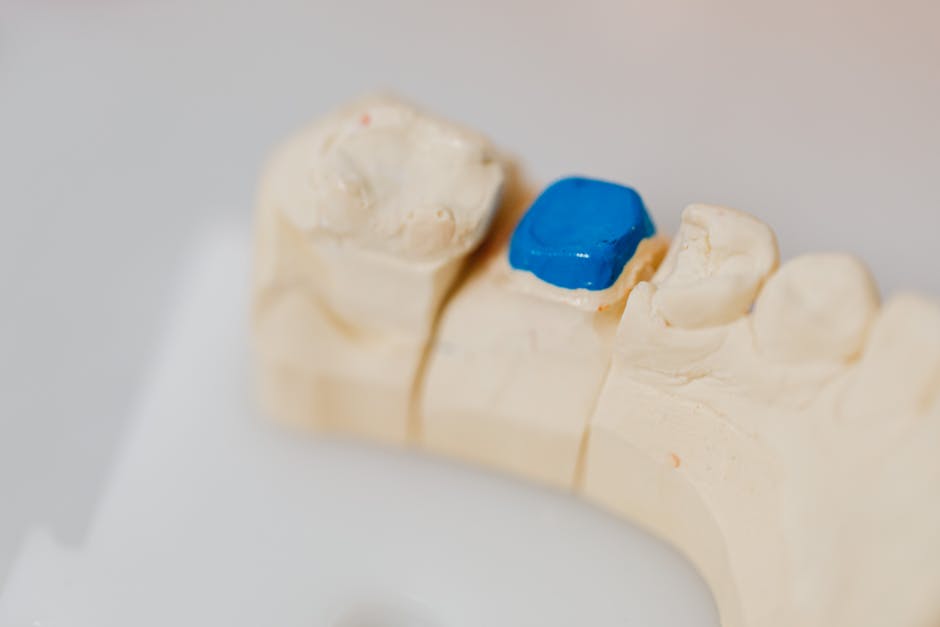
When a tooth is cracked, heavily decayed, or weakened by a large root canal, a standard filling is not strong enough. In these cases, we recommend dental crowns. A crown acts like a custom-engineered helmet, encasing the entire visible portion of the tooth above the gumline to provide lasting reinforcement.
For patients dealing with missing teeth, dental bridges offer a time-tested replacement option. A bridge consists of an artificial tooth (a pontic) held in place by dental crowns cemented onto the natural teeth on either side of the gap. To learn more about how we design these custom restorations, check out our guide on Crowns and Bridges and read our Service Post: Crowns and Bridges. If you are interested in a non-removable, highly stable option, a Permanent Bridge Teeth restoration can beautifully fill the gap and restore your bite.
Dental Implants and Full Mouth Reconstruction
Dental implants are widely considered the gold standard for tooth replacement. Unlike bridges, which rely on adjacent teeth for support, an implant is completely self-sustaining. It consists of a small titanium post surgically placed into the jawbone, which acts as a replacement root. Once the bone heals around the post, we attach a custom porcelain crown.
If you are missing a single tooth or several teeth, we encourage you to explore our Dental Implants and Dental Implants Near Me pages. For patients facing widespread tooth loss, severe wear, or advanced decay across their entire mouth, we can perform a customized Full Mouth Reconstruction. This comprehensive approach combines multiple restorative techniques to rebuild your smile from the ground up, providing incredible Dental Implants Health Benefits, including preserving your natural facial shape and stopping bone loss.
Root Canal Therapy and Tooth Extractions
When decay or trauma reaches the innermost chamber of a tooth—the pulp—it can cause severe pain and infection. To save the natural tooth from needing to be pulled, we perform a Root Canal. During this highly routine procedure, we gently remove the infected pulp, clean and disinfect the root canals, and seal the space.
If a tooth is too severely fractured or decayed to be saved, a Tooth Extraction becomes necessary to protect your overall health. Our Service Post: Tooth Extraction details how we prioritize patient comfort during this process. Rest assured, if an extraction is required, we will discuss replacement options like implants or bridges before the procedure even begins so you are never left without a plan for your smile.
Benefits, Longevity, and What to Expect from Restorative Care
Restoring your smile does more than just make eating comfortable again; it preserves your natural facial structure, prevents premature aging caused by bone loss, and gives you back your self-esteem. When deciding how to address missing teeth, patients often weigh several options. Our article Bridges, Implants and Flippers Oh My provides a lighthearted yet thorough comparison, while Dental Implants vs Bridge breaks down the functional differences of these two popular choices.
How Long Do Common Dental Restorations Last?
No dental restoration lasts forever, but with excellent home care and regular professional cleanings, they can serve you well for a decade or more.
Composite Fillings: Typically last between 5 to 10 years. They eventually wear down from chewing forces and may need replacement if new decay develops along the margins.
Dental Crowns and Bridges: Generally last between 10 to 15 years, though many last 20+ years with meticulous flossing and routine dental checkups.
Dental Implants: The titanium post itself can last a lifetime because it integrates directly with your jawbone. The custom porcelain crown attached to the implant typically lasts 15 to 20 years before normal wear and tear might require a replacement. Implants boast a clinical success rate of over 95%.
To dive deeper into the lifespans and structural differences of these options, check out our comparison guide on Dental Bridge vs Implant.
Preventing the Domino Effect of Tooth Loss
When you lose a tooth, the changes in your mouth start almost immediately. Within the first year alone, the surrounding jawbone tissue can degrade by up to 25% due to a lack of chewing stimulation (a process called bone resorption).
Furthermore, the teeth adjacent to the gap will naturally begin to tip and shift into the open space. This shifting disrupts your bite alignment, makes it easier for food to trap (leading to new cavities), and can cause joint pain in your temporomandibular joint (TMJ). By addressing missing teeth early with a custom plan for Full Mouth Restoration Lemont Palos Hills IL, we protect your jaw health and prevent a single missing tooth from causing a domino effect of oral health issues.
Recovery, Risks, and Financial Considerations
Modern restorative dentistry is designed with patient comfort in mind. We use advanced local anesthesia to completely numb the treatment area, and we offer dental sedation options for patients who feel anxious in the chair.
When it comes to the Teeth Restoration Price, the cost varies based on the complexity of your case, the materials chosen, and your insurance coverage. Most dental insurance policies cover a significant portion of restorative procedures because they are deemed medically necessary. Our office works closely with your insurance provider to maximize your benefits, and we offer flexible financing options to make your care as accessible and stress-free as possible.
Frequently Asked Questions
Understanding your options is the first step toward a healthy smile. Here are some of the questions we hear most often from our patients in Lemont and Palos Hills.
FAQ: What Are Restorative Dental Services and Are They Covered by Insurance?
Yes, because restorative services are designed to repair active damage, decay, or structural loss, they are generally covered by dental insurance policies. While preventive care is usually covered at 100%, restorative procedures are typically classified as either “basic” (like fillings and root canals) or “major” (like crowns, bridges, and dentures). Basic procedures are often covered at 70% to 80%, while major procedures are typically covered at 50%. Our team handles the pre-authorization process for you so you know exactly what your policy covers before your treatment begins.
Is restorative dentistry painful?
No! Thanks to modern local anesthetics, you should not feel any pain during your procedure. For patients who experience dental anxiety, we offer gentle sedation options to help you feel completely relaxed. Some mild soreness is common after the numbness wears off, but this is temporary and easily managed with standard over-the-counter pain relievers.
What happens if I delay restorative dental treatment?
Delaying care allows minor issues to grow. A small cavity that could have been fixed with a simple filling can easily spread to the tooth’s nerve, requiring a root canal and a crown. If left even longer, the tooth may become unsavable, leading to an extraction, bone loss, and the need for a more complex and costly dental implant. Addressing issues early is always the most comfortable and cost-effective choice.
Conclusion
Your smile is one of your most valuable assets. When decay, wear, or missing teeth get in the way of your daily comfort, what are restorative dental services if not a second chance at a healthy, pain-free life?
At Lemont Dental Clinic & Gentle Touch Dentistry, we pride ourselves on offering comprehensive general and restorative dental care to our neighbors in Lemont, IL, Palos Hills, IL, and surrounding communities like Palos Park, Hickory Hills, Oak Lawn, Orland Park, and Palos Heights. Our experienced doctors utilize the latest dental technology to deliver precise, durable results at competitive, transparent prices. We focus on high-quality, reliable care tailored to your unique needs.
Do not let a small dental issue turn into a major headache. Schedule a consultation today and let us help you rebuild a smile you can be proud of!