What You Need to Know Before Getting Full Set Dentures
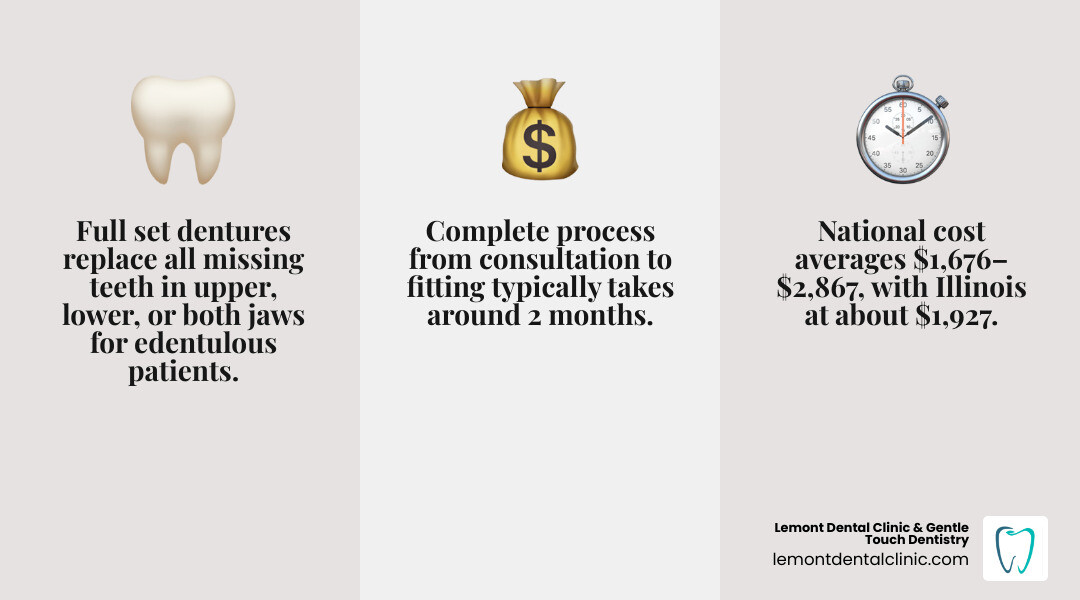
Full set dentures are removable dental appliances that replace all of your natural teeth in either your upper jaw, lower jaw, or both. Here’s a quick overview of what to know:
What they are: Custom-made prosthetics that rest on your gums and restore your smile, speech, and ability to eat
Who they’re for: Anyone who has lost all or most of their teeth in one or both arches
Average cost: Ranges from around $1,676 to $2,867 nationally, depending on your state (Illinois averages $1,927)
How long they last: 5 to 10 years with proper care
Timeline to get them: Typically about two months from first appointment to final fitting
Insurance coverage: Most dental plans cover around 50% of the cost, up to their annual maximum
Losing your teeth affects more than just your appearance. It changes how you eat, how you speak, and even how confident you feel in everyday situations. For many people, the thought of getting full dentures brings up real concerns — about cost, comfort, and whether they’ll look natural. Those concerns are completely valid.
This guide walks you through everything: what full set dentures actually are, what the process looks like, what they cost, and how to make sure you get a result you’re happy with.
I’m Piotr Dederowski, and at Lemont Dental Clinic & Gentle Touch Dentistry, I’ve helped countless patients restore their smiles and quality of life with full set dentures tailored to their unique needs. Whether you’re just starting to explore your options or ready to take the next step, this guide will give you the clear, honest information you need to move forward with confidence.
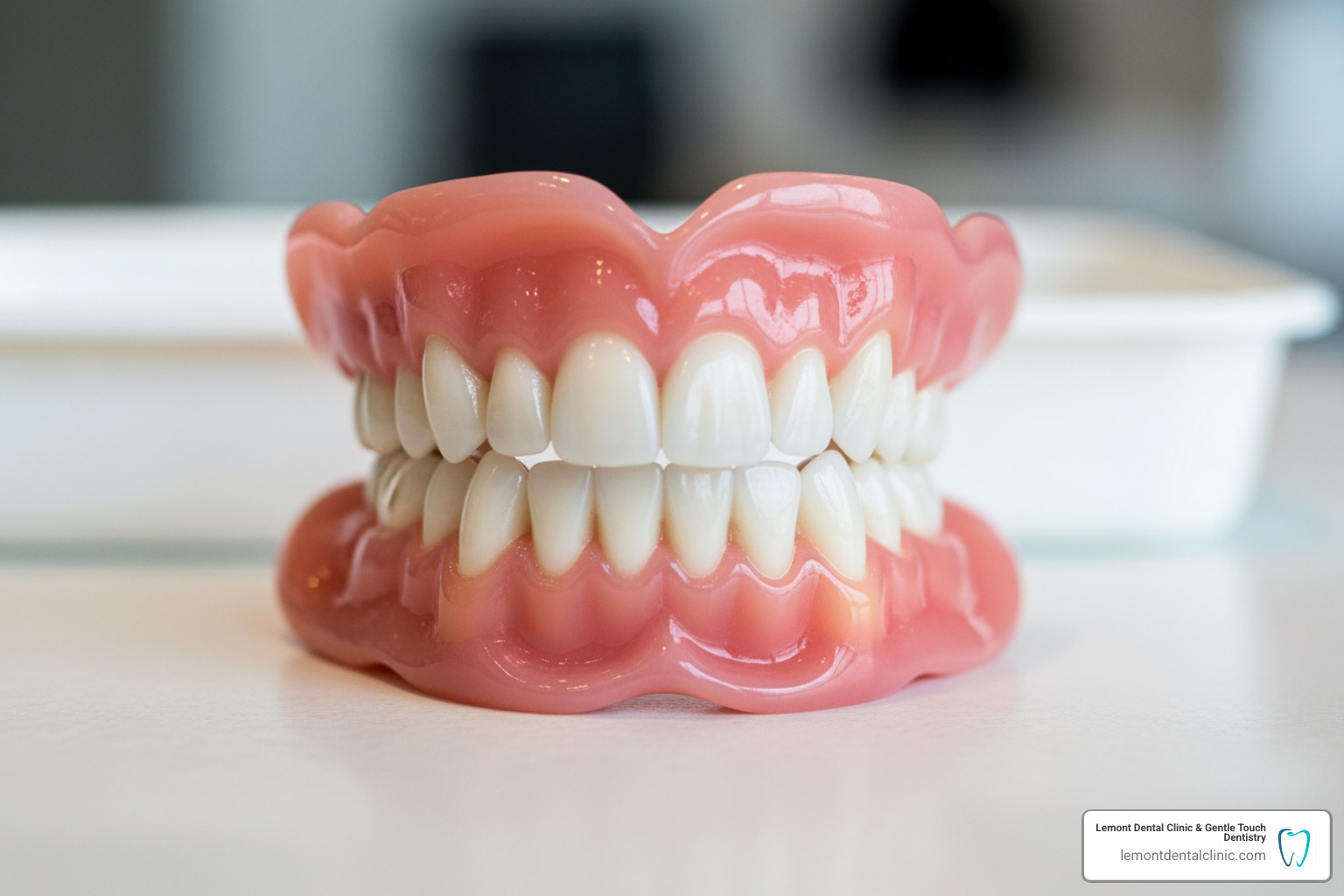
When we talk about complete dentures, we are referring to a full-arch replacement for missing teeth. If you have lost all the teeth in your upper jaw, lower jaw, or both, full set dentures provide a functional and aesthetic solution. These appliances consist of artificial teeth—usually made of high-quality acrylic resin or porcelain—set into a pink base that mimics the appearance of natural gum tissue.
The upper arch denture typically features a plate that covers the roof of the mouth (the palate), which creates suction to help keep the denture in place. The lower arch is horseshoe-shaped to leave room for your tongue and rests directly on the gum tissue and the bony ridge of the jaw. Beyond just replacing teeth, these appliances provide essential facial support. Without teeth, facial muscles can sag, leading to a sunken appearance; dentures help maintain the natural proportions of your face.
By restoring your “masticatory efficiency” (a fancy way of saying your ability to chew), full set dentures allow you to return to a more varied and nutritious diet. For more information on the materials used, you can explore this guide on types of fake teeth.
Full Set Dentures vs. Partial Dentures
The primary difference between full and partial dentures comes down to how many natural teeth you have left. We recommend full set dentures for “edentulous” jaws—meaning jaws where no natural teeth remain.
Partial dentures, on the other hand, are used when you still have some healthy teeth. These often use metal clasps that anchor onto your remaining natural teeth for stability. While full dentures rely on suction and muscle control (and sometimes adhesives), partials are physically tethered to your existing dental structure.
Conventional vs. Immediate Full Set Dentures
There are two main ways to begin your journey with full set dentures:
Conventional Dentures: These are made after your teeth have been extracted and the gum tissue has had significant time to heal—usually about 8 to 12 weeks. Because the “tissue remodeling” and jawbone shrinkage that happens after extraction has already stabilized, these often provide a very accurate fit right from the start.
Immediate Dentures: As the name suggests, these are placed the same day your remaining teeth are extracted. The biggest benefit is that you never have to be seen in public without teeth. However, because your gums shrink as they heal, immediate dentures act almost like a bandage and will require multiple adjustments or a “reline” a few months down the road to maintain a proper fit.
The Process and Timeline for Getting Custom Dentures
Getting a high-quality, custom-made smile isn’t an overnight process. At our clinics in Lemont and Palos Hills, IL, we follow a meticulous multi-step journey to ensure your full set dentures look and feel as natural as possible.
The Step-by-Step Journey
Initial Consultation: We examine your oral health, take digital X-rays, and discuss your goals.
Impressions: This is the most critical stage. We use specialized materials to create a “negative” of your mouth. According to scientific research on final-impression techniques, using custom trays and precise border molding is essential for a denture that stays in place.
Bite Registration: We measure how your upper and lower jaws meet to ensure your “bite” is comfortable and functional.
Wax Try-In: We create a wax model of your dentures with the actual teeth in place. You get to see how they look in your mouth and we can adjust the tooth shape or color before the final processing.
Final Fabrication: A dental lab transforms the wax model into a durable acrylic prosthetic through a process called flasking and injection.
Final Fitting: You receive your completed full set dentures. We check for pressure points and ensure the suction is correct.
This entire process typically takes about two months. While some “economy” options might promise a faster turnaround, rushing the lab work often results in a fit that is uncomfortable or looks “fake.”
Adjusting to Your New Smile
Even the best-fitting dentures require an adjustment period. It’s a bit like getting a new pair of shoes—they might feel a little “bulky” at first.
Speech: You might notice a slight lisp or find certain words difficult to say. We recommend reading aloud or practicing difficult words to build muscle memory.
Eating: Start with soft foods (eggs, pasta, cooked vegetables) and cut your food into small bites. Try to chew on both sides of your mouth simultaneously to keep the dentures stable.
Sore Spots: It is very common to develop small sore spots in the first week. If this happens, don’t worry—we can easily perform a minor adjustment to relieve the pressure. If your dentures feel consistently loose, you can read more about fixing loose dentures.
Saliva: Your brain might initially treat the dentures as food, causing an increase in saliva flow. This usually settles down within a few days.
Understanding the Cost of Full Set Dentures
We believe in transparency when it comes to pricing. The cost of full set dentures can vary based on the materials used and the complexity of your case. Nationally, the average cost for a traditional set of removable dentures ranges from $1,676 in Oklahoma to $2,867 in Hawaii.
Here in Illinois, the average cost for a full set of dentures is approximately $1,927.
Comparing Denture Tiers
Feature
Economy Dentures
Premium/Custom Dentures
Material
Standard Acrylic
High-Impact, Multi-Layered Acrylic
Appearance
Uniform tooth color
Custom shading and gum characterization
Durability
Lower resistance to wear
Highly durable, stain-resistant
Warranty
Usually 6 months to 1 year
Often 5 to 7 years
Fit
Basic
Precision-fit for better comfort
Choosing natural looking dentures often means investing in premium materials that mimic the light-reflecting properties of real tooth enamel.
Additional Expenses to Consider
When budgeting for your new smile, the “base price” of the dentures is only one part of the equation. Other necessary procedures include:
Comprehensive Exams: Usually around $200.
Digital X-rays: Essential for checking jawbone health.
Surgical Extractions: If you have remaining damaged teeth, extractions typically cost between $281 and $702 per tooth depending on complexity.
Denture Relines: As your jawbone changes over time, you will need a reline to tighten the fit. You can learn about what happens during a denture reline here.
Insurance and Financing Options
Most private dental insurance plans categorize dentures as a “major” procedure and typically cover 50% of the cost. However, be aware of your “annual maximum benefit”—usually around $1,500 to $2,000. If your dentures cost $4,000, your insurance might pay $1,500, leaving you to cover the remaining balance.
To help manage out-of-pocket costs, we accept CareCredit, which allows you to pay for your treatment through monthly installments. You can also use funds from your FSA (Flexible Spending Account) or HSA (Health Savings Account), as dentures are a qualified medical expense.
Professional Customization vs. DIY Denture Risks
In recent years, “boil-and-bite” or DIY denture kits have appeared online. While the low price tag is tempting, these products carry significant risks. Professional full set dentures are medical devices designed to interact with your living tissue.
DIY options often lack the proper “occlusion” (how your teeth meet). This can lead to:
Jaw Joint Pain (TMJ): An improper bite puts massive strain on your jaw joints.
Accelerated Bone Loss: Poorly fitted dentures put uneven pressure on the jawbone, leading to residual ridge resorption. This is a permanent loss of bone that makes it even harder to wear dentures in the future.
Infections: Porous, non-medical grade materials can trap bacteria, leading to “denture stomatitis” or fungal infections.
Benefits of Implant-Supported Options
For patients looking for the ultimate in stability, we offer implant dentures. Unlike traditional dentures that sit on the gums, snap-on dentures anchor to titanium posts placed in the jawbone.
The benefits are game-changing:
No Slipping: You can eat steak, apples, and corn on the cob without fear.
Bone Preservation: The implants stimulate the jawbone, preventing the “sunken look” associated with long-term tooth loss.
No Adhesives: You’ll never have to deal with messy denture glues again.
Frequently Asked Questions about Full Set Dentures
How long do full dentures typically last?
On average, full set dentures last between 5 to 10 years. While the acrylic teeth are durable, they do wear down over time, affecting your bite. Additionally, your mouth naturally changes shape as you age. The American Dental Association (ADA) recommends a professional evaluation every few years to determine if a reline or replacement is necessary.
Can I sleep with my dentures in?
We strongly recommend removing your dentures at night. Your gum tissues need a chance to rest and be bathed in saliva, which has natural antibacterial properties. Sleeping with dentures increases the risk of gum inflammation and oral yeast infections. Instead, soak them overnight in a dedicated denture cleaning solution to keep them moist and clean.
Will dentures change how I speak or eat?
Initially, yes. You might experience a temporary lisp or feel like your tongue doesn’t have enough room. However, with practice, most patients return to normal speech within a few weeks. Regarding eating, you will regain much of your function, though dentures provide about one-sixth the biting force of natural teeth. This is why many of our patients eventually transition to implant-supported options for better chewing power.
Conclusion
Losing your teeth is a major life event, but it doesn’t have to mean the end of your confidence or your favorite meals. At Lemont Dental Clinic & Gentle Touch Dentistry, we specialize in creating full set dentures that are as unique as the patients who wear them.
From our locations in Lemont and Palos Hills, we serve patients across the Chicago suburbs—including Worth, Hickory Hills, and Oak Lawn—providing high-quality restorative care that balances the latest technology with a gentle, personal touch. We don’t believe in one-size-fits-all solutions; we work with you to find the tier of service and the financing options that fit your life.
If you are ready to reclaim your smile, we are here to help.