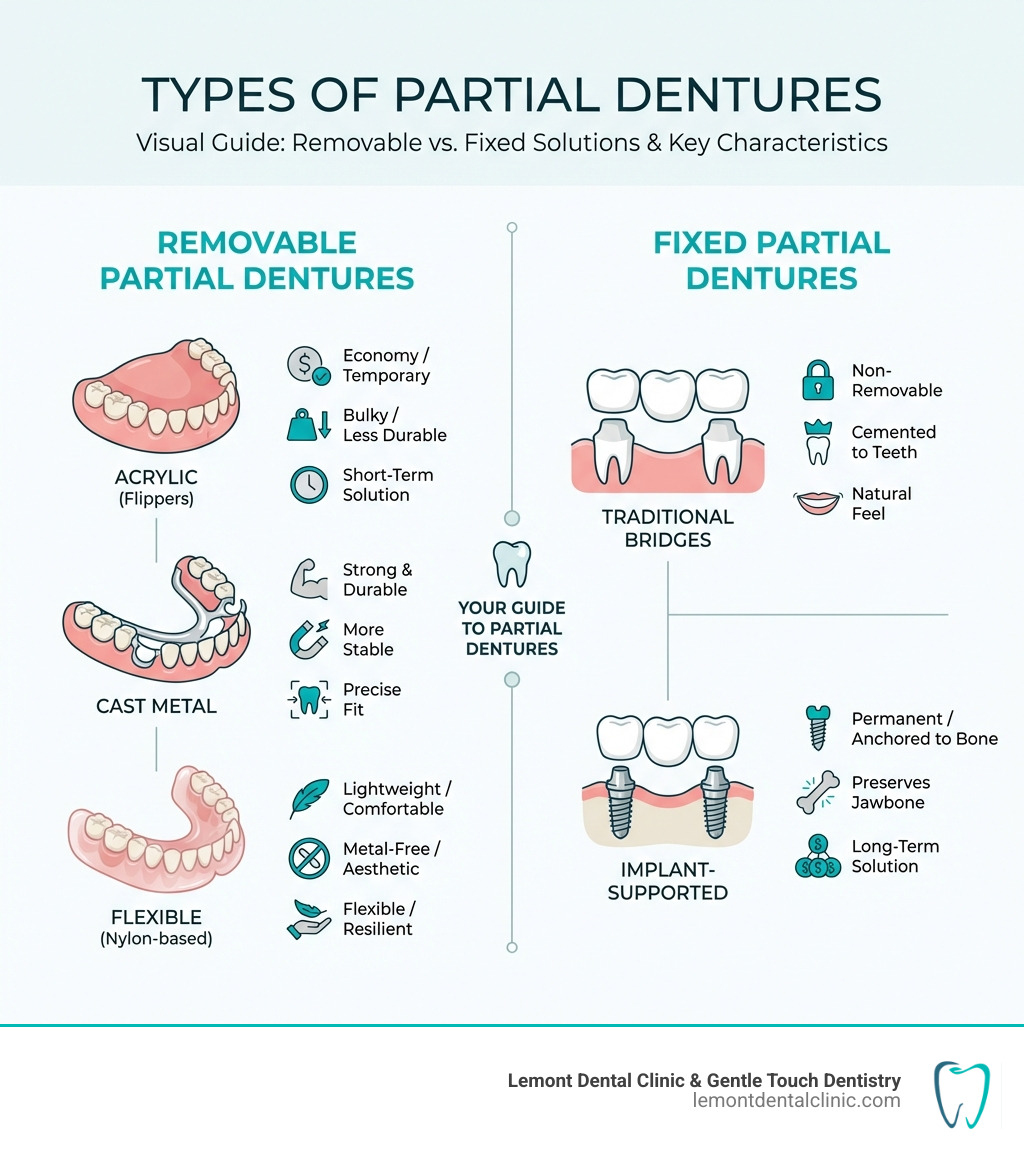
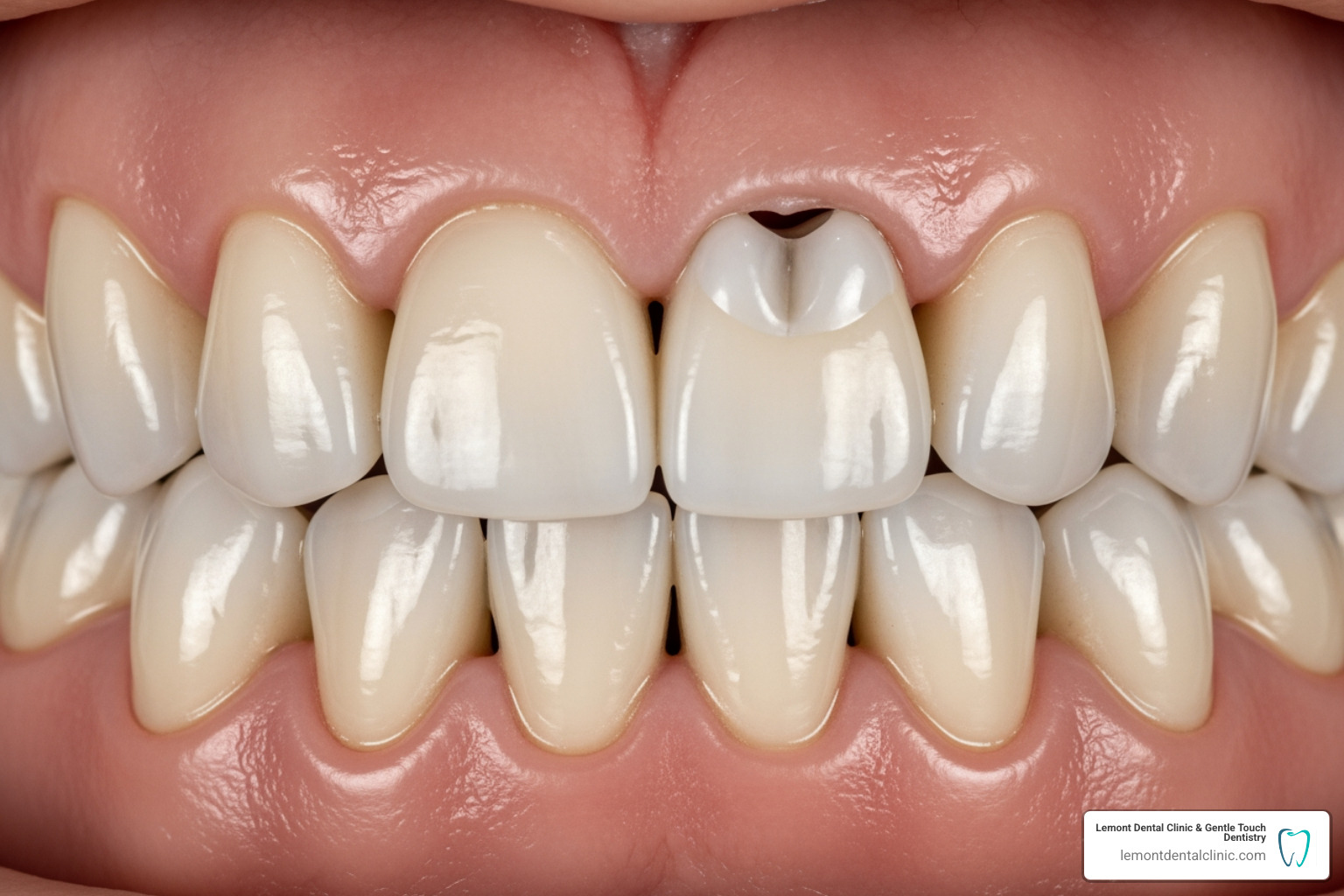
Types of partial dentures fall into two main categories: removable and fixed. Removable partial dentures include acrylic (flippers), cast metal frameworks, and flexible nylon-based options. Fixed partial dentures include traditional dental bridges and implant-supported solutions. Each type varies in durability, comfort, appearance, and cost, ranging from around $600 for basic acrylic partials to $3,000+ for implant-supported options.
Missing teeth affect more than just your smile. They impact how you eat, speak, and even how your face looks over time. When you lose teeth, the remaining ones can shift position, your jawbone can weaken, and simple tasks like enjoying a meal become challenging.
Partial dentures offer a proven solution to these problems. They’re custom-made dental appliances designed to replace one or more missing teeth while you still have some healthy natural teeth remaining. Unlike complete dentures that replace all teeth in an arch, partials work alongside your existing teeth to restore your smile and oral function.
The benefits are significant. Partial dentures help you chew food properly, speak clearly, and prevent your remaining teeth from drifting out of position. They also support your facial muscles, maintaining your natural appearance and preventing the sunken look that can develop after tooth loss.
Choosing the right type matters. Your decision will affect your comfort, how natural your smile looks, and how long your solution lasts. Some partials are designed for temporary use, while others can serve you well for 5 to 10 years with proper care.
I’m Piotr Dederowski, and at Lemont Dental Clinic & Gentle Touch Dentistry, I’ve helped countless patients steer the decision between different partial denture options to restore their smiles and confidence. Understanding the types of partial dentures available is the first step toward finding the solution that fits your lifestyle, budget, and oral health needs.
The Main Types of Removable Partial Dentures (RPDs)
When we talk about partial dentures, we’re often referring to removable partial dentures (RPDs). These are custom-made appliances designed to replace one or several missing teeth, but only when you still have some natural teeth remaining in your upper or lower jaw. Unlike fixed options, RPDs can be taken out for cleaning and while you sleep. They typically attach to your remaining natural teeth using clasps or other connectors, providing stability and support.
The beauty of RPDs lies in their custom nature. Each appliance is uniquely crafted to fit your mouth, restoring both the aesthetic appearance and functional capabilities that missing teeth can compromise.
Here’s a quick comparison of the main types of partial dentures that are removable:
Feature
Acrylic Partial Dentures (Flippers)
Cast Metal Partial Dentures
Flexible Partial Dentures
Durability
Less durable, easily breakable
Very strong and long-lasting
Not as sturdy as cast metal, can be difficult to repair
Aesthetics
Can be bulky, less natural look
Metal clasps can be visible
Highly aesthetic, virtually invisible clasps
Comfort
Can feel bulky, often uncomfortable
Excellent fit, less bulky
Superior comfort, lightweight
Cost
$600-$1,500 per arch
$1,000-$2,500 per arch
$900-$2,000 per arch
Acrylic Partial Dentures (Flippers)
Acrylic partial dentures, often affectionately (or not-so-affectionately) called “flippers,” are one of the simpler types of partial dentures we offer. They consist of replacement teeth attached to a pink, gum-colored acrylic base. They get their nickname because they can be “flipped” in and out of the mouth.
Pros:
Affordability: They are typically the most budget-friendly option among partial dentures, with costs ranging from $600 to $1,500 per arch.
Quick Fabrication: Flippers can often be made relatively quickly, making them a good temporary solution, especially if you’re waiting for a more permanent restoration or for your gums to heal after an extraction.
Lightweight: While they can feel bulky, the material itself is lightweight.
Cons:
Bulkiness: The acrylic base can be thicker and more cumbersome in the mouth, sometimes leading to discomfort or affecting speech initially.
Less Durable: Acrylic is not as strong as metal or flexible materials, making flippers more prone to breaking or cracking, especially with heavy chewing.
Often a Temporary Solution: Due to their bulkiness and fragility, flippers are often viewed as a short-term solution rather than a long-term replacement for missing teeth. They can also potentially put stress on surrounding natural teeth over time.
When durability and a secure fit are top priorities, cast metal partial dentures often come to mind. These types of partial dentures feature a lightweight yet incredibly strong metal framework, typically made from a cobalt-chromium alloy. This metal framework supports the artificial teeth and a gum-colored plastic base. They attach to your natural teeth with clasps, which can sometimes be visible, or with more discreet “precision attachments.” Precision attachments are generally less noticeable but can increase the overall cost.
Pros:
Strength and Durability: The metal framework makes these partials exceptionally sturdy and long-lasting, designed to withstand daily chewing forces.
Thinner and Less Bulky: Compared to acrylic flippers, the metal framework allows for a much thinner and less bulky design, which often translates to greater comfort and less interference with speech.
Excellent Fit: Cast metal partials are precisely fabricated to fit your mouth, offering superior stability and retention.
Cons:
Visible Metal Clasps: One of the main aesthetic drawbacks is that the metal clasps, which wrap around your natural teeth, can sometimes be visible, especially on front teeth.
Higher Cost: Due to the custom fabrication process and materials, cast metal partial dentures are more expensive than acrylic options, typically ranging from $1,000 to $2,500 per arch.
Flexible: The Most Aesthetic Type of Partial Denture
If you’re looking for a partial denture that blends seamlessly with your natural smile, flexible partial dentures are an excellent choice. These innovative types of partial dentures are made from a thin, thermoplastic material, often nylon-based, which is both flexible and incredibly lifelike. They typically feature gum-colored clasps (or no clasps at all), making them virtually invisible when you smile. They are also a great option for individuals with allergies to acrylic or certain metals.
Pros:
Superior Comfort: The flexible material adapts to the contours of your mouth, making them very comfortable to wear. They are lightweight and put less stress on your remaining natural teeth.
Lightweight: Their thin and flexible design makes them feel less intrusive than bulkier acrylic options.
Virtually Invisible: The translucent, gum-colored material and clasps (if present) blend beautifully with your natural oral tissues, offering a highly aesthetic solution.
Good for Metal Allergies: As they contain no metal, they are ideal for patients with sensitivities or allergies to traditional denture materials.
Cons:
Can Be Difficult to Repair: Due to the unique properties of the flexible material, repairs can be more challenging or sometimes impossible compared to acrylic or cast metal.
May Stain Over Time: Like natural teeth, flexible partials can absorb pigments from food and drink, potentially leading to staining if not cared for properly.
Less Sturdy: While comfortable, they may not offer the same chewing efficiency or long-term stability as a cast metal partial.
Beyond removable options, there are also fixed types of partial dentures that offer a more permanent solution for missing teeth. These are non-removable appliances that are cemented into place by a dentist and remain in your mouth at all times. Fixed partial dentures include traditional dental bridges and advanced implant-supported options, each providing distinct benefits in terms of stability, aesthetics, and oral health.
A traditional dental bridge is a classic example of a fixed partial denture. It’s designed to “bridge” the gap created by one or more missing teeth.
How bridges work: A bridge consists of one or more artificial teeth, called pontics, which are typically made from lifelike porcelain. These pontics are held in place by crowns that are cemented onto your natural teeth located on either side of the gap. These supporting teeth are known as abutment teeth. To prepare for the crowns, your abutment teeth must be reshaped.
Pros:
High Stability: Once cemented, a traditional bridge offers excellent stability and functions much like your natural teeth.
Natural Look and Feel: Modern dental bridges are crafted to match your existing teeth in color, shape, and size, providing a seamless and natural-looking restoration.
Improved Chewing and Speech: By filling the gap, bridges restore your ability to chew comfortably and speak clearly.
Cons:
Requires Shaping of Healthy Adjacent Teeth: A significant drawback is that healthy abutment teeth must be permanently altered (reshaped) to accommodate the crowns, which can compromise their long-term health.
Does Not Prevent Bone Loss: Unlike implants, a traditional bridge does not stimulate the jawbone beneath the missing tooth, meaning bone loss can still occur in that area over time.
Implant-Supported Partial Dentures
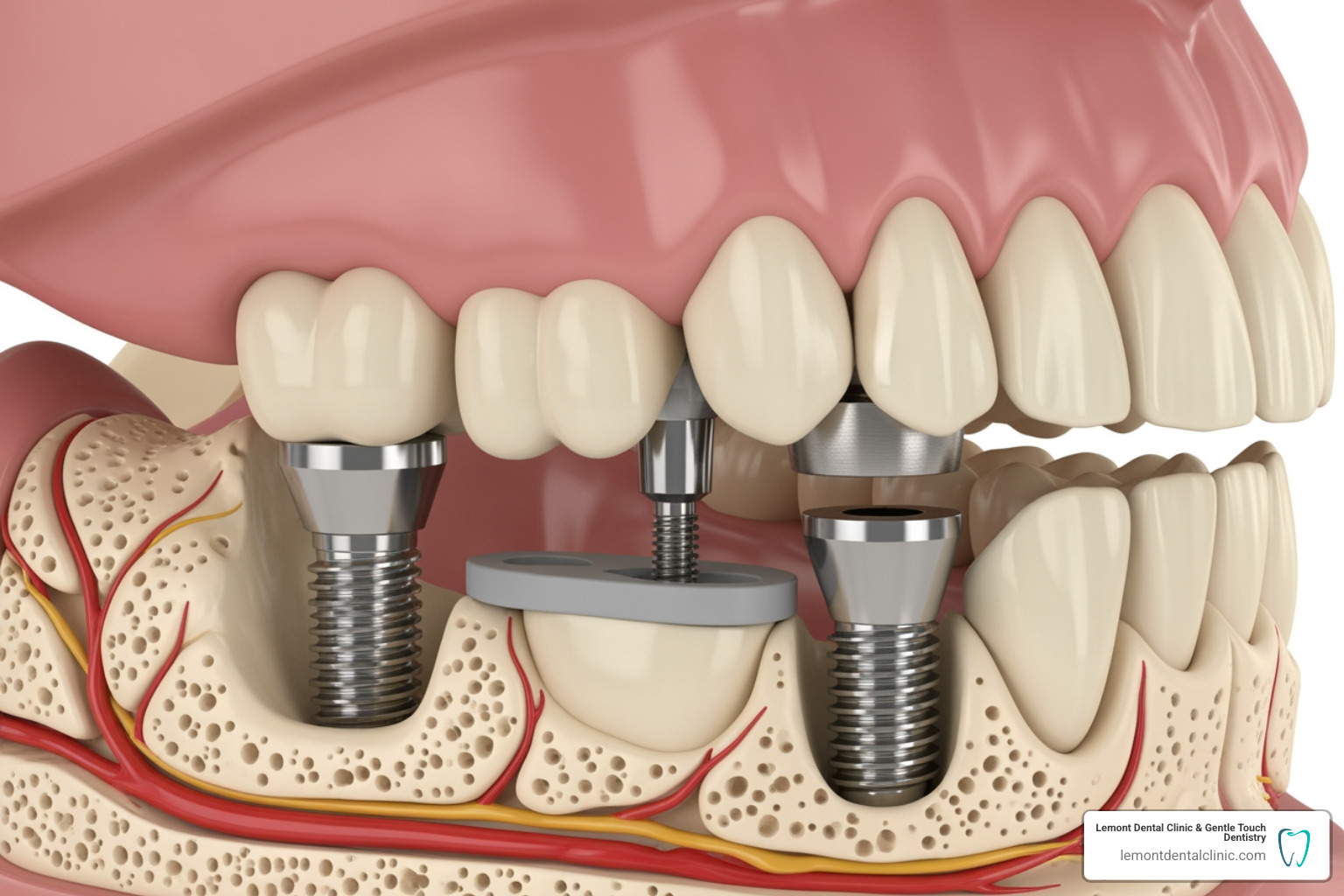
For those seeking the most secure and bone-preserving solution among the types of partial dentures, implant-supported partial dentures are often the gold standard. These are fixed appliances that combine the benefits of dental implants with the structure of a bridge.
How they work: Instead of relying on natural teeth for support, implant-supported partial dentures are anchored by dental implants. These are small, biocompatible titanium posts that are surgically placed into your jawbone where the teeth are missing. Over a period of 2 to 6 months, the jawbone naturally fuses with the implant in a process called osseointegration, creating an incredibly strong and stable foundation. Once integrated, custom-made crowns or a bridge are then attached to these implants.
Pros:
Preserves Jawbone Health: Dental implants stimulate the jawbone, preventing the bone loss that typically occurs after tooth extraction. This helps maintain your facial structure and overall oral health.
Extremely Stable and Secure: Implant-supported dentures feel incredibly natural and secure, allowing you to eat, speak, and smile with complete confidence. They don’t slip or shift.
Doesn’t Rely on Natural Teeth: Healthy adjacent teeth are left untouched, as the implants provide independent support for the restoration.
Long-Lasting: With proper care, dental implants can last for decades, often a lifetime, making them a very durable solution.
Cons:
Higher Initial Cost: Implant-supported options are generally the most significant investment among types of partial dentures, often starting at $3,000 and above per arch.
Requires Surgery: The placement of dental implants is a surgical procedure, which involves a healing period.
Longer Treatment Timeline: The entire process, from implant placement to final restoration, can take several months due to the osseointegration period.
Not Everyone is a Candidate: Good general health and sufficient jawbone density are required for successful implant placement.
Deciding on the best partial denture option can feel overwhelming given the variety of types of partial dentures available. Rest assured, we’re here to guide you through the process. Your choice will depend on several key factors unique to your situation.
Key factors to consider:
Number and Position of Missing Teeth: The location and extent of your tooth loss will heavily influence which options are suitable.
Budget: Costs vary significantly between the different types of partial dentures, so it’s important to consider what fits your financial plan.
Aesthetic Preferences: Do you prioritize a completely natural, invisible look, or are you comfortable with some visible components?
Oral Health Status: The health of your remaining natural teeth, gums, and jawbone will determine your eligibility for certain treatments, especially fixed options like bridges or implants.
Durability Needs: How important is long-term strength and resistance to wear and tear for your lifestyle?
Allergies: If you have sensitivities to certain metals or acrylics, flexible partials might be a better choice.
Lifestyle: Do you prefer a removable appliance you can clean easily, or a fixed one that stays in place?
Dentist’s Recommendation: Your dentist will provide a comprehensive assessment and personalized recommendations based on your specific oral health needs.
Cost Comparison (Average per Arch):
Acrylic Partial Dentures: $600-$1,500
Cast Metal Partial Dentures: $1,000-$2,500
Flexible Partial Dentures: $900-$2,000
Implant-Supported Partial Dentures: $3,000 and above
These figures are general ranges, and the actual cost can vary based on the complexity of your case, materials used, and any additional procedures required. We believe in transparency at Lemont Dental Clinic & Gentle Touch Dentistry, and we’ll provide a detailed treatment plan and cost overview during your consultation.
No matter which of the types of partial dentures you choose, proper care is paramount to ensure their longevity, maintain good oral hygiene, and protect your remaining natural teeth. With diligent care, most partial dentures can last between 5 and 10 years before needing adjustments or replacement.
Daily cleaning routine:
Remove and Clean Daily: Just like natural teeth, dentures accumulate plaque and food particles. Remove your partial denture and clean it thoroughly at least once a day.
Handle with Care: Always hold your denture over a folded towel or a sink filled with water. This cushions the denture if you accidentally drop it, preventing breakage.
Brush Gently: Use a soft-bristled brush specifically designed for dentures or a very soft toothbrush. Avoid using regular toothpaste, as it can be too abrasive and scratch the denture surface. Instead, use a non-abrasive denture cleanser, mild hand soap, or dishwashing liquid. Gently brush all surfaces of the denture.
Rinse Thoroughly: After cleaning, rinse your denture under cool running water to remove any cleanser residue.
Soak Overnight: For removable partial dentures, it’s generally recommended to remove them at night. This allows your gums and oral tissues to rest and reduces the risk of bacterial buildup. Store your denture in a denture cleanser soaking solution or plain water to keep it moist and prevent warping.
Regular Dental Check-ups and Professional Adjustments:
Even with the best at-home care, your mouth changes over time. Your jawbone and gum ridges can shrink, which can affect the fit of your partial denture. Regular dental visits, typically every 6 months, are crucial. During these appointments, we’ll examine your dentures for proper fit, check the health of your remaining teeth and gums, and perform any necessary professional adjustments or relines to ensure your denture remains comfortable and effective.
Avoid DIY Repairs:
It can be tempting to try to fix a loose or broken denture yourself, but we strongly advise against it. Using do-it-yourself kits or over-the-counter glues can cause serious harm to your denture and your oral health. If your denture breaks, cracks, chips, or feels loose, contact us immediately. We can often make the necessary adjustments or repairs professionally.
We often hear similar questions from our patients considering or adapting to types of partial dentures. Here are some common inquiries:
How long does it take to get used to new partial dentures?
Getting used to new partial dentures is a process that requires patience and practice. Initially, your new partial denture may feel a little odd, bulky, or even loose. This is completely normal! Your mouth, tongue, and cheek muscles need time to learn how to keep the denture in place.
Initial Awkwardness: Expect some minor irritation, soreness, or increased saliva flow during the first few weeks. These symptoms should gradually diminish as your mouth adjusts.
Practicing Speech: You might find it challenging to pronounce certain words clearly at first. Reading aloud to yourself can help your tongue and lips adapt to the new appliance, and your speech will improve over time.
Eating: Start with soft foods cut into small pieces. Chew slowly and try to use both sides of your mouth evenly to stabilize the denture. Gradually introduce firmer textures as you become more comfortable.
Consistent Wear (Initially): Your dentist may advise you to wear your new partial denture constantly for the first few days, even while sleeping. This helps us identify any pressure points that need adjustment. Once adjustments are made and your mouth has adapted, we typically recommend removing removable partials at night to give your gums a rest.
If you experience persistent discomfort or soreness, please don’t hesitate to contact us. We can make adjustments to ensure a comfortable fit.
What is the difference between partial and complete dentures?
This is a common question, and the distinction is quite simple:
Partial Dentures: As we’ve discussed, partial dentures are used when you have one or more missing teeth, but still have some natural teeth remaining in your upper or lower jaw. They “fill in the gaps” and rely on your existing teeth for support and retention, often with clasps. They complement your natural dentition.
Complete Dentures: Also known as full dentures, these appliances are used when all the teeth in an entire arch (either upper or lower) are missing. They replace an entire set of teeth and rely on the suction and support from your gums and underlying jawbone for stability.
Essentially, if you have some healthy teeth left, partial dentures are your route. If all teeth in an arch are gone, complete dentures are the solution.
Yes, absolutely! While partial dentures are an excellent and often cost-effective solution, other options exist depending on your specific needs, oral health, and budget.
Single Dental Implants: If you’re missing only one tooth, a single dental implant with a crown can be a fantastic, stand-alone solution. The implant acts as an artificial tooth root, providing unparalleled stability and preventing bone loss.
Full-Arch Implant Solutions: For more extensive tooth loss, but where some natural teeth remain, implant-supported bridges (as discussed above) are an alternative to traditional partial dentures. For complete tooth loss in an arch, options like “All-on-X” or hybrid dentures offer a full set of teeth supported by a few strategically placed implants.
Fixed Bridges: As detailed earlier, traditional fixed bridges are an alternative to removable partials, particularly for smaller gaps where healthy adjacent teeth can serve as abutments.
The best way to determine the right solution for you is through a thorough dental consultation. We will assess your oral health, discuss your goals, and outline all viable options, including their pros, cons, and associated costs.
Conclusion: Restore Your Smile with the Perfect Fit
Navigating the various types of partial dentures can seem complex, but understanding your options is the first step toward reclaiming a healthy, confident smile. Whether you lean towards the affordability and quick solution of an acrylic flipper, the robust durability of a cast metal partial, the aesthetic appeal and comfort of a flexible denture, or the permanent stability of a fixed bridge or implant-supported option, there’s a solution custom for you.
At Lemont Dental Clinic & Gentle Touch Dentistry, we are committed to providing high-quality, comprehensive general and restorative dental care right here in Lemont and Palos Hills, IL. We understand that choosing the right partial denture is a highly personal decision, impacting your daily life, comfort, and confidence. Our experienced doctors use the latest technology to ensure you receive expert guidance and the most suitable treatment plan.
We invite you to schedule a consultation with our team. We’ll listen to your concerns, assess your oral health, and discuss all the types of partial dentures and alternatives that best fit your unique needs, lifestyle, and budget. Let us help you restore your smile and improve your oral health with precision and care.