Dental Anxiety Is More Common Than You Think — Here’s What to Do About It
Dentist for anxiety is a real specialty, and finding the right one can completely change how you feel about dental care. If you’re nervous about the dentist, you’re in good company — as many as 1 in 3 people report experiencing anxiety about dental appointments.
Here’s a quick look at what anxious patients should know:
Tell your dentist upfront. Mention your anxiety when booking so the team can prepare.
Ask about sedation options. Nitrous oxide, oral sedation, and IV sedation are all available for anxious patients.
Use communication signals. A simple hand raise can pause any procedure, giving you control.
Choose the right dentist. Look for a provider trained in anxiety management, not just general dentistry.
Prepare before you go. Scheduling morning appointments, avoiding caffeine, and bringing a support person all help.
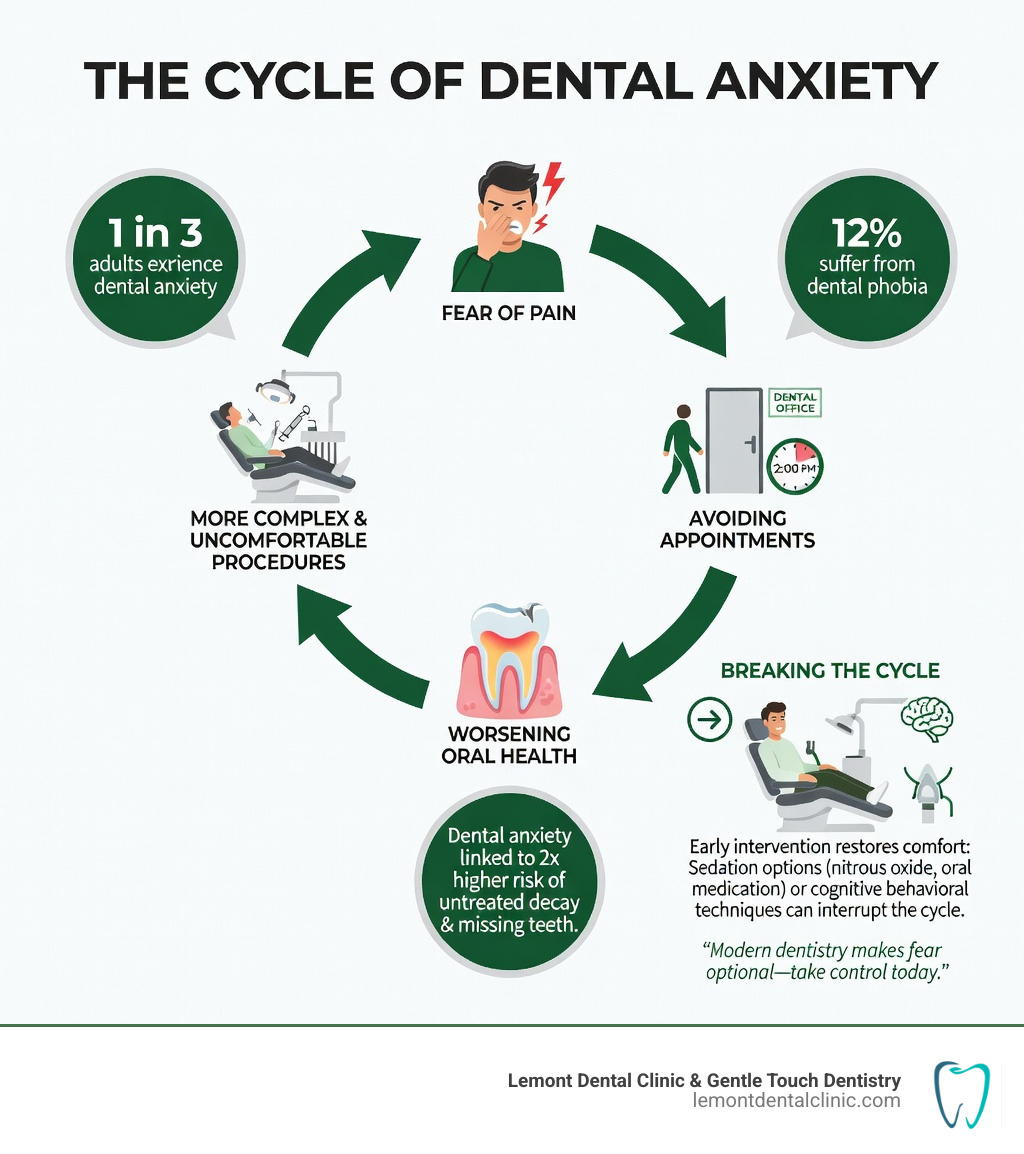
Dental anxiety isn’t just about feeling nervous. For many people, it leads to skipping appointments for months — or even years. And that avoidance has real consequences. Studies show a strong link between dental anxiety and higher rates of tooth decay, missing teeth, and gum disease. The fear of pain becomes the cause of more pain down the road.
The good news? Modern dentistry has come a long way. There are more tools than ever to make your visit comfortable — from calming environments to sedation options tailored to your level of anxiety.
I’m Piotr Dederowski from Lemont Dental Clinic & Gentle Touch Dentistry, where our team specializes in helping patients who consider themselves too anxious to visit a dentist for anxiety relief and comfortable care. We’ve helped countless nervous patients get the dental care they need — without the dread.
When we talk about being nervous at the dentist, it is important to distinguish between different “flavors” of worry. Experts often categorize these feelings into two main types: trait anxiety and state anxiety.
Trait anxiety refers to a person’s general tendency to be anxious. If you are someone who generally worries about many things in life, you likely have high trait anxiety. On the other hand, state anxiety is situational. You might be perfectly calm all week, but the moment you pull into our parking lot in Lemont or Palos Hills, your heart starts racing. That is state anxiety.
According to research published in British Dental Journal, 1 in 3 people report experiencing anxiety about dental appointments. Furthermore, statistics suggest that while 51% of people have low levels of anxiety, about 12% suffer from “phobic” levels of fear. This is more than just “butterflies”; it is a paralyzing terror that can lead to complete avoidance of care.
Why You Need a Specialized Dentist for Anxiety
Choosing a dentist for anxiety isn’t just a luxury—it’s a necessity for your long-term health. Phobia triggers are diverse. For some, it is the sterile smell of the office; for others, it is the sound of the drill or the fear of needles. Some patients also struggle with a strong gag reflex or a feeling of loss of control.
The stakes are high. There is a strong correlation between dental anxiety and tooth decay. When you avoid the dentist, small cavities become root canals, and minor gum irritation becomes periodontal disease. We often hear patients ask, does teeth cleaning hurt? The truth is that regular cleanings are generally painless, but the longer you wait, the more sensitive your gums become. By working with a team that understands these fears, you can stop the cycle of decay before it starts.
Non-Sedation Techniques for a Stress-Free Visit
Not every anxious patient needs medication to get through a visit. Sometimes, simple behavioral adjustments and a supportive environment are enough to lower the “threat level” in your mind.
One of the most effective tools we use is the STOP signal. Before we even pick up a mirror, we agree on a signal—usually raising your left hand. This gives you ultimate control. If you feel a twinge of discomfort, or if you just need a thirty-second breather to swallow and reset, you raise your hand, and we stop immediately. Research on the effectiveness of hand signals shows that simply knowing you have the power to stop the procedure significantly lowers blood pressure and heart rate during treatment.
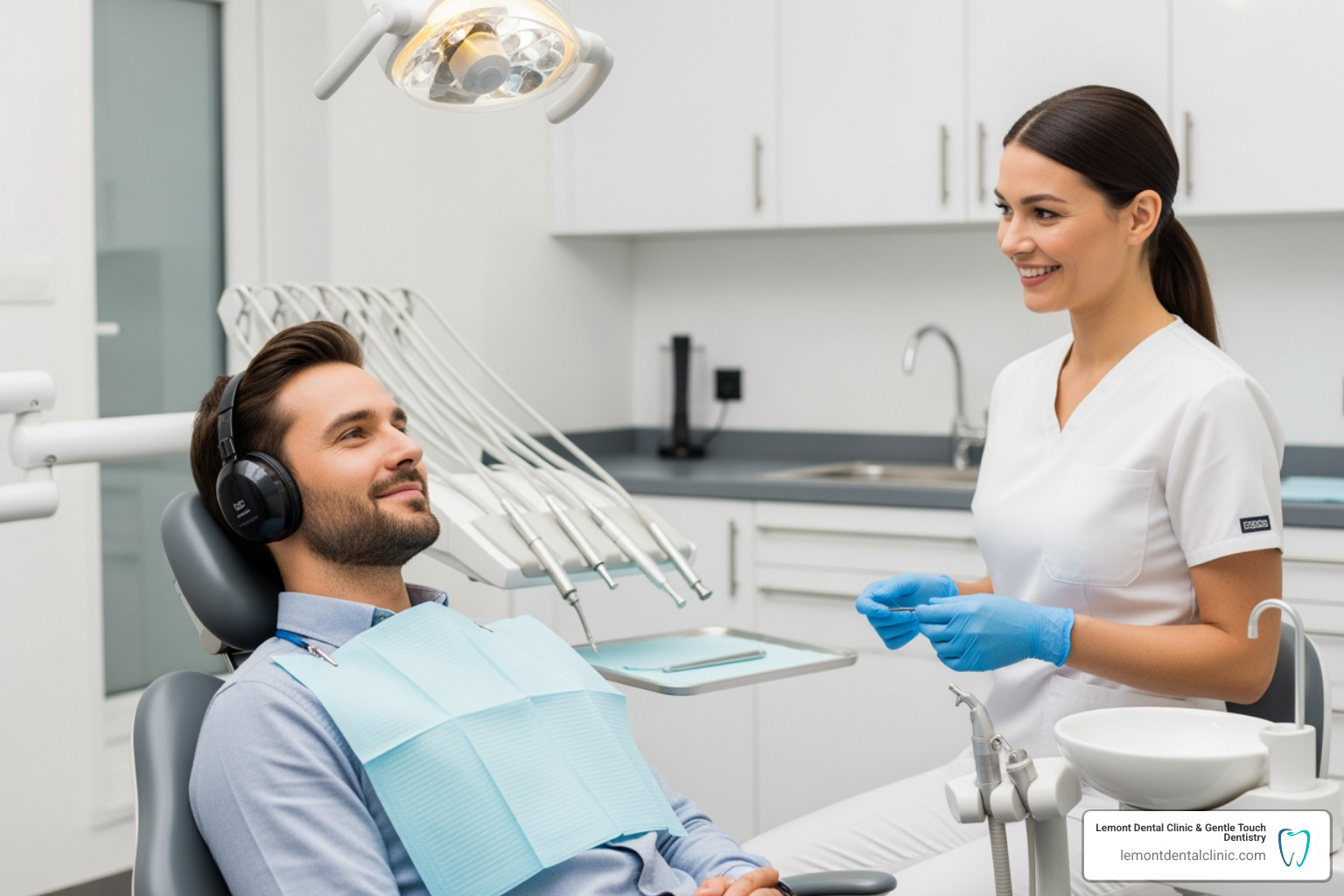
At our Gentle Touch Dentistry in Palos Hills, we also encourage distractions. Feel free to bring your own noise-canceling headphones to drown out the sounds of the office. Listening to a favorite podcast or a calming playlist can transport your mind far away from the dental chair.
Behavioral Strategies and Environment
The atmosphere of a dental office matters. We strive to move away from the “cold and sterile” vibe of the past. For instance, scientific research on lavender for anxiety has shown that the scent of lavender can measurably reduce adult anxiety levels on the day of treatment.
For those with more deep-seated phobias, long-term strategies like Cognitive Behavioral Therapy (CBT) can be life-changing. CBT helps you identify the root of your fear and “rewire” your brain’s response to dental triggers. The NICE guidelines for dental phobia actually advocate for CBT as a highly effective way to manage specific phobias. It’s about moving from “I can’t do this” to “I am safe, and I am in control.”
Exploring Sedation Dentistry Options
When behavioral techniques aren’t enough, sedation dentistry steps in to bridge the gap. It is important to understand that sedation is a spectrum, ranging from light relaxation to deep sleep.
Sedation Type
Level of Consciousness
Recovery Time
Best For
Nitrous Oxide
Fully awake, very relaxed
Immediate (minutes)
Mild anxiety, short procedures
Oral Conscious
Drowsy, may drift off
Several hours
Moderate anxiety, longer visits
IV Sedation
Deeply relaxed, “twilight”
24 hours
Severe phobia, extensive surgery
Safety is our absolute priority. Regardless of the type of sedation chosen, we follow strict clinical standards for sedation, which include continuous monitoring of your vital signs—heart rate, blood pressure, and oxygen levels—to ensure you are safe and comfortable throughout the entire process.
Nitrous Oxide and Oral Sedation
Nitrous oxide, famously known as “laughing gas,” is the most common form of sedation we use. You breathe it in through a small mask over your nose, and within minutes, a feeling of euphoria and warmth spreads through your body. It is excellent for tooth fillings in Palos Hills or for patients who just need the “edge” taken off. The best part? The effects wear off almost instantly once the gas is turned off, meaning you can drive yourself home.
Oral conscious sedation involves taking a prescribed pill (usually a benzodiazepine) about an hour before your appointment. By the time you sit in the chair, you will feel very drowsy. While you remain conscious and able to respond to our questions, you will be in a state of deep relaxation. Many patients find they have little to no memory of the procedure afterward.
IV Sedation: The Gold Standard for a Dentist for Anxiety
For patients with severe dental phobia or those undergoing complex restorative work, IV sedation is often the best path forward. This is “moderate sedation” where the medication is administered directly into the bloodstream.
The onset is rapid, and the level of sedation can be precisely adjusted by the doctor. It provides a powerful amnesic effect—most patients feel as though they were asleep and wake up surprised that the procedure is already over. We adhere to the Safe sedation practice guidelines to ensure that every IV session is handled with the highest level of medical oversight.
How to Choose the Right Dentist for Anxiety
Finding a dentist for anxiety requires looking beyond just the services offered. You need a team that prioritizes emotional well-being as much as clinical excellence.
Compassionate care starts with communication. A great dentist will never judge you for the state of your teeth or how long it has been since your last visit. They should be willing to explain every step of the process using simple language and show you the tools they will use before they use them.
Advanced technology also plays a huge role in reducing anxiety. For example, many people fear the “goop” used for traditional dental impressions. Modern 3D digital scanners eliminate this discomfort entirely, providing a faster and more comfortable experience. Tips from the Cleveland Clinic suggest that you should interview your dentist before committing to treatment.
Credentials to Look for in a Dentist for Anxiety
When vetting a provider, ask about their specific sedation accreditations. Not all dentists are licensed to provide IV sedation or oral conscious sedation. You should also look for a track record of success with nervous patients.
Reading patient testimonials can give you a window into the office’s “bedside manner.” Do patients mention feeling “at ease” or “heard”? This is especially important for procedures that people often worry about, such as deep cleanings. If you’ve ever wondered, does deep cleaning hurt?, reading about the experiences of other anxious patients can provide much-needed peace of mind.
Practical Tips to Prepare for Your Appointment
Preparation begins long before you arrive at our Lemont or Palos Hills locations. Here are some actionable steps to make your day easier:
Schedule for Success: Book your appointment for the morning. This prevents you from spending the whole day “stewing” over the visit.
Watch Your Diet: Avoid caffeine on the day of your appointment. Caffeine is a stimulant that can increase jitteriness and heart rate, making anxiety feel worse. Eat a light, protein-rich meal unless you are undergoing IV sedation (in which case, follow our specific fasting instructions).
Bring a “Safety Person”: Having a trusted friend or family member in the waiting room—or even in the operatory during the consultation—can provide a significant emotional anchor.
Practice Mindfulness: Use deep breathing exercises while you are in the waiting room. Counting your breaths (inhale for 4, hold for 4, exhale for 4) can help regulate your nervous system.
Write it Down: If you are worried you’ll forget your questions once you’re in the chair, write them down on a notepad or your phone beforehand.
For more great advice, the MouthHealthy anxiety management tips from the ADA are a fantastic resource for patients looking to take back control of their oral health.
Frequently Asked Questions about Dental Anxiety
Will I remember anything with dental sedation?
It depends on the type. With nitrous oxide, you will remember everything but feel very relaxed. With oral conscious sedation, your memory may be fuzzy. With IV sedation, most patients have no memory of the procedure at all, which is often a huge relief for those with significant phobias.
Is sedation dentistry typically covered by insurance?
Coverage varies wildly between providers. Some insurance plans view sedation as a “luxury,” while others will cover it if it is deemed medically necessary (for example, for a patient with a disability or for a very complex surgical procedure). We recommend checking with your insurance provider beforehand, and our office staff can help you navigate those details.
Is it safe to be sedated at the dentist?
Yes, when performed by trained professionals. At Lemont Dental Clinic & Gentle Touch Dentistry, we perform a thorough review of your medical history and current medications before recommending any sedation. During the procedure, we use advanced monitoring equipment to keep a constant eye on your vitals.
Conclusion
At Lemont Dental Clinic & Gentle Touch Dentistry, we believe that everyone deserves a healthy, beautiful smile—regardless of how they feel about the dental chair. By combining a warm, compassionate environment with the latest in sedation technology, we’ve made it our mission to be the premier dentist for anxiety in the Lemont and Palos Hills areas.
Don’t let fear stand in the way of your health. Whether you need a simple cleaning or a complex restorative plan, we are here to move at your pace.